Movies We Like: Cinematographer Jeff Cronenweth on Blade Runner

A Legacy of Light and Shadow

Andy Nelson and Pete Wright
October 27, 2025
Movies We Like (TruStory FM)

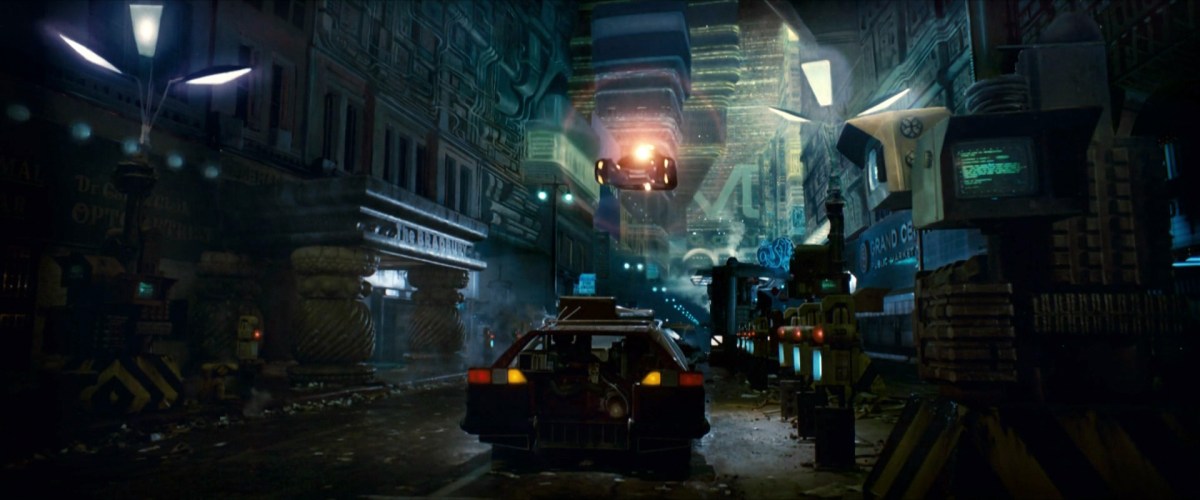
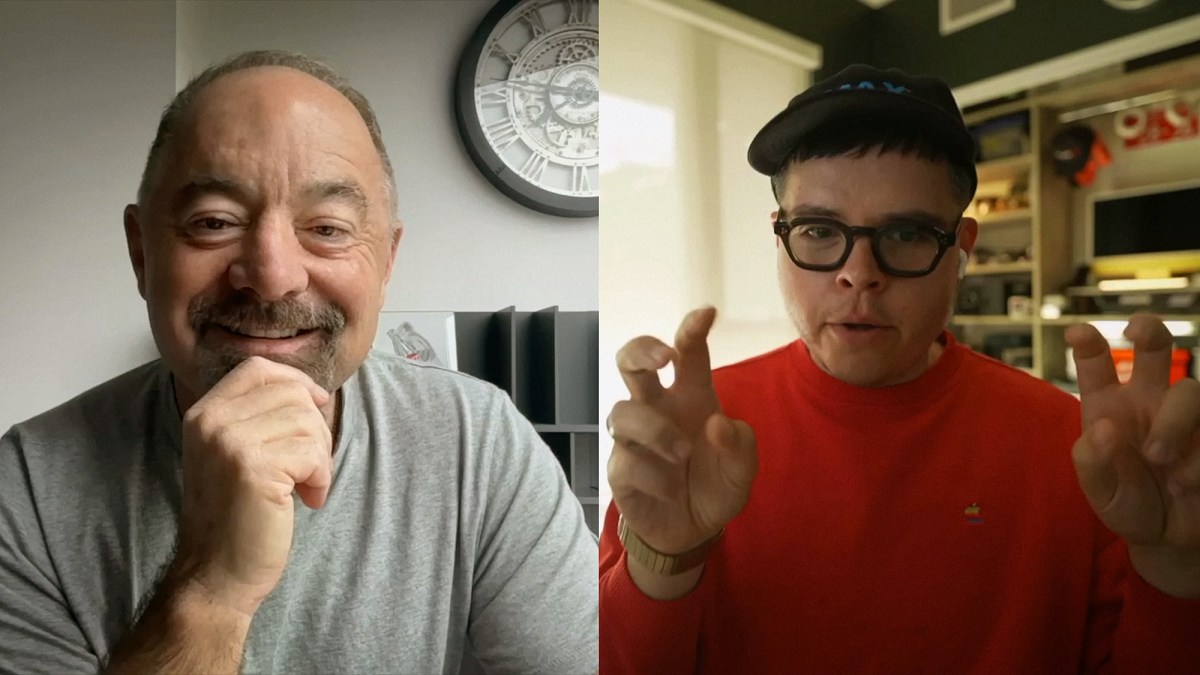
Cinematographer Jeff Cronenweth joins Movies We Like hosts Andy Nelson and Pete Wright to explore Ridley Scott’s groundbreaking 1982 film Blade Runner. As the son of the film’s original cinematographer, Jordan Cronenweth, Jeff brings a unique perspective on both the technical achievements and lasting influence of this sci-fi noir masterpiece. With his recent work on Tron: Ares hitting theaters, Cronenweth reflects on how Blade Runner continues to inspire filmmakers and cinematographers four decades later.

From early experiences on film sets with his father to becoming David Fincher’s go-to cinematographer on films like Fight Club, The Social Network, and The Girl with the Dragon Tattoo, Cronenweth has built a career focused on visual storytelling that serves character and narrative. He describes his approach as seeking human stories within any genre, whether period drama or science fiction. His transition from film to digital cinematography reflects broader industry changes, while maintaining his commitment to thoughtful, story-driven imagery.

The conversation explores how Blade Runner created its influential neo-noir aesthetic with remarkably limited technical resources, including just three xenon lights for its iconic beam effects and borrowed neon lights from Francis Ford Coppola’s One from the Heart set. Cronenweth shares insights into the film’s production challenges and creative solutions, from practical lighting techniques to Ridley Scott’s visionary production design. The discussion examines how the film balances its high-concept science fiction premise with intimate character moments, creating a template for genre storytelling that continues to resonate. Cronenweth also offers a perspective on the various cuts of the film and its 2017 sequel.

Through this engaging conversation, Cronenweth illuminates not just the technical mastery behind Blade Runner, but its enduring impact on cinema. His unique connection to the film through his father, combined with his own distinguished career, offers viewers fresh insights into this landmark work of science fiction and its continuing influence on visual storytelling.

Listen to the podcast:

Apple Podcasts
Spotify
YouTube (Audio Only)

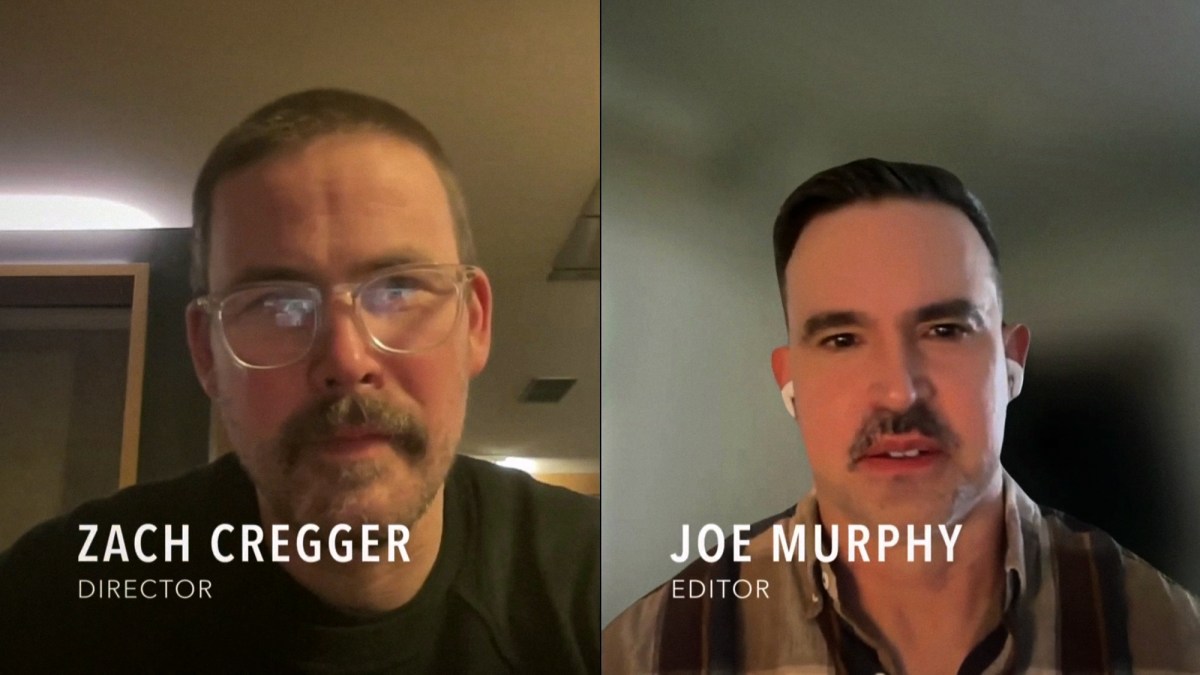
Shot Talk: Weapons, with Director Zach Cregger and Editor Joe Murphy

Oren Soffer
December 5, 2025
Shotdeck

Cinematographer Oren Soffer sits down with director Zach Cregger and editor Joe Murphy for an in-depth conversation about Weapons. From Zach’s meticulous pre-planning with photoboards, to Joe’s work shaping the tone of Gladys in the edit, to the rare opportunity to receive feedback from David Fincher, the duo breaks down the creative process behind the acclaimed supernatural horror film.

Along with the interview, we’re also releasing a bunch of great shots from the film, so you can start adding them to your decks and getting inspired right away!

But before you dive in and watch the filmmaking mini-masterclass above… make sure to go check out Weapons, streaming now on HBO Max.

Sign up for an account at ShotDeck, the world’s first fully-searchable film image database. It’s an invaluable research and educational resource that makes life easier for anyone in Film, Media, Advertising, and Education.

If you are creative, Shotdeck is the place to get inspired and discover new films and talented artists through our meticulously tagged database of still images, all while saving you time.

Search by film title, keyword, location, color, or a dozen other criteria to quickly find the exact “shots” you need to communicate your vision for your next project.

Shotdeck also on: YouTube, Instagram, Twitter

CineTalk: Peter Rosenfeld SOC, Camera Operator

Hugo Will
November 25, 2025
CinePro

Peter Rosenfeld, SOC, is one of Hollywood’s most respected camera and Steadicam operators, with credits on The Social Network, Gone Girl, American Sniper, Memoirs of a Geisha, Spider-Man: No Way Home, and more. In this episode of CineTalk, we dive into his decades of experience working alongside filmmakers like David Fincher, Clint Eastwood, Kathryn Bigelow, Rob Marshall, and Aaron Sorkin.

Peter breaks down the craft of camera operating, problem-solving on set, collaborating with directors, and the mindset required for a long-lasting career. A must-watch for anyone serious about cinematography or pursuing camera department work.

Watch the full episode on CinePro Academy

Leonardo DiCaprio and David Fincher Once Tested a RED Camera Using Just a Single Match

Matt Growcoot
October 23, 2025
PetaPixel

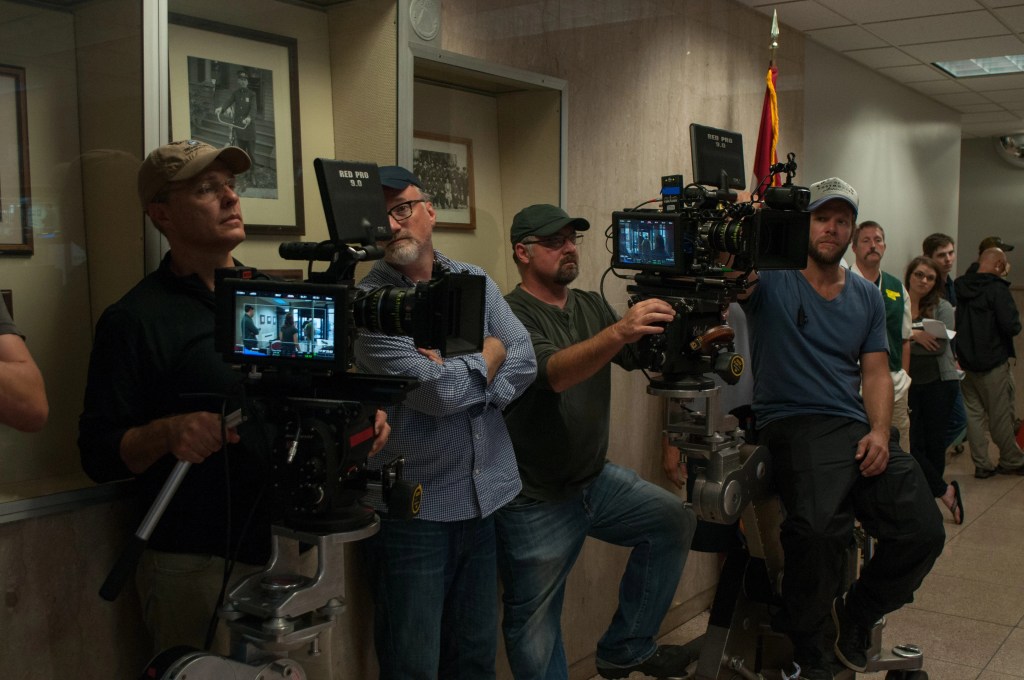
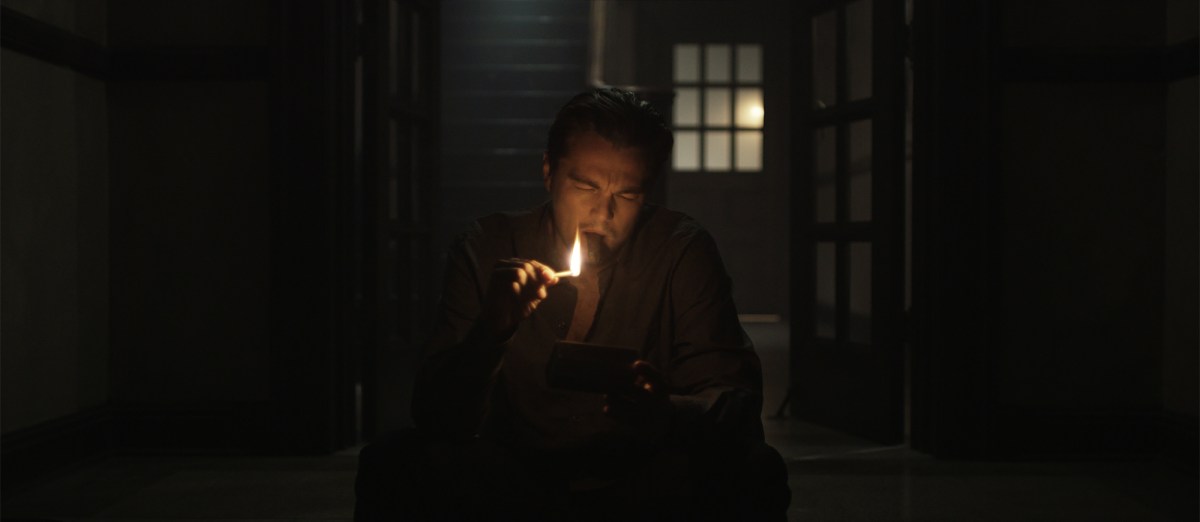
Leonardo DiCaprio and director David Fincher are movie titans of the modern age; therefore it is surprising that the two have never worked together. Unless you count the time the pair tested a RED camera together in 2010 for a clip called The Match.

At the time, Fincher was directing The Social Network and DiCaprio also happened to be in Boston as he was finishing Shutter Island. In fact, the same hallway where The Match was filmed briefly appears in The Social Network.

The 36-second clip was done as a favor for RED’s founder Jim Jannard, who posted the video on the Reduser forum in 2010, according to The Fincher Analyst website.

Read the full article

“Fight Club” Cinematographer Jeff Cronenweth ASC on his Career, Working with David Fincher, Shooting “Tron: Ares,” & More

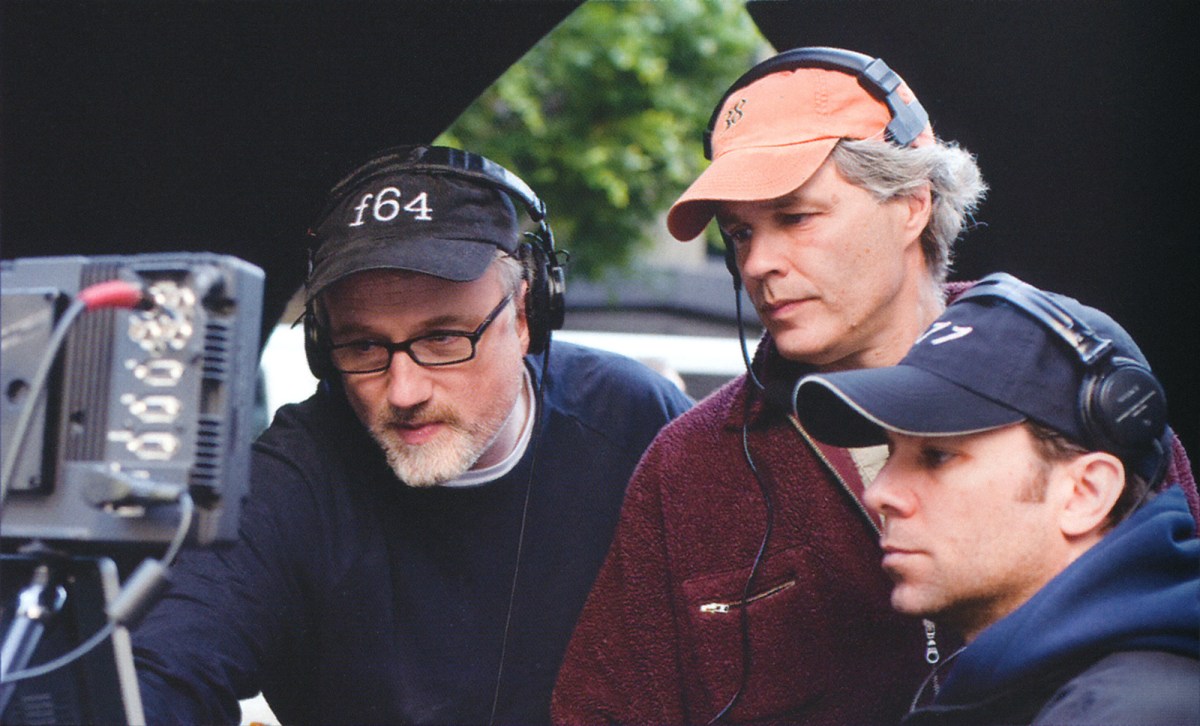
Jordan and Jeff Cronenweth on the set of Francis Ford Coppola‘s Gardens of Stone

Mike Valinsky
October 25, 2025
The Making Of

In this episode, we welcome two-time Oscar-nominated cinematographer Jeff Cronenweth, ASC. Jeff has shot films including Fight ClubOne Hour PhotoThe Social NetworkThe Girl with the Dragon TattooHitchcockGone GirlBeing the Ricardos, and Tron: Ares. In our chat, Jeff shares his origin story, experiences working with David Fincher — and all about his latest movie, Tron: Ares. He also offers extensive insights and recommendations for today’s cinematographers and filmmakers.

Listen to the podcast:

The Making Of (Substack)
Apple Podcasts

Spotify

Follow The Making Of: Instagram, Ex-Twitter

Follow Mike Valinsky: Instagram, Ex-Twitter

When the Movie Looks Insane: Jeff Cronenweth, ASC

Patrick Tomasso
October 19, 2025
patrick 2masso (YouTube)

Go behind the visuals of TRON: ARES with cinematographer Jeff Cronenweth, ASC – the mind behind the camera for films like The Social Network, The Girl with the Dragon Tattoo, and Gone Girl. We talk about the look of the new TRON film, his collaboration with director Joachim Rønning, shooting digitally on RED cameras, and how his decades-long partnership with David Fincher shaped his approach to modern cinematography.

If you’re into camera tech, lighting, or just want to know why TRON: ARES looks so good, this one’s for you.

Special thanks to RED Digital Cinema for setting this up.

Follow Patrick Tomasso on:

YouTube 1, YouTube 2, Instagram, Threads, X, TikTok, Letterboxd, LinkedIn

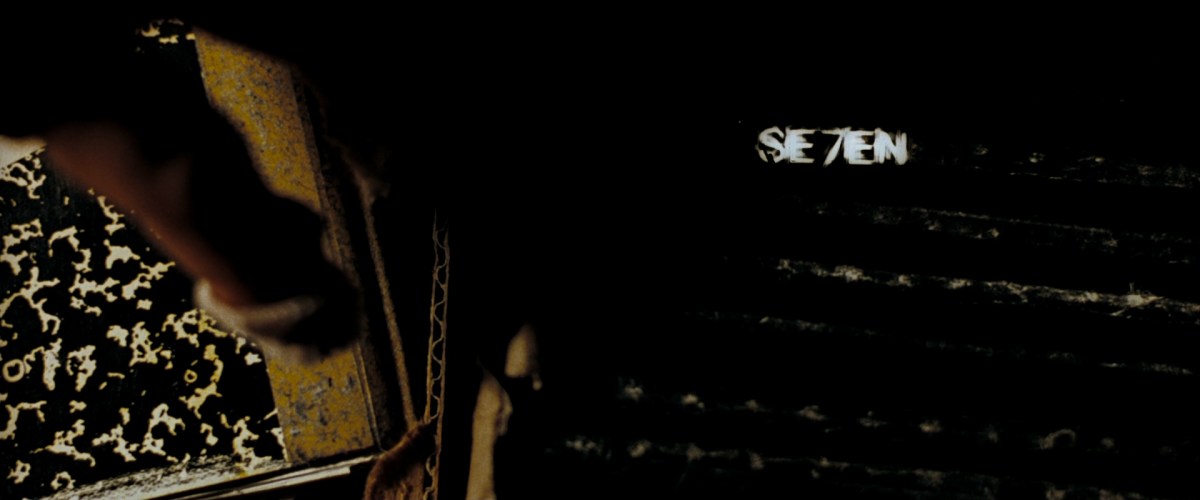
30 Years of Kyle Cooper’s Classic Title Sequence for SE7EN

On September 22, 1995, David Fincher’s SE7EN introduced audiences to a darkness unlike anything seen before, accompanied by an opening title sequence from Kyle Cooper that has since become one of the most influential in film history.

September 26, 2025
Prologue Films (Instagram: 1, 2, 3, 4)

For this classic title sequence, David Fincher tasked Kyle Cooper, founder of Prologue Films, to get inside the mind of a serial killer, immediately setting an ominous tone. Typography was scrawled into scratch board and shot on film, and Cooper shot tabletop photography representing the preparation of the killer’s obsessive sketchbooks. This dark yet spirited sequence was called a “masterpiece of dementia” and was credited with the resurgence of a generation’s interest in film title design.

The audio of this video is pulled from Kyle’s interview on the 2010 Blu-ray Special Edition of SE7EN, where he discussed the making of the sequence in detail.

In Part 1, Kyle reflects on his early conversations with Fincher. The two bounced ideas back and forth, shaping a vision that would forever change the way opening credits were made. This reel pairs finished titles with original process photographs, every frame shot on film, every prop (from John Doe’s notebooks to the hand model) photographed and tested.

“People think there’s computer graphics in there, but we assembled the majority of the sequence by hand… it takes on a life of its own.” In Part 2, he explains how he created the unsettling typography. Every letter was scratched, smeared, and distorted through the camera itself, analogue from start to finish. This reel pairs final frames from the title sequence with the original process photography of John Doe’s notebooks, props, and hands, showing how the haunting visuals took shape long before digital tools.

“This is John Doe’s job: he gets up, makes his books, plans his murders, drinks his tea.” In part 3, he reveals how the titles were designed to immerse viewers directly into the fractured psyche of the killer. To capture the killer’s mindset, Kyle went beyond typography. He gathered real objects from his surroundings, fish hooks, razor blades, sewing needles, twine, even clumps of hair from his shower drain, and filmed them in-camera alongside hand-crafted journals. These raw analogue elements were photographed, tested, and layered into the sequence, blurring the line between prop and pathology.

Kyle has recalled in interviews that during the premiere, when the title sequence finished, the audience actually clapped, something almost unheard of for opening credits. Thirty years later, that impact still reverberates across cinema and design.

The SE7EN End Credits Crawl

The unease of SE7EN doesn’t end with the final scene. Even the closing crawl was designed to keep audiences trapped in John Doe’s world.

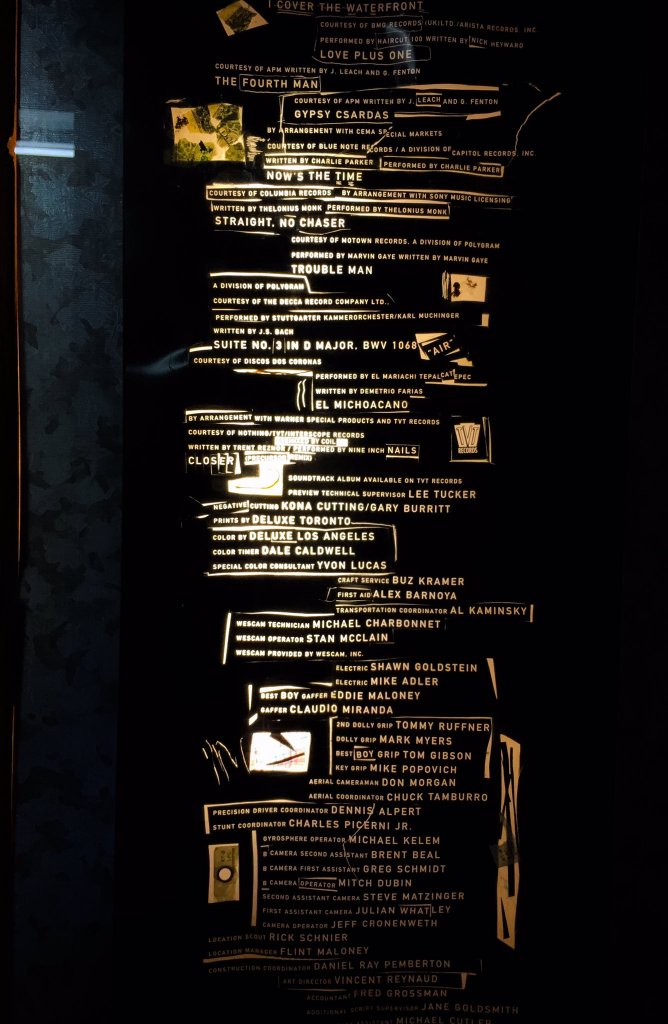
Kyle and Kim Cooper crafted the end credits entirely by hand. Each name was cut out and taped together into a single, massive scroll, almost like a tapestry. The piece was then shot with a video camera and lit from behind so the light bled through the lettering.

To deepen the sense of obsession, the crawl was embellished with objects John Doe might have owned: razor blades, fishing hooks, twine, screws, wire, flies, even hair pulled from a shower drain. Every detail was assembled practically, frame by frame, just like the opening titles.

We first show the original handmade scroll, now preserved in five long backlit panels at Prologue Films. Continue watching to see the crawl as it appeared in 1995. Instead of rolling upward like a traditional credit sequence, Fincher had it roll downward, a subtle inversion that mirrored the sick, twisted psychology at the heart of the film.

SE7EN end credits crawl panel, displayed at Prologue Films, photographed by Hideo Kojima.

Frame & Reference Podcast Extras: David Fincher’s Directors of Photography

Kenny McMillan
August 12, 2025
Frame & Reference

Frame & Reference is a conversation between Cinematographers hosted by Kenny McMillan. Each episode dives into the respective DP’s current and past work, as well as what influences and inspires them. These discussions are an entertaining and informative look into the world of making films through the lens of the people who shoot them.

This is a compilation of selections from past interviews with David Fincher‘s Directors of Photography, discussing their experiences working with him: Erik Messerschmidt, ASC (2022), Erik Messerschmidt, ASC (2024), Eigil Bryld (2023), Tim Ives, ASC (2021), Igor Martinovic and Vanja Černjul (2024), Jeff Cronenweth, ASC (2022).

Listen to the podcast:

Apple Podcasts
Spotify
YouTube

Support and follow the podcast: Patreon
Follow Frame & ReferenceYouTubeTwitterInstagram
Follow OWL BOTInstagram
Follow Kenny McMillanInstagram

AC Gallery: Gone Girl

A collection of stills and images from the making of David Fincher’s 2014 mystery drama.

Brian Kronner
April 14, 2025
American Cinematographer

Gone Girl was the fourth feature collaboration between director David Fincher and cinematographer Jeff Cronenweth, ASC since 1999; Fight Club, The Social Network and The Girl with the Dragon Tattoo being the other three. Additionally the pair worked together on multiple commercials and music videos, creating a working chemistry.

Their 2014 feature Gone Girl, for which Rosamund Pike earned a Best Actress nomination from the Academy, was deftly shot and flowed quicker than its 149-minute runtime would suggest, resulting in one of the best psychological thrillers of the 2000s.

The film was shot digitally on Red Dragon cameras, using Leitz Summilux-C lenses and “a fairly comprehensive lighting package,” which included ETC Source Fours, Mole-Richardson incandescents, and Arri M Series HMIs. Further details can be found in our cover story published in AC Nov. 2014.

In addition to Pike, the filmmakers rounded out the cast with Ben Affleck, Carrie Coon, Neil Patrick Harris, Tyler Perry, Kim Dickens, Patrick Fugit, Missi Pyle, Emily Ratajkowski, Casey Wilson, Boyd Holbrook, and Scoot McNairy.

Cronenweth’s chief lighting technician on this show was Erik Messerschmidt — now an ASC member whose feature credits as a cinematographer include Fincher’s Mank and The Killer.

What follows is a curated collection of unit photography by Merrick Morton, a founding member of the SMPSP who also shot stills for features including L.A. ConfidentialFight ClubZodiac, and The Bad Batch, and the series Mindhunter.

View the full gallery

David Fincher gives SE7EN a final, 4K UHD Glow Up For Its 30th Anniversary

Lindsey Bahr
January 3, 2025
AP News

For David Fincher, seeing SE7EN in 4K was an experience he can only describe as harrowing. That or a high school reunion.

“There are definitely moments that you go, ‘What was I thinking?’ Or ‘Why did I let this person have that hairdo’?” Fincher said in a recent interview with The Associated Press.

He’s OK with the film being a product of its time in most respects. But some things just could not stand in high-definition resolution.

“It was a little decrepit, to be honest,” said Fincher. “We needed to resuscitate it. There are things you can see in 4K HDR that you cannot see on a film print.”

Ever the perfectionist, he and a team got to work on a new restoration of the film for its 30th anniversary re-release. This weekend the restored SE7EN will play on IMAX screens for the first time in the U.S. and Canada, and on Jan. 7, the 4K UHD home video version will be available as well.

The dark crime thriller written by Andrew Kevin Walker and starring Brad Pitt and Morgan Freeman as a pair of detectives looking for a serial killer was somewhat of a career-reviver for Fincher, whose directorial debut Alien 3 had not gone well. SE7EN was not a sure thing: It was made for only $34 million (and only got that when Fincher managed to persuade studio execs to give up $3 million more). But it went on to earn more than $327 million, not accounting for inflation, and continues to influence the genre.

Fincher has over the years overseen several restorations of the film (including one for laser disc) but decided this needed to be the last. It’s why he insisted on an 8K scan that they could derive the 4K from. He wanted to ensure that it wouldn’t have to be repeated when screens get more advanced.

“I don’t want to do this again,” Fincher said. “What we’ve essentially gotten to with this is that this is the new negative. This will be the new archival storage element.”

For casual viewers, the tweaks should not be terribly noticeable. Fincher didn’t go in and add characters or give Gwyneth Paltrow a happy ending.

“I’m very against the idea of changing any of the content,” Fincher said. “There’s literally zero opportunity for toys in ‘Seven’ so we won’t be introducing any of that.”

But take the opening scene where Pitt’s character selects a pre-tied tie and looks out a window. In the original version, Fincher used a tried and true filmmaking technique where you bounce soft light off a white card outside the window to give the appearance of depth and natural light coming in. He called them the Being There windows, referring to what cinematographer Caleb Deschanel did on that film.

“There’s no expectation by the audience that you see the buildings beyond the window. They’re just overexposed. The inside is dark enough that your eyes don’t adjust. And so outside it’s very bright,” he explained. “In 4K, it’s no good. You could see the sheen of the white card.”

The fix was to add a cityscape and some rain drizzle.

“We’re not showing off that now you can see the city,” he said. “We’re just finally kind of bringing the bottom end of the expectation up a little bit so that it feels like it was intended to because now we have the ability to resolve that stuff.”

There were some exposure issues, some cinch marks, some places where the splices came loose or where the perforations of the print changed the properties. Fincher also removed some of the camera jiggles at the end of the film, explaining that because it was an omniscient camera it was distracting. But he didn’t want to do too much and have it lose its essence.

“It’s a document of its time and I believe that movies should be that,” Fincher said. “For all the primitive nonsense of the equipment that went into making The French Connection, it informs that movie. There is a kind of rugged primitivism in it. And I didn’t want that baked out.