Since his feature debut in 2000, filmmaker Bong Joon Ho has become a crucial contributor to the tremendous growth of South Korean cinema and its globalization. Known for his inquisitive mind and meticulous eye for detail, Bong’s creations, which span both realistic and fantastical realms, continue to impact the evolving atmosphere of the South Korean film industry as well as art and culture around the world.
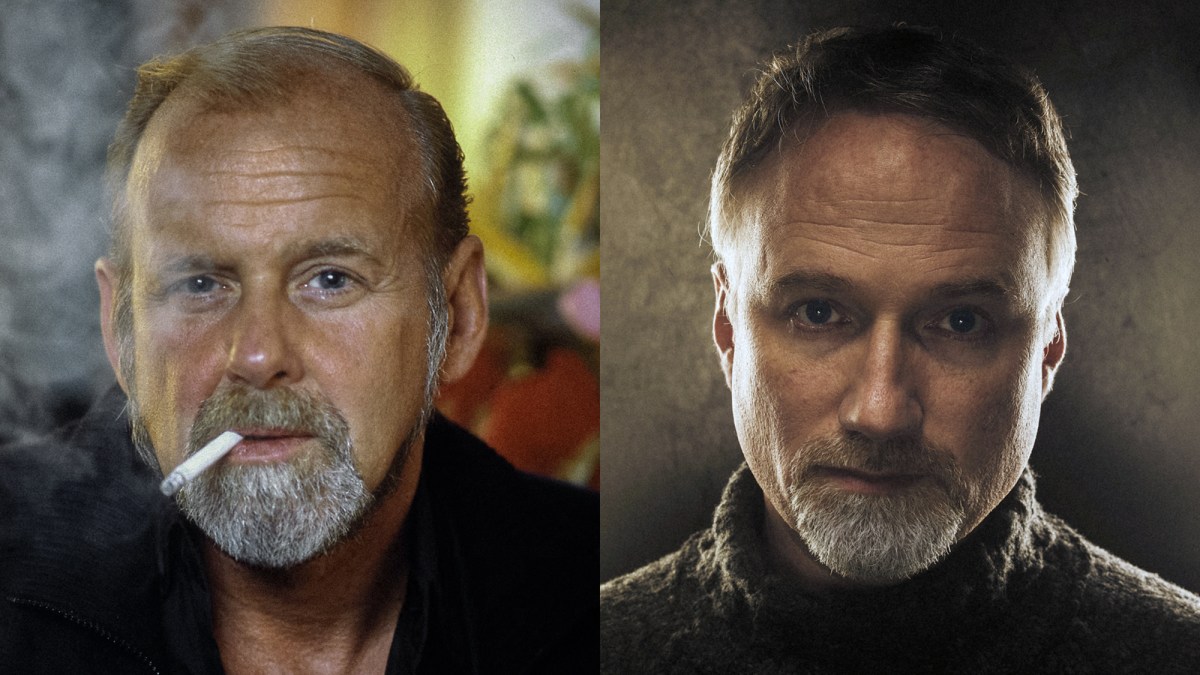
For one weekend in April 2026, Bong returned to the Academy Museum to create exhilarating memories on stage. On April 11, director David Fincher joined Bong for a conversation and screening of Fincher’s Zodiac (2007), a masterpiece thriller showcased via an original poster in the current exhibition, Director’s Inspiration: Bong Joon Ho.
Since its early April debut on HBO Max, people have been talking about the Alien3 Assembly Cut all over again. How has the conversation changed compared to when it was released in 2003?
Both rule number one and rule number two is you’re not supposed to talk about Fight Club, but those rules were broken in a fascinating way Wednesday night at the Academy Museum in Los Angeles, alongside the world premiere screening of the new 4K restoration of the beloved film, prior to its upcoming one-night nationwide theatrical screenings and debuting on disc and digital. The screening included an insider’s look back at the highly contentious debate over how to market the decidedly subversive and provocative film, which found the filmmakers and cast frequently at odds with the studio releasing the movie, 20th Century Fox (now 20th Century Studios).
As a longtime fan of Fight Club, it was a thrill to see it on a big screen again, with the new 4K transfer looking terrific and highly detailed but not, thankfully, causing a movie that purposely exists within a world filled with so much grit and grime to look too clean and pristine. The sound presentation was also better than ever, capturing every brutal punch — and eventually explosions — along the way as the Narrator (Edward Norton) and Tyler Durden (Brad Pitt) grow their following. The film’s examination of consumerism and angry and aimless disaffected men remains as compelling, satirical, and darkly witty as ever, and even though it’s been used in so many TV shows and films since, “Where is My Mind?” remains a perfect needle drop at the film’s conclusion.
The screening was presented by the Marketing and Public Relations Branch of the Academy, and thus the film’s marketing campaign was the focus of the pre-screening guest speaker presentation. Fight Club has an interesting place in cinema — and marketing — history, as in its initial 1999 release, it was highly divisive with critics and a box office bomb. However, it went on to became a sensation via the home video market, gaining an ever-growing cult following and a critical re-evaluation as the years went by.
As Academy Governor David Dinerstein noted in his intro at the screening, “When Fight Club was released in 1999 by 20th Century Fox, it posed a unique challenge… The film defied easy categorization. Was it a crime thriller, a dark comedy, a psychological drama? In truth, it was all of those and something else entirely. Marketing a film like Fight Club meant grappling with its tonal complexity, its subversive themes and, of course, its unforgettable twists – elements that made it compelling but also difficult to distill into a traditional marketing campaign.”
However, Dinerstein added, “In retrospect, the very elements that made Fight Club difficult to market — its audacity, its controversy, its refusal to conform — are precisely what cemented its lasting cultural impact. Fight Club is not just a movie, it has become a cultural event.”
The main speaker of the evening, Steve Siskind, was the head of Media at 20th Century Fox at the time Fight Club came out, which gave him plenty of insight into the struggle over how to market it. As he put it, “It’s not an exaggeration to say that Fight Club was one of the most contentious and fascinating marketing campaign processes I’ve ever witnessed.”
Eric Roth is an Academy Award-winning screenwriter best known for adapting Forrest Gump, for which he won the Oscar for Best Adapted Screenplay. He has received additional Academy Award nominations for The Curious Case of Benjamin Button, A Star Is Born, and Dune: Part One, and is widely regarded as one of Hollywood’s most sought-after writers. Roth co-wrote Killers of the Flower Moon with Martin Scorsese. He continues to work in films as both writer and executive producer. His latest project, the 2025 film The President’s Cake, is now playing in theaters.
BURBANK, CA (February 19, 2026) – The first rule is back. New Regency‘s groundbreaking cultural landmark Fight Club returns in a definitive 4K presentation this spring, with a one-night-only nationwide theatrical event on April 22 ahead of its release to own on 4K Ultra HD Steelbook® and 4K Digital May 12.
Directed by acclaimed filmmaker David Fincher and based on the novel by Chuck Palahniuk, Fight Club remains one of the most provocative and influential films of its generation. Starring Brad Pitt, Edward Norton, and Helena Bonham Carter, the film redefined late-1990s cinema with its visceral style, razor-sharp social commentary, and subversive exploration of identity, consumerism, and modern masculinity.
Meticulously restored in 4K Ultra HD, this presentation brings renewed intensity and clarity to Fincher’s uncompromising vision, enhancing the film’s striking cinematography and immersive sound design for both longtime fans and first-time viewers. From its electrifying debut to its enduring legacy as a defining cult classic, Fight Club continues to spark conversation and inspire generations of filmmakers and audiences alike.
Fight Club returns to theaters nationwide for a special one-night-only event on April 22, inviting fans to once again enter the underground world that changed cinema.
Fans and collectors can then bring the film home beginning May 12 on 4K Ultra HD Steelbook®, featuring premium packaging worthy of its iconic status, as well as on 4K Digital. This definitive home entertainment release preserves the film’s bold storytelling and groundbreaking craftsmanship in spectacular high definition for years to come.
New Regency and Insight Editions will release a companion Fight Club 25th Anniversary art book, featuring never-before-seen visuals, exclusive interviews, and behind-the-scenes content. This collector’s piece will offer fans the deepest look yet into the making of the film and its enduring legacy. More information on the book will be available soon at InsightEditions.com and @fightclubinsight on Instagram.
Specifications
Release Dates Digital: May 12, 2026 Physical: May 12, 2026
Product SKUs Digital: 4K UHD Physical: SteelBook 4K UHD + Blu-ray + Digital Code
Feature Run Time Approx. 139 minutes
Rating U.S.: Rated R for disturbing and graphic depiction of violent anti-social behavior, sexuality, and language.
Aspect Ratio Digital: 2:39:1 Physical: 2:39:1
Disc Size 4K UHD Blu-ray: 100GB Blu-ray: 50GB
Audio 4K: English 5.1 DTS-HDMA and Dolby 2.0 Digital Descriptive Audio, Spanish 5.1 Dolby Digital, and French 5.1 DTS Digital Surround Language Tracks Blu-ray: English 5.1 DTS-HDMA and Dolby 2.0 Digital Descriptive Audio, Spanish 5.1 Dolby Digital, and French 5.1 DTS Digital Surround Language Tracks
Subtitles 4K: English SDH, Spanish, and French Blu-ray: English SDH, Spanish, and French
Bonus Features
May vary by product and retailer.
4K ULTRA HD BONUS FEATURES
Commentary by Director David Fincher
Commentary by David Fincher, Brad Pitt, Edward Norton & Helena Bonham Carter
Writers’ Commentary by Chuck Palahniuk and Jim Uhls
Technical Commentary by Alex McDowell, Jeff Cronenweth, Michael Kaplan & Kevin Haug
BLU-RAY BONUS FEATURES
Commentary by Director David Fincher
Commentary by David Fincher, Brad Pitt, Edward Norton & Helena Bonham Carter
Writers’ Commentary by Chuck Palahniuk and Jim Uhls
Technical Commentary by Alex McDowell, Jeff Cronenweth, Michael Kaplan & Kevin Haug
A Hit in the Ear: Ren Klyce and the Sound Design of Fight Club
Flogging Fight Club Featurette
Insomniac Mode: I Am Jack’s Search Index
Work Behind-the-Scenes Vignettes with Multiple Angles and Commentary
Deleted and Alternate Scenes
Publicity Material Trailers, TV, and Internet Spots
A conversation about Kathryn Bigelow’s “A House of Dynamite” (and David Fincher’s “The Adventures of Cliff Booth”).
Kirk Baxter, ACE, has cut for David Fincher since The Curious Case of Benjamin Button (2008), picking up two Oscars (The Social Network, The Girl with the Dragon Tattoo) and a nomination () along the way. He’s also maintained a successful and sought-after commercials editing business the whole time.
Interestingly enough, it was editing her commercial that connected him to Kathryn Bigelow, director of his latest film, A House of Dynamite.
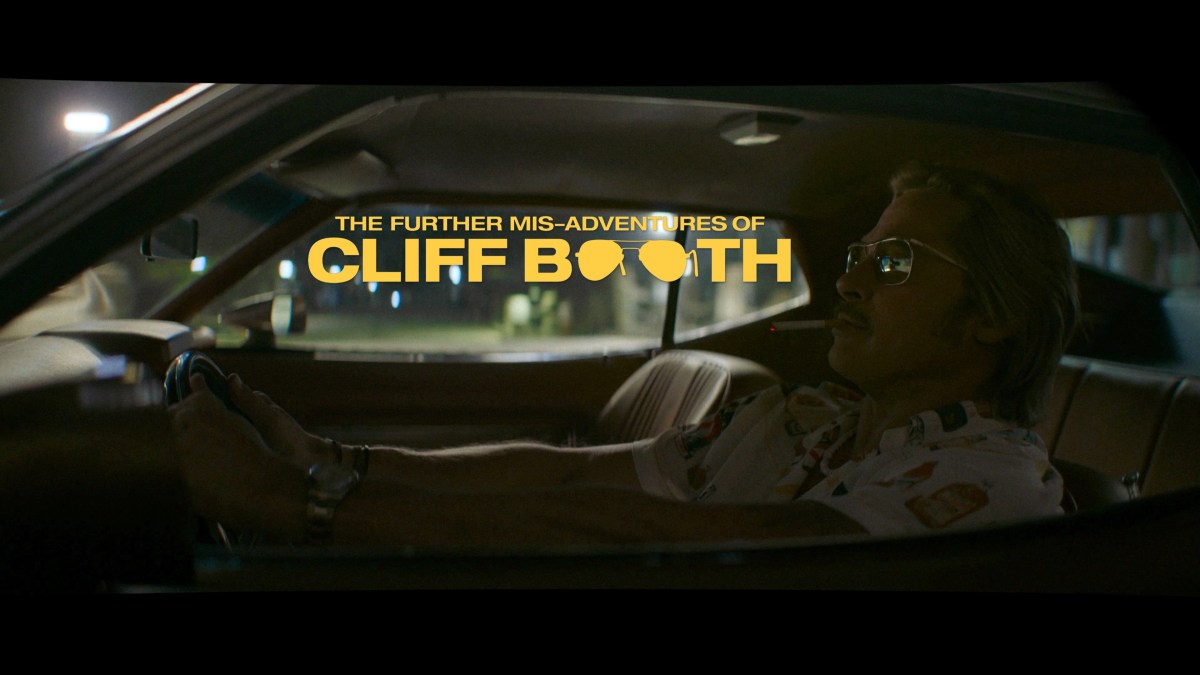
In this special issue of Cut/Daily Meets… you get to hear from the man himself, as I was fortunate enough to chat with him in person, in the middle of his work day on The Adventures of Cliff Booth, Fincher directing Tarantino’s script as a sequel/spin-off/connection to Once Upon a Time in Hollywood.
Introduction Kirk’s Location & Current Projects The Film’s Ending & Political Message What Did the Dailies Look Like? Split Screens vs. Found Footage Approach Editing the Missile Countdown Scenes The Three Acts & Secretary Baker’s Face Matching Audio Across Different Chapters Working with Score & Kathryn’s Initial Reaction The Composer Process & Volker Bertelmann How Do You Decide When Music Comes In? Creating the Chapter Title Cards What Was It Like Working with Kathryn Bigelow? How Do You Choose Your Projects? Cutting Commercials Between Films Evolution as an Editor & Avoiding Showiness Do Oscar Wins Change Imposter Syndrome? Editing Animation for Love, Death & Robots The IMDb Holiday Reunion Credit Future Projects & David Fincher’s Next Film
If you like deepening your knowledge about Post-Production, you’ll love Cut/Daily, my free weekly newsletter for Post Pros. Sign up for free at cut-daily.com.
There is always a class of filmmakers perennially itching for the next technological leap forward: James Cameron and Steven Soderbergh come to mind as two directors with opposing working styles but similar ambitions for the efficiencies and reality-bending possibilities of digital technology. The transition from the photochemical film process to digital production—from cameras to visual effects to editing within the early part of the 21st century—represents one of the most profound flashpoints in cinema history. David Fincher, just as technically savvy and game to test out the latest toys, has been less has received less fanfare, but if one has paid attention to Fincher’s career for any length of time, a sentimental affinity for the medium lags far behind the more practical desire to move on to the next project. It’s one of a panoply of oft-stated advantages with digital filmmaking, the ability to move quickly and dexterously, without the literal weight of film to slow you down. But Fincher’s work, inclusive of his time in television advertising and music videos in the ’80s and ’90s, illustrates a director’s desire at first to uphold and then transcend the strictures of the camera itself.
There are two competing perspectives of David Fincher: that of a hard-driving auteur who demands perfection and challenges his audiences with provocative material while still working comfortably within the commercial constraints of the Hollywood studio system; and that of the technical savant, an artist who, from a young age, steeped in the filmmaking culture of the 1970s (George Lucas was his neighbor in northern California for a time), absorbed every part of the cinematic production process, from developing film for director John Korty to working in the matte department at Industrial Light & Magic (Fincher worked under both Korty and Lucas on the 1983 animated feature Twice Upon a Time). Both views run parallel to one another throughout Fincher’s career, a gun-for-hire with an insatiable curiosity for process, a defining feature of his style and the narratives of his films.
Writer/Director Guillermo del Toro, and Costume Designer Kate Hawley, Composer Alexandre Desplat, Production Designer Tamara Deverell, Cinematographer Dan Laustsen, and Creature Design/Character Prosthetic Makeup FX Mike Hill discuss the making of Frankenstein with moderator David Fincher.
“The movie is exquisite. But it’s not just beautiful. Because “just beautiful” is a cop-out. You have a film that is an example of a hand-crafted personal expression. It is outstanding in that respect.”