This week we welcome on the show Courtenay Miles, a WGA-nominated screenwriter and assistant director whose credits include Gone Girl, Mindhunter, and the upcoming The Further Mis-Adventures of Cliff Booth, starring Brad Pitt.
In today’s conversation, Courtenay shares the remarkable story of her transition from assistant director to screenwriter, reflects on her years-long collaboration with David Fincher, and takes us inside the meticulous research and writing process behind Mindhunter.
Courtenay’s latest feature, Evil Genius, directed by Courteney Cox, will have its world premiere at the Toronto International Film Festival this September.
Frame & Reference is a conversation between Cinematographers hosted by Kenny McMillan. Each episode dives into the respective DP’s current and past work, as well as what influences and inspires them. These discussions are an entertaining and informative look into the world of making films through the lens of the people who shoot them.
This week, we have the absolutely wonderful Pete Konczal, ASC, on the program to talk about his work on Black Rabbit, House of Cards, and more!
Brian: Hello, Andrew. This is the first day of the Austin Film Festival, and I’m glad to sit down with you. I wanted to talk to you about your writing in your career. The first question I want to ask you is about your origin story, what made you want to be a writer, and who were some of your favorite writers growing up?
Andrew Kevin Walker: I really focused on screenwriting in college. I knew when I was a young kid that I wanted to work in the film industry. I remember, I was just talking to somebody about it because it was Jaws fiftieth anniversary, because it was so influential for me, and it really made me realize what a director does, et cetera. I was really into film early on and nerding out, reading American Film magazines and stuff in high school. I went into college studying film at Penn State, I was probably thinking I wanted to be a director but I really focused on screenwriting. There was an amazing screen writing teacher that was there at the time, I think he may still be teaching at Temple, his name is Jeff Rush. It was at Penn State that I focused on writing. Some my favorite writer’s? William Goldman is probably my favorite screenwriter of all time. My favorite novelist is [William] Somerset Maugham, which is not too surprising, I guess, there’s a couple of Somerset Maugham references in Se7en. As far as screenwriters go, Waldo Salt and William Goldman, some of the guys who were writing real classics, you know. My favorite two movies are Midnight Cowboy and Lawrence of Arabia.
Brian: That covers a lot.
Andrew: That covers the city and the desert I guess (laughs).
This week on On Story, we’ll travel back to the 90s with a retrospective on the crime thriller Se7en, with its screenwriter, Andrew Kevin Walker. Directed by David Fincher, Se7en stars Brad Pitt as David Mills, an idealistic young detective with a short fuse, who’s still adjusting to the violence and apathy of life in the big city. Mills is paired with William Somerset, a jaded Detective Lieutenant who’s only one week from retirement, played by Morgan Freeman. Mills and Somerset are tasked with investigating a pair of homicides that are exceptionally depraved and theatrical. The detectives realize that the two murders are only the beginning of a sadistic killing spree where each crime will be based on one of the seven deadly sins: gluttony, greed, sloth, envy, wrath, pride, and lust. Mills and Somerset begin a desperate game of cat and mouse as they try to get inside the mind of this depraved killer and catch him before he can carry out his plan.
The film was nominated for a BAFTA award for Best Original Screenplay. Se7en was screenwriter Andrew Kevin Walker’s first script to be sold. During Se7en’s three-year development period, Walker wrote the scripts for two horror movies: the sci-fi slasher Brainscan, about a troubled teen who’s seduced into committing crimes by a hypnotic interactive horror game, and the psychological horror Hideaway, about a man who survives a near-death experience and finds himself psychically connected to a serial killer. Walker has continued writing and producing in the crime thriller and sci-fi genres throughout his career. Walker wrote the script for 8mm, which follows a private detective investigating a snuff film which may depict a real murder. Walker collaborated with David Fincher again on the 2023 film The Killer, and on an episode of the animated series Love, Death & Robots. His writing credits also include Tim Burton’s Sleepy Hollow, the animated comedy Nerdland, the crime thriller Windfall, and many more. AFF moderator Andy Volk sat down with Andrew Kevin Walker for a post-screening conversation on his experience writing Se7en based on a one-sentence logline, getting the script in front of director David Fincher, and working with the film’s production crew to craft a version of New York City lost in time.
Eric Roth is an Academy Award-winning screenwriter best known for adapting Forrest Gump, for which he won the Oscar for Best Adapted Screenplay. He has received additional Academy Award nominations for The Curious Case of Benjamin Button, A Star Is Born, and Dune: Part One, and is widely regarded as one of Hollywood’s most sought-after writers. Roth co-wrote Killers of the Flower Moon with Martin Scorsese. He continues to work in films as both writer and executive producer. His latest project, the 2025 film The President’s Cake, is now playing in theaters.
Cinematographer Jeff Cronenweth joins Movies We Like hosts Andy Nelson and Pete Wright to explore Ridley Scott’s groundbreaking 1982 film Blade Runner. As the son of the film’s original cinematographer, Jordan Cronenweth, Jeff brings a unique perspective on both the technical achievements and lasting influence of this sci-fi noir masterpiece. With his recent work on Tron: Ares hitting theaters, Cronenweth reflects on how Blade Runner continues to inspire filmmakers and cinematographers four decades later.
From early experiences on film sets with his father to becoming David Fincher’s go-to cinematographer on films like Fight Club, The Social Network, and The Girl with the Dragon Tattoo, Cronenweth has built a career focused on visual storytelling that serves character and narrative. He describes his approach as seeking human stories within any genre, whether period drama or science fiction. His transition from film to digital cinematography reflects broader industry changes, while maintaining his commitment to thoughtful, story-driven imagery.
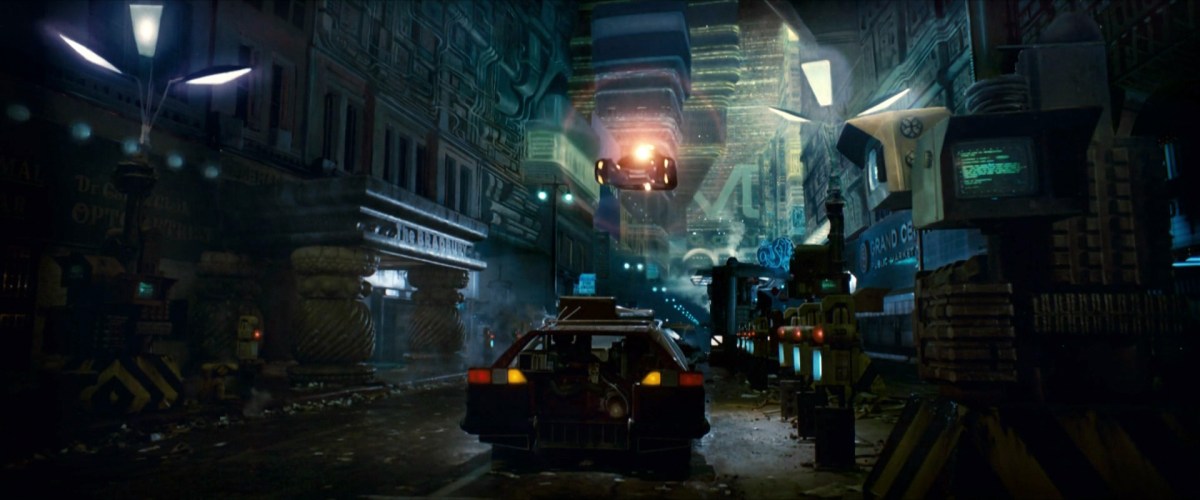
The conversation explores how Blade Runner created its influential neo-noir aesthetic with remarkably limited technical resources, including just three xenon lights for its iconic beam effects and borrowed neon lights from Francis Ford Coppola’s One from the Heart set. Cronenweth shares insights into the film’s production challenges and creative solutions, from practical lighting techniques to Ridley Scott’s visionary production design. The discussion examines how the film balances its high-concept science fiction premise with intimate character moments, creating a template for genre storytelling that continues to resonate. Cronenweth also offers a perspective on the various cuts of the film and its 2017 sequel.
Through this engaging conversation, Cronenweth illuminates not just the technical mastery behind Blade Runner, but its enduring impact on cinema. His unique connection to the film through his father, combined with his own distinguished career, offers viewers fresh insights into this landmark work of science fiction and its continuing influence on visual storytelling.
In this episode, we welcome two-time Oscar-nominated cinematographer Jeff Cronenweth, ASC. Jeff has shot films including Fight Club, One Hour Photo, The Social Network, The Girl with the Dragon Tattoo, Hitchcock, Gone Girl, Being the Ricardos, and Tron: Ares. In our chat, Jeff shares his origin story, experiences working with David Fincher — and all about his latest movie, Tron: Ares. He also offers extensive insights and recommendations for today’s cinematographers and filmmakers.
Go behind the visuals of TRON: ARES with cinematographer Jeff Cronenweth, ASC – the mind behind the camera for films like The Social Network, The Girl with the Dragon Tattoo, and Gone Girl. We talk about the look of the new TRON film, his collaboration with director Joachim Rønning, shooting digitally on RED cameras, and how his decades-long partnership with David Fincher shaped his approach to modern cinematography.
If you’re into camera tech, lighting, or just want to know why TRON: ARES looks so good, this one’s for you.
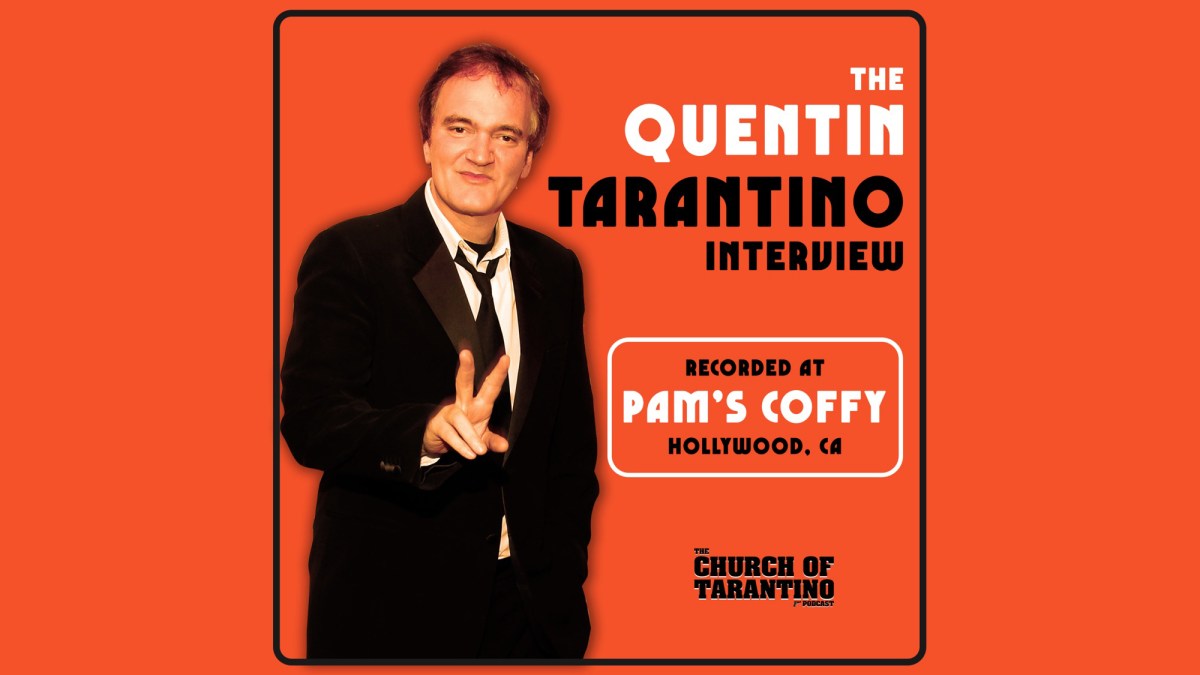
The Church of Tarantino is a podcast channel with weekly shows dedicated to discussing every and anything related to the films of Quentin Tarantino. One of our 4 unique monthly series drop an episode every Friday. Ranking Tarantino (1st Friday of the month), The Bible Study (2nd Friday of the month), Inglourious Blue Balls (3rd Friday of the month) & Tarantinoesque Film Review (4th Friday of the month). Whether we’re ranking various aspects of his films, dissecting his scenes, discussing all the projects he’s announced, or reviewing films that are like his, there’s something for every QT fan.
For this episode, join the Reverend inside Pam’s Coffy, for his first ever sit down with Mr. Quentin Tarantino, as they discuss the cancellation of The Movie Critic, the origin of The Adventures of Cliff Booth, why he handed it to Brad Pitt and David Fincher, his “favorite director”, what his next project is going to be, why Kill Bill: The Whole Bloody Affair is still unavailable to the public, the brilliance of the late great Michael Madsen and so much more, including the question he’s been dying to ask for over 2 and a half years: “What ever happened to the Untitled TV Series?” This is a must-listen for true Tarantino fans.
Frame & Reference is a conversation between Cinematographers hosted by Kenny McMillan. Each episode dives into the respective DP’s current and past work, as well as what influences and inspires them. These discussions are an entertaining and informative look into the world of making films through the lens of the people who shoot them.
Miles Perkins, Industry Manager, Epic Games July 28, 2025 Unreal Engine
Join Tim Miller, co-founder of Blur Studio and winner of multiple Emmy Awards, for a candid chat on his origins as an animator and visual effects artist, his “story first” philosophy, and his views on creativity. Tim’s curiosity and drive has led him to branch out from traditional visual effects to direct live-action features and explore real-time animation with Blur’s Secret Level series and the LOVE DEATH & ROBOTS anthology series.