Season 2 Episode 16 | Jeff Beal got fired from Monk, then won an Emmy for it
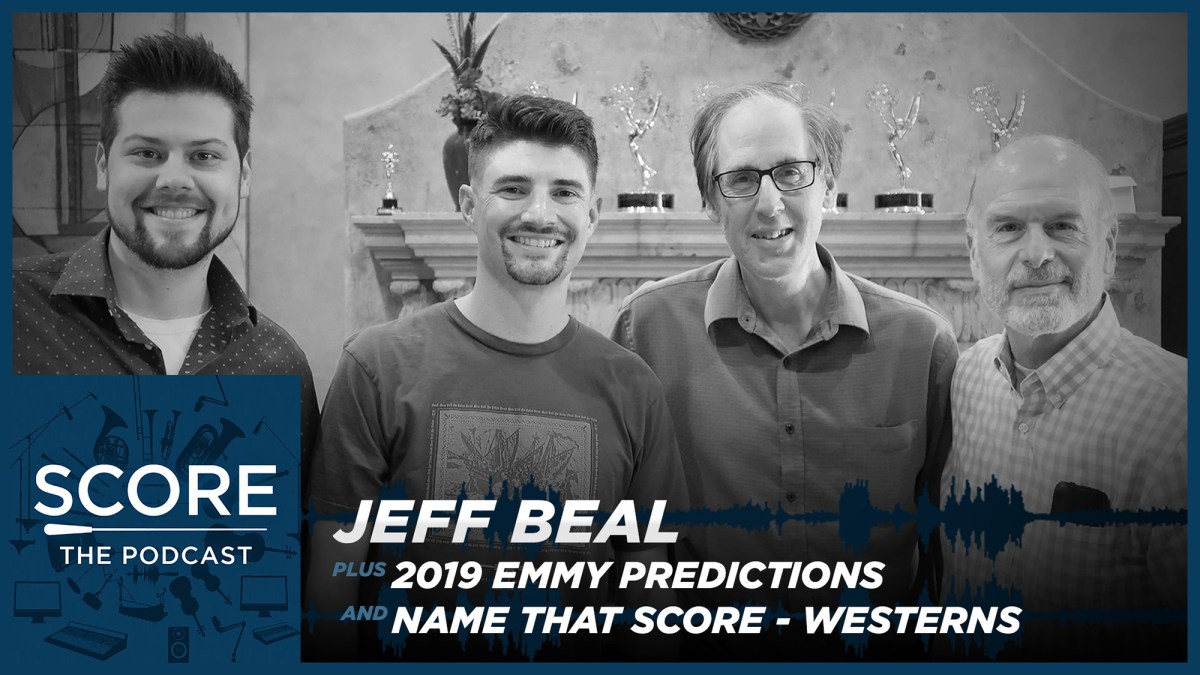
Robert and Kenny begin the show joined by Matt Schrader and Carol Kuswanto for the show’s annual Emmy predictions. The group makes predictions for seven categories: Drama Series, Comedy Series, Limited Series, Original Main Title Theme Music, Music – Limited Series, Music – Documentary Series, Music – Series.
Then 5x Emmy-winning composer and current Emmy nominee Jeff Beal joins the show telling the story of getting fired on his first TV show Monk, winning the Emmy for main title theme, then getting rehired. Jeff also discusses his working relationship with David Fincher on the Netflix hit series House of Cards and exclusively reveals his first sketch of the main title theme.
Lastly, Jeff join the guys for a special round of #NameThatScore with a “westerns” theme.
Jazz/Classical hybrid composer Jeff Beal speaks to us about the musical inspiration behind his game changing soundtrack/opening to the award winning House of Cards series.
Jason Hill is the hypnotic composer, producer, recording artist, songwriter, and multi-instrumentalist, admired for his arcane musical stylings and idiosyncratic approach. He is the frontman and thought leader of controversial post-punk band, Louis XIV, member of alternative supergroup, Vicky Cryer, and founder of The Department of Recording and Power, a voluminous vintage studio in Glendale, California. A contrarian musical nomad, Jason has thrived in myriad roles within the music business, working with David Bowie, The Killers, Robbie Williams, New York Dolls, Jet, Sky Ferreira, Macy Gray, The Virgins, Richard Butler of The Psychedelic Furs, and many others. After being tapped to fulfill the official trailer and teaser for Gone Girl, legendary director, David Fincher invited Jason to conjure a musical macrocosm for Netflix’s gripping criminal psychology thriller series, Mindhunter. Over two critically acclaimed seasons, Jason’s score negotiates the liminal space between masks of normalcy and unbridled savagery, masterfully evoking unseen traumas. In our sprawling discussion, Jason details his lifelong rejection of sonic mores and how he made Netflix history with his haunting re-imagining of the Mindhunter theme for the season two finale.
Before becoming a composer for media, you explored many artistic avenues in the music industry — Louis XIV, Vicky Cryer, and beyond. Could you describe some of your most fulfilling pursuits before you changed your professional trajectory? What are the advantages of having a strong pre-existing relationship to storytelling through music?
Well, it’s an interesting thought about the storytelling aspect. With songwriting, you’re trying to tell these mini stories, but I’ve had many, many fulfilling artistic projects. Louis XIV, I absolutely loved doing, and in fact, for the first time in 10 years, we’re in the middle of making another record. We’ve got a few songs so far, and it’s fun to come back around to it after we went pretty hard, toured the world, and made records. “The Best Little Secrets are Kept” is one of the records I’m very, very proud of. I just loved making it.
Looking back, I lived in this little, tiny…it wasn’t even an apartment, and it overlooked a Shell gas station. It didn’t have a shower or anything. I would literally connect a hose to the faucet and drag it out on the balcony that overlooked the gas station. In the middle of the night, I would hose myself to take a shower unless I was staying at girlfriends’ houses. I had a futon in the corner, but the rest of the place was just my recording gear. I was broke, but I was happy to be making music. That’s where all the Louis XIV material came about. It was essentially from those late nights, and that was a really great experience.
I’ve actually had so many great experiences related to music. There were times when me and my past bandmates moved to a place called Jamul up in the mountains, about an hour outside of downtown San Diego. We lived in this old adobe house on forty-six acres that an artist built. That was one of the places where we learned to sing harmonies and write together. That was also where I really learned how to record. We just had reel-to-reels, and I figured out how to do it. I’ve always lived in pursuit of trying to figure out how to do things by myself. If I signed a record deal, instead of giving another producer a bunch of money in the studio to make a record, it was like, “No. Let’s just buy a bunch of gear ourselves, and now, we can make records for the rest of our lives.” That’s why I have the arsenal of stuff I have to this day.
There are so many incarnations of my life in music, starting from the moment I first fell in love with it. I remember as a little kid; I was actually plagued by these things in my head, which later I learned were melodies. It would drive me nuts. To be honest with you, as a nine-year-old kid, I would have all these tiny, weird symphonies playing in my mind, but I didn’t know what they were until I started figuring out what music really was. Of course, I knew what music “was,” and I even wrote a song around age five, but at that point, I didn’t know how to make these melodies I was hearing come to life. It was like, “How do I get this out of my head and into the cosmos? How do I play it on a guitar or a piano?”. Oh god, it was so tough. That was a thing like, “I gotta figure this out because otherwise, it’s going to kill me.”
I think it’s always been a pursuit of the fog. It’s like a foggy mirror after a hot shower. Little by little, the fog comes clear, and you are able to see your reflection. That’s what music has been, for me, for my entire life, and now, I just have a lot more control over it. That said, it’s still this elusive thing, and I love that elusive thing. I love the feeling of not knowing, so I still dance in that realm.
The Glass Armonica, invented by Benjamin Franklin.
Taking place in the late ’70s through the early ’80s, Mindhunter charts the origin of the FBI’s Behavioral Science Unit and the practice of criminal profiling. Together, agents, Holden Ford and Bill Tench, alongside psychologist, Wendy Carr interview and analyze incarcerated serial killers across the nation, applying this groundbreaking knowledge to solve cases. In your collaboration with David Fincher, what concepts and musical references does he bring to the table, and how does that inform your approach?
[David Fincher] is so articulate. He’s a brilliant man. I can’t stress that enough, really. He gives you these prompts, but they’re rarely specific. Nowhere in there is he saying, “Do this,” or “Make this piece exactly like this.” He just gives you these open-ended questions.
This time around, one of his prompts was ‘the death of disco’ and what that sounded like. It was a very interesting thing to consider when you think of our score and where it ended up. How does finding out what the death of disco sounds like translate to season two of Mindhunter? I still don’t know, but it led me in a place of trying to figure it out, which was a bit of a mind fuck.
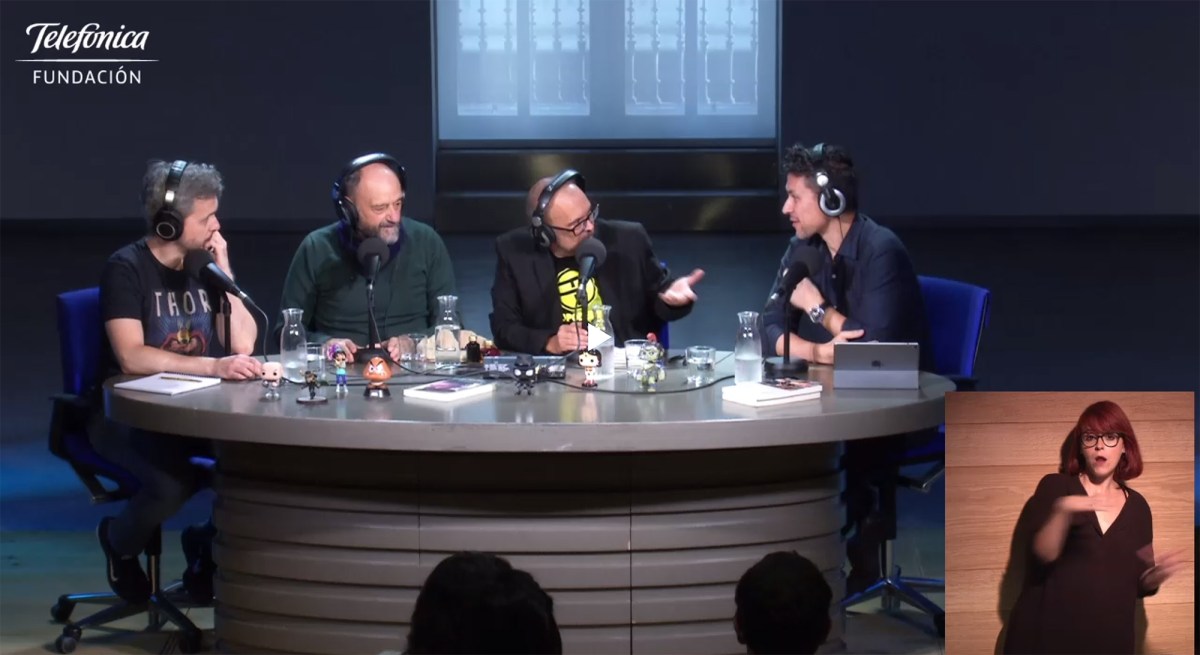
Castillos de naipes, chicas tatuadas, botones menguantes y hambrientos del like. Han vuelto los Todopoderosos para contarnos todo lo que se les quedó pendiente sobre David Fincher.
O sea, Rodrigo Cortés, Javier Cansado, Juan Gómez-Jurado y Arturo González-Campos. Que alguien llame a los mindhunters.
Autor de libros como La Leyenda Del Ladrón, El Paciente, Cicatriz o su reciente Reina Roja, un autor traducido a más de 40 idiomas, y una de las mentes más intrigantes de la cultura española.
Un ilustre ignorante que demostrará que ambos adjetivos son falsos en su caso. Uno de los grandes cómicos de este país y un comunicador que, cada día, hay que descubrir. Se afeita regular, eso también lo tiene.
Rodrigo Cortés ha hecho una película dentro de una caja y tres fuera. Escribe libros, habla por la radio y huele genial. Una vez se quedó atrapado en un ascensor con Carlos Boyero.
Durante muchas noches ha gritado en La Parroquia de Onda Cero, escribe libros, hace guiones y es monologuista, la prueba viviente de que un feo también tiene lugar en este mundo.
This week on Pop Culture Confidential we are thrilled to have screenwriter Liz Hannah in conversation about the incredible new season of Mindhunter, as well as working with Steven Spielberg on The Post and more!
Liz Hannah burst onto the scene a couple of years ago when her first screenplay, a spec script about Washington Post owner Kay Graham and her decision to publish the Pentagon Papers, was picked up none other than Steven Spielberg. That became The Post starring Meryl Streep and Tom Hanks. Liz Hannah went on the write the critically acclaimed comedy Long Shot starring Charlize Theron and Seth Rogen.
Now she is onboard Mindhunter season two as a writer and producer. Liz Hannah talks to us about her career, working with David Fincher (exec producer and director on Mindhunter), writing and staging one of the most intense episodes of TV this year, the Charles Manson episode, getting into the heads of serial killers and much more.
From the infamous tales of his multi-take shooting style to the sheer technical precision consistently on display in his work, it is apparent that Fincher is methodical in his craft, a director who knows what he wants and sees very little point in doing the job if he is ever willing to settle for less than that.
Which is why, in a truly unique way, the opening intro to Fincher’s latest Netflix series, Mindhunter, is essentially a distillation of his entire filmmaking career into a single minute-and-a-half of unnervingly brilliant and precise cinematic craft.
Fincher’s first credit as a filmmaker may have technically been Alien 3, but his career didn’t really begin properly until 1995, with the release of Seven. The tale of a pair of detectives investigating the grisly murders of a serial killer, Seven is in many ways, in hindsight, the perfect introductory statement for Fincher’s body of work as a whole. On the surface, it’s a tightly-woven and meanly constructed narrative about a serial killer and the men trying to catch him. But just beneath the surface (and for our purposes, much more importantly) Fincher is using the narrative as a framework through which to explore themes such as the perverseness of mankind, the lasting wounds of grieving, and obsession.
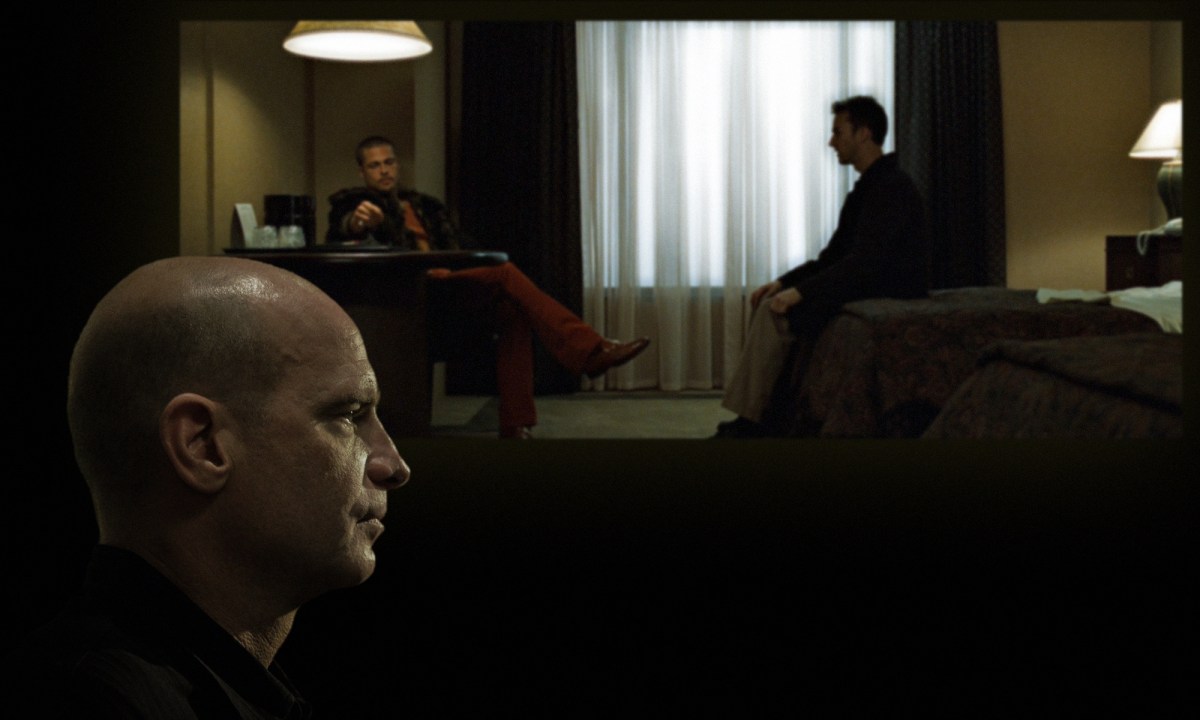
That last one is important: obsession. Because it’s one he’s come back to again and again, and explored in increasingly interesting ways. Fight Club saw him creating a pop-cultural satire, one that delved deep into the depravity of its time and how the obsessions of a generation essentially derailed the concept of mental stability. Zodiac saw him confronting it in his most direct way yet, showing how Robert Graysmith’s and the nation-at-large’s obsession with the Zodiac murders came to engulf them.
What’s so intriguing about Mindhunter is that it tackles this thematic staple of Fincher’s work in a very similar way, yet it does so without even necessitating a single minute of footage from the series proper.
There is a short list of films I consider to be perfect; that is, I’ve watched them over and over again and they not only work every single time, but they have no weak spots and just get better and better with each viewing. Casablanca is one of those. Psycho is one of those. Jaws is one of those. Fargo is one of those. Taxi Driver is one of those. The Social Network is one of those and, of course, Citizen Kane is one of those. You can’t imagine anything making the film better, and if you removed one tiny piece of it you would ruin the whole thing. From the writing to the directing to the acting to the producing, everything just works. Even time can’t break them down. You probably have your own ideas about which movies you consider perfect, but for me it’s a short list as even most of my favorite films of all time I would not call perfect. And indeed, perfection is never a goal any artist should seek to attain – it’s just that every so often a film arrives there.
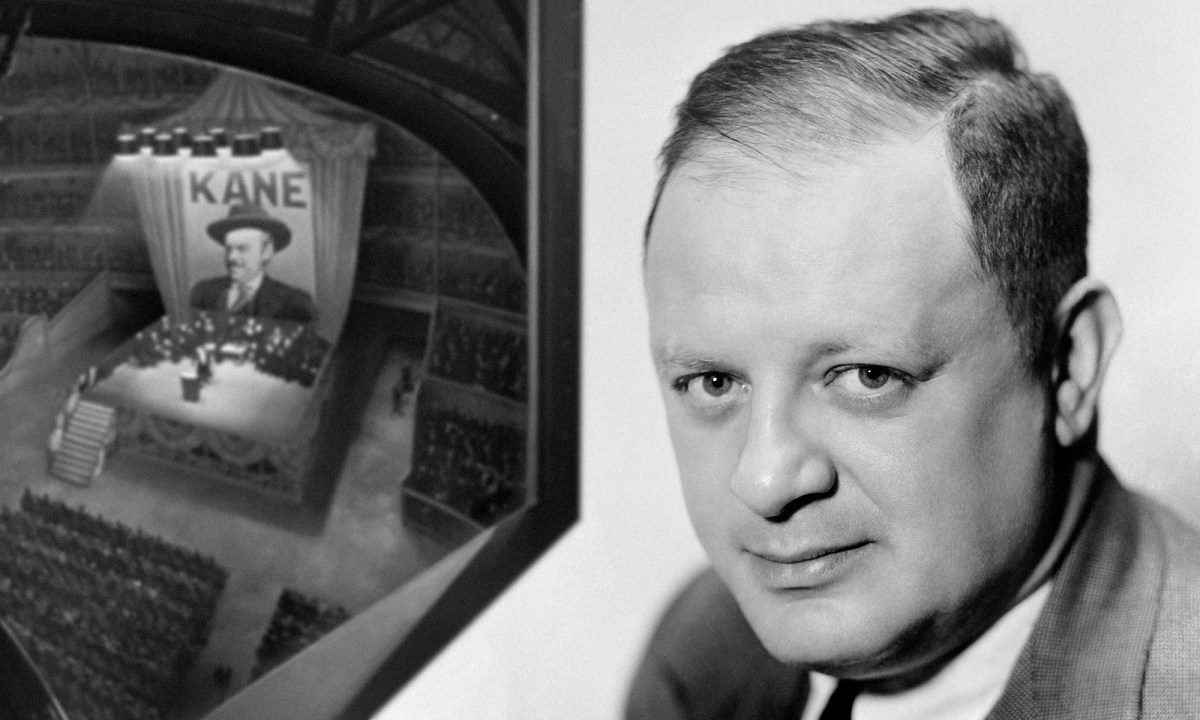
The myth about Citizen Kane is legendary – the young Orson Welles with his Mercury Theater players, a keen eye, and a whole lot of ambition made what is not-arguably the greatest film ever made. Welles has always been credited with the whole thing because in America we are beholden to the hero’s journey. That he pulled off such a brilliant hat trick at 24 is part of the myth. When you have a more honest conversation about Citizen Kane, you start talking about Gregg Toland and you eventually get to (because you must) Herman Mankiewicz.
Variety reports that David Fincher will team up with Gary Oldman for Mank, a biopic about the Oscar winning co-screenwriter on Kane for Netflix. The script was written by Fincher’s late father and will be filmed in black and white!
Although no plot details have been released about Mank, one can only assume it will have something to do with Mank’s writing of Citizen Kane, or co-writing with Orson Welles. Mank had famously spent time at William Randolph Hearst’s castle in San Simeon with Hearst’s wife, Marion Davies, which gave him such close and personal access that, it is rumored, Mank knew that Hearst had a pet name for Davies’ golden clam, Rosebud, and trolled Hearst by putting it in Kane.
What is great about the story of Kane is what it says about William Randolph Hearst directly and indirectly and what a fit Hearst had about it. He thwarted the film’s release, hurting its box office significantly. He somehow turned the film industry against Orson Welles, who was booed at the Oscars, and easily handed the Best Picture/Best Director win over to John Ford and How Green Was my Valley.
David Fincher has reportedly signed on to direct his first feature film since Gone Girl in 2014, a biopic about the contentious development of the script for Citizen Kane, one of Fincher’s favorite films, by the brilliant and prolific but troubled screenwriter Herman J. Mankiewiczand legendary director Orson Welles. They both shared the Academy Award for Best Original Screenplay.
And he is doing it for Netflix, the streaming service and production company that has granted him artistic freedom and for whom he has developed and produced the series House of Cards and Mindhunter, and executive produced the animated series Love, Death, and Robots.
Master Actor Gary Oldman will play the titular role, Mankiewicz, or “Mank“, as he was nicknamed.
The film project inception dates back to 1993 and is based on a script by Fincher’s late father, Howard “Jack” Fincher. Jack Fincher was a journalist, writer and essayist specialized in science, a former San Francisco bureau chief for LIFE magazine, and a devoted cinephile. In 1997, he was commissioned to draft a screenplay for a Howard Hughes biopic, with Kevin Spacey attached to direct. But this project was later absorbed by The Aviator project scripted by John Logan, which ended up being directed by Martin Scorsese.
Mank will be shot in black and white, as Fincher always intended. This caused the project to stall in the past, but Alfonso Cuarón’s recent success with Roma, also for Netflix, has reinforced the limited commercial appeal of this aesthetic option.
The film will be produced by the traditional power couple David Fincher & producer Ceán Chaffin, this time alongside Oldman’s business partner and producer Douglas Urbanski. Urbanski is an occasional actor who played President of Harvard University Lawrence Summers in The Social Network.
Production is scheduled to begin in November in Los Angeles.
As far back as 1997, this biographical story of Herman J. Mankiewicz, the writer of Orson Welles‘ epic motion picture Citizen Kane, was rumored as a pet project for David Fincher. From a script written by his father, Howard Fincher, the director’s black and white biopic targeted Seven star Kevin Spacey as the lead, with Panic Room‘s Jodie Foster in a co-starring role as movie actress Marion Davies. In production at the same time was HBO‘s telemovie RKO 281, which also covered the backstory of Citizen Kane (casting John Malkovich in the Mankiewicz role and Melanie Griffith as Davies). Still, the true story behind the creation of this mould-shattering movie and the writer behind it has enough scope for the production of a further feature by Fincher and his father.
Mankiewicz was a cynical but extremely talented scriptwriter, a former theatre critic for the New Yorker and the New York Times who left his job for the glitter of early Hollywood. Dropping out of the elite circle of New York’s high society, specifically the so-called “Algonquin Round Table“, Mankiewicz began with scripts for silent films, starting with The Road to Mandalay in 1926, working on more than 70 features during his lifetime. He once famously described Hollywood to a fellow writer in NYC by saying: “Millions are to be grabbed out here and your only competition is idiots. Don’t let this get around”. As film technology evolved in the late twenties, Mankiewicz changed gears and moved seamlessly into talkies, continuing to write stories or dialogue for films like Man of the World (1942), The Lost Squadron (1932), Dinner at Eight (1933) and It’s a Wonderful World (1939), as well as an uncredited rewrite on The Wizard of Oz; he also worked with the Marx Brothers as an executive producer on movies like Horse Feathers (1932) and Duck Soup (1933).
With his career flagging as the thirties ended and with his comedic hits behind him, Mankiewicz’s Oscar-winning success with Welles’ Citizen Kane in 1942 gave him a brief respite. However, his alcoholism and large gambling debts eventually got the better of him and he died, penniless, of uremic poisoning in 1953. Remembered for Welles’ powerfully directed feature about a ruthless newspaper mogul, Mankiewicz no doubt drew on his personal experiences as a former associate of real-life magnate William Randolph Hearst and as a partygoer at Hearst’s huge Hollywood mansion. Although Mankiewicz was forced to share Citizen Kane‘s Academy Award for Best Writing with Welles, the great majority of the script was the writer’s own work, and it was not only a source of friction between the two men but of debate among film critics to this day.
Last mooted as a Propaganda Films movie, Howard and David Fincher’s Mank may yet be produced as a project at Indelible Pictures. Fincher has previously spoken of his intent to use a special film stock to shoot Mank, a black and white negative type no longer used in the contemporary industry that would have to be recreated from the original “recipe”. For the director, this feature represents an opportunity to produce a fundamentally different film from his earlier works in a genre he has yet to explore; at the same time, the life of Herman J Mankiewicz retains the streak of darkness that has always appealed to Fincher’s sensibilities. “Mank is a script that I’ve been working to get exactly right for ten years”, said Fincher, “and I hope, some day, to make it as one of the definitive ‘writer in Hollywood’ stories”.
Pierce: Your dad was a journalist and a writer. He wrote a script called Mank, about the Citizen Kane screenwriter Herman J. Mankiewicz. Did you consider making that?
Fincher: We tried. It was too expensive. Because if you’re going to make a Hollywood insider movie—it’s nothing to do with Hollywood really, it’s Hollywood in the late thirties, early forties—you’ve got to make it really cheaply. We had a chance to make the movie for, like, $13 million, back in 1998 and, um, [guiltily] I wanted to make it in black and white. [Laughs] And that fucked up all those home video and video sellthrough and cable deals. I haven’t read it in a while. I probably should.
Pierce: Did your dad write a few screenplays?
Fincher: Yeah, he wrote a couple. That was the best of them, I think. He wrote a screenplay once about a divorce case. It was kind of based on the Keanes. Remember in the sixties, the guy who painted those pictures of the children with the giant eyes? They were in this bitter divorce. It was a very, very sardonic screenplay about two parents trying to prove what bad parents they are, so the other will get stuck with the kids! It was pretty funny! [Laughs] But it had an awful sentiment! But it was funny. It was a good script.
Pierce: There’s an element of your work—in Se7en, The Game, Zodiac— that is about professionalism and obsession. Is that something you think you got from your dad?
Fincher: My dad wasn’t very obsessive. Slightly compulsive, but not obsessive. You know, my dad did used to say, “Learn your craft; it will never stop you from being a genius.” It’s like, “Do the hard work, figure out how it works…” My dad worked a lot, but he paced himself. He paced himself a lot more than I think I probably do. […] My dad… he was an intellect and sort of a Monday-morning quarterback.
Having been handed the true crime book “Mindhunter” by friend Charlize Theron, executive producer David Fincher began the collaboration and long developed project we now know as Netflix‘s “Mindhunter“. Today on The Treatment, Fincher announces the release of season two of the series where discussion of serial killers became common place among American mainstream and how the soundtrack plays with the timeline of this eerie American history.
PIX has worked closely with David Fincher and his No. 13 production company since Panic Room in 2001, developing tools and services that have fundamentally changed how feature films and television shows are made. One of the first directors to embrace digital cameras with his use of the Thomson Viper on Zodiac, Fincher and his team are constantly redefining technology as they seek to blur the line between production and post production and strive to automate the mundane and more clearly communicate their creative vision.
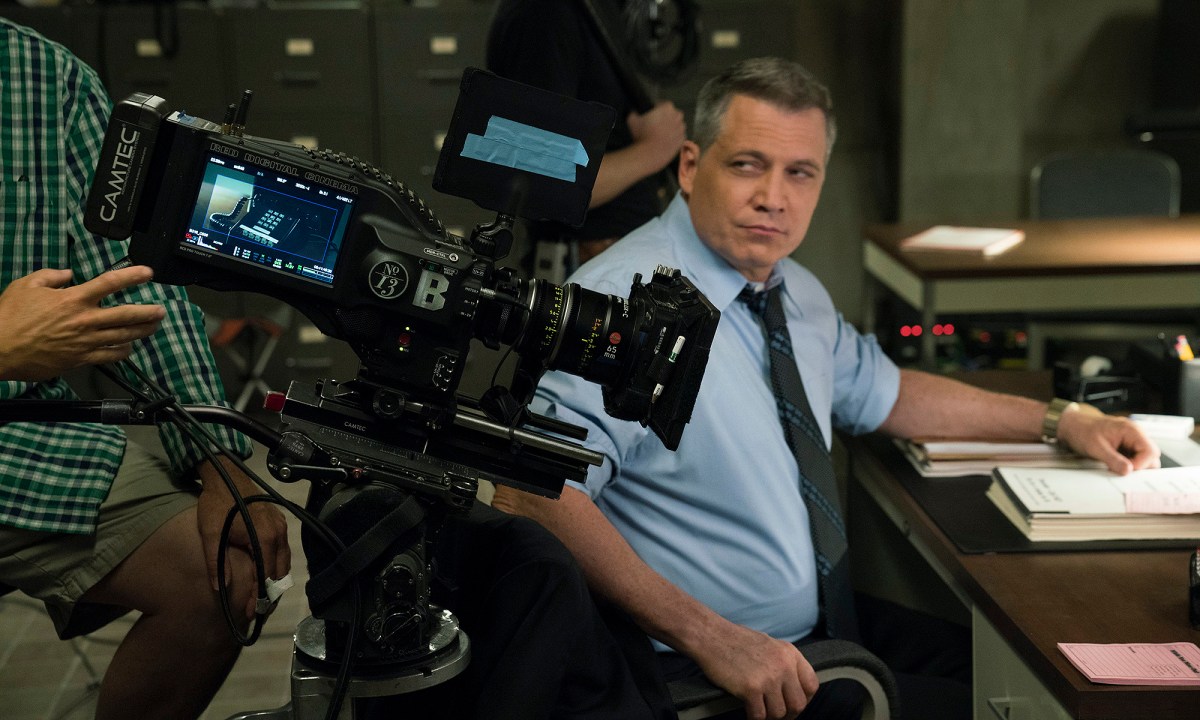
On Netflix’s Mindhunter, Fincher again used the latest digital capture technology – custom RED Xenomorph cameras designed to his specifications, integrating all the usual camera components (wireless video transmitters, focus controls etc.) into the camera for a much more ergonomic design. But Fincher’s desire for innovation extended far beyond the camera, so he again turned to PIX.
CHALLENGE
Working on his current project, the second season of Mindhunter, David Fincher was looking for a way to better convey the thoughts and ideas he came up with during production via annotations attached to the image captured by the camera. In the past, a thought about the grading required for a particular shot might have been conveyed via a phone call to the dailies colorist much later in the day after shooting wrapped. David Fincher required a real-time telestration solution, rather than a delayed response later in the evening or next day. And it absolutely could not delay shooting or increase the footprint or complexity of production.
SOLUTION
PIX has built a system that makes the often-used term “Connected Set” real. PIX OnSet creates a clip of the take and immediately presents this clip to the director via a tablet, so that he or she can make annotations and notes on the image right after it has been captured. These notes are then securely uploaded via PIX to all the approved members of the production who can review them along with image files. Other approved production crew – for example, DP Erik Messerschmidt – can also add their own notes. These notes are securely conveyed through to editorial and post production along with the image files and other metadata.
PRODUCTS DEPLOYED ON MINDHUNTER
– PIX for Desktop, Web, iOS – PIX OnSet – The series also utilized the PIX Developer Program for custom integrations.
RESULT
Real-Time Creative Capture – The thoughts and ideas of the creative team are recorded in real-time immediately after the take. This ensures that their vision and ideas are communicated clearly and without change through the many lines of communication to the rest of the production team, reducing the potential for misunderstanding. For example, the editorial team can easily see any notes the director or DP have made without relying on paper, phone calls or emails sent later in the day. This might be a note that a take needs to be printed down half a stop or a note that something in the frame needs to be removed in post. Having the note linked to the image vastly reduces the opportunity for error and saves valuable time.
Patented Content Security – Along with the rest of the industry-leading PIX platform, PIX OnSet is extremely secure, built on PIX’s patented DRM with dynamic and forensic watermarking and meets the exacting standards of the MPAA.
Minimal Footprint On Set – Rather than adding to the on-set production infrastructure, PIX OnSet actually reduces it by providing immediate playback of takes to authorized devices as they are captured by the camera
No Production Delays – As authorized members of the creative team can annotate the file immediately and easily on their own tablet, there is absolutely no slowdown in the pace of production.
See how PIX can help your next big project. Call or email us to set up a demo and learn more!
Film stills of Holt McCallany and Jonathan Groff on the set of Mindhunter, Season 1, by Patrick Harbron (Netflix).
We’re not supposed to talk about Episode 30 of The Film ‘89 Podcast where we remove our shirts and shoes to celebrate the 20th anniversary of director David Fincher’s searing, controversial and hugely faithful adaptation of the acclaimed novel by author Chuck Palahniuk, Fight Club. This playfully subversive film defies categorisation and refuses to submit to genre convention. It’s Fincher at the absolute top of his game and is a film like no other. Joining us to dissect Fight Club is Jacob Rivera. Founder of JabHookBoxing.com, Jacob is also a frequent co-host of podcasts such as the Pound for Pound Boxing Report, Wrong Reel and many more. He’s also a writer here at Film ‘89 and makes his return to the podcast after his brilliant debut on our Special Christmas 2018 episode. Jacob is a huge Fincher fan so who better to help us discuss not only Fight Club, but also our Favourite David Fincher films.
And if this huge episode somehow leaves you hungry for even more Fight Club analysis then click on the link at the bottom of this page for Skye Wingfield’s in-depth written essay on the film.