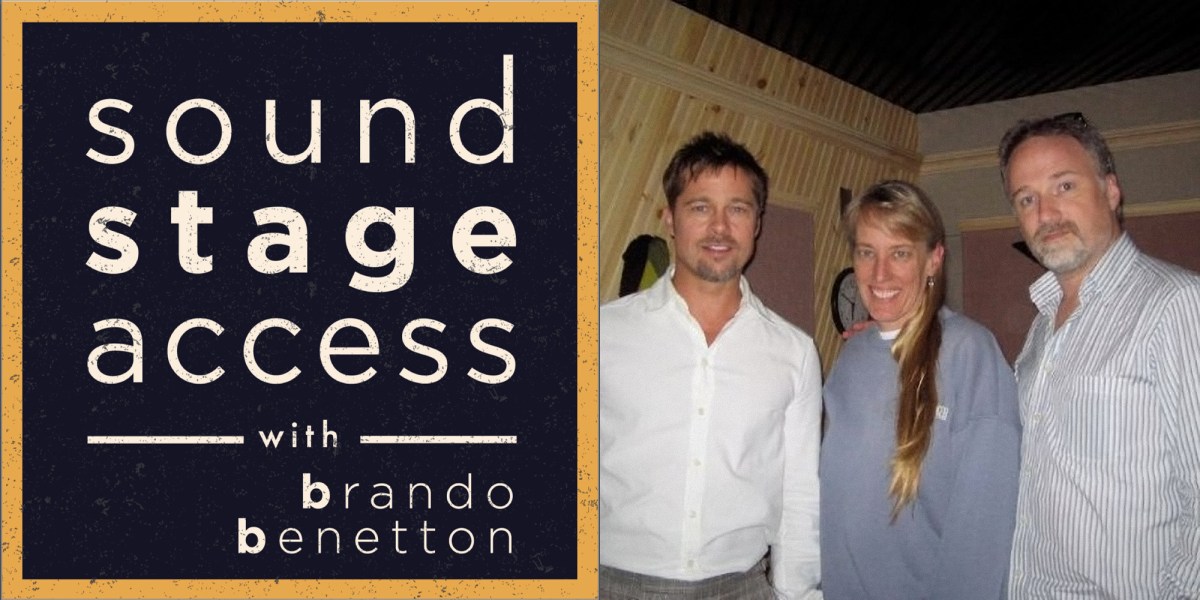
Winner, Theatrical Feature: Eric Weidt, for ‘Mank’
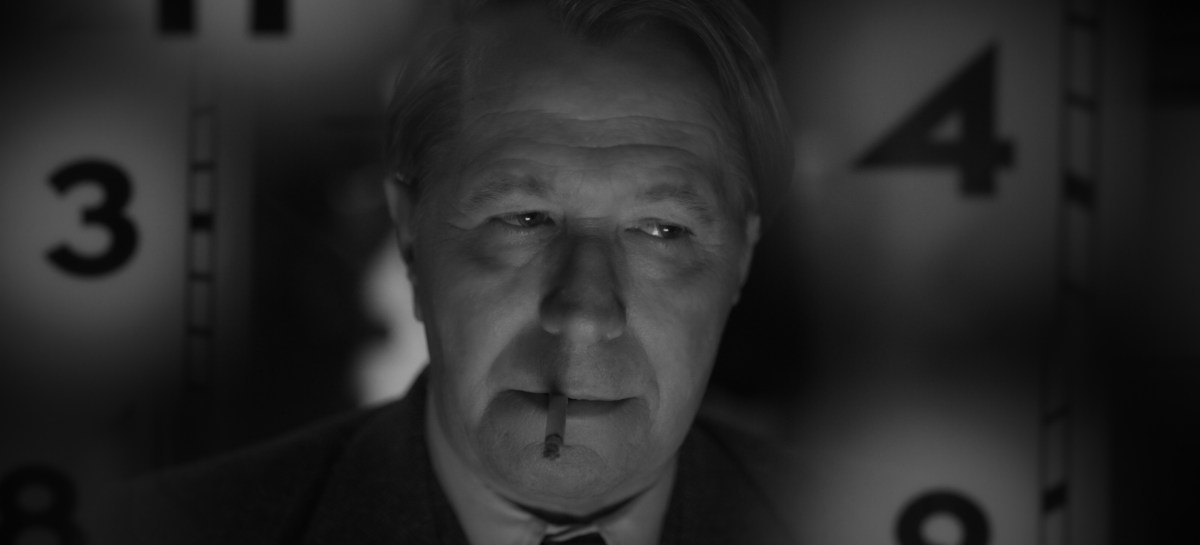
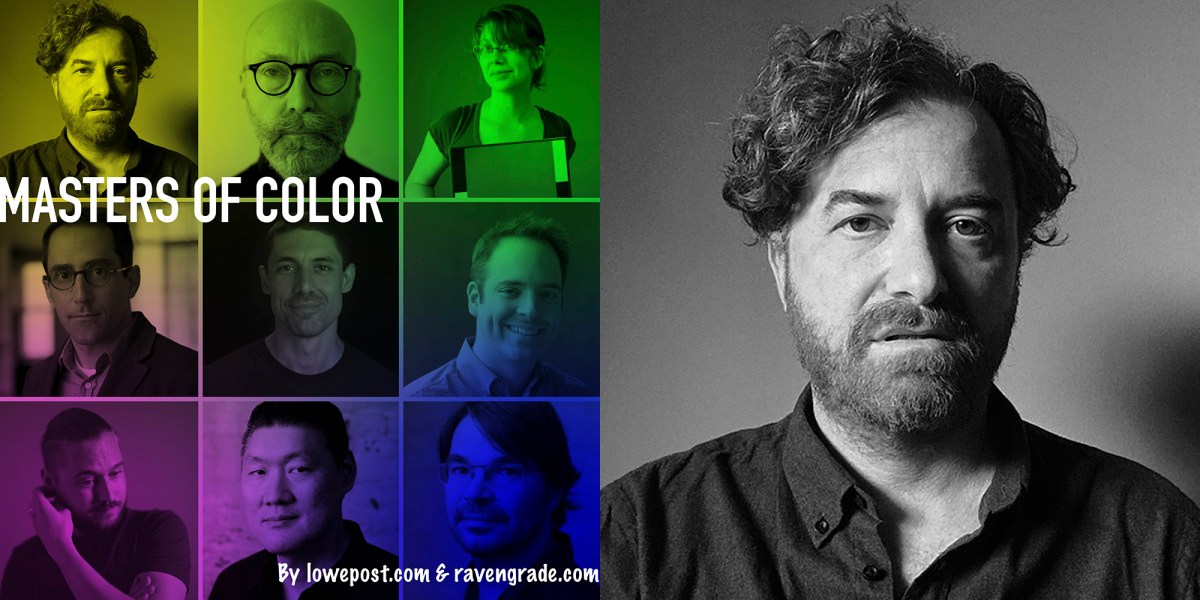
The award for the grading of a theatrical feature went to Eric Weidt, who worked with DoP Erik Messerschmidt on ‘Mank’. Shot on an 8K REDcamera, the movie is striking for its 30s Hollywood look combined with the crystal-sharp resolution.
Weidt also talks about his projects with Fincher for 2022.
In this episode, we talk with director David Fincher’s favorite colorist Eric Weidt about the art and craft of color grading.
Eric has an incredible list of credits that includes Mank and Mindhunter. His works on these projects extend far beyond traditional tasks of color grading, incorporating complex look modeling and incredibly detailed adjustments on virtually every frame.
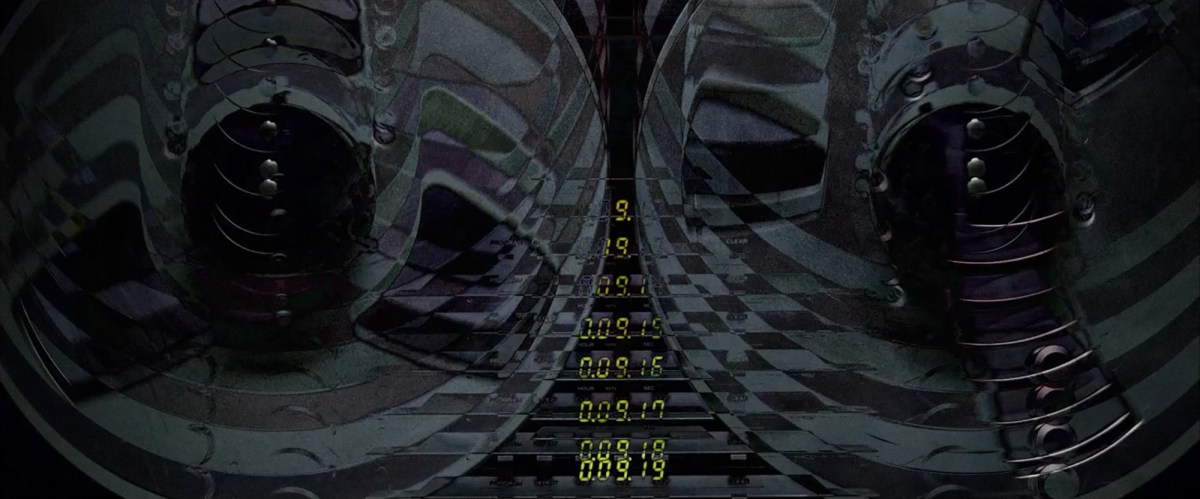
The techniques and insights he shares in this episode are unique and includes topics such as how to sculpt the viewers experience with textural and spatial tools, the lens treatment techniques used on Mindhunter, the process and swan curve treatment behind the day-for-night shots on Mank, advanced grain work and so much more.
This episode is sponsored by Pixelview, an industry standard and affordable streaming solution for editors and colorists.
This video essay examines the innovative use of sound recording and mixing in David Fincher’s Mank (2020). Whilst Mank received a limited theatrical release, the film is most widely available via the Netflix streaming platform. The essay takes as a starting point the rerecording and spatialisation of the soundtrack, with a focus on the home viewing experience. Donnelly argues that the re-recording process used on Mank’s soundtrack could potentially suggest a method by which films released into the domestic market could retain the reverberant sonic signature of cinematic exhibition. The published screenwork draws upon interviews with Fincher’s sound designer Ren Klyce, as well as the work of experimental composer, Alvin Lucier in order to better understand the experience of listening to Mank in our own rooms.
The ceremony included a panel discussion with several of the winners in attendance and others joining in online, in a hybrid presentation watched live by many across the globe.
Eric Weidt‘s presentation on Mank starts at min. 43:36.
This week’s conversation focuses in on David Fincher—a director whose decade-spanning body of gritty Americana—from the grim moral drama of Se7en to the revisionist Hollywood tale of the recent Mank—has inspired both obsessive fandom and derisive dismissal.
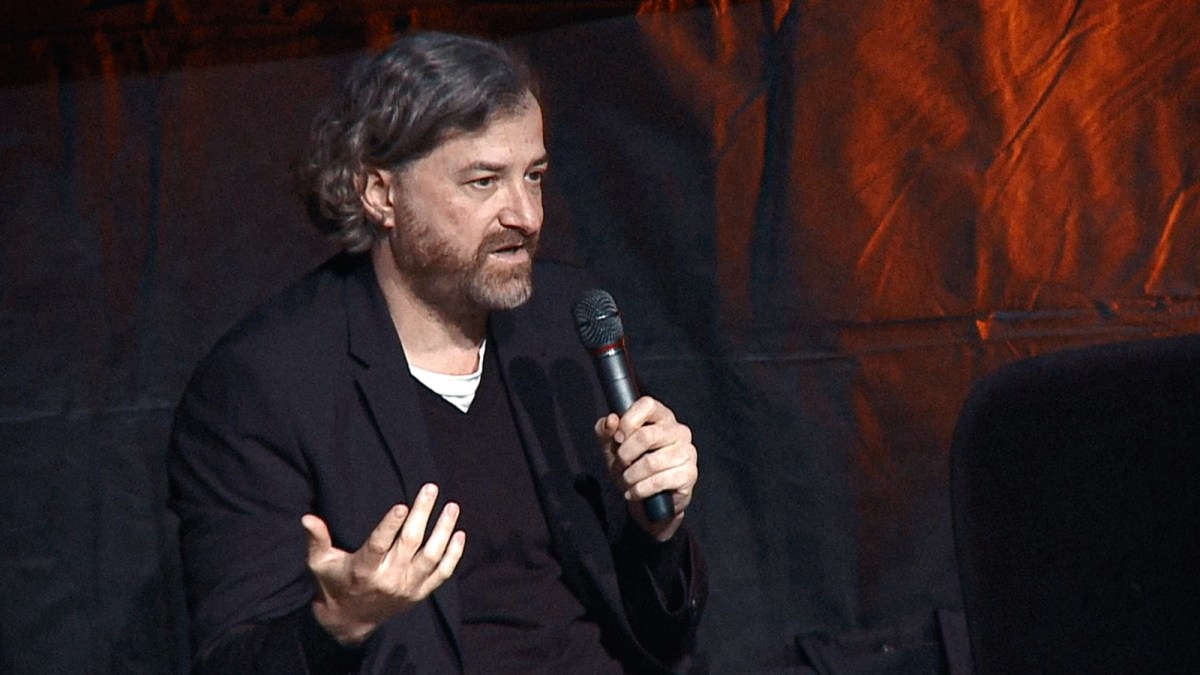
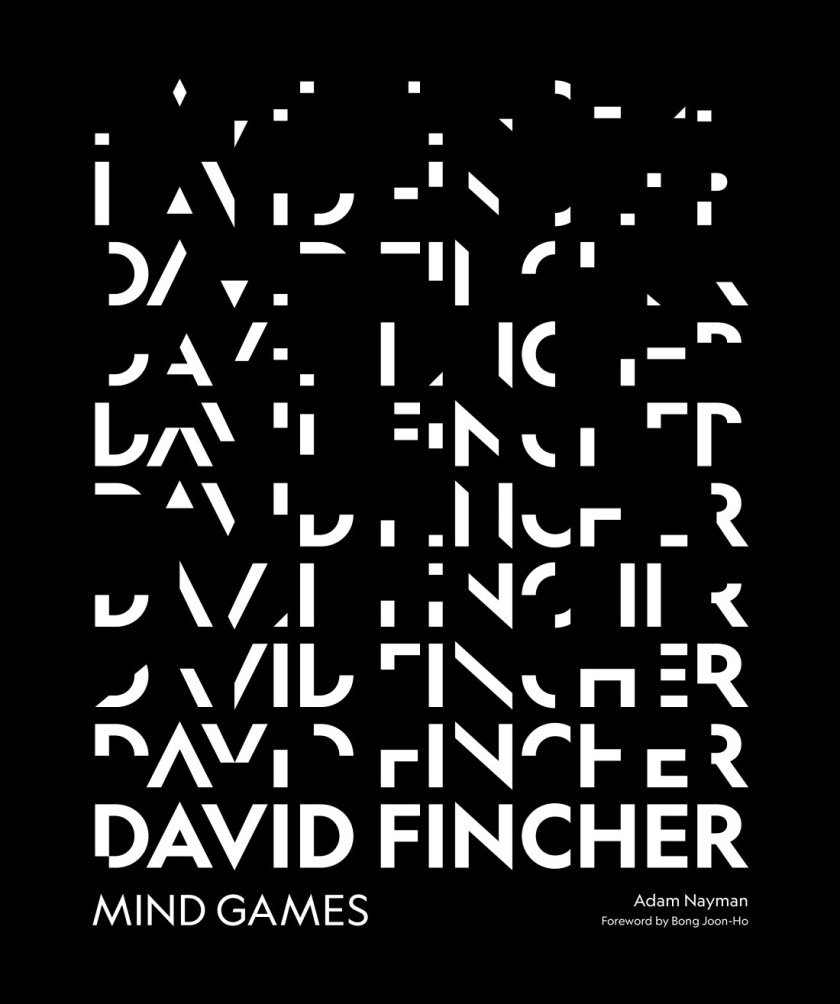
A new book by Adam Nayman, David Fincher: Mind Games (out November 23 from Abrams Books), offers a canny and timely appraisal of the director’s filmography. Adam writes that, “Over the past thirty years, Fincher has cultivated and maintained a reputation that precedes him of formal rigor and technocratic exactitude, of moviemaking as a game of inches.” Film Comment editors Devika Girish and Clinton Krute invited Adam and critic, filmmaker, and former NYFF director, Kent Jones—who’s written about Fincher many times over the years in FC—for an illuminating deep-dive into the Fincherverse.
Few film books in recent memory made waves like Adam Nayman’s Paul Thomas Anderson: Masterworks, a too-rare melange of authorial talent, topical interest, and opulent presentation. Last year Nayman and I spoke at length about the tome that no doubt you’ve seen in bookstores (big and small alike) since.
Nayman has returned with David Fincher: Mind Games, another Abrams-published doorstop on another double-capital-A American Auteur, lined again with essays that surprise in their capacity to find new perspectives and provocative readings on films for which there seemed no more room. Finally able to talk in person—thus, you’ll (please) read, at greater length—we sat down for a talk on writing thousands of words on someone for whom a consistent critical standing is tougher than meets the eye.
Adam Nyman is a fellow film critic and the author of several books about films and filmmakers, including but not limited to The Coen Brothers: This Book Really Ties the Films Together (2018) and Paul Thomas Anderson: Masterworks (2020). (Though we’ve never crossed paths in person, he also teaches in the department where I did my Master’s program.) He opens Mind Games with a dedicated discussion of the decade or so before Fincher ever made his narrative feature debut with ALIEN³ (1992), but then continues to come back to his commercial and music video work for the remainder of it, wisely treating his adman past as, well, more of an adman present. A few weeks back, Adam and I chatted for an hour about Fincher’s short-form oeuvre, but also his features because—again—the two aren’t as discrete as a lot of people believe. Our conversation has been edited for clarity, but not really so much for length.
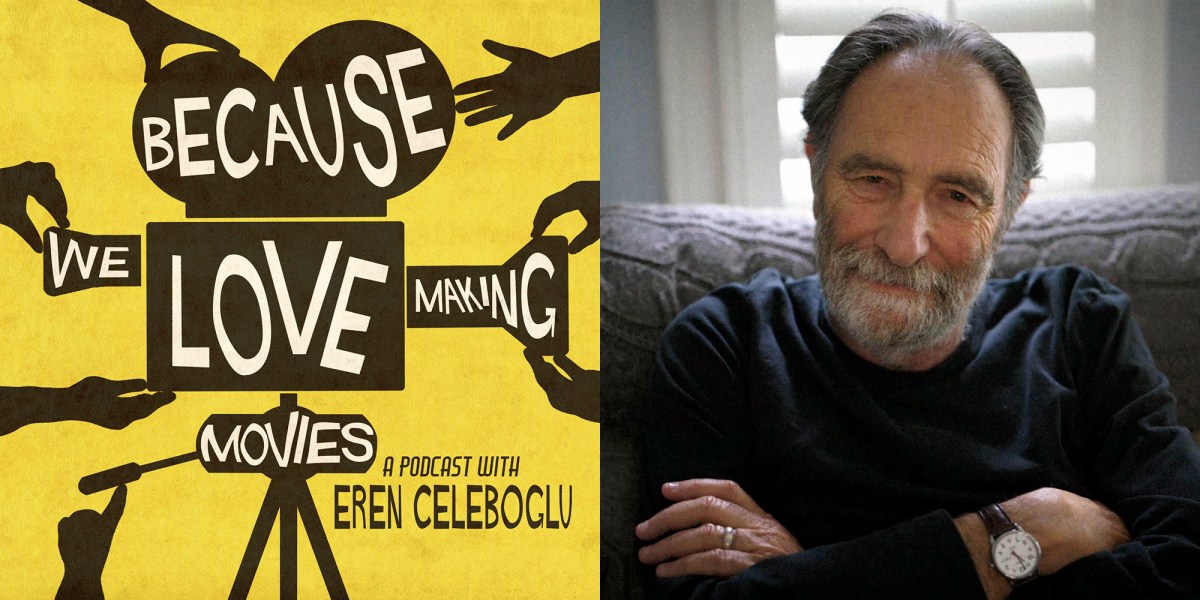
Today, I sit down with legendary screenwriter Eric Roth.
We talk about his life and his craft and why we should all be more generous of spirit. Truth be told, Eric has been involved in creating so many iconic films that it would have been impossible to try… so I asked him about the films of his that meant the most to me, and he held court and digressed in the loveliest of ways. I hope you have as much fun listening as I did recording this interview. Enjoy!
Eric’s credits include: The Nickel Ride, The Drowning Pool, The Onion Field, Forrest Gump (for which he won an Oscar), The Postman (for which he won a Razzie), The Horse Whisperer, and then one of my favorite films ever, The Insider, followed by Ali, Munich, The Good Shepherd, and The Curious Case of Benjamin Button. He’s also worked in Television, and seen not one but two sea changes, first with HBO, and then with Netflix and House of Cards. And much more recently he wrote A Star Is Born, Dune, and the new Western being Directed by Martin Scorsese, Killers of the Flower Moon. He was also a producer on the Oscar nominated Mank, directed by David Fincher, from a script by Fincher’s father.
Today we welcome back the legendary Eric Roth. An Oscar-Winning Screenwriter & Producer.
We talk about how he writes, and blends craft with pure inspiration. He talks about working with Robert Redford. We re-visit Munich & The Good Shepherd. He talks about being re-written, and his unique creative partnership with Bradley Cooper & Lady Gaga on A Star Is Born. And last but not least, we talk about writing the new Dune film which he thinks just might be something very special.
It’s a wonderful conversation with one of the very best working in Hollywood today, whose generous not only with his talent, but his spirit. Dig it!
Recommended Viewing: The Horse Whisperer, Munich, The Good Shepherd, A Star Is Born (2018), and Dune (See it in IMAX on October 22, 2021)
The Team Deakins podcast is an ongoing conversation between acclaimed cinematographer Roger Deakins and James Deakins, his collaborator, about cinematography, the film business and whatever other questions are submitted. We start with a specific question and end….who knows where! We are joined by guests periodically. Followup questions can be posted in the forums at rogerdeakins.com.
Team Deakins delves into the craft of production design with the great production designer, Donald Burt (The Curious Case of Benjamin Button, Hostiles, Mank). We loved hearing about his path to the film business! We talk about his first movie as production designer, Joy Luck Club – quite a film to start on! He shares his methods of working with a director and how he doesn’t want to draw attention to what he is doing and that he wants to be supportive and serve the story first. We also touch on how restrictions and limitations breed imagination, his approach to sets vs locations, and how you can’t be afraid of articulating a stupid idea. And, we also speak about the making of Mank, The Outlaw King, and Zodiac. As well as much, much more!
Chapters: 00:00 Intro — How David Fincher became a Filmmaker 02:01 Early Career & Return of the Jedi 03:18 Shot Composition and Blocking 06:19 “Relentless” Number of Takes 11:02 Directing with Precision 13:43 Color Theory & Creating the Look 15:48 Create a Feeling (Production Design & Music) 19:35 Final Takeaways
David Fincher is a director’s director. His reputation for having complete control over his work is well-known but many directors have had similar power. So, what makes his approach to film directing so captivating? In this David Fincher video essay, we’ll let the man speak for himself. Through a collection of interviews from throughout his career, Fincher guides us through some of the strongest characteristics of his directing style.
To date, over the past four decades, David Fincher has directed a plethora of music videos, commercials, and 11 feature films. Along the way, he has refined his directing style which can be summed up in two words: precise and purposeful. When watching any David Fincher movies, you would be hard-pressed to find an out-of-place camera movement, or a lazy frame composition. One lesson we learned from Fincher is how he balanced and imbalanced the frame during Nick and Amy’s first meeting in Gone Girl to show the “push and pull” of their flirting.
Another well-known staple of the David Fincher directing style is his predilection for shooting multiple takes. He famously shot 99 takes of the opening scene in The Social Network, for example. But there’s a method to his madness — he wants the actors to move “beyond muscle memory” especially in their domestic environments. In Fincher’s logic, when the actor sits on their couch, they need to have sat in it a hundred times to make it look like they’ve sat in it a hundred times.
Fincher also explains how he creates mood and tone with lighting, color, and music. With a darker frame, desaturated color, and the brooding tones of Atticus Ross and Trent Reznor, there certainly is a distinct experience watching David Fincher films. While all of this sounds extreme, the proof that he’s doing something right is visible on-screen.
♬ Songs used:
“Father / Son” — Makeup and Vanity Set “Subdivide” — Stanley Gurvich “Switchback” — Nu Alkemi$t “Battle in the Forest” — Charles Gerhardt – National Philharmonic Orchestra “Chasing Time” – David A. Molina “Sugar Storm” – Trent Reznor & Atticus Ross “Soul Sacrifice” – Santana “Graysmith Obsessed” – David Shire “Intriguing Possibilities” – Trent Reznor & Atticus Ross “Wendy Suite” – Jason Hill “Under the Midnight Sun” — Trent Reznor & Atticus Ross “14 – Ghosts II” – Nine Inch Nails “Corporate World” – The Dust Brothers “Appearances” – Trent Reznor & Atticus Ross “With Suspicion” – Trent Reznor & Atticus Ross “What Have We Done to Each Other” – Trent Reznor & Atticus Ross “Cowboys and Indians” – Trent Reznor & Atticus Ross “San Simeon Waltz” – Trent Reznor & Atticus Ross “Fool” – Ryan Taubert “Where Is My Mind” – The Pixies