
February 8, 2026
Netflix
The Adventures of Cliff Booth
Starring Brad Pitt. Written by Quentin Tarantino. Directed by David Fincher
Coming soon to Netflix
February 8, 2026
Netflix
The Adventures of Cliff Booth
Starring Brad Pitt. Written by Quentin Tarantino. Directed by David Fincher
Coming soon to Netflix
A Legacy of Light and Shadow
Andy Nelson and Pete Wright
October 27, 2025
Movies We Like (TruStory FM)
Cinematographer Jeff Cronenweth joins Movies We Like hosts Andy Nelson and Pete Wright to explore Ridley Scott’s groundbreaking 1982 film Blade Runner. As the son of the film’s original cinematographer, Jordan Cronenweth, Jeff brings a unique perspective on both the technical achievements and lasting influence of this sci-fi noir masterpiece. With his recent work on Tron: Ares hitting theaters, Cronenweth reflects on how Blade Runner continues to inspire filmmakers and cinematographers four decades later.
From early experiences on film sets with his father to becoming David Fincher’s go-to cinematographer on films like Fight Club, The Social Network, and The Girl with the Dragon Tattoo, Cronenweth has built a career focused on visual storytelling that serves character and narrative. He describes his approach as seeking human stories within any genre, whether period drama or science fiction. His transition from film to digital cinematography reflects broader industry changes, while maintaining his commitment to thoughtful, story-driven imagery.
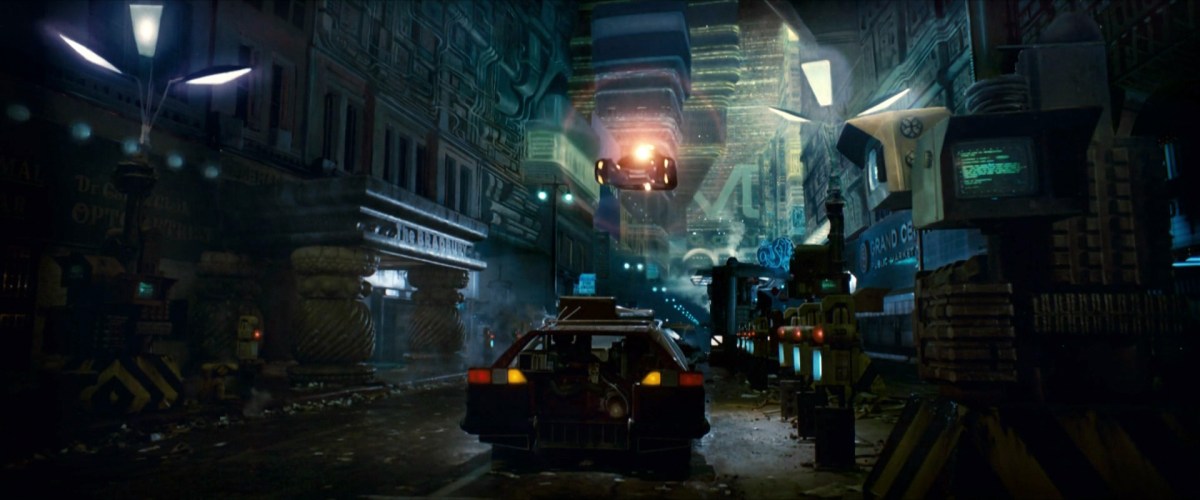
The conversation explores how Blade Runner created its influential neo-noir aesthetic with remarkably limited technical resources, including just three xenon lights for its iconic beam effects and borrowed neon lights from Francis Ford Coppola’s One from the Heart set. Cronenweth shares insights into the film’s production challenges and creative solutions, from practical lighting techniques to Ridley Scott’s visionary production design. The discussion examines how the film balances its high-concept science fiction premise with intimate character moments, creating a template for genre storytelling that continues to resonate. Cronenweth also offers a perspective on the various cuts of the film and its 2017 sequel.
Through this engaging conversation, Cronenweth illuminates not just the technical mastery behind Blade Runner, but its enduring impact on cinema. His unique connection to the film through his father, combined with his own distinguished career, offers viewers fresh insights into this landmark work of science fiction and its continuing influence on visual storytelling.
Listen to the podcast:
Oren Soffer
December 5, 2025
Shotdeck
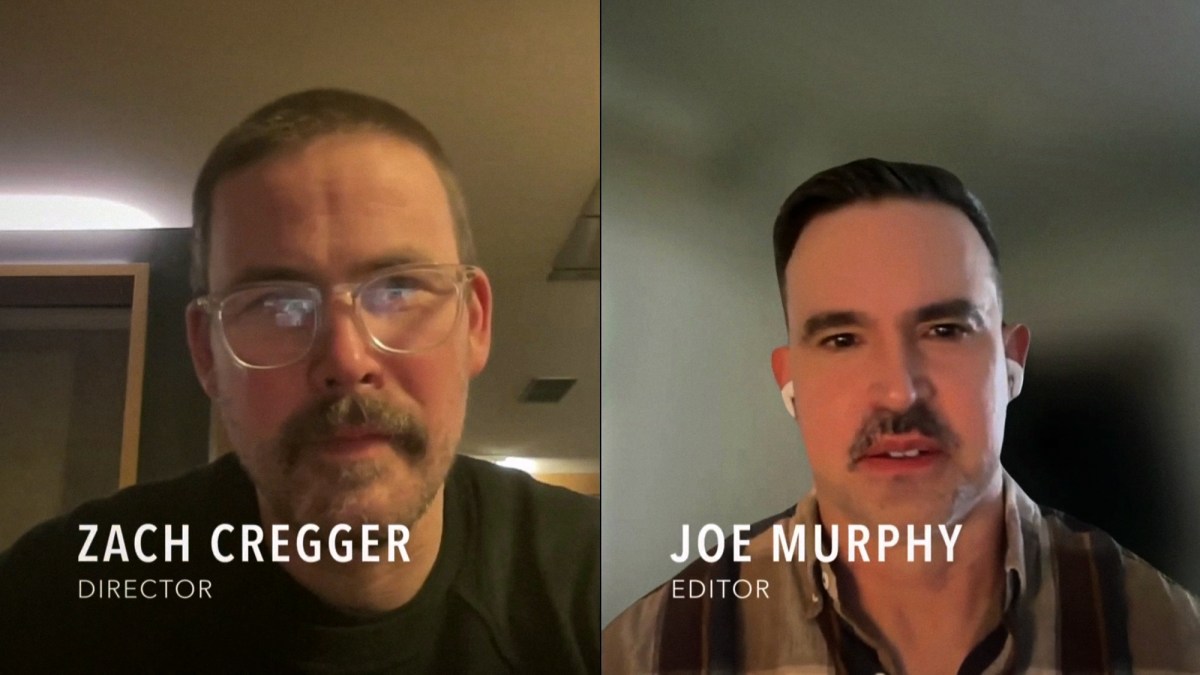
Cinematographer Oren Soffer sits down with director Zach Cregger and editor Joe Murphy for an in-depth conversation about Weapons. From Zach’s meticulous pre-planning with photoboards, to Joe’s work shaping the tone of Gladys in the edit, to the rare opportunity to receive feedback from David Fincher, the duo breaks down the creative process behind the acclaimed supernatural horror film.
Along with the interview, we’re also releasing a bunch of great shots from the film, so you can start adding them to your decks and getting inspired right away!
But before you dive in and watch the filmmaking mini-masterclass above… make sure to go check out Weapons, streaming now on HBO Max.
Sign up for an account at ShotDeck, the world’s first fully-searchable film image database. It’s an invaluable research and educational resource that makes life easier for anyone in Film, Media, Advertising, and Education.
If you are creative, Shotdeck is the place to get inspired and discover new films and talented artists through our meticulously tagged database of still images, all while saving you time.
Search by film title, keyword, location, color, or a dozen other criteria to quickly find the exact “shots” you need to communicate your vision for your next project.
Patrick Tomasso
October 19, 2025
patrick 2masso (YouTube)
Go behind the visuals of TRON: ARES with cinematographer Jeff Cronenweth, ASC – the mind behind the camera for films like The Social Network, The Girl with the Dragon Tattoo, and Gone Girl. We talk about the look of the new TRON film, his collaboration with director Joachim Rønning, shooting digitally on RED cameras, and how his decades-long partnership with David Fincher shaped his approach to modern cinematography.
If you’re into camera tech, lighting, or just want to know why TRON: ARES looks so good, this one’s for you.
Special thanks to RED Digital Cinema for setting this up.
Follow Patrick Tomasso on:
YouTube 1, YouTube 2, Instagram, Threads, X, TikTok, Letterboxd, LinkedIn
After Reznor brought industrial grind into the mainstream, he became an in-demand film composer—and from Natural Born Killers to Tron: Ares, he’s done some of his best, most adventurous work for the screen. A definitive guide to Nine Inch Nails on film.
By Laura Wynne
Photograph by Danielle Levitt
October 17, 2025
GQ
Nine Inch Nails founder Trent Reznor can’t have known how different a line like “I don’t believe in your institutions” would sound decades later. Nine Inch Nails have been inducted into the Rock and Roll Hall of Fame; Reznor and his composing partner Atticus Ross have an Emmy, a Bafta, two Grammies, three Golden Globes, two Oscars (they’re just a Tony away from an EGOT), and a Country Music Award. In some ways Reznor is now the kind of establishment figure he always despised, a respected elder statesman to goths and queers everywhere. With Nine Inch Nails, he married industrial aesthetics to pop instincts; Prince and Bowie were always more important to the recipe than Skinny Puppy. Reznor and Ross won their second Oscar for a Disney movie, and might win for another one at next year’s ceremony. The institutions believe in them.
It makes a lot of sense that someone whose audience is wide enough to include every strain of angry queer teen and the staff of Pixar would embrace these contradictions as he got older, got sober, had children, and became close friends with the people he grew up admiring (Bowie, David Lynch, John Carpenter). There is something in Reznor’s voice that speaks to millions of people, something indefinable that has nothing to do with hooks or record-label muscle behind him. The subject matter has always been lacerating and bleak. On his albums, Reznor was a one-man band plus hired hands until around 2016, where he officially made Atticus Ross a full member. Contradictorily, when he was inducted into the Hall of Fame he submitted every single touring musician as a band member and was forced to negotiate down to 7.
The Tron: Ares soundtrack, released a few weeks ago in advance of the Jared Leto-led threequel, is the first Nine Inch Nails album in five years credited to the band (as opposed to Reznor and Ross) and the first NIN release with sung vocals since 2018’s excellent but brief Bad Witch. It comes on the heels of a tour that everyone you know and admire went to, featuring startling production and the seamless incorporation of acoustic pianos and new collaborator Boys Noize. The pair have announced upcoming projects ranging from a new Naughty Dog video game to starting a production company that wants to branch into film production and fashion. Tron Ares, out today, isn’t even the only movie with a Reznor/Ross soundtrack in theaters right now—they also scored Luca Guadagnino‘s After The Hunt.
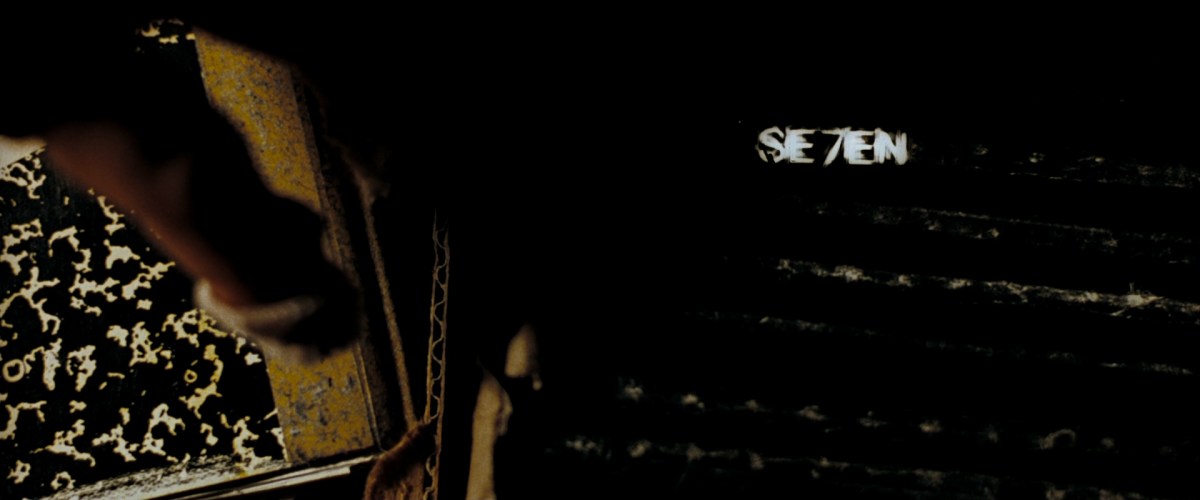
On September 22, 1995, David Fincher’s SE7EN introduced audiences to a darkness unlike anything seen before, accompanied by an opening title sequence from Kyle Cooper that has since become one of the most influential in film history.
September 26, 2025
Prologue Films (Instagram: 1, 2, 3, 4)
For this classic title sequence, David Fincher tasked Kyle Cooper, founder of Prologue Films, to get inside the mind of a serial killer, immediately setting an ominous tone. Typography was scrawled into scratch board and shot on film, and Cooper shot tabletop photography representing the preparation of the killer’s obsessive sketchbooks. This dark yet spirited sequence was called a “masterpiece of dementia” and was credited with the resurgence of a generation’s interest in film title design.
The audio of this video is pulled from Kyle’s interview on the 2010 Blu-ray Special Edition of SE7EN, where he discussed the making of the sequence in detail.
In Part 1, Kyle reflects on his early conversations with Fincher. The two bounced ideas back and forth, shaping a vision that would forever change the way opening credits were made. This reel pairs finished titles with original process photographs, every frame shot on film, every prop (from John Doe’s notebooks to the hand model) photographed and tested.
“People think there’s computer graphics in there, but we assembled the majority of the sequence by hand… it takes on a life of its own.” In Part 2, he explains how he created the unsettling typography. Every letter was scratched, smeared, and distorted through the camera itself, analogue from start to finish. This reel pairs final frames from the title sequence with the original process photography of John Doe’s notebooks, props, and hands, showing how the haunting visuals took shape long before digital tools.
“This is John Doe’s job: he gets up, makes his books, plans his murders, drinks his tea.” In part 3, he reveals how the titles were designed to immerse viewers directly into the fractured psyche of the killer. To capture the killer’s mindset, Kyle went beyond typography. He gathered real objects from his surroundings, fish hooks, razor blades, sewing needles, twine, even clumps of hair from his shower drain, and filmed them in-camera alongside hand-crafted journals. These raw analogue elements were photographed, tested, and layered into the sequence, blurring the line between prop and pathology.
Kyle has recalled in interviews that during the premiere, when the title sequence finished, the audience actually clapped, something almost unheard of for opening credits. Thirty years later, that impact still reverberates across cinema and design.
The SE7EN End Credits Crawl
The unease of SE7EN doesn’t end with the final scene. Even the closing crawl was designed to keep audiences trapped in John Doe’s world.
Kyle and Kim Cooper crafted the end credits entirely by hand. Each name was cut out and taped together into a single, massive scroll, almost like a tapestry. The piece was then shot with a video camera and lit from behind so the light bled through the lettering.
To deepen the sense of obsession, the crawl was embellished with objects John Doe might have owned: razor blades, fishing hooks, twine, screws, wire, flies, even hair pulled from a shower drain. Every detail was assembled practically, frame by frame, just like the opening titles.
We first show the original handmade scroll, now preserved in five long backlit panels at Prologue Films. Continue watching to see the crawl as it appeared in 1995. Instead of rolling upward like a traditional credit sequence, Fincher had it roll downward, a subtle inversion that mirrored the sick, twisted psychology at the heart of the film.
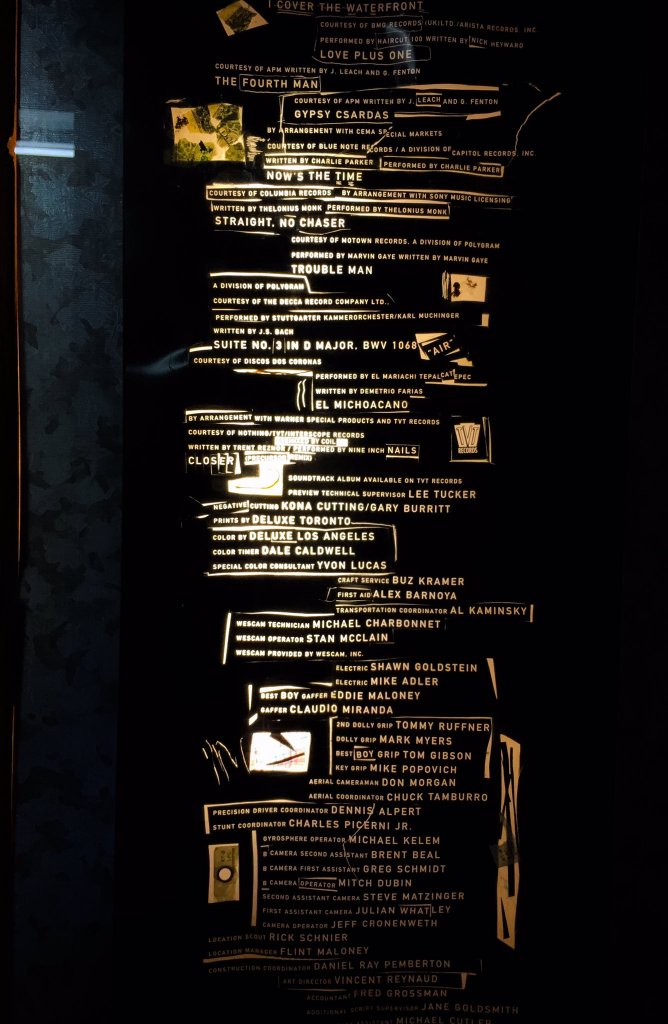
SE7EN end credits crawl panel, displayed at Prologue Films, photographed by Hideo Kojima.
Kenny McMillan
August 12, 2025
Frame & Reference
Frame & Reference is a conversation between Cinematographers hosted by Kenny McMillan. Each episode dives into the respective DP’s current and past work, as well as what influences and inspires them. These discussions are an entertaining and informative look into the world of making films through the lens of the people who shoot them.
This is a compilation of selections from past interviews with David Fincher‘s Directors of Photography, discussing their experiences working with him: Erik Messerschmidt, ASC (2022), Erik Messerschmidt, ASC (2024), Eigil Bryld (2023), Tim Ives, ASC (2021), Igor Martinovic and Vanja Černjul (2024), Jeff Cronenweth, ASC (2022).
Listen to the podcast:
Support and follow the podcast: Patreon
Follow Frame & Reference: YouTube, Twitter, Instagram
Follow OWL BOT: Instagram
Follow Kenny McMillan: Instagram
Miles Perkins, Industry Manager, Epic Games
July 28, 2025
Unreal Engine
Join Tim Miller, co-founder of Blur Studio and winner of multiple Emmy Awards, for a candid chat on his origins as an animator and visual effects artist, his “story first” philosophy, and his views on creativity. Tim’s curiosity and drive has led him to branch out from traditional visual effects to direct live-action features and explore real-time animation with Blur’s Secret Level series and the LOVE DEATH & ROBOTS anthology series.
June 9, 2025
Still Watching Netflix (YouTube)
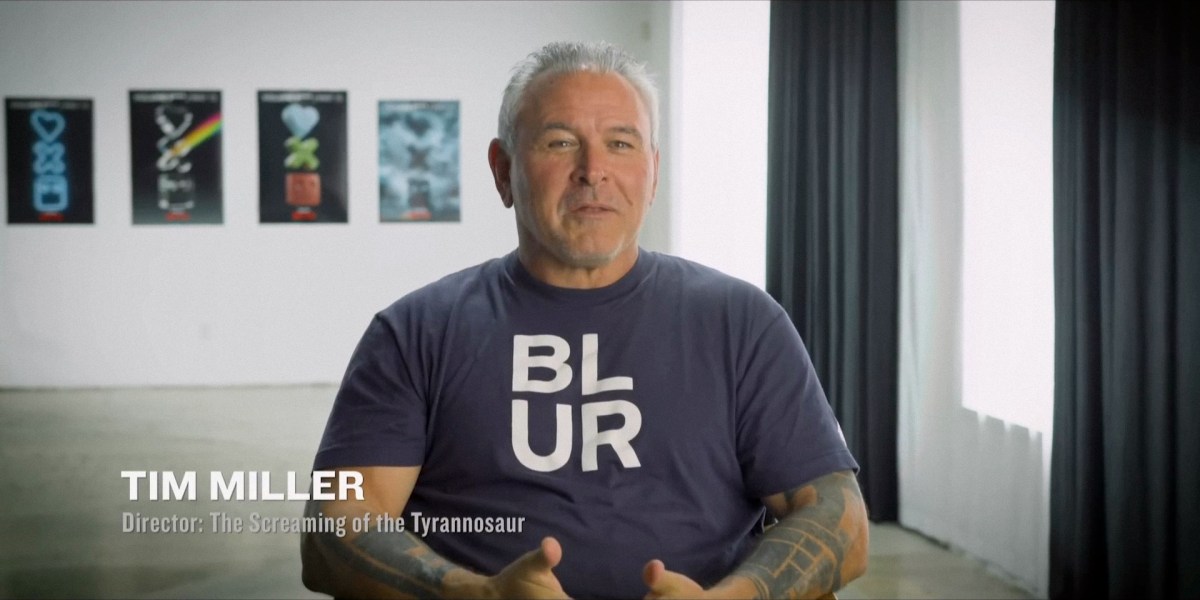
Director Tim Miller discusses how he approached directing this dinosaurs in space adventure, starring MrBeast! Featuring Jennifer Yuh Nelson and David Fincher.
May 29, 2025
Still Watching Netflix (YouTube)
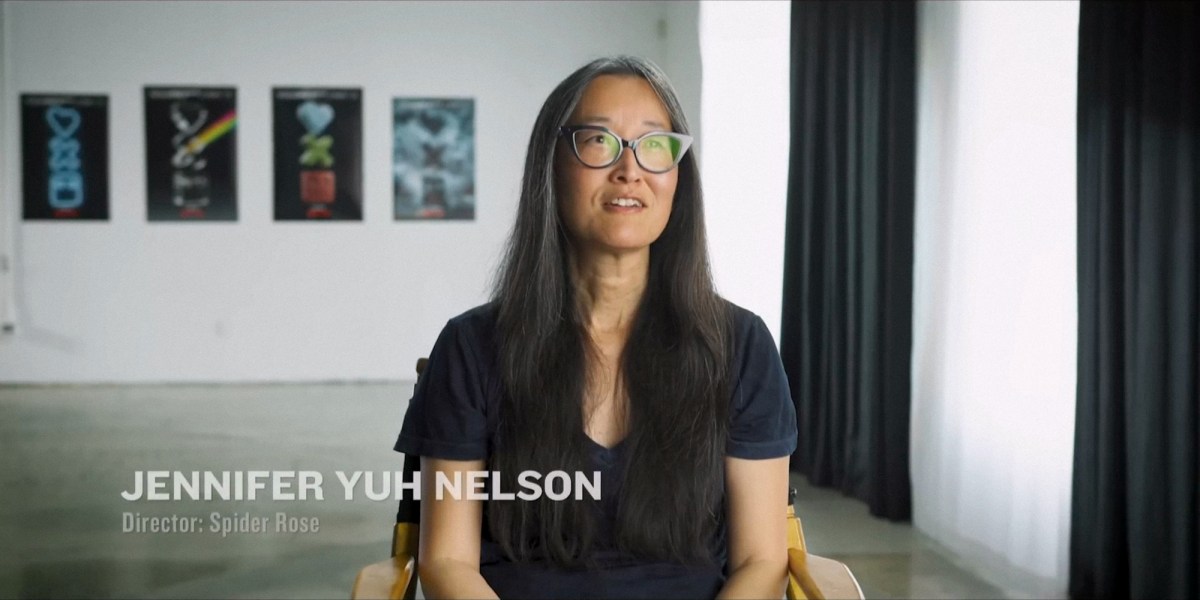
Director Jennifer Yuh Nelson showcases some behind-the-scenes of her process to create Spider Rose. Featuring Tim Miller and David Fincher.

 The Fincher Analyst