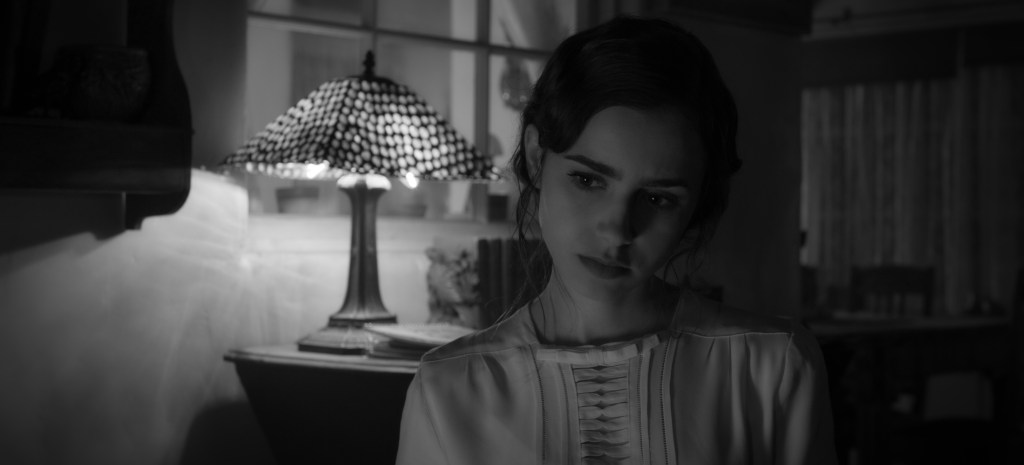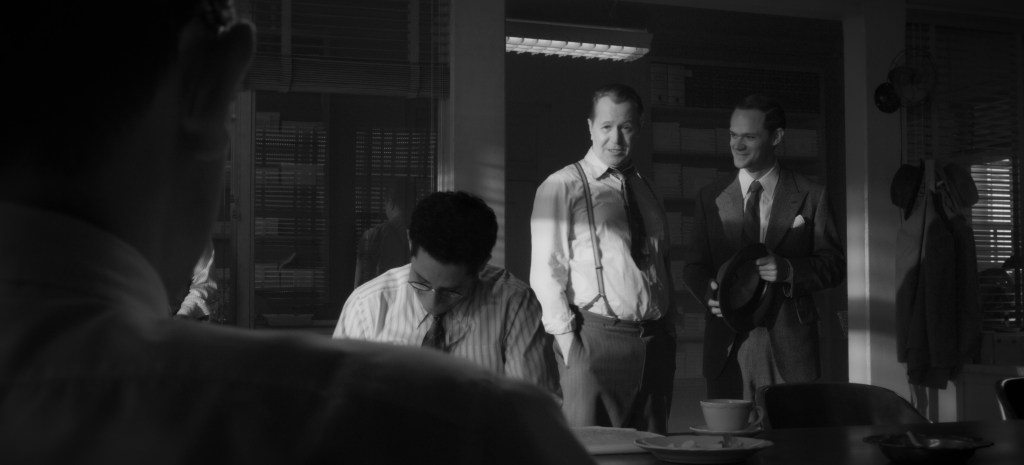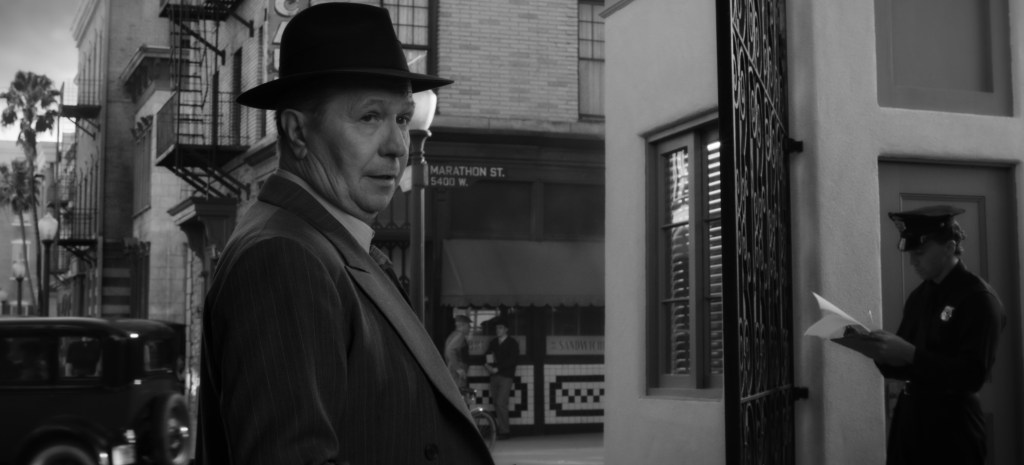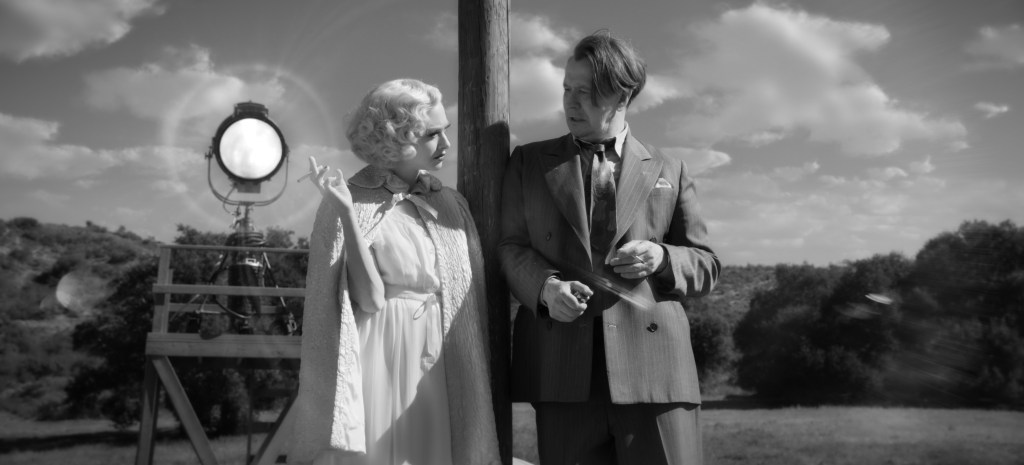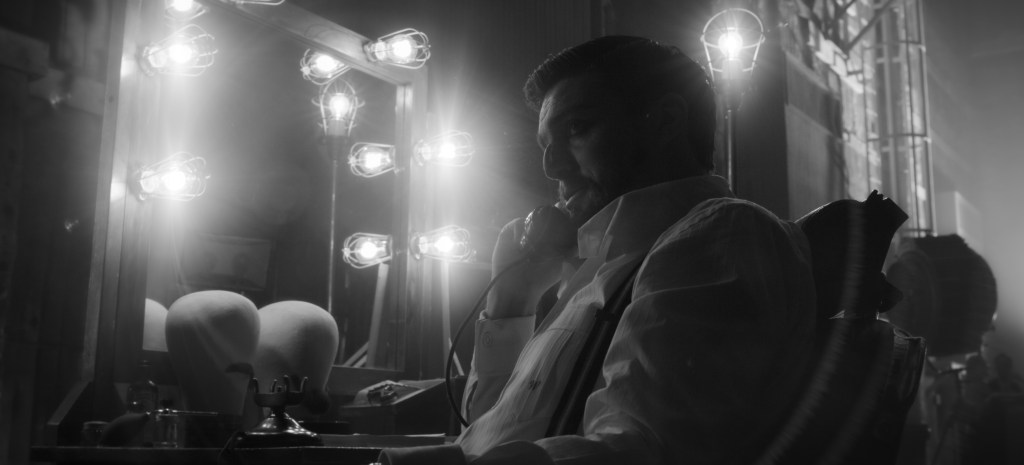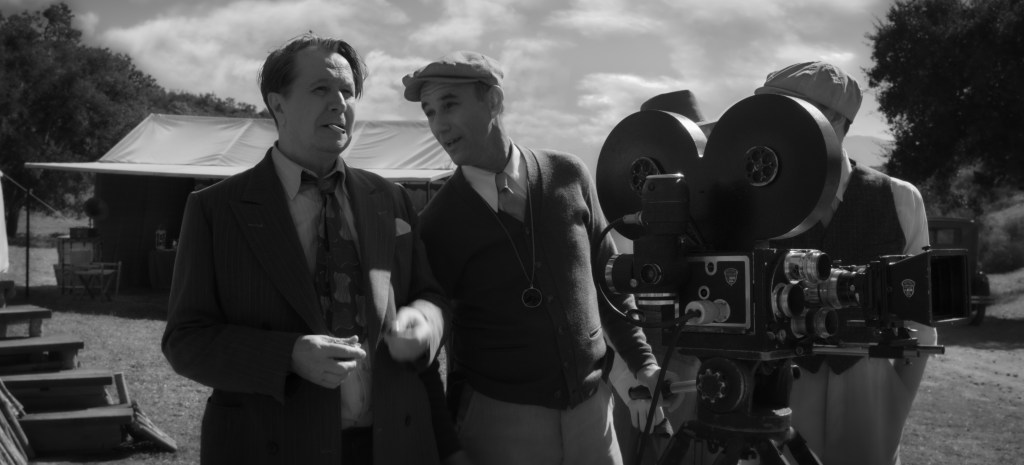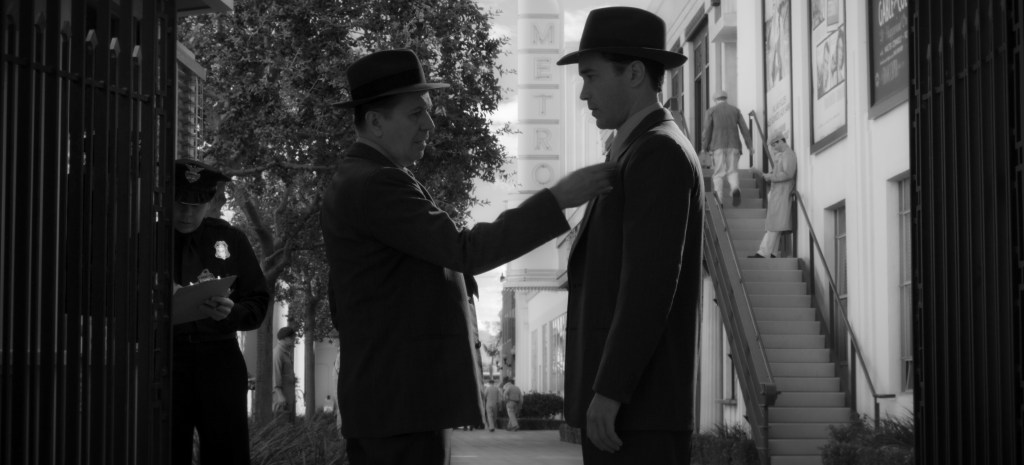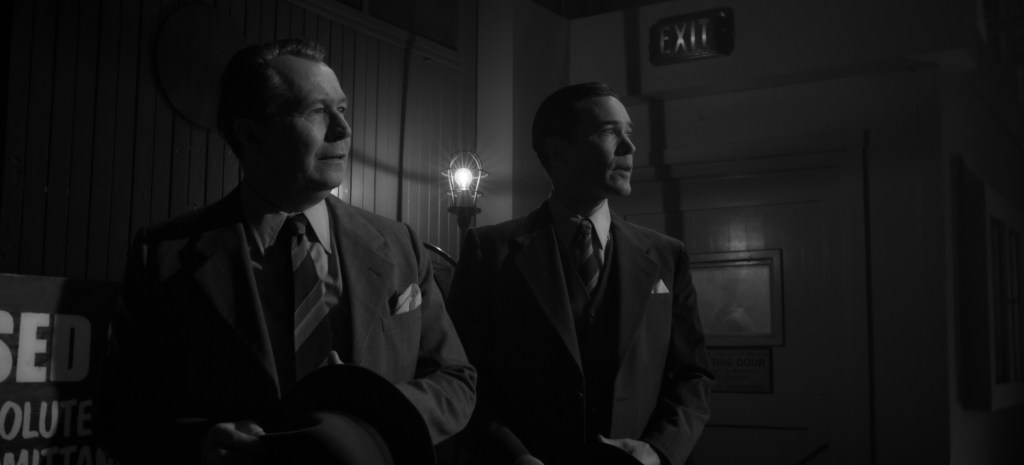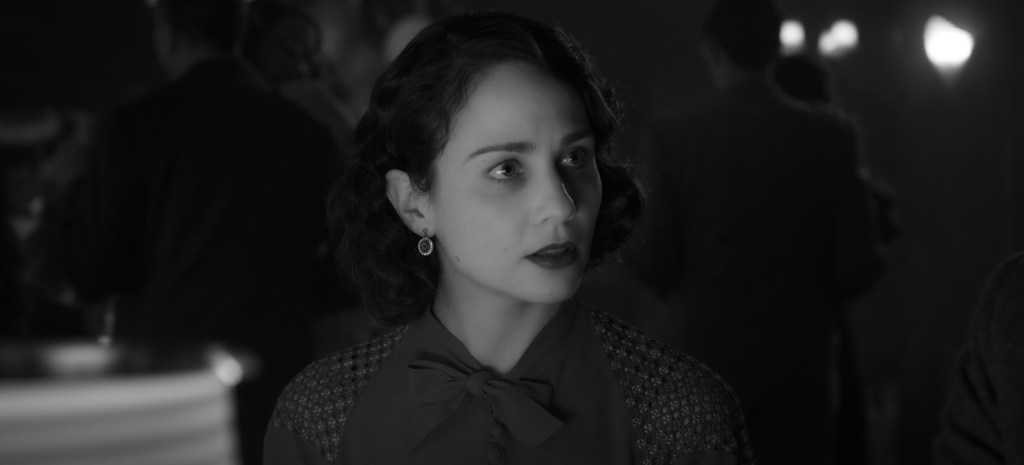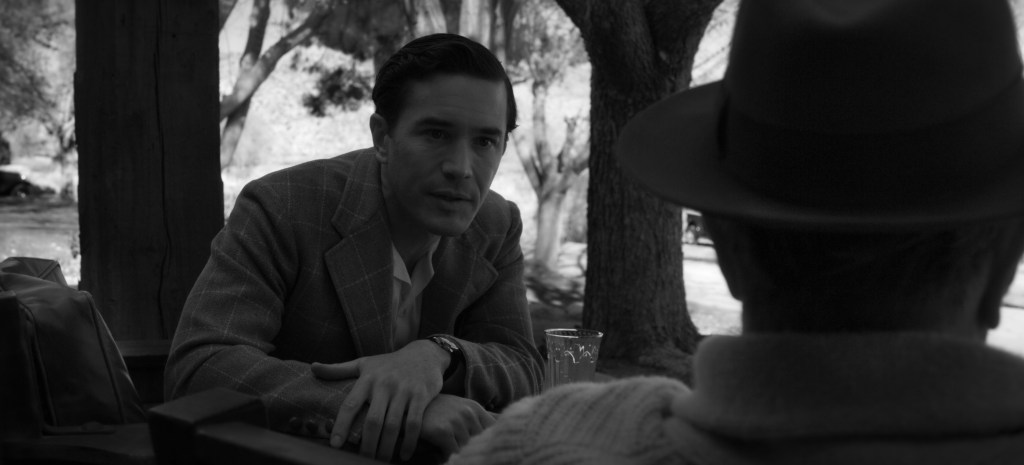
Starring Academy Award Winner Gary Oldman, Amanda Seyfried, Lily Collins, Arliss Howard, Tom Pelphrey, Sam Troughton, Ferdinand Kingsley, Tuppence Middleton, Tom Burke, and Charles Dance.
Six years ago, after I contacted David Fincher and told him I wanted to write an article about how he makes movies, he invited me to his office to present my case in person and, while I was there, watch him get some work done. On an April afternoon, I arrived at the Hollywood Art Deco building that has long served as Fincher’s base of operations, where he was about to look at footage from his 10th feature film, “Gone Girl,” then in postproduction. We headed upstairs and found the editor Kirk Baxter assembling a scene. Fincher watched it once through, then asked Baxter to replay a five-second stretch. It was a seemingly simple tracking shot, the camera traveling alongside Ben Affleck as he entered a living room in violent disarray: overturned ottoman, shattered glass. The camera moved at the same speed as Affleck, gliding with unvarying smoothness, which is exactly how Fincher likes his shots to behave. Except that three seconds in, something was off. “There’s a bump,” he said.
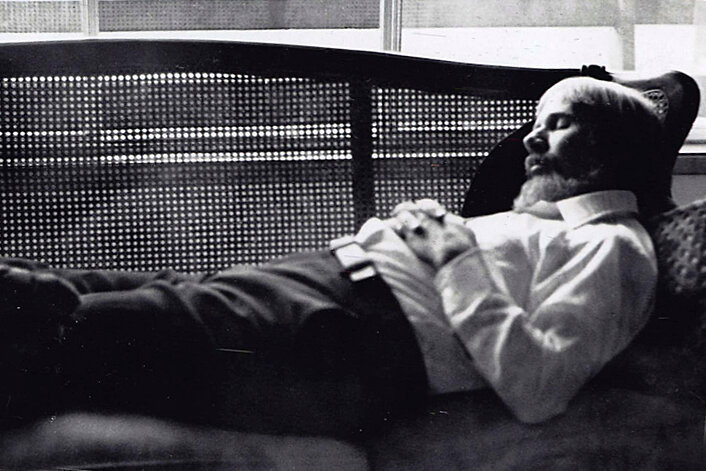
Jack Fincher photographed by David Fincher in 1976, when he was 14. “That’s why it’s out of focus”.
No living director surpasses Fincher’s reputation for exactitude. Any account of his methods invariably mentions how many takes he likes to shoot, which can annoy him, not because this is inaccurate but because it abets a vision of him as a dictatorially fussy artiste. Fincher, who is 58, argues that this caricature misses the point: If you want to build worlds as engrossing as those he seeks to construct, then you need actors to push their performances into zones of fecund uncertainty, to shed all traces of what he calls “presentation.” And then you need them to give you options, all while hitting the exact same marks (which goes for the camera operators too) to ensure there will be no continuity errors when you cut the scene together. Getting all these stars to align before, say, Take No. 9 is possible but unlikely. “I get, He’s a perfectionist,” Fincher volunteered. “No. There’s just a difference between mediocre and acceptable.”
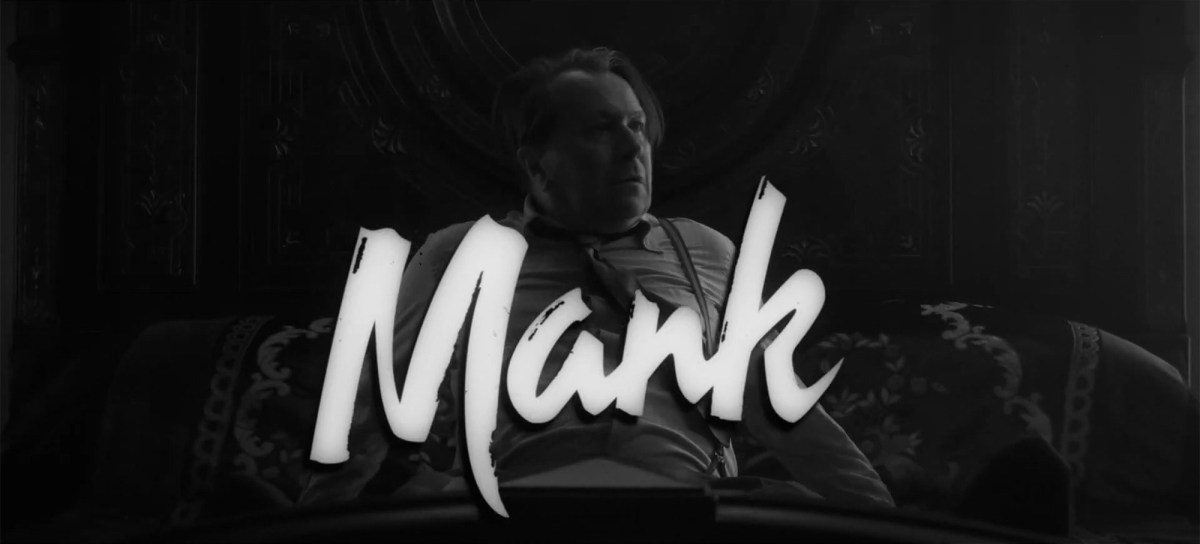
“Mank” is the gripping story of the brilliant but troubled artist behind “Citizen Kane,” often considered to be the greatest movie ever made.
No, it’s not about director Orson Welles. Instead, it pushes Herman J. Mankiewicz, the alcoholic writer for hire who is responsible for bringing the film’s revolutionary, non-linear narrative structure and corrosive portrait of wealth and power, to the center of the frame.
“He was one of those voices that charted the way,” says David Fincher, the director who labored for nearly 30 years to bring “Mank” to life. “My hope is that people will be entertained watching a generational wit, who is in some ways forgotten and never got his due.”
“Mank,” which Netflix will debut Dec. 4, is also likely to reignite a fierce debate around the concept of auteurism. If film is truly a director’s medium, then who gets the credit for a masterpiece? It’s an argument about authorship that has swirled around “Citizen Kane” almost from the time it hit theaters in 1941. That’s largely due to the fact that Welles not only starred in the movie: He also directed, produced and co-wrote it while still just a 24-year-old wunderkind.
Others disagree about the extent of Welles’ contributions. As Pauline Kael’s controversial 1971 essay “Raising Kane” and now “Mank” make clear, “Citizen Kane” was greatly informed by Mankiewicz’s friendship with William Randolph Hearst (the newspaper baron who inspired Kane), as well his personal experience with media and politics.
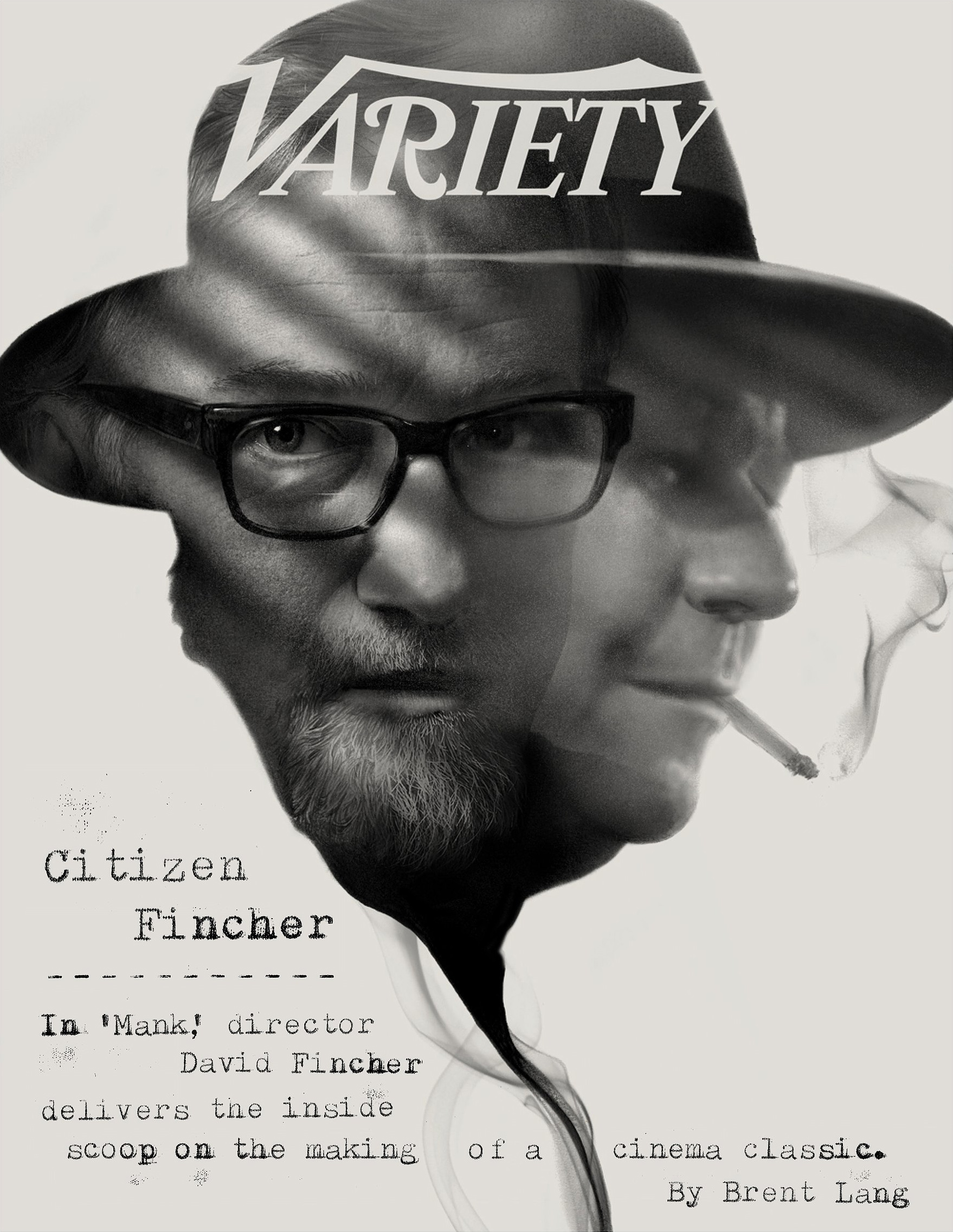
You might think that Fincher, a revered visual stylist, whose perfectionism can drive film crews and actors to the breaking point, would be a subscriber to the Great Man theory at the heart of auteurism — the idea that some talents are so outsize they seep into every shot or beat of a movie. You’d be wrong though.
The viewership of Mindhunter, irrespective of its near-cult status on the web, was evidently not enough to inspire its own creators to continue the journey.
One of the most significant things to hit the web last week was the trailer of Mank. Global Film Twitter went into overdrive, and understandably so. Think of the context. This was American director extraordinaire David Fincher’s first movie since Gone Girl (2014), so it was a long-awaited return of sorts. Add this to the fact that Mank is a black-and-white movie about the movies – a biographical drama anchored by screenwriter Herman Mankiewicz’s battles with Orson Welles over screenplay credit for Citizen Kane – and that Fincher’s latest passion project is based on his late father’s screenplay. The hype machine is oiled and ready to fire.
Yet, only a day later, the excitement for Mank was replaced by the grief for Mindhunter. In a fascinating Vulture interview, Fincher, who served as an executive producer, director and de facto showrunner of Mindhunter, confirmed that there is likely to be no third season of the acclaimed true-crime thriller. The second season dropped on Netflix last September, two years after the first. Most Mindhunter fans had suspected the worst ever since the contracts of the cast weren’t renewed earlier this year. With Fincher looking to concentrate on Mank, the series was indefinitely put on hold. The global pandemic, of course, added to the uncertainty. Which is to say that the signs were there. So the show’s demise was no blinding bolt from the blue. But the real reasons are unsettling.
It is arguably the most famous word ever spoken on film: Rosebud. And it comes from what many consider the greatest movie ever made. “Citizen Kane,” Orson Welles‘ 1941 masterpiece on the rise and fall of Charles Foster Kane, a ruthless capitalist mostly based on newspaper tycoon William Randolph Hearst.
With its deep focus camerawork and bold lighting techniques that use shadows to direct the audience’s attention, “Citizen Kane” is a cinematic landmark.
So it’s only fitting that the story behind it is equally compelling.
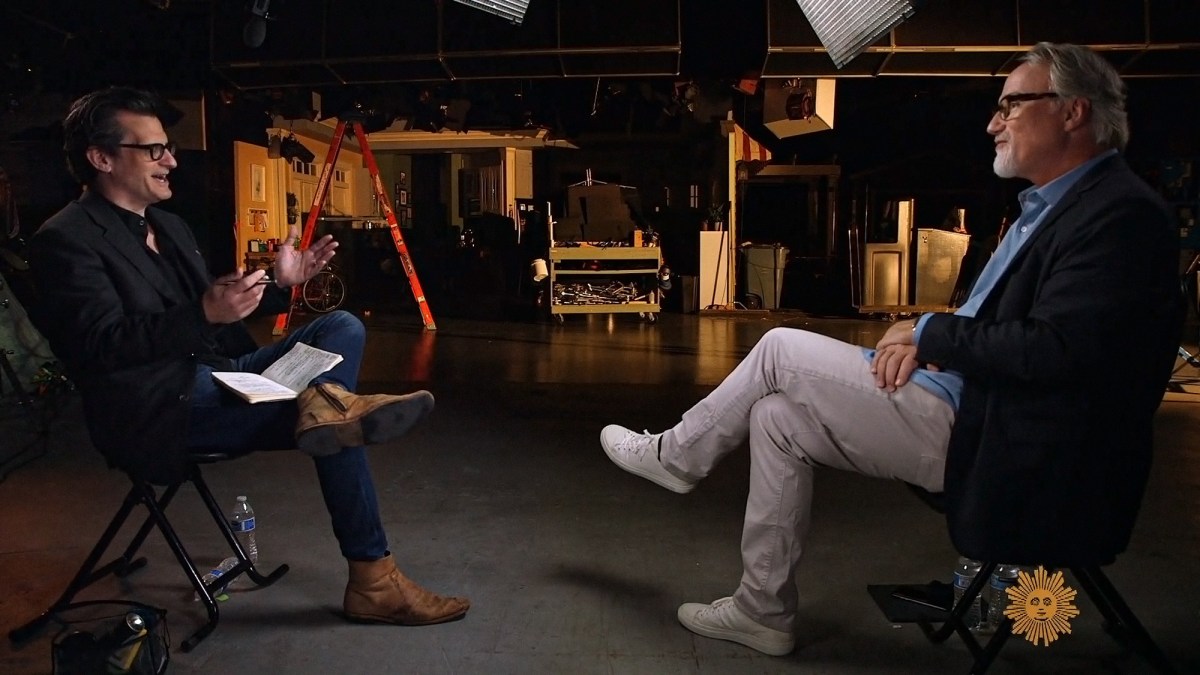
And that’s the story director David Fincher tells in his new Netflix film. I spoke to Fincher on Stage 19 at Paramount Studios, where Welles made Citizen Kane 80 years ago.
“When you look at a movie that is cohesive, as ‘Kane’ was, from the authorship standpoint, it fires on all cylinders,” Fincher told me.
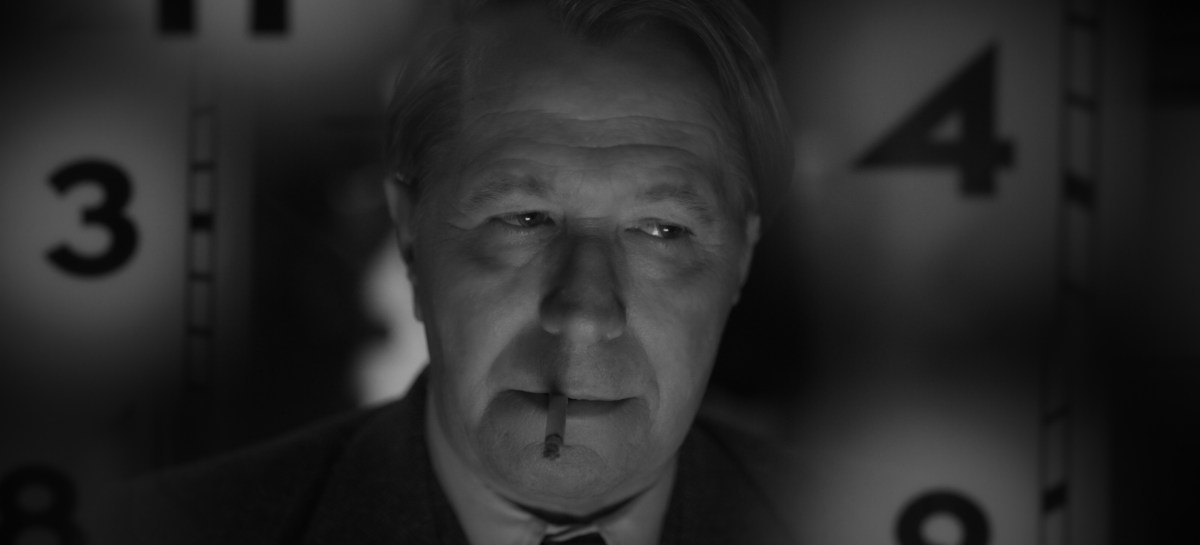
Fincher’s film is called “Mank.” Oscar winner Gary Oldman stars as Herman Mankiewicz, who Welles hired to write the screenplay for “Kane.”
Full disclosure, Herman Mankiewicz was my grandfather.
David Fincher’s 11th feature film, Mank, is a passion project like no other on the director’s résumé — a drama, shot in black-and-white, about the formative years of Hollywood’s sound era, the agony and the ecstasy of what he calls “enforced collaboration” between directors and writers, and the political ruthlessness of Golden Age studios, told through the journey of an unlikely hero — Herman J. Mankiewicz (played by Gary Oldman), the newspaperman turned screenwriter who co-wrote (or wrote, depending on your POV) the screenplay for Orson Welles’s Citizen Kane. Every frame of the movie, which opens in select theaters November 13 and will hit Netflix on December 4, brims with the director’s loving but unsentimental view of film history and of filmmaking — and also carries an unexpected wallop of political resonance with media manipulation and the creation of “fake news” disinformation that couldn’t possibly have been anticipated 30 years ago, when his late father, Jack, first wrote the script. Mank is an unusually personal film for Fincher, not only because it memorializes his work with his father (who died in 2003), but because, in a way, it continues a passionate conversation about movies that began between the two of them when Fincher was a young boy. Its history also spans Fincher’s entire feature career — the original draft was written just before he went off to direct his first film. In two interviews over a long weekend, the director talked about bringing it to the screen.
Starring Academy Award Winner Gary Oldman, Amanda Seyfried, Lily Collins, Arliss Howard, Tom Pelphrey, Sam Troughton, Ferdinand Kingsley, Tuppence Middleton, Tom Burke, and Charles Dance.
Amanda Seyfried Lily Collins – Arliss Howard Tom Pelphrey – Sam Troughton – Ferdinand Kingsley Tuppence Middleton – Tom Burke – Joseph Cross Jamie McShane – Toby Leonard Moore – Monika Gossmann and Charles Dance
Casting by Laray Mayfield Sound Supervised by Ren Klyce Music by Trent Reznor & Atticus Ross Gowns and Costumes by Trish Summerville Film Edited by Kirk Baxter, A.C.E. Production Designed by Donald Graham Burt Photographed in Hi-Dynamic Range by Erik Messerschmidt, ASC Produced by Ceán Chaffin, Eric Roth, Douglas Urbanski Screen Play by Jack Fincher Directed by David Fincher
MPPDA – Recorded in Mon((o))scape – I.A.T.S.E. – Rated R. Some Language
Herman ‘Mank’ Mankiewicz (Gary Oldman) drunkenly harangues the dinner guests at Hearst Castle
Directed by: David Fincher Produced by: Ceán Chaffin, Eric Roth, and Douglas Urbanski Written by: Jack Fincher Score by: Trent Reznor & Atticus Ross Costumes by: Trish Summerville Edited by: Kirk Baxter, ACE Production Design by: Donald Graham Burt Photography by: Erik Messerschmidt, ASC Co-Produced by: Peter Mavromates & William Doyle
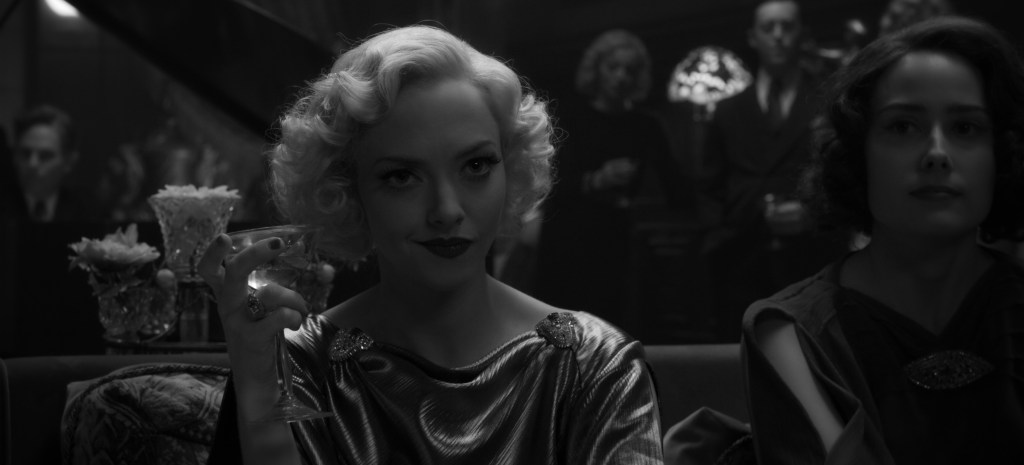
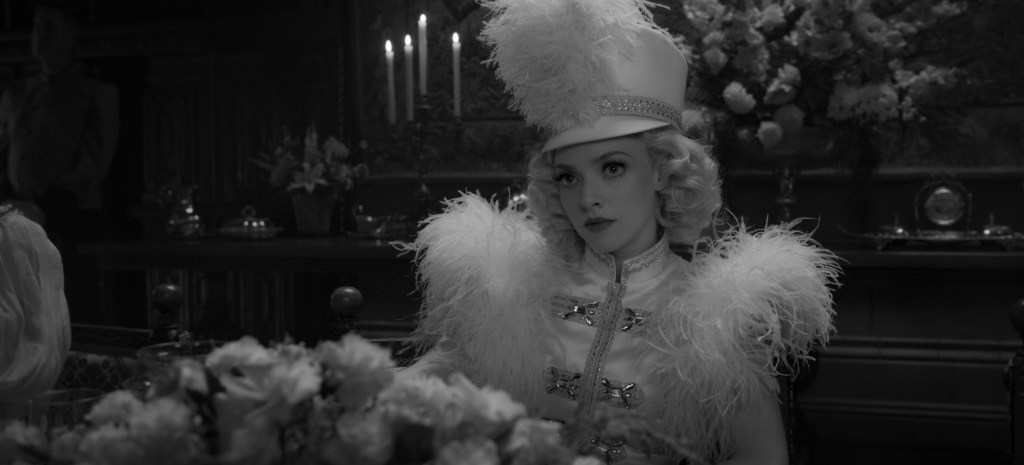
Marion Davies (Amanda Seyfried) sits in growing horror as her dinner party is disturbed by Mank
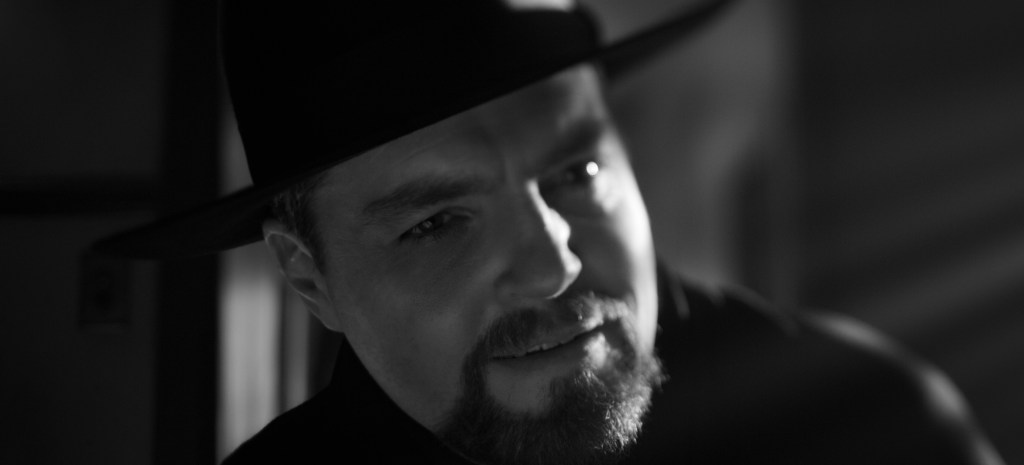
Cast: Gary Oldman as Herman J. Mankiewicz Amanda Seyfried as Marion Davies Lily Collins as Rita Alexander Arliss Howard as Louis B. Mayer Tom Pelphrey as Joe Mankiewicz Sam Troughton as John Houseman Ferdinand Kingsley as Irving Thalberg Tuppence Middleton as Sara Mankiewicz Tom Burke as Orson Welles Joseph Cross as Charles Lederer Jamie McShane as Shelly Metcalf Toby Leonard Moore as David O. Selznick Monika Gossmann as Fraulein Freda and Charles Dance as William Randolph Hearst
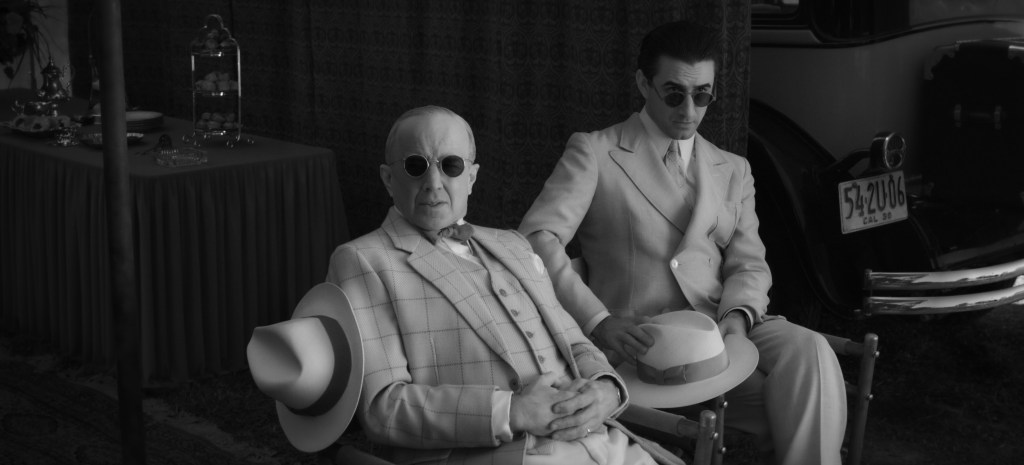
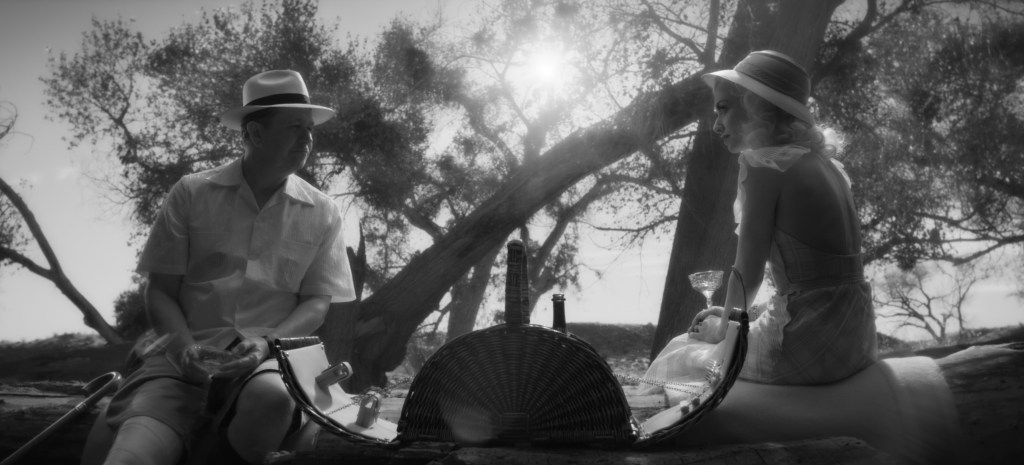
William Randolph Hearst (Charles Dance) beside MGM’s Louis B. Mayer (Arliss Howard)
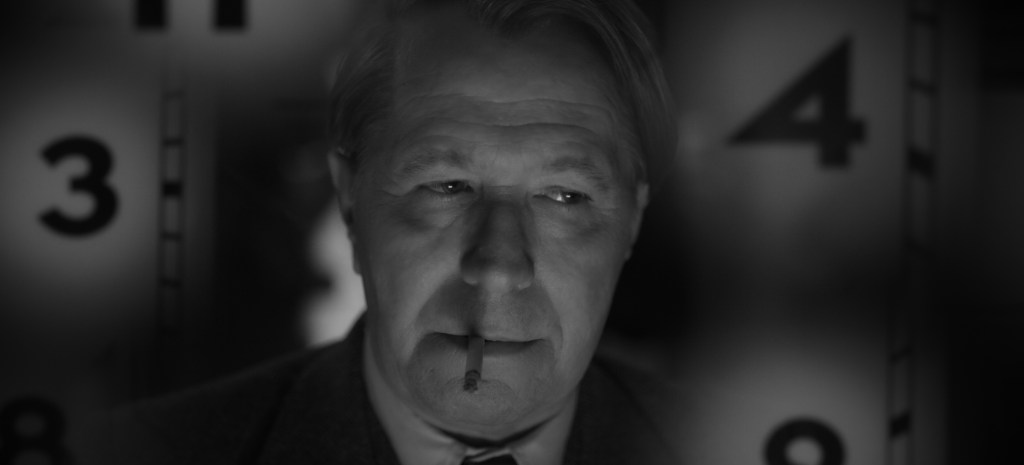
Gary Oldman as Herman Mankiewicz (Gisele Schmidt/NETFLIX)
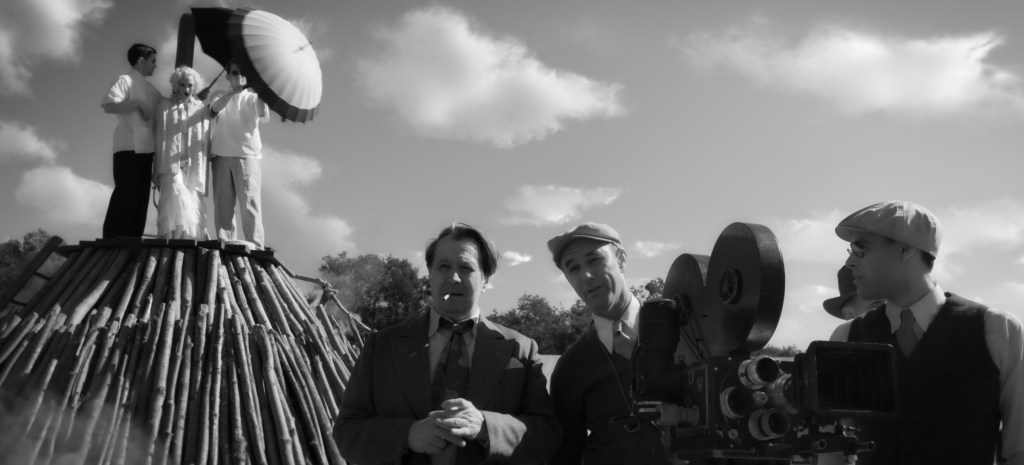
Gary Oldman (as Herman Mankiewicz), Sean Persaud (as Mank’s colleague Tommy), and Gaffer Danny Gonzalez, before a LED backdrop of the desert (Gisele Schmidt/NETFLIX)
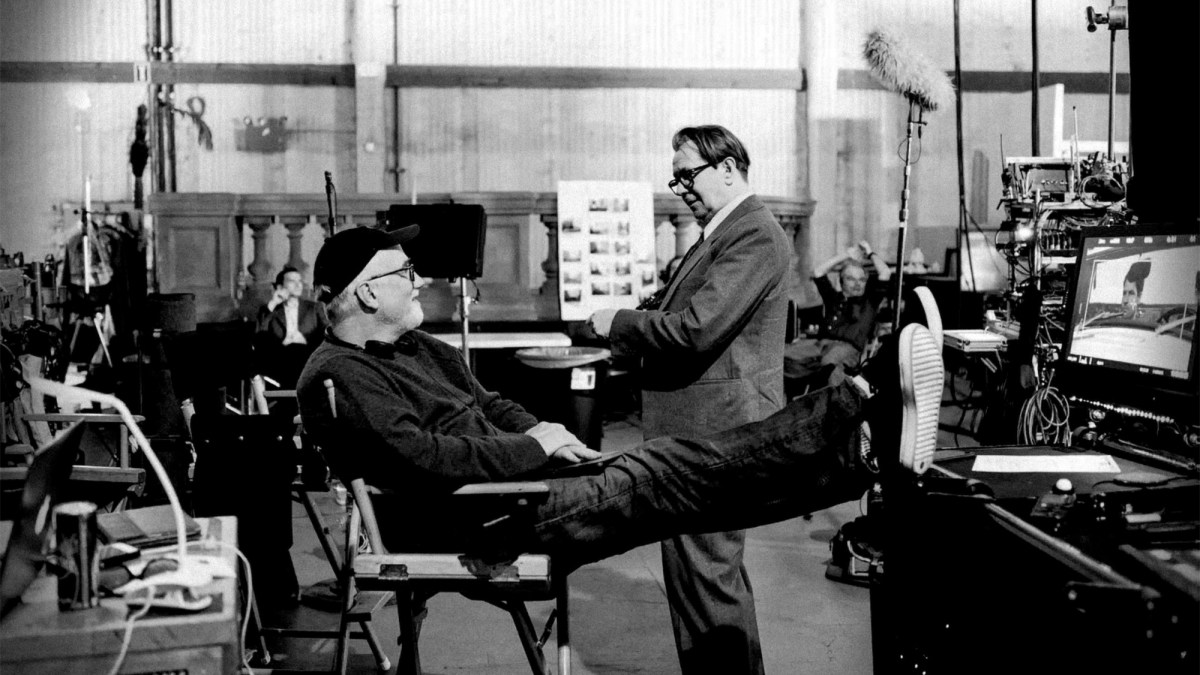
Gary Oldman (as Herman Mankiewicz) shot with the RED Monstro 8K Monochrome by Camera Operator Brian Osmond (Nikolai Loveikis/NETFLIX)