Lensing Creativity Goes Remote

The pandemic has accelerated many technical trends that were already underway

David Heuring
November 11, 2020
Variety

Necessity is the mother of invention, and nothing proves this proverb more true than the evolution of film and television production technology in the age of COVID-19. While the field has always changed rapidly even in normal times, the pace of change and adaptation has accelerated over the past six months.

This adjustment has posed many questions. Beyond personal protective equipment, mandatory testing, on-set safety monitors, walking lunches and corona contingency fees, will the pandemic have enduring effects in the creative, collaborative endeavor that is filmmaking? The technology to work remotely has essentially been in place for some time, but will the pandemic finally push us over into a new normal?

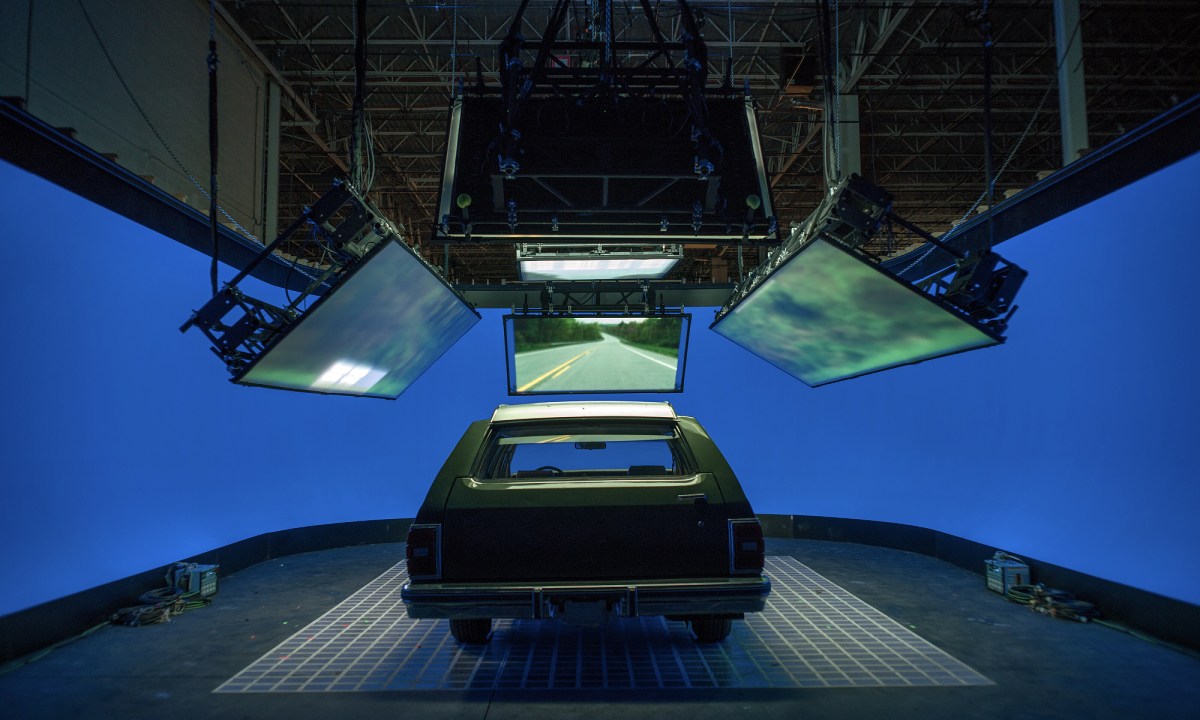
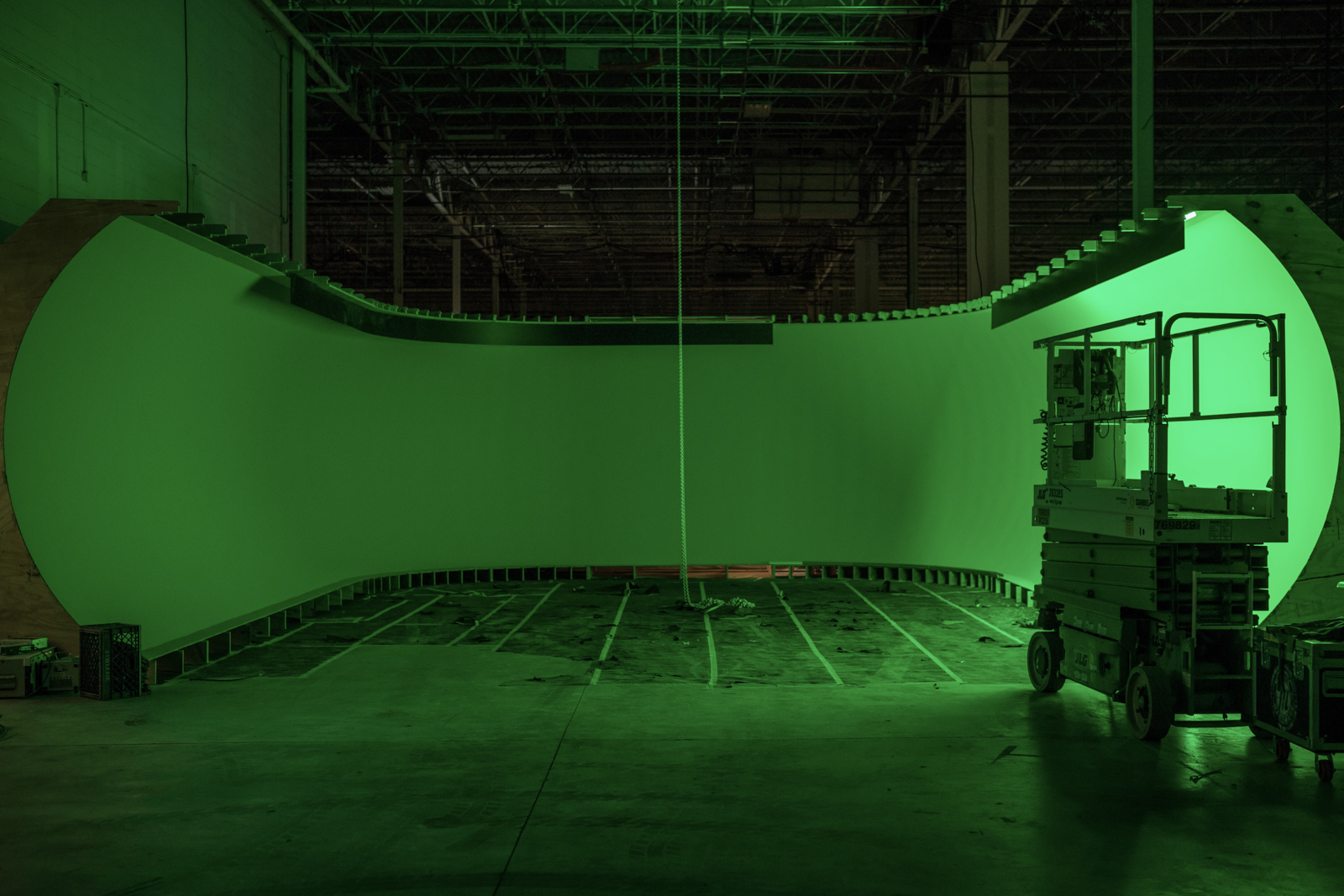
Numerous existing technology trends are being suddenly supercharged by the necessities imposed by the coronavirus. Shooting close to home has never been more appealing, and that impulse aligns neatly with ongoing advancements in LED backings and virtual production. In the world of image processing, connectivity solutions such as those offered by Moxion, Frame.io and Sohonet were already bringing immediacy and super-high resolution to a wide variety of devices without regard to location — and now those virtues are suddenly in much higher demand. And remote collaboration solutions including PIX are looking positively prescient.

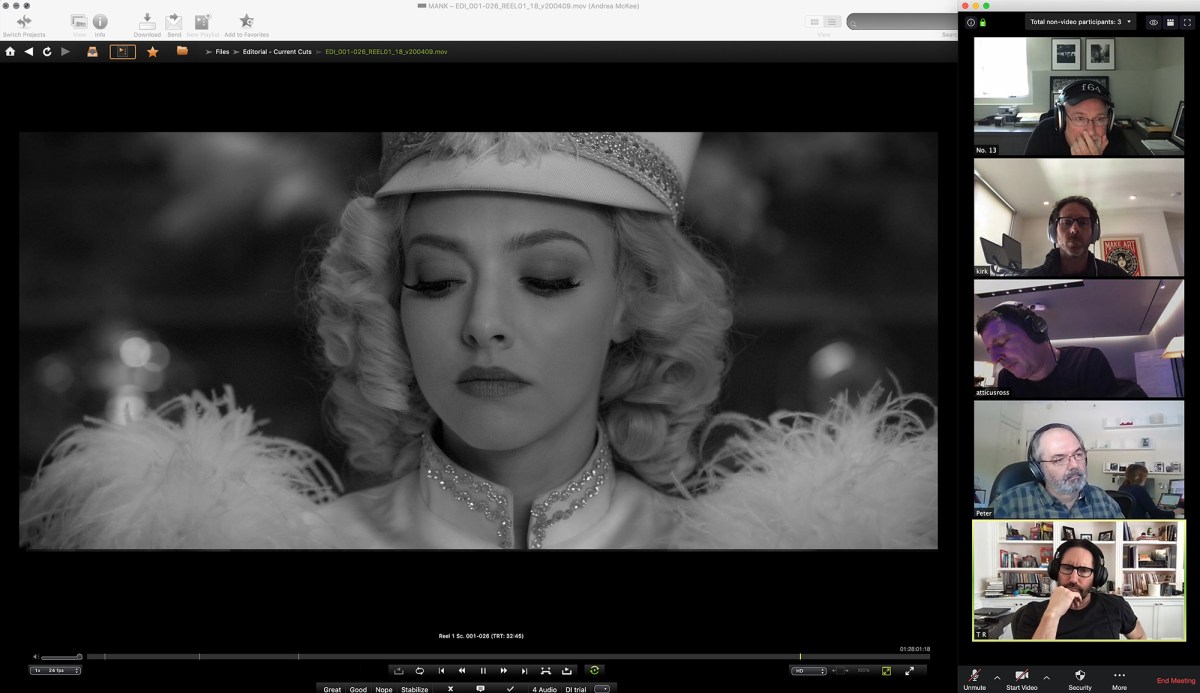
Director David Fincher’s team found that the PIX production backbone, a tool they’ve helped develop over the years, facilitated safe group creativity but also enhanced efficiency on the forthcoming Mank.

Read the full article

Mix Magazine 2020: The Music in Sound with Ren Klyce

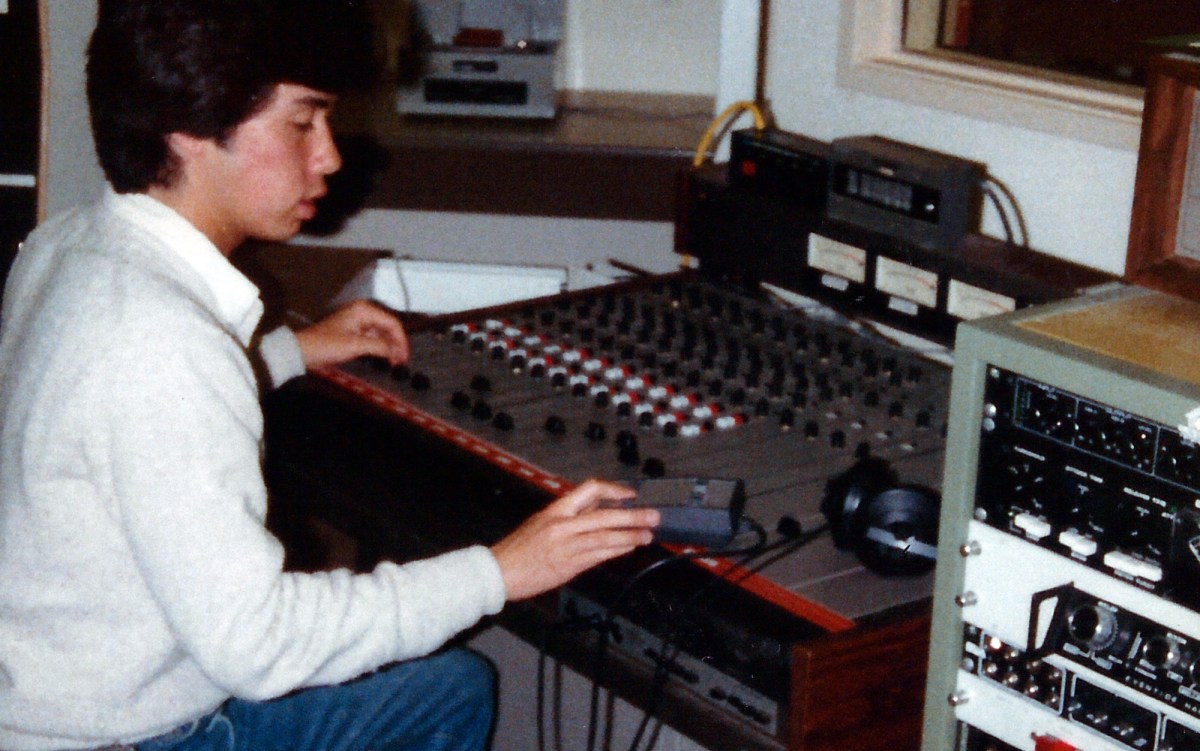
Ren Klyce in Peter Elsea’s Studio (1984)

Larry Blake
November 5, 2020
Mix Magazine / SoundWorks Collection

Animated short for Sesame Street (January 17, 1984) produced by John Korty. Sound and music by Ren Klyce:

From Madonna to Mank: Why David Fincher’s Greatest Film is an Erotic Pop Music Video

The Gone Girl director is known for the psychological depth, visual symbolism and pulpy thrills of his films but all roads lead back to his tempestuous – and mysterious – collaborations with Madge.

Adam White
November 6, 2020
Independent

It was in the winter of 1993 that David Fincher murdered Madonna. The crime scene: a music video for one of the latter’s greatest singles, “Bad Girl”, and what would be the last of the pair’s four collaborations. In its wake, Fincher would become one of cinema’s most revered directors, the prickly genius behind Se7en (1995), The Social Network (2010), Gone Girl (2014) and the forthcoming Mank. But it’s “Bad Girl” that remains Fincher’s most important venture. It is a short, stylish erotic thriller that begins and ends with Madonna’s lifeless corpse; a video that nods toward the filmmaker Fincher would become, and a final act of artistic symbiosis between two titans of pop culture.

Back in the Nineties, Fincher was coming to the end of a luminous eight years as a music video visionary. The likes of Aerosmith’s “Janie’s Got a Gun” and George Michael’s supermodel-filled “Freedom ‘90” were gorgeous exercises in style and short-form storytelling. Little was more thrilling, though, than his work with Madonna – from the grandiose myth-making of “Vogue” and “Express Yourself” to the richly personal “Oh Father”. They both recognised the cinematic potential of the form, even if it came at a cost – all of their collaborations rank among the most expensive videos ever made.

That trilogy of music videos – which came before “Bad Girl” and were shot over the course of 10 months between 1989 and 1990 – would reflect a fruitful creative tussle between the pair. Despite Fincher’s relative lack of clout in the industry at the time, and especially compared to Madonna’s cultural ubiquity, they would approach their work as somewhat begrudging – and almost flirtatious – equals.

In interviews, Fincher recalled expressing mock outrage when Madonna asked him if he had heard of Metropolis, the landmark sci-fi film she wanted to replicate for “Express Yourself”. Madonna sneered at his idea to have her crawl across the floor, lick milk from a bowl, and then pour it over herself in the same video, assuming it might look like a student film. It turned out to be one of the video’s most memorable set pieces. The visual for “Oh Father”, meanwhile, a psychological wormhole into Madonna’s childhood and the emotional toll of her mother’s death, only came about at Fincher’s insistence. Madonna had been unsure it would even work as a single. Fincher, though, saw it as ripe for visual accompaniment, and captured her vulnerability like no other.

Read the full article

David Fincher’s Lost Projects

To celebrate the 25th anniversary of Se7en and the 10th anniversary of The Social NetworkThe Ringer hereby dubs September 21-25 David Fincher Week. Join us all throughout the week as we celebrate and examine the man, the myth, and his impeccable body of work.

The acclaimed director has an unimpeachable body of work, but why isn’t it more extensive? The answer lies in the long list of movies and TV shows that he hasn’t made.

Alan Siegel
September 23, 2020
The Ringer

For a longtime screenwriter, the email seemed too good to be true. “How would you like to work on this TV show,” Rich Wilkes recalls it saying, “and have no one tell you what you have to do?”

The note was from David Fincher.

The two had almost collaborated in the early 2000s, when Wilkes wrote the adaptation of the Mötley Crüe biography The Dirt. Fincher planned to direct the debaucherous movie. But it didn’t happen. “It got blown apart somehow,” Wilkes says. “Which was really frustrating.”

A decade later, Wilkes was surprised to hear from Fincher. “I don’t know if you know who this is, I’m the guy who wrote The Dirt. I think maybe you contacted the wrong person,” Wilkes remembers responding. “And he said, ‘No, no, I know who you are. Do you want to work on this show?’”

The series was a half-hour HBO comedy set in the world of ’80s music videos, where Fincher’s career had taken off after he directed clips like Madonna’s “Express Yourself” and Paula Abdul’s “Straight Up.” Videosyncrasy centered on a new-to-showbiz production assistant and told the story of the rise of a wildly popular new medium. The first season began with the making of Berlin’s “The Metro” and was set to culminate with the filming of Michael Jackson’s “Thriller.”

Initially referred to by its two working titles, Living on Video and Video Synchronicity, the show had a cast that included Charlie Rowe, Sam Page, Kerry Condon, Corbin Bernsen, and Paz Vega.

For the man behind Se7en, Fight Club, and Zodiac, the tone and format of the series was a departure. But the subject matter was not. “The beauty of working on that with him was, one, he had the inside knowledge of how things worked,” Wilkes says. “But he [also] had the relationships to be able to call up David Geffen and say, ‘Hey, can we use this song?’ Once you get one person to say yes, the next people are like, ‘OK. I’d like to be involved with that too.’”

In early 2015, Fincher and his crew shot a handful of episodes of Videosyncrasy. That June, however, HBO stopped production on the series.

Read the full article

Dismantling the Myth of David Fincher

On the cusp of the 25th anniversary of Se7en and the 10th anniversary of The Social NetworkThe Ringer hereby dubs the next five days David Fincher Week. Join us all throughout the week as we celebrate and examine the man, the myth, and his impeccable body of work.

He has a reputation as Hollywood’s ultimate control freak, a director obsessed with attaining perfection no matter how many takes it needs or whose feelings he hurts. Now, three decades of collaborators demystify what it’s really like to work with one of the most talented directors of his generation.

Eric Ducker
Eric Ducker is a writer and editor in Los Angeles.
September 21, 2020
The Ringer

In the early 1990s, Michael Alan Kahn worked as David Fincher’s first assistant director. Kahn had already paid his dues on Joel Silver productions like Die Hard, Hudson Hawk, and the first two Lethal Weapon sequels—big-budget action flicks made by big personalities whose off-camera tantrums rivaled the on-screen explosions. Fincher was coming off the failure of Alien 3, a film that the director still hates and hates talking about. As Fincher entered his 30s, he had returned to making music videos and commercials, two worlds where he’d earned a reputation first as a prodigy and then as a master. “When I linked up with David I immediately recognized that it was a whole different level,” says Kahn.

Not only was Fincher’s work inventive and distinct, it was meticulously constructed. Kahn remembers a series of spots they made for Heineken. They had two days to film four tableaus of the bottle in different environments, including one on an airplane. “You’d start from scratch and [Fincher] would spend five hours and 57 minutes dressing the fuselage, dressing the background, moving the background around, putting the bottle right in place, finessing the light so it felt like you were in flight, the right amount of spritz on the bottle, the right amount of napkin,” says Kahn. “Every aspect of every aspect was considered and perfected. Then he would roll the camera for three minutes, and that was lunch and that one was done. It was an amazing thing to watch because you see a blank frame and then you see him paint, basically.”

But trying to realize the vision of one man—and a man as doggedly obsessive as David Fincher—could be a double-edged sword, especially when the director moved back to filmmaking. Shortly after production began on 1995’s Se7en, “I had one of those moments where I looked around and I appreciated where I was,” says Kahn. Fincher had often admitted to Kahn how badly he wanted another chance to make a movie. “I went up to Fincher and I said, ‘Look at this! Look! It’s here! We’re here! You did it! We’re shooting a movie! There’s Morgan Freeman. There Brad [Pitt]. There’s Kevin Spacey. … Isn’t this amazing? Isn’t this wonderful? This is what you wanted.’ And he looked at me as though I were from outer space and said, ‘No, it’s awful.’ And I looked at him and I said, ‘Why is it awful?’ And he said, and I mean sincerely, ‘Because now I have to get what’s in my head out of all you cretins.’” Early in his career, Fincher already knew that no matter how an entire film unspooled in his brain, actually turning it into a reality would require him to make an endless amount of compromises, most of which only he would perceive. But that hasn’t stopped him from fighting his way toward his version of a flawless end product.

Throughout Fincher’s 40-year career, from his time as a teenage production assistant in Marin County to his upcoming 11th feature, Mank, he’s established himself as one of his generation’s most talented, and most emulated, filmmakers. He’s also become notorious for his singular style of making films. He’s gained a reputation as a demanding director who is never satisfied and doesn’t suffer fools, and seems to have little interest in being likable. But of course the full story is more complicated. During interviews with more than a dozen cast and crew members—ranging from those who have worked with him consistently since his earliest days as a director, to those who were part of a single project—he was called “exacting,” “razor-sharp focused,” “intense,” “tough,” “extremely observant,” “very articulate,” and “relentless.” Some also admitted that “there are times he can be a dick,” that he was “difficult,” “condescending,” and “a bit of a bully.” But he was also described as “very self-depreciating,” “so witty,” “fucking hilarious,” “one of the smartest people I’ve ever met,” “very generous,” and “my dearest, dearest friend.”

Nobody says making a Fincher film is easy. Most say it’s worth it.

Read the full profile

The David Fincher Exit Survey

To kick off Fincher Week, contributors explain what they find so fascinating about the man behind ‘Fight Club,’ ‘The Social Network,’ and more

The Ringer Staff
September 21, 2020
The Ringer

David Fincher’s Longtime DP Jeff Cronenweth Has Advice, Insight, and Stories

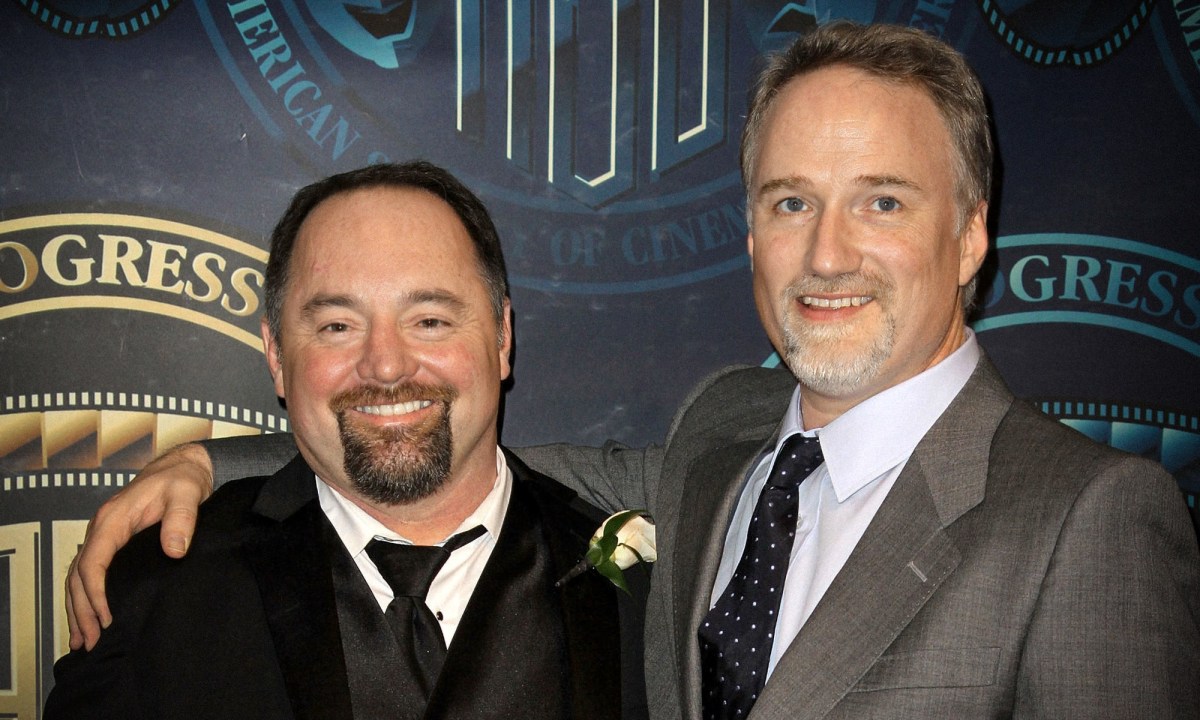
25th Annual American Society Of Cinematographers (ASC) Awards (2011)

A podcast about how to build a career in filmmaking. No Film School shares the latest opportunities and trends for anyone working in film and TV. We break news on cameras, lighting, and apps. We interview leaders in screenwriting, directing, cinematography, editing, and producing. And we answer your questions! We are dedicated to sharing knowledge with filmmakers around the globe, “no film school” required.

Jeffrey Reeser
August 28, 2020
No Film School

Oscar-nominated camera wizard Jeff Cronenweth sat down with us to talk about his origins in the film industry.

As a young man, Cronenweth spent time on the set of Blade Runner as his father, Jordan Cronenweth shot it. He walks us through the next chapter of his career, starting out as an AC for legendary DP Sven Nykvist and how his longtime working relationship with David Fincher began when shooting pickups for a Madonna music video.

We discuss his experiences crafting the look of Fight Club, The Social Network, and Gone Girl, among other great films. Now in 2020, he is up for an Emmy for his work on the Amazon series Tales From The Loop.

Listen to the podcast:

No Film School
Apple Podcasts

Follow Jeff Cronenweth, ASC Archives on Twitter

Art of the Shot: Jeff Cronenweth, ASC on Tales from the Loop & How Story Drives the Visuals

Derek Stettler
April 27, 2020
Art of the Shot

Welcome to the Art of the Shot podcast! Join writer and filmmaker Derek Stettler for conversations with the artists behind the camera on strikingly-shot films, series, music videos and commercials. Discover how they made their careers happen, hear about their creative process, and learn how they make the shots that make us say: wait, how did they do that?

For the third episode, Derek speaks with none other than Jeff Cronenweth, ASC!

Jeff is the two-time Oscar-nominated cinematographer behind many of David Fincher’s films, including The Social Network, The Girl with the Dragon Tattoo, and their first film together–and Jeff’s first feature film–Fight Club.

(And if you’re worried, no, they don’t talk about Fight Club… much.)

Jeff has also shot numerous commercials and music videos for some of the biggest artists, including Madonna, David Bowie, Shakira, Taylor Swift and Katy Perry.

And this month marked the release of Jeff’s first foray into television, with the pilot to the Amazon Prime original series, Tales from the Loop: a sci-fi anthology adapted from the paintings of Swedish artist Simon Stålenhag.

What you may not know is that Jeff Cronenweth is the son of legendary cinematographer Jordan Cronenweth, the eye behind the era-defining look of Blade Runner. Enjoy this in-depth conversation about everything from how Jeff forged his own path while following in his father’s footsteps, and his approach to lighting based on story, to working with David Fincher, his work on Tales from the Loop (including how he achieved a never-before-seen lighting effect), and his trick for making sure eye lights look more natural.

Note, due to the COVID-19 pandemic, this conversation was recorded remotely, but all efforts were made to ensure quality audio.

The Art of the Shot podcast is brought to you by Evidence Cameras, an outstanding rental house in Echo Park specializing in high-end digital cinema camera packages, lenses, support, and accessories.

If you like what you hear, please subscribe to be notified of future episodes, and share this podcast with others to help grow the show!

Listen to the podcast:

Apple Podcasts
Spotify
Google Podcasts

Follow Art of the Shot: Instagram
Follow Derek Stettler: Instagram, Twitter

Tales from the Loop trailer audio copyright Amazon.com, Inc. Used with permission courtesy of Amazon Studios.

Follow Jeff Cronenweth, ASC Archives on Twitter

LiteGear Live: Mindhunter Erik Messerschmidt and Danny Gonzalez

Mike Bauman & Paul Royalty
April 24, 2020
LiteGear

Welcome to LiteGear Live, our community outreach portal where we host panel discussions, educate, and discuss all things related to Set Lighting. Join us for weekly conversations with Cinematographers, Gaffers, Rigging Gaffers, Fixtures Technicians, Programmers, and many more. We’ll be sharing behind-the-scenes photographs, production stills, and clips, all while chatting in real-time with the filmmakers who made it happen.

Our second edition of LiteGear Live presents a conversation with Cinematographer Erik Messerschmidt, Chief Lighting Technician Danny Gonzalez, and Rigging Gaffer Bobby Dechellis, discussing their most recent work on the popular Netflix series Mindhunter.

Hosted by Co-Founder of LiteGear Mike Bauman and Vice President of Sales at LiteGear, Paul Royalty, they delve into a wide range of questions for each guest intended to dig deep into the style choices and challenges faced on the show. The group also shares some behind-the-scenes photographs, production stills, and clips from Mindhunter.

Watch Mindhunter exclusively on Netflix.

Thank you to Netflix for allowing the use of Mindhunter stills and clips.

The Cinematography Podcast: Jeff Cronenweth

Jordan and Jeff Cronenweth on the set of Francis Ford Coppola‘s Gardens of Stone

Jeff Cronenweth, ASC on David Fincher, Fight Club, growing up in Hollywood, music videos, Mark Romanek, One Hour Photo, Gone Girl, The Social Network and the new Amazon series Tales from the Loop.

Ben Rock & Illya Friedman
April 22, 2020
The Cinematography Podcast (Cam Noir)

Jeff Cronenweth comes from three generations in the film business and followed his father, cinematographer Jordan Cronenweth (Blade Runner) into a career as a director of photography. Growing up on film sets and working alongside his father enabled Jeff to take a hands-on role in the camera department. He started as a loader and camera assistant, getting into the union while attending USC. He met David Fincher while working on the Madonna music video “Oh Father” as a camera assistant. Fincher gave Jeff his first opportunity to DP for the film Fight Club. Jeff’s collaboration with Fincher later earned him two Oscar nominations- one for The Social Network and one for The Girl with the Dragon Tattoo. He also began working with director Mark Romanek on music videos, such as EelsNovocaine for the Soul” and Nine Inch Nails’ “The Perfect Drug.” Jeff and Romanek also worked together on the feature film, One Hour Photo starring Robin Williams. The film presented many lighting challenges since the bulk of it takes place inside a store with flat white lights before the darker undertones of the movie are revealed.

Jeff also shot the pilot for Tales from the Loop with director Mark Romanek, streaming now on Amazon Prime.

Listen to the podcast:

Cam Noir
Apple Podcasts

LIKE AND FOLLOW US, send fan mail or suggestions!: Facebook, Instagram, Twitter

Podcast Credits:

Sponsored by Hot Rod Cameras (Instagram)
Editor in Chief: Illya Friedman (Instagram)
Ben Rock (Twitter, Instagram)
Producer: Alana Kode
Editor: Ben Katz
Composer: Kays Alatractchi

Follow Jeff Cronenweth, ASC Archives on Twitter

Jeff Cronenweth Discusses the Unique Job of a Cinematographer

Joey Magidson
April 2, 2020
HollywoodNews.com

Cinematography is a true art form. To compose a memorable shot is something that one really does need a skill for. That doesn’t even take into account how a cinematographer must work well with a director, have an understanding of their camera, and an infinite number of other assets necessary to help make a movie succeed. Earlier this week, we got a chance to talk with two time Academy Award nominated cinematographer Jeff Cronenweth, who was able to detail just some of what goes into being a quality DP.

Cronenweth has been cited by the Academy twice. Both times, collaborations with director David Fincher (The Social Network, followed by The Girl with the Dragon Tattoo) received Oscar nominations in Best Cinematography. Tomorrow, he ventures into television for the first time, collaborating with filmmaker Mark Romanek on an episode of the new Amazon Prime science fiction series Tales from the Loop. Generously chatting on the phone for nearly a half hour, Cronenweth details not just working on the show, but with Fincher as well. He even tells us a few interesting stories about his father Jordan Cronenweth, a famous cinematographer in his own right. It’s an informative and loose interview, so we hope you enjoy it…

Listen to the podcast

Follow Jeff Cronenweth, ASC Archives on Twitter