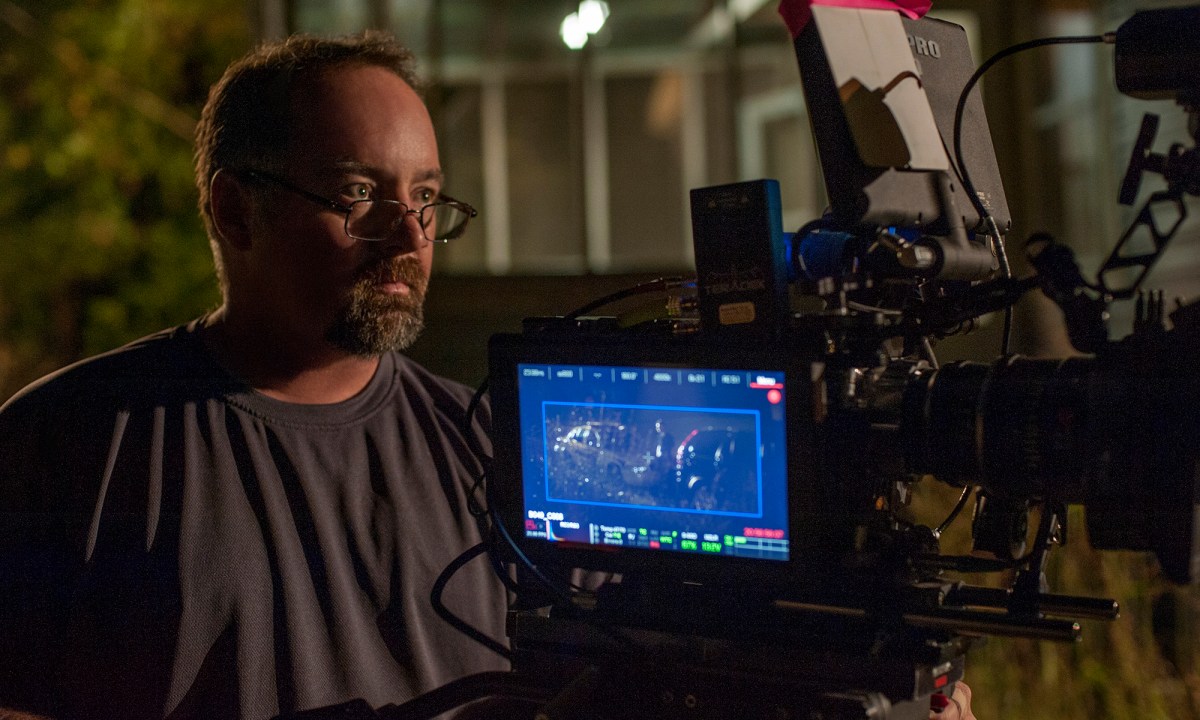
Portbox: How Jeff Cronenweth Builds Iconic Images That You Can’t Forget

Madhav Goyal
July 12, 2020
Invisible Storytelling (Portbox)

Academy Award-nominated Cinematographer Jeff Cronenweth (Fight Club, The Social Network, The Girl with the Dragon Tattoo, Gone Girl) breaks down the visual decisions behind some of the most studied films of the past three decades, and what it actually takes to build imagery that lasts.

Cronenweth explains how he and David Fincher approached the unreliable narrator problem in Fight Club, why the opening scene of The Social Network was shot with crossing cameras instead of traditional coverage, and how shallow depth of field became the primary tool for conveying isolation in Tales from the Loop. He also gets into why fear is essential to staying sharp, and why fighting for every single shot matters more than most cinematographers realize.

If you have ever wondered how great cinematographers make technical decisions in service of emotion rather than spectacle, this conversation gets into the specifics.

Read the episode notes:

How Jeff Cronenweth Builds Iconic Images That You Can’t Forget

Listen to the podcast on:

Apple Podcasts
Spotify
Amazon Music

Portbox: The Desire to Go Noir With Erik Messerschmidt

Madhav Goyal
June 29, 2020
Invisible Storytelling (Portbox)

Erik Messerschmidt (Mindhunter) is an American cinematographer. Erik chats with Portbox about his transition into cinematography with Netflix Original Series: Mindhunter. Madhav inquires about how Erik studies human behavior, both professionally and personally. Erik highlights how working with great cinematographers and highly disciplined directors has informed his workflow and why director-cinematographer relationships work across different films. He also breaks down one of Madhav’s favorite scene from the second season of Mindhunter, while giving us details on his next project with David Fincher, Mank.

Read the episode notes:

How Erik Messerschmidt Uses Psychology to Shape Cinematic Storytelling

Listen to the podcast on:

Apple Podcasts
Spotify
Amazon Music

Art of the Shot: Jeff Cronenweth, ASC on Tales from the Loop & How Story Drives the Visuals

Derek Stettler
April 27, 2020
Art of the Shot

Welcome to the Art of the Shot podcast! Join writer and filmmaker Derek Stettler for conversations with the artists behind the camera on strikingly-shot films, series, music videos and commercials. Discover how they made their careers happen, hear about their creative process, and learn how they make the shots that make us say: wait, how did they do that?

For the third episode, Derek speaks with none other than Jeff Cronenweth, ASC!

Jeff is the two-time Oscar-nominated cinematographer behind many of David Fincher’s films, including The Social Network, The Girl with the Dragon Tattoo, and their first film together–and Jeff’s first feature film–Fight Club.

(And if you’re worried, no, they don’t talk about Fight Club… much.)

Jeff has also shot numerous commercials and music videos for some of the biggest artists, including Madonna, David Bowie, Shakira, Taylor Swift and Katy Perry.

And this month marked the release of Jeff’s first foray into television, with the pilot to the Amazon Prime original series, Tales from the Loop: a sci-fi anthology adapted from the paintings of Swedish artist Simon Stålenhag.

What you may not know is that Jeff Cronenweth is the son of legendary cinematographer Jordan Cronenweth, the eye behind the era-defining look of Blade Runner. Enjoy this in-depth conversation about everything from how Jeff forged his own path while following in his father’s footsteps, and his approach to lighting based on story, to working with David Fincher, his work on Tales from the Loop (including how he achieved a never-before-seen lighting effect), and his trick for making sure eye lights look more natural.

Note, due to the COVID-19 pandemic, this conversation was recorded remotely, but all efforts were made to ensure quality audio.

The Art of the Shot podcast is brought to you by Evidence Cameras, an outstanding rental house in Echo Park specializing in high-end digital cinema camera packages, lenses, support, and accessories.

If you like what you hear, please subscribe to be notified of future episodes, and share this podcast with others to help grow the show!

Listen to the podcast:

Apple Podcasts
Spotify
Google Podcasts

Follow Art of the Shot: Instagram
Follow Derek Stettler: Instagram, Twitter

Tales from the Loop trailer audio copyright Amazon.com, Inc. Used with permission courtesy of Amazon Studios.

Follow Jeff Cronenweth, ASC Archives on Twitter

LiteGear Live: Mindhunter Erik Messerschmidt and Danny Gonzalez

Mike Bauman & Paul Royalty
April 24, 2020
LiteGear

Welcome to LiteGear Live, our community outreach portal where we host panel discussions, educate, and discuss all things related to Set Lighting. Join us for weekly conversations with Cinematographers, Gaffers, Rigging Gaffers, Fixtures Technicians, Programmers, and many more. We’ll be sharing behind-the-scenes photographs, production stills, and clips, all while chatting in real-time with the filmmakers who made it happen.

Our second edition of LiteGear Live presents a conversation with Cinematographer Erik Messerschmidt, Chief Lighting Technician Danny Gonzalez, and Rigging Gaffer Bobby Dechellis, discussing their most recent work on the popular Netflix series Mindhunter.

Hosted by Co-Founder of LiteGear Mike Bauman and Vice President of Sales at LiteGear, Paul Royalty, they delve into a wide range of questions for each guest intended to dig deep into the style choices and challenges faced on the show. The group also shares some behind-the-scenes photographs, production stills, and clips from Mindhunter.

Watch Mindhunter exclusively on Netflix.

Thank you to Netflix for allowing the use of Mindhunter stills and clips.

The Cinematography Podcast: Jeff Cronenweth

Jordan and Jeff Cronenweth on the set of Francis Ford Coppola‘s Gardens of Stone

Jeff Cronenweth, ASC on David Fincher, Fight Club, growing up in Hollywood, music videos, Mark Romanek, One Hour Photo, Gone Girl, The Social Network and the new Amazon series Tales from the Loop.

Ben Rock & Illya Friedman
April 22, 2020
The Cinematography Podcast (Cam Noir)

Jeff Cronenweth comes from three generations in the film business and followed his father, cinematographer Jordan Cronenweth (Blade Runner) into a career as a director of photography. Growing up on film sets and working alongside his father enabled Jeff to take a hands-on role in the camera department. He started as a loader and camera assistant, getting into the union while attending USC. He met David Fincher while working on the Madonna music video “Oh Father” as a camera assistant. Fincher gave Jeff his first opportunity to DP for the film Fight Club. Jeff’s collaboration with Fincher later earned him two Oscar nominations- one for The Social Network and one for The Girl with the Dragon Tattoo. He also began working with director Mark Romanek on music videos, such as EelsNovocaine for the Soul” and Nine Inch Nails’ “The Perfect Drug.” Jeff and Romanek also worked together on the feature film, One Hour Photo starring Robin Williams. The film presented many lighting challenges since the bulk of it takes place inside a store with flat white lights before the darker undertones of the movie are revealed.

Jeff also shot the pilot for Tales from the Loop with director Mark Romanek, streaming now on Amazon Prime.

Listen to the podcast:

Cam Noir
Apple Podcasts

LIKE AND FOLLOW US, send fan mail or suggestions!: Facebook, Instagram, Twitter

Podcast Credits:

Sponsored by Hot Rod Cameras (Instagram)
Editor in Chief: Illya Friedman (Instagram)
Ben Rock (Twitter, Instagram)
Producer: Alana Kode
Editor: Ben Katz
Composer: Kays Alatractchi

Follow Jeff Cronenweth, ASC Archives on Twitter

Jeff Cronenweth Discusses the Unique Job of a Cinematographer

Joey Magidson
April 2, 2020
HollywoodNews.com

Cinematography is a true art form. To compose a memorable shot is something that one really does need a skill for. That doesn’t even take into account how a cinematographer must work well with a director, have an understanding of their camera, and an infinite number of other assets necessary to help make a movie succeed. Earlier this week, we got a chance to talk with two time Academy Award nominated cinematographer Jeff Cronenweth, who was able to detail just some of what goes into being a quality DP.

Cronenweth has been cited by the Academy twice. Both times, collaborations with director David Fincher (The Social Network, followed by The Girl with the Dragon Tattoo) received Oscar nominations in Best Cinematography. Tomorrow, he ventures into television for the first time, collaborating with filmmaker Mark Romanek on an episode of the new Amazon Prime science fiction series Tales from the Loop. Generously chatting on the phone for nearly a half hour, Cronenweth details not just working on the show, but with Fincher as well. He even tells us a few interesting stories about his father Jordan Cronenweth, a famous cinematographer in his own right. It’s an informative and loose interview, so we hope you enjoy it…

Listen to the podcast

Follow Jeff Cronenweth, ASC Archives on Twitter

Fight Club Cinematographer Jeff Cronenweth, ASC

Jeff Cronenweth in the set of The Social Network (Merrick Morton, 2010)

Alan Schaller & Christopher Hooton
February 7, 2020
Candela: Photography & Cinematography masters

Fight Club cinematographer Jeff Cronenweth talks us through this iconic shot and many others in David Fincher‘s masterpiece. We also discuss how the relative naturalism of The Social Network was just as difficult to achieve, and whether something is lost with VFX even when it looks perfect.

Listen to the podcast

Follow Jeff Cronenweth, ASC Archives on Twitter

“David F*cking Fincher” Awards Brad Pitt His Modern Master Award at SBIFF

Sasha Stone
January 23, 2020
AwardsDaily

Roger Durling’s wildly successful Santa Barbara International Film Festival is underway with tributes and with honors being handed out for the next week or so. Last night, Brad Pitt was honored with the Leonard Maltin Modern Master award.

After a lengthy interview with Maltin, which covered all of Pitt’s work with directors like both Ridley and Tony Scott, the Coen brothers, Tarantino, and beyond, Pitt’s frequent collaborator David Fincher made a rare appearance to hand Pitt his Modern Master award. They have made three films together, if you didn’t know (which of course would be insane to not know). Pitt is a muse of sorts for Fincher, starting with Se7en (1995), then Fight Club (1999), and finally Benjamin Button (2008). Pitt said when accepting his award that he hoped the two get to do five more collaborations together. Wouldn’t that be something?

Brad Pitt is having quite a season. It’s as though we’ve never seen a movie star. Movie stars of his stature are “as rare as albino pandas, and here’s one of them,” said Fincher. What that means is that it’s rare indeed for an actor to possess that thing — that movie star thing. Charisma that could power an entire planet. You can’t teach it. You can’t learn it. It’s there or it isn’t. And with Pitt, it was there from his first appearance onscreen.

Here are the videos of the event (playlist):

January 22, 2020
officialSBIFF (YouTube)

Brad Pitt Looks Back on ‘Snatch’, ‘Oceans 12’, ‘Once Upon a Time…’ and More at SBIFF

Christina Radish
January 25, 2020
Collider

Read the highlights of the conversation

Not On Blu-ray?: Fight Club Compared

Blu-rays vs iTunes HD vs D-VHS vs DVD vs Laserdisc

Mac
April 7, 2018
Not On Blu-ray?

Caustic, nihilistic and controversial, Fight Club successfully adapted Chuck Palahniuk’s transgressive fiction novel, it’s a credit to screenwriter Jim Uhl’s excellent adaptation that the voice of the original novel is heard so clearly, and at the same time the film proved to be an enormous success. Though much credit is also due to the excellent sound and editing: so much in this film depends on hitting exactly the right tone.

Based on a reader suggestion, I decided to take a look at the various home video versions of Fight Club that are available.

Filming Fight Club

Fight club was photographed by Jeff Cronenweth, a then hot and upcoming Cinematographer who until that point hadn’t shot a major feature, but did have the advantage of being Blade Runner cinematographer Jordan Cronenweth’s son. Fincher has worked with both father and son on a number of projects culminating in ‘Alien 3’. Subsequently Jeff did camera work on a number of Fincher’s other features including ‘Se7en’ and ‘The Game’.

An Interview with Cronenweth in American cinematographer records Fincher’s preference for both natural and pre-existing lighting in locations over elaborate lighting setups. This necessitated the choice of higher speed stocks.

The film was shot using the Super35 format, and framed at 2.35:1. Daylight scenes were shot on Kodak EXR 100T and Vision 250D film, while the majority of night scenes were shot on ‘faster’, grainier Vision 500T.

Selected night scenes from the film were 5% flashed at the laboratory, which boosts contrast and enhances detail in the darker parts of the frame. Additionally a handful of release prints were treated with the Technicolor’s ENR silver retention process (bleach bypass) at the 80 IR level.

Shooting in Super35 at an aspect ratio of 2.35:1 provides considerable latitude for re-framing during the editing process, which David Fincher may have developed a taste for when working on the various home video editions of Se7en.

Read the full article

Here the composition is noticeably skewed between the 16:9 and 2.35:1 versions.

Alien3: In Space, They’re Still Screaming

Ron Magid
Unit Photography by Rolf Konow and Bob Penn, courtesy of 20th Century Fox
July, 1992
American Cinematographer

Alex Thomson, BSC — one of Britain’s premier cinematographers — creates images of dazzling perfection, richness and clarity, images which have graced some of the most exquisite-looking films in recent memory: Legend, Ridley Scott‘s epic fairytale; Eureka, Nicholas Roeg‘s influential retelling of Citizen Kane; and Excalibur, John Boorman‘s visually magnificent approach to the King Arthur legend.

Though Alien3 is ideal subject matter for Thomson’s rich photographic style, he might never have lent his expertise to the project had it not been for one of the greatest triumphs and tragedies of his career. Late in 1990, Thomson had been chosen by one of the world’s undisputed filmic masters to photograph what promised to be his final masterpiece: the director was David Lean; the project was Joseph Conrad‘s Nostromo

Unfortunately, Lean took ill and died, Nostromo shut down and a saddened Alex Thomson returned to London, wondering what he would do next. “I came back from France on a weekend and they called me on Monday to see if I could take over on Alien3,” Thomson recollects. “I started work on Tuesday, which was about a week and a half into production. I was happy to do it; it kept my mind off what might have been.” (There is a certain karmic irony to Thomson’s twist of fate. As fans of the first Alien film will recall, the spaceship in that picture was dubbed the Nostromo.)

Behind the camera, Alex Thomson, BSC watches intently as operator David Worley lines up a shot on Charles Dance as Sigorney Weaver stands by.

The production history of Alien3 is a troubled one. Before Thomson joined the film, its first director, New Zealander Vincent Ward — one of a slew of directors who had been attached to the project during its lengthy pre-production phase — had been replaced by rock video director David Fincher. Thomson was hired when the film’s original cinematographer, Jordan Cronenweth, ASC (Blade Runner) left the production.

Many cinematographers might feel stifled by a production where the original look had already been determined, but not Thomson. “I had no problem with following in Jordan’s footsteps because his approach was so right,” he enthuses. “It was marvelous to be pointed in the right direction by a man of his caliber.” 

First-time feature director Fincher, for his part, is an award-winning rock video director with a background in visual effects storyboarding at ILM. “To take something over like this at 28 must’ve been quite awe-inspiring, but he handled it as if he’d done 20 pictures,” Thomson relates.

Read the full profile