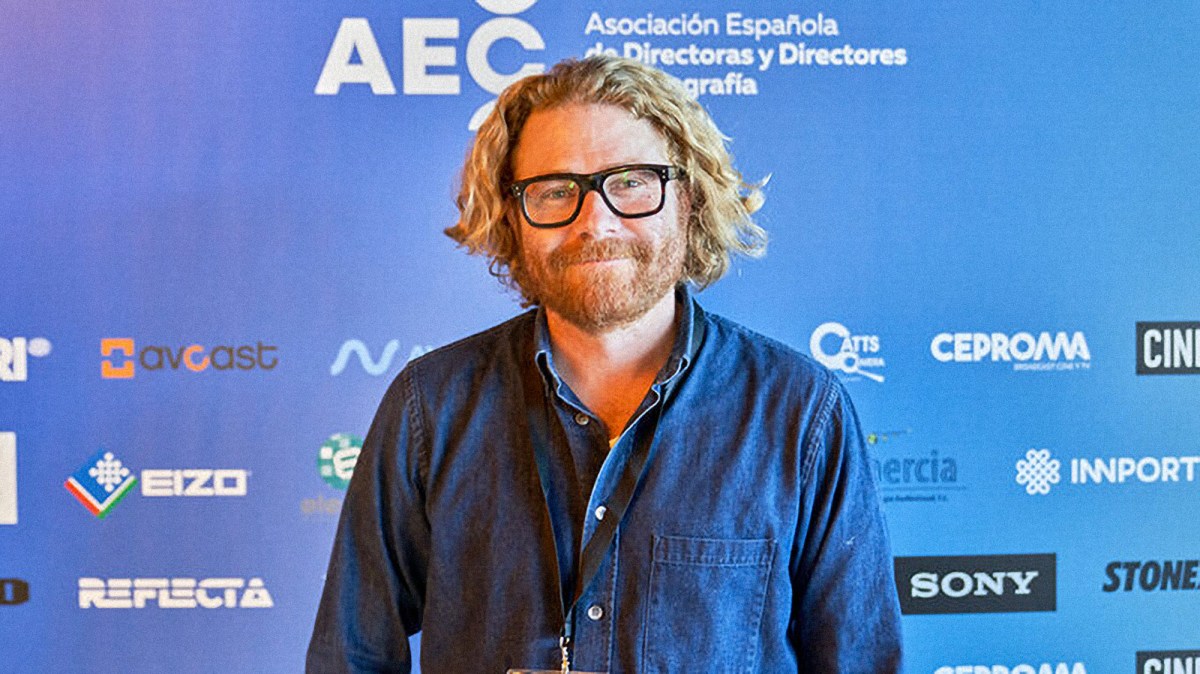
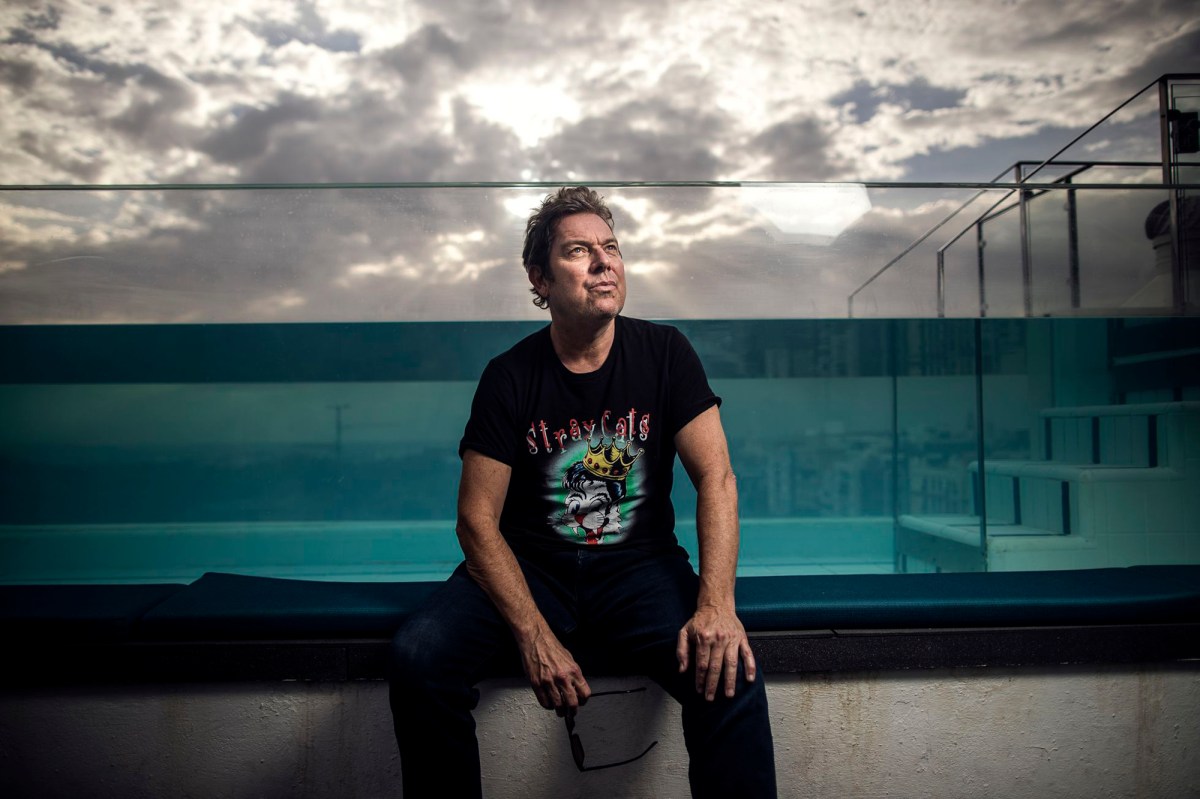
Entrevistamos a Erik Messerschmidt, director de fotografía estadounidense, en el marco del evento MicroSalón AEC, con sede en Madrid. Messerschmidt es habitual colaborador del cineasta David Fincher y obtuvo un premio Óscar a la mejor fotografía por Mank.
Me gustaría preguntarte si consideras que el cine proviene de la fotografía, si te parece que el cine proporciona movimiento a las fotografías o si proviene de una transformación técnica más compleja.
Es una gran pregunta. Creo que el cine es storytelling extendido en el tiempo. Es esculpir en el tiempo, como decía Tarkovski. La fotografía tiene que ver con la historia de un momento singular. El cine manipula y hace progresar el tiempo. Tiene más en común con la literatura y los sueños que con la fotografía.
Award-winning director of photography Erik Messerschmidt, ASC has a natural eye for arresting and spellbinding images, thriving in a role that allows him to combine his love of art, craft and science. Recently, he lensed Devotion for director J.D. Dillard, based on the real-life story of a Black naval officer who befriends a white naval officer during the Korean War, with both becoming heroes for their selfless acts of bravery.
He also finished shooting Michael Mann’s biographical film Ferrari, starring Adam Driver, Shailene Woodley, and Penélope Cruz, and David Fincher’s The Killer, starring Michael Fassbender and Tilda Swinton.
Previously, Messerschmidt shot Fincher’s passion project Mank, chronicling the screenwriter Herman Mankiewicz’s turbulent journey to write Citizen Kane alongside Orson Welles. Messerschmidt’s meticulous and striking black and white recreation of the period’s aesthetic earned him the Academy Award for Best Cinematography, an ASC Award for Outstanding Cinematography in a Feature Film, a BSC Award for Best Cinematography in a Theatrical Feature Release, a BAFTA Award nomination for Best Cinematography, as well as Best Cinematography award nominations from the San Francisco Bay Area Film Critics Circle, the Broadcast Film Critics Association Critics Choice, and the Alliance of Women Film Journalists.
In addition, Messerschmidt co-lensed several episodes of the HBO Max original series Raised by Wolves from producer Ridley Scott. He also shot the first and second seasons of Fincher’s hit thriller series Mindhunter for Netflix, earning a 2020 Emmy Award nomination for Outstanding Cinematography for a Single-Camera Series (one-hour) for episode 206.
With a background in the fine arts world, Messerschmidt honed his skills while working with such renowned cinematographers such as Dariusz Wolski, ASC, Jeff Cronenweth, ASC, Phedon Papamichael, ASC, Claudio Miranda, ASC, and Greig Fraser, ASC. Messerschmidt now lives in Los Angeles and is a member of IATSE Local 600. He is represented by DDA.
Has there ever been a movie director who has taken more advantage of new technology than David Fincher? We look back on how digital production benefitted his movies so much.
When digital cinematography was in its infancy, around 2005, it was like the Wild West; new cameras were appearing seemingly every week, whether from University’ concept’ programs or start-ups with a movie making a revolution on their minds.
In this white heat of technology, director David Fincher started to craft his movie-making skills. He was a risk taker with new technology but driven by the promise it gave him. As much as Fincher and his crew were proud of the films they made, they were also proud of how they made them.
Zodiac’s Digital Gamble
Fincher had already used digital cinematography for his commercials and decided to commit early to this technology for his movies. But his long-time producer Ceán Chaffin brought some hard business sense to brace against his pioneering creative decisions.
Ceán had been involved more in costing this digital workflow out and had looked at introducing digital for a feature before Zodiac but found that it wasn’t cost-efficient at that time; Zodiac was different. “At the moment of Zodiac, storage was so cheap that we could push it; it was also about the savings at that point. The sticking point was really about storage for us up to Zodiac.”
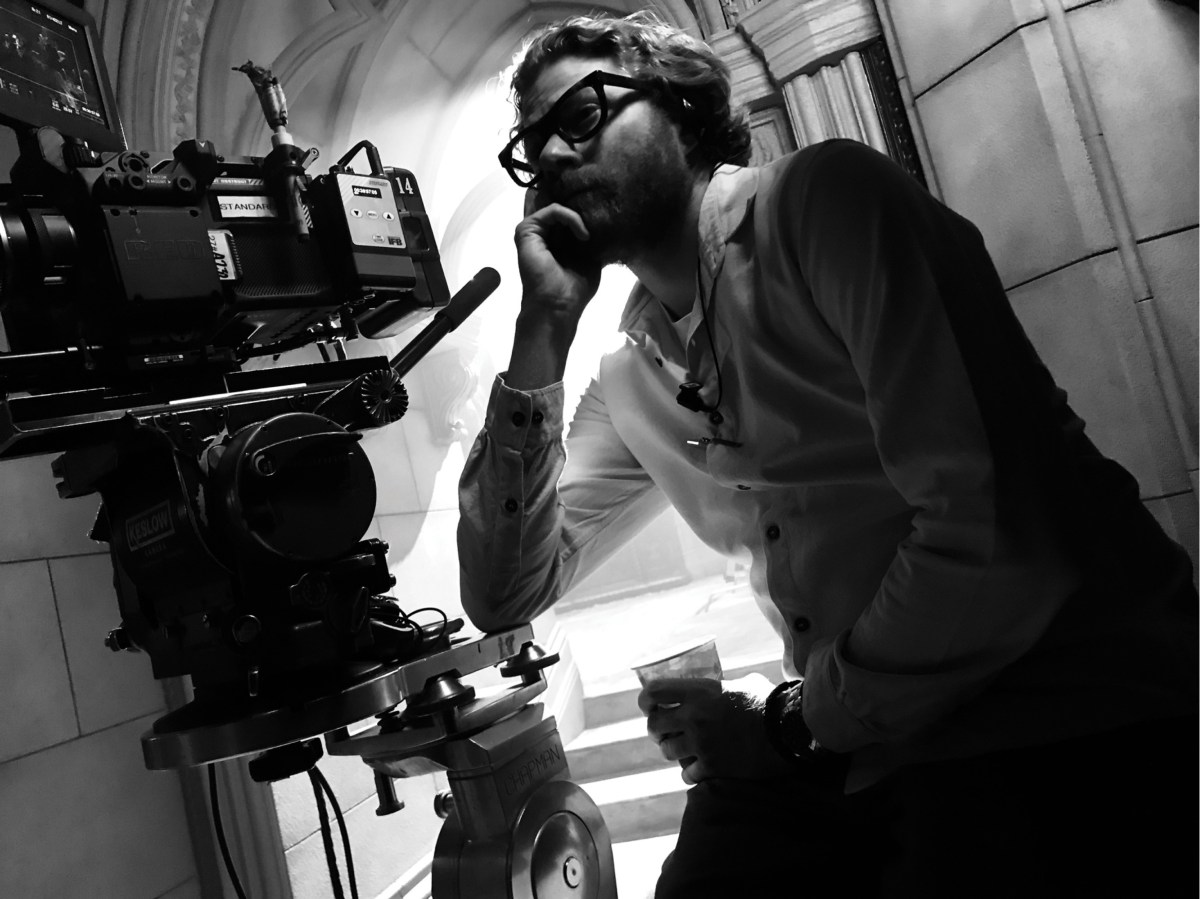
Has any cinematographer had so fast an ascendancy as Erik Messerschmidt? While no newcomer—his IMDb dates back to 2001, his first cinematography credit from 2003—work on Gone Girl earned the attention of David Fincher, by whom Messerschmidt was then enlisted to shoot his Netflix series Mindhunter. (Impressive then, all the more sterling since as an example of streaming television that doesn’t look or move like streaming television.) Which led into Mank which led into The Killer, Fincher’s much-anticipated thriller arriving next year.
Somewhere along the way Michael Mann called. I talked to Messerschmidt at ENERGACamerimage, where he was promoting the new feature Devotion and mere weeks from wrapping Ferrari, Mann’s first feature in longer than you’d believe and a passion project of equal gestation—nothing you leave in the hands of an amateur. Certainly not if you’re as obsessive, fastidious, demanding as Michael Mann. Meeting in Toruń’s CKK Jordanki, we were quick to start.
Joe Penhall, creador de la serie ‘Mindhunter’, en Madrid (Samuel Sánchez)
El creador de ‘Mindhunter’ repasa las entrañas de un género en auge en la ficción: “Hollywood los convierte en personajes icónicos, pero solo son seres tristes y muy jodidos”
Aunque la segunda temporada de Mindhunter (Netflix) se emitió en 2019, todavía muchos de sus seguidores siguen preguntando si volverá la producción que, en sus dos entregas, seguía el trabajo de dos agentes del FBI y una psicóloga que ponen en marcha la Unidad de Análisis de la Conducta del cuerpo en los años setenta. La serie, que tiene entre sus directores y productores al cineasta David Fincher, se basa en las memorias del exagente John E. Douglas y el escritor Mark Olshaker. A partir de ese material y muchas entrevistas con policías reales, expertos en análisis del comportamiento, e incluso con los agentes que capturaron a asesinos en serie como Green River y Ted Bundy, el autor teatral y guionista Joe Penhall (Londres, 55 años) ficcionó las vidas de quienes trataron de meterse en la mente de los criminales más peligrosos.
Are we totally saying goodbye to the option of a 3rd season of Mindhunter?
“I think so. Never say never, but Fincher loves making movies, and making movies is easier than 10 episodes of Mindhunter. The thing is that to make series for Netflix you have to make them like in a sausage factory. You have to get the episodes out with little money. I did 25 or 30 script rewrites per episode. It became impossible. Fincher realized that he couldn’t do that for a long time and also make movies. The budget was too high, we had the best directors… To move forward we would have to lower the quality, and that is why I think it will not happen. But I have told David [Fincher] that I have more seasons in mind. He always tells me, ‘well, we’ll see, who knows…’. In fact, Penhall wrote in 75 pages the main lines of what he devised as 5 seasons of the series. “In the 5th, Tench [played by Holt McCallany] and Holden [Jonathan Groff] become authors, they write books. They go to Hollywood premieres and no longer work as agents, become famous and sign autographs, and have a battle with other rivals over who invented behavioral science and even become consultants on a Hollywood movie. It was a very playful idea”, he smiles.
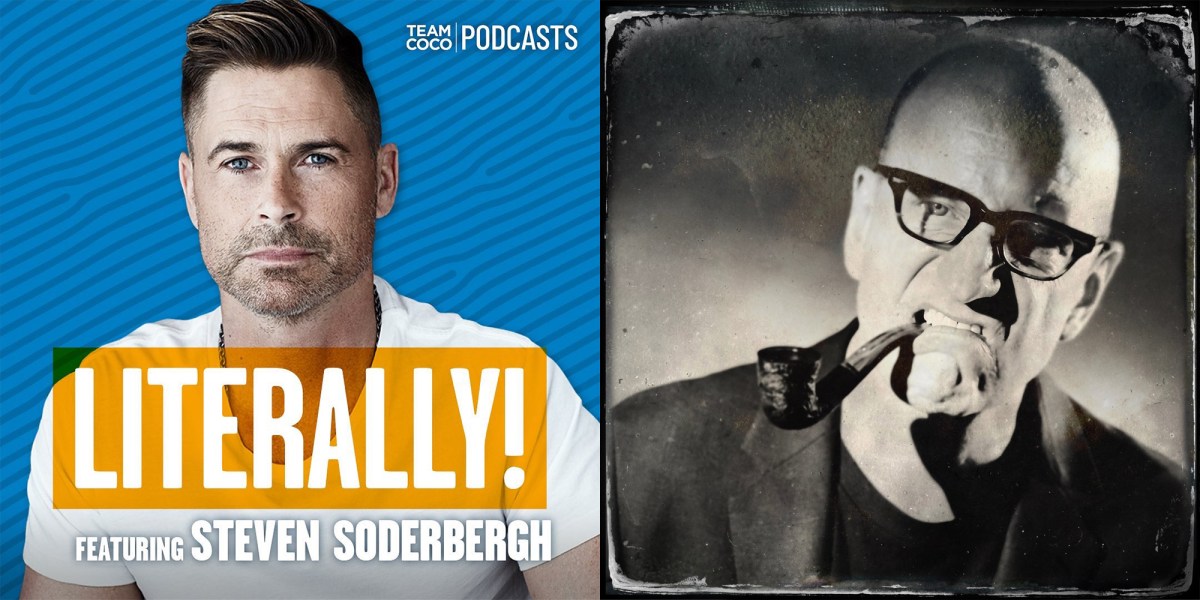
It’s Showtime! When Steven Soderbergh joins Rob, the two friends get to ask the questions they’ve never asked one another. In this episode find out about Steven’s new film Kimi, and how he thinks Sex, Lies, and Videotape now feels like a Jane Austen novel.
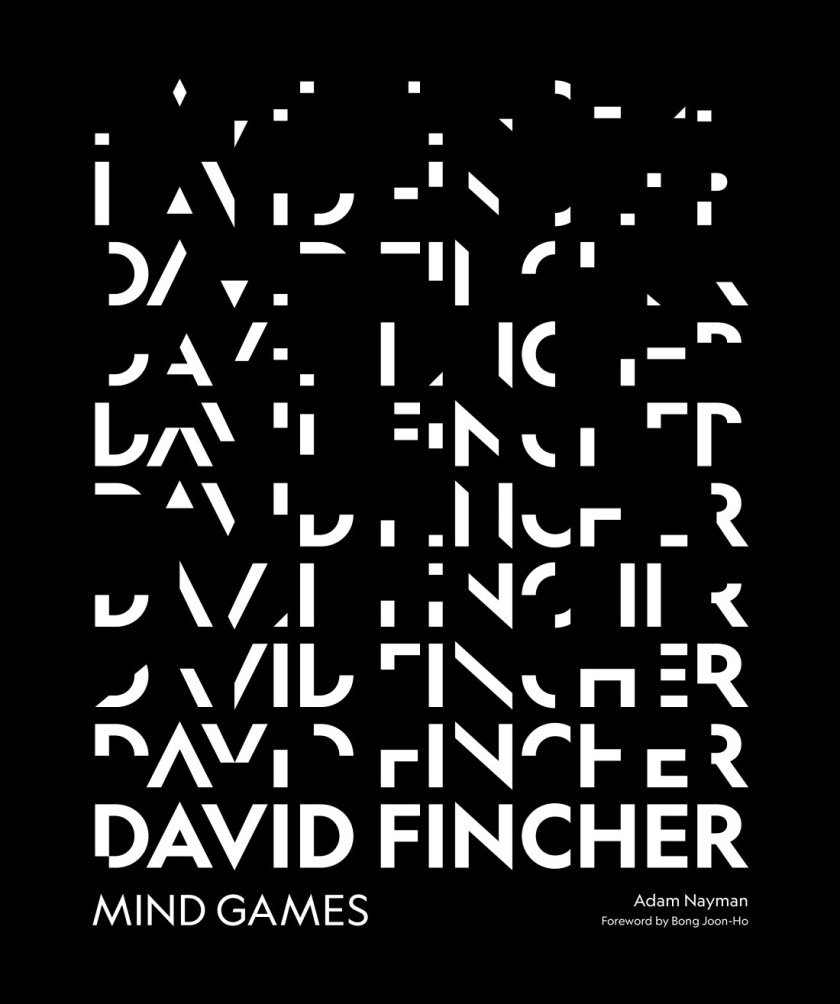
David Fincher’s films are full of doubles, puzzles, and tantalizing glimpses of the director himself. As Adam Nayman writes in his new book about Fincher’s films, Mind Games, “Fincher imposes his presence through the actions and psychologies of thinly veiled proxies: Clockmakers and safecrackers; hackers and terrorists; detectives and serial killers.” These are films that are, like their director, obsessed with procedure and appearance—and intent on puncturing both.
These films are, perhaps because of their complexity or their (at least outward) coldness—or perhaps because of Fincher’s own past as a director of music videos and advertisements—misunderstood or even dismissed. In the past decade alone, Fincher’s The Social Network and, especially, Gone Girl have received radical reappraisals, while Zodiac has been seen by many as one of the best films of the twenty-first century. Mind Games is particularly valuable in its willingness to critically engage with much of Fincher’s less-appreciated output—from his work in advertising to films like Benjamin Button and The Girl With the Dragon Tattoo. But Nayman, the author of similar studies of the Coen brothers and Paul Thomas Anderson, also deepens the understanding of films by situating them in an oeuvre that has been obsessively looking at many of the same themes for decades.
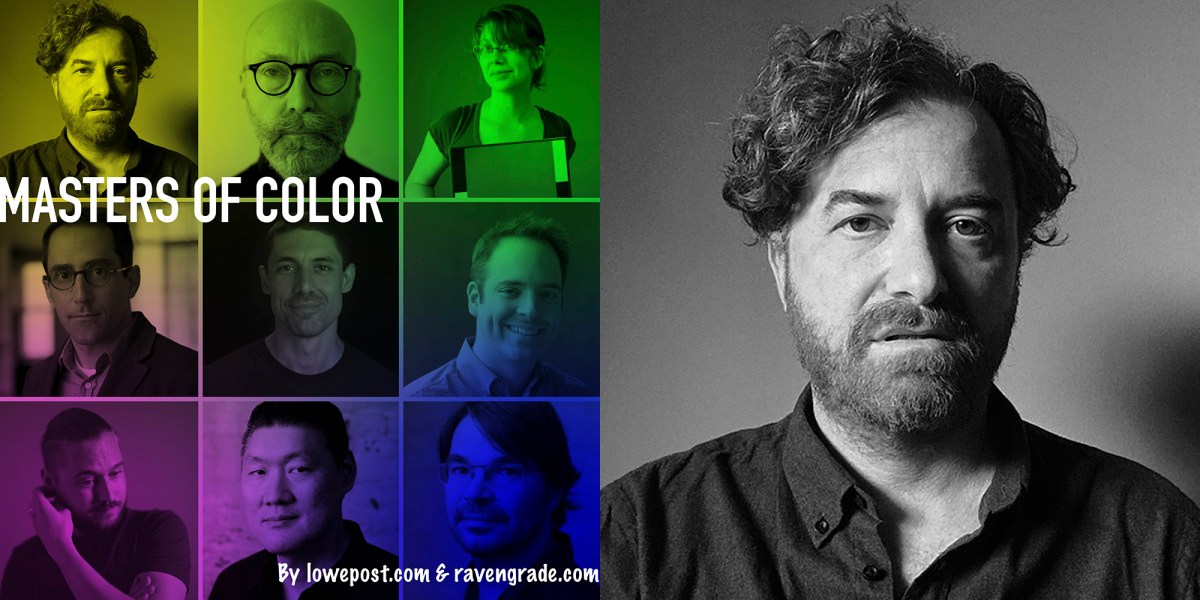
In this episode, we talk with director David Fincher’s favorite colorist Eric Weidt about the art and craft of color grading.
Eric has an incredible list of credits that includes Mank and Mindhunter. His works on these projects extend far beyond traditional tasks of color grading, incorporating complex look modeling and incredibly detailed adjustments on virtually every frame.
The techniques and insights he shares in this episode are unique and includes topics such as how to sculpt the viewers experience with textural and spatial tools, the lens treatment techniques used on Mindhunter, the process and swan curve treatment behind the day-for-night shots on Mank, advanced grain work and so much more.
This episode is sponsored by Pixelview, an industry standard and affordable streaming solution for editors and colorists.
This week’s conversation focuses in on David Fincher—a director whose decade-spanning body of gritty Americana—from the grim moral drama of Se7en to the revisionist Hollywood tale of the recent Mank—has inspired both obsessive fandom and derisive dismissal.
A new book by Adam Nayman, David Fincher: Mind Games (out November 23 from Abrams Books), offers a canny and timely appraisal of the director’s filmography. Adam writes that, “Over the past thirty years, Fincher has cultivated and maintained a reputation that precedes him of formal rigor and technocratic exactitude, of moviemaking as a game of inches.” Film Comment editors Devika Girish and Clinton Krute invited Adam and critic, filmmaker, and former NYFF director, Kent Jones—who’s written about Fincher many times over the years in FC—for an illuminating deep-dive into the Fincherverse.
Few film books in recent memory made waves like Adam Nayman’s Paul Thomas Anderson: Masterworks, a too-rare melange of authorial talent, topical interest, and opulent presentation. Last year Nayman and I spoke at length about the tome that no doubt you’ve seen in bookstores (big and small alike) since.
Nayman has returned with David Fincher: Mind Games, another Abrams-published doorstop on another double-capital-A American Auteur, lined again with essays that surprise in their capacity to find new perspectives and provocative readings on films for which there seemed no more room. Finally able to talk in person—thus, you’ll (please) read, at greater length—we sat down for a talk on writing thousands of words on someone for whom a consistent critical standing is tougher than meets the eye.


 The Fincher Analyst