This week’s conversation focuses in on David Fincher—a director whose decade-spanning body of gritty Americana—from the grim moral drama of Se7en to the revisionist Hollywood tale of the recent Mank—has inspired both obsessive fandom and derisive dismissal.
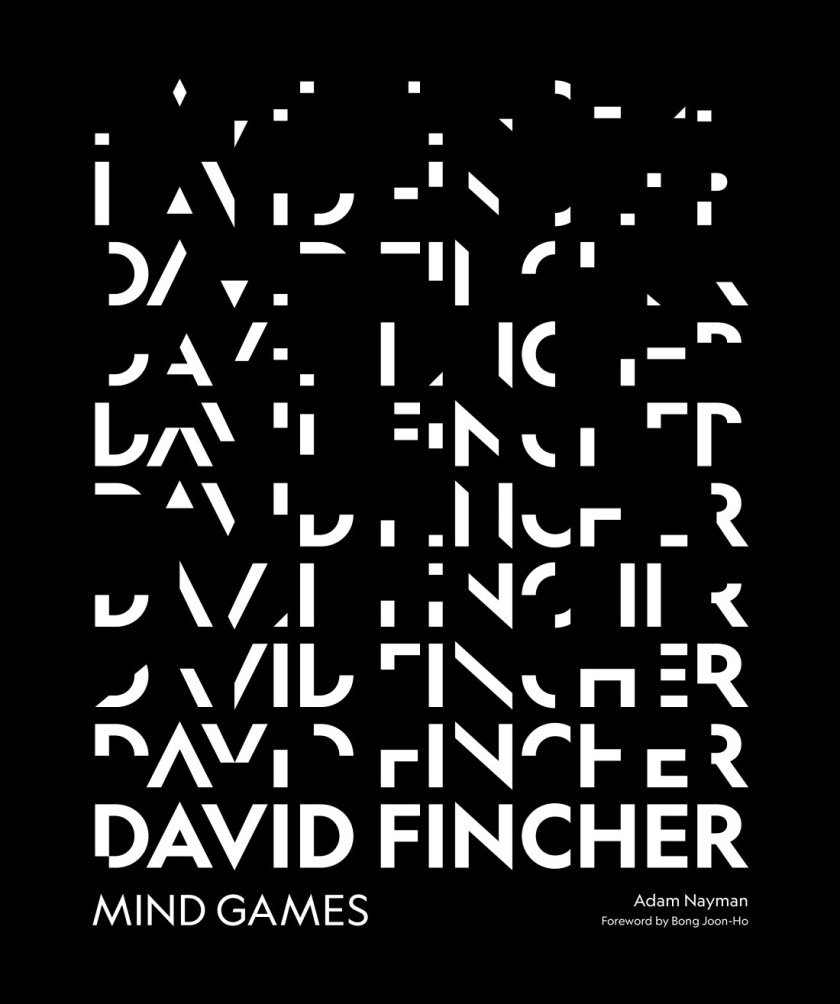
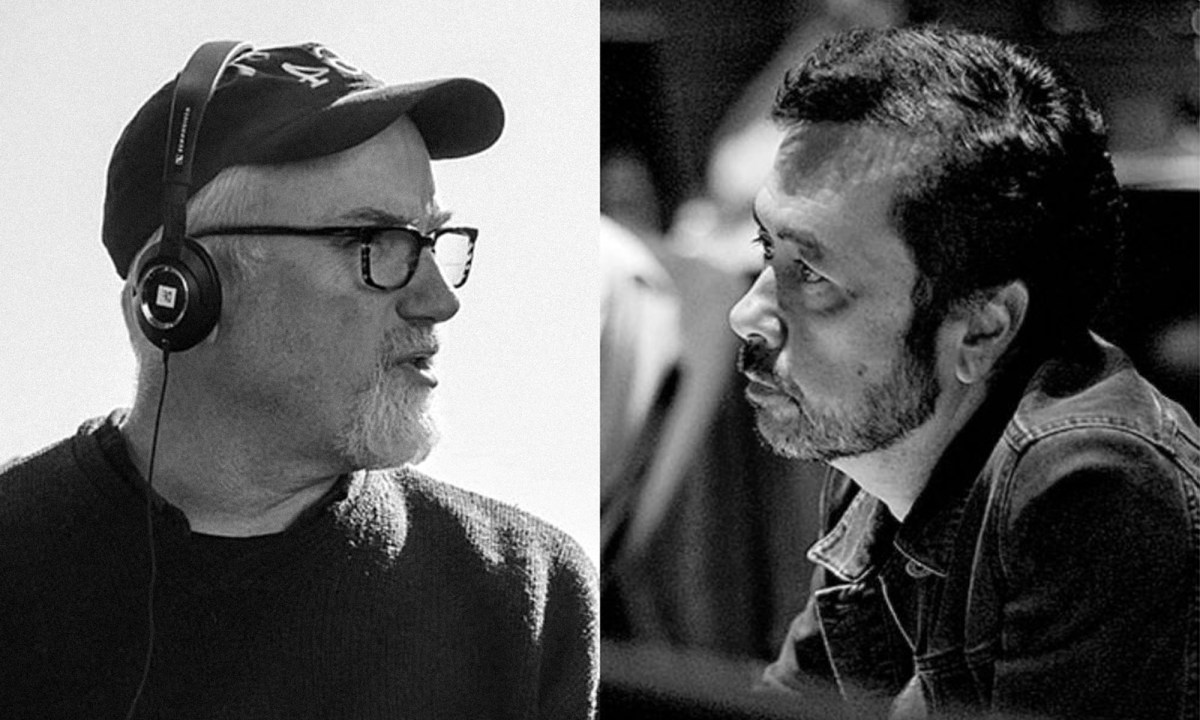
A new book by Adam Nayman, David Fincher: Mind Games (out November 23 from Abrams Books), offers a canny and timely appraisal of the director’s filmography. Adam writes that, “Over the past thirty years, Fincher has cultivated and maintained a reputation that precedes him of formal rigor and technocratic exactitude, of moviemaking as a game of inches.” Film Comment editors Devika Girish and Clinton Krute invited Adam and critic, filmmaker, and former NYFF director, Kent Jones—who’s written about Fincher many times over the years in FC—for an illuminating deep-dive into the Fincherverse.
Few film books in recent memory made waves like Adam Nayman’s Paul Thomas Anderson: Masterworks, a too-rare melange of authorial talent, topical interest, and opulent presentation. Last year Nayman and I spoke at length about the tome that no doubt you’ve seen in bookstores (big and small alike) since.
Nayman has returned with David Fincher: Mind Games, another Abrams-published doorstop on another double-capital-A American Auteur, lined again with essays that surprise in their capacity to find new perspectives and provocative readings on films for which there seemed no more room. Finally able to talk in person—thus, you’ll (please) read, at greater length—we sat down for a talk on writing thousands of words on someone for whom a consistent critical standing is tougher than meets the eye.
Adam Nyman is a fellow film critic and the author of several books about films and filmmakers, including but not limited to The Coen Brothers: This Book Really Ties the Films Together (2018) and Paul Thomas Anderson: Masterworks (2020). (Though we’ve never crossed paths in person, he also teaches in the department where I did my Master’s program.) He opens Mind Games with a dedicated discussion of the decade or so before Fincher ever made his narrative feature debut with ALIEN³ (1992), but then continues to come back to his commercial and music video work for the remainder of it, wisely treating his adman past as, well, more of an adman present. A few weeks back, Adam and I chatted for an hour about Fincher’s short-form oeuvre, but also his features because—again—the two aren’t as discrete as a lot of people believe. Our conversation has been edited for clarity, but not really so much for length.
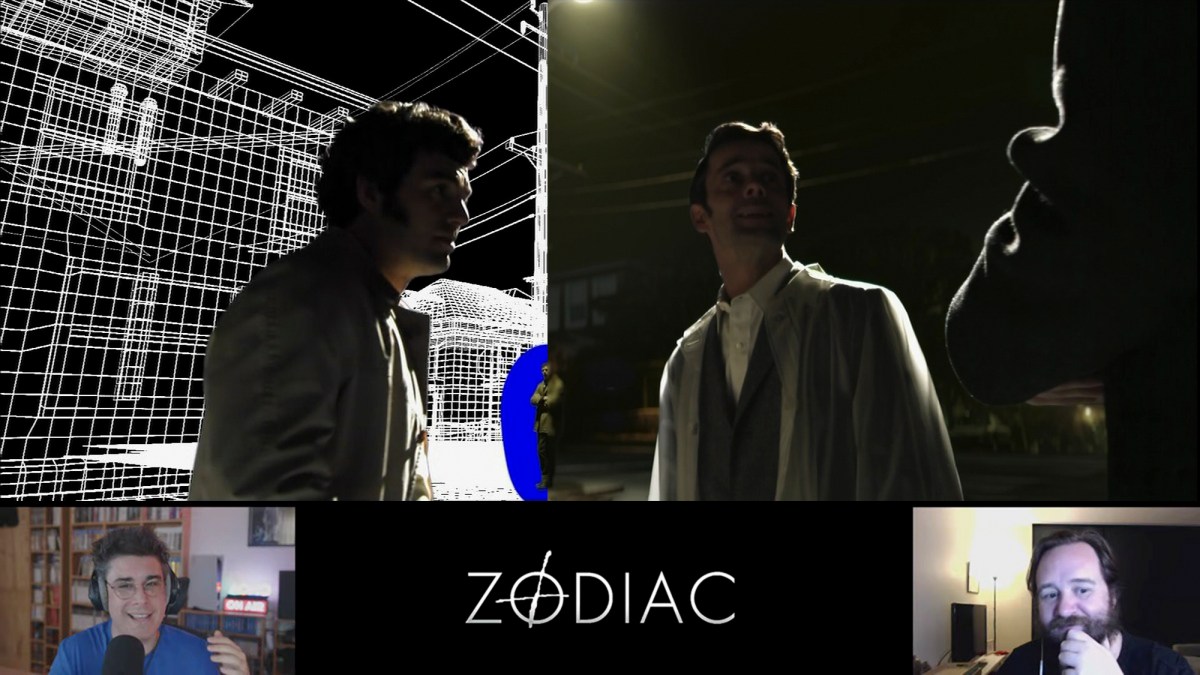
On this episode of VFX Notes, Hugo Guerra from Hugo’s Desk and Ian Failes from befores & afters dive deep into the visual effects in David Fincher films. We take an especially close look at Digital Domain‘s work for Zodiac and The Curious Case of Benjamin Button.
Chapters: 00:00:00 – Intro 00:04:20 – Zodiac and the rise of invisible VFX 00:09:09 – The rise of D2 and Foundry‘s Nuke 00:18:31 – David Fincher’s methods and Zodiac‘s murder scenes 00:30:03 – Environments by DD and Matte World 00:43:41 – The VFX of The Curious Case of Benjamin Button 00:57:27 – The VFX of The Social Network 01:03:15 – The VFX of Mindhunter 01:09:51 – Wrap up 01:12:45 – Patreon, YouTube members and Twitch Subs Credits
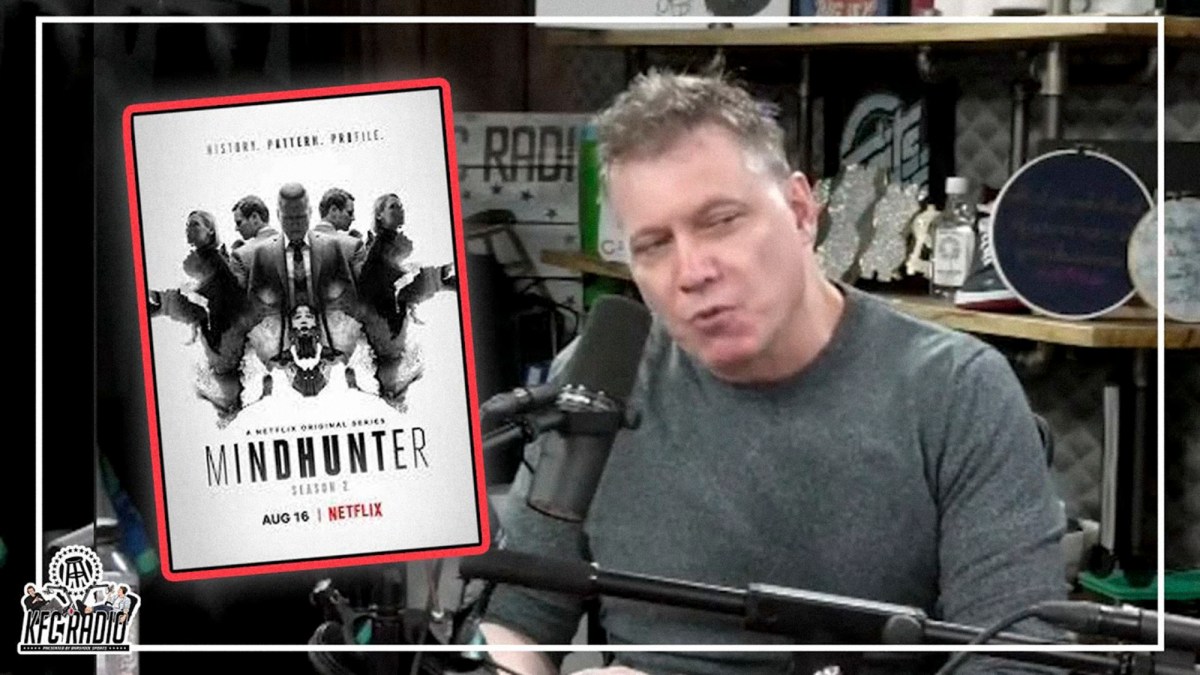
Holt McCallany stops by the show to talk about his role in Wrath of Man with Jason Statham. We discuss talk about his time playing Bill Tench in Mindhunter, how he got linked up with David Fincher, and whether or not he’d like to see Mindhunter return. (min. 1:18:54)
Chapters: 00:00 Intro — How David Fincher became a Filmmaker 02:01 Early Career & Return of the Jedi 03:18 Shot Composition and Blocking 06:19 “Relentless” Number of Takes 11:02 Directing with Precision 13:43 Color Theory & Creating the Look 15:48 Create a Feeling (Production Design & Music) 19:35 Final Takeaways
David Fincher is a director’s director. His reputation for having complete control over his work is well-known but many directors have had similar power. So, what makes his approach to film directing so captivating? In this David Fincher video essay, we’ll let the man speak for himself. Through a collection of interviews from throughout his career, Fincher guides us through some of the strongest characteristics of his directing style.
To date, over the past four decades, David Fincher has directed a plethora of music videos, commercials, and 11 feature films. Along the way, he has refined his directing style which can be summed up in two words: precise and purposeful. When watching any David Fincher movies, you would be hard-pressed to find an out-of-place camera movement, or a lazy frame composition. One lesson we learned from Fincher is how he balanced and imbalanced the frame during Nick and Amy’s first meeting in Gone Girl to show the “push and pull” of their flirting.
Another well-known staple of the David Fincher directing style is his predilection for shooting multiple takes. He famously shot 99 takes of the opening scene in The Social Network, for example. But there’s a method to his madness — he wants the actors to move “beyond muscle memory” especially in their domestic environments. In Fincher’s logic, when the actor sits on their couch, they need to have sat in it a hundred times to make it look like they’ve sat in it a hundred times.
Fincher also explains how he creates mood and tone with lighting, color, and music. With a darker frame, desaturated color, and the brooding tones of Atticus Ross and Trent Reznor, there certainly is a distinct experience watching David Fincher films. While all of this sounds extreme, the proof that he’s doing something right is visible on-screen.
♬ Songs used:
“Father / Son” — Makeup and Vanity Set “Subdivide” — Stanley Gurvich “Switchback” — Nu Alkemi$t “Battle in the Forest” — Charles Gerhardt – National Philharmonic Orchestra “Chasing Time” – David A. Molina “Sugar Storm” – Trent Reznor & Atticus Ross “Soul Sacrifice” – Santana “Graysmith Obsessed” – David Shire “Intriguing Possibilities” – Trent Reznor & Atticus Ross “Wendy Suite” – Jason Hill “Under the Midnight Sun” — Trent Reznor & Atticus Ross “14 – Ghosts II” – Nine Inch Nails “Corporate World” – The Dust Brothers “Appearances” – Trent Reznor & Atticus Ross “With Suspicion” – Trent Reznor & Atticus Ross “What Have We Done to Each Other” – Trent Reznor & Atticus Ross “Cowboys and Indians” – Trent Reznor & Atticus Ross “San Simeon Waltz” – Trent Reznor & Atticus Ross “Fool” – Ryan Taubert “Where Is My Mind” – The Pixies
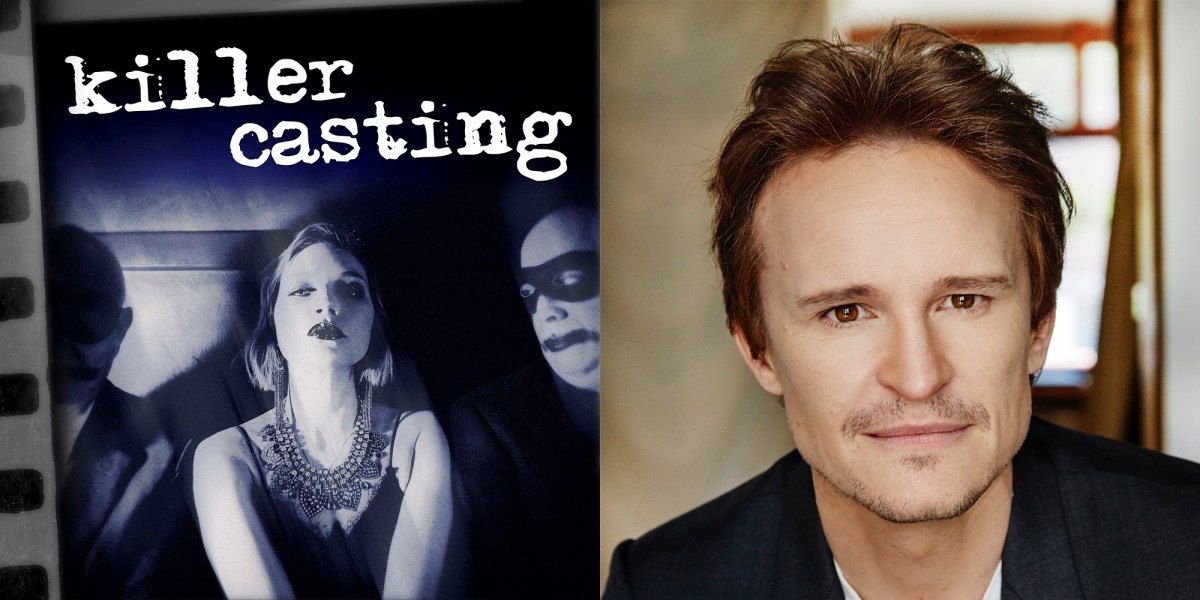
We are so psyched to welcome transformational actor Damon Herriman to the show! Mr. In Between fans will know him as Freddy the Strip Club owner, but there rest of the world knows him for tons of other roles including playing Charles Manson (twice) in Mindhunter and Once Upon A Time in Hollywood, Dewey from Justified, Kim from Secret City and so many others. Damon talks about working with Scott Ryan and Nash Edgerton, about his background growing up in the business as a child actor and so much more!
Because We Love Making Movies is an ongoing conversation with filmmakers who work behind the scenes to make the movies we love. These are the invisible warriors we don’t think of: Production & Costume Designers, Cinematographers, Editors, Producers, and the whole family of artists who make movies with their hands and hearts.
Today I talk with Gigi Williams, an Oscar Nominated Makeup Artist, and longtime collaborator with the brilliant David Fincher. Her credits are very long, but to name a few: Rock N’ Roll High School, The Howling, The Professional, as well as Single Man, Argo, The Master & Inherent Vice, not to mention her work with Fincher: Gone Girl, Mindhunter, and now Mank.
We talk about going through doors in life when they open, how her craft is misunderstood, how she cherishes working with Actors, and how she doesn’t do personal makeup, she does the movie. We also talk about Gigi’s incredible beginnings in the New York fashion world before she became a Makeup-Artist, which included working with Andy Warhol & Diane Von Furstenberg… She’s had quite a journey, and she’s still on it. It’s an amazing talk so check it out and share!
Welcome to the Rock ‘n Roll Ghost Podcast. On this episode, the Ghost speaks with musician and composer Jason Hill about his career dating back to his days in the bands Convoy, Louis XIV and Vicki Cryer. As well as his work with The Killers and producing/touring with the New York Dolls and the recent passing of Sylvain Sylvain. Hill also talks about his late career turn towards film and TV composing. He has worked closely with director David Fincher on projects such as Fincher’s Gone Girl and the Netflix series Mindhunter. It’s a pretty wide ranging, fun interview with someone I go back nearly twenty years with.
Also, starting April 1st, Hill will be hosting Film Composing and Music production masterclasses. Check out the Department of Recording and Power‘s website for more information.
David Fincher and Ren Klyce came of age during a seminal time for Hollywood: when the pair were just kids, a group of ’70s filmmakers was reshaping what it meant to make movies, right from the pair’s native Bay Area. In a biographical detail almost too perfect to be true, George Lucas rented a house in Marin County to edit his “THX 1138,” that just so happened to be located right next door to the Klyce family’s home. A single suburban lawn is all that separated a then-9-year-old Ren from the great Walter Murch, just as he was starting to change modern movie sound forever, work he’d continue throughout the decade with another NorCal auteur, Francis Ford Coppola. And it would be on a Lucas-produced animated feature, “Twice Upon a Time,” that future sound designer Klyce would meet his Coppola, a then-19-year-old Fincher.
Over the last 25 years, as Hollywood has utilized the multi-channel surround technology pioneered by Murch to create bombastic soundtracks that all too often mask a lack of craft, Klyce has helped Fincher explore the subconscious underbelly of his own films, constantly refining how sound can be used to shape a viewer’s emotional response.
“To me, sound design is not about 96 channels all at 11, and two side cars giving you this sound pressure-gasm; to me, it’s very much about the detail and the nuance and maybe things that you wouldn’t even be aware that you heard until the second or third time you saw it,” said Fincher in an interview about his collaboration with Klyce. “I can’t talk more enthusiastically about someone [Klyce] I feel has very subtly pushed what sound designers do.”