Few film books in recent memory made waves like Adam Nayman’s Paul Thomas Anderson: Masterworks, a too-rare melange of authorial talent, topical interest, and opulent presentation. Last year Nayman and I spoke at length about the tome that no doubt you’ve seen in bookstores (big and small alike) since.
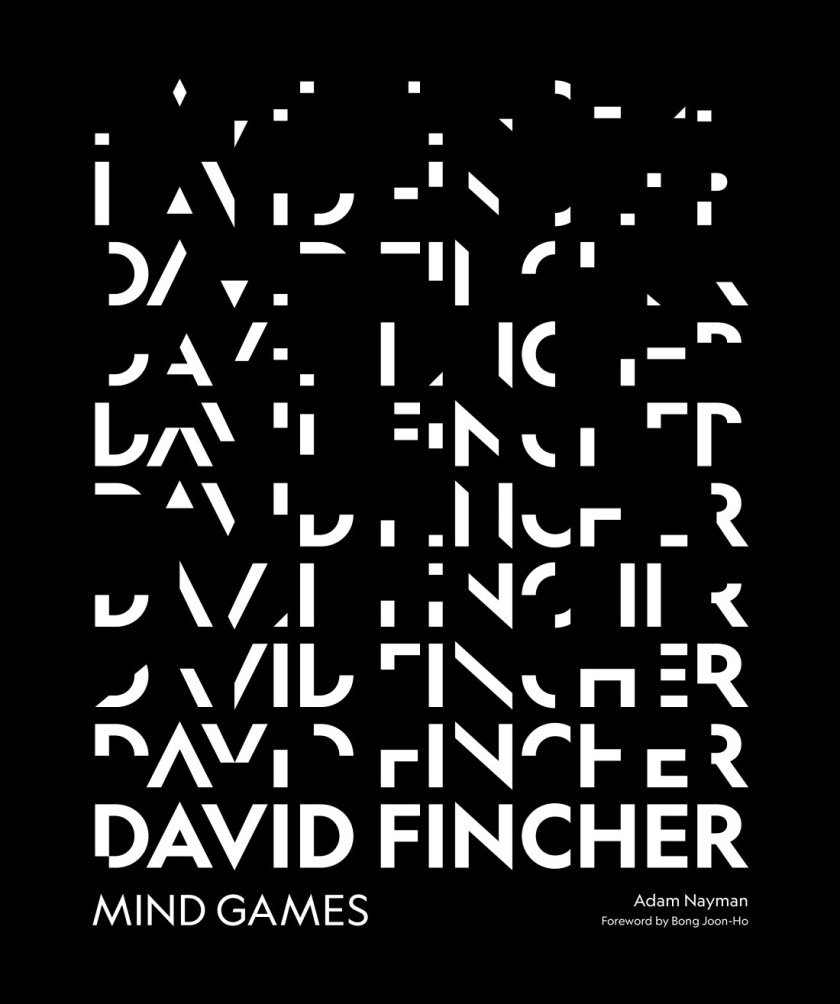
Nayman has returned with David Fincher: Mind Games, another Abrams-published doorstop on another double-capital-A American Auteur, lined again with essays that surprise in their capacity to find new perspectives and provocative readings on films for which there seemed no more room. Finally able to talk in person—thus, you’ll (please) read, at greater length—we sat down for a talk on writing thousands of words on someone for whom a consistent critical standing is tougher than meets the eye.
Adam Nyman is a fellow film critic and the author of several books about films and filmmakers, including but not limited to The Coen Brothers: This Book Really Ties the Films Together (2018) and Paul Thomas Anderson: Masterworks (2020). (Though we’ve never crossed paths in person, he also teaches in the department where I did my Master’s program.) He opens Mind Games with a dedicated discussion of the decade or so before Fincher ever made his narrative feature debut with ALIEN³ (1992), but then continues to come back to his commercial and music video work for the remainder of it, wisely treating his adman past as, well, more of an adman present. A few weeks back, Adam and I chatted for an hour about Fincher’s short-form oeuvre, but also his features because—again—the two aren’t as discrete as a lot of people believe. Our conversation has been edited for clarity, but not really so much for length.
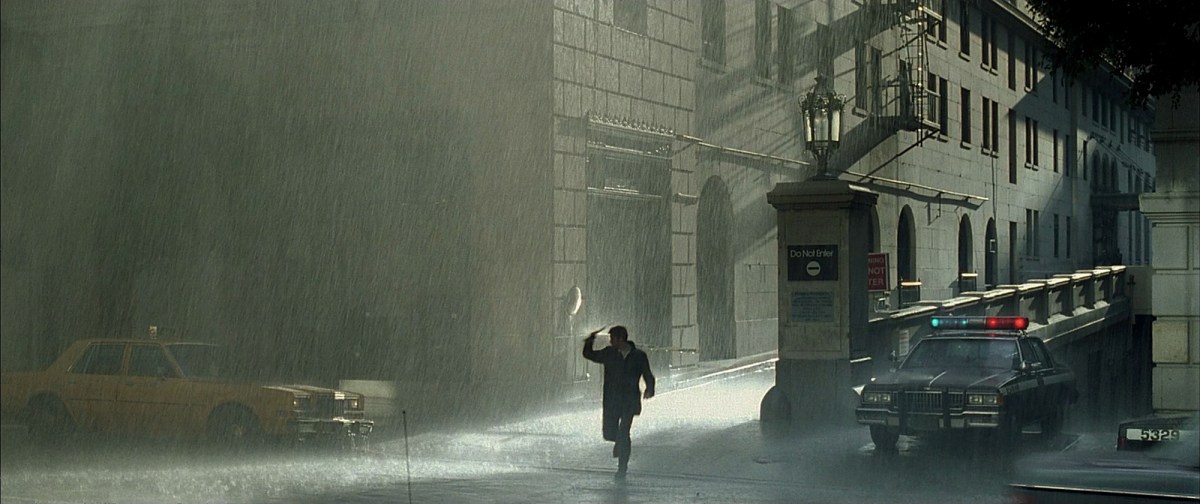
After watching a few David Fincher films I realised that one way he presents a cinematic world which is an exaggerated version of real life is through the weather.
0:00: Introduction 0:50: Seven 4:08: Sponsored Message 5:06: The Girl With The Dragon Tattoo 7:48: The Social Network 9:00: Conclusion
Music: Rhythm Scott – ‘Tribal Splash’ Dear Gravity – ‘Finish Remember Begin Again’ Doug Kauffman – ‘The River Brethren’ We Dream Of Eden – ‘After the Storm’ Ottom – ‘Quiet Street’
The first 1,000 people to use this link will get a 1 month free trial of Skillshare.
DISCLAIMER: Some links in this description are affiliate links. If you purchase a product or service with these links I may receive a small commission without an additional charge to you. Thank you for supporting my channel so I can continue to provide you with free videos!
In this edition I’ll look at Jeff Cronenweth, who, to a large extent, is responsible for popularising a style of ‘dark cinematography’, through his work on movies such as Fight Club or The Social Network.
DISCLAIMER: Some links in this description are affiliate links. If you purchase a product or service with these links I may receive a small commission without an additional charge to you. Thank you for supporting my channel so I can continue to provide you with free videos!
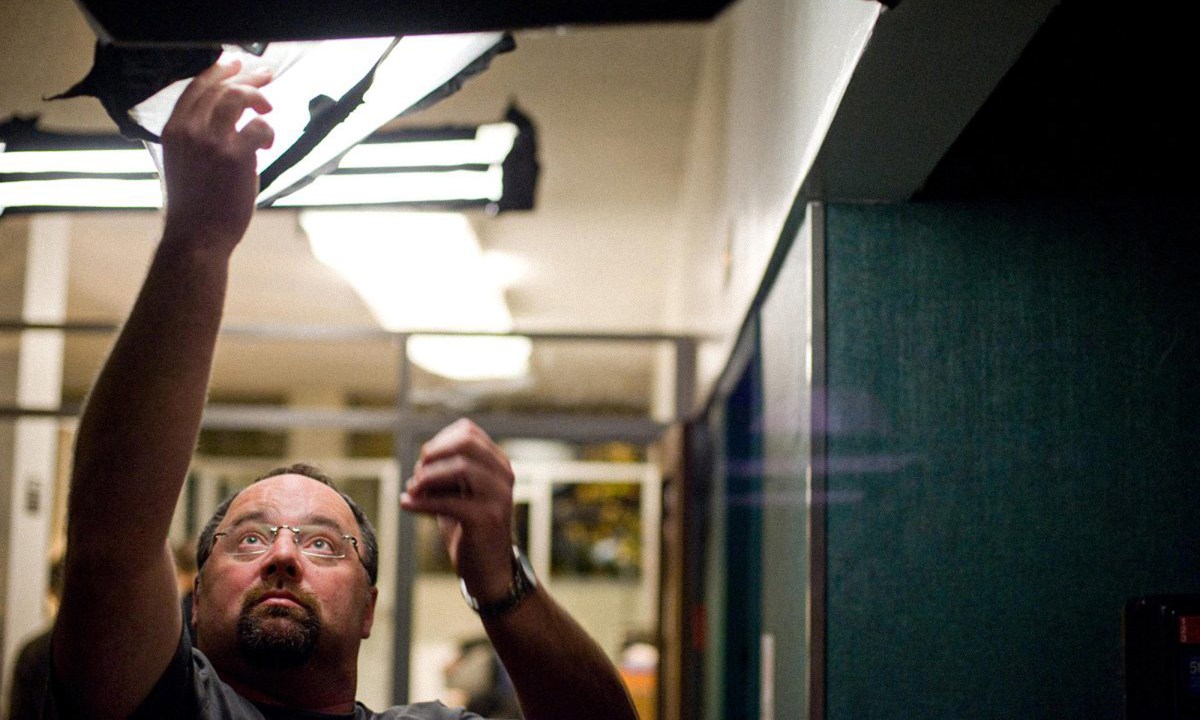
3 Things That Working With Jeff Cronenweth Taught Me About Cinematography
Chapters: 00:00 Intro — How David Fincher became a Filmmaker 02:01 Early Career & Return of the Jedi 03:18 Shot Composition and Blocking 06:19 “Relentless” Number of Takes 11:02 Directing with Precision 13:43 Color Theory & Creating the Look 15:48 Create a Feeling (Production Design & Music) 19:35 Final Takeaways
David Fincher is a director’s director. His reputation for having complete control over his work is well-known but many directors have had similar power. So, what makes his approach to film directing so captivating? In this David Fincher video essay, we’ll let the man speak for himself. Through a collection of interviews from throughout his career, Fincher guides us through some of the strongest characteristics of his directing style.
To date, over the past four decades, David Fincher has directed a plethora of music videos, commercials, and 11 feature films. Along the way, he has refined his directing style which can be summed up in two words: precise and purposeful. When watching any David Fincher movies, you would be hard-pressed to find an out-of-place camera movement, or a lazy frame composition. One lesson we learned from Fincher is how he balanced and imbalanced the frame during Nick and Amy’s first meeting in Gone Girl to show the “push and pull” of their flirting.
Another well-known staple of the David Fincher directing style is his predilection for shooting multiple takes. He famously shot 99 takes of the opening scene in The Social Network, for example. But there’s a method to his madness — he wants the actors to move “beyond muscle memory” especially in their domestic environments. In Fincher’s logic, when the actor sits on their couch, they need to have sat in it a hundred times to make it look like they’ve sat in it a hundred times.
Fincher also explains how he creates mood and tone with lighting, color, and music. With a darker frame, desaturated color, and the brooding tones of Atticus Ross and Trent Reznor, there certainly is a distinct experience watching David Fincher films. While all of this sounds extreme, the proof that he’s doing something right is visible on-screen.
♬ Songs used:
“Father / Son” — Makeup and Vanity Set “Subdivide” — Stanley Gurvich “Switchback” — Nu Alkemi$t “Battle in the Forest” — Charles Gerhardt – National Philharmonic Orchestra “Chasing Time” – David A. Molina “Sugar Storm” – Trent Reznor & Atticus Ross “Soul Sacrifice” – Santana “Graysmith Obsessed” – David Shire “Intriguing Possibilities” – Trent Reznor & Atticus Ross “Wendy Suite” – Jason Hill “Under the Midnight Sun” — Trent Reznor & Atticus Ross “14 – Ghosts II” – Nine Inch Nails “Corporate World” – The Dust Brothers “Appearances” – Trent Reznor & Atticus Ross “With Suspicion” – Trent Reznor & Atticus Ross “What Have We Done to Each Other” – Trent Reznor & Atticus Ross “Cowboys and Indians” – Trent Reznor & Atticus Ross “San Simeon Waltz” – Trent Reznor & Atticus Ross “Fool” – Ryan Taubert “Where Is My Mind” – The Pixies
David Prior is an American writer and director who made his feature directorial debut with The Empty Man, an epic in the world of horror, one of the most criminally overlooked horror movies of 2020, and one of the most ambitious horror movies of recent years . It has the scope and execution of a Chris Nolan movie while mixing elements of cults, quantum horror, and creepypastas into an extremely unique mythology that is all its own.
The story behind the making of The Empty Man is very harrowing. In the middle of shooting in South Africa, it was temporarily shut down due to weather conditions, during which a key studio executive who greenlit the film left the studio, essentially leaving the movie abandoned. If that wasn’t enough, once the movie finally got finished, David had to endure a series of calamities, including negative test screenings and studio interference which kept the movie in limbo for years. If that wasn’t enough, once the movie was finally released, it was in theatres during the height of the pandemic only to get largely negative Rotten Tomato reviews (which were very unjust) and thus be completely buried.
However, as of the past few weeks, The Empty Man has been seeing a major resurgence as a number of outspoken critics have been singing the praises of the movie and thus causing it to get the attention it deserves. The story behind The Empty Man brings to light the many issues that can befall a movie but also shows the power of the internet to champion a movie when it belongs in the spotlight. I’m personally thrilled that The Empty Man is getting the viewership that it has been; it’s a must-see, and I’m convinced it will be considered a horror epic for years to come.
In this conversation with David, we got into the whole story behind The Empty Man, his directorial processes, and what he learned observing directors like David Fincher, Tim Burton, and Peter Weir when he visited them on set while producing special features for multiple DVD titles. All of this and so much more on today’s episode of The Nick Taylor Horror Show.
The director and the rock star composer have now collaborated on four films and discuss their work on the overwhelming Oscar favourite, plus why Bird Box made no sense and whether Fight Club could come to Broadway
One of the US’s greatest living directors is keeping his camera switched off for our Zoom call, but he sounds so cheerful – “Hey! It’s Fincher!” – that he might as well be communicating in smiley-face emojis. Perhaps it is the effect of the 10 Oscar nominations announced a few days earlier for Mank, his acclaimed, affectionate film about the writing of Citizen Kane. Meanwhile, Trent Reznor – who, with his musical partner in Nine Inch Nails, Atticus Ross, has composed the scores for all the director’s movies since 2010 – joins the call a moment later, and proves less camera-shy. He pops up in a brown tracksuit, seated beside a keyboard in a bright, cluttered room. Fincher gives him a chipper greeting: “Trent-O!”
They are here to discuss a partnership that has spanned four pictures: the Facebook origin story The Social Network, the thrillers The Girl With the Dragon Tattoo and Gone Girl, and now Mank. It has also brought awards nominations for each of them, as well as an Oscar in 2011 for the baleful, festering music composed by Reznor and Ross for The Social Network, their first film score. I congratulate both men on their most recent nominations. Reznor has received two this year for his scores with Ross: one for Mank, the other for the Pixar fantasy Soul. “It’s brought the ratio down a bit,” he says softly. “It was always nice being able to say: ‘One film, one win.’”
Those 10 nods, which include Fincher’s third for best director, mean that Mank has more nominations than any other film in contention, though perhaps it doesn’t do to get carried away: The Irishman, another prestigious Netflix title, got the same number last year but left empty handed. It feels perverse, though, that a movie about an Oscar-winning writer (Herman J Mankiewicz, played by Gary Oldman) has been overlooked in the best original screenplay category.
“Listen, you can’t expect other people to see the exact same value in things that you do,” Fincher says. “That’s just childish. Ten’s nice. I got no complaints about 10. He won’t be upset.”
When the twist-filled cosmic horror mind-bender The Empty Manwas unceremoniously dumped in theaters last October, its writer and director David Prior wasn’t even sent a link to the final version of the film by the studio. More than four years before, he’d pitched the movie to 20th Century Fox, a perhaps unconventional home for such a strange project, and, after the company was acquired by Disney in 2019, Prior’s debut feature slipped through the corporate cracks. In the middle of a global pandemic, The Empty Man was released with one misleading trailer, which marketed the two-hour-plus saga as another urban legend-inspired teen thriller, and minimal promotional fanfare. Unsurprisingly, it bombed, grossing just over $4 million worldwide. Prior transmitted and almost no one received.
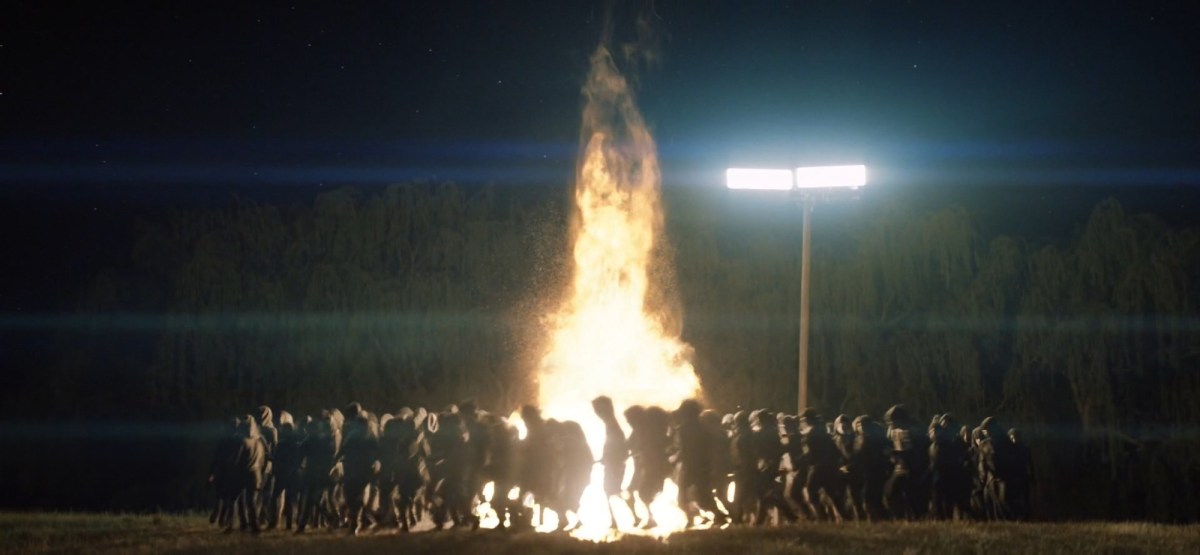
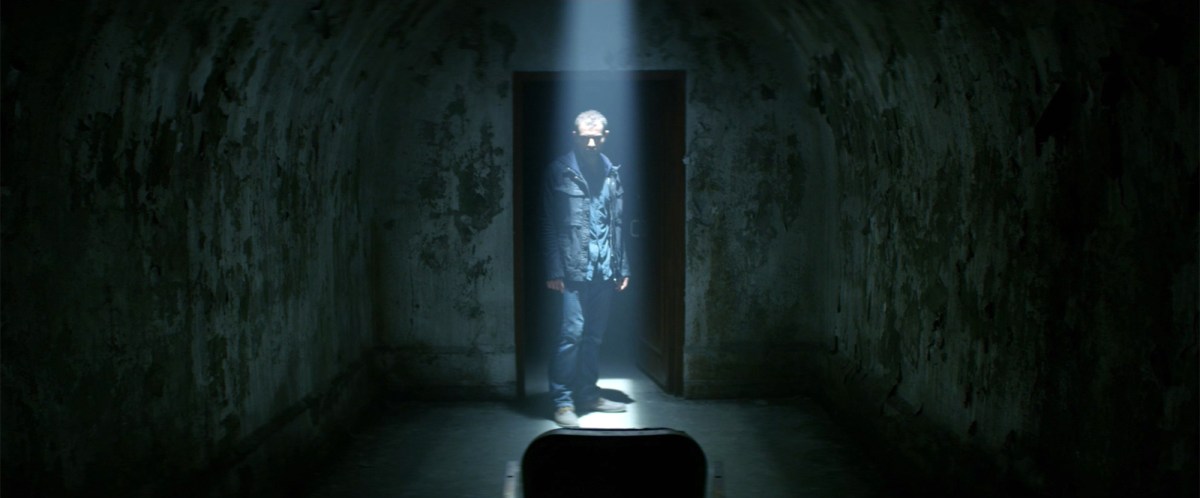
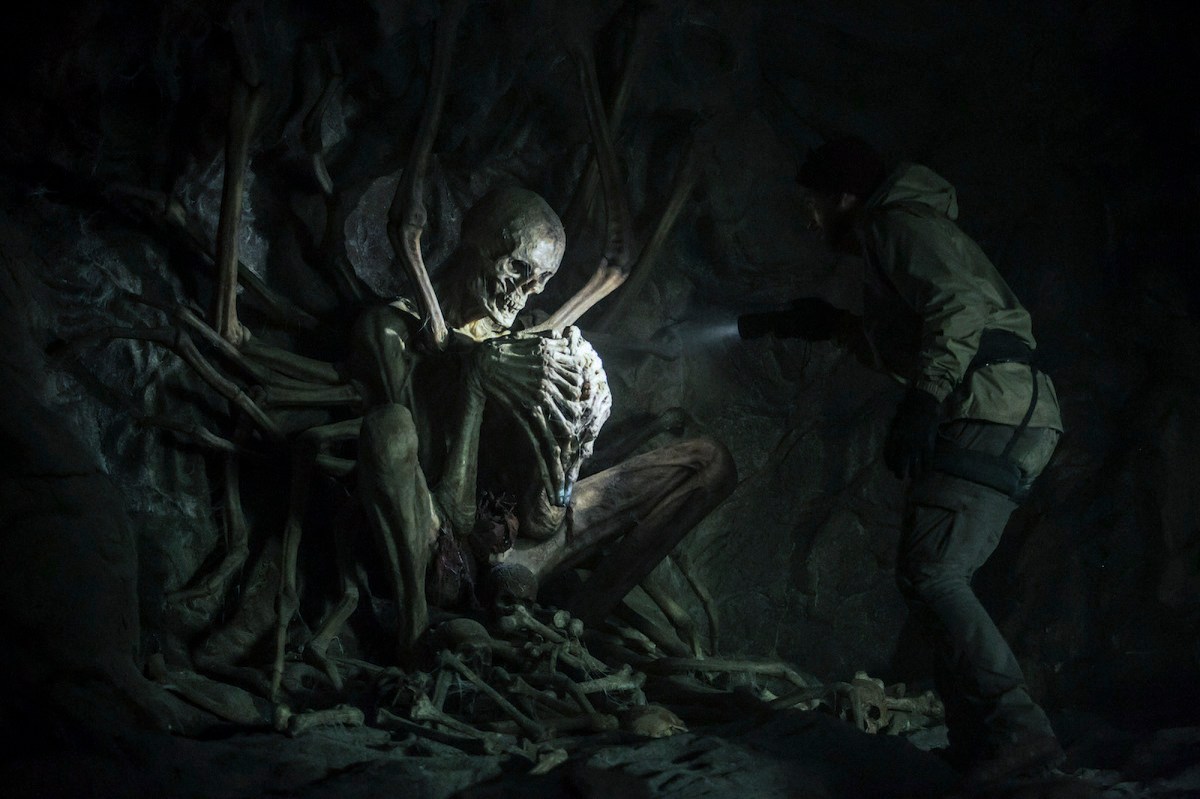
Adapted from a Boom! Studios comic by the writer Cullen Bunn and artist Vanesa R. Del Rey, The Empty Man was initially sold to Fox in 2016 as a stylish horror mystery infused with thematic ambiguity, existential dread, and a dash of Lovecraftian terror. James Badge Dale plays ex-detective James Lasombra, a grief-stricken widower whose friend Nora (Marin Ireland) enlists him to help find her daughter Amanda (Sasha Frolova) after she disappears. Amanda and her teenage friends may or may not have summoned the Empty Man, a mystical entity with an odd connection to a cult-like organization called the Pontifex Institute, led by a charismatic leader played by Stephen Root of Office Space and Barry. (I’ve been describing it to friends as The Girl with the Dragon Tattoo meets The Ring.) In his early conversations with executives, Prior compared it to Mulholland Drive rather than something in The Conjuring universe or the Blumhouse arsenal. In the writing stage, executives even encouraged him to expand the film’s lengthy opening, a snowbound tale of hikers in Bhutan’s Ura Valley who stumble upon a sinister cave.
The Empty Man‘s journey to the big screen quickly unraveled. In some ways, the story has all the hallmarks of classic Hollywood fiasco: a shoot plagued by bad weather, disastrous test screenings, fights over runtime, studio meddling, a breakdown in communication, and an ambitious first-time director threading potentially alienating material into familiar genre fare. (Not many horror movies have a prominent shot of a high school named after a famous French philosopher.) In other ways, it’s a uniquely modern tale of mounting corporate neglect, expiring tax rebates, confusing IP mismanagement, and slow-building social media advocacy.
Are audiences hungry for movies like The Empty Man? The movie’s box office performance would suggest a definitive no, but, since becoming available as a digital rental in 2021, the film has taken on a second life online, where podcast hosts and viewers on platforms like Twitter and Letterboxd have sung its praises, turning it into the rare 21st century studio project that earns the over-used descriptor of “cult movie.”
Prior, who began his career working on a DVD of the 1999 horror movie Ravenous and later directed special features for David Fincher films like Zodiac and The Social Network, has a keen awareness of how his movie plays into certain narratives. Over a Google Hangout, he spoke with the combination of weary cynicism and wounded pride that often accompanies someone who has been through an ordeal. “It’s amazing how trenchant Barton Fink is about the way the Hollywood system really works,” he noted early in the conversation.
As the Coen Brothers screenwriter protagonist knows, the “life of the mind” can be painful. While unpacking the jargon-heavy mythology of his debut and the turmoil-packed narrative of its production, Prior repeatedly emphasized how grateful he was that the movie has found an audience and often laughed at the absurdity of its fate. Who can be blamed for what happened to The Empty Man? As one of the movie’s grizzled detectives remarks in the film, “We can’t indict the cosmos.”
Last October, a horror movie came and went. It wasn’t the first time a Hollywood studio dumped a horror movie in the middle of Halloween; given the ongoing pandemic, few films with a theatrical release could have moved the needle in 2020. But in the case of David Prior’s The Empty Man, this release was just the tip of the iceberg, the near-final act in a first-time filmmaker’s multi-year struggle to bring his vision to the screen.
In this conversation, Prior explains how he went from being David Fincher’s protégé to the director of 2020’s most ambitious — and most abandoned — horror film. We also explore how a perfect storm of production problems and studio politics nearly killed the film, and how a passionate audience has already started to turn The Empty Man into a future cult classic.
From DVDs to David Fincher
History doesn’t repeat itself, but it often rhymes. If The Empty Man survives its troubled production and halfhearted theatrical release to become a household name for genre fans, then perhaps this story will serve as a fitting beginning to Prior’s career as a feature filmmaker. For years, Prior worked as a production documentarian for filmmakers such as David Fincher and Peter Weir, but one of his big breaks came with Antonia Bird’s Ravenous, itself a studio disaster that took years to find a passionate audience.
In the years before Ravenous’s theatrical release, Prior had built relationships in 20th Century Fox’s home video department thanks to his contributions to the isolated score track on the Alien DVD release. So when Prior stumbled across Ravenous in theaters — despite a trailer that he describes as a “piss-poor representation of the movie” — he saw an opportunity to build on those connections and bring some much-deserved love to Bird’s film.
His gamble worked. According to Prior, the special-edition release of Ravenous sold three times its initial projections, forcing 20th Century Fox to rush extra copies of the film into production. With his credentials established, Prior was given his pick of future home video releases, and his decision resulted in one of the most influential relationships of Prior’s professional career. “I said, ‘I don’t know what Fight Club is, but I really want to meet David Fincher, so I’ll do that one. And that led to a relationship with Fincher that goes on to this day.”
Over the next decade, Prior became a powerhouse in behind-the-scenes documentaries, shooting features for such films as Master and Commander, Zodiac, and The Social Network. It proved to be a successful and stable career, just not the one that Prior had in mind when he went to Hollywood. “I remember at the time thinking, ‘This is gonna be something where if I’m not careful, ten, fifteen years of my life is going to go by doing this instead of what I’d rather be doing,’” the director says. So Prior took another gamble, this time using some of his own money to produce the short film that would eventually land him his role with The Empty Man.
“In 40 short minutes, David Prior shows why he is one of the most promising directors I’ve ever seen. People always ask me what to do for a ‘calling card’ in Hollywood. Well do something like this, and try to do it half as well.”
A disillusioned screenwriter in old Hollywood gets a shot at redemption in Director David Fincher’s biographical comedy-drama, Mank.
Fincher’s film takes place as film 24-year-old wunderkind Orson Welles hires scathing social critic and alcoholic screenwriter Herman J. Mankiewicz to write the screenplay for his masterpiece, Citizen Kane.
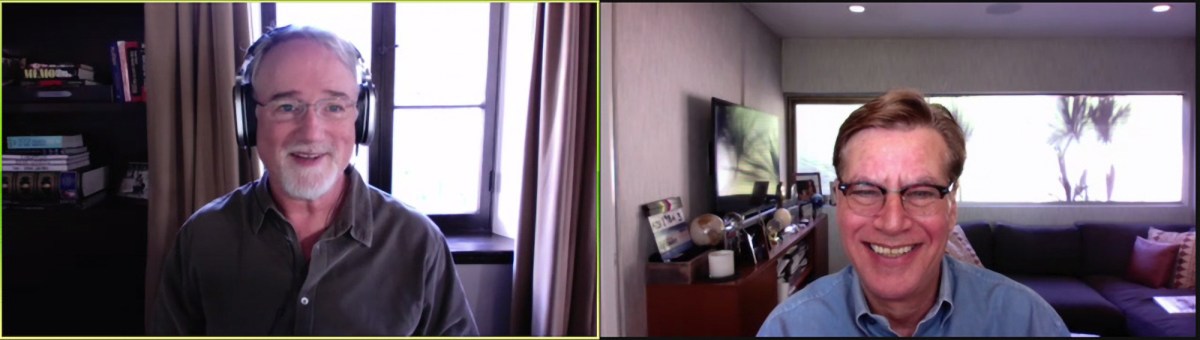
On February 6, Fincher discussed the making of Mank in a DGA Virtual Q&A moderated by Director Aaron Sorkin (The Trial of the Chicago 7).
During their conversation, Fincher spoke about his love for “the altar of cinema,” the communal aspect that can come through film. “For me, what I love about cinema is going into a big dark room with 700 people and through their laughter and through their surprise and through their shock and through their reactions you realize, I’m not alone. I’m the same. I’m wired into this group in the same way just organically and I’m picking up on all these other cues. That is what makes the cinema, or a great grand theater, an almost cathedral-like experience.”
Fincher’s other directorial credits include the feature films Se7en, The Game, Panic Room, Zodiac, Gone Girl; episodes of the television series House of Cards and Mindhunter; and countless commercials and music videos. He has been nominated for the DGA Award for Outstanding Directorial Achievement in Theatrical Feature Film for The Curious Case of Benjamin Button, The Social Network and The Girl with the Dragon Tattoo. In 2013, he was nominated for the DGA Award for Dramatic Series for House of Cards, “Chapter 1” and has twice been nominated for the DGA Award for his Commercial work with Anonymous Content in 2003 and 2008, winning the Award in 2003 for Beauty for Sale (Xelibri Phones), Gamebreakers (Nikegridiron.Com) and Speed Chain (Nike).






 The Fincher Analyst