How Technology Made David Fincher a Better Director

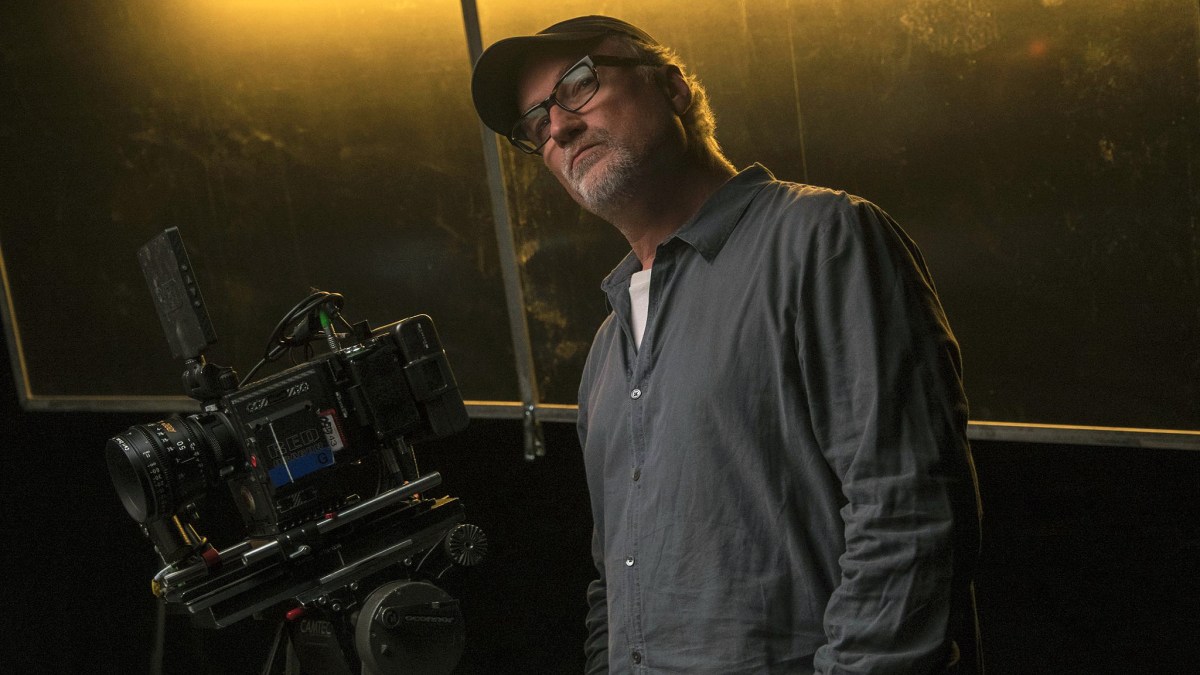
Has there ever been a movie director who has taken more advantage of new technology than David Fincher? We look back on how digital production benefitted his movies so much.

Julian Mitchell
November 28, 2022
The Beat (Premium Beat)

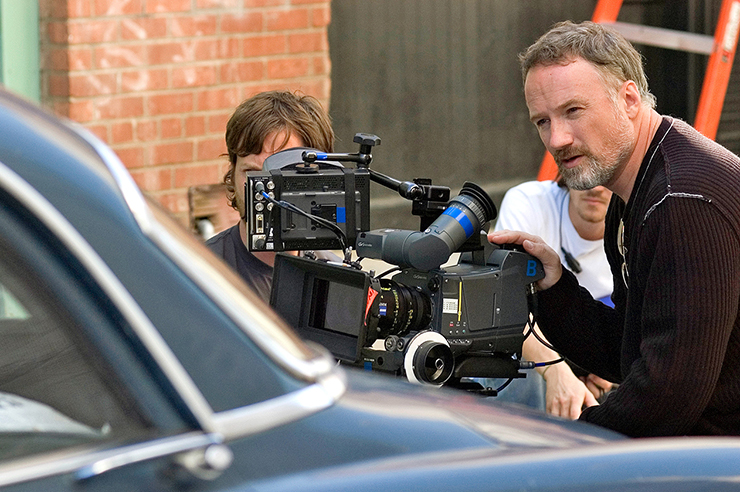
When digital cinematography was in its infancy, around 2005, it was like the Wild West; new cameras were appearing seemingly every week, whether from University’ concept’ programs or start-ups with a movie making a revolution on their minds.

In this white heat of technology, director David Fincher started to craft his movie-making skills. He was a risk taker with new technology but driven by the promise it gave him. As much as Fincher and his crew were proud of the films they made, they were also proud of how they made them.

Zodiac’s Digital Gamble

Fincher had already used digital cinematography for his commercials and decided to commit early to this technology for his movies. But his long-time producer Ceán Chaffin brought some hard business sense to brace against his pioneering creative decisions.

Ceán had been involved more in costing this digital workflow out and had looked at introducing digital for a feature before Zodiac but found that it wasn’t cost-efficient at that time; Zodiac was different. “At the moment of Zodiac, storage was so cheap that we could push it; it was also about the savings at that point. The sticking point was really about storage for us up to Zodiac.”
Read the full article

Pixel Perfection

Jarred Land / RED Digital Cinema

Adrian Pennington
April 2022
British Cinematographer

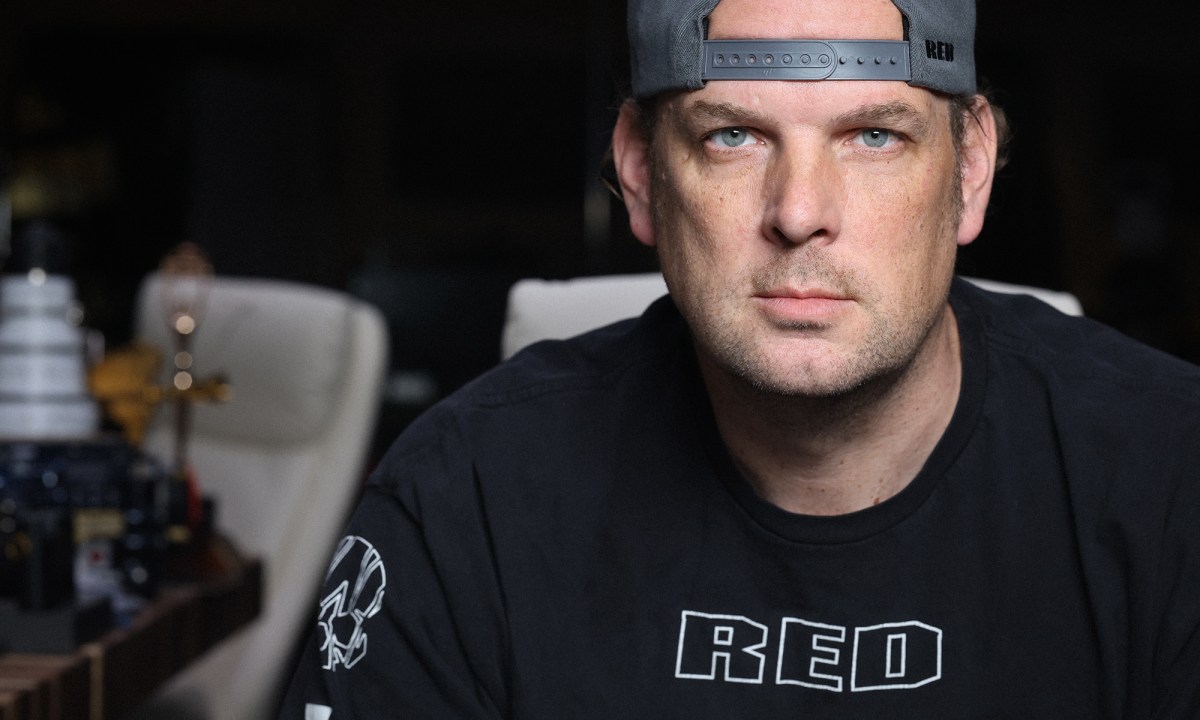
Jarred Land has spent his career in close collaboration and connection with filmmakers, supporting the execution of their vision with powerful and ground-breaking tools.

Jarred Land runs RED Digital Cinema, the company whose 4K camera went from scepticism to admiration on a run of prestige movies like David Fincher’s Oscar-winning Mank and series like The Queen’s Gambit. Since 2013, Land has led a team focused on precedent-setting technology for filmmakers.

Land didn’t found RED but joined Jim Jannard before the launch of the first camera and during the hardcore, technology banging sleepless nights part of the story, where a small group failed, learned, succeeded. From the first conversation Land had with Jannard and still today, the focus is on providing a more complete tool for filmmakers.

Born in Edmonton, Canada, Land’s father ran gas stations and shopping malls, imbuing in him an entrepreneurial spirit. The teenage Land’s passion was mountain biking which he segued into his own bike courier company in Vancouver.

A chance encounter with a client inspired him to take up videography using the Panasonic tape camcorder DVX100. “I couldn’t go to film school because I was running my company and biking 100km a day, so I set up a bulletin board for help,” he says.

Read the full profile

Frame & Reference Podcast: “Being the Ricardos” DP Jeff Cronenweth, ASC

Kenny McMillan
April 7, 2022
Frame & Reference

Frame & Reference is a conversation between Cinematographers hosted by Kenny McMillan. Each episode dives into the respective DP’s current and past work, as well as what influences and inspires them. These discussions are an entertaining and informative look into the world of making films through the lens of the people who shoot them.

In this episode, Kenny talks with legendary cinematographer Jeff Cronenweth, ASC about the Oscar Nominated film “Being the Ricardos.” You likely know Jeff from his work on films such as “Fight Club“, “Gone Girl“, “The Social Network” & “The Girl with the Dragon Tattoo.”

Listen to the podcast:

Apple Podcasts
Spotify
YouTube

Support the podcast on Patreon, Buy Me a Coffee
Follow Frame & Reference: Twitter, Instagram
Follow Kenny McMillan: Instagram, OWL BOT

The Enneagram in a Movie: David Fincher and Enneagram Type 5

Mario Sikora and TJ Dawe
March 21, 2022
Awareness to Action

The Enneagram in a Movie Podcast is a fun and informative way to take a deep dive into understanding the Enneagram.

Join your Season 2 hosts, Mario Sikora and TJ Dawe, as well as their special guest hosts throughout the season, as they discuss how the themes of the Enneagram are reflected in the work of great film directors such as Clint Eastwood, Martin Scorsese, Steven Spielberg, Wes Anderson, Michael Mann, and others.

Mario and TJ analyze the films of David Fincher in two episodes to explore Enneagram Type 5, “Striving to Feel Detached.” They discuss “Seven”, “Fight Club”, The Social Network” and “Girl with a Dragon Tattoo.”

Listen to the Part 1 podcast:

Apple Podcast
Simplecast
Audible

Listen to the Part 2 podcast:

Apple Podcast
Simplecast
Audible

SBIFF 2016. Cinema Vanguard – Rooney Mara Talks David Fincher

… and the Enneagram.

Red Carpet Rookies: Jeff Cronenweth. Cinematographer

Mike Battle
January 31, 2022
Red Carpet Rookies

In this episode, we’re joined by one of the world’s greatest Cinematographers, Jeff Cronenweth. Born into the film business, he grafted his way through the rungs of the camera department and music video scene of the 1990s, until he got the call from David Fincher to take the reins of Fight Club. From there it’s been a run of legendary movies including, One Hour Photo and Gone Girl, as well as The Social Network and The Girl With The Dragon Tattoo both of which he picked up Oscar nominations.

What you’ll learn from Jeff:

  • Jeff’s opinion on whether film school is still necessary
  • Whether music videos are still useful starting grounds for DPs
  • How Jeff get imposter syndrome on Fight Club
  • What it’s like to work with Aaron Sorkin
  • How does the DP Director relationship work
  • Jeff’s opinion on the film fanboys that constantly copy the ‘Fincher/Cronwneth aesthetic!’
  • Whether Jeff has taught David Fincher anything
  • What a day of prep is like for Fincher and Jeff

And of course in our quick-fire: Jeff’s no 1 piece of advice, favourite film, book to read, person to work with, and more.

Listen to the podcast:

Red Carpet Rookies (with a transcript)
Apple Podcast
Spotify
Google Podcasts

Follow Red Carpet Rookies: InstagramFacebookTwitter

Follow Mike: Instagram, Twitter

Dakota Johnson and Andrew Garfield on What The Social Network Taught Them—And Where It Took Them

The stars of The Lost Daughter and Tick, Tick…Boom! also reflect on the weight of franchise fame: “It takes a lot to be private now.”

Rebecca Ford
January 18, 2022
Vanity Fair

In Reunited, Awards Insider hosts a conversation between two Oscar contenders who have collaborated on a previous project. Here, we speak with Lost Daughter actor Dakota Johnson and Tick, Tick…Boom! star Andrew Garfield, who previously appeared together in the 2010 drama The Social Network.

The Social Network, David Fincher’s 2010 drama about Mark Zuckerberg and the creation of Facebook, has remained firmly part of the cultural conversation—after all, the influence of the social media network on our lives and politics has only increased. But this year also brings an opportunity to celebrate two of its stars who are making their way through the awards circuit: Andrew Garfield, who played Eduardo Saverin, and Dakota Johnson, who, in her first film role, played Amelia Ritter.

The 32-year-old Johnson, who went on to lead the Fifty Shades franchise, plays a conflicted young mother in Maggie Gyllenhaal’s The Lost Daughter. And Garfield, 38, who went on to don the Spider-Man suit for two films before diving into more auteur-driven fare like Hacksaw Ridge and Silence, delivers a career-best performance as Rent creator Jonathan Larson in Lin-Manuel Miranda’s Tick, Tick…Boom!

Their current projects could not be more different, but their paths to get to them, from the early days of The Social Network to leading big franchises (and the fandom that comes with that), have been eerily similar. Vanity Fair reunited the two in Los Angeles for a conversation about filming with Fincher, dealing with the spotlight of fame, and the “rotten fish” of social media.

Read the full interview

Andrew Garfield & Dakota Johnson Reunite After 11 Years

Masters of Color: Ian Vertovec

Cullen Kelly
December 12, 2021
Lowepost & Ravengrade

In this episode, we talk with Ian Vertovec about the art and craft of color grading.

This episode is sponsored by Pixelview, an industry standard and affordable streaming solution for editors and colorists.

Listen to the podcast:

Apple Podcasts
Spotify
Amazon Music
Google Podcasts
Lowepost (Premium membership videos)

Masters of Color: Eric Weidt

Cullen Kelly
December 2, 2021
Lowepost & Ravengrade

In this episode, we talk with director David Fincher’s favorite colorist Eric Weidt about the art and craft of color grading.

Eric has an incredible list of credits that includes Mank and Mindhunter. His works on these projects extend far beyond traditional tasks of color grading, incorporating complex look modeling and incredibly detailed adjustments on virtually every frame.

The techniques and insights he shares in this episode are unique and includes topics such as how to sculpt the viewers experience with textural and spatial tools, the lens treatment techniques used on Mindhunter, the process and swan curve treatment behind the day-for-night shots on Mank, advanced grain work and so much more.

This episode is sponsored by Pixelview, an industry standard and affordable streaming solution for editors and colorists.

Listen to the podcast:

Apple Podcasts
Spotify
Amazon Music
Google Podcasts
Lowepost (Premium membership videos)

BETA (WPR): The exacting and evolving genius of filmmaker David Fincher

Film critic Adam Nayman’s ‘Mind Games’ explores the successful perfectionism of the ‘Fight Club,’ ‘Se7en,’ ‘The Social Network’ and ‘Zodiac’ director

Doug Gordon, Adam Friedrich
December 18, 2021
BETA (WPR)

In 1985, aspiring director David Fincher was tapped by the American Cancer Society to make a PSA. Riffing off Stanley Kubrick‘s “2001,” Fincher put forth one of the most provocative and memorable commercials ever featuring an in-utero fetus smoking a cigarette to demonstrate the dangers of pregnant smoking.

This PSA was just the beginning of Fincher’s ability to utilize the shared language and visuals of film to express a point. He would move next to directing music videos where he famously invoked Fritz Lang‘s “Metropolis” while directing Madonna’s 1989 video for “Express Yourself.”

Film critic Adam Nayman told WPR‘s “BETA” that Fincher’s cinematic ambition was present in all of this early work before he became a household name directing transcendent films like “Fight Club,” “Se7en,” “Zodiac” and “The Social Network.”

“I think that he was part of a cycle of music video directors who were drawing on movies for the music videos. So, by the time they ended up making feature films, the visual language and the ambition were already there,” Nayman said.

Nayman is the author of “David Fincher: Mind Games,” a comprehensive critical companion book to Fincher’s career output thus far. It’s the third installment of Nayman’s deep dives into generational filmmakers that includes the Coen brothers and Paul Thomas Anderson.

Read and listen to the full interview

Buy the book David Fincher: Mind Games. By Adam Nayman

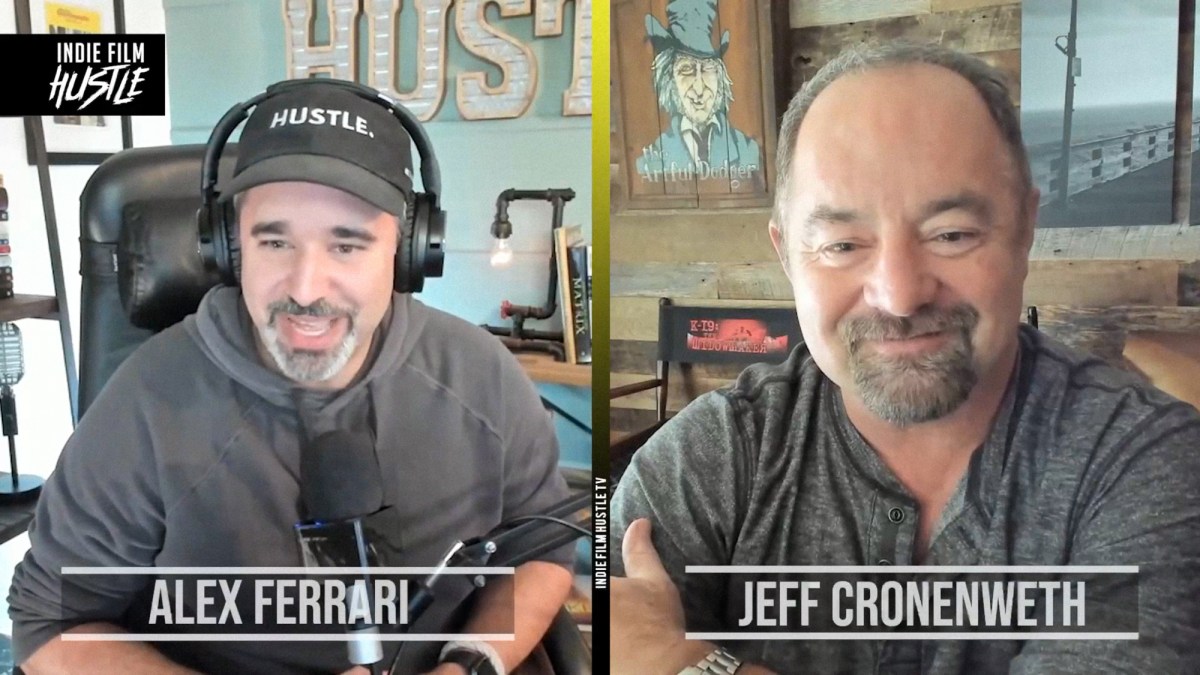
Indie Film Hustle: Cinematographer Jeff Cronenweth, ASC

The Art of Cinematography & David Fincher

Alex Ferrari
December 14, 2021
Indie Film Hustle

Cinematographer Jeff Cronenweth, ASC, is the son of Jordan Cronenweth, ASC, one of the most influential cinematographers in history, most notable for Blade Runner.

He worked with his father as a camera loader and second assistant camera during high school, graduated from the USC School of Cinematic Arts, and worked his way up to first assistant camera and then camera operator until the mid-1990s. He also worked for legendary Swedish cinematographer Sven Nykvist.

The first major motion picture where he acted as a DP was for David Fincher‘s Fight Club. Other notable feature films on which he worked as a DP are One Hour Photo, directed by Mark RomanekK-19: The WidowmakerDown With LoveThe Social NetworkHitchcockThe Girl with the Dragon Tattoo, Gone Girl, and recently, Being the Ricardos, written and directed by Aaron Sorkin.

He was nominated twice for an Academy Award for Best Cinematography for his work on Fincher’s The Social Network (2010) and The Girl with the Dragon Tattoo (2011).

Listen to the podcast and read the transcript