Press conference featuring Director of Photography Erik Messerschmidt ASC, Sound Designer Ren Klyce, Director David Fincher, and Editor Kirk Baxter ACE.
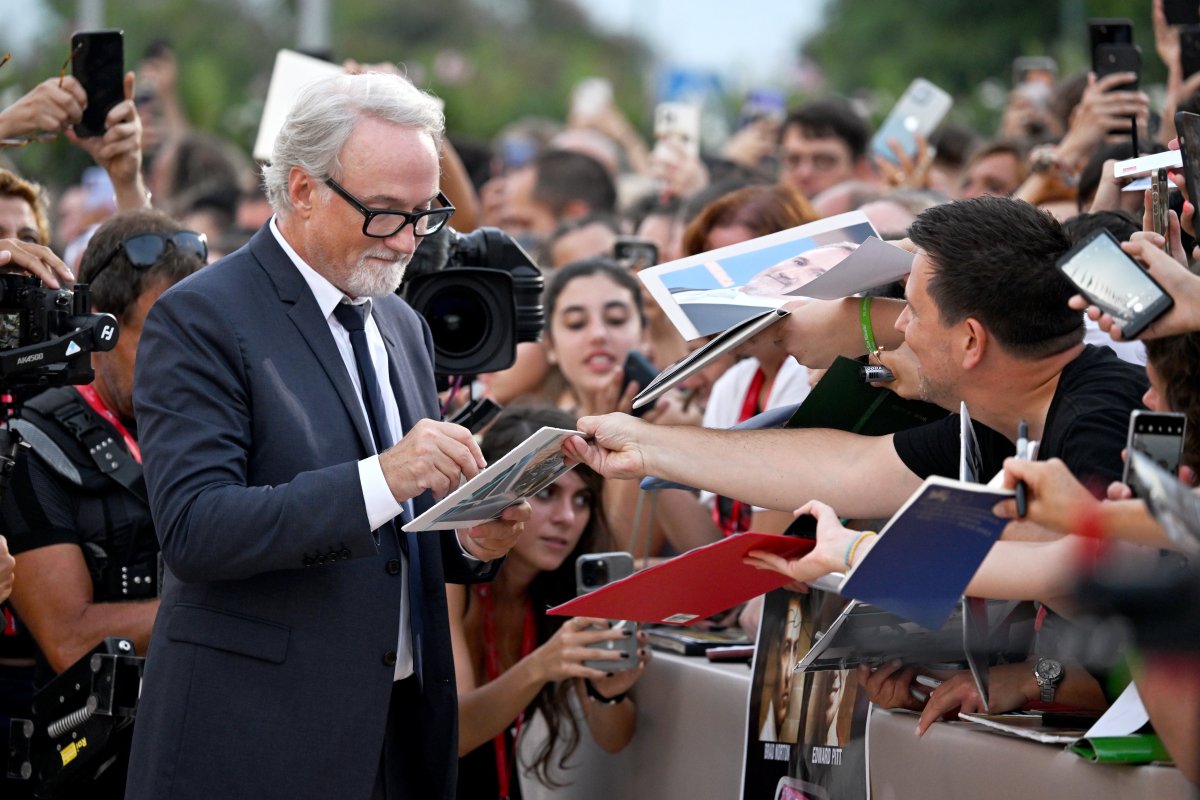
Red Carpet featuring Producer Peter Mavromates, Director of Photography Erik Messerschmidt ASC, Writer of the original “The Killer” (“Le tueur”) comic Alexis “Matz” Nolent, Editor Kirk Baxter ACE, Sound Designer Ren Klyce, Director David Fincher. The original stream has the ambient sound turned down to a minimum because it is too busy and noisy, and only barely intelligible in the close-ups.
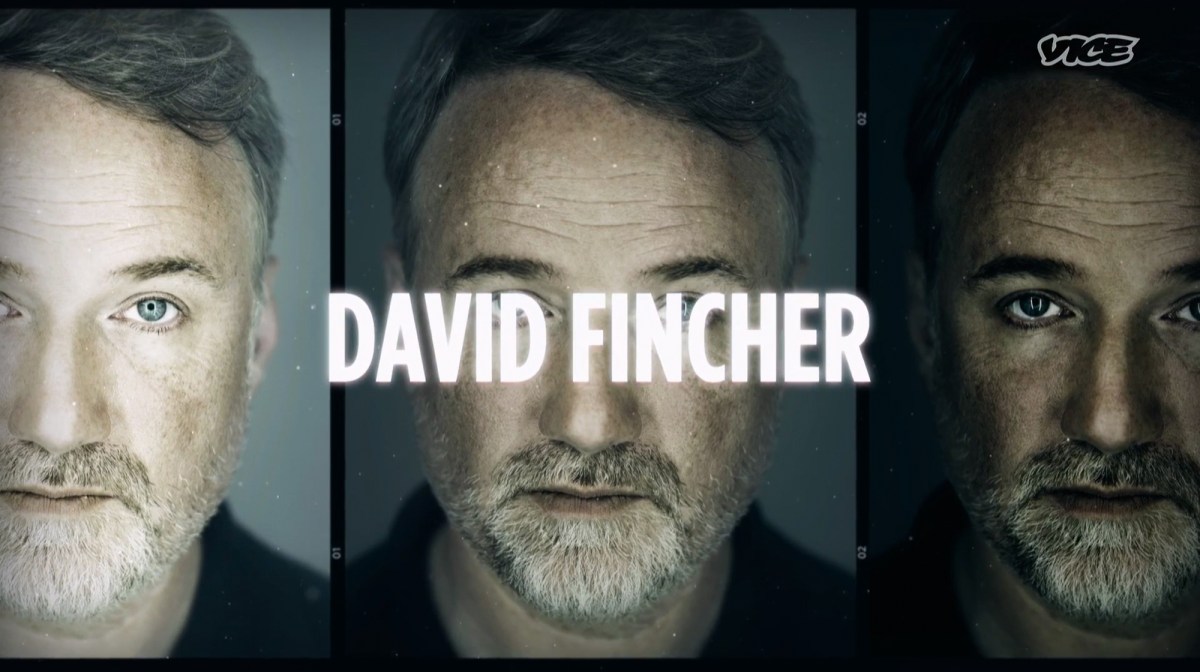
Ben Affleck, Director of Photography Jeff Cronenweth, Writer Kiva Reardon, Jesse Eisenberg, Robin Wright, and Director Tamra Davis, examine the films of David Fincher, whose mixture of craftsmanship and showmanship has created thrillers that cast a dark shadow over American cinema.
The retrospective supported by Netflix, Patron of the Cinémathèque Française (French Cinematheque), will open with a preview screening of The Killer followed by a discussion with Fincher. The next day, a screening of Zodiac will be followed by a Master Class with the director.
A compilation of quotes and transcriptions from all available sources.
June 15, 2023
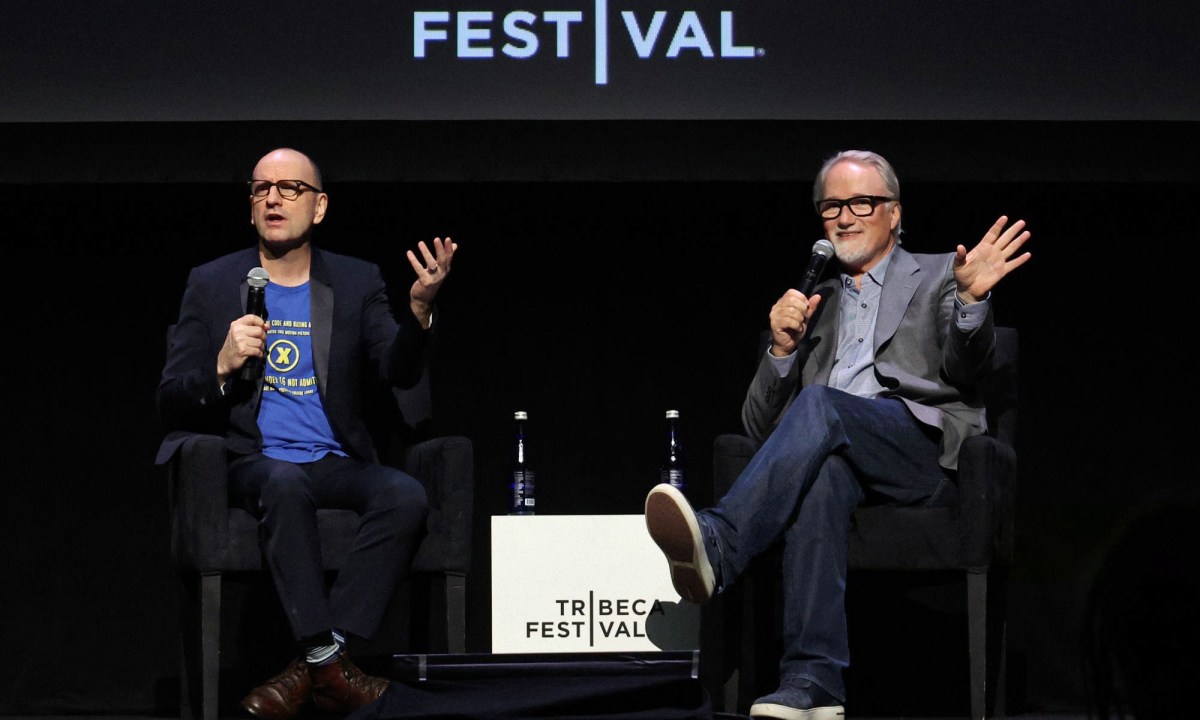
As part of the 2023 Tribeca Festival “Directors Series” live conversations, David Fincher discussed his career, filmmaking process, and philosophy with his fellow director and longtime friend Steven Soderbergh, before an audience in the Indeed Theater at Spring Studios in New York.
Fincher and Soderbergh first met 32 years ago, just after Fincher had been fired for the second time from the troubled production of his first film, Alien3 (he was later fired once more):
I came out of a truly fucked-up situation and kind of swore that I would never make the same mistake. I made a lot of brand-new ones, but I’d never start something that didn’t have a script that I didn’t believe in or that I didn’t understand or that I couldn’t articulate to people. And I’d also very much learned that I wanted to make all my own mistakes instead of inheriting them from other people.
The two explained that they have been talking about twice a week for the past 20 years, and that they regularly show each other rough cuts of their works in progress for feedback.
Soderbergh: I think the next time we saw each other, I was doing an episode of Fallen Angels [in 1994], the second season of a noir series that was on Showtime. You were going to do one. And I saw you in the office one day. And then you weren’t able to do one because you Seven got greenlit. And you went and did that thing.
Fincher: Yeah, it was one of those. It was a strangely rushed pre-production on that. Michael De Luca basically said, ‘if you can be up and making this movie in six weeks, we’ll greenlight it.’ So that was one of those, ‘okay, let me shut down the rest of my life.’
Fincher revealed how he approached shooting Music Videos as his film school:
I really went at it going, ‘I don’t want to spend my own money trying all this stuff out, so let’s see if Madonna will finance it.’
Soderbergh: You’re one of the few people who came out of the 80’s whose visual sense was matched by the importance of performance, and the understanding of a two-hour movie narrative… a lot different than a commercial or music video.
On The Social Network:
It was a pretty tight script. And part of getting it made was saying, ‘we’re gonna get this in under two hours, even if it’s 178 pages or whatever it is, we’re just gonna have everybody talk really fast.’
Fincher has learned over the years that it’s best to first discuss every aspect of film production with the cast and crew.
When I was younger, when an actor pushed back at me it felt like they were calling out the quality of my interpretation. I don’t feel that way anymore. It’s fun to get into that dialogue. It’s fun to find different avenues to explain how you see something evolving.
There’s no such thing as my editor, or my cameraman. It’s the people we’re lucky enough to get. And if you really do feel that you’re lucky enough to get the costume designer that you want, it’s incumbent upon you to squeeze them for everything that they have. It’s more on you to get their best. Because it is Darwinism. The best ideas not only will win out, they should win out, and everybody’s there to help you.
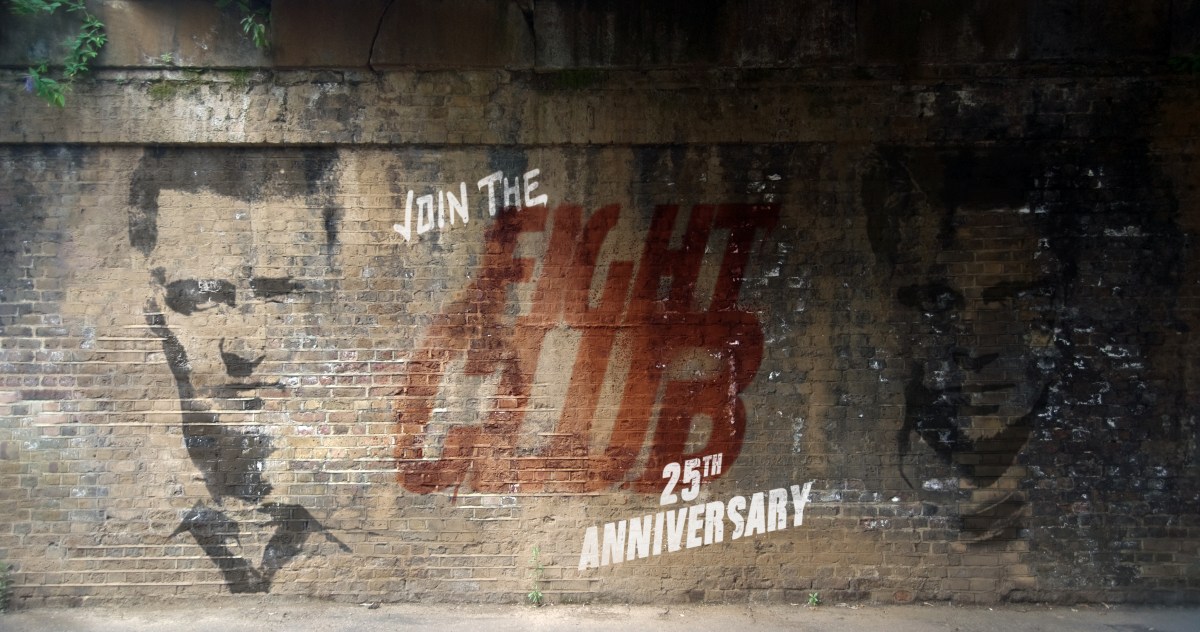
Soderbergh asked Fincher to break down a montage in Fight Club which, by Soderbergh’s estimate, involved 75 to 80 shots. Although the montage created the illusion that the Narrator played by Edward Norton was traveling across the country, everything was actually filmed within five or six blocks of LAX:
I really love a good montage. I love the montage because it’s pure cinema, it’s inference. It’s like, this goes against this, as quickly as we can possibly make a point and get the fuck out of Dodge. Then the question is where do people’s eyes need to be.
Soderbergh observed that Fincher seems happiest while imagining a project versus actually being in production, and felt that he’s seen the movies Fincher didn’t even make because of the way he has laid them out in his office.
I have enough of a reputation as a misanthrope that I don’t need to feed into that.
Shooting for me is a lot of indigestion and reality. They just keep seeping into everything you’re trying to do. So that part of it is difficult. And I think the first couple of times I had stuff fall apart even for the right reasons.
Asked by Soderbergh what he considers the “fun part” of filmmaking:
I love rehearsal. I love talking to people about the intention. I love haggling over every single word, and what the script means, and listening to people read it, and hearing their ideas. I love casting, I love the casting process. I love designing the movie. I love sitting with the production designer, and the director of photography, and all the art directors. And talking about what do we want to say, and where do we want people’s attention, and what are the things that we have to underline.
By the time it gets to the shooting… I don’t enjoy shooting. I find it to be unnecessary. I would much rather love to just workshop it, and then have someone else take it over, after all those conversations, and bring it home. But you got to be there.
I remember debating Francis Coppola and the Silverfish. And the idea of working over with a microphone over a P.A. system ‘okay, pan A camera left.’ And I don’t think you can… I think movies require you to impress upon people the amount that you’re sweating it, the amount that you care. They have to see it in your face. They have to see it in your eyes.
There was a really interesting thing last year, shooting a movie [The Killer] with all of the COVID protocols, working through a mask and a visor. I had no idea how much I was imparting with making faces and sound effects. It was a completely different experience.
On the stress of directing:
Directing is storytelling through a medium that requires an awful lot of personnel to just support what you’re doing technically and what you’re doing just from a logistical standpoint. That can be extremely distracting, and it can create an enormous amount of stress and pressure. You feel it every day. You only have so much time to get this many shots. The sun is moving as it continues to do to this day. And you can’t negotiate with that.
After half an hour, the couple turned it over to the audience for questions. Asked by an audience member about whether he rewatches his old work:
I don’t. I’m not brave. I’m fundamentally like, look, no, I can’t. It’s like looking at middle school pictures. I don’t want to even acknowledge that. But I do find myself having to adjust, you know.
On remastering Seven in 4K HDR:
We’re doing Seven right now. And we’re going back and doing it in 4K from the original negative. And we overscan it, oversample it, doing all of the due diligence. And there’s a lot of shit that needs to be fixed because there’s a lot of stuff that we now can add because of high dynamic range. You know, streaming media is a very different thing than 35 mm motion picture negative in terms of what it can actually retain. So, there are, you know, a lot of blown-out windows that we have to kind of go back and ghost in a little bit of cityscape out there.
While many issues may not be noticeable, on a 100-inch screen, you’ll look at it and go, ‘What the fuck, they only had money for white cardboard out there?’ So that’s the kind of stuff on print stock, it just gets blown out of being there. And now you’re looking at it, going ‘I can see, you know, 500 nits of what the fuck.’
But I’m fundamentally against the idea of changing what it is. You can fix, you know, three percent, five percent. If something’s egregious, it needs to be addressed. But, you know, I’m not gonna take all the guns out of people’s hands and replace them with flashlights.
Soderbergh: David sees things that not a lot of people see. He once invited me to a session while he was working on a film. David’s got a laser pointer and it’s frozen on the shot and he’s like, ‘I want that part of the wall a quarter of a stock darker. I walked out and laid down on a couch in the lobby because of what torture it is to see that.
On film projects involving real people, including ones who are still alive, like the subjects of his Facebook origins film, The Social Network, and the inspirations behind his Mindhunter series:
There was so much flak after Zodiac came out about people saying, ‘Why didn’t you go down this rabbit hole? Why did you only go down the Graysmith rabbit hole?’ That’s the book that we bought. We didn’t buy everyone’s book about the Zodiac.
You have a responsibility to make sure that you are saying what you want to say because chances are they can deck you in an airport. So, you want to be conscious and be smart about it. Making movies about things that are ripped from headlines is a slippery slope. I think it’s important to be responsible, and by the same token, you also have to entertain an audience.
Asked about unfinished projects like the Millenium trilogy and Mindhunter, Fincher only replied about The Girl with the Dragon Tattoo:
I was offered Dragon Tattoo long before the first movie was made and was in the middle of something else. And I was like, “lesbian hacker on a motorcycle? I don’t think so.’ And then, the thing went on to be a huge deal, and it came back around.
And so, I thought, well, it would be interesting to see if you took this piece of material that has millions and millions of people excited, and you did it within an inch of its life, could it support the kind of money that it would take to do?
And we had pledged early on that we wanted to make a movie that was not embarrassing to its Swedish heritage. We didn’t want it to seem like we just came, you know… And when they said, ‘well, can you shoot in Atlanta?’, I said, ‘no! Atlanta for Sweden? I don’t know.’ And we didn’t want to transpose it. We wanted it to be true to its essence.
And so, you shoot in Sweden. You are shooting eight-hour days, nine-hour days if you’re lucky. And so, the movie took 140 days to shoot.
And I was proud of it. I thought we did what we set out to do. I mean, I have the same reservations about whether or not, a long dead Nazi story on a remote island in the north of Sweden, would really be a gripping, ripping yarn.
But we did it the way that we could. And then when people said it cost too much for what the return on the investment was, ‘okay, swing and miss.’
An aspiring filmmaker in the audience asked about compromise and weathering disappointment in an increasingly complicated landscape:
Stick to it. It’s easier to make something now, something that looks really good, for not a lot of money. But it’s harder to get it seen. It’s harder to get bought. When I started a long time ago, it was really hard to get the money to make something, even cheaply. Because film costs money. It was hard to make stuff cheap and look good. But if you did manage to do that you had a better shot at people actually seeing it or buying it.
Another one asked for advice on how to get an independent film out in the world. Fincher deferred to Soderbergh as better suited to answering the question:
I’m a slave. I’m essentially going to beg for an inordinately huge amount of money.
Soderbergh: You have to remember everybody that you’re trying to get to, that you’re coming up against this barrier of representation, at some point got there because they were probably really good in an independent film. All you do is to continue to make something that you care about and try and get other people involved and hope that some alchemy takes place that will vault you for a moment into the space that you want to be in. It’s better now than it was. It’s not good enough. Where the democratization of technology has resulted in the fact that it’s easier to make something now, something that looks really good for not a lot of money, but it’s harder to get it seen.
And what does David Fincher watch on TV?
In terms of interfacing with movies, I think I’m like probably everybody in here, I’m the guy going through all the landing pages at Max, or Apple +, going [mimes scrolling with the remote] ‘No’, ‘Did it’, ‘Saw it!’…
I was with a friend. We meet on the weekends. And there’s a theater that we have access to, massive, great screen. And we finish watching a movie, and lights came up, and he turned to two other friends, and he goes ‘I think we’ve come to the end of content.’
Born in Los Angeles, California, on June 26, 1957, Ceán Chaffin is a film producer who has mostly collaborated with her husband, director David Fincher.
I started out in commercials, at the bottom. PA-ing, 2nd AD-ing, the whole route into line producing. (1)
She joined Propaganda Films in 1992 and worked as a producer for several commercial directors, handling a diverse group of accounts that took her to 13 countries before accepting a job on a Japanese Coca-Cola commercial that was directed by David Fincher: Coca-Cola: Blade Roller (1993, filmed in December 1992). (2) (3) (4) (5)
I started working with difficult directors at Pytka and Propaganda Films.
It wasn’t a conscious choice but with those guys, I just learned more. Someone dared me to work for Fincher and partly because he was younger than me, I thought, “That little punk?” But I figured I’d give it a shot, and I learned more than I’d ever learned before. (1)
That project led to an association with Fincher on other commercials and such notable music videos as the Rolling Stones’ Grammy Award-winning Love is Strong (1994).
She also produced the music videos directed by Mark Romanek, Madonna’s Bedtime Story (1995), and Michael Jackson’s Scream (1995), for which she earned a second Grammy. (4)
Propaganda offered me a movie; they had moved other commercial producers into films, but I believe I was their first female producer. So I was offered this film with David, but he signed up first to make Seven, which I wasn’t hired to do. I prepped it but they wouldn’t hire me because I had never line-produced a feature before. Which drove me crazy and still does, that Catch-22. It was a film for Polygram, which owned Propaganda; the budget was $69 million, and it was called The Game. (1) (2) (4)
Chaffin and Fincher became a couple in 1995 and they married in 2013. (6) (7) (8) (9)
Producer Arnold Kopelson (Seven, 1995):
Ceán is very supportive of David. She makes it possible for him to be totally enmeshed in his life of making movies. (8)
Director Jamie Babbit (script supervisor on The Game, 1997):
I would say [the people who influenced my career the most are] David Fincher and Ceán Chaffin. They are the power couple, director-producer combo that I worked with at the beginning of my career. They really taught me how amazing it is to marry a producer, and I feel like they’re the best compliment to a director in love and in life. I’m currently married to a producer. (10)
(1) “Case Study. Walking the Line” (Produced By, October 2009) (2) “Entrevista de El curioso caso de Benjamin Button” (Ceán Chaffin) (Cine PREMIERE, YouTube, January 19, 2009) (3) Nev Pierce – “Interview” (Mank, The Unmaking, 2021) (4) “Cean Chaffin” (Panic Room, Production Notes. Sony Pictures, 2002) (5) Benoît Marchisio – Génération Propaganda (Playlist Society, 2017) (6) Nev Pierce – “The Devil Is in the Detail” (Total Film, March 26, 2007) (7) Nev Pierce – “In Conversation with David Fincher” (Empire, January 2009) (8) Stephen Galloway – “David Fincher. Punk. Prophet. Genius” (The Hollywood Reporter, February 9, 2011) (9) Nev Pierce – “Essay” (Mank, The Unmaking, 2021) (10) Danny Edwards – On My Radar: Jamie Babbit (shots, March 3, 2026)
Interview with David Fincher’s Producer Ceán Chaffin on The Curious Case of Benjamin Button
January 19, 2009 Cine Premiere (Mexico)
Case Study. Walking the Line
September 2009 Produced By
Quotes from Ceán Chaffin:
“I feel that being a line producer is an honor. I’m really proud of that. When you talk to somebody in the business and you say you’re a line producer, I think you get more respect then when you say, ‘Oh, I’m a producer.’ I think that I watch a director’s back better than anyone else, and that’s why David forces me into a Produced By credit. At first I was really hesitant because there’s a part of Hollywood that I kind of hide from. I really love directors, and I love what they do. But I also think that we all walk that line of supporting these filmmakers, while at the same time doing that job for the studio, because they’re financing it. We walk that line, and I don’t see anybody else willing to do that. How else are you going to deliver on all these different levels?”
“I think there’s too much hung on the creative idea; people’s egos are too attached to it or something. Because what we in this room all do couldn’t support the creative process more. Fincher is a very smart director; he gets that. I didn’t survive those early years with him because I had a different philosophy than he does. He feels the same way, so much so that one of the things he says to his fellow directors is “you gotta have your producer skills.” You need to understand what these people are doing for you because if they’re not doing it for you, you’re screwed.”
“Very rarely does anyone get upset when we say, ‘the money goes on the screen.’ That is our mantra. We don’t lie, and the money goes on the screen. When there are a lot of producers on a show, you sometimes have everyone in trailers … there are drivers, assistants, the whole entourage. And so, very gently, I hope, we ask: let’s put that on the screen instead. There aren’t a lot of bells and whistles and bling for everybody; when we have a Fincher project, it goes on the screen. We’re very serious about it. It’s not an easy question to ask some people, but you do.
You can look at dailies now online and on demand, so having some place to do that work is important, but it can be anywhere. It can be the AD’s trailer, wherever…”
“They will suss it out in a nanosecond if you’re not being honest. It’s so important. That’s probably number one.
I take ‘no’ from the director. And I understand the firm ‘no’ from the maybe-I-canchange-his-mind-later ‘no.’ That’s another skill.
We have our own opinions too. We’re not always going to agree with either the director or the studio. And that can get in the way.”
“We feel very strongly, both of us, that we have to make things work within the envelope that we promised… partly because that’s an expectation with the kind of movies that he makes. It’s a different beast that way. When you’ve got a Transformers, they’re willing to spend a little differently. So we give the bad news up front. We know that David asks for more days than most people do, but that’s the way he works. The studio once actually asked me, ‘How are you shooting 80 days on Panic Room when we’re at 80 days on Spider-Man?’ I said, ‘Well, who do you think is lying?’ [laughs]”
“It’s a wonderful little thing you get from commercials and music videos, which we still do, though not as much these days. But they’re a great opportunity to try out new DPs, new equipment… It’s a chance to push the edge, a little bit. It’s like a date. You get to date your crew, and then when you make a feature, you get to run a marathon with them.
You have to have visual effects knowledge as a producer or line producer. I haven’t had a job, including commercials, in probably 18 years that hasn’t used VFX. You have to know this stuff.
You just have to show up; that’s how we all learn. I didn’t know what a telecine was when I first started, 25 or 30 years ago. So I showed up. You go and you learn, and you go to all the meetings with the visual effects groups. And it’s a big time commitment, but I don’t see any other way of doing it. I actually get tired of chasing David, sometimes, because he is so curious. But you go, and you visit RED, and you meet with Viper, S.two, engineers… It’s all part of the job.”
“The audience has changed, our economy has changed, clearly technology has changed, and the delivery system is still changing. So between all those things, it does have an impact on everybody in the film business. And that’s why it is important, I think, that we embrace the change. Change ultimately can be a good thing. It almost always is, if you look at it historically. People always prefer their past to their present, but I think once you embrace the change, there’s another curve out here that can be a positive one.”
Conference Spotlight: Ceán Chaffin and David Fincher
July 2014 Produced By
One of the most anticipated sessions of the 2014 Produced By Conference was its “Conversation with Ceán Chaffin and David Fincher” — a rare look into the process of the producing and directing team behind some of the most provocative films of the last 20 years, including Fight Club, The Social Network, The Girl with the Dragon Tattoo and the upcoming Gone Girl.
In order to keep the discussion candid and open, members of the press were not allowed into the session, but Ms. Chaffin and Mr. Fincher graciously agreed to sit down with Producedby for a brief interview just before taking the stage.
Many of your films feel more like independent or even art films, given their challenge and complexity, and yet you’ve been able to make them within the major studio system. What’s your secret?
David Fincher: We’ve been pretty lucky. You have to have people within those bureaucracies who are fervent believers. We could not have made Fight Club without Laura [Ziskin] and Bill [Mechanic]. They bought the material. They had it before I had it. So I think you have to look for like-minded perverts within those bureaucracies to convert. And you have to do what you say you’re going to do.
Ceán Chaffin: And do it time and time again, so they start believing. It takes a while for that trust to be built up so you have a reputation that you can do what you say you’re going to do.
Wasn’t Seven famously a script that everyone said couldn’t be made?
Fincher: No, they just didn’t want to make it as written. They wanted to take out all the things that were disturbing. When it came down to whether there was going to be a head in the box at the end, my argument was: This movie is known around town as the ‘head in the box’ movie — so taking it out makes no sense. It’s like taking the wizard out of The Wizard of Oz. I don’t think it’s a question of unmakeability as much as it’s just people saying, “this could be too offensive.”
Chaffin: But they’re happy to make “too offensive” if it’s the right price.
Fincher: [With Seven], it was 11 drafts in development, and by the time I got it from Mike De Luca, I said, “Let’s go back to draft one.” So it’s finding the…
Chaffin: The champion.
Fincher: …the fellow pervert!
Chaffin: The like-minded people.
Working on projects with successful, popular source material often means that there are other producers attached. How do you stay true to your vision while collaborating with other producers?
Chaffin: It depends on the competence level and ego of each person. People know that David and I come together as a team, and I fill a space that they don’t [always] want to fill. [Other producers] have so much respect for David, and by this point they appreciate how we work, and they just want to be there when we need support. But a lot of people don’t want to do the things that we do and work how we work.
Let’s talk about that. What are those things?
Chaffin: We come from working on short-format together, and in that world you do everything from start to finish — and we just moved that over to films. I also line produce. You just wear more hats when you come from commercials and music video. So there’s more of an immersion in the whole process.
Fincher: I also think that the assembly-line nature of our industry encourages specialization, but I really have an aversion to that. So the people I am naturally going to turn to are people who can think about it from multiple facets. So for me, what Ceán brings to it is… for my job, I have to be out there, not trying to fail, but certainly exposed to failure. And I need someone behind me saying, “You need to keep in mind that if this goes horribly awry, that’s three days of shooting.” You need that balance. Or when it comes to music, like the Pixies song at the end of Fight Club — that’s Ceán saying “Listen to this.”
Chaffin: That’s not true. I just listen to a lot of music…
Fincher: Well, it is true. Or when we were casting Dragon Tattoo, Ceán was there right at the beginning saying, “I think Rooney [Mara] might be able to do it.” She has a legacy of experience, and I have that with 10 or 12 people that I continue to go back to because I know that they’re not going to try to talk me out of things that discomfort the audience.
Chaffin: But creative input — that’s not something I focus on with David. To me it’s all about watching the director’s back. And you’re in the position that you’re also working for the studio, and it’s very important that there’s somebody out there trying to work with both sides. It’s not just “us against them.”
Speaking of conflict, how often do you fight, what are the fights about, and who generally wins?
Chaffin: [Long pause] I don’t know.
Fincher: We don’t fight, we disagree. We disagree about a lot of things. Usually it’s because we’re looking at it from diametrically opposed [places]. I’m looking at it in terms of mortality, and she’s looking at it more in terms of feasibility. What can we guarantee? What can we expect from someone hanging from wires for nine hours?
Chaffin: We’ve worked together longer than we’ve been a couple, and we found early on that we have the same philosophy. That’s so much better, because if you don’t have that same care, it’s really tough, and can be dangerous, and can be dishonest, and that’s not comfortable for me. And with David, I have that. Then it was about…
Fincher: Not making you cry.
Chaffin: [Laughs] He made me cry on the first job; that’s true. But he makes everybody cry. I didn’t take it personally. His old person said, “Don’t worry, everyone cries.” [Fincher nodsin agreement.] I’m kidding. But it’s not just with David, it’s all the people [we work with] who are so talented. You have to learn what their process is. Because when you don’t understand that, it can create conflict. It’s not about being right, it’s about making the whole work, and if you don’t understand each individual’s process, you can’t really be that person that moves [things] along, makes deadlines, makes budgets. I think that’s the part that keeps us from knocking heads — as a producer, sitting back and asking, “How does this person work? Let’s observe how they behave.” And then you support them.
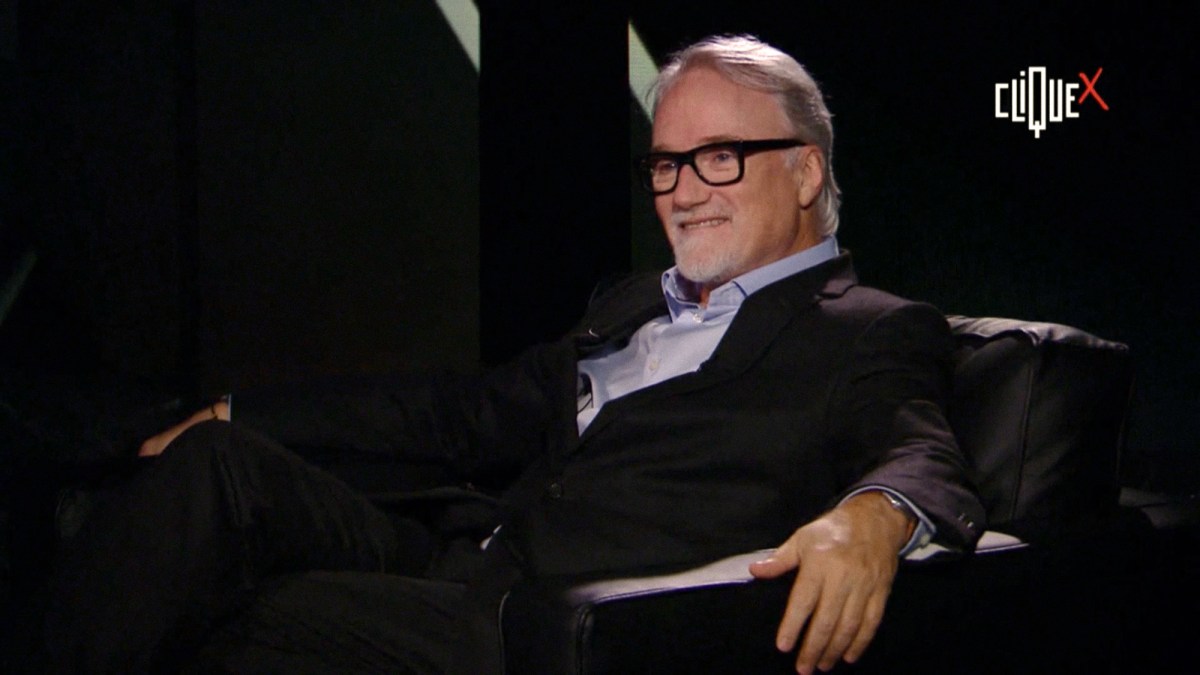
The immense director David Fincher granted us a 90-minute exclusive interview with Mouloud Achour. This new Clique X is a masterclass from the American genius about the secrets of his filmography that has become so emblematic over the years: Seven, Fight Club, Zodiac, The Social Network…
After making his name creating iconic music videos for some of the biggest pop stars of the 20th Century, including George Michael, Madonna,and Michael Jackson, David Fincher made his feature film debut to mixed results, directing the third installment in the Alien series in 1992. Our celebration of this exacting filmmaker’s work begins with the film that came next, Se7en (1995), an unforgettable serial killer horror whose influence in style and tone is still felt across film and TV today.
Fincher’s subsequent films have made him one of the most sought-after and critically acclaimed (and occasionally divisive) directors working today. With his new film The Killer, starring Michael Fassbender and Tilda Swinton, scheduled for release in late 2023, we are delighted to offer audiences a chance to dive into Fincher’s dark world on the big screen through March and April at GFT. The season includes several screenings on 35mm, our first chance to screen Fincher’s Oscar-winning Covid-era release Mank, and a special discussion around one of his most enduringly beloved and controversial films entitled ‘Yes, We Are Going to Talk About Fight Club’.
Se7en: 15 – 19 March Fight Club: 21 March – 26 March + panel discussion Panic Room: 5 April Zodiac: 29 March – 2 April The Curious Benjamin Button: 9 – 10 April The Girl with the Dragon Tattoo: 23 April The Social Network: 16 – 19 April Gone Girl: 26 April Mank: 30 April – 3 May
CineMasters: David Fincher Ticket deal
Buy tickets to 6 or more different titles in the season and get one of those tickets free. Add all tickets in one transaction and the discount will be automatically applied to your basket at checkout.
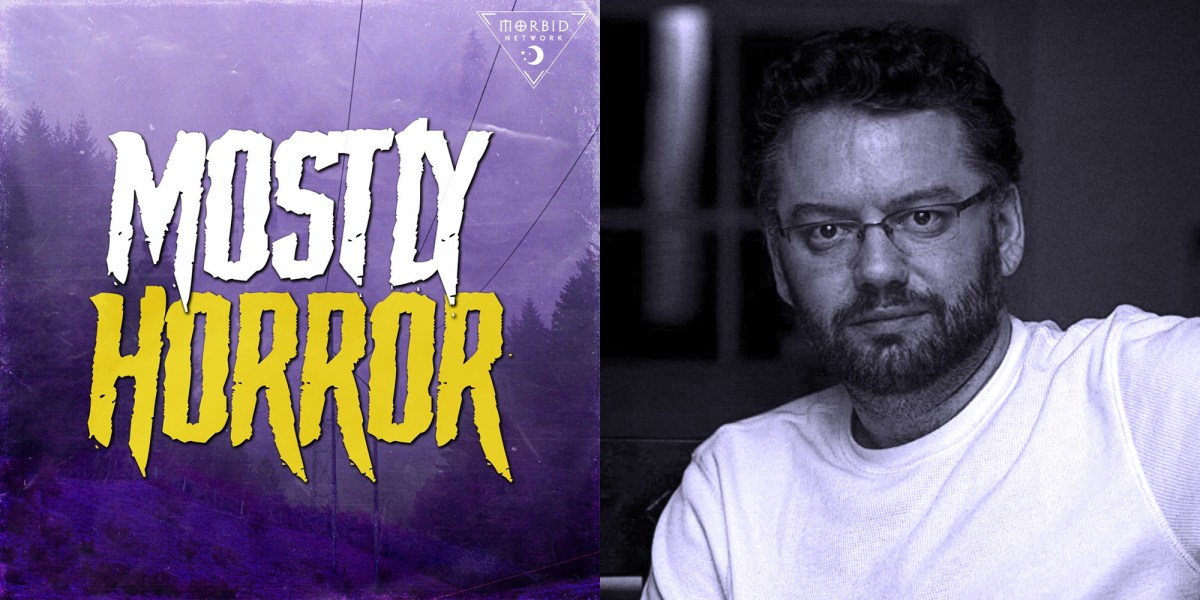
Sean Parker (Illustrator) and Steve Goldberg (NY Nets Content Manager) discuss the horror genre; interviewing the amazing people who contribute to it and discussing our love for horror films, television and more!
In this episode, they talk about The Last Of Us, Infinity Pool, The Boogeyman, and the super secret stuff they have coming up.
Then, they’re joined by director David Prior. They discuss horrifying formative childhood memories, his Fincher featurettes, the video clerk to director pipeline, and more!
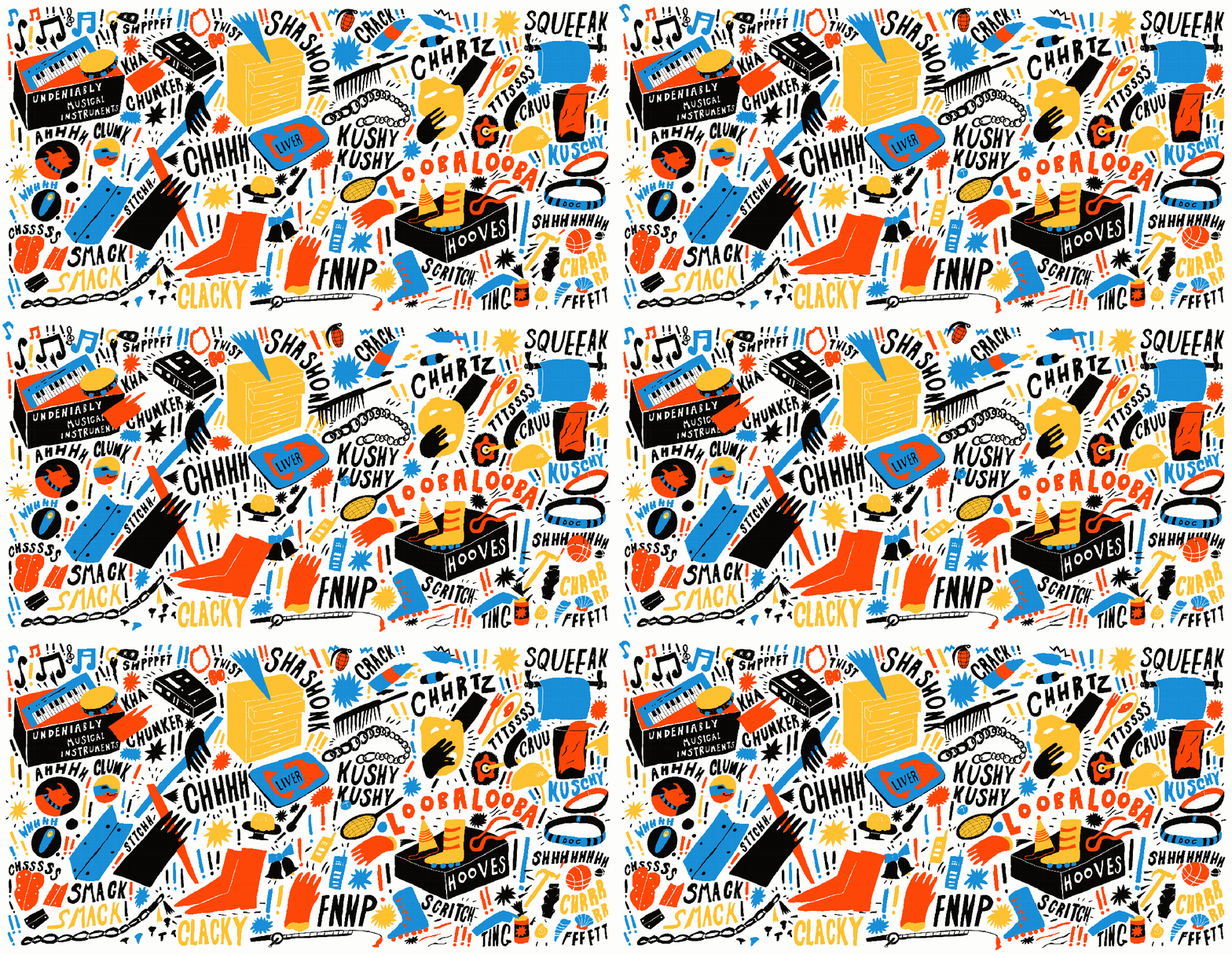
The salvage yard at M. Maselli & Sons, in Petaluma, California, is made up of six acres of angle irons, block pulleys, doorplates, digging tools, motors, fencing, tubing, reels, spools, and rusted machinery. To the untrained eye, the place is a testament to the enduring power of American detritus, but to Foley artists—craftspeople who create custom sound effects for film, television, and video games—it’s a trove of potential props. On a recent morning, Shelley Roden and John Roesch, Foley artists who work at Skywalker Sound, the postproduction audio division of Lucasfilm, stood in the parking lot, considering the sonic properties of an enormous industrial hopper. “I’m looking for a resonator, and I need more ka-chunkers,” Roden, who is blond and in her late forties, said. A lazy Susan was also on the checklist—something to produce a smooth, swivelling sound. Roesch, a puffer-clad sexagenarian with white hair, had brought his truck, in the event of a large haul. The pair was joined by Scott Curtis, their Foley mixer, a bearded fiftysomething. Curtis was in the market for a squeaky hinge. “There was a door at the Paramount stage that had the best creak,” he said. “The funny thing was, the cleaning crew discovered this hinge squeak, and they lubricated the squeak—the hinge. It was never the same.”
Petaluma is a historically agricultural town, and that afternoon was the thirty-ninth annual Butter and Egg Days Parade; the air smelled of lavender and barbecued meat. Inside the yard, Curtis immediately gravitated toward a pile of what looked like millstones, or sanding wheels. He began rotating one against another, producing a gritty, high-pitched ring, like an elementary-school fire alarm. “The texture is great,” Roden said. She suggested that one of the wheels could be used as a sweetener—a sound that is subtly layered over another sound, to add dimension—for a high-tech roll-up door, or perhaps one made of stone. “It’s kinda chimey,” she said, wavering. “It has potential.” A few yards away, Curtis had moved on to a shelf of metal filing-cabinet drawers, freckled with rust. “We have so many metal boxes,” Roden said, and walked away.
“It’s kinda the squeak I was looking for,” Curtis said softly.
“Hey, guys, remember the ‘Black Panther’ area?” Roden called out. “Wanna explore?” She led the group past a rack of hanging chains, also rusted; Curtis lightly palmed a few in sequence, producing the pleasant rings of a tintinnabulum. Roden pointed to the spot where she had found a curved crowbar to create the sound of Vibranium—a fictional rare metal unique to the Marvel universe—before zeroing in on a rack of thimbles, clamps, nuts, bolts, and washers. The trio began knocking and tapping hardware together, producing a series of chimes, tinks, and clunks. Roesch, who calls himself an “audile”—someone who processes information in a primarily auditory manner, rather than in a visual or a material one—had unearthed a sceptre-like industrial tool with a moving part, and was rapidly sliding it back and forth. “Robot,” he said.
The bulk of the sound in film is typically added in postproduction. “I always say there’s sound effects, like footsteps, and then there’s music,” the director David Lynch, whose films are famous for their inventive, evocative sound design, said. “And then there’s sound effects that are like music. . . . They conjure a feeling.” Traditionally, “hard effects” cover ambient noises such as traffic or rain, or the more mechanical, combustive sounds of explosions and gunfire; they are usually pulled from libraries, or electronically produced. Foley effects are custom to a film, and are synchronized to characters’ movements. They might include the sound of someone walking across a room, rolling over in bed, stirring a pot, typing, fighting, dancing, eating, falling, or kissing. The line between the two kinds of effect is thin: Foley artists record the sound of a hand twisting a doorknob, but not the sound of the mechanism turning within. Foley is subtle but suggestive, capturing offstage bedsprings, or the shuffle of a clumsy intruder. In the past hundred years, technology has changed the process of recording, editing, and engineering sounds, but the techniques of Foley have remained stubbornly analog. Behind any given Foley effect, no matter how complex, are one or two people contorting their bodies in a soundproof room.
Foley artists have historically worked in pairs. (Certain sounds are so complex that they require the labor of four hands.) Roden and Roesch are two of the masters in their field. David Fincher, the director of movies including “The Social Network,” “Gone Girl,” and “Mank,” told me that Foley is “a very strange calling,” and “a dark art” foundational to filmmaking. “You’re trying to make beautiful sounds that make their point once and get the hell out of Dodge,” Fincher said. “The people who do it really, really well are few and far between.”


 The Fincher Analyst