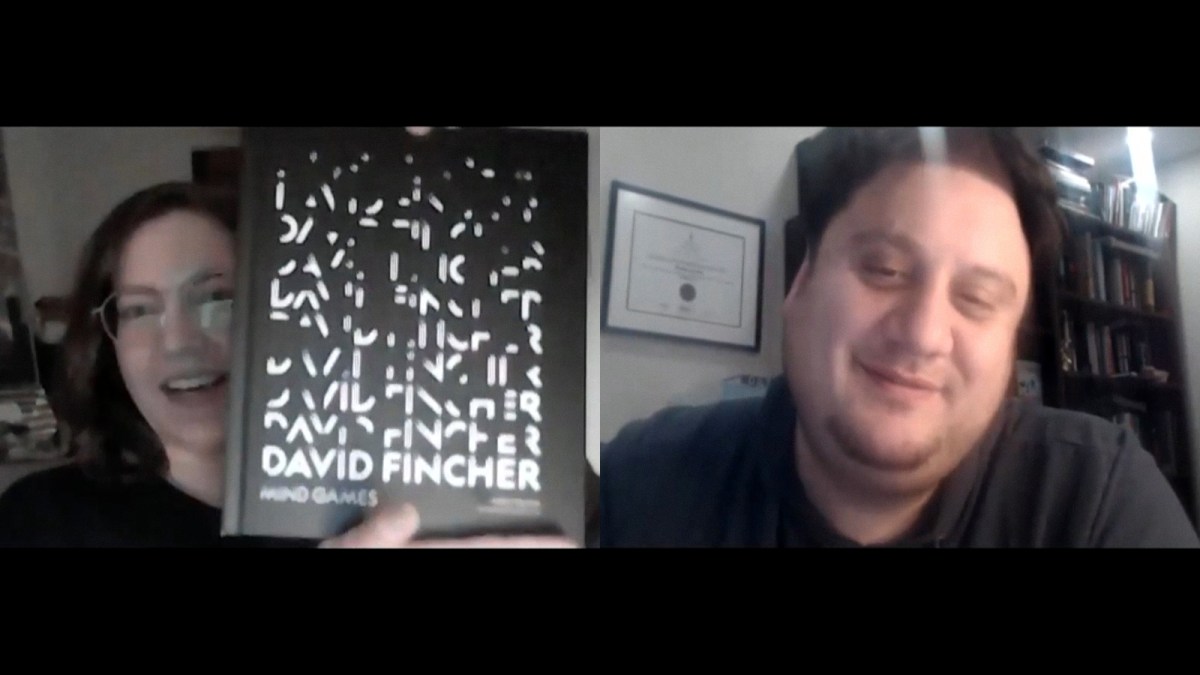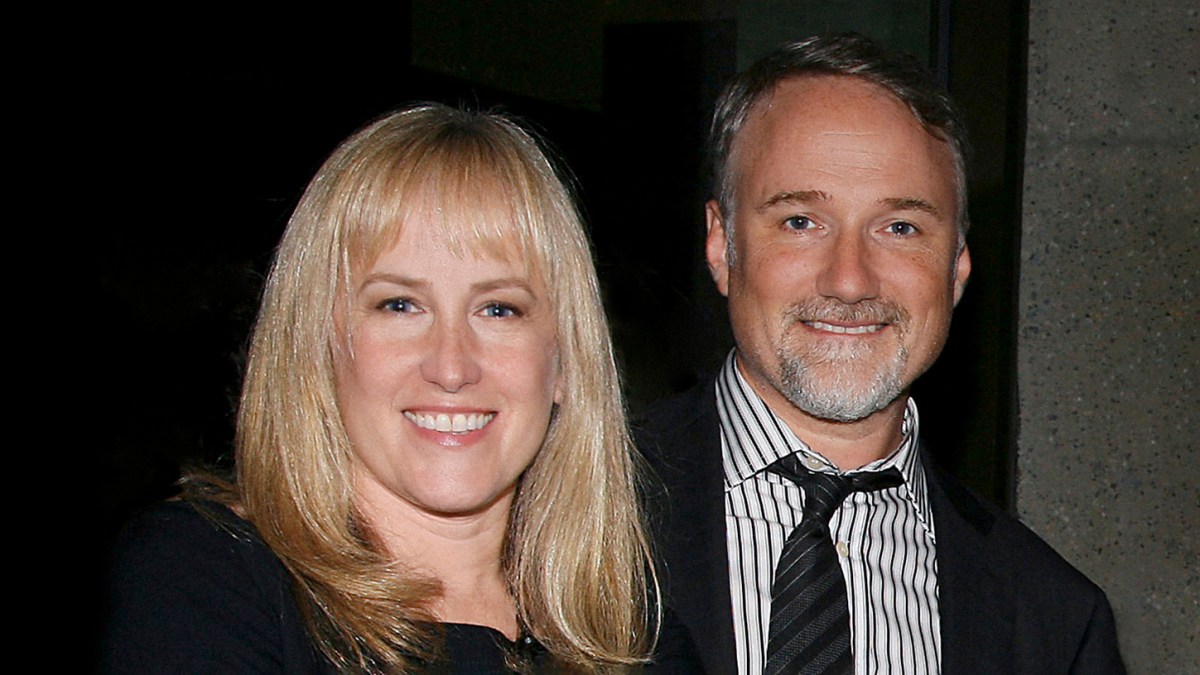
Born in Los Angeles, California, on June 26, 1957, Ceán Chaffin is a film producer who has mostly collaborated with her husband, director David Fincher.
I started out in commercials, at the bottom. PA-ing, 2nd AD-ing, the whole route into line producing. (1)
She joined Propaganda Films in 1992 and worked as a producer for several commercial directors, handling a diverse group of accounts that took her to 13 countries before accepting a job on a Japanese Coca-Cola commercial that was directed by David Fincher: Coca-Cola: Blade Roller (1993, filmed in December 1992). (2) (3) (4) (5)
I started working with difficult directors at Pytka and Propaganda Films.
It wasn’t a conscious choice but with those guys, I just learned more. Someone dared me to work for Fincher and partly because he was younger than me, I thought, “That little punk?” But I figured I’d give it a shot, and I learned more than I’d ever learned before. (1)
That project led to an association with Fincher on other commercials and such notable music videos as the Rolling Stones’ Grammy Award-winning Love is Strong (1994).
She also produced the music videos directed by Mark Romanek, Madonna’s Bedtime Story (1995), and Michael Jackson’s Scream (1995), for which she earned a second Grammy. (4)
Propaganda offered me a movie; they had moved other commercial producers into films, but I believe I was their first female producer. So I was offered this film with David, but he signed up first to make Seven, which I wasn’t hired to do. I prepped it but they wouldn’t hire me because I had never line-produced a feature before. Which drove me crazy and still does, that Catch-22. It was a film for Polygram, which owned Propaganda; the budget was $69 million, and it was called The Game. (1) (2) (4)
Chaffin and Fincher became a couple in 1995 and they married in 2013. (6) (7) (8) (9)
Producer Arnold Kopelson (Seven, 1995):
Ceán is very supportive of David. She makes it possible for him to be totally enmeshed in his life of making movies. (8)
Director Jamie Babbit (script supervisor on The Game, 1997):
I would say [the people who influenced my career the most are] David Fincher and Ceán Chaffin. They are the power couple, director-producer combo that I worked with at the beginning of my career. They really taught me how amazing it is to marry a producer, and I feel like they’re the best compliment to a director in love and in life. I’m currently married to a producer. (10)
(1) “Case Study. Walking the Line” (Produced By, October 2009)
(2) “Entrevista de El curioso caso de Benjamin Button” (Ceán Chaffin) (Cine PREMIERE, YouTube, January 19, 2009)
(3) Nev Pierce – “Interview” (Mank, The Unmaking, 2021)
(4) “Cean Chaffin” (Panic Room, Production Notes. Sony Pictures, 2002)
(5) Benoît Marchisio – Génération Propaganda (Playlist Society, 2017)
(6) Nev Pierce – “The Devil Is in the Detail” (Total Film, March 26, 2007)
(7) Nev Pierce – “In Conversation with David Fincher” (Empire, January 2009)
(8) Stephen Galloway – “David Fincher. Punk. Prophet. Genius” (The Hollywood Reporter, February 9, 2011)
(9) Nev Pierce – “Essay” (Mank, The Unmaking, 2021)
(10) Danny Edwards – On My Radar: Jamie Babbit (shots, March 3, 2026)
Interview with David Fincher’s Producer Ceán Chaffin on The Curious Case of Benjamin Button
January 19, 2009
Cine Premiere (Mexico)
Case Study. Walking the Line
September 2009
Produced By
Quotes from Ceán Chaffin:
“I feel that being a line producer is an honor. I’m really proud of that. When you talk to somebody in the business and you say you’re a line producer, I think you get more respect then when you say, ‘Oh, I’m a producer.’ I think that I watch a director’s back better than anyone else, and that’s why David forces me into a Produced By credit. At first I was really hesitant because there’s a part of Hollywood that I kind of hide from. I really love directors, and I love what they do. But I also think that we all walk that line of supporting these filmmakers, while at the same time doing that job for the studio, because they’re financing it. We walk that line, and I don’t see anybody else willing to do that. How else are you going to deliver on all these different levels?”
“I think there’s too much hung on the creative idea; people’s egos are too attached to it or something. Because what we in this room all do couldn’t support the creative process more. Fincher is a very smart director; he gets that. I didn’t survive those early years with him because I had a different philosophy than he does. He feels the same way, so much so that one of the things he says to his fellow directors is “you gotta have your producer skills.” You need to understand what these people are doing for you because if they’re not doing it for you, you’re screwed.”
“Very rarely does anyone get upset when we say, ‘the money goes on the screen.’ That is our mantra. We don’t lie, and the money goes on the screen. When there are a lot of producers on a show, you sometimes have everyone in trailers … there are drivers, assistants, the whole entourage. And so, very gently, I hope, we ask: let’s put that on the screen instead. There aren’t a lot of bells and whistles and bling for everybody; when we have a Fincher project, it goes on the screen. We’re very serious about it. It’s not an easy question to ask some people, but you do.
You can look at dailies now online and on demand, so having some place to do that work is important, but it can be anywhere. It can be the AD’s trailer, wherever…”
“They will suss it out in a nanosecond if you’re not being honest. It’s so important. That’s probably number one.
I take ‘no’ from the director. And I understand the firm ‘no’ from the maybe-I-canchange-his-mind-later ‘no.’ That’s another skill.
We have our own opinions too. We’re not always going to agree with either the director or the studio. And that can get in the way.”
“We feel very strongly, both of us, that we have to make things work within the envelope that we promised… partly because that’s an expectation with the kind of movies that he makes. It’s a different beast that way. When you’ve got a Transformers, they’re willing to spend a little differently. So we give the bad news up front. We know that David asks for more days than most people do, but that’s the way he works. The studio once actually asked me, ‘How are you shooting 80 days on Panic Room when we’re at 80 days on Spider-Man?’ I said, ‘Well, who do you think is lying?’ [laughs]”
“It’s a wonderful little thing you get from commercials and music videos, which we still do, though not as much these days. But they’re a great opportunity to try out new DPs, new equipment… It’s a chance to push the edge, a little bit. It’s like a date. You get to date your crew, and then when you make a feature, you get to run a marathon with them.
You have to have visual effects knowledge as a producer or line producer. I haven’t had a job, including commercials, in probably 18 years that hasn’t used VFX. You have to know this stuff.
You just have to show up; that’s how we all learn. I didn’t know what a telecine was when I first started, 25 or 30 years ago. So I showed up. You go and you learn, and you go to all the meetings with the visual effects groups. And it’s a big time commitment, but I don’t see any other way of doing it. I actually get tired of chasing David, sometimes, because he is so curious. But you go, and you visit RED, and you meet with Viper, S.two, engineers… It’s all part of the job.”
“The audience has changed, our economy has changed, clearly technology has changed, and the delivery system is still changing. So between all those things, it does have an impact on everybody in the film business. And that’s why it is important, I think, that we embrace the change. Change ultimately can be a good thing. It almost always is, if you look at it historically. People always prefer their past to their present, but I think once you embrace the change, there’s another curve out here that can be a positive one.”
Conference Spotlight: Ceán Chaffin and David Fincher
July 2014
Produced By
One of the most anticipated sessions of the 2014 Produced By Conference was its “Conversation with Ceán Chaffin and David Fincher” — a rare look into the process of the producing and directing team behind some of the most provocative films of the last 20 years, including Fight Club, The Social Network, The Girl with the Dragon Tattoo and the upcoming Gone Girl.
In order to keep the discussion candid and open, members of the press were not allowed into the session, but Ms. Chaffin and Mr. Fincher graciously agreed to sit down with Producedby for a brief interview just before taking the stage.
Many of your films feel more like independent or even art films, given their challenge and complexity, and yet you’ve been able to make them within the major studio system. What’s your secret?
David Fincher: We’ve been pretty lucky. You have to have people within those bureaucracies who are fervent believers. We could not have made Fight Club without Laura [Ziskin] and Bill [Mechanic]. They bought the material. They had it before I had it. So I think you have to look for like-minded perverts within those bureaucracies to convert. And you have to do what you say you’re going to do.
Ceán Chaffin: And do it time and time again, so they start believing. It takes a while for that trust to be built up so you have a reputation that you can do what you say you’re going to do.
Wasn’t Seven famously a script that everyone said couldn’t be made?
Fincher: No, they just didn’t want to make it as written. They wanted to take out all the things that were disturbing. When it came down to whether there was going to be a head in the box at the end, my argument was: This movie is known around town as the ‘head in the box’ movie — so taking it out makes no sense. It’s like taking the wizard out of The Wizard of Oz. I don’t think it’s a question of unmakeability as much as it’s just people saying, “this could be too offensive.”
Chaffin: But they’re happy to make “too offensive” if it’s the right price.
Fincher: [With Seven], it was 11 drafts in development, and by the time I got it from Mike De Luca, I said, “Let’s go back to draft one.” So it’s finding the…
Chaffin: The champion.
Fincher: …the fellow pervert!
Chaffin: The like-minded people.
Working on projects with successful, popular source material often means that there are other producers attached. How do you stay true to your vision while collaborating with other producers?
Chaffin: It depends on the competence level and ego of each person. People know that David and I come together as a team, and I fill a space that they don’t [always] want to fill. [Other producers] have so much respect for David, and by this point they appreciate how we work, and they just want to be there when we need support. But a lot of people don’t want to do the things that we do and work how we work.
Let’s talk about that. What are those things?
Chaffin: We come from working on short-format together, and in that world you do everything from start to finish — and we just moved that over to films. I also line produce. You just wear more hats when you come from commercials and music video. So there’s more of an immersion in the whole process.
Fincher: I also think that the assembly-line nature of our industry encourages specialization, but I really have an aversion to that. So the people I am naturally going to turn to are people who can think about it from multiple facets. So for me, what Ceán brings to it is… for my job, I have to be out there, not trying to fail, but certainly exposed to failure. And I need someone behind me saying, “You need to keep in mind that if this goes horribly awry, that’s three days of shooting.” You need that balance. Or when it comes to music, like the Pixies song at the end of Fight Club — that’s Ceán saying “Listen to this.”
Chaffin: That’s not true. I just listen to a lot of music…
Fincher: Well, it is true. Or when we were casting Dragon Tattoo, Ceán was there right at the beginning saying, “I think Rooney [Mara] might be able to do it.” She has a legacy of experience, and I have that with 10 or 12 people that I continue to go back to because I know that they’re not going to try to talk me out of things that discomfort the audience.
Chaffin: But creative input — that’s not something I focus on with David. To me it’s all about watching the director’s back. And you’re in the position that you’re also working for the studio, and it’s very important that there’s somebody out there trying to work with both sides. It’s not just “us against them.”
Speaking of conflict, how often do you fight, what are the fights about, and who generally wins?
Chaffin: [Long pause] I don’t know.
Fincher: We don’t fight, we disagree. We disagree about a lot of things. Usually it’s because we’re looking at it from diametrically opposed [places]. I’m looking at it in terms of mortality, and she’s looking at it more in terms of feasibility. What can we guarantee? What can we expect from someone hanging from wires for nine hours?
Chaffin: We’ve worked together longer than we’ve been a couple, and we found early on that we have the same philosophy. That’s so much better, because if you don’t have that same care, it’s really tough, and can be dangerous, and can be dishonest, and that’s not comfortable for me. And with David, I have that. Then it was about…
Fincher: Not making you cry.
Chaffin: [Laughs] He made me cry on the first job; that’s true. But he makes everybody cry. I didn’t take it personally. His old person said, “Don’t worry, everyone cries.” [Fincher nods in agreement.] I’m kidding. But it’s not just with David, it’s all the people [we work with] who are so talented. You have to learn what their process is. Because when you don’t understand that, it can create conflict. It’s not about being right, it’s about making the whole work, and if you don’t understand each individual’s process, you can’t really be that person that moves [things] along, makes deadlines, makes budgets. I think that’s the part that keeps us from knocking heads — as a producer, sitting back and asking, “How does this person work? Let’s observe how they behave.” And then you support them.