Cinematographer Jeff Cronenweth talks to Cooke Optics TV about working on the iconic 90’s movie Fight Club. A long-time collaborator with director David Fincher, Cronenweth reflects on how they work together, giving insight into how some of the most recognisable scenes were shot, and revealing a surprising inspiration for the look of the movie, a Prada fashion campaign.
In this episode, we’re joined by one of the world’s greatest Cinematographers, Jeff Cronenweth. Born into the film business, he grafted his way through the rungs of the camera department and music video scene of the 1990s, until he got the call from David Fincher to take the reins of Fight Club. From there it’s been a run of legendary movies including, One Hour Photo and Gone Girl, as well as The Social Network and The Girl With The Dragon Tattoo both of which he picked up Oscar nominations.
What you’ll learn from Jeff:
Jeff’s opinion on whether film school is still necessary
Whether music videos are still useful starting grounds for DPs
How Jeff get imposter syndrome on Fight Club
What it’s like to work with Aaron Sorkin
How does the DP Director relationship work
Jeff’s opinion on the film fanboys that constantly copy the ‘Fincher/Cronwneth aesthetic!’
Whether Jeff has taught David Fincher anything
What a day of prep is like for Fincher and Jeff
And of course in our quick-fire: Jeff’s no 1 piece of advice, favourite film, book to read, person to work with, and more.
On History of the 90’s we’ll travel back in time through the stories that defined a decade. The last 10 years of the 20th century was a time like no other, from Columbine to Ruth Bader Ginsburg to Seinfeld, Air Jordan, and the Spice Girls… if it happened in the 90’s you’ll hear about it on this podcast. Join Kathy Kenzora as we journey through the History of the 90’s every other Wednesday.
In the 1990’s director David Fincher brought us classic movies like Seven and Fight Club, making his mark on the industry as one the best film makers of his generation. But Fincher’s impact on the decade stretches beyond movies. Through dozens of TV commercials and music videos Fincher helped style the 90s.
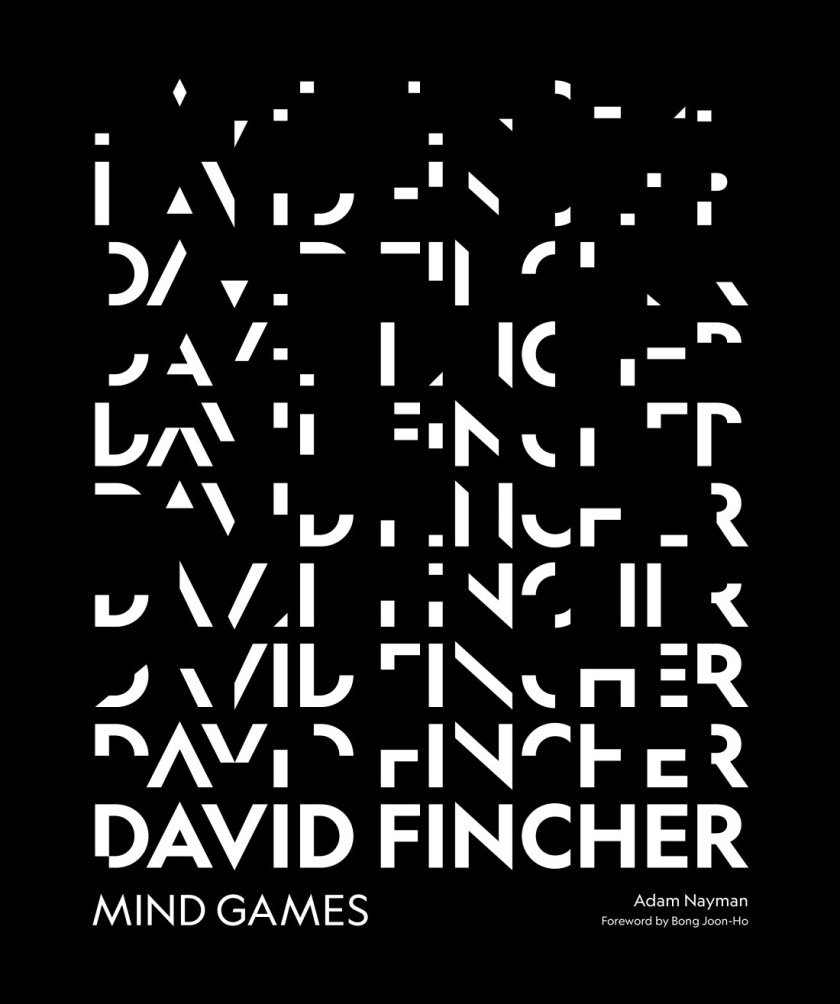
David Fincher’s films are full of doubles, puzzles, and tantalizing glimpses of the director himself. As Adam Nayman writes in his new book about Fincher’s films, Mind Games, “Fincher imposes his presence through the actions and psychologies of thinly veiled proxies: Clockmakers and safecrackers; hackers and terrorists; detectives and serial killers.” These are films that are, like their director, obsessed with procedure and appearance—and intent on puncturing both.
These films are, perhaps because of their complexity or their (at least outward) coldness—or perhaps because of Fincher’s own past as a director of music videos and advertisements—misunderstood or even dismissed. In the past decade alone, Fincher’s The Social Network and, especially, Gone Girl have received radical reappraisals, while Zodiac has been seen by many as one of the best films of the twenty-first century. Mind Games is particularly valuable in its willingness to critically engage with much of Fincher’s less-appreciated output—from his work in advertising to films like Benjamin Button and The Girl With the Dragon Tattoo. But Nayman, the author of similar studies of the Coen brothers and Paul Thomas Anderson, also deepens the understanding of films by situating them in an oeuvre that has been obsessively looking at many of the same themes for decades.
Riverside Chats is a series of conversations hosted by Tom Knoblauch exploring culture of all kinds, broadcast from the Heartland. Listen on KIOS 91.5 Omaha Public Radio on Mondays and Saturdays or on your favorite podcast app.
Adam Nayman is a critic at The Ringer and Cinema Scope and he is also the author of The Coen Brothers: This Book Really Ties the Room Together and Paul Thomas Anderson: Masterworks, which he discussed in an earlier episode of this show.
His latest book, David Fincher: Mind Games is a critical and visual survey of the filmmaker behind incredibly influential works include Seven, Fight Club, The Curious Case of Benjamin Button, The Social Network, The Girl with the Dragon Tattoo, and Gone Girl, and more. Nayman gives context, analysis, links themes, and conducts interviews with various people involved across Fincher’s career, grouping Fincher’s work around themes of procedure, imprisonment, paranoia, prestige, and relationship dynamics. Today he talks about Fincher’s career and shifting place in the cinematic landscape.
Mind Games author Adam Nayman discusses the connective tissue between David Fincher’s films and why we can’t help comparing him to Paul Thomas Anderson
Radheyan Simonpillai December 22, 2021 NOW Magazine
In the David Fincher film Zodiac, cartoonist Robert Graysmith obsessively pours over legal documents, testimonies, and geographic patterns. He connects the dots that won’t necessarily give him conclusive answers regarding the titular San Francisco serial killer but will nevertheless make for a pretty good book that paved the way for a masterpiece film. I like to picture Toronto film critic and author Adam Nayman doing the same for his book David Fincher: Mind Games.
Nayman scans Fincher’s work, from the music video for Madonna’s Express Yourself to last year’s endearing look back at authorship in Mank, writing chapters on each movie with forensic detail and riveting insight. Mind Games, which comes with a lovely foreword from Parasite director Bong Joon-Ho, is the latest in Nayman’s series of comprehensive books on the greatest white male directors of our generation, sitting nicely alongside The Coen Bros: This Book Really Ties The Films Together and Paul Thomas Anderson: Masterworks. And there’s an argument to be made that this book is the most fascinating of the three.
More so than the others, Fincher’s movies inspire divisive reactions. Movies like The Curious Case Of Benjamin Button and Mank rack up the most Oscar nominations while being pilloried by many critics. Se7en and Fight Club earn dorm room notoriety, which in turn is weaponized against the films themselves. Some of his greatest work in Zodiac and Gone Girl doesn’t quite get the love it deserves. But Fincher is the kind of filmmaker whose misses are infinitely more fascinating to me than the best that a Christopher Nolan puts up.
Nayman discussed Fincher’s canon with NOW in a conversation about the imprint he leaves on his films and how he compares to Paul Thomas Anderson. The Licorice Pizza filmmaker has a very different kind of career, but feels oddly linked to Fincher.
Cinematographer Jeff Cronenweth, ASC, is the son of Jordan Cronenweth, ASC, one of the most influential cinematographers in history, most notable for Blade Runner.
He worked with his father as a camera loader and second assistant camera during high school, graduated from the USC School of Cinematic Arts, and worked his way up to first assistant camera and then camera operator until the mid-1990s. He also worked for legendary Swedish cinematographer Sven Nykvist.
The first major motion picture where he acted as a DP was for David Fincher‘s Fight Club. Other notable feature films on which he worked as a DP are One Hour Photo, directed by Mark Romanek, K-19: The Widowmaker, Down With Love, The Social Network, Hitchcock, The Girl with the Dragon Tattoo, Gone Girl, and recently, Being the Ricardos, written and directed by Aaron Sorkin.
He was nominated twice for an Academy Award for Best Cinematography for his work on Fincher’s The Social Network (2010) and The Girl with the Dragon Tattoo (2011).
The following is an excerpt from the new book David Fincher: Mind Games, by Adam Nayman.
Fight Club was adapted by screenwriter Jim Uhls from Chuck Palahniuk’s cult 1996 novel of the same name, which traced its gestation to a Portland-based author’s workshop specializing in “dangerous writing.” The enclave’s transgressive, minimalist mandate would be allegorized in Fight Club’s eponymous bare-knuckle boxing group, whose members become the acolytes of Tyler Durden Project Mayhem, in effect going from pummeling one another to “punching up” against the forces of late capitalism.
In his foreword to a 2004 reprint of the novel, Palahniuk reflects on the book’s themes of catharsis and self pity and ties them to a literary moment “[full of] novels that presented a social model for women to be together.” He cites bestsellers like Amy Tan’s The Joy Luck Club and Whitney Otto’s How to Make an American Quilt and notes the lack of corresponding masculinist examples; with the calculated humility of a writer who no longer worries about his advance, he proposes that his breakthrough novel’s popularity was a simple matter of supply and demand.
The question of whether Fight Club, in either literary or cinematic form, fills that void deepens it, or disappears down it—or if, like Tyler Durden, such a void ever really existed in the first place—was open at the time and remains so. Twenty-five years after its publication, Fight Club looks like a signal work anticipating, dramatizing, and perhaps exemplifying a condition recently identified as “toxic masculinity,” loosely defined by New York Times essayist Maya Salam as “a series of cultural lessons . . . linked to aggression and violence.”
This week’s conversation focuses in on David Fincher—a director whose decade-spanning body of gritty Americana—from the grim moral drama of Se7en to the revisionist Hollywood tale of the recent Mank—has inspired both obsessive fandom and derisive dismissal.
A new book by Adam Nayman, David Fincher: Mind Games (out November 23 from Abrams Books), offers a canny and timely appraisal of the director’s filmography. Adam writes that, “Over the past thirty years, Fincher has cultivated and maintained a reputation that precedes him of formal rigor and technocratic exactitude, of moviemaking as a game of inches.” Film Comment editors Devika Girish and Clinton Krute invited Adam and critic, filmmaker, and former NYFF director, Kent Jones—who’s written about Fincher many times over the years in FC—for an illuminating deep-dive into the Fincherverse.
Few film books in recent memory made waves like Adam Nayman’s Paul Thomas Anderson: Masterworks, a too-rare melange of authorial talent, topical interest, and opulent presentation. Last year Nayman and I spoke at length about the tome that no doubt you’ve seen in bookstores (big and small alike) since.
Nayman has returned with David Fincher: Mind Games, another Abrams-published doorstop on another double-capital-A American Auteur, lined again with essays that surprise in their capacity to find new perspectives and provocative readings on films for which there seemed no more room. Finally able to talk in person—thus, you’ll (please) read, at greater length—we sat down for a talk on writing thousands of words on someone for whom a consistent critical standing is tougher than meets the eye.