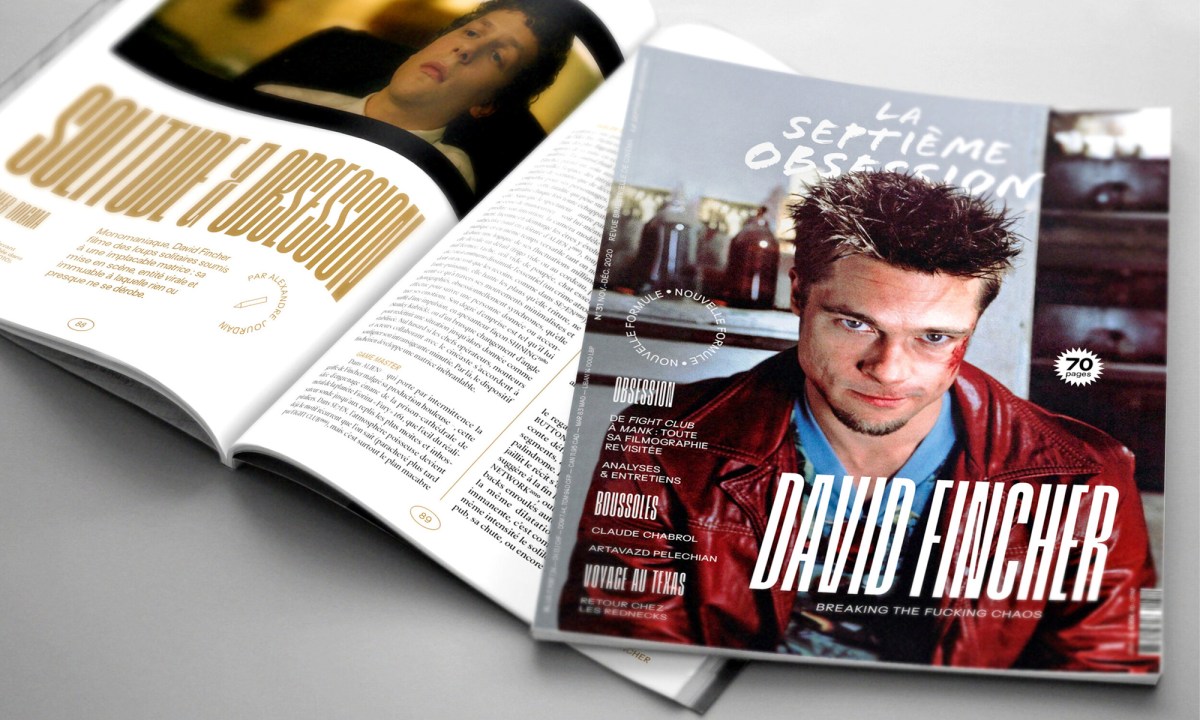
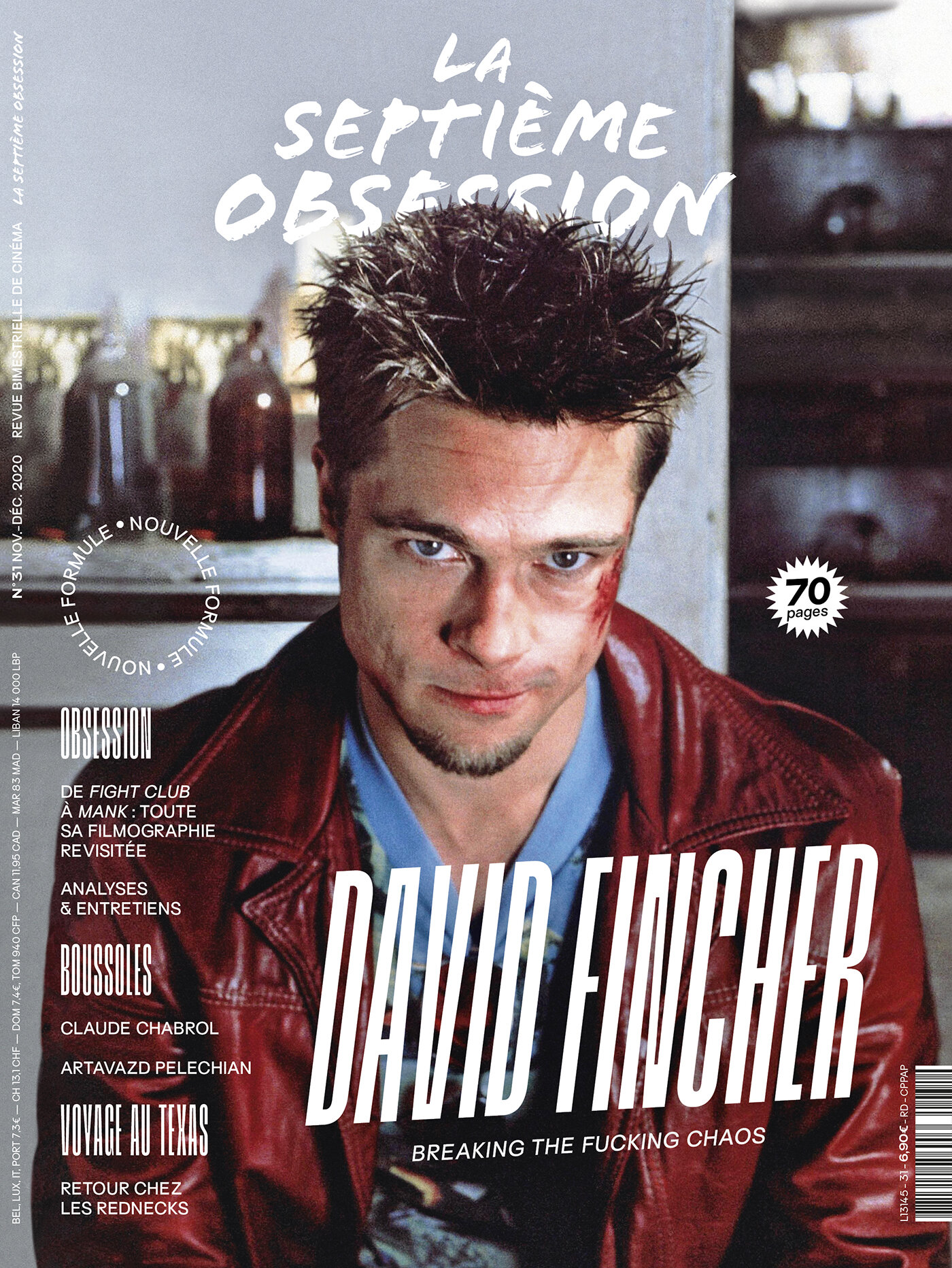
La Septième Obsession 31: David Fincher

La Septième Obsession

OBSESSION: David Fincher

1. Mank de David Fincher

Le grand film de Fincher débarque sur Netflix le 4 décembre. L’occasion d’un entretien avec le cinéaste, mais aussi avec ses collaborateurs les plus proches. 16 pages spéciales.

Scénario pour une critique par Nicolas Tellop

Filmopathe entretien avec David Fincher – par Nev Pierce

Collaborer avec Fincher entretiens avec Erik Messerschmidt (chef opérateur) – Donald Graham Burt (chef décorateur) – Trish Summerville (costumière) – Kirk Baxter (monteur)

2. Revisiter Fincher

Plongée exceptionnelle dans l’oeuvre de l’un des plus grands cinéastes contemporains. Filmographie commentée, analyses… 50 pages à lire.

4 nuances de Fincher par Jean-Sébastien Massart et Fabrice Fuentes

David Fincher en 14 titres Propaganda Films (clips) – Alien 3Se7enThe GameFight ClubPanic Room + les plans de Panic RoomZodiacL’Étrange histoire de Benjamin ButtonThe Social Network Millénium + la musique hantée de MilléniumGone Girl Mindhunter

3. Analyses

Démoniaque – la perfection du crime par Nathan Reneaud
Fantômes et paranoïa par Jérôme d’Estais
Solitude & obsession – Fincher Dogma par Alexandre Jourdain
Poétique du suicide par Aurélien Lemant
Le système des objets – design finchérien par Dick Tomasovic
Sommaire complet

Commander

Mix Magazine 2020: The Music in Sound with Ren Klyce

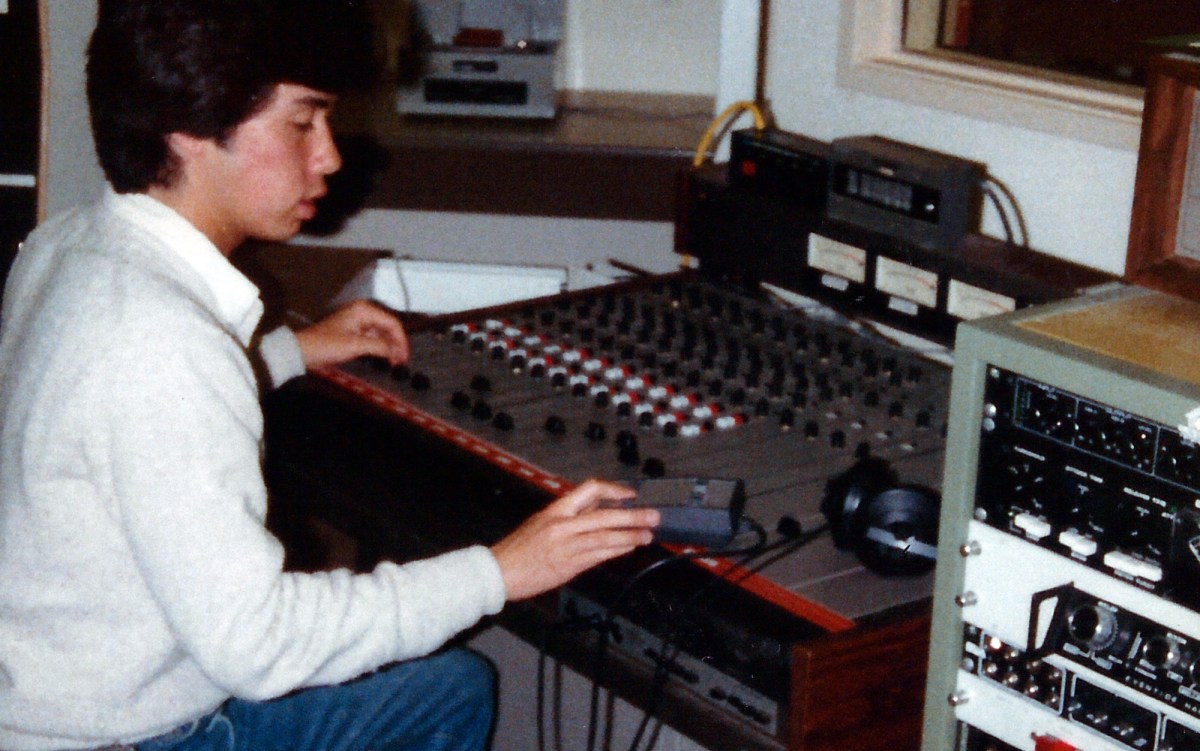
Ren Klyce in Peter Elsea’s Studio (1984)

Larry Blake
November 5, 2020
Mix Magazine / SoundWorks Collection

Animated short for Sesame Street (January 17, 1984) produced by John Korty. Sound and music by Ren Klyce:

All Hell Broke Loose: David Fincher’s Se7en And The Medieval Morality Play

David Fincher’s grisly neo-noir turns 25 this year, but its major influences go back much further than the film industry. Kristina Murkett explores the film’s roots in the medieval morality play

Kristina Murkett
September 25, 2020
The Quietus

The gruesome, grim and gut-wrenching ending of Se7en is unparalleled. The “What’s in the box?” scene is a murderous masterpiece; Fincher’s direction is so violent, visceral and unsettling that the scene becomes not only about an execution on film, but the execution of film-making.

All of the elements in this scene combine to create the final climax in which detective David Mills (Brad Pitt) shoots serial-killer John Doe (Kevin Spacey): the sickly yellow colour palette; the handheld camera shots; the ominous crescendo in the score; and the menacing metaphor of Doe’s silhouette in his blood-red uniform against the setting sun.

In killing him, Mills fulfils Doe’s prophecy; in Doe’s own words, he “[becomes] vengeance, [becomes] wrath.”

Twenty-five years ago, when audiences first walked out of the cinema solemn and more than a little shell-shocked, critics realised the seismic power of the film. Roger Ebert said that​ “Se7en is one of the darkest and most merciless films ever made in the Hollywood mainstream,” whilst John Wrathall described it as “the most complex and disturbing entry in the serial killer genre since Manhunter.”

These reviews still ring true; the film’s themes are intense, insidious, and irredeemably gloomy, and yet the performances and psychological terror of the script are still undeniably gripping. Its box-office success (it was the seventh-highest grossing film of 1995) arguably secured Fincher’s image as a master of bleak, bold blockbusters, and it is still the 28th most highly rated film of all time on IMDb.

There are many works that had an important influence on the film: Silence of the Lambs, Psycho and M, to name a few. However, one of the most revelatory influences, and one that can help us to understand the fatal foreshadowing of the characters’ endings, is actually a genre that came 500 years before Se7en: the medieval morality play.

Read the full article

The David Fincher You Meet in His Movies

To celebrate the 25th anniversary of Se7en and the 10th anniversary of The Social NetworkThe Ringer hereby dubs September 21-25 David Fincher Week. Join us all throughout the week as we celebrate and examine the man, the myth, and his impeccable body of work.

The protagonists of everything from ‘Fight Club’ to ‘Zodiac’ to ‘Gone Girl’ have something in common: they’re all cut from the same cloth as their director

Adam Nayman
September 23, 2020
The Ringer

No filmmaker has ever put himself into his work like Alfred Hitchcock. In movie after movie, the director made blink-or-miss-them appearances located at the edge of the frame—crossing a street walking a dog; appearing in a photo for a weight loss clinic—that prompted audiences to play a game of spot-the-auteur. These slyly miniaturized acts of showmanship were simultaneously sight gags and wry reminders of who was really in charge: The so-called “master of suspense” mixed in among the actors he infamously referred to as “cattle.”

David Fincher has not appeared in any of his own films: the closest thing to a cameo comes in 2014’s Gone Girl, a positively Hitchcockian thriller right down to its shower scene featuring a bloody blond. Midway through the film, suspected wife killer Nick Dunne (Ben Affleck) is being coached on an upcoming television appearance by his high-priced lawyer Tanner Bolt (Tyler Perry), who’s determined that his client makes just the right impression. During their dressing room prep session, the attorney pelts Nick with gummy bears to sharpen his posture and line readings. Perry supposedly didn’t know who Fincher was before being cast in the part, but that doesn’t preclude the fact that in this scene, he’s doing an indirect impression of his director—a control freak who once said there are only two ways to shoot any given scene, and that one of them is always wrong.

Read the full article

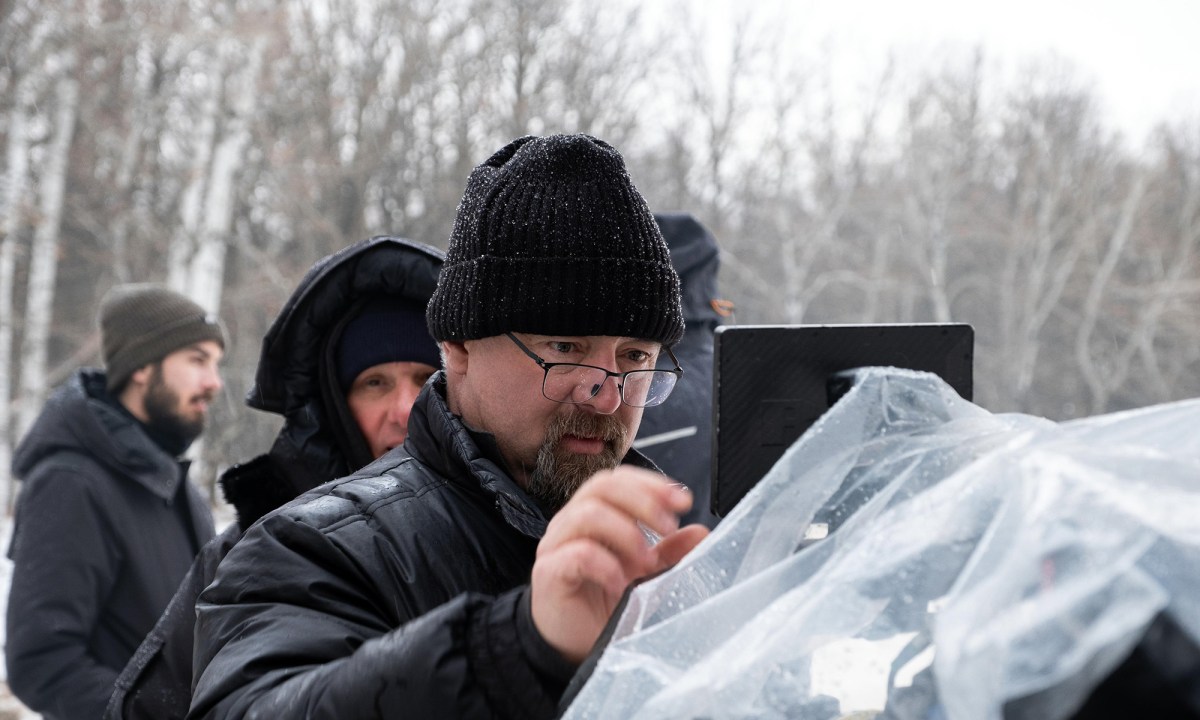
David Fincher’s Longtime DP Jeff Cronenweth Has Advice, Insight, and Stories

25th Annual American Society Of Cinematographers (ASC) Awards (2011)

A podcast about how to build a career in filmmaking. No Film School shares the latest opportunities and trends for anyone working in film and TV. We break news on cameras, lighting, and apps. We interview leaders in screenwriting, directing, cinematography, editing, and producing. And we answer your questions! We are dedicated to sharing knowledge with filmmakers around the globe, “no film school” required.

Jeffrey Reeser
August 28, 2020
No Film School

Oscar-nominated camera wizard Jeff Cronenweth sat down with us to talk about his origins in the film industry.

As a young man, Cronenweth spent time on the set of Blade Runner as his father, Jordan Cronenweth shot it. He walks us through the next chapter of his career, starting out as an AC for legendary DP Sven Nykvist and how his longtime working relationship with David Fincher began when shooting pickups for a Madonna music video.

We discuss his experiences crafting the look of Fight Club, The Social Network, and Gone Girl, among other great films. Now in 2020, he is up for an Emmy for his work on the Amazon series Tales From The Loop.

Listen to the podcast:

No Film School
Apple Podcasts

Follow Jeff Cronenweth, ASC Archives on Twitter

All The Right Movies: Zodiac (2007)

“Hey Bullitt, it’s been almost a year. You gonna catch this f*ckin’ guy or not?”

July 31, 2020
All The Right Movies

A chilling series of murders by the self-titled Zodiac Killer sends Northern California into a state of frenzy. Aided and abetted by SF’s finest, cartoonist Robert Graysmith is willing to sacrifice his marriage, his career and his sanity to track down the killer. David Fincher’s period tale of obsession didn’t perform at the box office and was largely ignored at awards season, but its reputation has built over time, and it is now regarded by many one of the greatest American movies since the turn of the century.

All The Right Movies have gone door to door to find out everything there is to know about Zodiac.

Listen to the podcast

All The Right Movies: Se7en (1995)

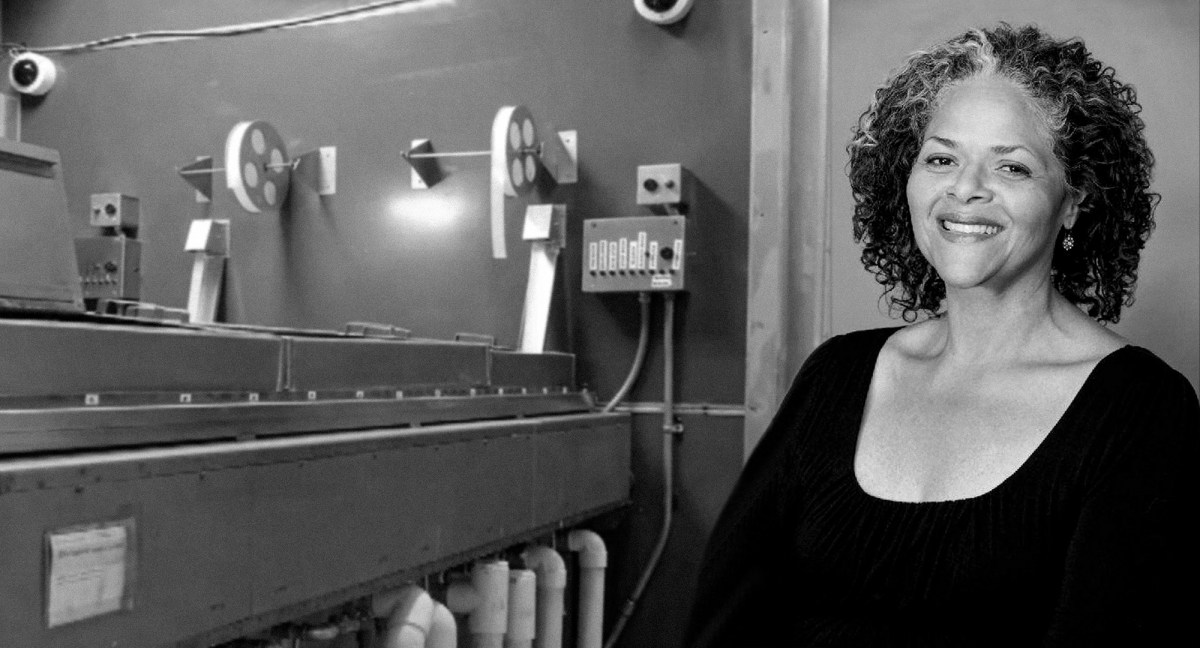
Beverly Wood, former VP of technical services at Deluxe, and the CCE process on Seven

Women in Film, Legacy Series: Beverly Wood Interview

Linda Feferman
April 23, 2013

Watch the 26:17 min. interview and documentary on vimeo

Team Deakins: Bev Wood, Journey from Film to Digital

Roger Deakins, James Deakins & Matt Wyman
May 3, 2020
Team Deakins

We speak with Beverly Wood, former Executive VP at Deluxe and Managing Director at eFilm. We discuss the transition in Hollywood from Film to Digital with one of the industries foremost experts on the science behind it all. We discuss how film emulsion actually works, color science, her work with Roger and James, and films like SkyFall, O Brother, Where Art Thou and more.

She’s been with us through our journey from film to digital and is a great source of information in general!

Listen to the podcast:

Team Deakins (libsyn)
Apple Podcasts

Beverly Wood. The Mad Scientist of Deluxe Labs

Bennett Moore
December 14, 2020

Soup du Jour

AC demystifies the special processing techniques offered by motion picture laboratories to enhance and manipulate imagery.

Christopher Probst
November 1998
American Cinematographer

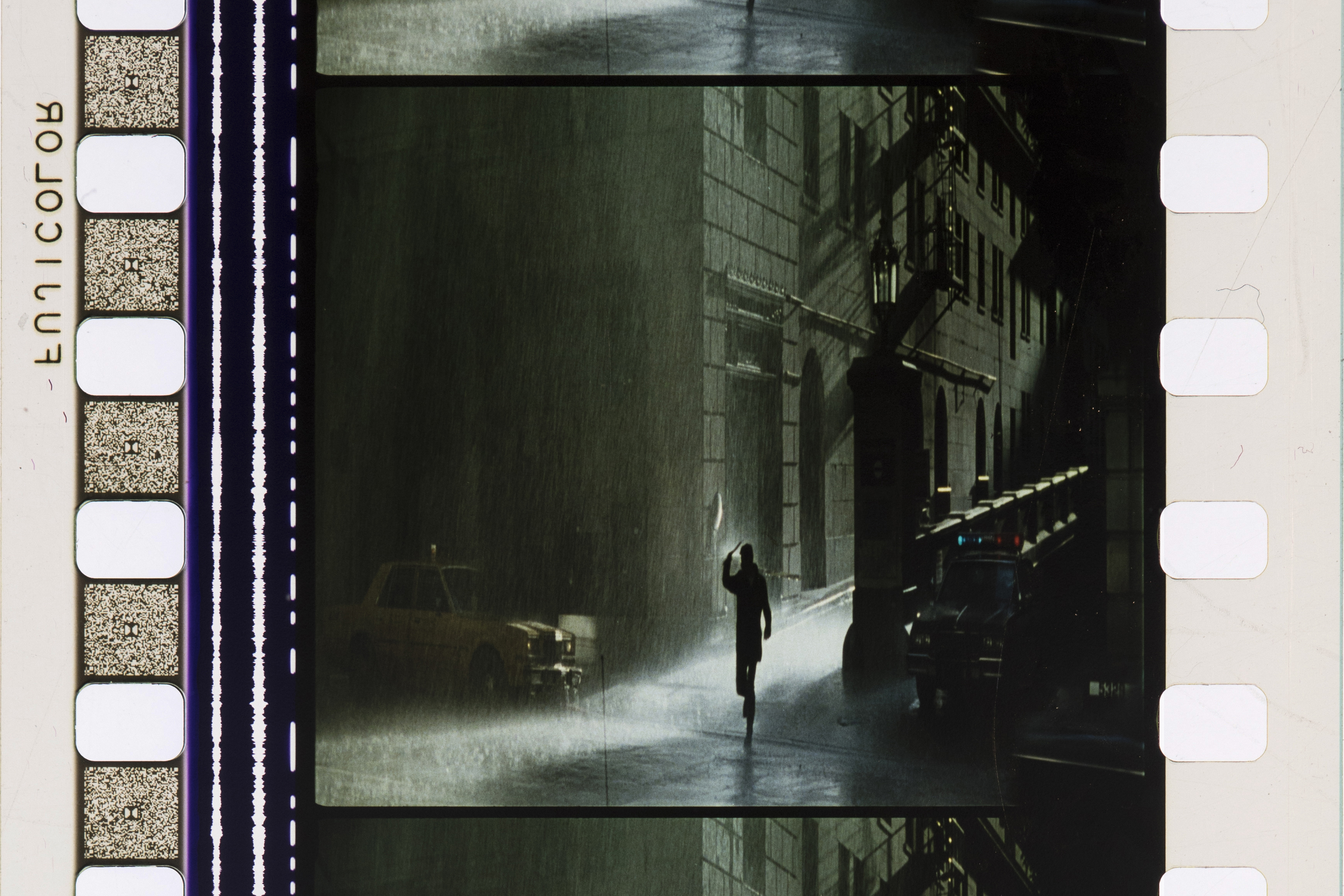
Although mainstream audiences may not be consciously aware of the use of special processes when they watch a film in a theater, they certainly felt the effect while watching David Fincher‘s horrific thriller Seven (AC Oct. ’95), which was photographed by Darius Khondji. A number of the film’s release prints were treated with Deluxe‘s Color Contrast Enhancement (CCE) process to heighten the film’s blacks and add a palpable texture and tonality.

Read the full article

Martin Scorsese Collection, George Eastman Museum, Rochester, NY.

Deluxe Color Contrast Enhancement

(CCE, Deluxe Adjustable Contrast Enhancement, ACE)

By Beverly Wood
FilmAtlas

Color Contrast Enhancement (CCE) was a silver retention process used at Deluxe Laboratories in the late 1990s that provided an extreme gritty look, with a muted color palette and increased contrast. Its companion process, Adjustable Contrast Enhancement (ACE), allowed for scalable control of contrast and black levels without impairing color saturation.

On David Fincher’s Se7en (1995), a small number of 35mm show prints were made for big city engagements using Deluxe’s Color Contrast Enhancement silver retention process. This enhanced the film’s noirish visual style with heightened contrast, desaturated colors and rich blacks.

Read the full article

Art of the Shot: Jeff Cronenweth, ASC on Tales from the Loop & How Story Drives the Visuals

Derek Stettler
April 27, 2020
Art of the Shot

Welcome to the Art of the Shot podcast! Join writer and filmmaker Derek Stettler for conversations with the artists behind the camera on strikingly-shot films, series, music videos and commercials. Discover how they made their careers happen, hear about their creative process, and learn how they make the shots that make us say: wait, how did they do that?

For the third episode, Derek speaks with none other than Jeff Cronenweth, ASC!

Jeff is the two-time Oscar-nominated cinematographer behind many of David Fincher’s films, including The Social Network, The Girl with the Dragon Tattoo, and their first film together–and Jeff’s first feature film–Fight Club.

(And if you’re worried, no, they don’t talk about Fight Club… much.)

Jeff has also shot numerous commercials and music videos for some of the biggest artists, including Madonna, David Bowie, Shakira, Taylor Swift and Katy Perry.

And this month marked the release of Jeff’s first foray into television, with the pilot to the Amazon Prime original series, Tales from the Loop: a sci-fi anthology adapted from the paintings of Swedish artist Simon Stålenhag.

What you may not know is that Jeff Cronenweth is the son of legendary cinematographer Jordan Cronenweth, the eye behind the era-defining look of Blade Runner. Enjoy this in-depth conversation about everything from how Jeff forged his own path while following in his father’s footsteps, and his approach to lighting based on story, to working with David Fincher, his work on Tales from the Loop (including how he achieved a never-before-seen lighting effect), and his trick for making sure eye lights look more natural.

Note, due to the COVID-19 pandemic, this conversation was recorded remotely, but all efforts were made to ensure quality audio.

The Art of the Shot podcast is brought to you by Evidence Cameras, an outstanding rental house in Echo Park specializing in high-end digital cinema camera packages, lenses, support, and accessories.

If you like what you hear, please subscribe to be notified of future episodes, and share this podcast with others to help grow the show!

Listen to the podcast:

Apple Podcasts
Spotify
Google Podcasts

Follow Art of the Shot: Instagram
Follow Derek Stettler: Instagram, Twitter

Tales from the Loop trailer audio copyright Amazon.com, Inc. Used with permission courtesy of Amazon Studios.

Follow Jeff Cronenweth, ASC Archives on Twitter

The Cinematography Podcast: Jeff Cronenweth

Jordan and Jeff Cronenweth on the set of Francis Ford Coppola‘s Gardens of Stone

Jeff Cronenweth, ASC on David Fincher, Fight Club, growing up in Hollywood, music videos, Mark Romanek, One Hour Photo, Gone Girl, The Social Network and the new Amazon series Tales from the Loop.

Ben Rock & Illya Friedman
April 22, 2020
The Cinematography Podcast (Cam Noir)

Jeff Cronenweth comes from three generations in the film business and followed his father, cinematographer Jordan Cronenweth (Blade Runner) into a career as a director of photography. Growing up on film sets and working alongside his father enabled Jeff to take a hands-on role in the camera department. He started as a loader and camera assistant, getting into the union while attending USC. He met David Fincher while working on the Madonna music video “Oh Father” as a camera assistant. Fincher gave Jeff his first opportunity to DP for the film Fight Club. Jeff’s collaboration with Fincher later earned him two Oscar nominations- one for The Social Network and one for The Girl with the Dragon Tattoo. He also began working with director Mark Romanek on music videos, such as EelsNovocaine for the Soul” and Nine Inch Nails’ “The Perfect Drug.” Jeff and Romanek also worked together on the feature film, One Hour Photo starring Robin Williams. The film presented many lighting challenges since the bulk of it takes place inside a store with flat white lights before the darker undertones of the movie are revealed.

Jeff also shot the pilot for Tales from the Loop with director Mark Romanek, streaming now on Amazon Prime.

Listen to the podcast:

Cam Noir
Apple Podcasts

LIKE AND FOLLOW US, send fan mail or suggestions!: Facebook, Instagram, Twitter

Podcast Credits:

Sponsored by Hot Rod Cameras (Instagram)
Editor in Chief: Illya Friedman (Instagram)
Ben Rock (Twitter, Instagram)
Producer: Alana Kode
Editor: Ben Katz
Composer: Kays Alatractchi

Follow Jeff Cronenweth, ASC Archives on Twitter

“David F*cking Fincher” Awards Brad Pitt His Modern Master Award at SBIFF

Sasha Stone
January 23, 2020
AwardsDaily

Roger Durling’s wildly successful Santa Barbara International Film Festival is underway with tributes and with honors being handed out for the next week or so. Last night, Brad Pitt was honored with the Leonard Maltin Modern Master award.

After a lengthy interview with Maltin, which covered all of Pitt’s work with directors like both Ridley and Tony Scott, the Coen brothers, Tarantino, and beyond, Pitt’s frequent collaborator David Fincher made a rare appearance to hand Pitt his Modern Master award. They have made three films together, if you didn’t know (which of course would be insane to not know). Pitt is a muse of sorts for Fincher, starting with Se7en (1995), then Fight Club (1999), and finally Benjamin Button (2008). Pitt said when accepting his award that he hoped the two get to do five more collaborations together. Wouldn’t that be something?

Brad Pitt is having quite a season. It’s as though we’ve never seen a movie star. Movie stars of his stature are “as rare as albino pandas, and here’s one of them,” said Fincher. What that means is that it’s rare indeed for an actor to possess that thing — that movie star thing. Charisma that could power an entire planet. You can’t teach it. You can’t learn it. It’s there or it isn’t. And with Pitt, it was there from his first appearance onscreen.

Here are the videos of the event (playlist):

January 22, 2020
officialSBIFF (YouTube)

Brad Pitt Looks Back on ‘Snatch’, ‘Oceans 12’, ‘Once Upon a Time…’ and More at SBIFF

Christina Radish
January 25, 2020
Collider

Read the highlights of the conversation