Adam Nayman Talks David Fincher’s Adman Past (And Present)

A conversation with the author about his new book, “David Fincher: Mind Games”

Sydney Urbanek
November 17, 2021
Mononym Mythology

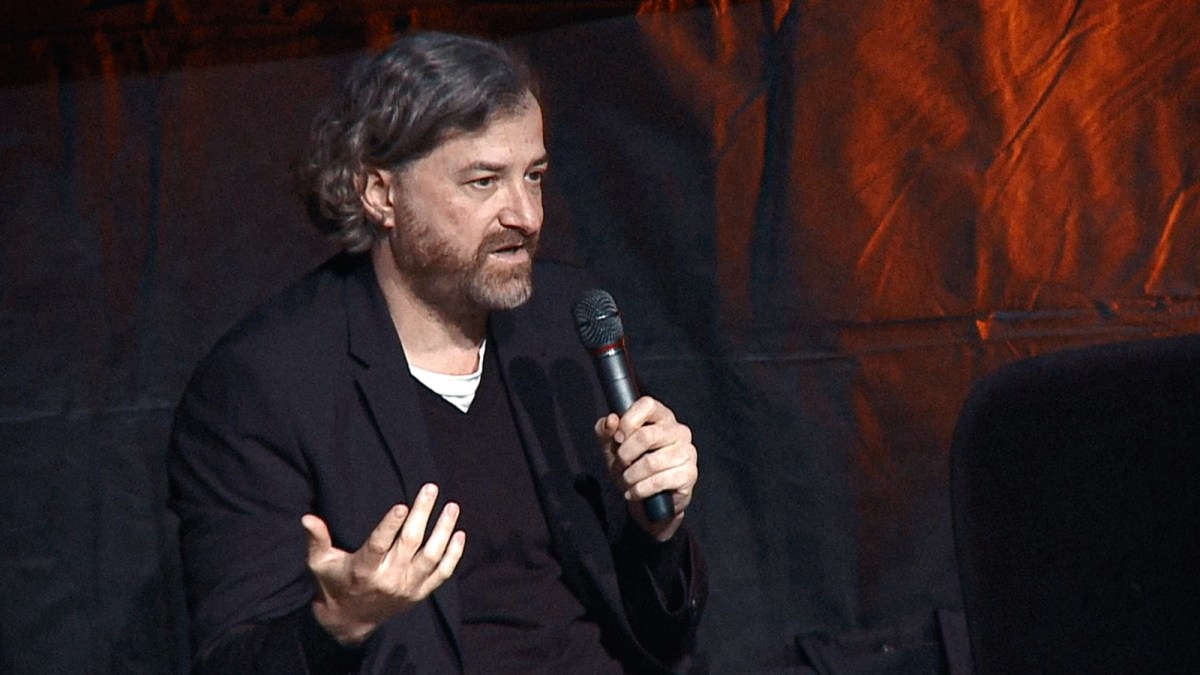
Adam Nyman is a fellow film critic and the author of several books about films and filmmakers, including but not limited to The Coen Brothers: This Book Really Ties the Films Together (2018) and Paul Thomas Anderson: Masterworks (2020). (Though we’ve never crossed paths in person, he also teaches in the department where I did my Master’s program.) He opens Mind Games with a dedicated discussion of the decade or so before Fincher ever made his narrative feature debut with ALIEN³ (1992), but then continues to come back to his commercial and music video work for the remainder of it, wisely treating his adman past as, well, more of an adman present. A few weeks back, Adam and I chatted for an hour about Fincher’s short-form oeuvre, but also his features because—again—the two aren’t as discrete as a lot of people believe. Our conversation has been edited for clarity, but not really so much for length.

Read the full interview

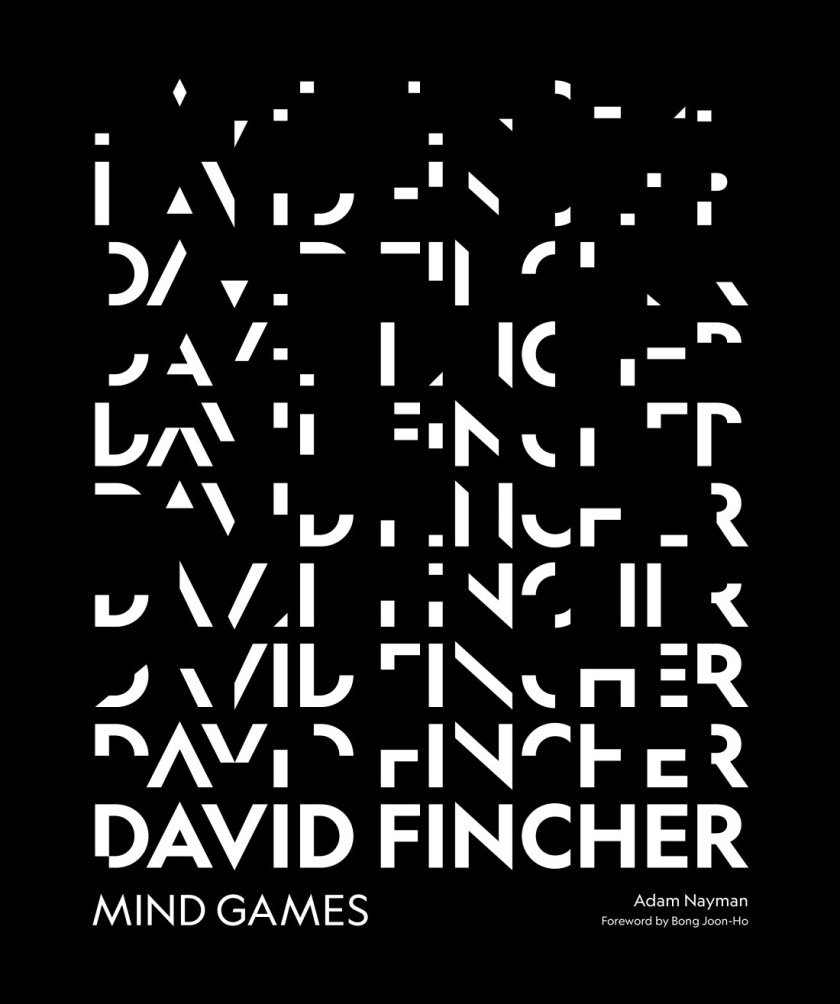
Buy the book David Fincher: Mind Games. By Adam Nayman

Multiple Men Play the Zodiac Killer in Zodiac. Adam Nayman’s New Book on David Fincher Explains Why

Illustration by Ana Godis

Adam Nayman
November 15, 2021
MovieMaker

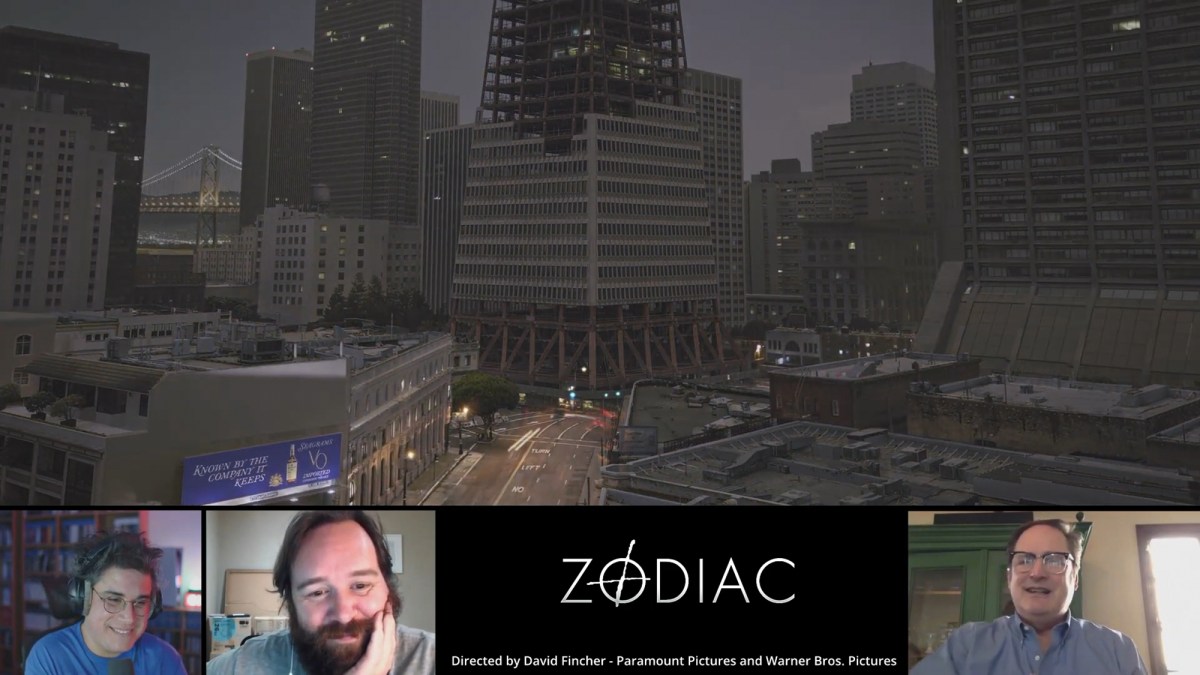
There is a fourth major screen presence in Zodiac: the title character, who is played by a number of different actors in various guises before disappearing as a physical presence around the midpoint of the movie, last seen and heard threatening a female hitchhiker who survives her encounter. This set-piece, based on the recollections of one Kathleen Johns (Ione Skye), pays off the ruthlessness of what has come before, even as it emphasizes Fincher’s restraint. Because we’ve seen in bloody detail what the Zodiac is capable of in the prologue and the borderline unwatchable lakeside filleting of a couple in Berryessa, his warning to Kathleen that “before I kill you, I’m going to throw your baby out the window” is hideously credible. But, amazingly, the historical record intervenes as a deus ex machina; Kathleen’s unlikely escape and roadside salvation constitute this pressurized movie’s only moment of true relief.

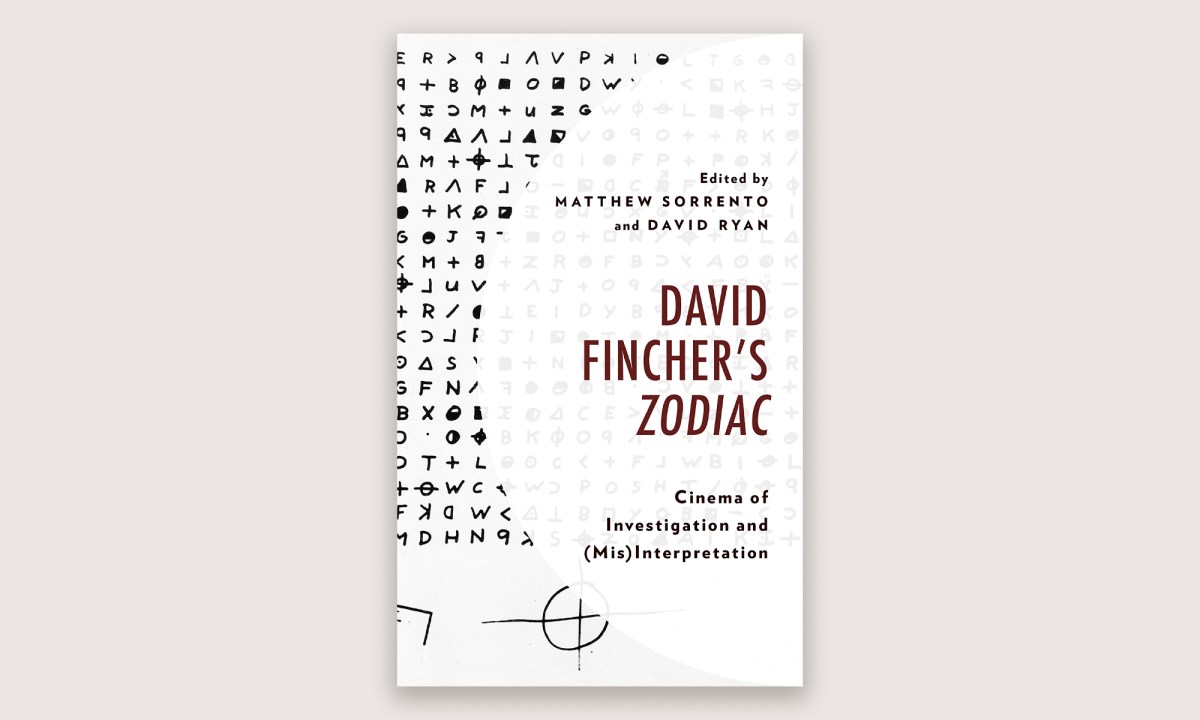
Zodiac’s multiple-casting trick is there to account for the possibility — floated in Graysmith’s book, as well as several other studies — of multiple killers, either working in tandem or in a copycat scenario. Broadly speaking, the film follows Graysmith’s hypothesis that the most plausible suspect was one Arthur Leigh Allen (referred to in Zodiac the book pseudonymously as “Bob Starr”), a disgraced elementary school teacher with a history of pedophilia who died in 1992 surrounded by a veritable mountain of persuasive circumstantial evidence, including a series of supposedly self-incriminating comments to friends and relatives. Allen was ultimately exculpated by DNA testing and inconclusive fingerprint matches, events which Zodiac presents without trying to either reinforce or rebut them. “I don’t want this [movie] to be about convicting Arthur Leigh Allen,” Fincher said in 2005. “Certainly [Graysmith] came to his conclusion and it was good enough for him . . . When [Allen] died, he felt like it was put away. That’s not what we want to represent.”

Read the full excerpt

Buy the book David Fincher: Mind Games. By Adam Nayman

What’s in the Box?: The Terrifying Truth of ‘Se7en’

David Fincher’s horrifying breakthrough continues to scare us. In an excerpt from a new book about the director’s work, open the box and see what evil lurks in the hearts of man.

Adam Nayman
November 15, 2021
The Ringer

“Wanting people to listen,” says John Doe (Kevin Spacey) to Detectives Somerset (Morgan Freeman) and Mills (Brad Pitt), “you can’t just tap them on the shoulder anymore. You have to hit them with a sledgehammer. And then you’ll notice you’ve got their strict attention.”

The idea of a movie directed with a sledgehammer conjures up a bludgeoning clumsiness, or maybe accidental expressionism. Observing the Jackson Pollock–like splatter of another senseless murder at the beginning of Se7en, William Somerset sighs, “Look at all that passion all over the wall.” From there unfolds a series of precise strokes—its pace as finely calibrated as the metronome in Somserset’s study, its shocks as carefully curated as a museum retrospective. In this gallery analogy, there is a didactic aspect to an artist using excess as a tool of communication, and a real–world precedent for such pummelling innovations as the ones used by John Doe. In 1971, the American artist Chris Burden, whose oeuvre included shutting himself inside a locker for five days and crucifying himself to a Volkswagen Beetle, arranged for a friend to fire a bullet from a small-caliber rifle into his arm as part of a performance piece titled Shoot. “In this instant,” Burden reflected later, “I was a sculpture.”

Ever the vanguard artiste, John Doe adapts Burden’s gambit while interrogating its mixture of self-aggrandizement and self-endangerment—the frisson that occurs when art is remodeled into a life or death venture. Burden made his mark without resorting to full-on martyrdom; as a self-styled fin-de-siècle aesthete jointly projecting his superiority and self-loathing onto the world around him, John Doe goes further. He has to, because he’s on the margins of a marketplace oversaturated with morbid images and ideas. In order to make an impact, he must swing for the fences.

Read the full excerpt

Buy the book David Fincher: Mind Games. By Adam Nayman

VOIR, the Davids, and the Summer of the Shark

Sasha Stone
November 11, 2021
Awards Daily

I had a dream that I got to work with the director David Fincher. Turns out, it wasn’t a dream.

How did this good fortune ever shine upon me, you might wonder? Most of you know me as an Oscar watcher, or one of the bad seeds that birthed this industry back in 1999. Really, writing about the Oscars was a way to write about movies. I’d grown up living in movies and practically living in movie theaters. But it wasn’t just in theaters or at drive-ins. I would watch movies on our rabbit-eared TVs whenever they came on. Back in the day you had to watch them when they aired because we did not have VCRs. We did not have cable. In the early days, we didn’t even have remote controls. But we had movies and we had movies that played on television. Usually these were black-and-whites, but they were as great as movies always have been and always will be.

I had dropped out of film school in 1993, landed online in 1994, and spent the next five years thinking and writing about movies in a Usenet group intensely devoted to cinema. That was where I first got into David Fincher’s films. I started this site as a way to fuse my own love of movies with whatever the Oscars were. I came from a place of loving MOVIES, not loving the Oscars.

Of course, I had not yet met David Fincher when I first started writing about his work. And he would have had no way of knowing that I’d made much of my own reputation online by writing about him, specifically The Social Network. We finally met after he read my review of The Girl with the Dragon Tattoo. When I told him I’d seen The Social Network 30 times and declared it a perfect film, he told me I was insane.

Since 2011, a lot has changed about movies and the way they are covered. There’s been an ongoing lament that film criticism, such as it is, had supplanted the pure love of film. The Oscar business, my business, seemed to directly impact that trajectory. Does the Oscar industry do more harm than good? If everyone is aiming for those nominations, and in order to get those nominations the movies must deliver what the Oscar voters want — does that create a kind of chokehold that empties out LOVE of movies?

Read the full article

VOIR: Trailer and Poster

From executive producers David Fincher and David Prior.

A Netflix documentary series.

As told by
Walter Chaw, Drew McWeeny, Taylor Ramos, Sasha Stone, and Tony Zhou.

Take a closer look at the stories that captured our imaginations.

VOIR

Only on Netflix. December 6, 2021.

Why Does It Always Rain In David Fincher’s Films?

Gray Kotzé (Director of Photography)
November 7, 2021
In Depth Cine

After watching a few David Fincher films I realised that one way he presents a cinematic world which is an exaggerated version of real life is through the weather.

0:00: Introduction
0:50: Seven
4:08: Sponsored Message
5:06: The Girl With The Dragon Tattoo
7:48: The Social Network
9:00: Conclusion

Music:
Rhythm Scott‘Tribal Splash’
Dear Gravity‘Finish Remember Begin Again’
Doug Kauffman‘The River Brethren’
We Dream Of Eden‘After the Storm’
Ottom‘Quiet Street’

The first 1,000 people to use this link will get a 1 month free trial of Skillshare.

In Depth Cine: Official IDC Merch, Patreon, YouTube, Instagram, Discord, Facebook

Gear I use: YouTube GearEditing SoftwareMusic, Stock Footage, Cinematography Gear

DISCLAIMER: Some links in this description are affiliate links. If you purchase a product or service with these links I may receive a small commission without an additional charge to you. Thank you for supporting my channel so I can continue to provide you with free videos!

Director David Prior Talks ‘The Empty Man,’ ‘Voir’ & Netflix Becoming “Custodians To The Cinematic Experience”

Andrew Bundy
November 5, 2021
The Playlist

There’s a specificity of intention to David Prior’s “The Empty Man” that eludes most studio horror projects. Inspired by the Boom Studios! comic (created by writer Cullen Bunn and artist Vanessa del Rey), Prior’s debut could have been a success story were the movie released under different circumstances. Inherited by Disney following the Fox merger, and dumped into theaters mid-pandemic, “The Empty Man” certainly wasn’t given the A24 Ari Aster treatment, which is a shame, as Prior’s film would make an outstanding, grief-tinged double feature with “Midsommar” or “Hereditary,” though its shape is far more chimerically hypnotic. 

Laying somewhere in the cosmic ether between David Fincher’s serial killer films, “Se7en” and “Zodiac,” Prior’s sepulchral vision slithers like a paranormal odyssey in the guise of a J-horror procedural a la Kiyoshi Kurasawa’s “Cure,” veteran character actor James Badge Dale aiding in making detective work look effortless through a mesmerizing lead performance. “We go looking for things we have lost… More than that, there is no such thing as loss,” a mysterious cult leader, played by Stephen Root, preaches

Audiences missed out on “The Empty Man,” but it’s deservedly found a devoted following. “If the price of making the movie I wanted to make meant getting abandoned by the studio and left to be picked up by passionate people who saw it on their own, that’s not a bad outcome.” Prior told us, “At least it’s the movie I wanted to make. It wasn’t some highly compromised, shortened, messed up version of that probably would have gotten more support from the studio but it would have vanished from everybody’s mind as soon as they saw it.”

Prior was later approached by David Fincher (for whom he used to direct documentaries) about a new film appreciation series, titled “Voir.” Scheduled to debut at AFI Fest this month, Netflix’s video essay project spotlights “passionate voices that love movies… highlighting the elements that get people excited about cinema.”

In a time when streaming services threaten to swallow up the theatrical experience, “Voir” is an essential look back at what makes film uniquely hypnotic. “Movies cornered the cultural conversation throughout the 20th century.” Prior told us. “It was the art form of the 20th century… [movies] don’t hold the same place in cultural thinking they used to and there’s a lot that’s important being lost.”

No great film deserves to be forgotten, and Prior is keenly aware platforms like Netflix now hold the keys to Hollywood’s kingdom, as “custodians to the cinematic experience.” “The Empty Man,” may not have mopped up box office dollars but revealed its director to be as impassioned and skilled a filmmaking scholar as David Fincher. We were fortunate to sit down for an extensive chat with him ahead of “Voir’s” upcoming premiere. Eerily, both his debut film and new Netflix series stemming from an obsession with Jaws,” the legendary Steven Spielberg, a fervent supporter of his film appreciation project.

Read the full interview

The Drysdale Exchange: Nev Pierce

Jeremy Drysdale (Scriptastic)
November 5, 2021
The Drysdale Exchange (365 Radio)

Jeremy is a screenwriter and producer who has written films, computer games, novels, events, and primetime television globally for over two decades.

Each Drysdale Exchange will showcase a penetrating one-on-one interview with an entertainment industry specialist, designed to illuminate an area of film, television, writing, or music which is not generally addressed in the mainstream.

David Fincher called Nev Pierce‘s directorial debut, Bricks, a “classy take on a morbid classic”. Mark Romanek labeled his fourth short Promise “superbly done”. His other films (Ghosted, Lock In) are well praised, too, and not just by A-list directing talents. He’s seen his work played at festivals worldwide, including Fantasia, FrightFest, and the London Short Film Festival. He has various features in development as a director and is also a contributing editor for Empire Magazine.

Listen to the podcast:

365 Radio
Amazon Music

Because We Love Making Movies: Screenwriter Eric Roth

Eren Celeboglu
Because We Love Making Movies (InstagramFacebook)

Part 1

May 22, 2021

Today, I sit down with legendary screenwriter Eric Roth.

We talk about his life and his craft and why we should all be more generous of spirit. Truth be told, Eric has been involved in creating so many iconic films that it would have been impossible to try… so I asked him about the films of his that meant the most to me, and he held court and digressed in the loveliest of ways. I hope you have as much fun listening as I did recording this interview. Enjoy! 

Eric’s credits include: The Nickel Ride, The Drowning Pool, The Onion Field, Forrest Gump (for which he won an Oscar), The Postman (for which he won a Razzie), The Horse Whisperer, and then one of my favorite films ever, The Insider, followed by Ali, Munich, The Good Shepherd, and The Curious Case of Benjamin Button. He’s also worked in Television, and seen not one but two sea changes, first with HBO, and then with Netflix and House of Cards. And much more recently he wrote A Star Is Born, Dune, and the new Western being Directed by Martin Scorsese, Killers of the Flower Moon. He was also a producer on the Oscar nominated Mank, directed by David Fincher, from a script by Fincher’s father.

Listen to the podcast:

Apple Podcasts
Spotify

Part 2

October 18, 2021

Today we welcome back the legendary Eric Roth. An Oscar-Winning Screenwriter & Producer.

We talk about how he writes, and blends craft with pure inspiration. He talks about working with Robert Redford. We re-visit Munich & The Good Shepherd. He talks about being re-written, and his unique creative partnership with Bradley Cooper & Lady Gaga on A Star Is Born. And last but not least, we talk about writing the new Dune film which he thinks just might be something very special.

It’s a wonderful conversation with one of the very best working in Hollywood today, whose generous not only with his talent, but his spirit. Dig it!

Recommended Viewing: The Horse Whisperer, Munich, The Good Shepherd, A Star Is Born (2018), and Dune (See it in IMAX on October 22, 2021)

Listen to the podcast:

Apple Podcasts
Spotify

Cinematography Style: Jeff Cronenweth

Gray Kotzé (Director of Photography)
October 17, 2021
In Depth Cine

In this edition I’ll look at Jeff Cronenweth, who, to a large extent, is responsible for popularising a style of ‘dark cinematography’, through his work on movies such as Fight Club or The Social Network.

0:00: Introduction
1:03: Background
2:36: Philosophy
5:23: Sponsored Message
6:18: Gear
11:57: Conclusion

Music:
Liquid Memoirs‘Through The Portal’
Bosnow ‘Bangkok Rain’
Liquid Memoirs‘Altered States’
Salt Of The Sound‘Awake My Soul’
Liquid Memoirs‘Hazy Evenings’
Ottom ‘Raining In Kyoto’
Trevor Kowalski‘Katydid’

Source: Fight Club (American Cinematographer, November 1999)

Head to squarespace.com/indepthcine to save 10% off your first purchase of a website or domain using code INDEPTHCINE.

In Depth Cine: Official IDC Merch, Patreon, YouTube, Instagram, Discord, Facebook

Gear I use: YouTube Gear, Editing Software, Music, Stock Footage, Cinematography Gear

DISCLAIMER: Some links in this description are affiliate links. If you purchase a product or service with these links I may receive a small commission without an additional charge to you. Thank you for supporting my channel so I can continue to provide you with free videos!

3 Things That Working With Jeff Cronenweth Taught Me About Cinematography

Gray Kotzé (Director of Photography)
June 19, 2020
In Depth Cine