For many, the idea of recording 8K video understandably conjures up images of unmanageable files sizes, long transfer times, huge piles of hard drives, and slow proxy workflows… not to mention a black hole in the budget.
Leaving aside for one moment the fact that HDR and HFR are far more valuable than resolution to the consumer’s eye, there are benefits to an 8K production which an increasing number of projects are taking advantage of.
Mank, directed by David Fincher and lensed by Erik Messerschmidt, ASC, was acquired 8K using the RED Monstro in monochrome (above); and Money Heist, the Netflix drama which in season 4 is shot at 7K to accommodate HDR in a 4K deliverable, are just two of the most recent.
You can’t sell productions made in less than 4K to Netflix and other streaming services now. One day soon, some will mandate 8K to begin with and Netflix will have its fair share in the bank.
Even if the final output is only going to be 4K/UHD, shooting in 8K gives you many options in post that you do not have when starting in 4K. These include downscaling, cut/crop (pan/scan) or headroom for VFX.
“Before making the decision to capture a project in 8K, producers and cinematographers need to consider the project’s long-term goals,” says Bryce Button, director of product marketing, AJA Video Systems. For instance, capturing in 8K makes a lot of sense if there will be future use for the material.
I was late in discovering David Fincher’s gripping series on serial killers, Mindhunter. But last summer, I noticed the Netflix original lurking in my suggested titles and decided to give it a whirl. I burned through both seasons within a week. The show is both thrilling and chilling, but the majority of these moments are not achieved through blazing guns, jump scares and pyrotechnics. It instead focuses on the inner lives of multiple murderers and the FBI agents whose job it is to understand them through subtle but detail-rich conversation.
Sound plays a crucial role in setting the tone of the series and heightening tension through each narrative arc. I recently spoke to rerecording mixersScott Lewis and Stephen Urata as well as supervising sound editorJeremy Molod — all from Skywalker Sound — about their process creating a haunting and detail-laden soundtrack. Let’s start with Lewis and Urata and then work our way to Molod.
Scott Lewis, Stephen Urata, and Jeremy Molod
How is working with David Fincher? Does he have any directorial preferences when it comes to sound? I know he’s been big on loud backgrounds in crowded spaces since The Social Network.
Scott Lewis: David is extremely detail-oriented and knowledgeable about sound. So he would give us very indepth notes about the mix… down to the decibel.
Stephen Urata: That level of attention to detail is one of the more challenging parts of working on a show like Mindhunter.
Working with a director who is so involved in the audio, does that limit your freedom at all?
Lewis: No. It doesn’t curtail your freedom, because when a director has a really clear vision, it’s more about crafting the track to be what he’s looking for. Ultimately, it’s the director’s show, and he has a way of bringing the best work out of people. I’m sure you heard about how he does hundreds of takes with actors to get many options. He takes a similar approach with sound in that we might give him multiple options for a certain scene or give him many different flavors of something to choose from. And he’ll push us to deliver the goods. For example, you might deliver a technically perfect mix but he’ll dig in until it’s exactly what he wants it to be.
Urata: Exactly. It’s not that he’s curtailing or handcuffing us from doing something creative. This project has been one of my favorites because it was just the editorial team and sound design, and then it would come to the mix stage. That’s where it would be just Scott and me in a mix room just the two of us and we’d get a shot at our own aesthetic and our own choice. It was really a lot of fun trying to nail down what our favorite version of the mix would be, and David really gave us that opportunity. If he wanted something else he would have just said, “I want it like this and only do it like this.”
But at the same time, we would do something maybe completely different than he was expecting, and if he liked it, he would say, “I wasn’t thinking that, but if you’re going to go that direction, try this also.” So he wasn’t handcuffing us, he was pushing us.
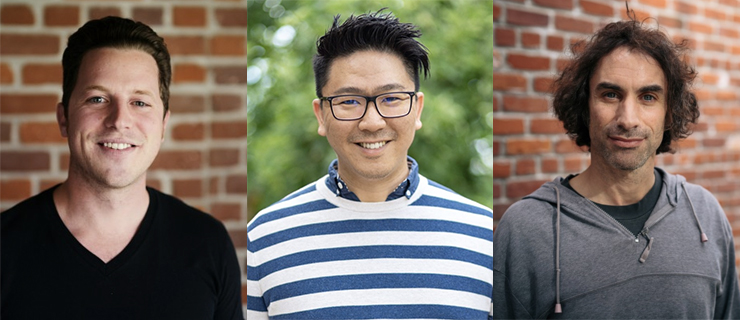
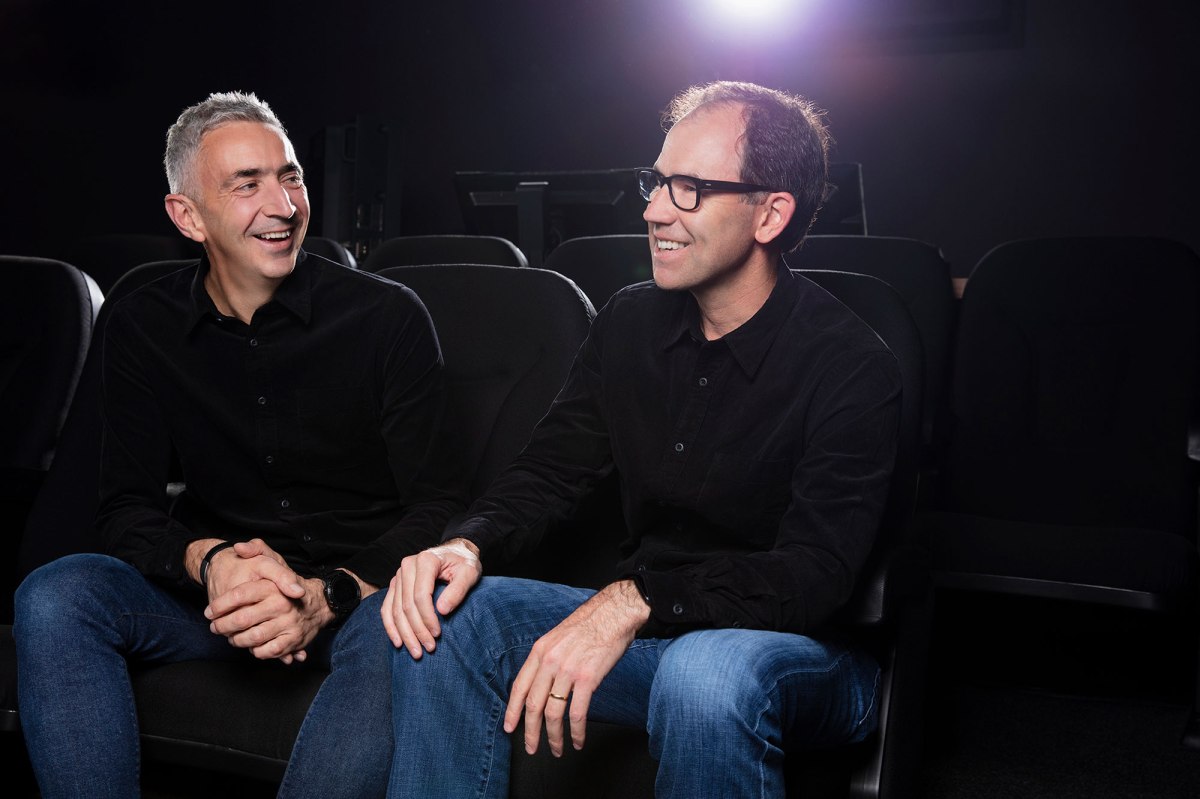
We took the opportunity to sit down with the founders of PIX and CODEX, Eric Dachs and Marc Dando, to learn more about why PIX acquired CODEX and what the future holds for X2X.
“I was fortunate enough to meet David Fincher on Panic Room in 2001 when I was working as a sound editor and the relationship I developed with him and his No. 13 production company has carried through until today with Mindhunter. He’s someone I can bounce ideas off and he’s constantly challenging us. For the second season of Mindhunter he asked to design a real-time telestration solution that would enable him to communicate the thoughts and ideas he came up with during production via annotations attached to the image captured by the camera. We came up with PIX RT it immediately creates clips of the take and presents this clip to the director and certain other approved crew members via a tablet, so he or she can make annotations and notes on the image. This media, metadata and the notes are then securely synchronized with the PIX cloud to all the approved members of the production who can review them. And of course, it is completely secure and integrated with all of our other services. And now we’re working with the CODEX team on the next evolution of these tools.”
Marc Dando:
“Sometimes it takes working with the most demanding and yet most exceptionally talented people to push you to design the best products. That’s certainly the case with cinematographers like Bob Richardson and Emmanuel “Chivo” Lubezki. On Gravity we worked with Chivo and his crew along with our services company to design an efficient, color critical, ARRIRAW workflow that would support this complex, multi-camera shoot which involved “The Cage”. The Cage was a lightbox consisting of 196 2’x2′ LED panels which simulated the light coming from stars and the sun and reflected light from Earth, but could also project images of Earth, distant stars, or, images of Sandra Bullock‘s child character, as the actor was suspended within. It was ground-breaking. And funnily enough, I recall that Chivo talked to David Fincher before the shoot and he thought that it was a couple of years too early to pull it off. Projects like Gravity inspire us to push the boundaries of what is possible.”
Read the full interview (part one) on the X2X magazine app (App Store & Google Play). You’ll find interviews and Q&A’s with some of the world’s leading DITs, directors, and cinematographers. Best of all, it’s free!
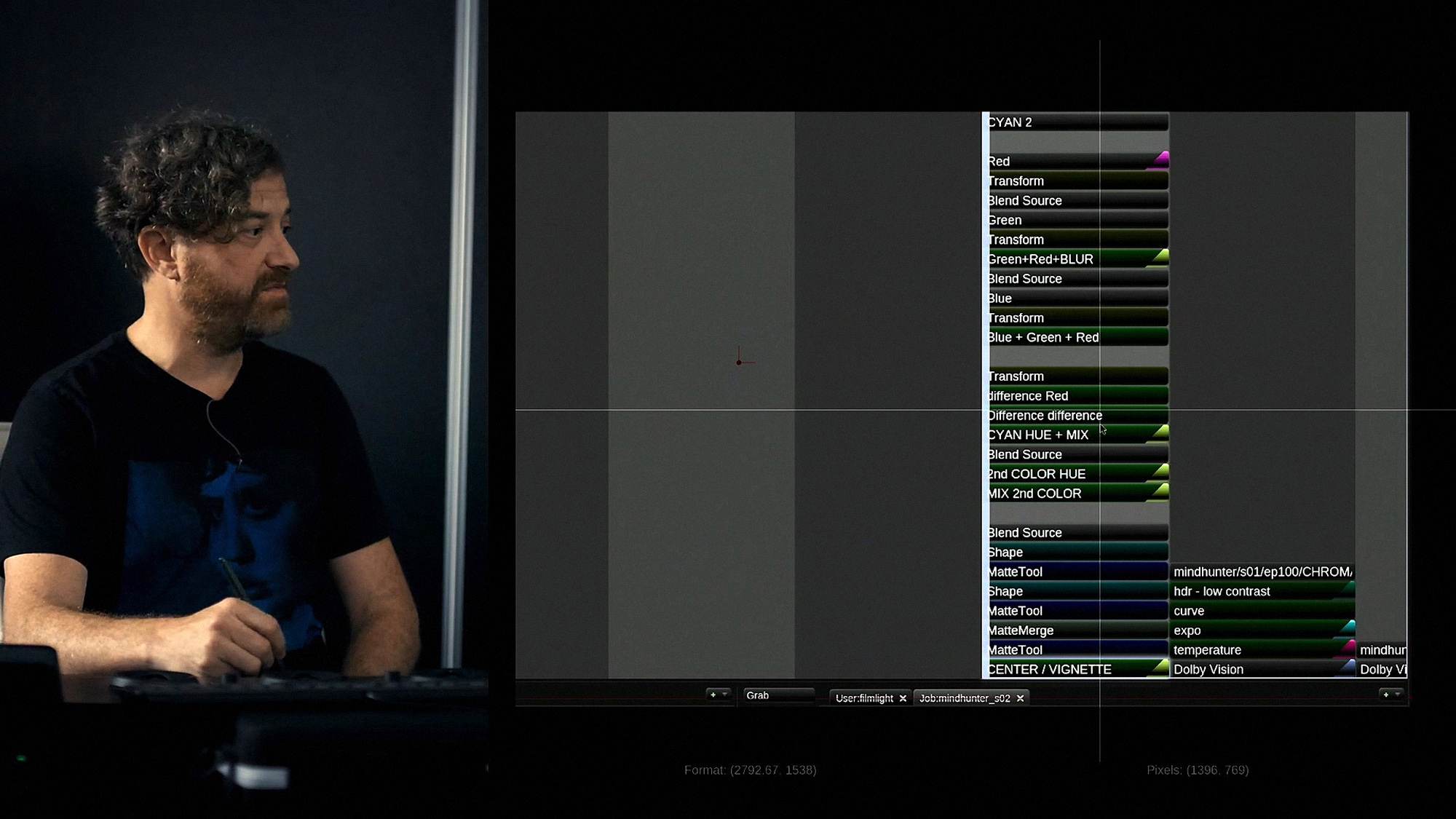
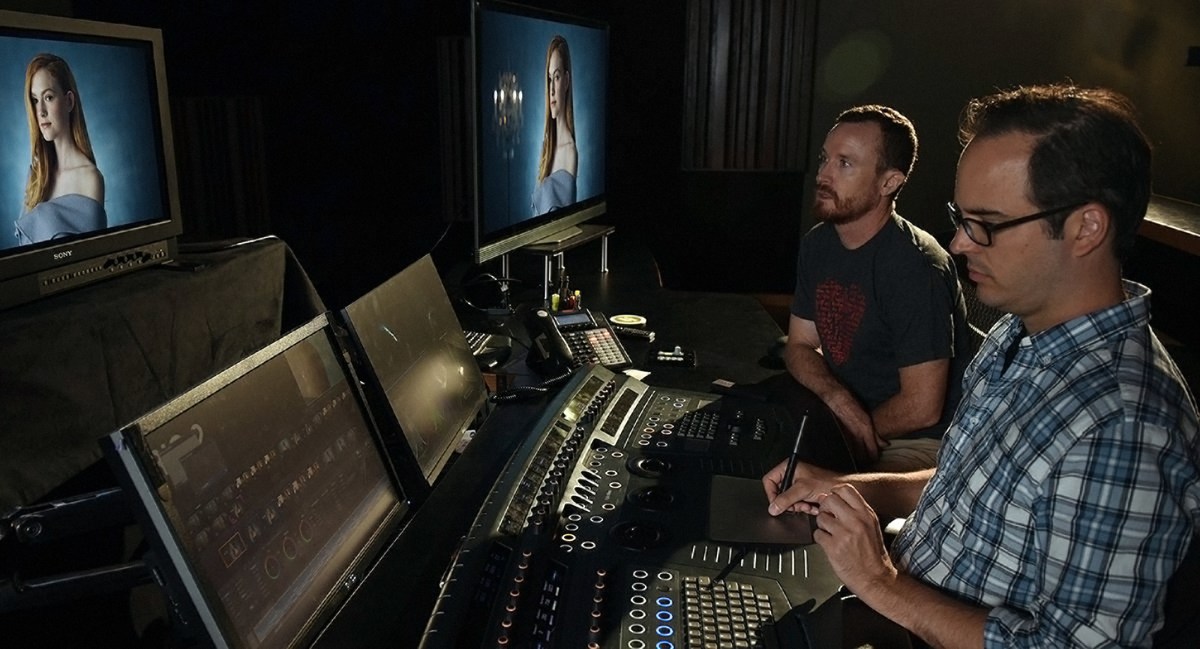
Eric Weidt talks about his collaboration with director David Fincher – from defining the workflow to creating the look and feel of Mindhunter. He breaks down scenes and runs through colour grading details of the masterful crime thriller.
Eric Weidt spent years in Paris working with fashion photographers transitioning from traditional film to digital capture workflows. He created custom film-emulation ICC profiles, and mastered color work and compositing techniques for print stills and fashion films.
Clients included Mario Testino, David Sims, Patrick Demarchelier, Mert Alas and Markus Piggot, Steven Meisel, Hedi Slimane, Karl Lagerfeld. His motion picture work for David Fincher includes responsibilies as VFX artist (Gone Girl), and Digital Intermediate Colorist (Videosyncracy and Mindhunter).
He holds a BA in Theater Arts from the University of California at Santa Cruz and is both an American and French citizen.
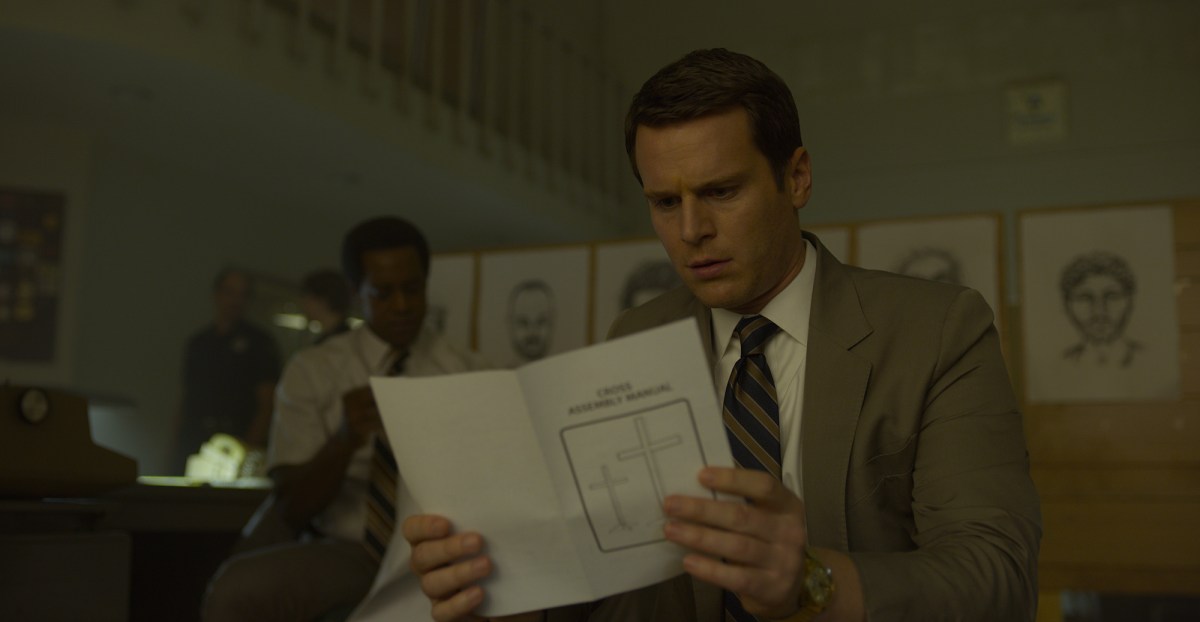
Going inside Mindhunter Season 2: there’s a contradiction at the heart of Mindhunter, the highly rated Netflix drama. For all the efforts of creator David Fincher and cinematographer Erik Messerschmidt to craft a minimalist aesthetic for this ripped-from-the headlines chronicle of the modern serial killer and its FBI profilers, the show itself continues to win plaudits for how it stylistically marries editorial with subject.
Season 1 was lauded for shining a light onto this particularly murky corner of the criminal psyche with its desaturated cinematography. “David and I continued with what we had put together for the first season,” Messerschmidt explains. “If anything, Season 2 is even more structured and formalist. That classical aesthetic is driven a lot by the content. The show is very measured in its approach to a story about serial killers so we felt the photography should be restrained and simple.”
Miles Crist / Netflix
Messerschmidt photographed all nine episodes of the new season which returned to Netflix after a two-year hiatus. Directors Andrew Dominik (The Assassination of Jesse James by the Coward Robert Ford), Carl Franklin (House of Cards) and Fincher took charge of blocks of three. Before taking responsibility to shape the look of Mindhunter’s first run, Messerschmidt had worked as a gaffer on shows like Mad Men and Bones, and then the feature film Gone Girl where he first came into contact with Fincher.
Definitive if subtle changes were made for Mindhunter’s latest season, the most notable of which was shooting with the custom XENOMORPH with HELIUM 8K S35 sensor and being able to monitor HDR on set.
PIX has worked closely with David Fincher and his No. 13 production company since Panic Room in 2001, developing tools and services that have fundamentally changed how feature films and television shows are made. One of the first directors to embrace digital cameras with his use of the Thomson Viper on Zodiac, Fincher and his team are constantly redefining technology as they seek to blur the line between production and post production and strive to automate the mundane and more clearly communicate their creative vision.
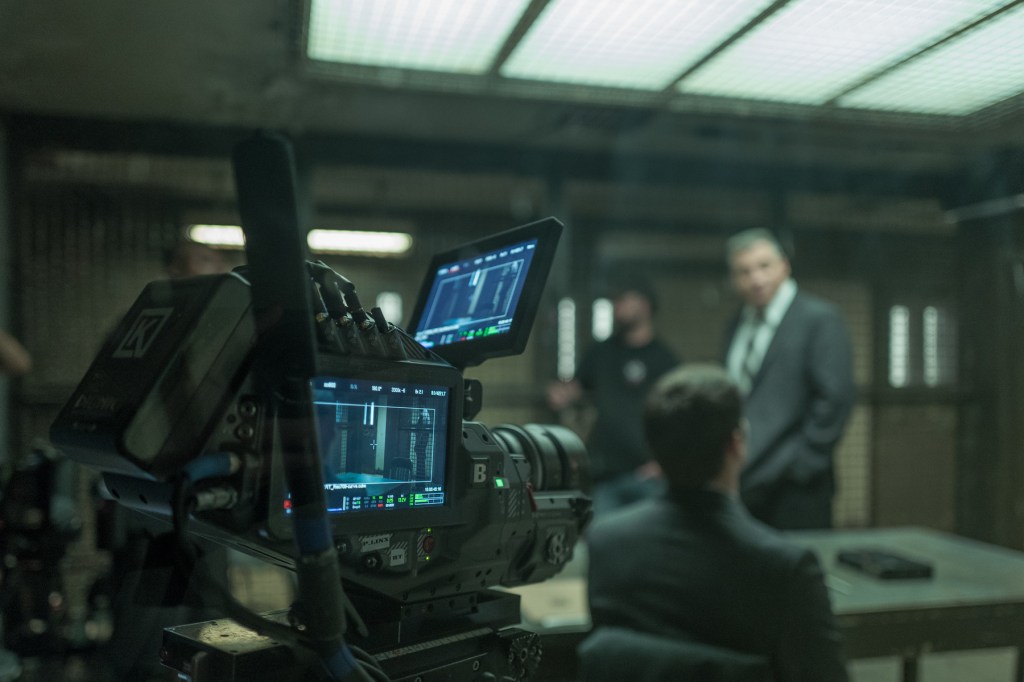
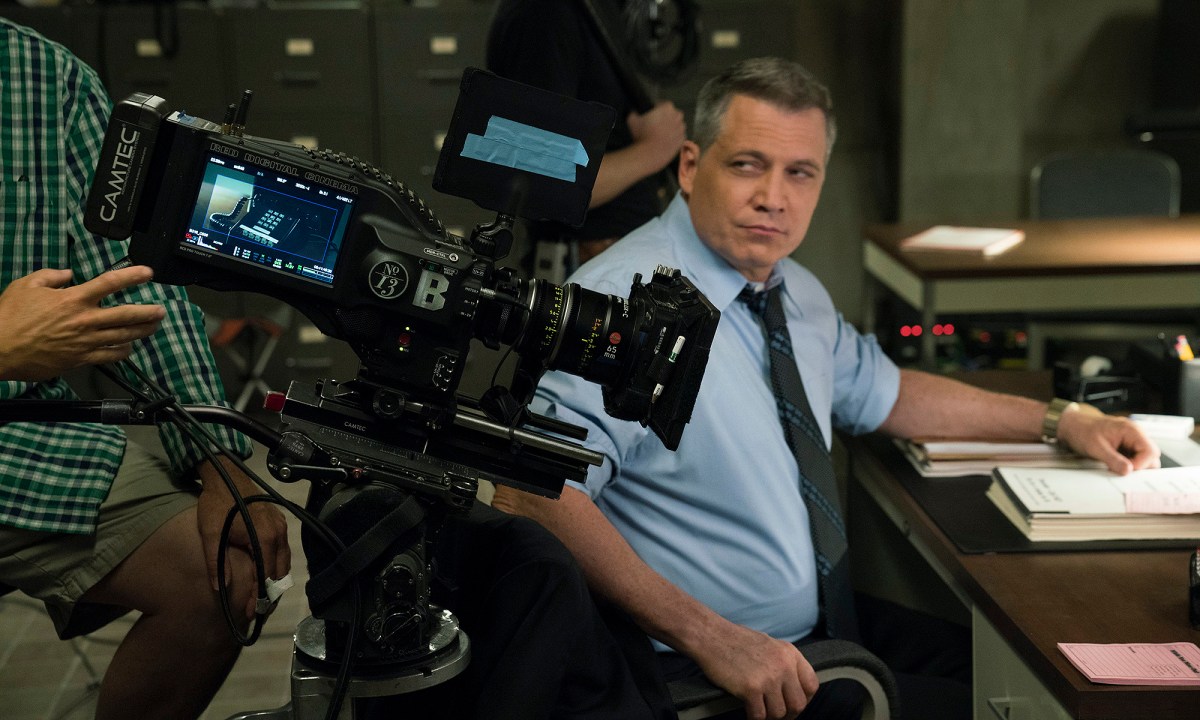
On Netflix’s Mindhunter, Fincher again used the latest digital capture technology – custom RED Xenomorph cameras designed to his specifications, integrating all the usual camera components (wireless video transmitters, focus controls etc.) into the camera for a much more ergonomic design. But Fincher’s desire for innovation extended far beyond the camera, so he again turned to PIX.
CHALLENGE
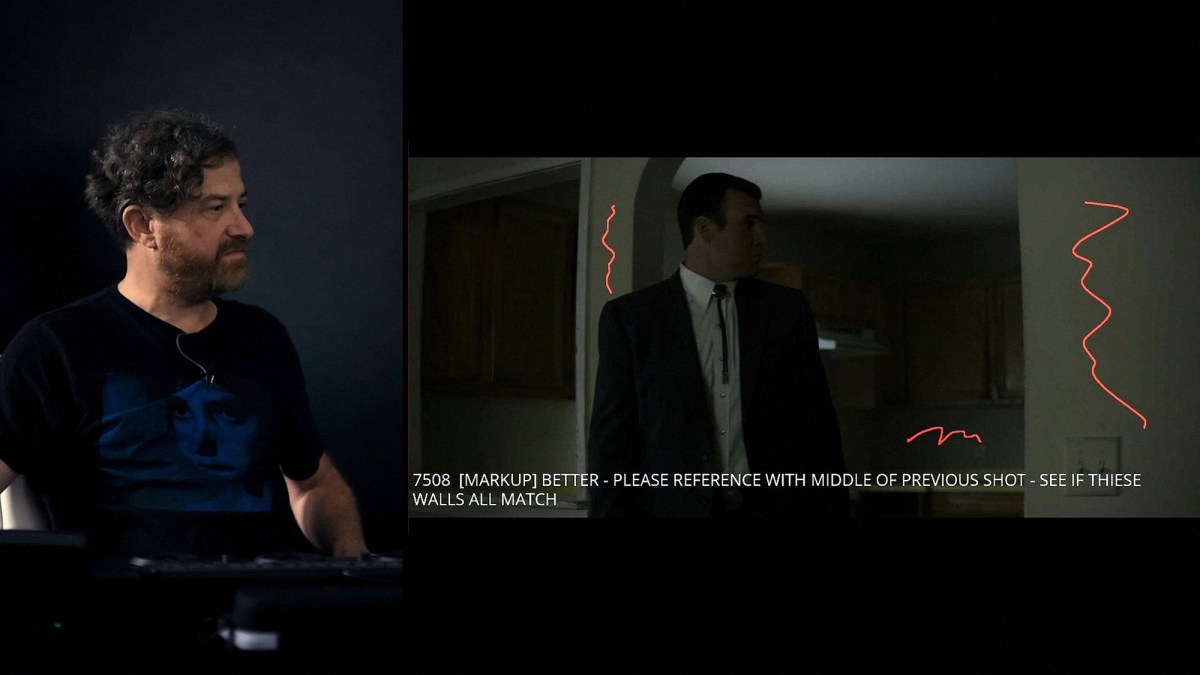
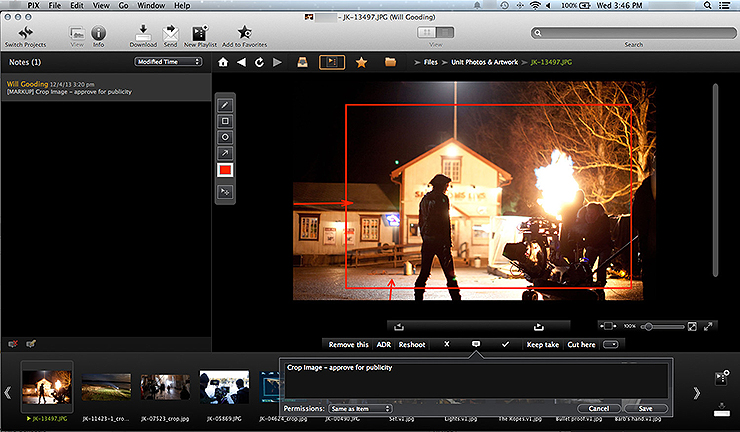
Working on his current project, the second season of Mindhunter, David Fincher was looking for a way to better convey the thoughts and ideas he came up with during production via annotations attached to the image captured by the camera. In the past, a thought about the grading required for a particular shot might have been conveyed via a phone call to the dailies colorist much later in the day after shooting wrapped. David Fincher required a real-time telestration solution, rather than a delayed response later in the evening or next day. And it absolutely could not delay shooting or increase the footprint or complexity of production.
SOLUTION
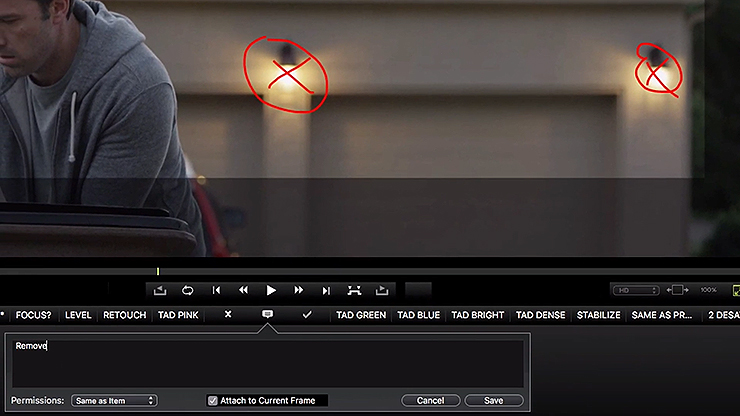
PIX has built a system that makes the often-used term “Connected Set” real. PIX OnSet creates a clip of the take and immediately presents this clip to the director via a tablet, so that he or she can make annotations and notes on the image right after it has been captured. These notes are then securely uploaded via PIX to all the approved members of the production who can review them along with image files. Other approved production crew – for example, DP Erik Messerschmidt – can also add their own notes. These notes are securely conveyed through to editorial and post production along with the image files and other metadata.
PRODUCTS DEPLOYED ON MINDHUNTER
– PIX for Desktop, Web, iOS – PIX OnSet – The series also utilized the PIX Developer Program for custom integrations.
RESULT
Real-Time Creative Capture – The thoughts and ideas of the creative team are recorded in real-time immediately after the take. This ensures that their vision and ideas are communicated clearly and without change through the many lines of communication to the rest of the production team, reducing the potential for misunderstanding. For example, the editorial team can easily see any notes the director or DP have made without relying on paper, phone calls or emails sent later in the day. This might be a note that a take needs to be printed down half a stop or a note that something in the frame needs to be removed in post. Having the note linked to the image vastly reduces the opportunity for error and saves valuable time.
Patented Content Security – Along with the rest of the industry-leading PIX platform, PIX OnSet is extremely secure, built on PIX’s patented DRM with dynamic and forensic watermarking and meets the exacting standards of the MPAA.
Minimal Footprint On Set – Rather than adding to the on-set production infrastructure, PIX OnSet actually reduces it by providing immediate playback of takes to authorized devices as they are captured by the camera
No Production Delays – As authorized members of the creative team can annotate the file immediately and easily on their own tablet, there is absolutely no slowdown in the pace of production.
See how PIX can help your next big project. Call or email us to set up a demo and learn more!
Film stills of Holt McCallany and Jonathan Groff on the set of Mindhunter, Season 1, by Patrick Harbron (Netflix).
Ian Vertovec is Supervising Colorist at Light Iron, which he co-founded, a Panavision company specialized in dailies, digital intermediate, archival, and data services for projects originated on file-based motion cameras.
At PIX System, we help create entertainment and media by bringing creativity, collaborators and assets together. For 16 years, we’ve been creating and innovating ways to give the top creative talent, studios, mini-majors, networks, indie productions, and online content providers the time and resources they need to create. Better. Faster. More reliably.
Our industry leading platform is an open sandbox and secure home base, viewer, community workspace, media mine, think tank and muse – a place on the digital frontier where creative and strategic content and communication are safe and tidy and easily found, shared and worked on alone or together.
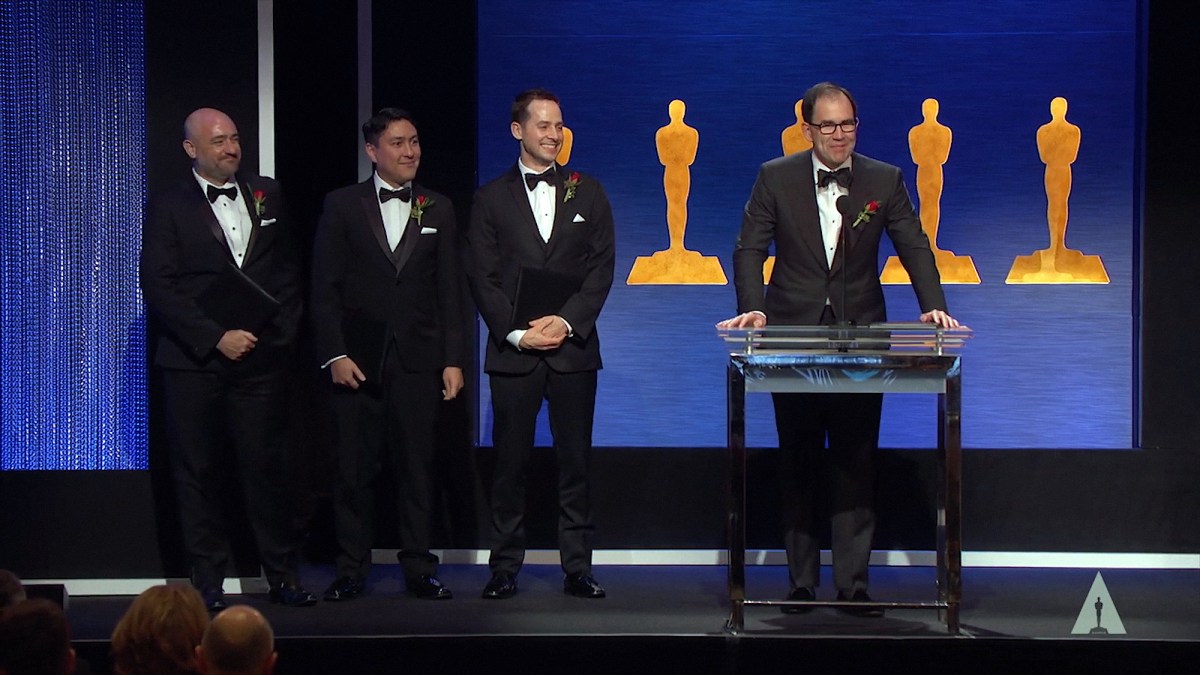
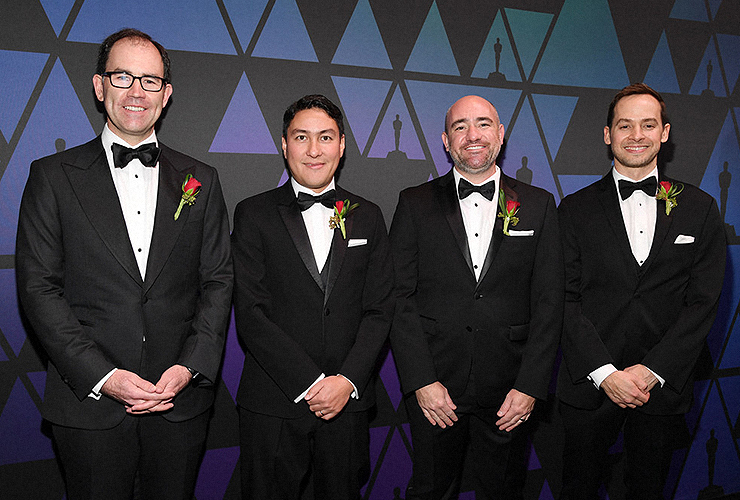
On Saturday night at its annual Scientific and Technical Awards Presentation, the Academy of Motion Picture Arts and Sciences honored PIX with a Technical Achievement Award. The award recognized Eric Dachs, founder and CEO; Erik Bielefeldt, director of research and development; Craig Wood, technical director; and Paul McReynolds for the design and development of the industry leading security mechanism for distributing media. Prior to the awards ceremony, Digital Cinema Report spoke exclusively with Bielefeldt and Wood to talk about the company’s continued innovation in the evolving world of content collaboration from film to digital to next-generation data rich requirements.
Technical Achievement Award (Academy Certificate): to Eric Dachs, Erik Bielefeldt, Craig Wood and Paul McReynolds for the design and development of the PIX System’s novel security mechanism for distributing media.
PIX System’s robust approach to secure media access has enabled wide adoption of their remotely collaborative dailies-review system by the motion picture industry.
PIX founder and CEO Eric Dachs thanked Ren Klyce, Ceán Chaffin and David Fincher (present at the ceremony): “your friendship, patience, and talents have had an enduring and measurable impact on our work, and more importantly, in filmmaking.”
Eric Dachs, Erik Bielefeldt, Craig Wood, and Paul McReynolds (Amy Sussman/Getty Images)
The familiar Pix app is one of the early tools with security features developed to improved communication and collaboration during production, which was initially conceived as filmmaking became more distributed geographically. After being used on more than 5,000 film and TV projects including Black Panther, Bohemian Rhapsody and Mindhunter, its developers will be among those honored Saturday at the Academy of Motion Picture Arts and Sciences’ annual Scientific and Technical Awards.
Pix founder/CEO Eric Dachs — who with director of R&D Erik Bielefeldt, technical director Craig Wood and Paul McReynolds will receive Technical Achievement Awards — started his career in sound and it was while working as an assistant to seven-time Oscar nominated sound designer Ren Klyce on David Fincher’s 2002 film Panic Room that the idea for Pix was born. “I got a look at how digital technology was changing motion picture postproduction, but I also saw the inefficiency from faxing notes when the work was distributed geographically,” Dachs tells The Hollywood Reporter. “I started writing a really simple prototype application for capturing David’s spotting notes and getting them distributed to the crew via a simple web application. So that [composer Howard Shore] could get the music notes in real time, and the different departments within sound were no longer having to wait for faxes.”
One afternoon during the final mix, Klyce showed Fincher the app and the technically-savvy director was impressed. In fact, he continues to use it today.
The Academy of Motion Picture Arts and Sciences (AMPAS) honored Eric Dachs ’98, the founder and CEO of PIX System, with a Technical Achievement Award at its Oscars 2019 Scientific and Technical Awards Presentation on Feb. 9, 2019.
Since its creation in 2003, PIX System has become the entertainment industry gold standard in providing secure communication and content management capabilities. Dachs, a theater major while at Wesleyan, designed and coded the initial software early in his career when he was an assistant to sound designer Ren Klyce for Panic Room. It was then that he saw the need for an easy, safe digital platform to share revisions and collaborate across locations.
Joe Penhall has been keeping busy. In between researching and writing Mindhunter Season 2, he also had time to pen King of Thieves, a new movie out next week about a group of elderly British burglars. But we couldn’t resist asking about his hit Netflix show, and, in an interview, Penhall tells Inverse approximately when we can expect Mindhunter Season 2 to arrive along with his plans for Season 3 and beyond. (Listen to the interview in the video above, if you can stand the sound of my rapid note-taking throughout.)
You might think that, as series creator, Penhall would be heavily involved with the editing process, but once filming wrapped in December 2018 he was essentially finished with Mindhunter Season 2.
“The editing process is quiet for me because David Fincher locks himself away and doesn’t really want to share with anybody,” Penhall says. “And I don’t particularly need to see things half finished.”
He added that Season 1 took about “6 months of 8 months” to edit, suggesting that Mindhunter Season 2 could see a similar timeline, only faster.
“We’re working as fast as we can,” he says. “There’s only eight episodes in this one [down from 10 in Season 1]. So he doesn’t have quite as much to do.”
Mindhunter creator Joe Penhall is hopeful that the second season of the Netflix show will be released by the end of 2019, although he admits that all depends on director David Fincher.
Shooting on Mindhunter season 2 finished “about a month ago,” but when it comes to its release date Penhall says, “I don’t know because that’s always up to David. He kind of goes into editing and he doesn’t talk to anybody until he comes out again.”
“I would hope that would be by the end of this year but I just don’t really know. Yeah and he’s a rule breaker and he wants to do it on his own with his own schedule.”









 The Fincher Analyst