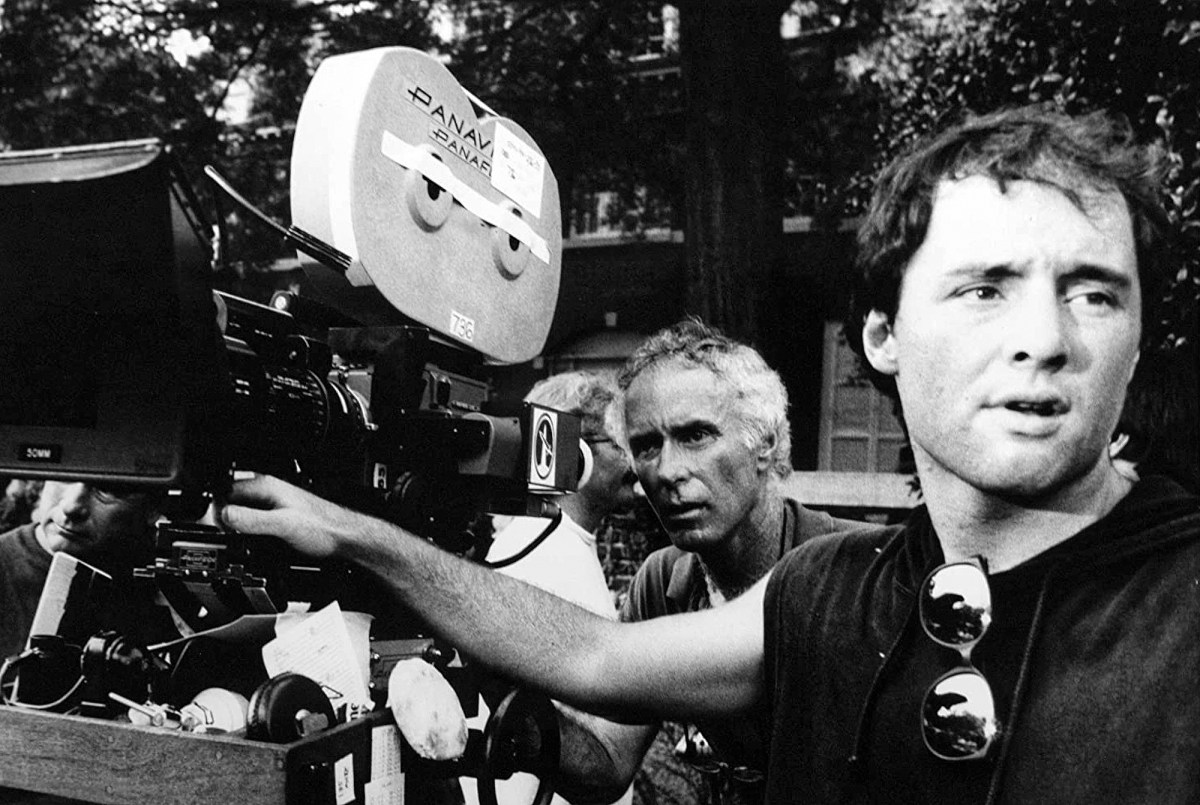
In this episode, we welcome two-time Oscar-nominated cinematographer Jeff Cronenweth, ASC. Jeff has shot films including Fight Club, One Hour Photo, The Social Network, The Girl with the Dragon Tattoo, Hitchcock, Gone Girl, Being the Ricardos, and Tron: Ares. In our chat, Jeff shares his origin story, experiences working with David Fincher — and all about his latest movie, Tron: Ares. He also offers extensive insights and recommendations for today’s cinematographers and filmmakers.
Let’s get into how Erik Messerschmidt does what he does, by unpacking his thoughts and philosophy on photography and looking at what gear he chooses in this episode of Cinematography Style.
00:00: Introduction 01:04: Background 02:06: Visual Language & References 03:44: Perspective & Camera Movement 05:40: Post Production 07:15: Lenses 09:05: Cameras 10:51: Grips 11:33: Lighting 12:28: MUBI
Music: Ottom – ‘Hold On’ Stephen Keech – ‘Grand Design’ Nuer Self – ‘Dawn’ Liquid Memoirs – ‘Distant Dream’ Joley – ‘Night Stroll’ I Am Alex – ‘Bonfire’ The Soundkeeper – ‘The View From The Attic Window’ Sero – ‘Mid August’ Chill Winston – ‘The Truth’
DISCLAIMER: Some links in this description are affiliate links. If you purchase a product or service with these links I may receive a small commission without an additional charge to you. Thank you for supporting my channel so I can continue to provide you with free videos!
With The Killer, David Fincher created a masterpiece of cinematic storytelling.
In the first act – the Paris hit – Fincher and his team combined three sets in post. They also added typical artifacts like horizontal flares and distortions to give The Killer an anamorphic vibe.
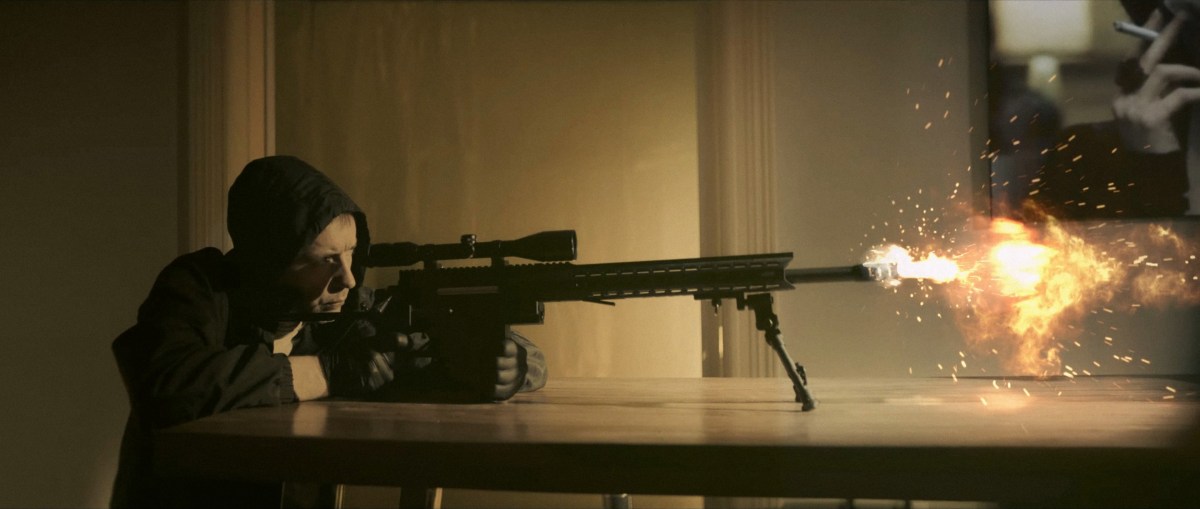
To learn and explore, we set out to recreate the climax of the first act of The Killer, BUT to do it for real: One real location and real anamorphic lenses. We even developed a way to do film through a real rifle scope – anamorphic of course.
This was possible as DZO just introduced three new focal lengths to their awesome PAVO lineup of 2x anamorphic lenses, a 135mm, a 180mm, and a 65mm Macro. This new focal length and the general short minimum focus distance of the PAVO made them the ideal companions to shoot our short.
We take you behind the scenes, share our experiences with you, and, of course, show you the result: “The Killers” gives the original a slightly different spin…
Disclaimer: We collaborated with DZOfilm and got the full PAVO set of 9 lenses to shoot our short. As always, we strive to give you our honest opinion based on our experience and tests.
00:00: Intro & Contents 02:48: The Killer / A Cinematic Masterpiece 03:44: Subjective Camera Movement 05:00: Subjective Sound Design 05:41: Subjective Edit 06:25: Paris: A Real Fake Location 10:08: Faking the Anamorphic Look| 12:14: Reimagining The Killer 15:49: Gear: The Lenses 23:18: The Rifle Scope 25:01: Gear: The Cameras 27:45: Feature: The Killers 31:08: A Second Killer & Verdict 33:16: Thank You 34:02: Member Shout Out
Meet Beverly Wood, an innovator in color technologies for major motion pictures. She began working as an analytical chemist in the early 1980s before moving from the east coast of the U.S. to the west coast—a move which greatly influenced the trajectory her work. Her specialized knowledge of chemistry, engineering, and filmmaking led to her award-winning contributions to the creation and development of Color Contrast Enhancement (CCE) and Adjustable Contrast Enhancement (ACE) motion picture processes.
During this live online interview, you will be inspired by the story of Wood’s career, helping cinematographers, like Darius Khondji and Roger Deakins, to achieve their visual goals, and guiding them through the transition from chemical to digital technology, which changed how we see films today.
Frame & Reference is a conversation between Cinematographers hosted by Kenny McMillan. Each episode dives into the respective DP’s current and past work, as well as what influences and inspires them. These discussions are an entertaining and informative look into the world of making films through the lens of the people who shoot them.
In this episode, we’re joined by my friend Michael Cioni to talk about his new company Strada (YouTube).
Michael is a serial entrepreneur whose career includes numerous awards for his creative work and technical achievements. He is an accomplished director, cinematographer, musician, four-time Emmy winner, member of the Motion Picture Academy, and Associate Member of the American Society of Cinematographers.
A U.S. patent holder of digital cinema technology, Michael was the founder and CEO of the post house Light Iron where he pioneered tools and techniques that emerged as global workflow industry standards. After Light Iron was acquired by Panavision, Michael served as product director for Panavision’s Millennium DXL 8K camera ecosystem.
He then joined the cloud startup company Frame.io where he served as Senior Vice President of Global Innovation. After Frame.io was acquired by Adobe, Michael led numerous workflow innovations including the breakthrough Camera to Cloud technology program as Senior Director of Global Innovation.
He continues to be motivated by the desire to democratize professional workflows and focuses his efforts on inventing new ways for filmmakers to create through his technology. Michael is a well-known and gifted speaker, advocate for the community, and serves as a mentor and educator throughout the global media industry.
Producer and long-time David Fincher collaborator Peter Mavromates extend their partnership in The Killer where an assassin seeks revenge after a botched assignment. The Netflix feature consists of 900 digitally-augmented shots that range from shortening the tail of a dog to CG airplanes, tasked to a vendor list that includes Ollin VFX, Artemple-Hollywood, Savage VFX, and Wylie Co. as well as an in-house team. “Visual Effects Compositor Christopher Doulgeris and I will go into the color bay with [Colorist] Eric Weidt and talk about some issue that we had,” Mavromates explains. “Even sometimes if it’s an outside vendor, we’ll focus to help problem-solve. It’s this wonderful and fluid atmosphere, and it works for David Fincher because he’s always got ideas flowing. He doesn’t want to be on a clock at a facility where you’ve got from 2 p.m. to 5 p.m. and then it’s overtime. There’s none of that. David will walk the halls and stop in on people to check on stuff.”
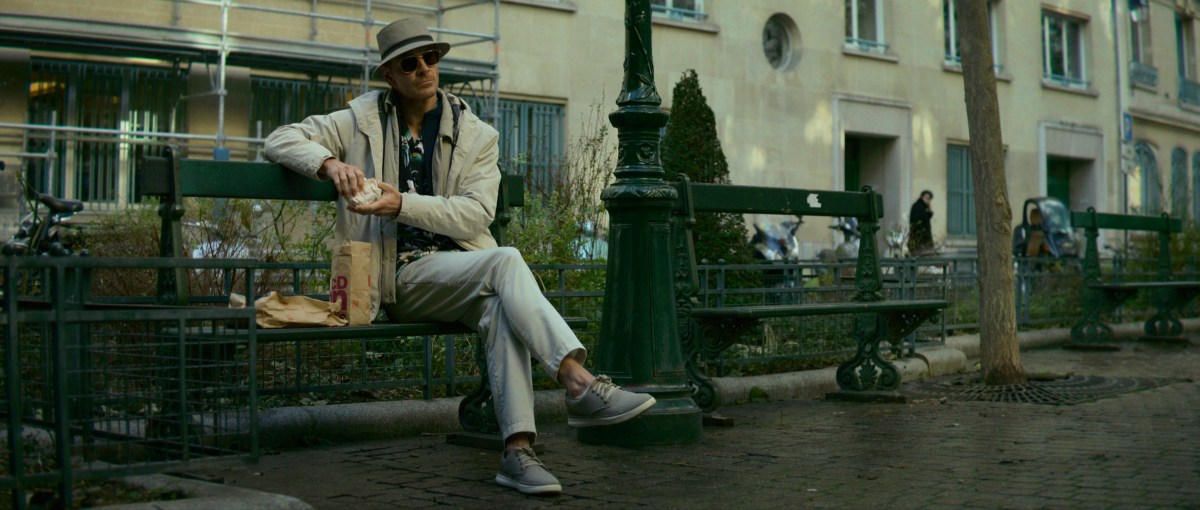
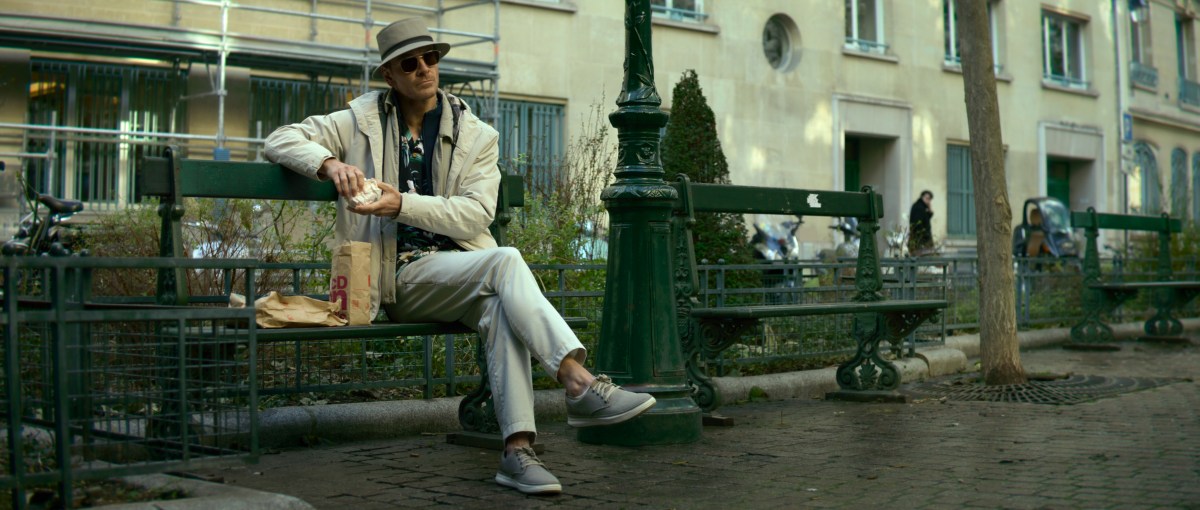
In chapter one of The Killer (2023), Michael Fassbender sits in a Paris WeWork office, rented as the base of operations for his nameless hitman’s latest job. While waiting for the target, pigeons fly past, their wings loudly breaking his forced concentration. The odds they entered the frame at a serendipitous moment are low, and there’s no reason to pay for a bird wrangler given the advanced state of CG. Once you see them, they’re impossible to unsee as they follow Fassbender’s character from city to city, segment to segment. It’s clear that they must be a digitally created motif, a fresh reminder of David Fincher’s unwillingness to let the real world preclude his very precise vision.
Initial responses to The Killer included many variants on “minor Fincher,” which raises an obvious question: what’s the perceptible gap between a major and minor David Fincher film? Surely it’s not a question of craft; second for second, Fincher’s films have to be in the top 0.5% of technically-worked-over products. Control, famously, is his thing, to the extent that even The Killer’s seemingly handheld shots were, in fact, static shots made shaky to a exact degree in post. “Minor,” then, refers to the ostensible worthiness of the material: why all this effort to so little end, i.e., the umpteenth variant on “hitman cleans up after a job gone wrong”? When you’ve begun your directing career coming up with compelling images for lower-tier Rick Springfieldsingles everything after is, presumably, a breeze to elevate. Still, that doesn’t answer the “why bother” question.
Bobby Miller January 11, 2024 Creative Industry Insight
In this episode, we welcome VFX Editor Casey Curtiss who joins us to talk about his work on The Killer. Casey walks us through what the role of a VFX editor entails and how those skills were used on The Killer.
The Killer begins with an assassin (Michael Fassbender) in a half-completed WeWork office awaiting the arrival of his latest target. As he waits, he details his vocational mantras for the audience in voiceover: stick to the plan. Don’t improvise. Never yield an advantage. Forbid empathy. Fassbender proceeds to miss his shot and spends the rest of the film breaking each and every one of those tenets in the chaotic aftermath.
Many of the pieces written about the film have pointed out perceived similarities between the film’s methodical, detail-oriented titular character and the perfectionist reputation of its director, David Fincher. However, what makes Fincher’s approach to filmmaking so fascinating is the way it combines the fluid with the obsessively regimented. For The Killer, the illusion of handheld camerawork, anamorphic lens characteristics and glass filters were all created in post, where they could be minutely modulated. Conversely, Fincher often prefers to design coverage on the day after blocking rehearsals and is open to the spontaneous comedic possibilities of the cheese grater.
On Fincher’s Mindhunter, Mankand now The Killer, cinematographer Erik Messerschmidt has been the director’s partner in that duality. The Oscar-winning DP graced this column for a fifth time to discuss his latest work.
The last few years have been a whirlwind for Erik Messerschmidt, ASC. He had been working his way through the camera department for nearly two decades, including as a gaffer on David Fincher’s Gone Girl, before he began acting as DoP on a number of high-profile shows, one of them being Fincher’s Mindhunter for Netflix.
When Fincher decided to make Mank, his biopic about Citizen Kane screenwriter Herman J. Mankiewicz, as played by Gary Oldman, he brought Messersschmidt along with him to shoot the film in black and white. The movie was slightly hobbled by the pandemic that kept it from playing theatrically, but Messerschmidt won the Oscar for Cinematography, as well as the feature film category for the American Society of Cinematographers (ASC).
Last year, Messerschmidt reunited with Fincher for his adaptation of the graphic novel, The Killer, starring Michael Fassbender as an assassin on a streak of vengeance after a job goes wrong. He also teamed up with the great Michael Mann to shoot his racing biopic, Ferrari, starring Adam Driver.
Below the Line spoke with the cinematographer a few months back when he was in Poland for EnergaCAMERIMAGE, although we got on Zoom with him from the States.