David Fincher Revives One of His Longtime Dream Projects, “Mank”

David Fincher has reportedly signed on to direct his first feature film since Gone Girl in 2014, a biopic about the contentious development of the script for Citizen Kane, one of Fincher’s favorite films, by the brilliant and prolific but troubled screenwriter Herman J. Mankiewicz and legendary director Orson Welles. They both shared the Academy Award for Best Original Screenplay.

And he is doing it for Netflix, the streaming service and production company that has granted him artistic freedom and for whom he has developed and produced the series House of Cards and Mindhunter, and executive produced the animated series Love, Death, and Robots.

Master Actor Gary Oldman will play the titular role, Mankiewicz, or “Mank“, as he was nicknamed.

The film project inception dates back to 1993 and is based on a script by Fincher’s late father, Howard “Jack” Fincher. Jack Fincher was a journalist, writer and essayist specialized in science, a former San Francisco bureau chief for LIFE magazine, and a devoted cinephile. In 1997, he was commissioned to draft a screenplay for a Howard Hughes biopic, with Kevin Spacey attached to direct. But this project was later absorbed by The Aviator project scripted by John Logan, which ended up being directed by Martin Scorsese.

Mank will be shot in black and white, as Fincher always intended. This caused the project to stall in the past, but Alfonso Cuarón’s recent success with Roma, also for Netflix, has reinforced the limited commercial appeal of this aesthetic option.

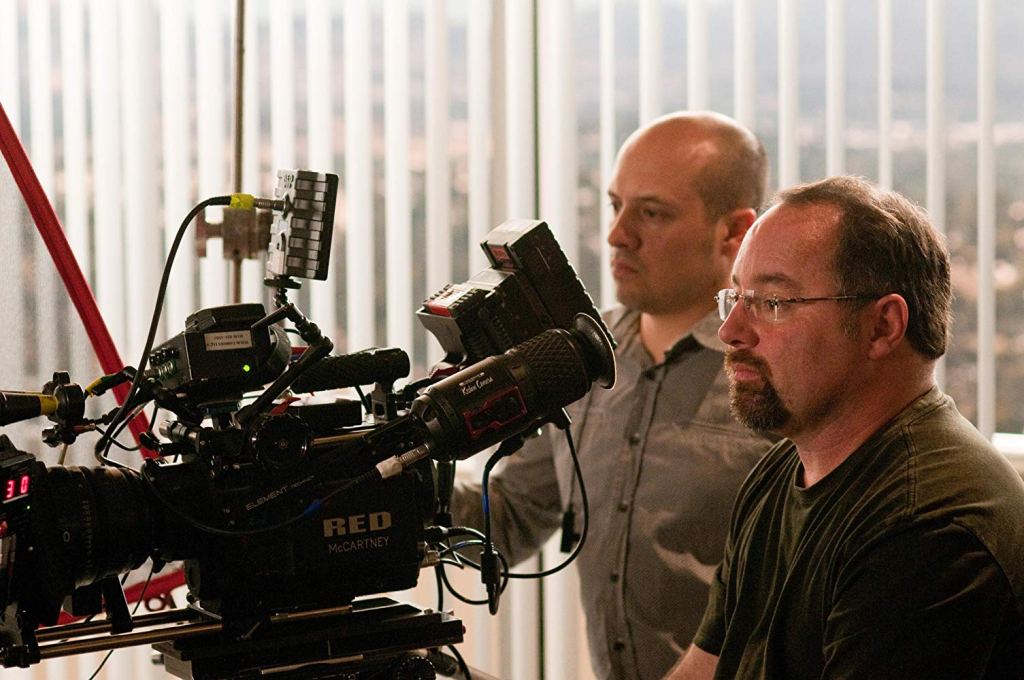
Fincher has shot many commercials and music videos in black and white, including Oh Father for Madonna (1989), notably inspired by Citizen Kane. His last music video, Suit & Tie (ft. JAY Z) for Justin Timberlake (2013), and last two commercial campaigns, for Calvin Klein (2013) and Gap (2014), were gorgeously shot using RED Cameras with monochrome sensors, perhaps with Mank in mind.

The film will be produced by the traditional power couple David Fincher & producer Ceán Chaffin, this time alongside Oldman’s business partner and producer Douglas Urbanski. Urbanski is an occasional actor who played President of Harvard University Lawrence Summers in The Social Network.

Production is scheduled to begin in November in Los Angeles.

James Swallow wrote about the original project on his essential chronicle of the first half of Fincher’s career, Dark Eye. The Films of David Fincher (Reynolds & Hearn Ltd, 2003):

As far back as 1997, this biographical story of Herman J. Mankiewicz, the writer of Orson Welles‘ epic motion picture Citizen Kane, was rumored as a pet project for David Fincher. From a script written by his father, Howard Fincher, the director’s black and white biopic targeted Seven star Kevin Spacey as the lead, with Panic Room‘s Jodie Foster in a co-starring role as movie actress Marion Davies. In production at the same time was HBO‘s telemovie RKO 281, which also covered the backstory of Citizen Kane (casting John Malkovich in the Mankiewicz role and Melanie Griffith as Davies). Still, the true story behind the creation of this mould-shattering movie and the writer behind it has enough scope for the production of a further feature by Fincher and his father.

Mankiewicz was a cynical but extremely talented scriptwriter, a former theatre critic for the New Yorker and the New York Times who left his job for the glitter of early Hollywood. Dropping out of the elite circle of New York’s high society, specifically the so-called “Algonquin Round Table“, Mankiewicz began with scripts for silent films, starting with The Road to Mandalay in 1926, working on more than 70 features during his lifetime. He once famously described Hollywood to a fellow writer in NYC by saying: “Millions are to be grabbed out here and your only competition is idiots. Don’t let this get around”. As film technology evolved in the late twenties, Mankiewicz changed gears and moved seamlessly into talkies, continuing to write stories or dialogue for films like Man of the World (1942), The Lost Squadron (1932), Dinner at Eight (1933) and It’s a Wonderful World (1939), as well as an uncredited rewrite on The Wizard of Oz; he also worked with the Marx Brothers as an executive producer on movies like Horse Feathers (1932) and Duck Soup (1933).

With his career flagging as the thirties ended and with his comedic hits behind him, Mankiewicz’s Oscar-winning success with Welles’ Citizen Kane in 1942 gave him a brief respite. However, his alcoholism and large gambling debts eventually got the better of him and he died, penniless, of uremic poisoning in 1953. Remembered for Welles’ powerfully directed feature about a ruthless newspaper mogul, Mankiewicz no doubt drew on his personal experiences as a former associate of real-life magnate William Randolph Hearst and as a partygoer at Hearst’s huge Hollywood mansion. Although Mankiewicz was forced to share Citizen Kane‘s Academy Award for Best Writing with Welles, the great majority of the script was the writer’s own work, and it was not only a source of friction between the two men but of debate among film critics to this day.

Last mooted as a Propaganda Films movie, Howard and David Fincher’s Mank may yet be produced as a project at Indelible Pictures. Fincher has previously spoken of his intent to use a special film stock to shoot Mank, a black and white negative type no longer used in the contemporary industry that would have to be recreated from the original “recipe”. For the director, this feature represents an opportunity to produce a fundamentally different film from his earlier works in a genre he has yet to explore; at the same time, the life of Herman J Mankiewicz retains the streak of darkness that has always appealed to Fincher’s sensibilities. “Mank is a script that I’ve been working to get exactly right for ten years”, said Fincher, “and I hope, some day, to make it as one of the definitive ‘writer in Hollywood’ stories”.

Nev Pierce asked Fincher about the project during his 2009 career interview for Empire Magazine:

Pierce: Your dad was a journalist and a writer. He wrote a script called Mank, about the Citizen Kane screenwriter Herman J. Mankiewicz. Did you consider making that?

Fincher: We tried. It was too expensive. Because if you’re going to make a Hollywood insider movie—it’s nothing to do with Hollywood really, it’s Hollywood in the late thirties, early forties—you’ve got to make it really cheaply. We had a chance to make the movie for, like, $13 million, back in 1998 and, um, [guiltily] I wanted to make it in black and white. [Laughs] And that fucked up all those home video and video sellthrough and cable deals. I haven’t read it in a while. I probably should.

Pierce: Did your dad write a few screenplays?

Fincher: Yeah, he wrote a couple. That was the best of them, I think. He wrote a screenplay once about a divorce case. It was kind of based on the Keanes. Remember in the sixties, the guy who painted those pictures of the children with the giant eyes? They were in this bitter divorce. It was a very, very sardonic screenplay about two parents trying to prove what bad parents they are, so the other will get stuck with the kids! It was pretty funny! [Laughs] But it had an awful sentiment! But it was funny. It was a good script.

Pierce: There’s an element of your work—in Se7en, The Game, Zodiac— that is about professionalism and obsession. Is that something you think you got from your dad?

Fincher: My dad wasn’t very obsessive. Slightly compulsive, but not obsessive. You know, my dad did used to say, “Learn your craft; it will never stop you from being a genius.” It’s like, “Do the hard work, figure out how it works…” My dad worked a lot, but he paced himself. He paced himself a lot more than I think I probably do. […] My dad… he was an intellect and sort of a Monday-morning quarterback.

The Treatment: David Fincher, “Mindhunter”

David Fincher (Merrick Morton, 2011)

“I guess I’m allowed to say it, but yeah, it’s gonna be the 16th [of August].”

Hosted by Elvis Mitchell
July 12, 2019
The Treatment (KCRW)

Having been handed the true crime book “Mindhunter” by friend Charlize Theron, executive producer David Fincher began the collaboration and long developed project we now know as Netflix‘s “Mindhunter“. Today on The Treatment, Fincher announces the release of season two of the series where discussion of serial killers became common place among American mainstream and how the soundtrack plays with the timeline of this eerie American history.

Listen to the interview

View this post on Instagram

This week on The Treatment, David Fincher.

A post shared by Elvis Mitchell (@theelvismitchell) on

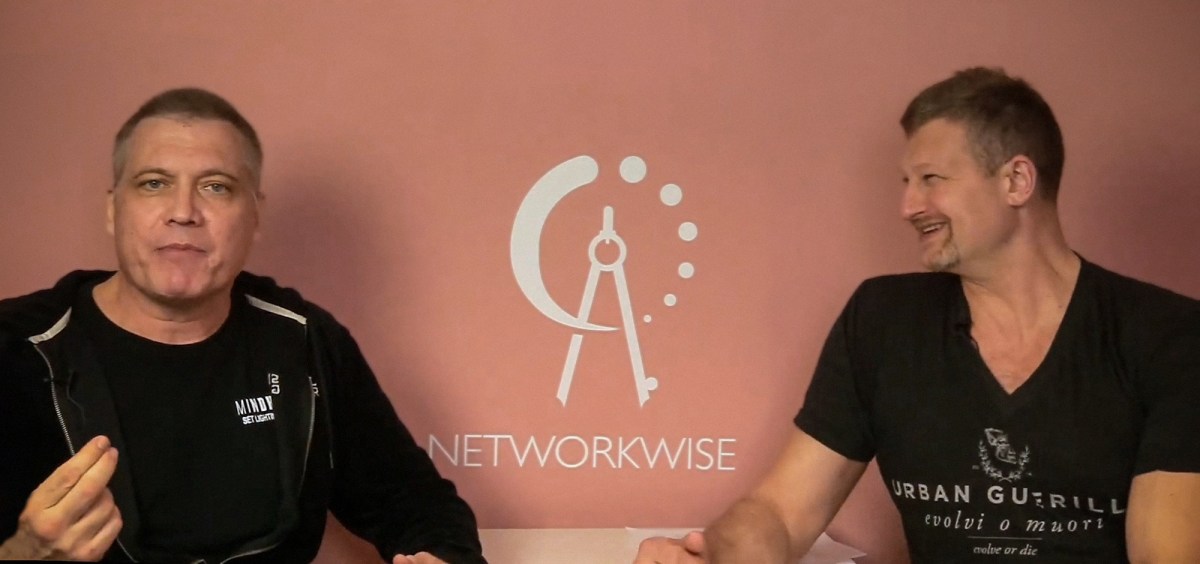
NetWorkWise: Holt McCallany, Bringing Hollywood Down to Earth

Adam Connors
July 10, 2019
NetWorkWise

Audio version:
NetWorkWise Presents: Conversations with Connors (PodBean)
Holt McCallany: Bringing Hollywood Down to Earth

Original Post

From Facebook to ‘Fuck-You Flip-Flops’: How Aaron Sorkin and David Fincher Made ‘The Social Network’ a Fiery Word-Off

Adam Buffery
May 28, 2019

I’ve been Mark Zuckerberg—there are times in my life where I’ve acted that way. There are times in my life where I’ve been Eduardo Saverin—where I’ve gone and made a scene and regretted it and where I’ve been emotional and felt silly and stupid. And there are times when I’ve felt self-righteous and I’ve acted out in this other way… Look, what Mark does is no different than directing a movie—it’s what I do for a living every day. You grow something, and your job is to grow it well and to make sure it gets enhanced and to take care of it. That’s the subject of the movie. And if you have to hurt people’s feelings in order to protect that thing, that’s what you have to do. It’s a responsibility. You want to love every character in the movie. You want to be able to understand them. You want to be able to relate to them. But, as a director, the characters’ behaviors are inevitably related to facets of moments in your own life. You look at the work and say, Maybe I do know what that is. I’ve been the angry young man. I’ve been Elvis Costello. I know what that’s like. The anger is certainly something I felt that I could relate to—the notion of being twenty-one and having a fairly clear notion of what it is you want to do or what it is you want to say and having all these people go, well, we’d love to, we’d love you to try. Show us what it is that you want to do. It’s that whole condescending thing of having to ask adults for permission because the perception is that you’re too young to do it for yourself. And that’s why I understood Mark’s frustration. You have a vision of what this thing should be. And everyone wants to tell you, Oh, well, you’re young. You’ll see soon enough. —David Fincher

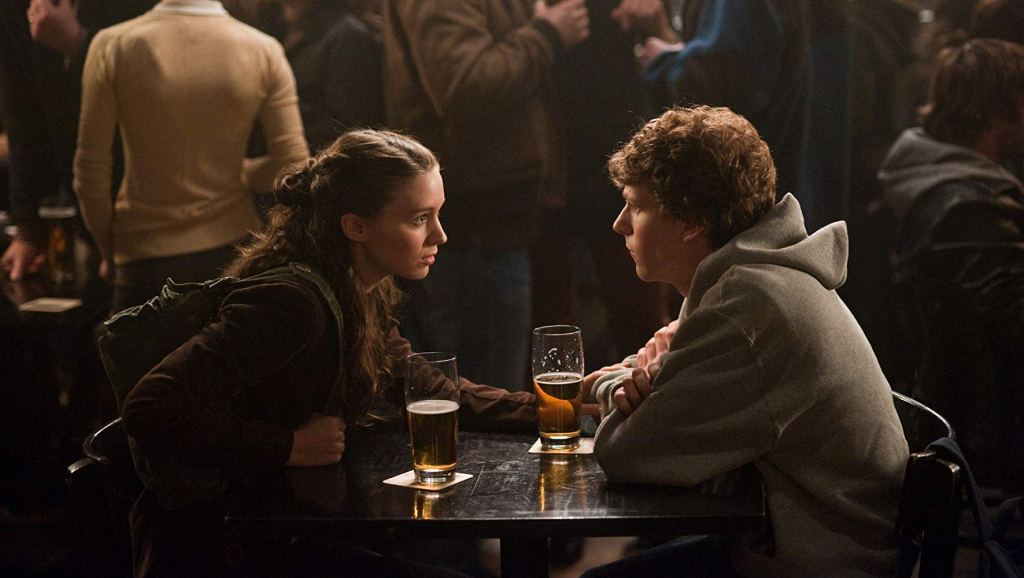
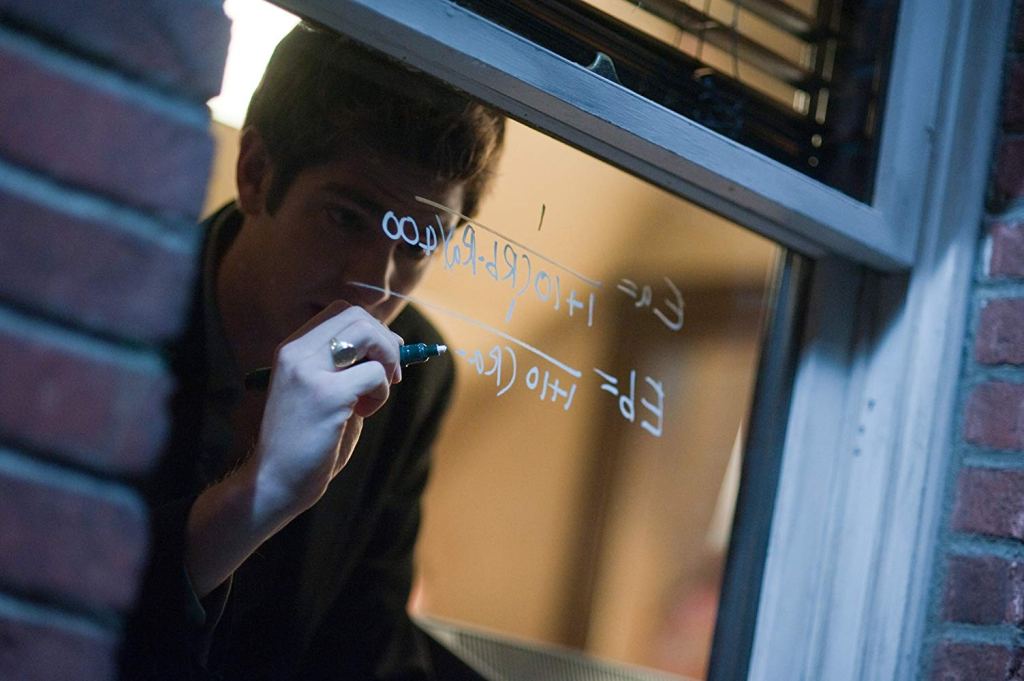
The 21st century computer-scribes who work behind the scenes behind the screens, creating culture and beauty with code, got an anti-hero to remember on the silver-screen in 2010 with David Fincher’s 8th feature film. From a once-in-a-generation, “holy shit” screenplay by Aaron SorkinThe Social Network is a movie about a 19-year-old Harvard student creating Facebook while losing the relationships in his life. It is an examination of a social outsider who built one of the biggest “clubs” the world’s ever seen, and it’s about the new age zooming past the old. It’s about ignorance in high places, that awkward moment when powerful hired officials prove they have no concept of what simple features on Facebook are in a hearing on Facebook security. It’s about a new language of coding that’s sweeping and running the globe, and about treating coding with the respect it deserves. It’s about coders being taken as seriously as writers, musicians, filmmakers, film producers, painters, costume-designers, photographers, and all other artists and creators. It’s about attaining power even though you’re socially anxious or awkward, and about finding that inner drive that helps you accomplish your goals. It’s about what happens when you lose your humility in your thirst for greatness, and about the fragility of the line between “passionate” and “ass-hole.” The Social Network is simultaneously about a seismic shift in the zeitgeist and your best friend getting your company in trouble for feeding his fraternity chicken a piece of chicken. It’s about creating and solidifying one’s identity, and everything and anything else that goes with what Fincher once jokingly referred to as “the Citizen Kane of John Hughes movies.”

Read the full article

Film stills by Merrick Morton (Sony Pictures)

Other in-depth articles on films by David Fincher on Cinephilia & Beyond:

Alien3: “Take all of the responsibility, because you’re going to get all of the blame”

Se7en: A Rain-Drenched, Somber, Gut-Wrenching Thriller that Restored David Fincher’s Faith in Filmmaking

Downwards Is the Only Way Forwards: Welcome to David Fincher’s The Game

Fight Club’: David Fincher’s Stylish Exploration of Modern-Day Man’s Estrangement and Disillusionment

Fincher’s Zodiac As Easily One Of The Best Thrillers Of The Millennium So Far

How Netflix’s Love, Death & Robots Created That Eye-Popping Animation

The anthology series is a love letter to animation and artistic flair.

Tom Power
April 2, 2019
IGN

Love, Death & Robots transcends genres. It doesn’t want to be categorized, or appeal to niche markets. Instead, the broad appeal of Netflix’s animated anthology series ensures that there’s something for everyone. (Read our Love, Death & Robots review.)

For Tim Miller, creator and executive producer on Love, Death & Robots, this approach was a key aspect of the series’ development. It’s a vow that the show retains, and sits perfectly with the punchy, unconnected stories that Love, Death & Robots has brought to a wider audience.

“It really was designed to be something for everyone,” Miller told IGN, “which means a pretty broad spectrum of sci-fi, fantasy, horror, and fantastic fiction. I think I chose a few more sci-fi ones because that’s where I lean a little more heavily, but we tried very hard to balance it.”

That balance is what makes Love, Death & Robots a unique Netflix property. Taking inspiration from other anthologies, such as the iconic comic book series Heavy Metal, the show is a celebration of various short stories by acclaimed authors like Alastair Reynolds, Joe Lansdale, and John Scalzi.

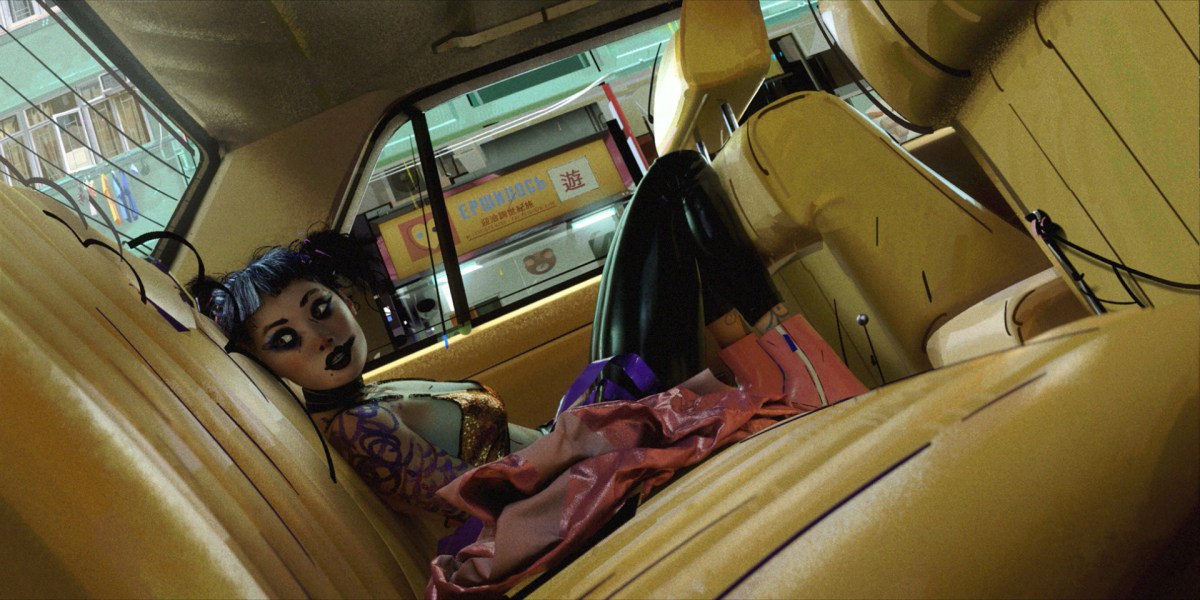
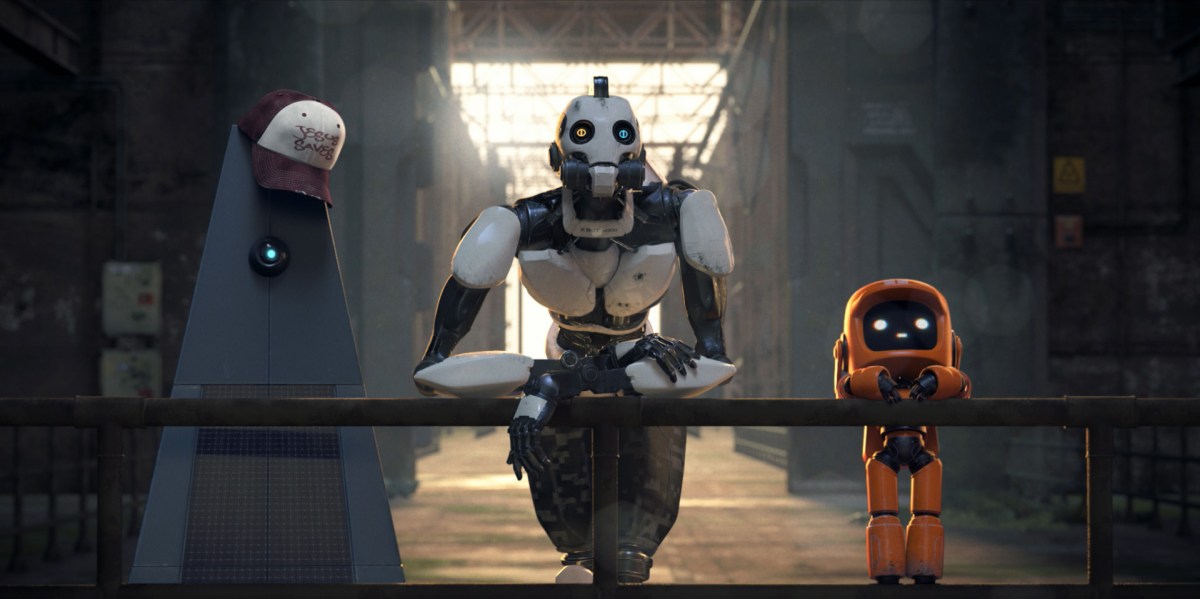
Led by Miller’s own animation studio Blur, the production involved 13 studios and animators from nine countries. Tasked with bringing Miller’s handpicked stories – 16 pre-existing ones, and two original tales that were written for the series – to life, each studio’s drive and love for their craft is evident in the sheer diversity of animation styles and art forms on display.

Read the full article

Love, Death & Robots: Tim Miller (Executive Producer) & Jerome Denjean (VFX Supervisor)

In 2016, Tim Miller explained his work and that of Blur Studio on DEADPOOL. He is back today to talk about LOVE, DEATH & ROBOTS.

Jerome Denjean began his career as an animator in 2000 at Cryo Interactive. He joined Blur Studio in 2003.

Vincent Frei
April 1, 2019
Art of VFX

How did you get involved in Love, Death + Robots?

Tim: This show has been my dream project for as long as I can remember, but the real story starts when I met David [Fincher] in 2005. I showed him a long list of projects I wanted to do, one of which was an adult animated anthology. He loved it. We originally developed it as a feature film, and we planned to animate the entire thing at Blur… but it never gained traction. But, when DEADPOOL came out, it became clear that there’s an audience for this kind of material. We seized the moment and decided to bring the adult anthology back as a series. Netflix was in. And now it’s so fucking cool to see how much people love this show and this kind of material, because it’s the stuff I grew up on.

Jed: Blur has been making game trailers and cinematics for a long time, always innovating new styles as far as our clients would let us. LOVE, DEATH AND ROBOTS presented us with an incredible opportunity to make stories without restraint, and to fold in amazing partners from around the world we had always admired.

Tim: Jed heavily campaigned to be on this project for years. Which was great because we knew he’d be enthusiastic and lead the charge at Blur.

Jed: The other studios were also enthusiastic to be a part of this anthology because, like Blur, they want to keep evolving and growing. They were all great, CG studios like DigicAxisUnit, and Platige. And because they bring different skills and perspectives, the show has something for everyone.

What was it like working with David Fincher, Jennifer Miller, and Josh Donen?

Tim: We have a history with all of them, so it was very easy and comfortable. David first came to Blur because he wanted to develop a game. Our studio is run by artists and he was immediately drawn to that aspect. Josh is David’s longtime collaborator and producer. We’ve known each other for over a decade and have always gotten along and enjoyed working together. Jennifer is the COO of Blur and runs the company, not to mention she’s my wife. Together, all of us had worked on ZODIACGIRL WITH THE DRAGON TATTOO, and many other projects. History builds trust, so when David and Josh left for MINDHUNTER, they knew that LOVE, DEATH AND ROBOTS was in good hands.

Read the full interview

In Conversation with Actor Joe Tuttle

Paula Courtney
March 23, 2019
Absolute Music Chat

Joe Tuttle is well known amongst the fans of David Fincher’s Netflix show Mindhunter, for his role as FBI Agent Gregg Smith in both seasons 1 and 2. He has also appeared on other top-rated shows such as The Blacklist and Unforgettable. Joe and I had an in-depth conversation discussing his influences growing up, his career, and so much more.

[…]

JT: My secret weapon is my wife, she’s not an actress but she does have a writing background, so sometimes I think I can get caught up looking at these scripts as an actor like, ‘Oh this could be a really beautiful moment,’ but my wife is always about the writing, sort of, ‘Don’t forget these are human beings.’ It’s nice to have your moment as an actor, but don’t forget, are you really serving the story?

PC: And from speaking to many of the actors on Mindhunter that’s exactly what David Fincher wants when he shoots take after take of the same scene, for you not to play them out as an actor but to be, or react, as you would naturally in real life, and that really ties in to what your wife is saying.

JT: I think that’s part of it… I wish just for one day I could get in the head of David. I don’t think I’ve ever met anyone like him before; I probably won’t meet anyone like him again. He’s sort of brilliant at all these different things. I think that’s true he does a lot of takes for a lot of different reasons. One of them is certainly because it’s, ‘Okay let’s make the performances kind of finely crafted in a way, sort of uncrafted in a way. We don’t want to see the actor, we want to see a human being having the experience’.

PC: Yeah exactly!

JT: Also another reason David Fincher does a lot of takes is because I think he has a vision and he wants it to be exactly how he visualises it. It’s not always about the actor, sometimes it’s: we are slightly out of focus; it’s the wrong moment; actually I want to change one word, or the lightning is slightly different, or l want to frame up the camera in a different way, or I don’t like the coffee cup you are using, or that chair, we need to switch that out, or the background actors weren’t perfectly in sync. He notices everything, things that no one else would notice!

PC: In shooting numerous takes he wants the scenes to be the best of the best and to be fair it pays off doesn’t it.

JT: I think so. I don’t think David is making movies or TV shows for the 95%. I think people universally love his work and for good reason. He’s not making them for the 95%, he’s making them for that top 5, that top 2% even, who are going to notice these kinds of things. They are going to say, ‘That cup doesn’t make sense in this world. The lighting was a little bit off in that shot,’ or, ‘that background actor didn’t see his mark exactly.’ He’s making it for people like him, who are going to really notice that stuff. And when you do notice a glaring error or mistake, or something that doesn’t seem right, it takes you out of the story. I think he just wants a total immersive experience. He wants you, I presume, to be so involved that you almost forget, so that you really do feel like a fly on the wall, watching these people having these experiences.

PC: I have just interviewed Garry Pastore and his other job, when he’s not acting, is as a set dresser (leadman). He said he notices stuff like a blank wall behind a person which would clearly have a piece of art or a photograph on it in real life.

JT: The trouble with David is it means we notice that stuff now too; he’s sort of a force of nature; he raises everybody’s game. I’ve really noticed that about him – and not just with the actors, but the cinematographer, the technicians, the dolly grip, the sound folk – because he’s operating at such a high level you have rise to the occasion. I think that’s why people are drawn to working with him and will pass up other job opportunities, just to be able to work with David.

PC: I have arranged to have an interview with a guy called Dwayne Barr who operates the A camera dolly grip, because I’m just as interested to get his take on the technicalities of Mindhunter and Fincher, not just actors. I would love to talk to Erik Messerschmidt about cinematography.

JT: He’s a talented guy. It’s the first time in my working life as an actor I’ve been like ‘Wow!’ I wish my education had included more about cameras, editing and lighting. We touched on a lot of that stuff in acting school but wow, the technical aspects of making a TV show or film is frankly probably more important than some stuff we were taught. Just being able to ask the DP or the cinematographer why this, why now? Because I’ve had this work opportunity, I’ve started to notice.

Read the full interview

Joe Tuttle (David Noles)

Read the other Absolute Music Chat conversations with the Cast of Mindhunter (more to come):

Jonathan GroffHolt McCallanyCameron BrittonCotter SmithJack ErdieAdam ZastrowAlex Morf, Jesse C. Boyd, Tobias SegalThomas Francis MurphyChris Dettone.

‘Love, Death & Robots’: Tim Miller on His NSFW Anthology of Animated Stories

Steve ‘Frosty’ Weintraub
March 16, 2019
Collider

With Love, Death + Robots now streaming on Netflix, a few days ago at SXSW I got to sit down with Tim Miller to talk about the NSFW anthology of animated stories he made with David Fincher. If you haven’t seen the trailers, the very cool series features 18 shorts that run between 5-15 minutes in length, are aimed at adults, were done by different teams of filmmakers from around the world, and showcase a variety of styles from traditional 2D to photo-real CGI. In addition, all of the stories are wildly different. You’ve got cyborg bounty hunters, alien spiders, sentient dairy products, werewolf soldiers, robots gone wild, and blood-thirsty demons from hell — to just name a few.

I caught six of the shorts before doing the interview and absolutely loved what I saw. If you’re into cool stories and incredible animation, you absolutely want to check the series out. Love, Death + Robots is now streaming on Netflix.

During the interview, Tim Miller talked about how the series was made, how they’ve been working on it since before Deadpool was released in theaters, how he became friends with David Fincher and why they did this project, and what it was like collaborating with Netflix. Plus, if he has a suggested order for people to watch the series, if he’s ready to tell more stories in some of these worlds, the possibility of a second season, how the budgets were dictated by length and animation style, and so much more.

Watch the full interview

How Netflix’s Spectacularly Weird Love, Death & Robots Came Together

David Fincher, Jennifer Miller & Tim Miller, Executive Producers
SXSW Film Festival. Austin, TX
(Daniel Boczarski / Getty Images, Zimbio)

Eric Vespe
March 15, 2019
SyFy Wire

Tim Miller and David Fincher aim to scramble and rearrange the face of TV animation with their ambitious Netflix series Love, Death & Robots, which features short, adult tales told in a variety of styles. At SXSW this week, they debuted six of the 18 shorts that went live on Netflix today. These risque shorts ran the gamut of comedy, thriller, crime, sci-fi horror and everything in-between.

This isn’t the first time Fincher has teamed up with Tim Miller. Before Miller achieved fame as director of Deadpool, he owned the Blur animation and VFX studio, and worked as Fincher’s guy for opening title sequences. The two even tried to get an animated adaptation of Eric Powell‘s The Goon off the ground 10 years ago.

In this chat with Tim Miller and his producer and wife Jennifer Miller, we talk about the process of bringing Love, Death & Robots to life, how that could potentially help make their Goon adaptation a reality, as well, and what it was like juggling dozens of directors and production outfits.

[…]

I don’t think you and I talked around the time, but I did talk with both David Fincher and Eric Powell when you all were trying to get The Goon off the ground about ten years ago…

Tim: We have not given up. It will happen.

Watching those episodes from Love, Death & Robots last night I couldn’t help but hope that it does well enough for Netflix that maybe they’ll go ahead and finally make Goon a reality. I’d love for this to pave the way to The Goon actually happening.

Tim: I think it will only help, but we haven’t given up on The Goon. Never have, never will. And I think you’ll be happy. Soon. I’m excited about it and I do think all of this helps. It can take a while. I don’t think I’m talking out of school, but the last hiccup was Eric had some older business that needed to be cleared out for lawyers to be happy and stuff. I feel it keenly, like if I was a fan and I would go, “These f***ers took my money and what did they do with it?” We did exactly what we said. We have a whole reel. We spent that money and more of our own besides. We have a full reel for the movie. It’s going to be great. It’s just any movie is a push up hill. For (Love, Death & Robots) David and I tried for 10 years.

Since you tried to get The Goon off the ground you’ve made one of the most successful superhero movies of all time…

Tim: Which also took five years to do as well, but we never gave up. David never gave up. On this show, literally the weekend Deadpool came out, David called and said, “Okay, you’re going to get a little juice off of this and we’re going to use that to combine it with my power and we’re going to push this forward.” The thing that was nice about Deadpool, which David saw, was it was something that everybody said won’t work and then they see it not only works but it works well and there’s a hunger for this kind of material out there. That was the same door we were pushing against with this R-rated animated anthology. So you can see the corollaries, and I think the same thing will be for The Goon. Why not?

That source material is so fun It’s a tragedy that it hasn’t happened yet, but I love that you guys are still pushing forward on it.

Tim: David never gives up and I don’t either. It’s not like I can’t give up because I have so much time invested. I just never stopped liking it. I didn’t get bored with it. Sometimes you just can’t get it done. You hit a wall and you have to find another way around.

Jennifer: I think it’s one of the things that makes you successful. You will walk through a wall to get to that project. I’ve seen you do it. You hang on for years and years. That tenacity is great. You need it, in this business especially.

You’re producing all these different shorts and you also directed one of your own. Did you find that there was much a difference when you were directing versus when you’re producing the other projects? Did you find yourself in any kind of different mindset?

Tim: I don’t think directors make the best producers because it’s hard for you not to go, “Well, how would I do this?” or “I would never do that.” But I do think from running a studio for years, Blur is almost 25. We have a lot of directors doing projects and I’m used to helping them or, I hate this word, but mentoring some of them or just chiming in and with an opinion when I’m asked. I’ve never felt like I had to control everything. I’m not that type of guy. And David is definitely not. I mean, we did the Girl With the Dragon Tattoo opening and David was like, “Tell me I’m the best f***ing client you’ve ever had.” I mean it was his vision for what it was, but as far as like saying “No, do this,” or “Cut out five frames early,” he never said any of that.

In fact, the last review was him saying, “I want to stop by and see it.” And I said, “Oh, why?” He’s like “’cause it’s cool. I just want to come by and see it and I’m in the neighborhood.” That’s the way he was for the whole project. And I try and be that way. On the other hand, Netflix expects us, Blur, as the hub of this whole enterprise to make something great. If we don’t deliver, first David will go, “Dude, what the f***? This sucks.” And then secondly, Netflix will go, “Uhhh…” So we feel a sense of responsibility to make sure it hits a certain level of quality, but I think you can do that without being heavy-handed. Maybe you should ask the other directors. (laughs) We only made two or three people cry during the production.

Jennifer: One of your superpowers is finding excellent talent. You would scour through the Internet and find all these great artists to come work at Blur and now you’re scouring the Internet to find these fantastic new directors. You gave them a lot of latitude and you set them up for success with fantastic stories and it worked. I think that very excellent hiring of talent really just set you up to be able to let go as a director and let them do their job.

Tim: Timing-wise, it worked pretty well for us. When Netflix said go we had a chunk of time before I had to leave and do The Terminator. We got through the entire story selection process. We got through the entire selection of the directors and studios that were doing the work. We got through the initial presentations of here’s what we’d like it to look like and here are our storyboards, and, in some cases, even animatics before I had to say, “See you later!” Terminator was a seven days a week, 24 hours a day enterprise. Jennifer and the production team are involved in all of that as well, so I don’t have to worry about that. Blur can do that without any input from me. It was a really great teamwork approach to the whole thing.

Read the full interview

Terminator 6’s Tim Miller Says Linda Hamilton and James Cameron’s Rules Are Key

Eric Vespe
March 15, 2019
SyFy Wire

In Conversation with Jesse C. Boyd (Mindhunter, Day 5, TURN)

Davina Baynes
March 9, 2019
Absolute Music Chat

Jesse C. Boyd has graced our screens playing roles such as Frank Janderman in David Fincher’s Mindhunter, the lead role of Jake in Day 5, a Queen’s Ranger in TURN and a wolf in The Walking Dead. We had an in-depth, and really fun conversation, about his childhood in rural North Carolina, his career and roles, upcoming projects, music, his love of hot sauce and lots more besides.

[…]

JCB: For Mindhunter I auditioned for it for, I think, a year – it was really long time. I remember I did my first tape when I was at a film festival in Idaho and, I think, while I was there I found out that I got Day 5. Then when I was filming Day 5 season 1 I got my second audition and they added another 8 pages to it. That was just ongoing and ongoing over time until, finally (and I think I was wondering whether it was actually happening) they were like, ‘They want you to come in to the office and do another read.’ I went in for another read. I think that Laray Mayfield (who does the casting) she actually does prefer self-tapes because she wants to weed through and see what she gets. They did just such an incredible job with that casting. When I saw it myself I just thought, ‘Wow! This is just so authentic and good!’ Laray is so talented too. Getting finally into the room you’re like, ‘Don’t screw this up!’

DB: When you were in the room was it just one or two run-throughs, or did she tweak how she wanted you to play it?

JCB: She did tweak. I know she did a version where she wanted it really fast. You’ve got to realise we’ve been doing these auditions over a year and the names are changing and the dialogue changes so you are consistently reframing what you’ve already learned. And then you’re finally going into the room and they’re like, ‘Can you do a fast version?’ (I think they want to see how [actors] can be on their feet, because of the way they filmed that show. When I ended up filming it they had so many different versions that we did of dialogue, I think they wanted to see whether you could handle these quick switches). There was one take that was super-fast and one that was more slowed down.

DB: How did you prep for that role? For who Frank Janderman actually is.

JCB: First of all I [had] spent a lot of time in Pittsburgh which was great (I did work and lots of things there), so that Pittsburghian accent was all around me. Then I just saw Frank as just like so many people that I feel that I already kind of know in life. This ‘nobody-fucking-asked-you’ kind of guy, but also he believes he’s a hotshot. He was accessible to me through so many other people I had met in my life that I know, that I think are really so much about the façade of not showing who they really, truly are – some of that, broken-downness in them.

DB: There’s a long interrogation scene and then a shorter one: how many takes did they do?

JCB: Oh my God! I wish I could tell you! Can I say a million takes? They did that big interrogation scene – we had three cameras running at all times – I think we filmed it for 12 hours the first day (it’s a 9-and-a-half page scene) three cameras, so you’re getting every angle on either side, and you’re doing it over, and over, and over, and over, and over… and just when you’re done, you’re doing it over, and over, and over again. Then I think the next day we went back and did another 6 hours. So it was a really long time of doing which is, I think, what makes it so great. First of all you’re breaking down a lot; you’re coming back; you’re refreshing with new things; you’re constantly finding new things to play with; and also you have so much coverage that when he [David Fincher] chooses what he’s going to put together he really has every colour of the box to paint his picture with.

Read the full interview

Jesse C. Boyd (Janet Adamson / JA Images)

Read the other Absolute Music Chat conversations with the Cast of Mindhunter (more to come): Jonathan Groff, Holt McCallany, Cameron Britton, Cotter Smith, Jack Erdie, Adam Zastrow, Alex Morf, Tobias Segal, Thomas Francis Murphy, Chris Dettone.