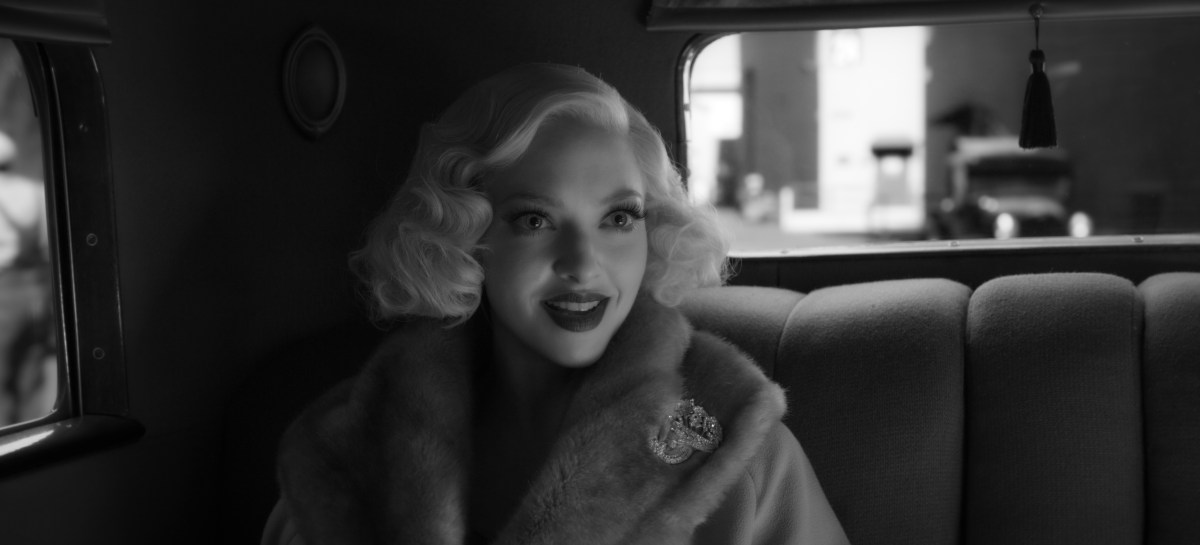
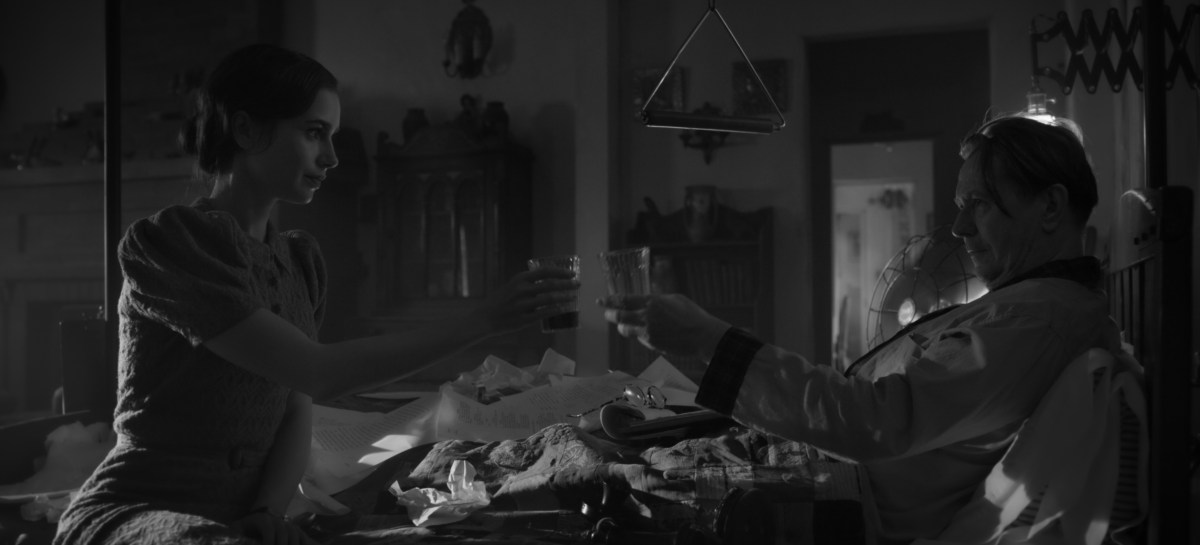
When it came to designing the costumes of David Fincher’s “Mank,” both costume designer Trish Summerville and production designer Donald Graham Burt used the noir and monochromatic filters on their iPhones to see how color would convert for Fincher’s black and white film.
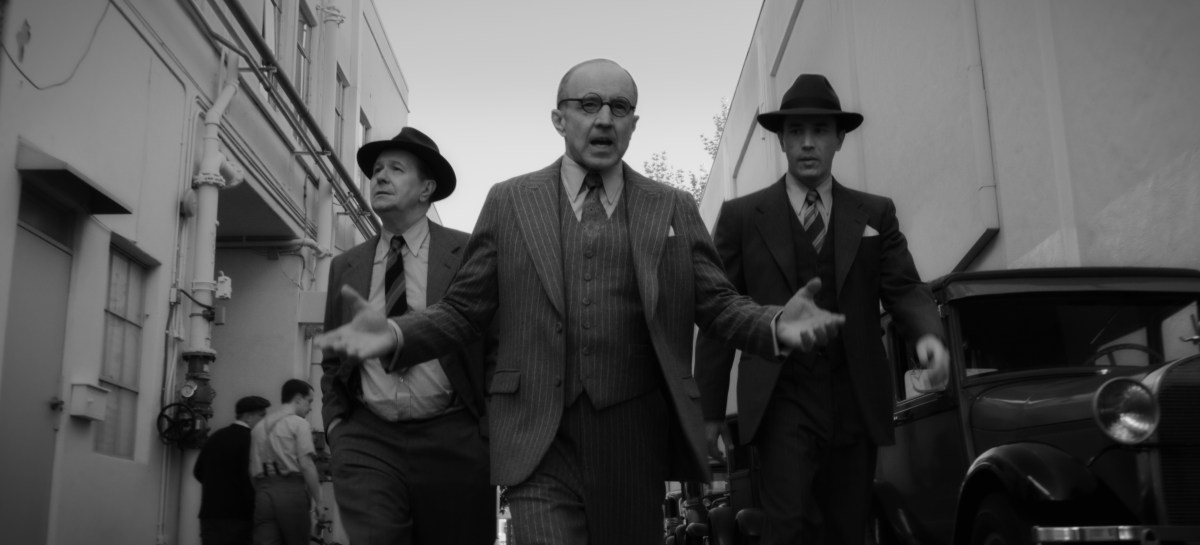
The film, which tells the story of Herman J. Mankiewicz and how he developed the script for Orson Welles’ “Citizen Kane,” was shot on digital and filmed in black and white, rather than converted after shooting. That meant Summerville had to use wardrobe colors that would pop onscreen.
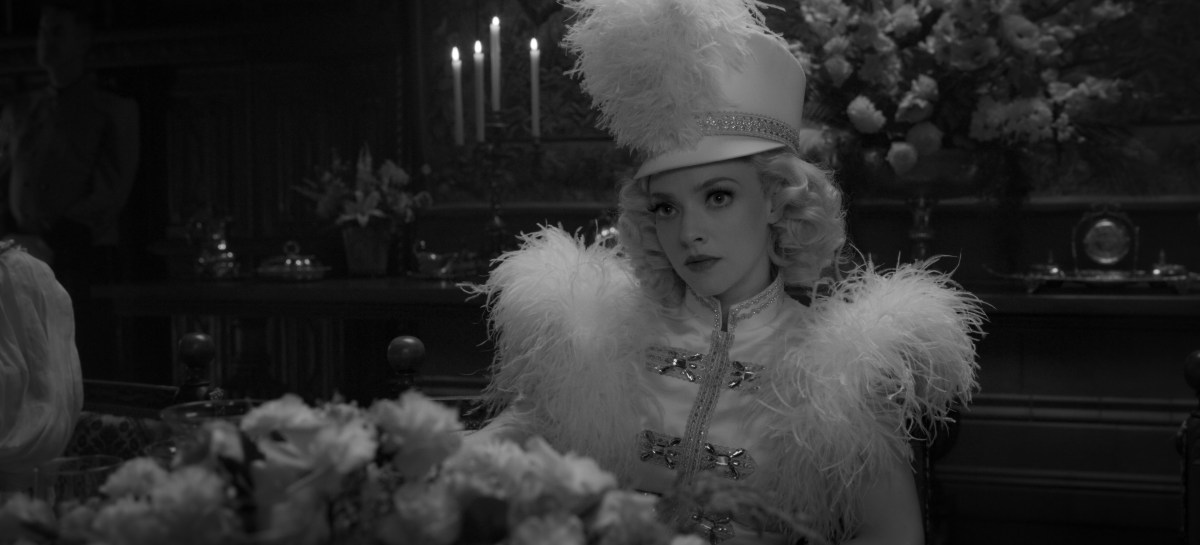
In looking at photos from the ‘30s, Summerville says she found that the Hollywood executives and glamorous actresses dressed in salmon hues, greens and aubergine, which she used to build texture when it came to dressing Amanda Seyfried and Gary Oldman.
“We wanted to show the varying degrees and levels of socioeconomic status in Hollywood at the time,” says Summerville, who breaks down key costumes from “Mank,” now streaming on Netflix.
From its unique sound profile to its lush black-and-white cinematography, Mank is a love letter to the Golden Age of Hollywood and one of its most enigmatic raconteurs, Citizen Kane screenwriter Herman J. Mankiewicz. The fingerprints of the era are everywhere, but nowhere is the homage more noticeable than in a shot of Mank with an empty Seconal bottle that perfectly mirrors that of Charles Foster Kane holding a snow-globe in the opening moments of Citizen Kane.
It’s impressive when a Director of Photography’s first fiction feature is with David Fincher, notorious for his exacting eye in terms of both working methods and stringent aesthetics. But before Mank—Fincher’s passion project on Herman J. Mankiewicz and the writing of Citizen Kane—Erik Messerschmidt had been a part of Fincher’s team on both seasons of Mindhunter and even earlier as a gaffer on Gone Girl for DP Jeff Cronenweth. On Mindhunter, Messerschmidt’s camera infused the bloodless institutional interiors of its serial-killer/FBI interview set pieces with subtly vulnerable undertones, hewing to a Fincher playbook of visual control that telegraphs barely contained chaos.
Mank posed its own challenge with the director’s dream of making a black-and-white period picture in 2020, a vision of authenticity that is something of a chimera in cinema’s digital age. The story shuttles between Mankiewicz (Gary Oldman) writing Citizen Kane in 1940 and his preceding years of experience with the people and society that inspired him, including Davies (Amanda Seyfried) and William Randolph Hearst (Charles Dance). Mank does not simulate the look of any single movie made in the 1940s but rather comprises a gentle pastiche of styles and signifiers (no office seems without slatted shades). Standout scenes include the banquets in cavernous Hearst Castle, where Mank dunks on the assembled high-flown guests; bull sessions in the screenwriter’s Mojave Desert bungalow as he hems and haws and bangs out the screenplay for Citizen Kane; a glitzy-weary 1934 election party for California’s gubernatorial contest, celebrating Republican Frank Merriam’s victory over Upton Sinclair; and anything featuring Seyfried as Davies, remarkably the sole true star in a film set in 1930s and ’40s Hollywood.
Speaking with Messerschmidt, I zeroed in on the feelings and associations within the look of Mindhunter, and the particular technical choices that went into creating Mank’s Hollywoodland.
David Fincher’s passion project about the Citizen Kane screenwriter Herman J. Mankiewicz looks, as intended, like a love letter to 1930s cinema. The filmmakers employ sophisticated digital techniques to pay homage to the cinematic bravura that helps Orson Welles’ masterpiece regularly top the list of all-time classics.
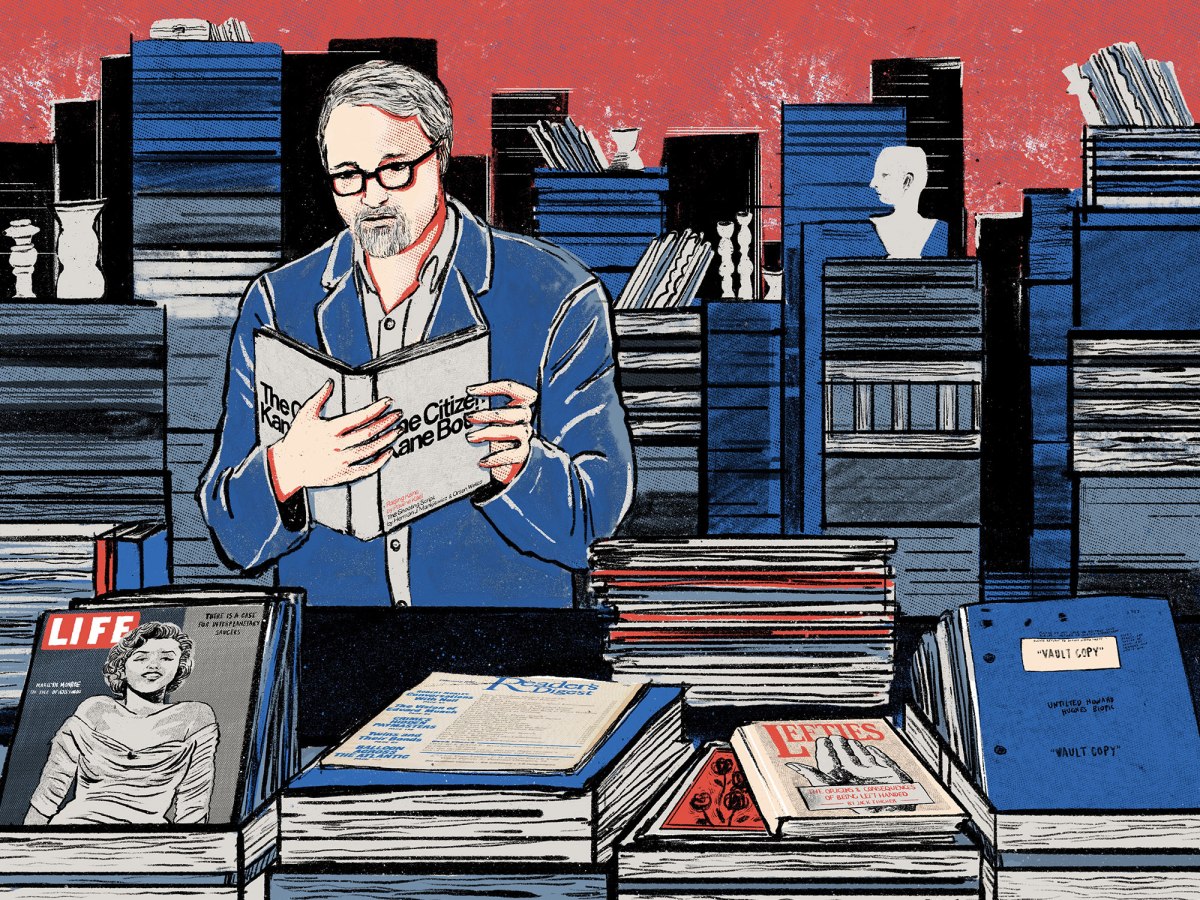
It’s a film the director originally intended as the follow-up to his 1997 thriller The Game, shortly after his father Howard, a journalist at LIFE magazine, wrote the script. For one reason and another, and reports suggest it was Fincher’s insistence on shooting in black and white, Mank was delayed until Netflix greenlit production late last year. Principal photography finished in February, just days before California went into lockdown.
Fincher of course kickstarted the streamer’s original content by masterminding House of Cards. He has subsequently made two series of serial killer investigation Mindhunter, all sixteen episodes shot by ErikMesserschmidtASC who is Fincher’s collaborator here.
Mank follows the ‘scathing social critic and alcoholic’, played by Gary Oldman as he races to finish the Kane screenplay for Welles. It also stars Charles Dance as newspaper tycoon William Randolph Hearst and Amanda Seyfried as Heart’s girlfriend Marion Davies, satirized by Welles and Mankiewicz as Charles Foster Kane and mistress Susan Alexander. The connection with Hearst is strengthened by the fact that Mankiewicz was a frequent guest of Davies at Hearst’s fabulous California castle, dubbed Xanadu in Kane.
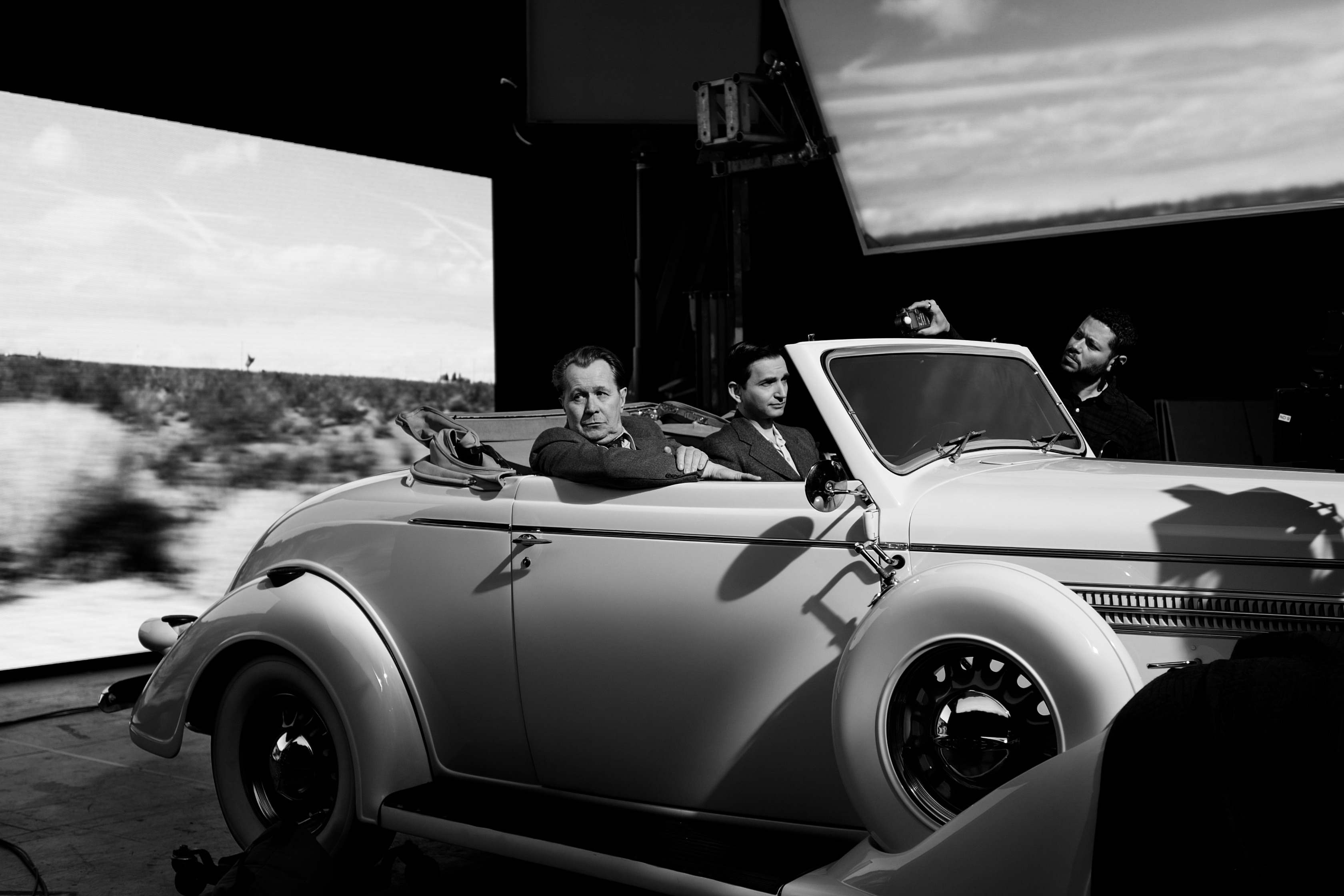
As a homage to WWII-era Hollywood the decision to emulate the look pioneered by cinematographers like Gregg Toland in digital format is a bold one.
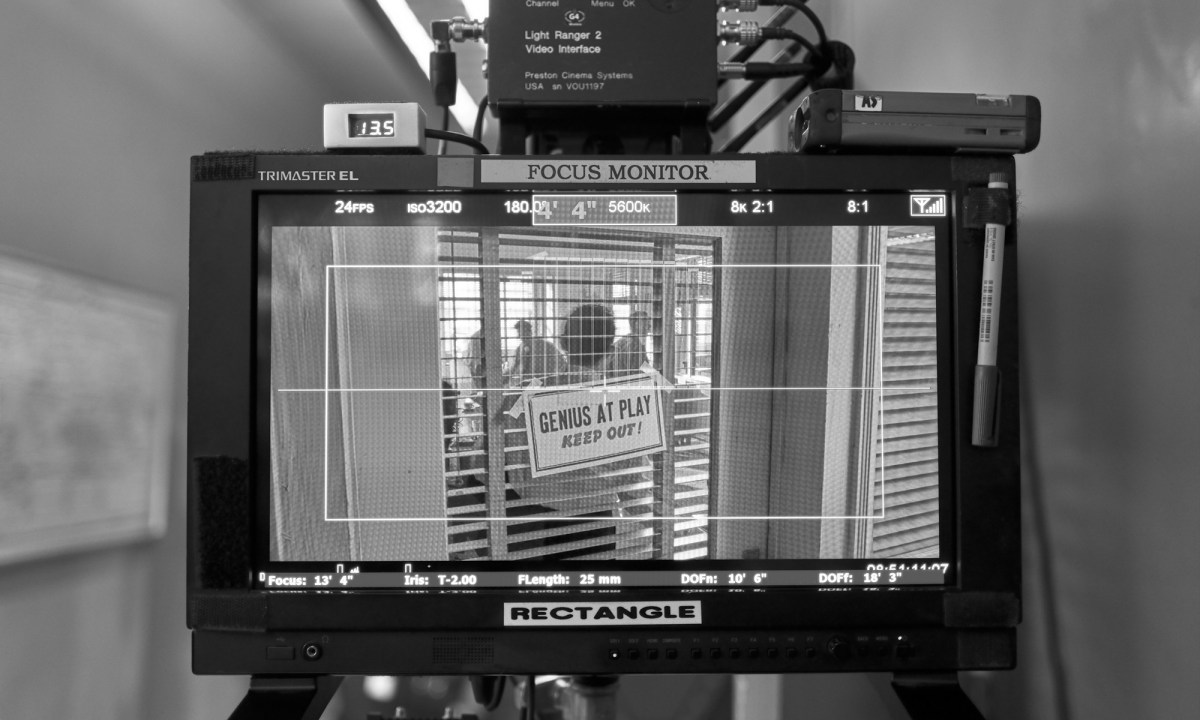
“For this movie we wanted to shoot very deep focus photography for most of the film and then be very specific about where we used shallow focus,” says Messerschmidt. “Shooting on film would have significantly limited our creative choices, particularly with focus and depth of field.”
From the pen of Jack Fincher comes Mank, the story of how perma-soused Hollywood hack Herman J Mankiewicz happened to write one of the greatest screenplays of all time. Sadly, Jack didn’t live long enough to see the words he had written transformed into sound and light, but it’s something that his son David had wanted to realise for close to three decades.
It’s been six years since Fincher Jr’s last feature film, 2014’s Gone Girl, and in the interim we’ve had two series of Rolls Royce TV drama in the form of Mindhunter. For someone who has already made a tech bro riff on Citizen Kane (2010’s The Social Network), and a melancholic homage to his late father (2008’s The Curious Case of Benjamin Button), Mank combines these two career poles, while also posing such existential hypotheticals as, what makes a man? And not only that, what makes a writer, and what makes a director?
LWLies: Let’s go on a quick flashback to the early days and the creation of this amazing script by your father, Jack. He was a journalist and author by trade. Did he pivot to screenwriting later in life?
Fincher: I think he wrote a screenplay that was optioned and Rock Hudson wanted to do it – this was in the late ’60s. That fizzled out. Then he wrote spec screenplays in the ’60s, ’70s and ’80s, and then when he retired in the ’90s, he came to me and said, ‘I’m going to have all this time on my hands, what do you want to read a script about?’ I said I had always been interested in ‘Raising Kane’ which I was exposed to in middle school. I had read Pauline Kael’s essay on microfiche in the school library, and then I noticed a copy of it in my father’s library, and we talked about it. Then, 12 years later, I was about to go off to do Alien3, and he was retiring and wanted a new challenge.
The “Mean Girls” and “Mamma Mia!” actress knows her performance as Marion Davies in“Mank” will be a turning point in her career. But first, she had to put some distance between herself and Hollywood.
In the Oscar-magnet Netflix film, her typist character brings ‘a young and fresh perspective’ to her boss, the booze-soaked narcissist writing ‘Citizen Kane.’
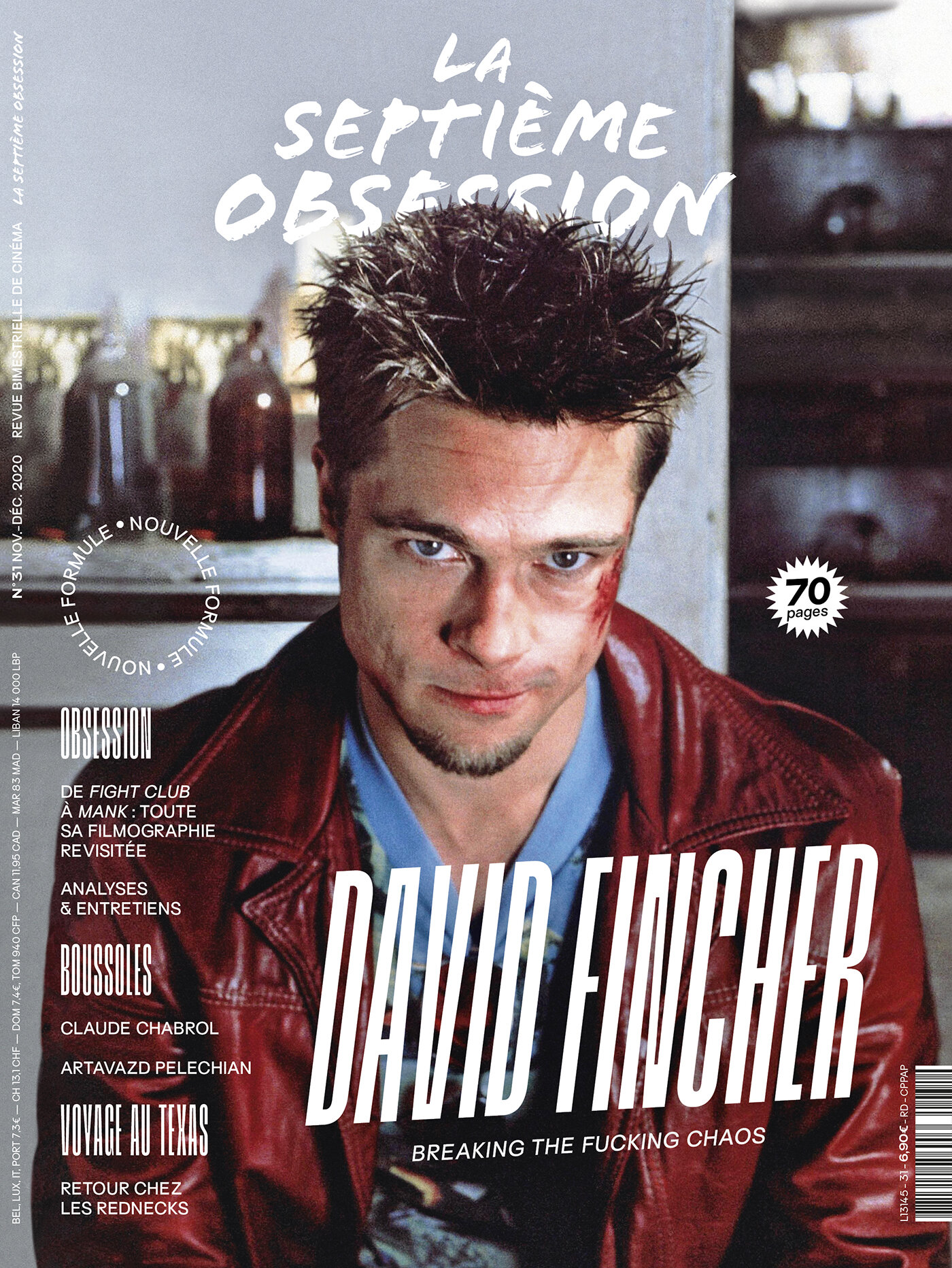
Le grand film de Fincher débarque sur Netflix le 4 décembre. L’occasion d’un entretien avec le cinéaste, mais aussi avec ses collaborateurs les plus proches. 16 pages spéciales.
Scénario pour une critique par Nicolas Tellop
Filmopathe entretien avec David Fincher – par Nev Pierce
Collaborer avec Fincher entretiens avec Erik Messerschmidt (chef opérateur) – Donald Graham Burt (chef décorateur) – Trish Summerville (costumière) – Kirk Baxter (monteur)
2. Revisiter Fincher
Plongée exceptionnelle dans l’oeuvre de l’un des plus grands cinéastes contemporains. Filmographie commentée, analyses… 50 pages à lire.
4 nuances de Fincher par Jean-Sébastien Massart et Fabrice Fuentes
David Fincher en 14 titres Propaganda Films (clips) – Alien 3 – Se7en – The Game – Fight Club – Panic Room + les plans de Panic Room – Zodiac – L’Étrange histoire de Benjamin Button – The Social Network – Millénium + la musique hantée de Millénium – Gone Girl – Mindhunter
3. Analyses
Démoniaque – la perfection du crime par Nathan Reneaud Fantômes et paranoïa par Jérôme d’Estais Solitude & obsession – Fincher Dogma par Alexandre Jourdain Poétique du suicide par Aurélien Lemant Le système des objets – design finchérien par Dick Tomasovic