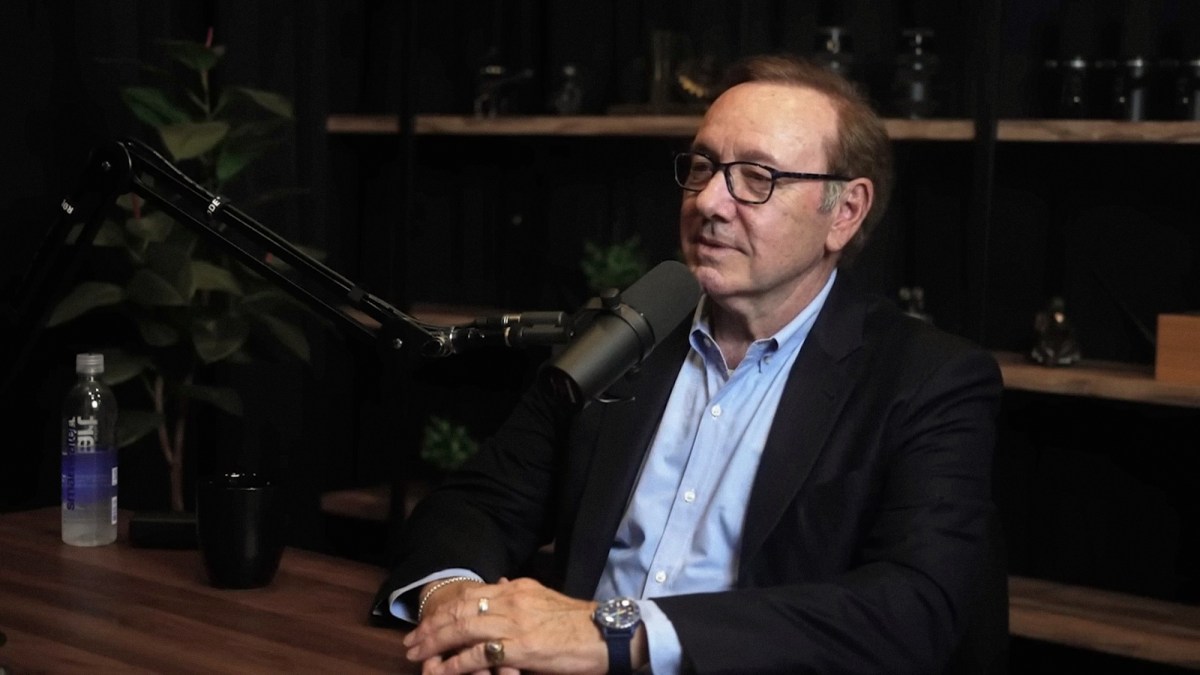
Kevin Spacey is a two-time Oscar-winning actor, who starred in Se7en, The Usual Suspects, American Beauty, and House of Cards, creating haunting performances of characters who often embody the dark side of human nature.
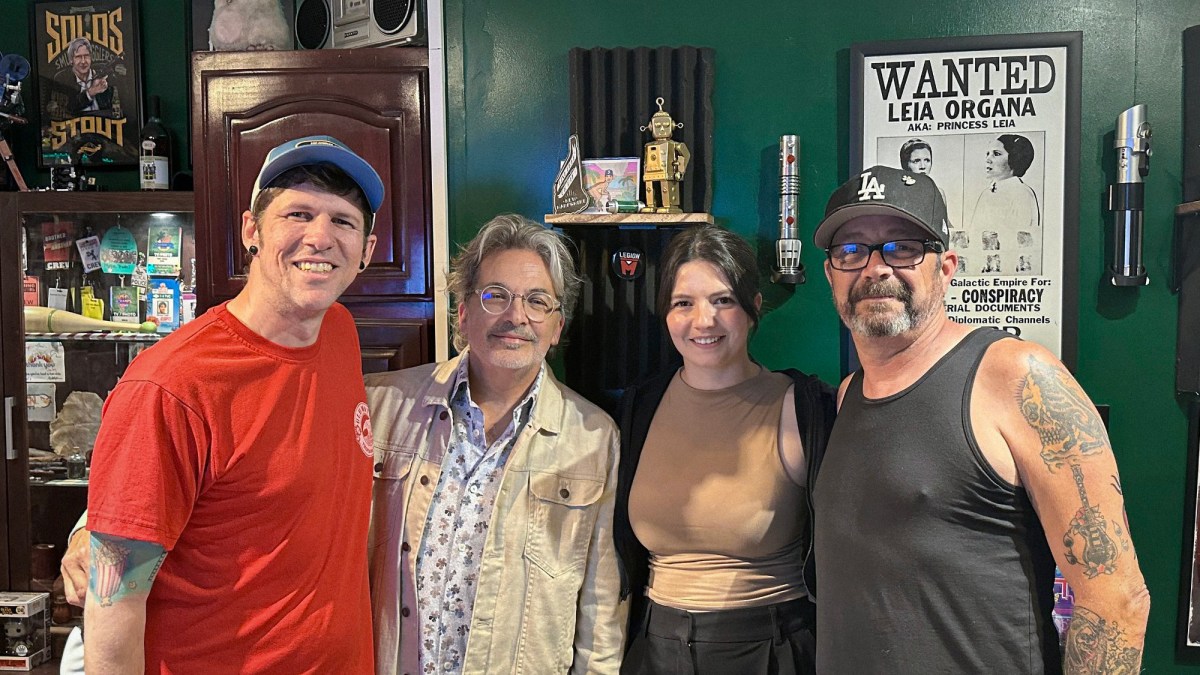
On this episode of Prop Talk, we sit down with PMG member and Local 44Property MasterJames Eddy and his daughter, Local 44 member Assistant Property Master Kelsi Eddy, to discuss their relationship and experiences working for Directors like David Fincher in Mindhunter and The Killer.
Hosts: Chris Call, PMG Founding Member & Local 44 Property Master with Michael Trudel, PMG Secretary & Local 44 Property Master.
Jason Hill is a multi-talented artist who has made a name for himself as an award-winning film composer, platinum-selling recording artist, record producer, and mixer.
Hill’s upcoming projects include; Apple TV+‘s drama series Dark Matter, which premieres May 8th; and season 4 of Showtime’s Couples Therapy, which premieres May 31st. Hill is also a music producer on the forthcoming Robbie Williams’ biopic, Better Man.
Notable film and television credits include David Fincher‘s psychological thriller film, Gone Girl; the Emmy-winning series, Mindhunter; Voir; Videosyncrasy; and his only animated short film, Bad Travelling (part of the Emmy-winning series Love, Death, and Robots); Elijah Bynum’s drama film, Magazine Dreams; Apple TV+’s Extrapolations; and City On Fire; Netflix’s Fyre: The Greatest Party That Never Happened; The Confession Killer; and This Is A Robbery; and Philip O’Leary‘s film, The Buffalo Hunt.
In addition to his work in film/television scoring and production, Hill is also the lead singer, guitarist, and producer for the band LOUIS XIV along with the band Vicky Cryer (which contained members of bands The Killers, Muse, Julian Casablancas and the Voidz, Jet, and Jamiroquai). In 2011, he also joined The New York Dolls and played bass on several tours after producing the album Dancing Backward in High Heels, their final Dolls album. He has produced, written records or otherwise worked with such artists as The Killers, David Bowie, Robbie Williams, Jet, Sky Ferreira, Brandon Flowers, Ariel Pink, The Virgins, Macy Gray, Neon Trees, The Bronx, Nick Littlemore/Luke Steele (Empire of the Sun, Pnau), IDKHBTFM (I Don’t Know How But They Found Me), and more. Hill was also part of the seminal alt-country band, Convoy in his early years.
In 2015 Hill bought a building in Glendale that was originally built as a music studio in the mid-1970s and reimagined it into one of the world’s premier modern recording facilities, Department of Recording and Power. This iconic complex was once the birthplace of massive hits from The Beach Boys, James Brown, Barbra Streisand, Billy Joel, Michael Jackson, Joni Mitchell, Joe Cocker, and many more, and is now reborn for the next generation of influential artists.
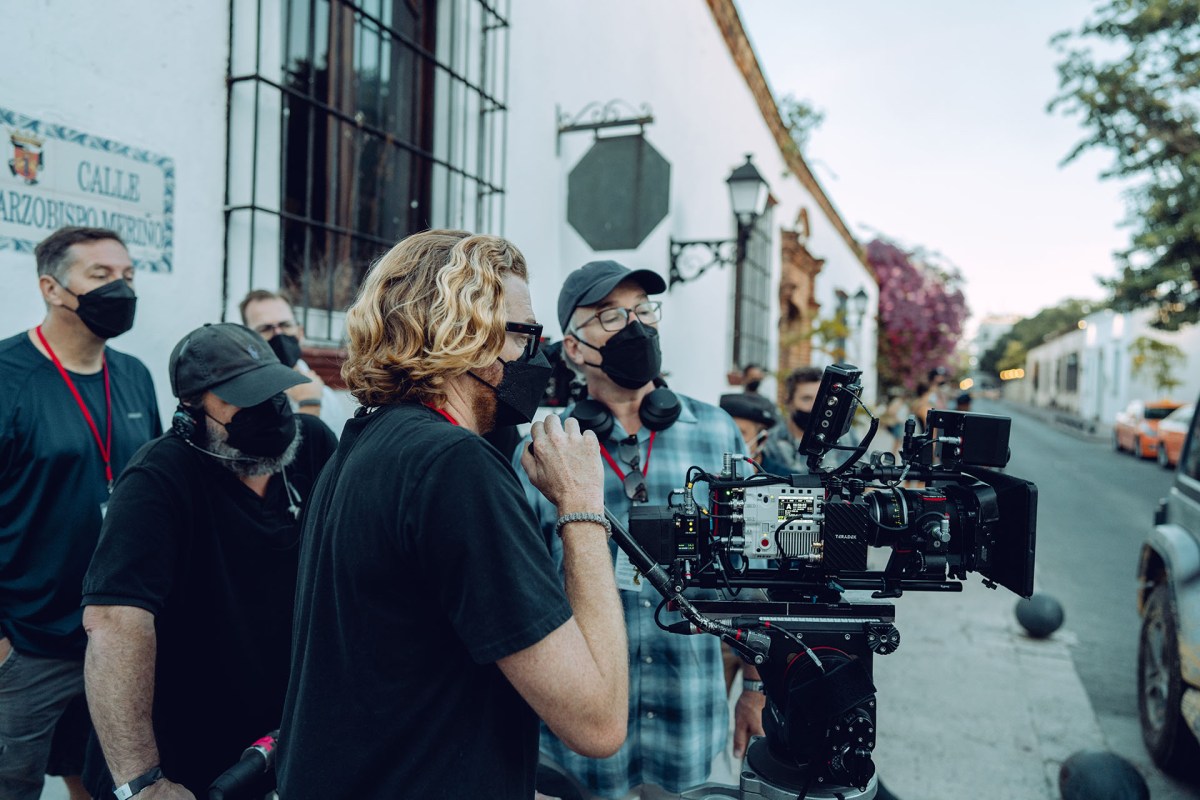
In David Fincher’s Netflix darkly comic thriller The Killer, Michael Fassbender is the nameless assassin who goes on an international hunt for revenge while insisting to himself that it isn’t personal.
The film marks the second Fincher-directed feature shot by Erik Messerschmidt ASC, following the Citizen Kane drama Mank, for which he won the 2020 Academy Award for Best Cinematography.
It is also the latest in a long line of Fincher movies since The Social Network to be shot on RED.
“There was not a conversation about using another camera system – there never is with David,” Messerschmidt says. “RED as a partner have been enormously collaborative with us in terms of helping us develop new ideas and solve problems. RED is absolutely creative partners to David’s process and certainly to me.”
The singularity of cinema lies in its unprecedented capacity to transform the energies of the other arts into an integrated audiovisual experience. This synthesis makes cinema particularly engaging, immersive, and resonant, although, precisely because the constituent elements are organically fused together, it can easily be taken for granted. Film Secession creates new ways of exploring the ideas and artistic currents that have shaped different filmmakers, periods, and art forms. Subscribers will discover nonlinear pathways through the histories of the arts, be able to watch rare films provided by the world’s preeminent studios, production companies, and archives, and have special access to events held worldwide.
The Vienna Secession is a key inspiration. Created at the very moment of cinema’s emergence (1897-1905), its motto was, “To every age its art, to every art its freedom.” By fostering deeper understanding of our cinematic heritage and revitalizing our shared creative legacies, Film Secession will similarly provide opportunities to reimagine the future.
Darius Khondji is one of the most acclaimed and influential cinematographers working today. This exhibition explores Khondji’s work – especially his approach to light, color, space, and framing – and the larger question of the role of the cinematographer as a shaping agent in the overall style of a film.
Meet Beverly Wood, an innovator in color technologies for major motion pictures. She began working as an analytical chemist in the early 1980s before moving from the east coast of the U.S. to the west coast—a move which greatly influenced the trajectory her work. Her specialized knowledge of chemistry, engineering, and filmmaking led to her award-winning contributions to the creation and development of Color Contrast Enhancement (CCE) and Adjustable Contrast Enhancement (ACE) motion picture processes.
During this live online interview, you will be inspired by the story of Wood’s career, helping cinematographers, like Darius Khondji and Roger Deakins, to achieve their visual goals, and guiding them through the transition from chemical to digital technology, which changed how we see films today.
Master of creating imagery that illustrates beyond the narrative, Erik Messerschmidt is an Academy-Award-winning cinematographer and long-time David Fincher collaborator equipped with a captivating photographic eye and razor-sharp instinct. Messerschmidt’s expertise lies in the visceral experience, the intricacy of his lens causing hairs on the backs of necks to stand to attention while Fincher’s protagonists face a run-in with death, and chests to pound amid the thrill of a car chase – all thanks to the cinematographer’s ability to deliver a sucker-punch to the senses.
After starting out as gaffer on Fincher’s 2014 thriller Gone Girl, Messerschmidt was the guiding visual eye behind the auteur’s chilling Netflix series Mindhunter, his monochromatic ode to 1940s cinema, Mank (for which Messerschmidt won the Oscar for Best Cinematography), and most recently The Killer, stalking the dark psyche of a trained assassin. Having developed an instinctive shorthand with Fincher, Messerschmidt’s ongoing intention is to ensure the viewer is immersed in a world that is palpable in our own. Messerschmidt switched lanes for his most recent project, as Michael Mann’s cinematographer for his acclaimed high-speed epic, Ferrari, bringing to life the tumultuous rise of Enzo Ferrari’s automotive empire in Northern Italy.
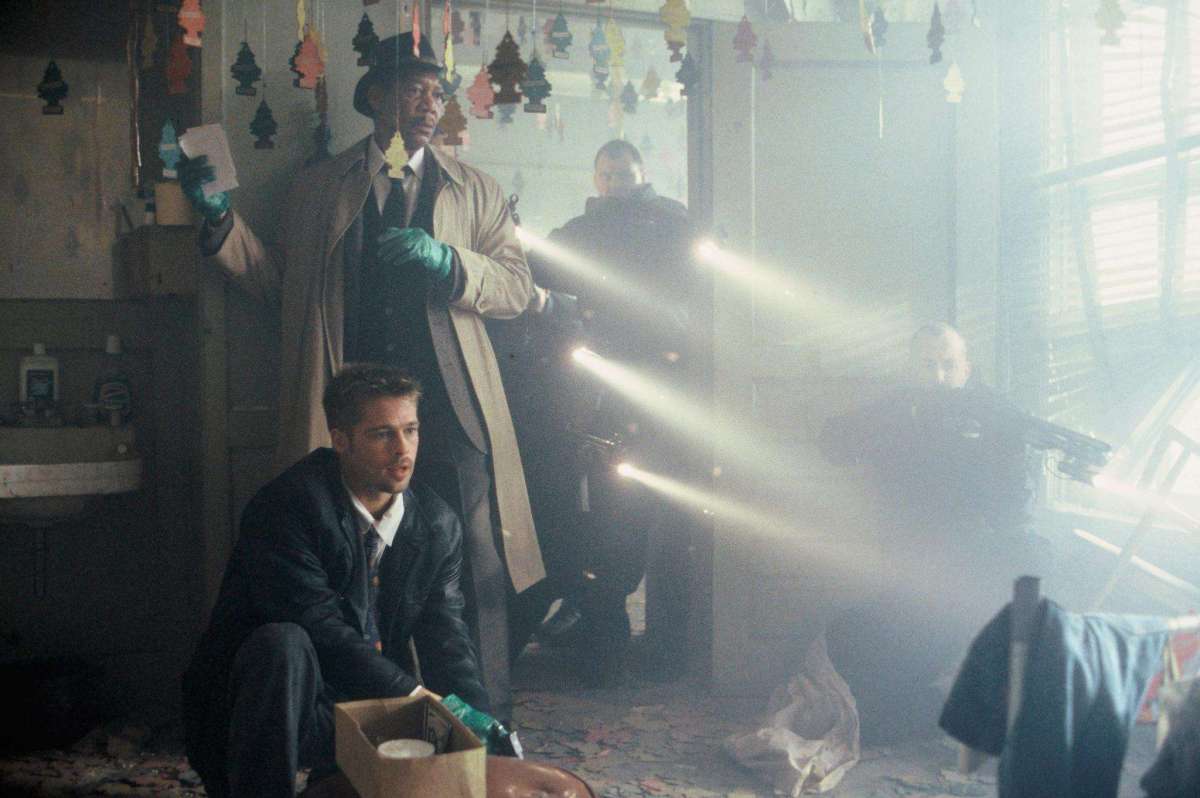
David Fincher is a philosopher as well as a perfectionist. When asked about the significance of his 8K remastering of Seven (premiering April 19 at the Chinese IMAX in 4K as part of the TCM Classic Film Festival), he told IndieWire, “If you think of it in string theory, it’s like a volumetric capture of where all these careers were at, and what these people wanted and needed and infused the thing with.”
Fincher was referring, of course, to Morgan Freeman, Brad Pitt, Gwyneth Paltrow, Kevin Spacey, and the rest of the cast and crew who made his breakout 1995 serial killer neo-noir. The film was a brilliant analog product of the era (with only seven weeks of prep) but also ahead of its time in conveying a dark, creepy, nihilistic police procedural that got under our skin like no other film (select release prints even underwent a bleach bypass, silver retention process that provided greater color density and black levels).
“It is what it is, warts and all,” Fincher said. “And some of it is spectacular and some of it is stuff that I would change or fix today, but I didn’t want to mess with that. There’s a lot of imperfections, there’s a lot of things that you just don’t see on film. When people say they love the look of film, what they’re talking about is chaos, entropy, and softness. Now, of course, we live in an HDR world where you get those kinds of very deep, rich, velvety blacks for free.
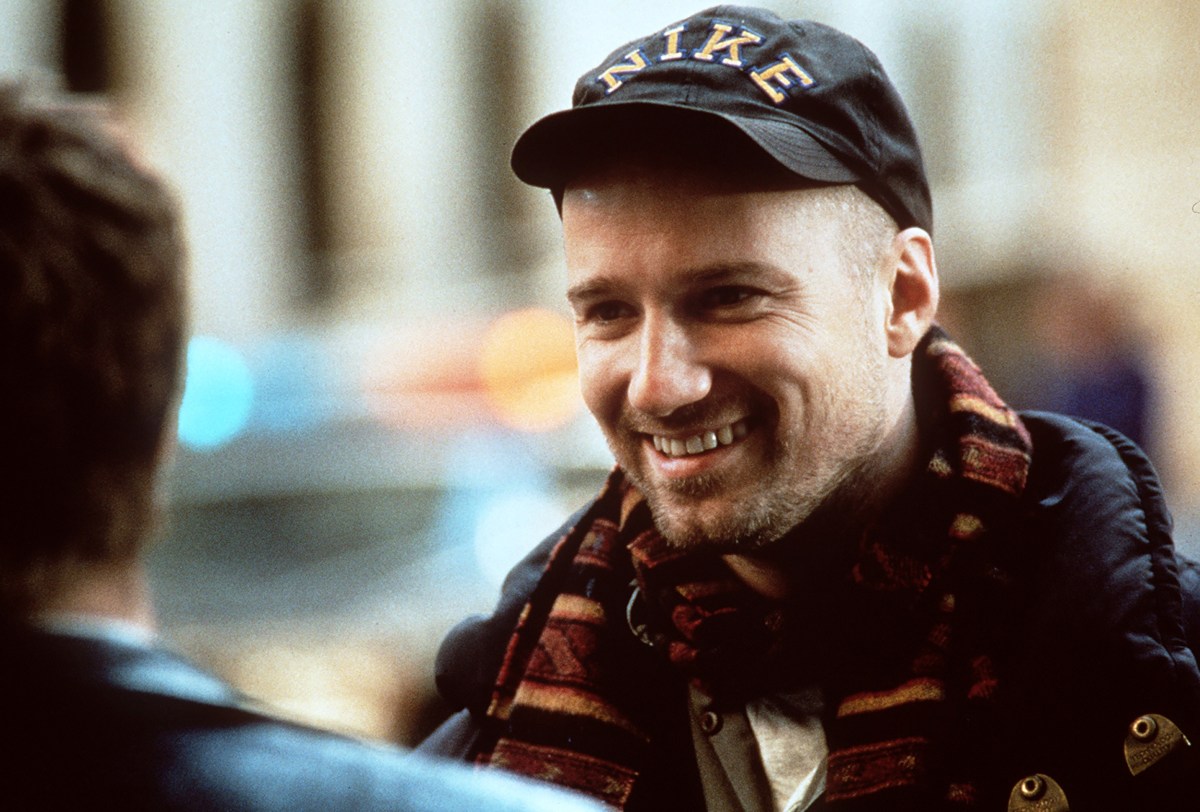
By any reasonable measure, David Fincher had made it by 1990. He was directing rapturous music videos for Madonna (Express Yourself, Vogue) and doing lucrative ads for top brands worldwide. The production company he co-founded, Propaganda Films, had cornered the MTV market, helping launch the careers of such future notables as Spike Jonze and Antoine Fuqua.
But there was Hollywood to conquer and Fincher, not yet 30, rushed headlong into his feature debut, one that no superfan of Ridley Scott (also a genius director of commercials) could pass up: the third movie of the Alien franchise. While it has since found a hardcore base of defenders, 1992’s dour, much-mussed Alien3, a troubled production, was a disappointment that Fincher has largely disowned.
A little over three years later, however, he was back with a movie that has since come to define him, even with future Oscar-nominated titles on the horizon. Starring Morgan Freeman and a rising Brad Pitt as detectives — one deliberate and cynical, the other impulsive and naive — in an oppressively rainy city hunting down a ghoulish maker of tableaus based on the deadly sins, Seven yoked Fincher’s gift for atmosphere to Fritz Lang-worthy material that approached metaphysical profundity.
“Who wants to spend their time bitching and moaning about transgressions that were done to you?” says Fincher, 61, of the tough years between Alien3 and the breakthrough that cemented his style. “That seems like a waste of time. I don’t think I was persecuted on Alien3, but I definitely learned what my limits were.”
The story of his rebound, though, remains a valuable one, even if the director himself would rather move on. In advance of Friday’s world premiere of a newly remastered 8K Imax version of Seven at the TCM Classic Film Festival, it feels like time to tell it again. Fincher is in a sharply funny, self-deprecating mood — his typical M.O. — when he connects on Zoom from his Los Angeles office.
Frame & Reference is a conversation between Cinematographers hosted by Kenny McMillan. Each episode dives into the respective DP’s current and past work, as well as what influences and inspires them. These discussions are an entertaining and informative look into the world of making films through the lens of the people who shoot them.
In this episode, we’re joined by my friend Michael Cioni to talk about his new company Strada (YouTube).
Michael is a serial entrepreneur whose career includes numerous awards for his creative work and technical achievements. He is an accomplished director, cinematographer, musician, four-time Emmy winner, member of the Motion Picture Academy, and Associate Member of the American Society of Cinematographers.
A U.S. patent holder of digital cinema technology, Michael was the founder and CEO of the post house Light Iron where he pioneered tools and techniques that emerged as global workflow industry standards. After Light Iron was acquired by Panavision, Michael served as product director for Panavision’s Millennium DXL 8K camera ecosystem.
He then joined the cloud startup company Frame.io where he served as Senior Vice President of Global Innovation. After Frame.io was acquired by Adobe, Michael led numerous workflow innovations including the breakthrough Camera to Cloud technology program as Senior Director of Global Innovation.
He continues to be motivated by the desire to democratize professional workflows and focuses his efforts on inventing new ways for filmmakers to create through his technology. Michael is a well-known and gifted speaker, advocate for the community, and serves as a mentor and educator throughout the global media industry.





 The Fincher Analyst