Chad Smith remembers the night in 2003 when the Red Hot Chili Peppers played for an audience of 80,000 or so amid the rolling hills of the Irish countryside.
After a somewhat fallow period in the mid-’90s, the veteran Los Angeles alt-rock band resurged with 1999’s eight-times-platinum Californication and its 2002 follow-up, By the Way, which spawned the chart-topping single Can’t Stop. To mark the moment, the Chili Peppers brought a crew to document their performance at Slane Castle, where they headlined a full day of music that also included sets by Foo Fighters and Queens of the Stone Age, for an eventual concert movie.
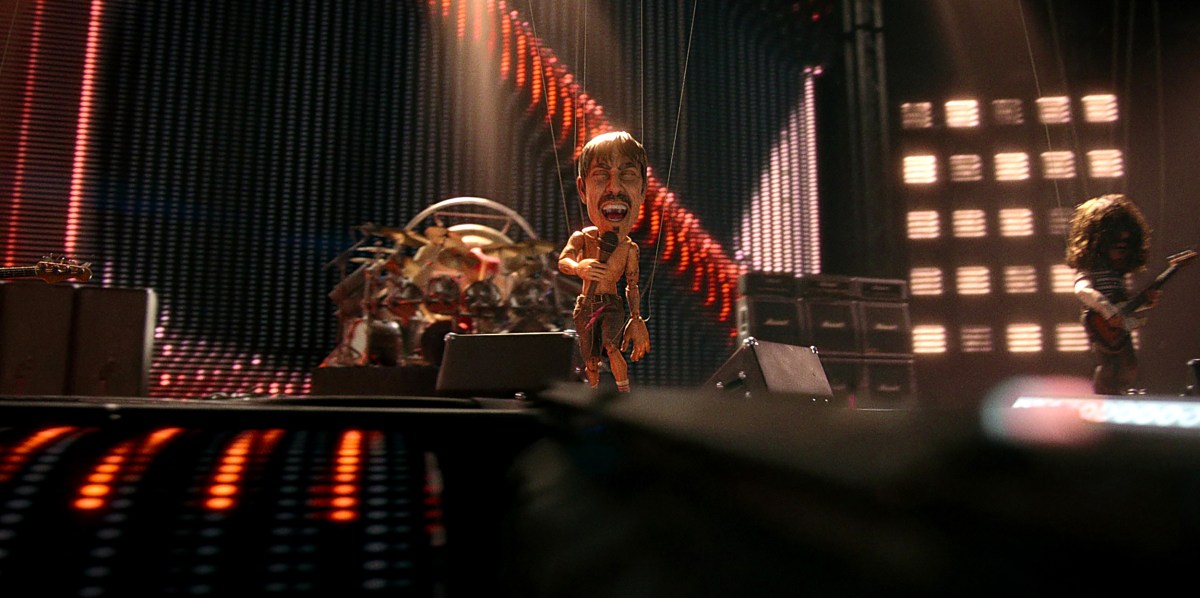
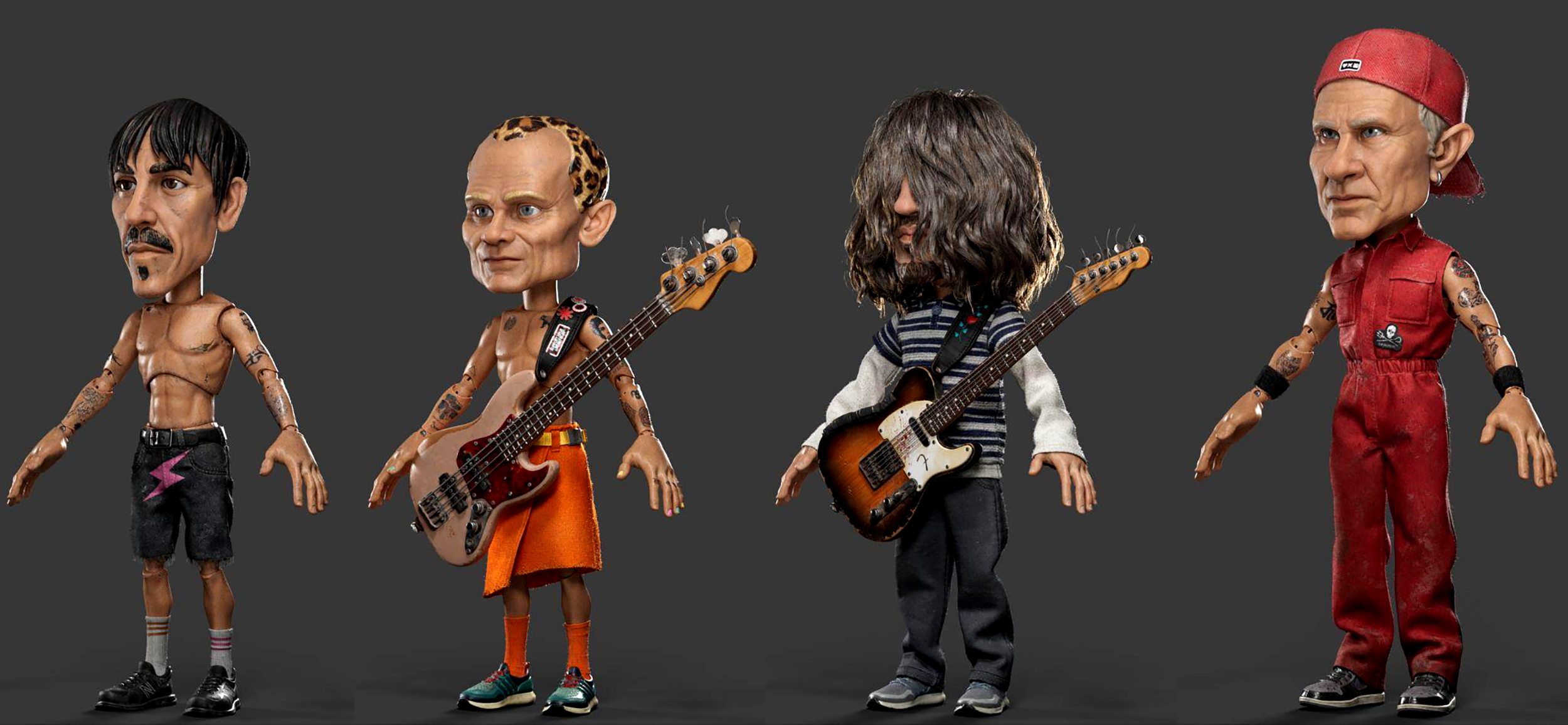
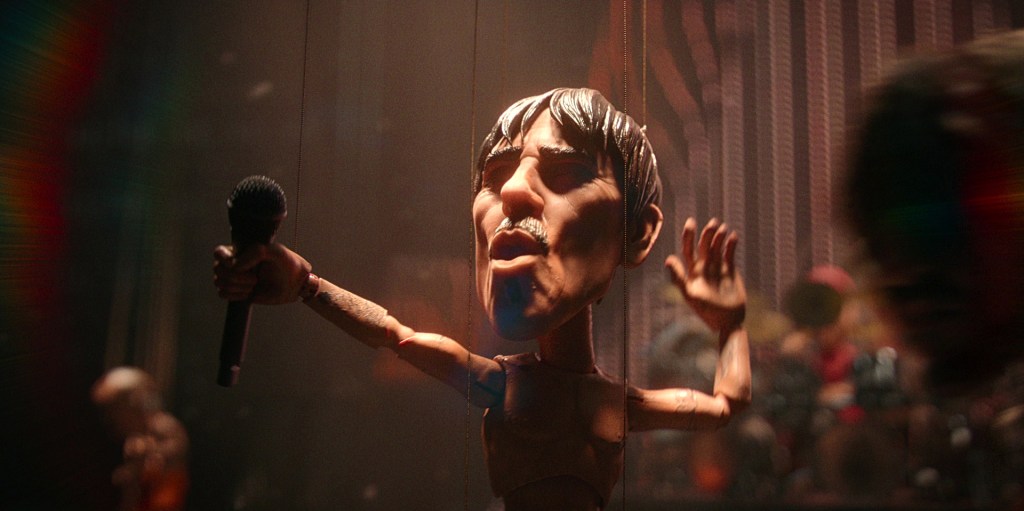
Twenty-two years later, the Chili Peppers are bringing that 2003 gig to screens again — only this time they’re string puppets.
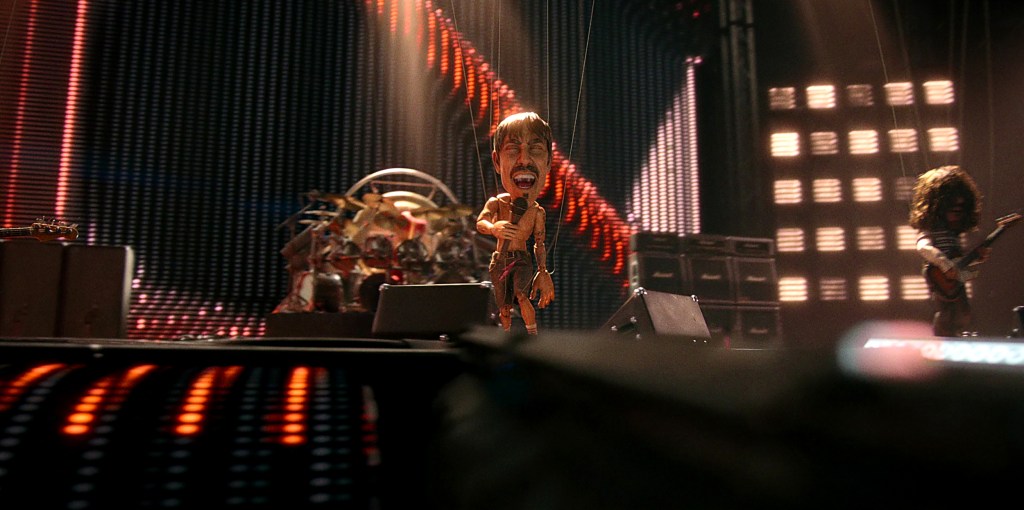
Can’t Stop is director David Fincher’s re-creation of the band’s rendition of that tune at Slane Castle. Part of the just-released fourth season of the Emmy-winning Netflix anthology series “Love, Death + Robots,” the animated short film depicts the Chili Peppers — Smith, Flea, singer Anthony Kiedis and guitarist John Frusciante — as dangling marionettes onstage before a veritable sea of the same. As the band rides the song’s slinky punk-funk groove, we see Flea bust out some of his signature moves and Kiedis swipe a fan’s cellphone for a selfie; at one point, a group of women in the crowd even flash their breasts at the frontman.
The puppets aren’t real — the entire six-minute episode was computer-generated. But the way they move looks astoundingly lifelike, not least when one fan’s lighter accidentally sets another fan’s wires on fire.
So why did Fincher, the A-list filmmaker behind Fight Club and The Social Network, put his considerable resources to work to make Can’t Stop?
“A perfectly reasonable inquiry,” the director, who executive produces LOVE DEATH + ROBOTS, said with a laugh.
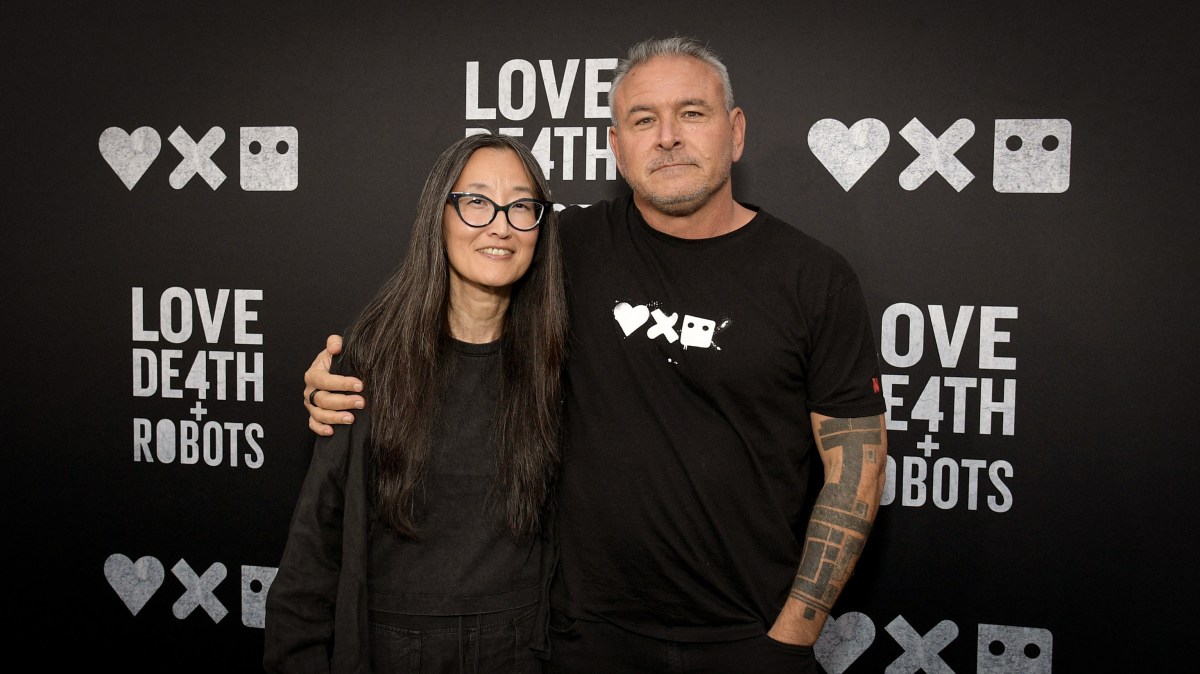
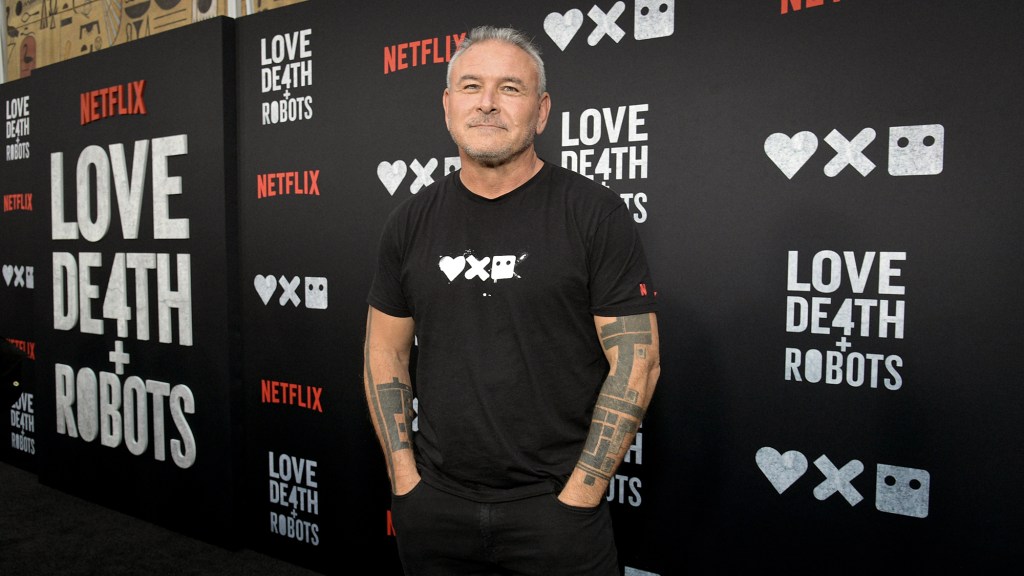
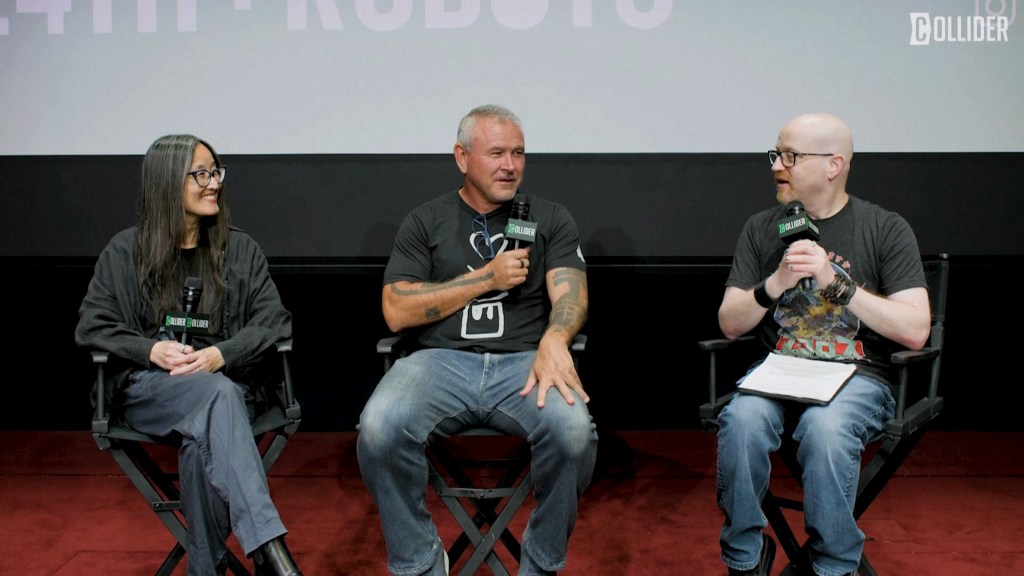
Creator Tim Miller, supervising director Jennifer Yuh Nelson, and designer/director Robert Valley discuss the latest edition of Netflix’s Emmy Award-winning animated short film anthology series that once again delivers a wide selection of funny, frightening, and thoroughly provocative works.
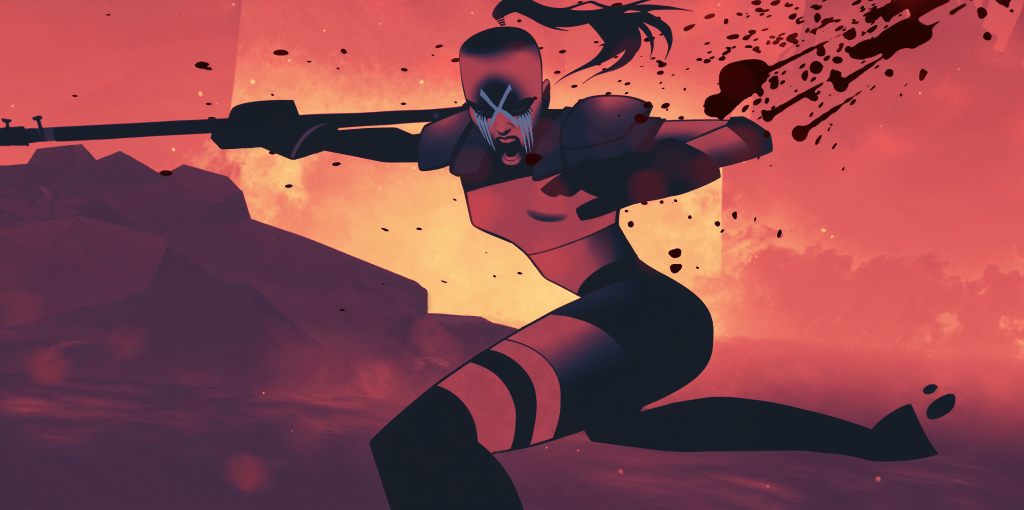
Director Jennifer Yuh Nelson tells IndieWire about being drawn to a grieving cyborg and her alien companion, who knows how to be adorable as a defense mechanism.
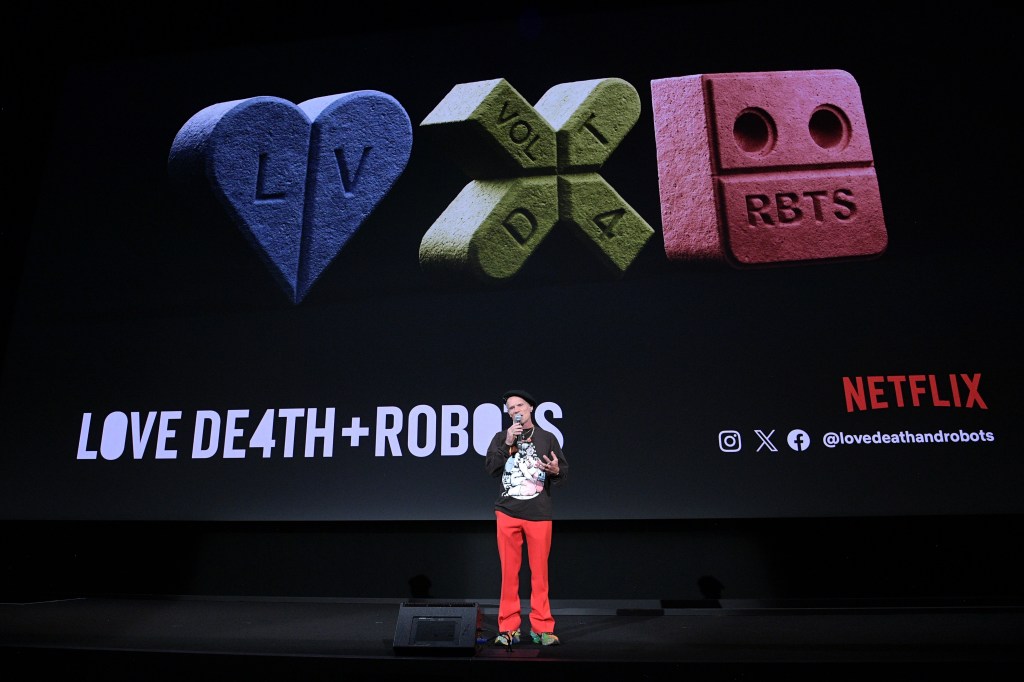
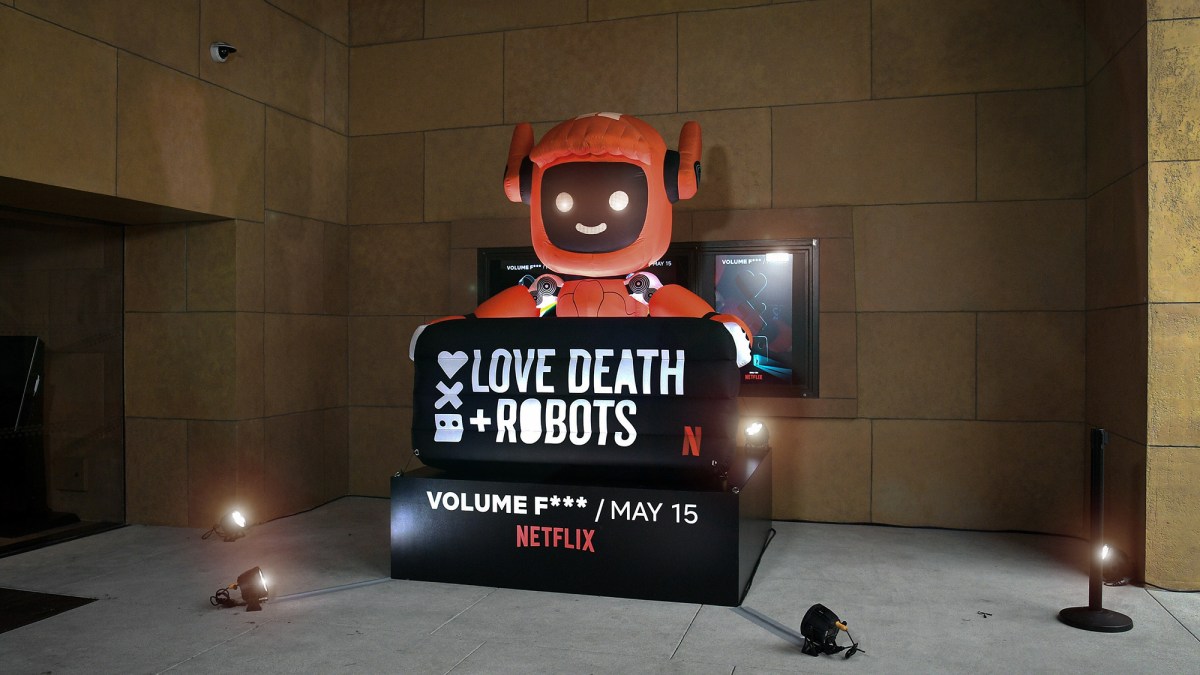
“For my money, it’s like LOVE DEATH + ROBOTS should be anything. Anything that you can’t figure out where else it goes,” legendary filmmaker David Fincher mused about the unconventional, sci-fi/cyberpunk-flavored Netflix (mostly) animated anthology series. It’s as apt a description as any for the ambitious, experimental, and genre-bending project, now launching its fourth season.
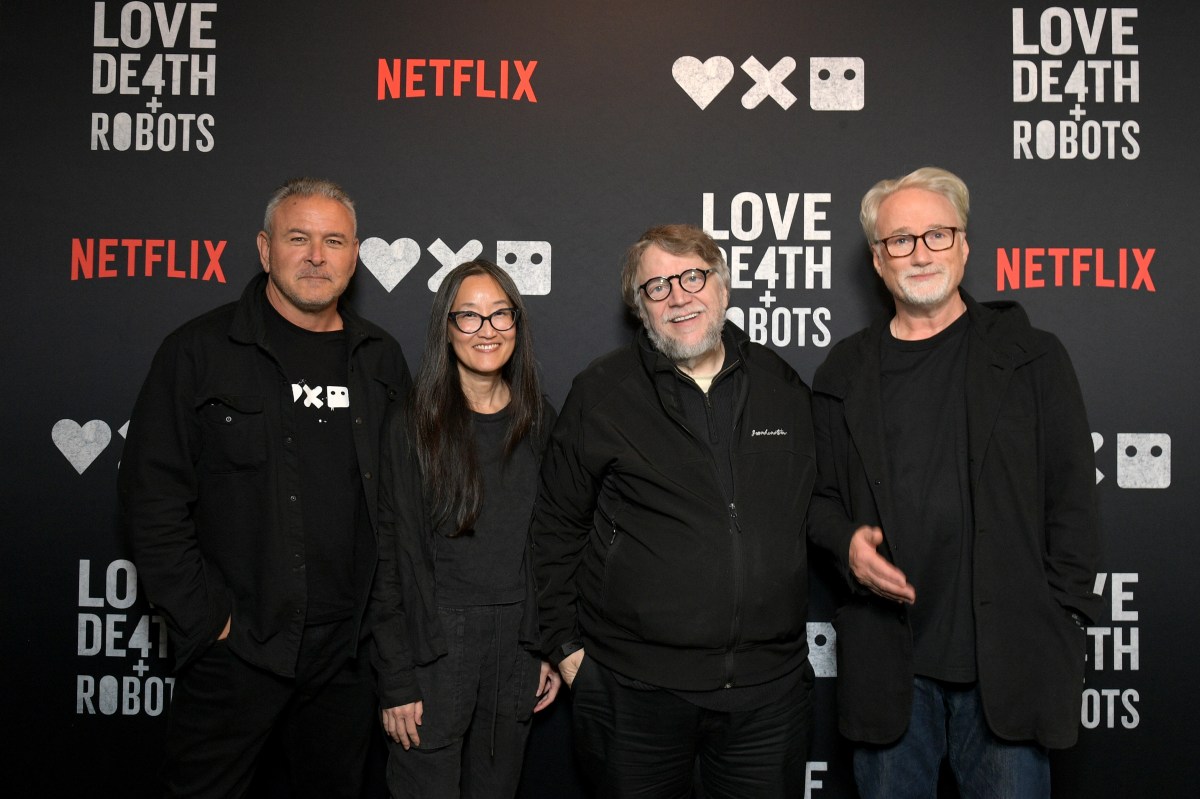
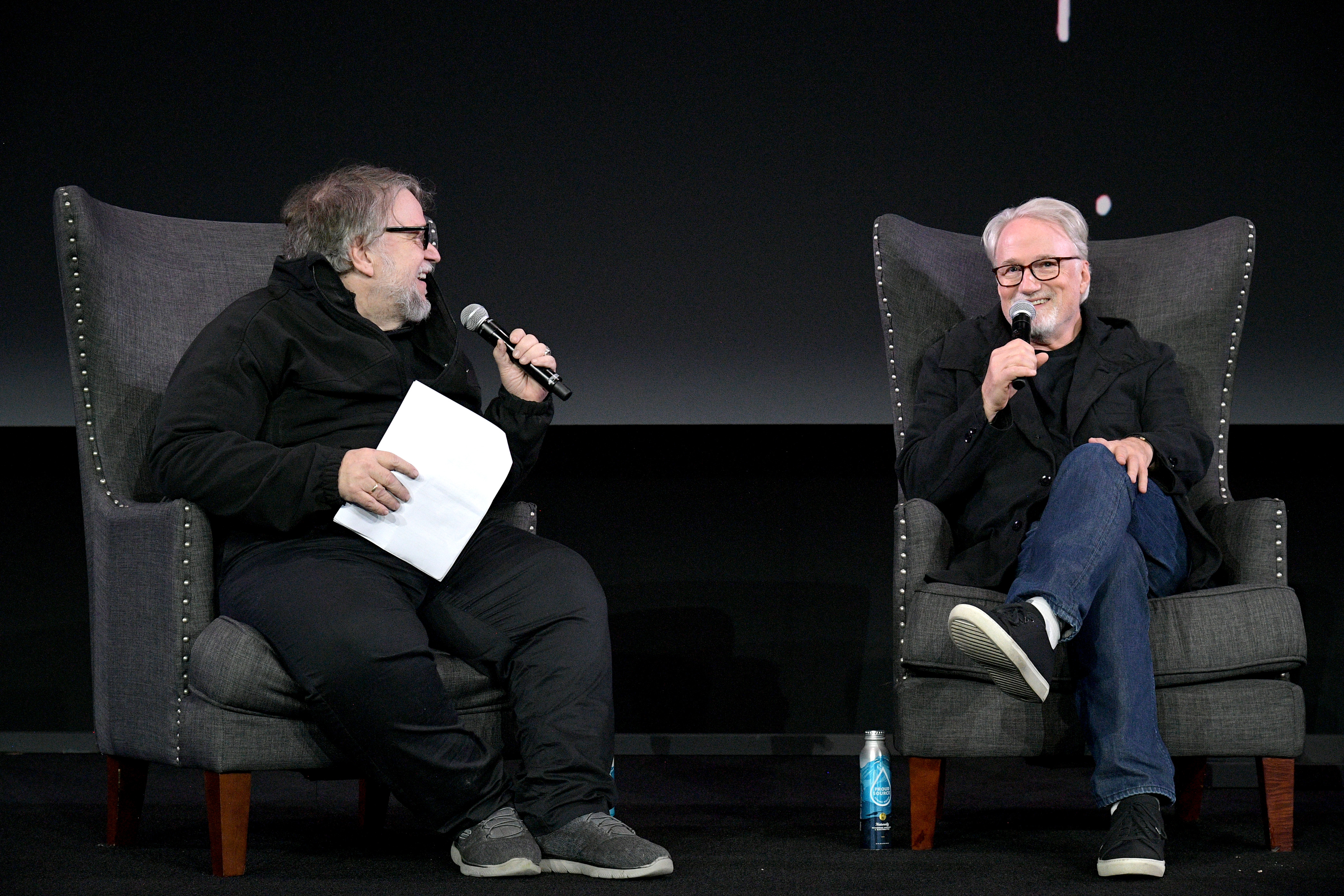
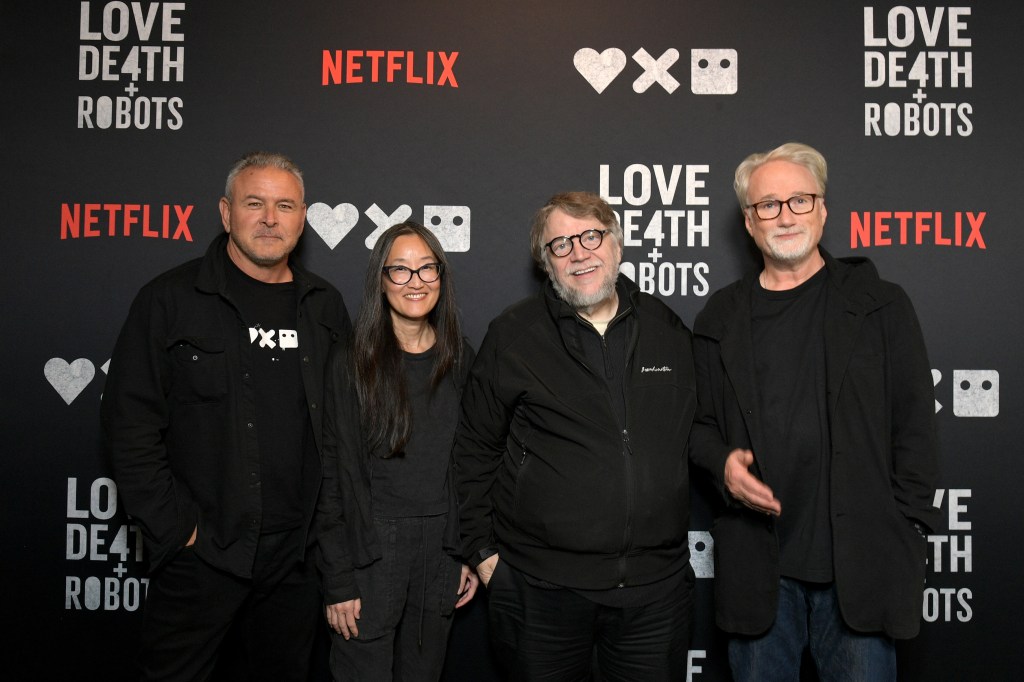
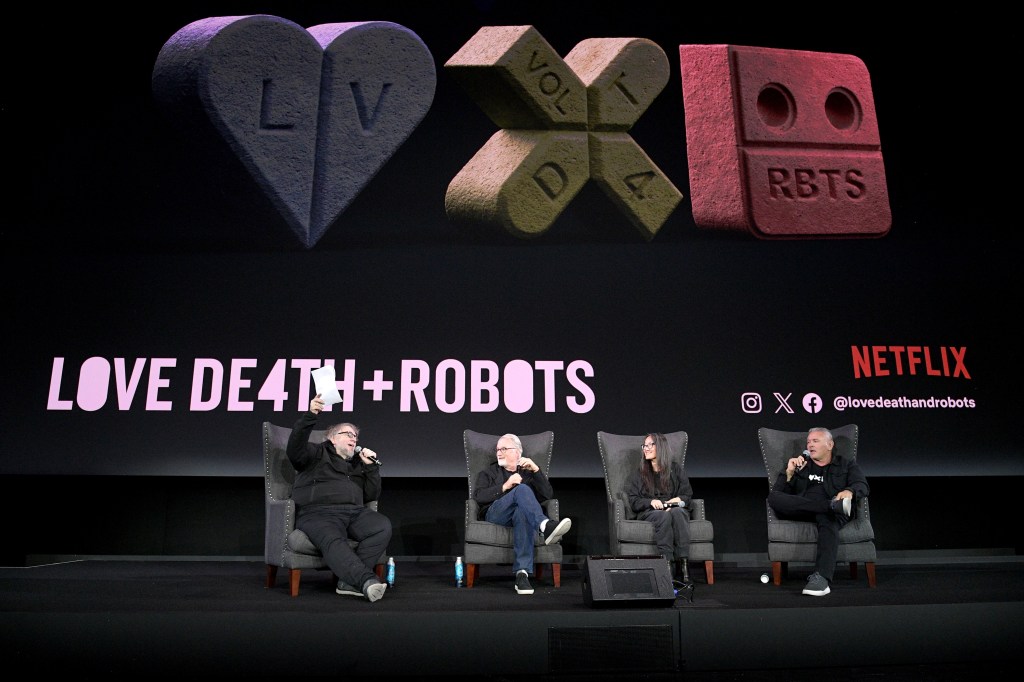
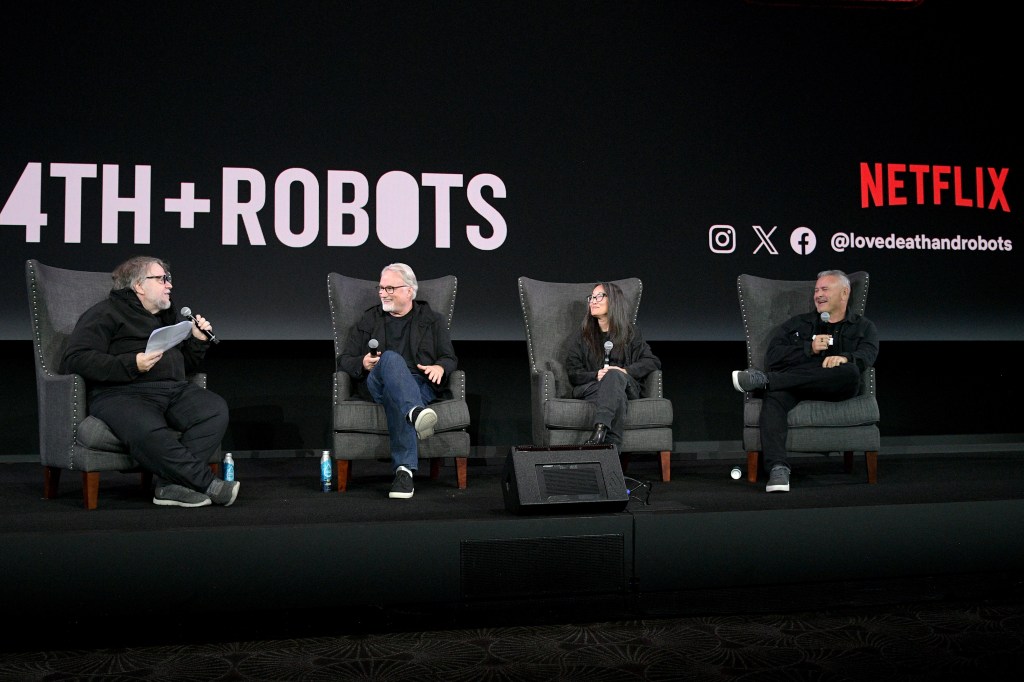
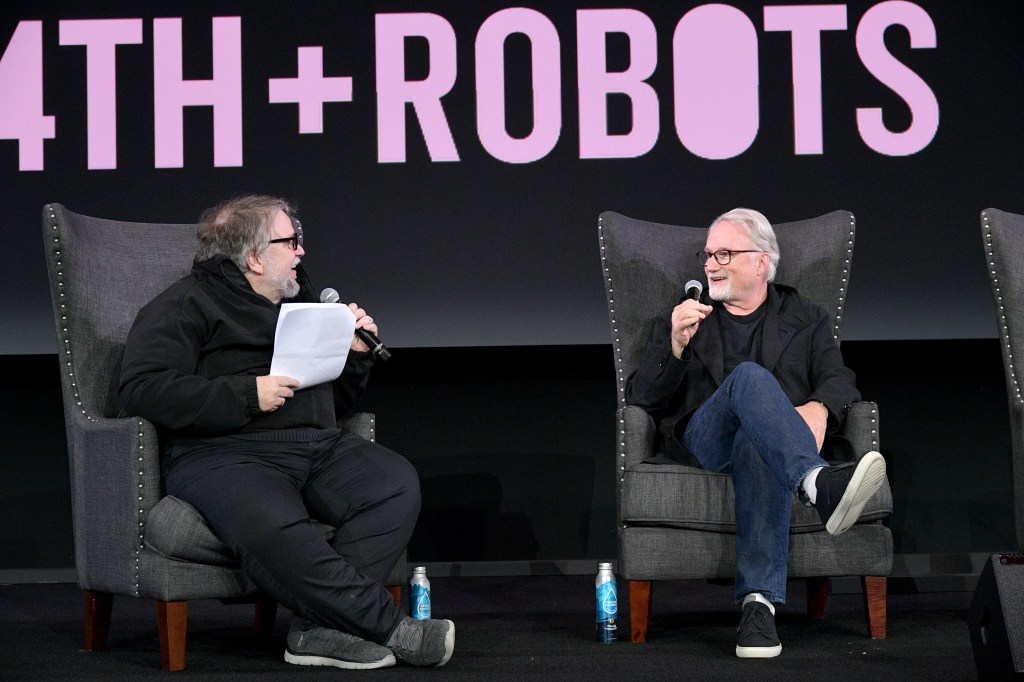
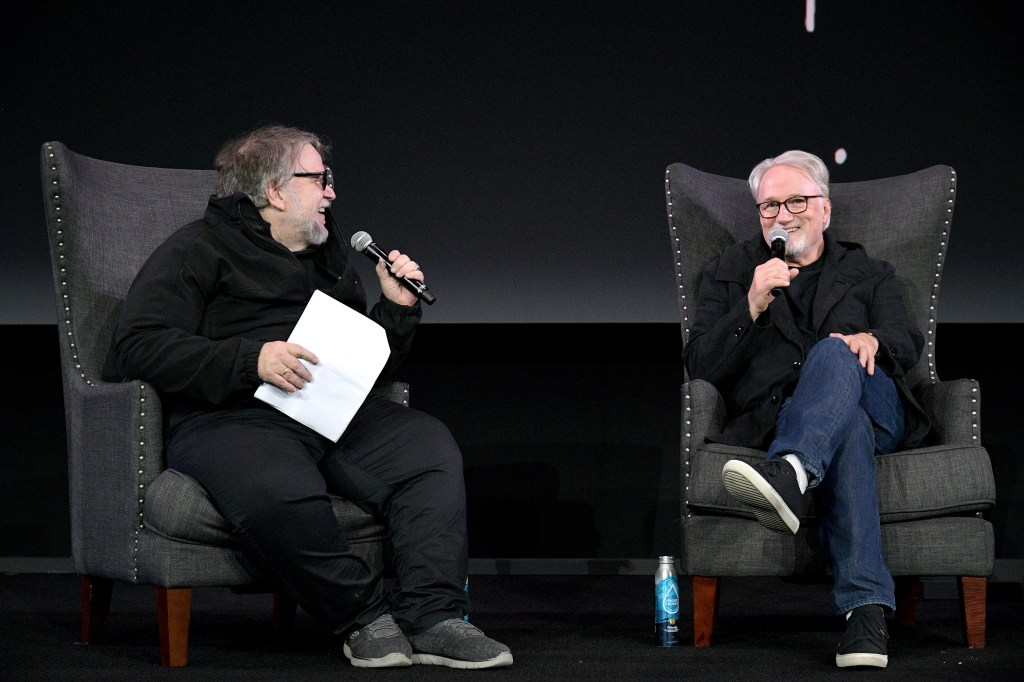
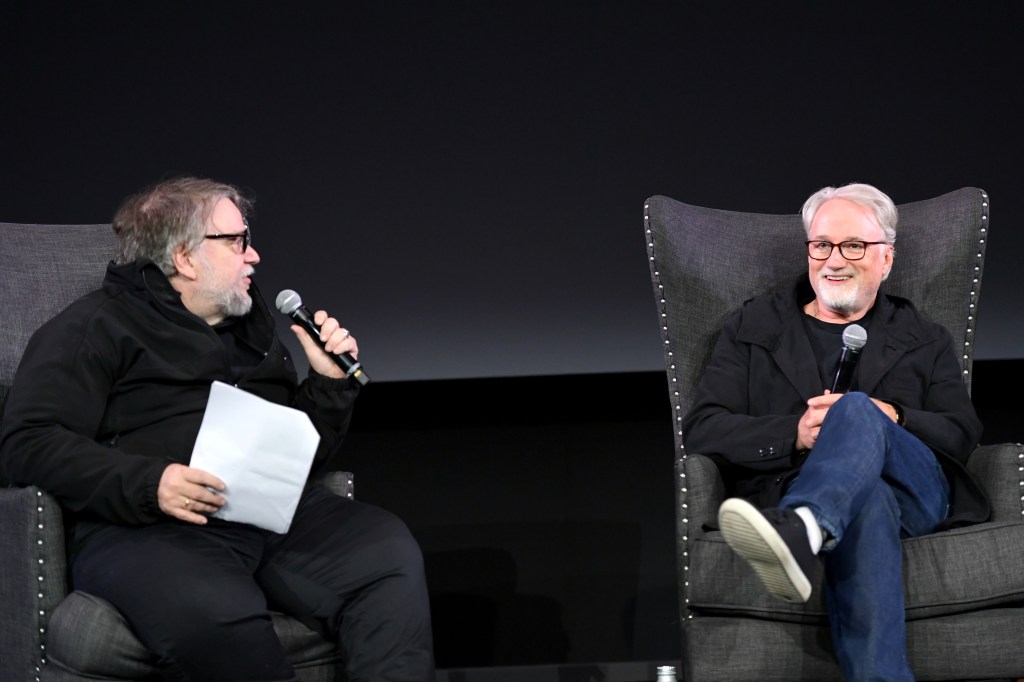
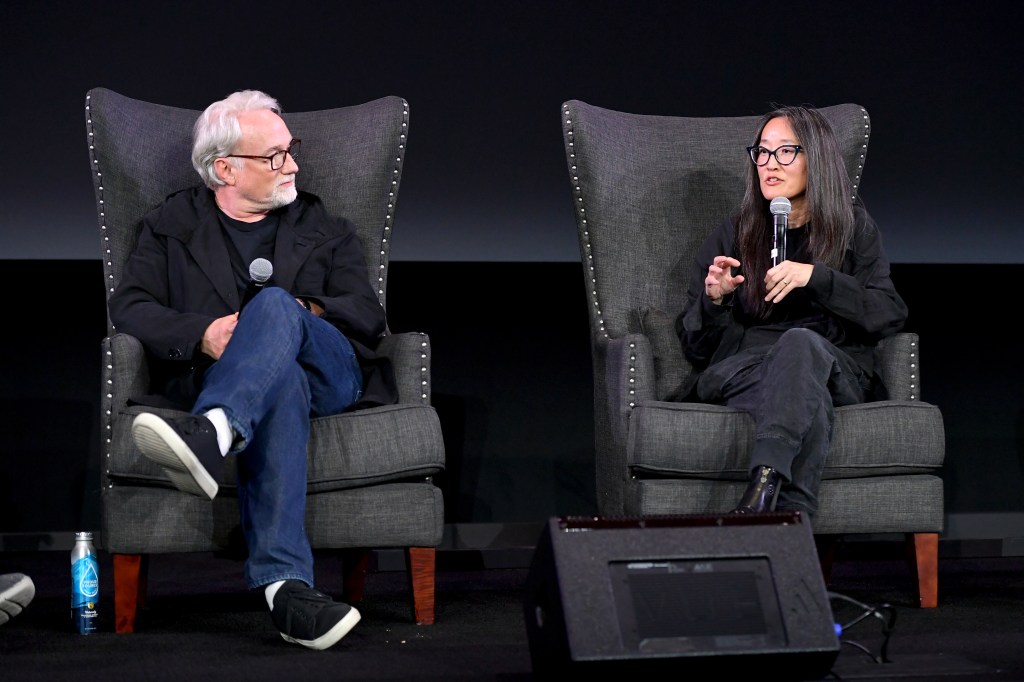
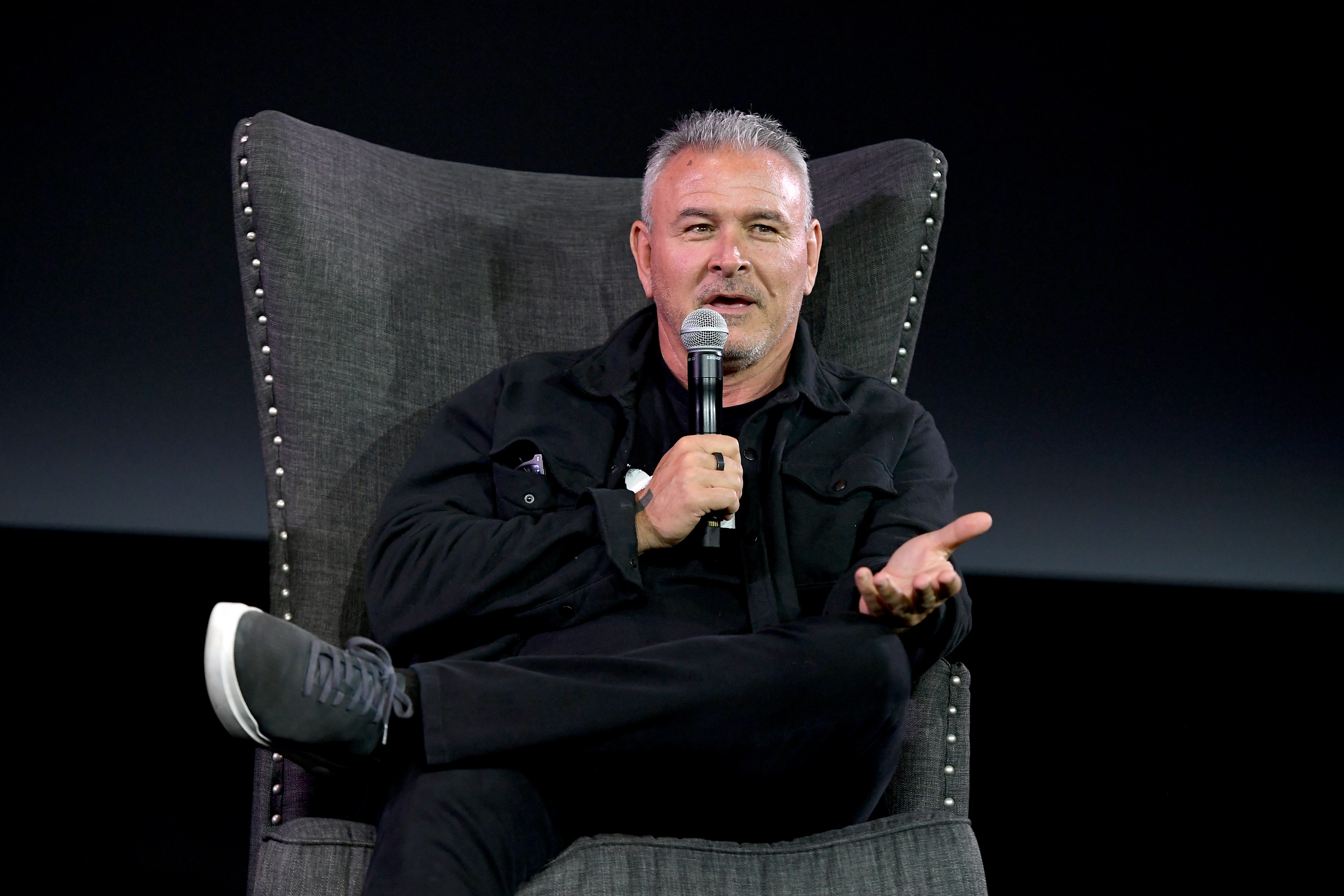
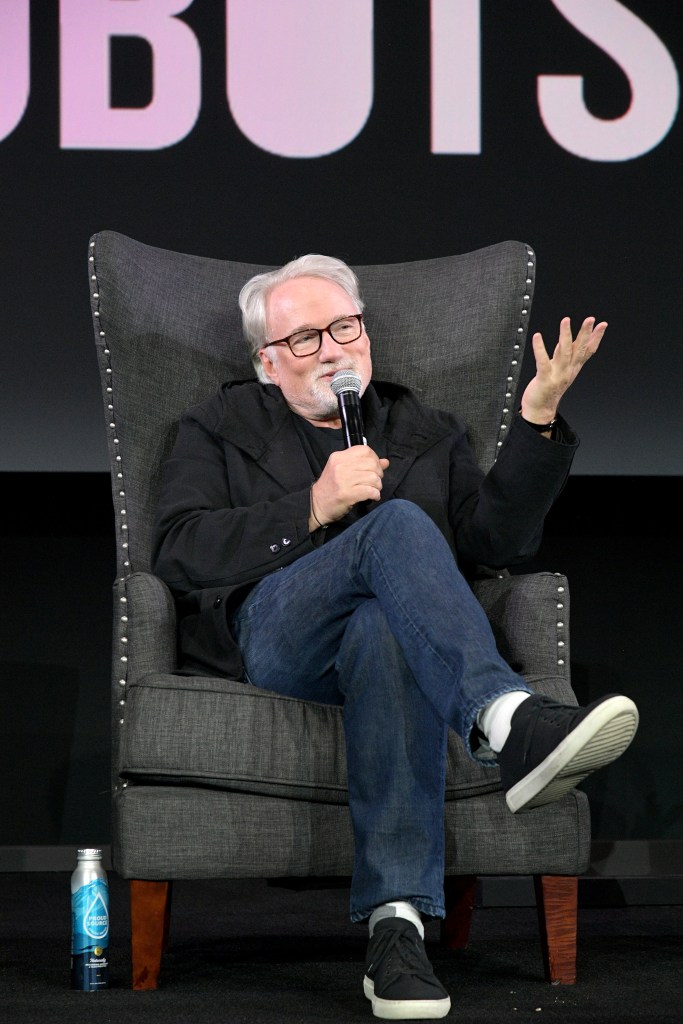
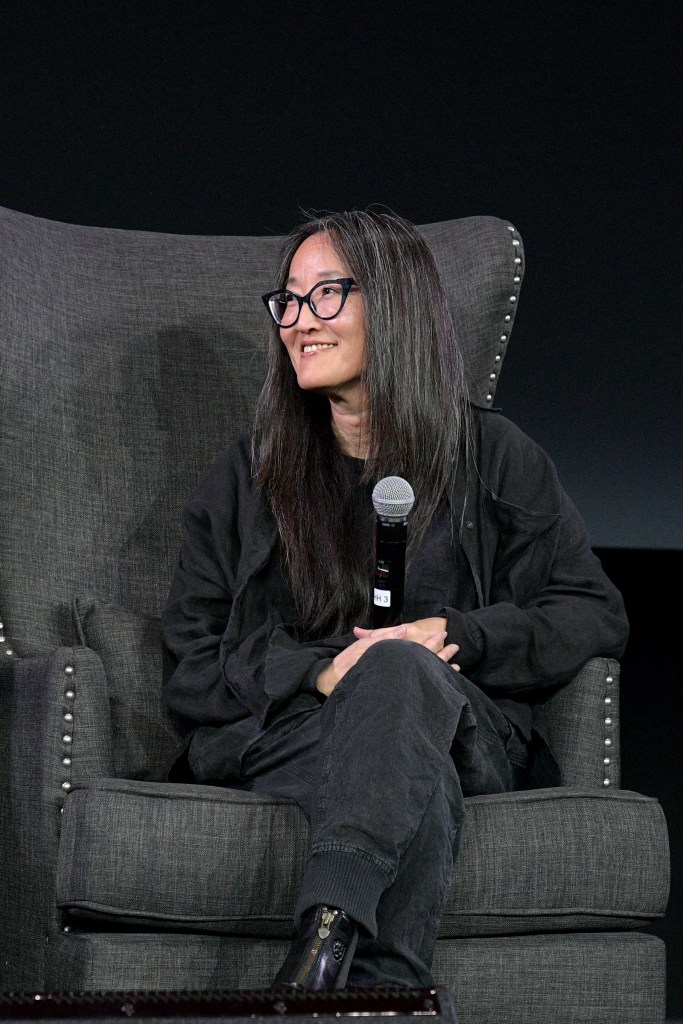
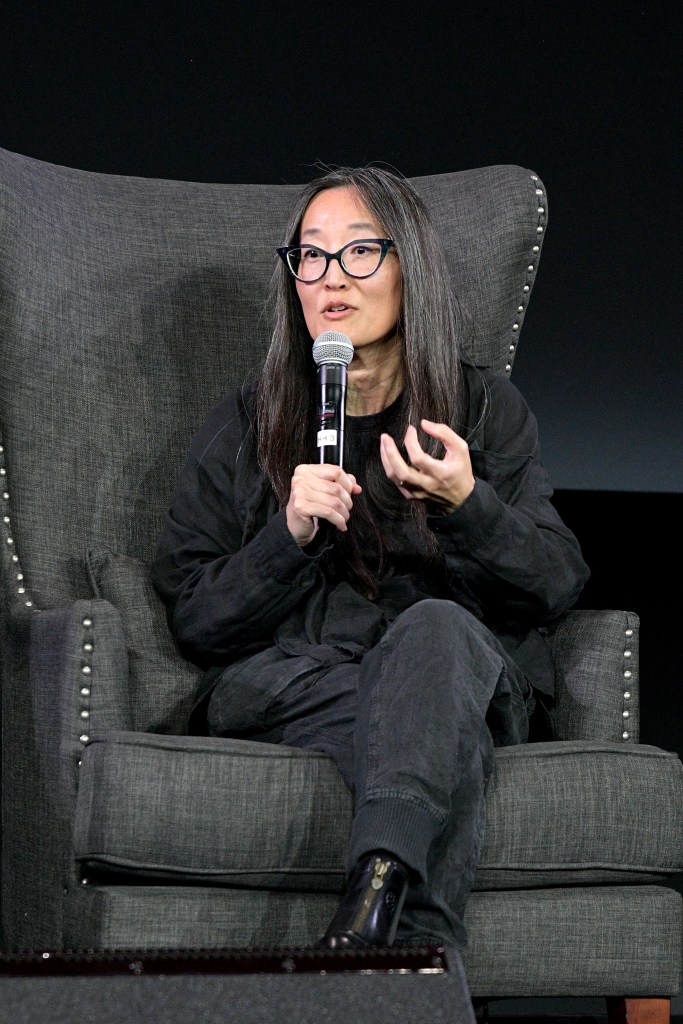
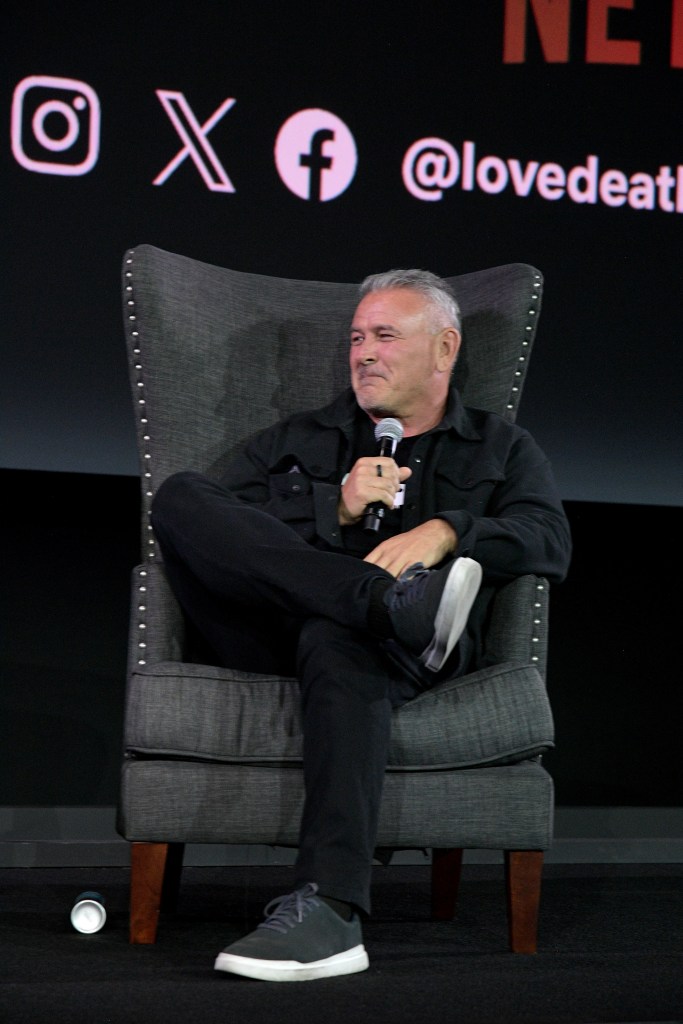
“Creativity happens on the fringe,” said Fincher — the director behind boundary-pushing cinematic classics like Seven, Fight Club, The Social Network, Gone Girl, and Zodiac. Speaking on stage at the LOVE DEATH + ROBOTS season premiere at the Egyptian Theatre in Hollywood, he was joined by fellow executive producer Tim Miller (Deadpool) and supervising producer Jennifer Yuh Nelson (Kung Fu Panda 2 & 3), and the host, director Guillermo del Toro. “It always does, and it always takes somebody — it has to be these weird flyers out there — to inform where the industry is going to go. So we’re just going to be out there.”
“Out there” also aptly describes Fincher’s contribution to the new season as a director. Having launched his career as an in-demand music video director for top artists in the ’80s and ’90s — including Madonna, Michael Jackson, the Rolling Stones, Sting, George Michael, Aerosmith, Nine Inch Nails, and Paula Abdul — Fincher returned to those roots to helm Can’t Stop. The dynamic, fully CGI-animated short features theRed Hot Chili Peppers performing their 2002 hit at an Irish castle—as marionettes on strings.
Featuring Directors Till Miller, Jennifer Yuh Nelson, Patrick Osborne, Emily Dean, Robert Bisi & Andy Lyon, and Voice Actors Emily O’Brien, and Sumalee Montano.
LOVE, DEATH + ROBOTS Vol. 4 Red Carpet Interview The Movie Couple
LOVE, DEATH + ROBOTS VOLUME IV Premiere! Tim Miller, Emily O’Brien, Sumalee Montano, and more! Temple of Geek
LOVE, DEATH + ROBOTS Vol. 4 Premiere: MR. BEAST’s Episode (Snyder Connection & Sonic 4)! Mama’s Geeky
LOVE, DEATH + ROBOTS Season 4 Cast and Creatives on AI & How They’d Expand the Title The Direct Extras
LOVE, DEATH + ROBOTS: Tim Miller & Cast Break Down Epic Volume 4 Episodes Screen Rant Plus
When Netflix launched as a DVD rental service in 1998, that was its most effective pitch to potential customers — an unmistakable reference to the thing that people hated the most about Blockbuster. With more than 9,000 locations, Blockbuster was the biggest video rental chain in the world, but it was alienating members because its profits came from charging hefty fines for movies that weren’t returned on time.
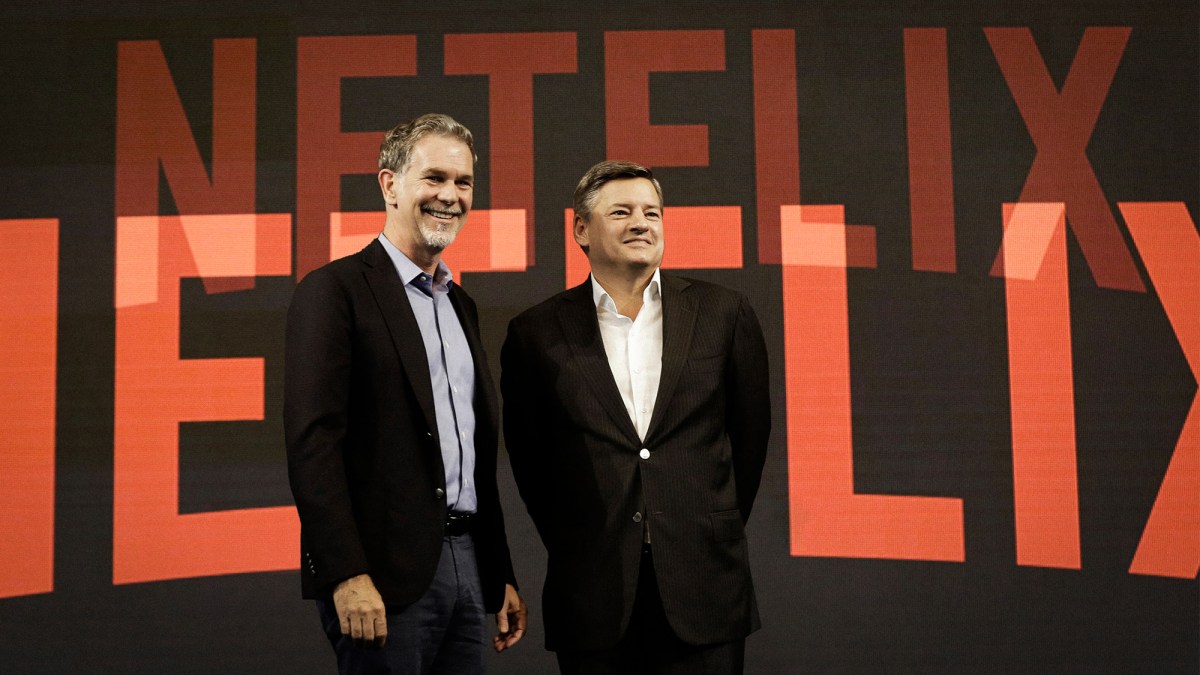
“It was an obvious sore spot,” Reed Hastings, Netflix’s co-founder, says. “People loved renting movies and watching them at home, but the late fee became the symbol of everything painful about that model. So we decided to create something different.”
Netflix didn’t just do away with late fees by allowing customers to keep movies for as long as they wanted. It offered subscribers unlimited rentals for a monthly flat fee. As a bonus, it delivered DVDs directly to customers’ homes, eliminating the hassle of having to drive to the local Blockbuster to scour aisle after aisle of movies in search of something to watch.
That gamble paid off. Twenty-eight years after it debuted with little fanfare, Netflix, now under the leadership of Hastings’ successors, Ted Sarandos and Greg Peters, dominates Hollywood. Its market cap of $392.68 billion surpasses those of Disney, Warner Bros., Discovery, Paramount Global, and Comcast combined.
Reed Hastings on Ted Sarandos committing to spending $100 million on House of Cards, picking the show up for an unheard-of two seasons, before a pilot had even been shot, and agreeing not to give David Fincher any notes and guaranteeing him full creative control:
“I wasn’t comfortable with it. It seemed perilously aggressive to me, just on the edge of reckless. We’d been working together for a decade, so I’d come to trust Ted’s instincts. But they were definitely not my instincts.”
The Oscar-nominated writer (he’s a finalist for his semi-autobiographical original screenplay about a transformative trip to Poland) and actor (2010’s The Social Network) talks to THR about his life and career.
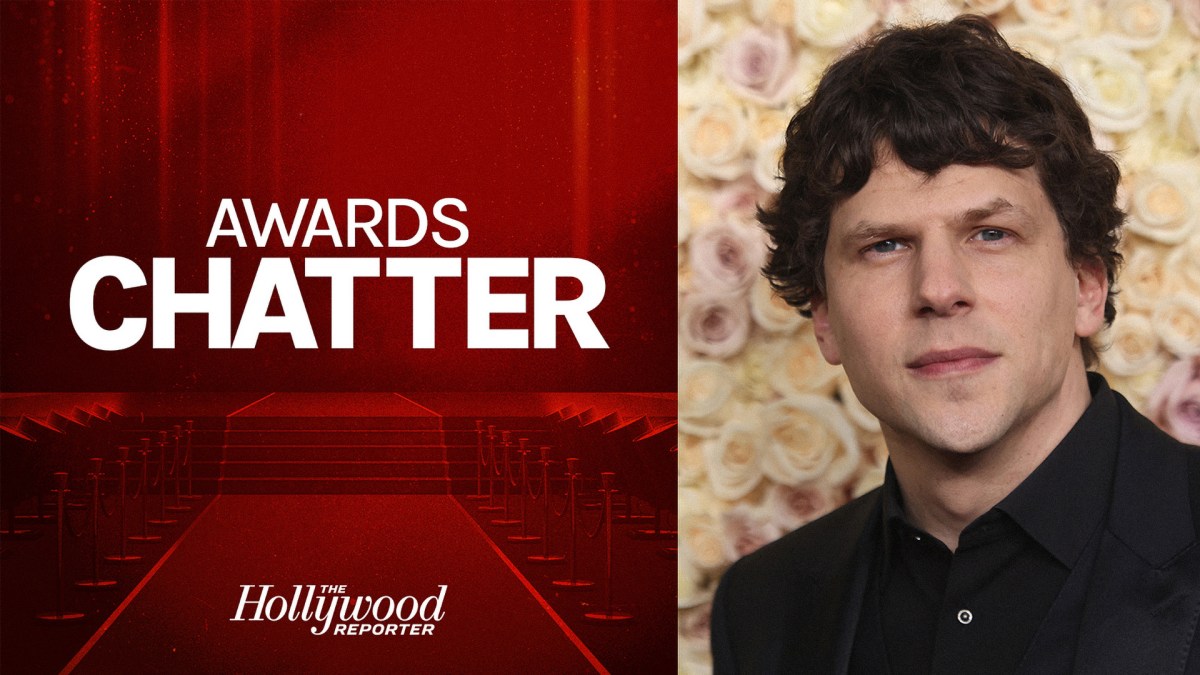
Jesse Eisenberg is the guest on the latest episode of The Hollywood Reporters Awards Chatter podcast. The 41-year-old actor, writer and director is best known for his portrayal of Facebook founder Mark Zuckerberg in David Fincher’s 2010 masterpiece The Social Network. Fourteen years after receiving an best actor Oscar nomination for that performance, the former child actor is an Oscar nominee again, this time for the original screenplay that he wrote for a 2024 film that he also directed and stars in, A Real Pain.
The semi-autobiographical drama is about two very different cousins — one “successful” but anxious, played by him, the other struggling but charming, played by Kieran Culkin — who travel together to Poland to pay tribute to their beloved late grandmother. It premiered at the 2024 Sundance Film Festival, where Eisenberg was recognized with the Waldo Salt Screenwriting Award, and at which its U.S. distribution rights were acquired for $10 million by Searchlight, which released it on Nov. 1, 2024. It has since garnered rave reviews — it’s at 96% on Rotten Tomatoes — and has grossed $16.4 million worldwide.
Over the course of a conversation at the Los Angeles offices of The Hollywood Reporter, Eisenberg reflected on how a shy and socially-awkward kid wound up on the stage and the screen in the first place, in films such as 2002’s Roger Dodger, 2005’s The Squid and the Whale and 2009’s Adventureland; what led him to begin writing, even as his acting career took off thanks to the commercial success of 2009’s Zombieland and 2010’s The Social Network, and why he shifted from penning scripts in the mold of Adam Sandler comedies to more personal material; how A Real Pain — the second feature that he wrote and directed, after 2022’s When You Finish Saving the World — essentially brings together ideas he first explored in other pieces that he wrote years ago; plus much more.
EXCLUSIVE: Speaking to ‘The Independent’, the filmmaker also revealed the hilariously blunt response he received from Gene Hackman after he offered the veteran actor a part in the film
David Fincher has revealed secrets from behind the scenes of his 1995 thriller SE7EN as it’s re-released in an eye-popping new remastered edition.
Speaking to The Independent, the filmmaker discussed some of the actors he initially hoped to cast in the film, poured cold water on a long-standing rumour about its shocking ending, and his memories of how Denzel Washington was initially approached to star in the movie.
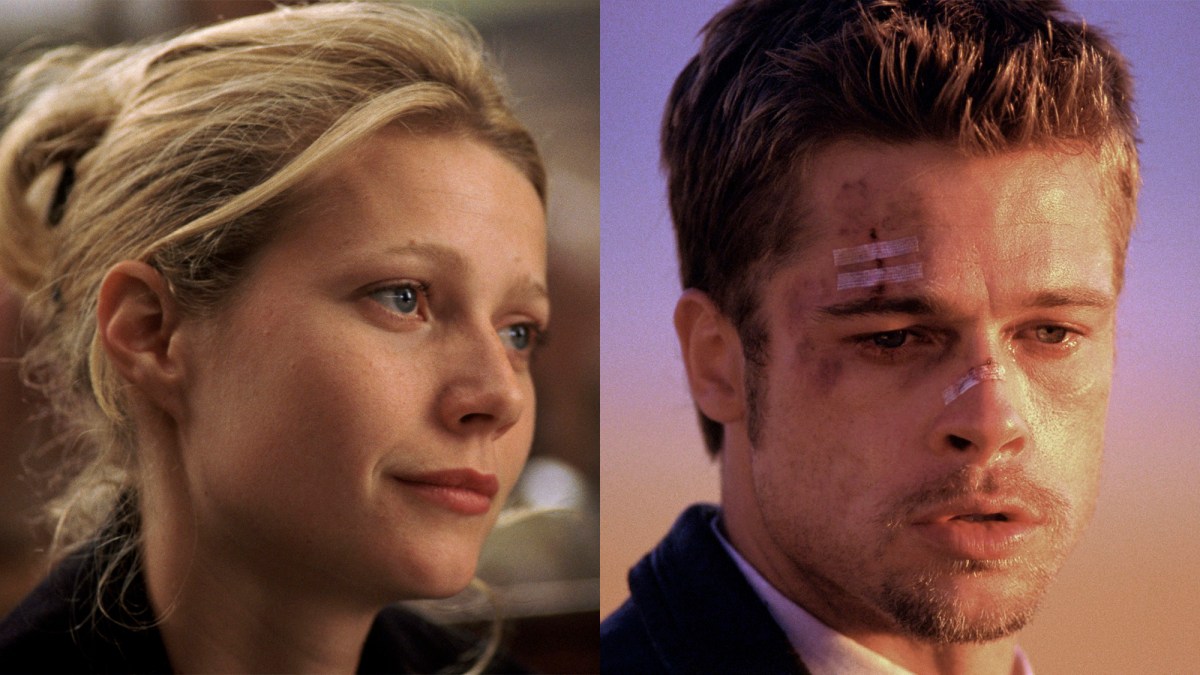
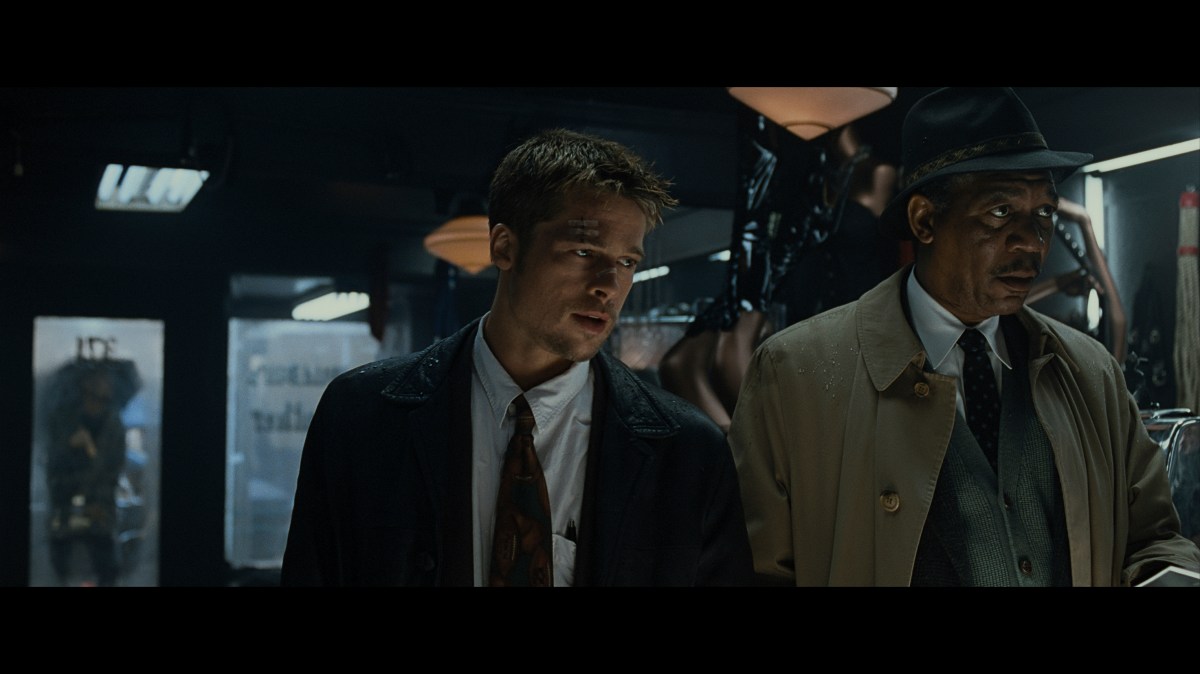
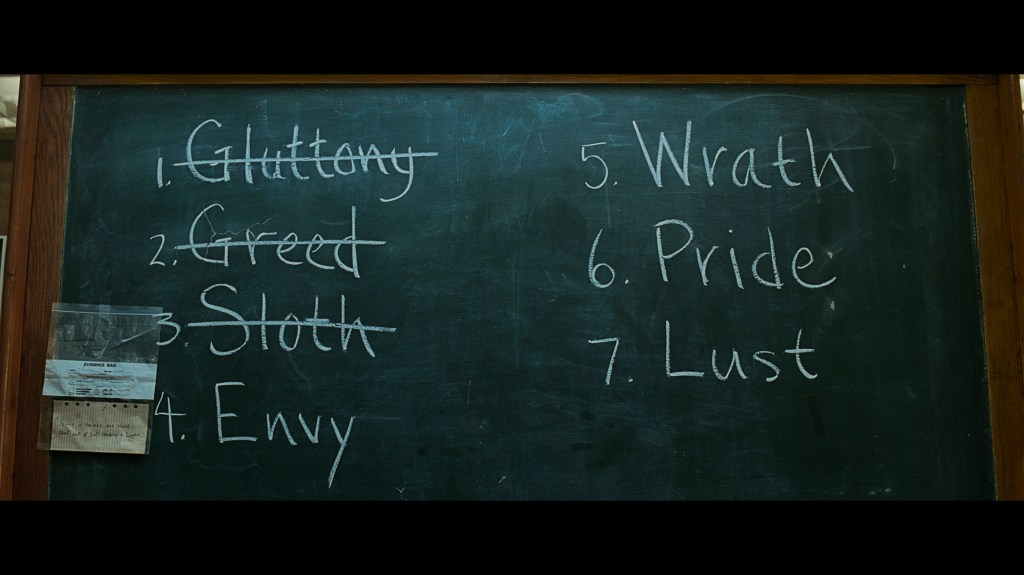
Morgan Freeman and Brad Pitt ultimately led the film as Detectives Somerset and Mills, who are tasked with investigating a serial killer modelling his crimes after the seven deadly sins. Gwyneth Paltrow was cast as Mills’s doomed wife Tracy, while Kevin Spacey starred as the killer John Doe. All four parties collide in the film’s famed climax, which has birthed a particular urban legend linking SE7EN with Steven Soderbergh’s 2011 pandemic thriller Contagion.
*Spoiler warning* Before you read any further, be aware that this article discusses the final scenes of SE7EN and a specific plot point in Contagion.
As SE7EN receives an anniversary release in IMAX theaters and on 4K UHD Blu-ray, David Fincher tells Mitchell Beaupre about the film’s enduring impact, Brad Pitt’s basketball ties, John Doe’s memorable entrance and more, including his personal favorite opening credit sequences.
“The movie is a horror movie. The movie is about utter and total loss of control.” —David Fincher on SE7EN
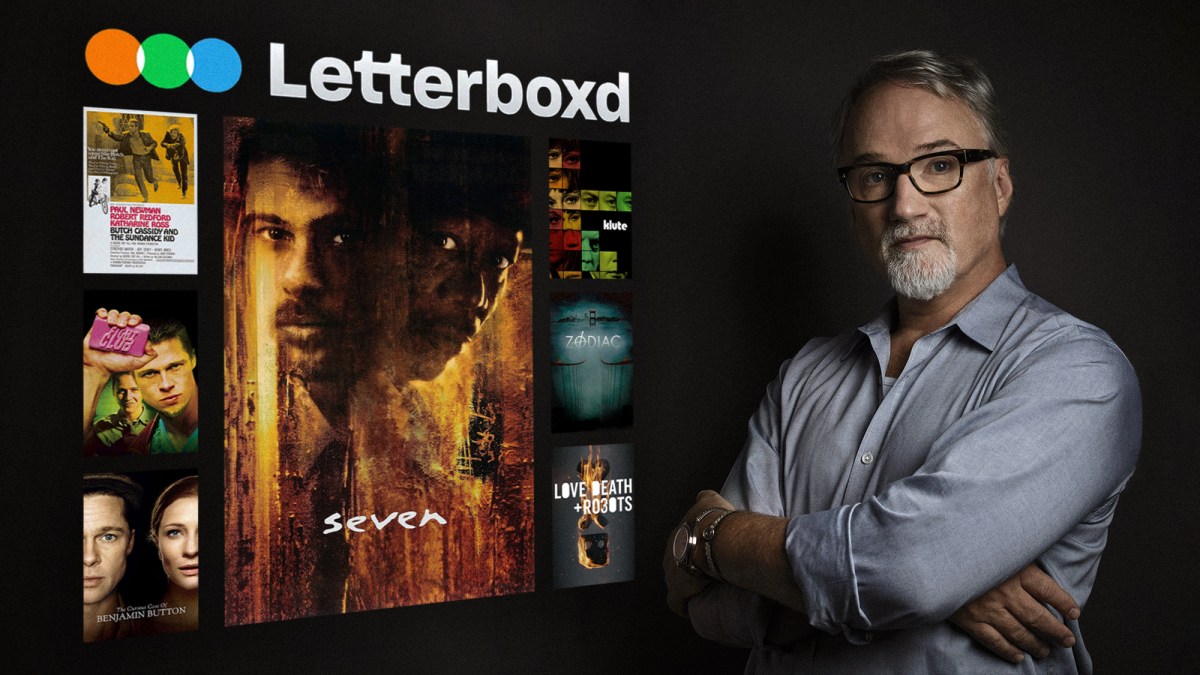
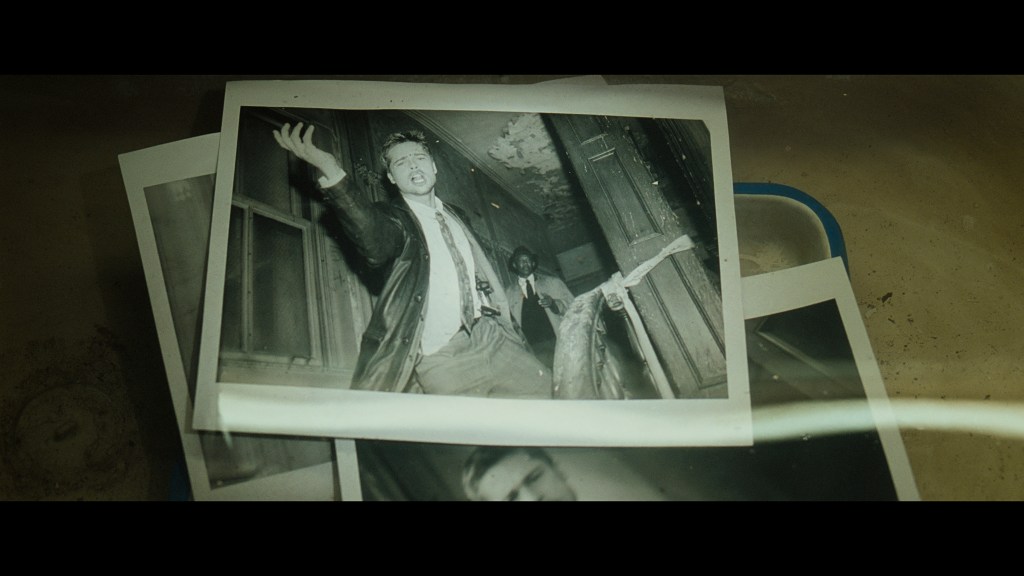
Plenty of films want to sell us on the idea that sinning is fun. SE7EN is not that film. Drenched in the cold city rain, grime coming out from the sewers and onto the streets, cockroaches scattering behind furniture and paint peeling off the walls, in the world of Se7en there’s not much fun about life at all. And yet, since its release thirty years ago, David Fincher’s neo-noir-tinged detective thriller/serial killer horror has been a fan favorite, pulling in more than $327 million worldwide and firmly cementing a place on the Letterboxd Top 250 with a whopping 4.3 average rating. Not bad for a movie that makes you want to take a shower the minute you finish watching.
Beneath all of the shocking moments of grotesquerie as Detectives Mills (Brad Pitt) and Somerset (Morgan Freeman) track the meticulously orchestrated slaughters executed by John Doe (Kevin Spacey), SE7EN’s resonance comes from how it invites us to question the futility of feeling good about anything in this life. It’s the ultimate glass half full or half empty story, as these men see some of the worst that humankind is capable of every day, and Mills somehow retains a positive outlook while Somerset has lost all hope for society. Over the course of a week, these two develop a natural bond while their worldviews continuously clash. Director Jim Cummings writes in a Letterboxd review of SE7EN that “outside of the incredible craftsmanship displayed in its filmmaking, it’s an incredible character study with perfect fusion of character-comedy and detective-pornography.”
Cummings is one of many filmmakers who adore Fincher’s sophomore feature, which laid the foundation in 1995 for essentially every gnarly detective thriller that would come in the years to follow. “Easy to forget that this became the template for the genre it reinvented, but beyond that it’s a spectacular piece of provocation and confidence,” Matt writes, which Dirk echoes by saying, “The true star here is David Fincher. He has created an aesthetic that has been copied so many times, but has never really been equaled.” Dirk also opens his review by pondering, “It is always difficult to determine when you are ‘allowed’ to call a film a classic or a masterpiece,” then three paragraphs later ending with the declaration that SE7EN is, indeed, both.
So that settles that. Here’s my conversation with David Fincher.
For David Fincher, seeing SE7EN in 4K was an experience he can only describe as harrowing. That or a high school reunion.
“There are definitely moments that you go, ‘What was I thinking?’ Or ‘Why did I let this person have that hairdo’?” Fincher said in a recent interview with The Associated Press.
He’s OK with the film being a product of its time in most respects. But some things just could not stand in high-definition resolution.
“It was a little decrepit, to be honest,” said Fincher. “We needed to resuscitate it. There are things you can see in 4K HDR that you cannot see on a film print.”
Ever the perfectionist, he and a team got to work on a new restoration of the film for its 30th anniversary re-release. This weekend the restored SE7EN will play on IMAX screens for the first time in the U.S. and Canada, and on Jan. 7, the 4K UHD home video version will be available as well.
The dark crime thriller written by Andrew Kevin Walker and starring Brad Pitt and Morgan Freeman as a pair of detectives looking for a serial killer was somewhat of a career-reviver for Fincher, whose directorial debut Alien 3 had not gone well. SE7EN was not a sure thing: It was made for only $34 million (and only got that when Fincher managed to persuade studio execs to give up $3 million more). But it went on to earn more than $327 million, not accounting for inflation, and continues to influence the genre.
Fincher has over the years overseen several restorations of the film (including one for laser disc) but decided this needed to be the last. It’s why he insisted on an 8K scan that they could derive the 4K from. He wanted to ensure that it wouldn’t have to be repeated when screens get more advanced.
“I don’t want to do this again,” Fincher said. “What we’ve essentially gotten to with this is that this is the new negative. This will be the new archival storage element.”
For casual viewers, the tweaks should not be terribly noticeable. Fincher didn’t go in and add characters or give Gwyneth Paltrow a happy ending.
“I’m very against the idea of changing any of the content,” Fincher said. “There’s literally zero opportunity for toys in ‘Seven’ so we won’t be introducing any of that.”
But take the opening scene where Pitt’s character selects a pre-tied tie and looks out a window. In the original version, Fincher used a tried and true filmmaking technique where you bounce soft light off a white card outside the window to give the appearance of depth and natural light coming in. He called them the Being There windows, referring to what cinematographer Caleb Deschanel did on that film.
“There’s no expectation by the audience that you see the buildings beyond the window. They’re just overexposed. The inside is dark enough that your eyes don’t adjust. And so outside it’s very bright,” he explained. “In 4K, it’s no good. You could see the sheen of the white card.”
The fix was to add a cityscape and some rain drizzle.
“We’re not showing off that now you can see the city,” he said. “We’re just finally kind of bringing the bottom end of the expectation up a little bit so that it feels like it was intended to because now we have the ability to resolve that stuff.”
There were some exposure issues, some cinch marks, some places where the splices came loose or where the perforations of the print changed the properties. Fincher also removed some of the camera jiggles at the end of the film, explaining that because it was an omniscient camera it was distracting. But he didn’t want to do too much and have it lose its essence.
“It’s a document of its time and I believe that movies should be that,” Fincher said. “For all the primitive nonsense of the equipment that went into making The French Connection, it informs that movie. There is a kind of rugged primitivism in it. And I didn’t want that baked out.
David Fincher bristles at being labeled a perfectionist.
He makes an unconvincing case in the shadow of his filmography, which includes “Fight Club,” “Zodiac” and “The Social Network” among several other films marked by a meticulous and unerring technical precision. But Fincher’s objections ring especially hollow when it comes in the midst of an explanation — involving corrections to emulsion caused by the device that perforated the original celluloid — why a new 4K version of “SE7EN” took a year to complete. Yet even if one were inclined to describe his approach merely as a “passionate attention to detail,” that attention has nevertheless resulted in some of the most unforgettable cinematic images of the last 30 years — and now, one of the most beautiful restorations produced in the high-definition era.
Perhaps ironically, “SE7EN,” the film that marked his Hollywood breakthrough, was by his description inspired by “movies with dirt under their fingernails.” Following its premiere at the 2024 TCM Film Festival, the upgraded transfer will be released in theaters (including IMAX) Jan. 3, to be followed on 4K UHD Jan. 7. Fincher recently spoke with Variety about the film, describing his approach to the project after the critical and commercial underperformance of his debut feature, “Alien 3;” revealing details about key casting and creative choices in bringing to life the story of a serial killer inspired by the seven deadly sins; and reflecting on its legacy as a film that both inspired countless imitators and defined his reputation — be it as a perfectionist or just a filmmaker who learned to ask for forgiveness instead of permission.
David Fincher:
I bristle at that idea of perfectionism because if you look at an image and you can see that there’s something going on on the left side of it, I’ll admit it was a big problem for me when I moved to high definition because now I could finally see all of the background actors looky-looing and counting, and you go, “Wow, what is this behavior that’s in the background?” So the more you see, the more I feel it’s my responsibility to make sure that the only thing that’s documented is the stuff that focuses your attention on what you need to walk away with.