Mike Bauman & Paul Royalty April 24, 2020 LiteGear
Welcome to LiteGear Live, our community outreach portal where we host panel discussions, educate, and discuss all things related to Set Lighting. Join us for weekly conversations with Cinematographers, Gaffers, Rigging Gaffers, Fixtures Technicians, Programmers, and many more. We’ll be sharing behind-the-scenes photographs, production stills, and clips, all while chatting in real-time with the filmmakers who made it happen.
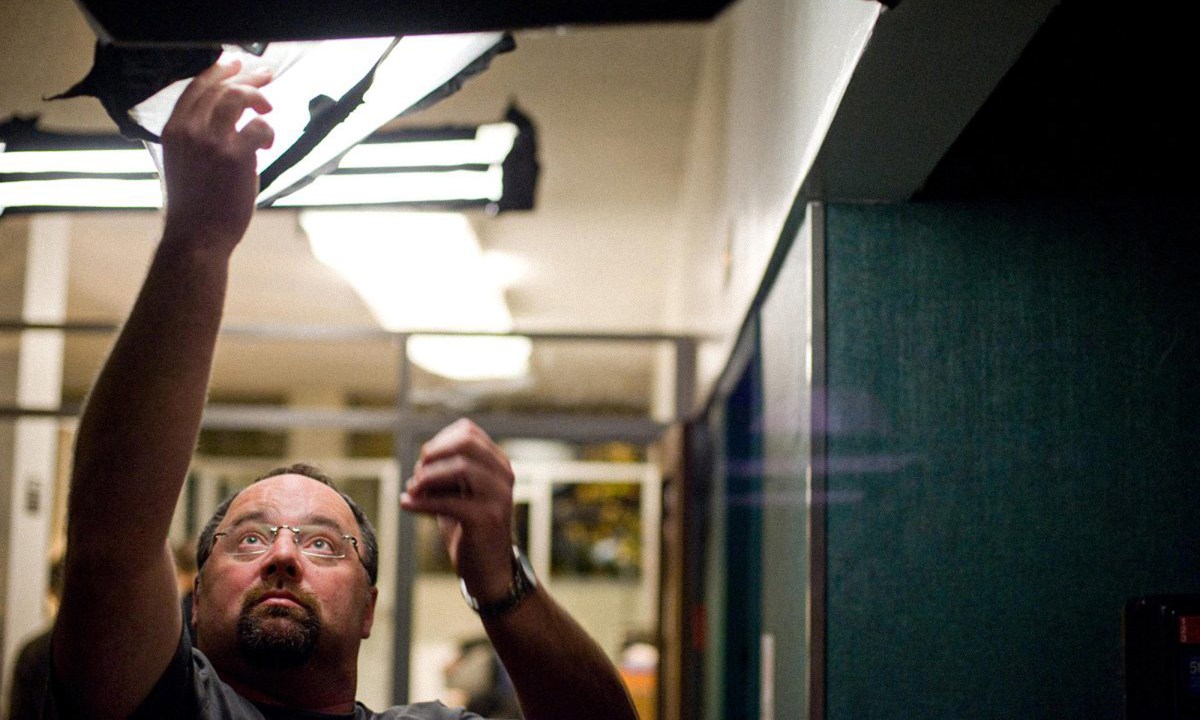
Our second edition of LiteGear Live presents a conversation with Cinematographer Erik Messerschmidt, Chief Lighting Technician Danny Gonzalez, and Rigging Gaffer Bobby Dechellis, discussing their most recent work on the popular Netflix series Mindhunter.
Hosted by Co-Founder of LiteGear Mike Bauman and Vice President of Sales at LiteGear, Paul Royalty, they delve into a wide range of questions for each guest intended to dig deep into the style choices and challenges faced on the show. The group also shares some behind-the-scenes photographs, production stills, and clips from Mindhunter.
Watch Mindhunter exclusively on Netflix.
Thank you to Netflix for allowing the use of Mindhunter stills and clips.
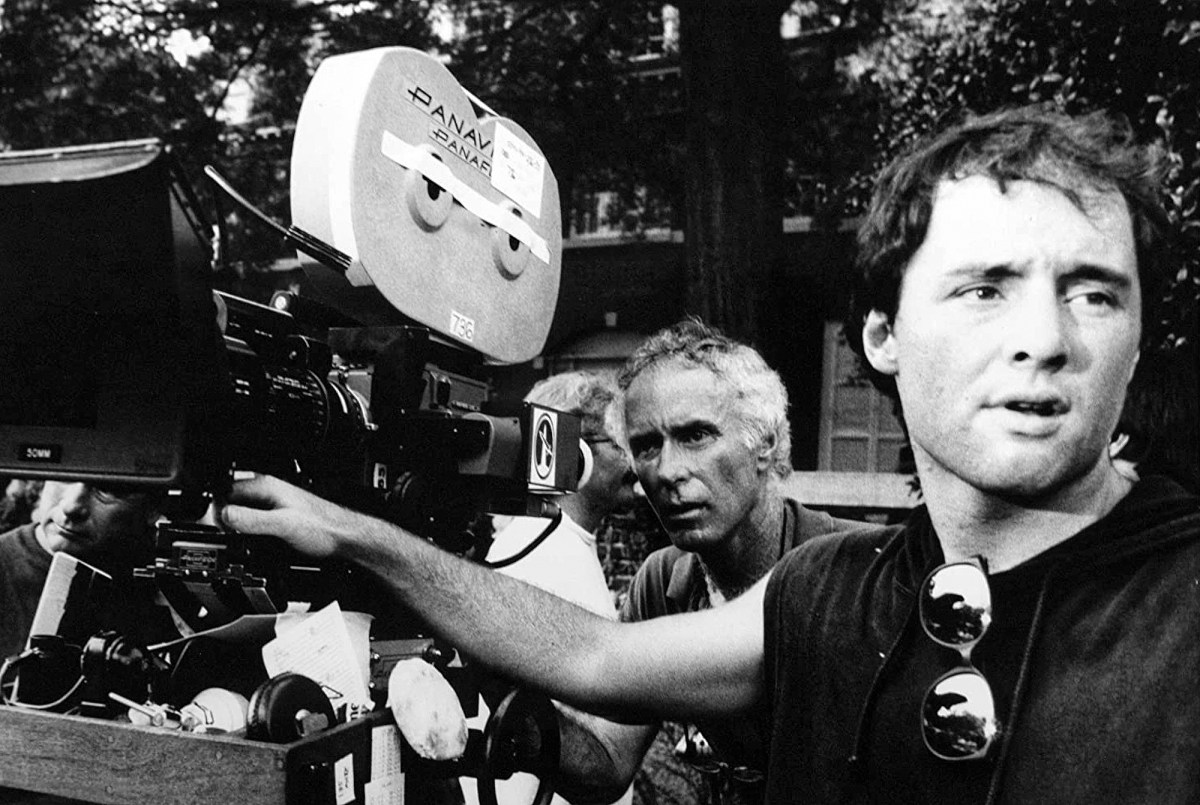
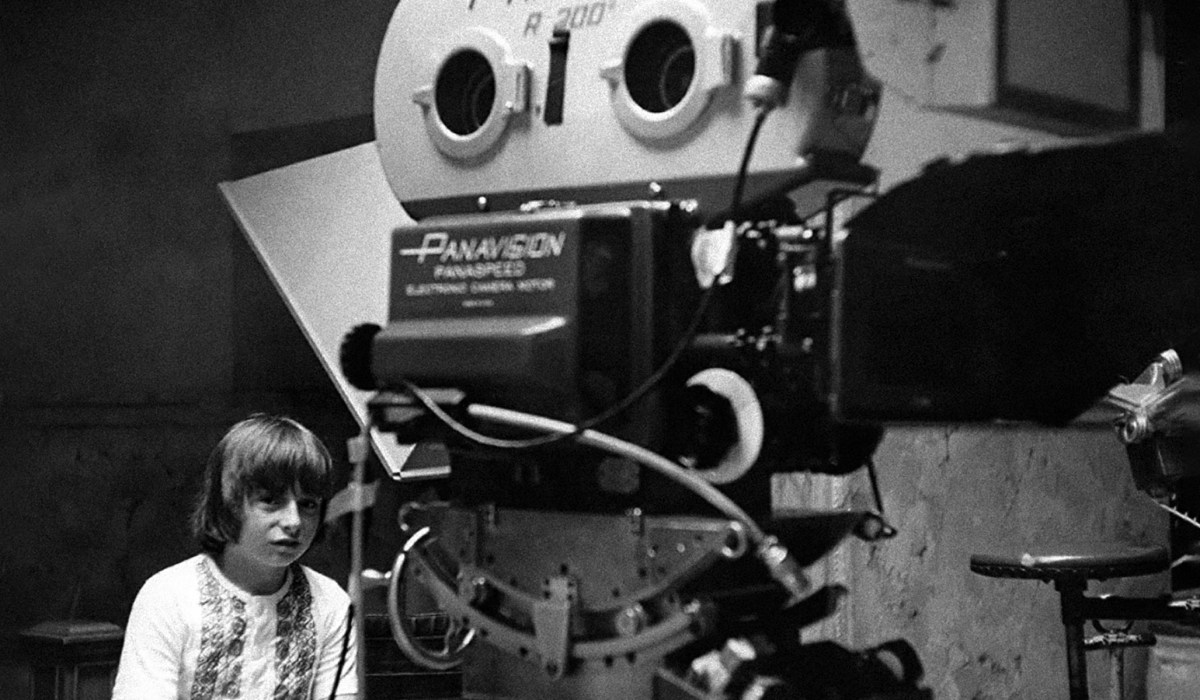
Jordan and Jeff Cronenweth on the set of Francis Ford Coppola‘s Gardens of Stone
Jeff Cronenweth, ASC on David Fincher, Fight Club, growing up in Hollywood, music videos, Mark Romanek, One Hour Photo, Gone Girl, The Social Network and the new Amazon series Tales from the Loop.
Jeff Cronenweth comes from three generations in the film business and followed his father, cinematographer Jordan Cronenweth (Blade Runner) into a career as a director of photography. Growing up on film sets and working alongside his father enabled Jeff to take a hands-on role in the camera department. He started as a loader and camera assistant, getting into the union while attending USC. He met David Fincher while working on the Madonna music video “Oh Father” as a camera assistant. Fincher gave Jeff his first opportunity to DP for the filmFight Club. Jeff’s collaboration with Fincher later earned him two Oscar nominations- one for The Social Network and one for The Girl with the Dragon Tattoo. He also began working with director Mark Romanek on music videos, such as Eels “Novocaine for the Soul” and Nine Inch Nails’ “The Perfect Drug.” Jeff and Romanek also worked together on the feature film, One Hour Photo starring Robin Williams. The film presented many lighting challenges since the bulk of it takes place inside a store with flat white lights before the darker undertones of the movie are revealed.
Jeff also shot the pilot for Tales from the Loop with director Mark Romanek, streaming now on Amazon Prime.
For many, the idea of recording 8K video understandably conjures up images of unmanageable files sizes, long transfer times, huge piles of hard drives, and slow proxy workflows… not to mention a black hole in the budget.
Leaving aside for one moment the fact that HDR and HFR are far more valuable than resolution to the consumer’s eye, there are benefits to an 8K production which an increasing number of projects are taking advantage of.
Mank, directed by David Fincher and lensed by Erik Messerschmidt, ASC, was acquired 8K using the RED Monstro in monochrome (above); and Money Heist, the Netflix drama which in season 4 is shot at 7K to accommodate HDR in a 4K deliverable, are just two of the most recent.
You can’t sell productions made in less than 4K to Netflix and other streaming services now. One day soon, some will mandate 8K to begin with and Netflix will have its fair share in the bank.
Even if the final output is only going to be 4K/UHD, shooting in 8K gives you many options in post that you do not have when starting in 4K. These include downscaling, cut/crop (pan/scan) or headroom for VFX.
“Before making the decision to capture a project in 8K, producers and cinematographers need to consider the project’s long-term goals,” says Bryce Button, director of product marketing, AJA Video Systems. For instance, capturing in 8K makes a lot of sense if there will be future use for the material.
Cinematography is a true art form. To compose a memorable shot is something that one really does need a skill for. That doesn’t even take into account how a cinematographer must work well with a director, have an understanding of their camera, and an infinite number of other assets necessary to help make a movie succeed. Earlier this week, we got a chance to talk with two time Academy Award nominated cinematographer Jeff Cronenweth, who was able to detail just some of what goes into being a quality DP.
Cronenweth has been cited by the Academy twice. Both times, collaborations with director David Fincher (The Social Network, followed by The Girl with the Dragon Tattoo) received Oscar nominations in Best Cinematography. Tomorrow, he ventures into television for the first time, collaborating with filmmaker Mark Romanek on an episode of the new Amazon Prime science fiction series Tales from the Loop. Generously chatting on the phone for nearly a half hour, Cronenweth details not just working on the show, but with Fincher as well. He even tells us a few interesting stories about his father Jordan Cronenweth, a famous cinematographer in his own right. It’s an informative and loose interview, so we hope you enjoy it…
Fight Club cinematographer Jeff Cronenweth talks us through this iconic shot and many others in David Fincher‘s masterpiece. We also discuss how the relative naturalism of The Social Network was just as difficult to achieve, and whether something is lost with VFX even when it looks perfect.
Erik Messerschmidt, ASC had a childhood dream of becoming a cinematographer, which he began pursuing at Emerson College, where he studied film production. While in school, he hit the ground running, working on film sets as an electrician, which then led to work as a gaffer in features, television and commercials. Before he graduated, he was able to join the IATSE Local 481 in Boston. During this time, he also served as a lighting technician and lighting director for many well-known photographers, including Gregory Crewdson, Mike and Doug Starn and Larry Sulton.
Following graduation, Messerschmidt relocated to Los Angeles to further his career in the industry. Shortly thereafter, he met Mark Doering-Powell, ASC and Mark Weingartner, ASC, who served as early mentors. Doering-Powell hired Messerschmidt on several smaller feature projects as a grip and later gaffer, which allowed him to join Local 728 as a gaffer. He developed relationships with numerous ASC members, including Claudio Miranda, Jeff Cronenweth and Tami Reiker, who Messerschmidt calls his “closest mentors.”
Gordon Lonsdale, ASC hired Messerschmidt as his gaffer on the television series Bones, and the two worked together for six seasons. During this time, Messerschmidt also gained experience as a director of photography, shooting several commercials, short films and documentaries.
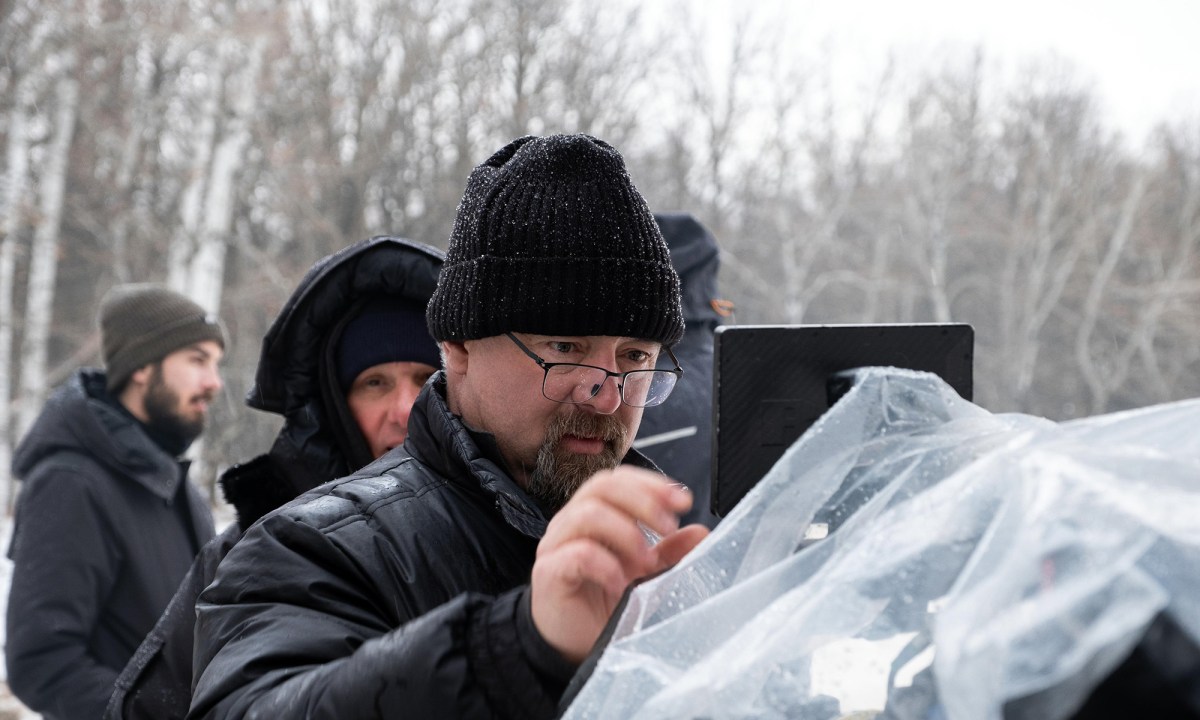
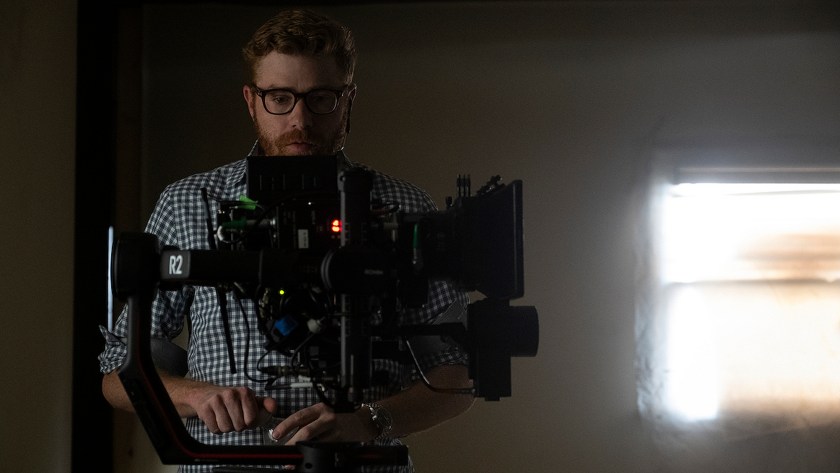
Erik Messerschmidt, ASC on the set of the Netflix series Mindhunter.
Cronenweth hired Messerschmidt as his gaffer on David Fincher’s Gone Girl, and subsequently encouraged the director to hire Messerschmidt to photograph his next project, the Netflix series Mindhunter. Since then, the cinematographer has shot the bulk of episodes on both seasons. (See story here.)
Messerschmidt has also photographed several episodes of the television series Legion as well as second-unit work on the feature Sicario: Day of the Soldado, shot by Dariusz Wolski, ASC. On the recommendation of Wolski, Messerschmidt was hired to photograph the HBO Max series Raised by Wolves.
His upcoming credits include Fincher’s latest feature, Mank, depicting the life of screenwriter Herman J. Mankiewicz and the writing of the script to Citizen Kane.
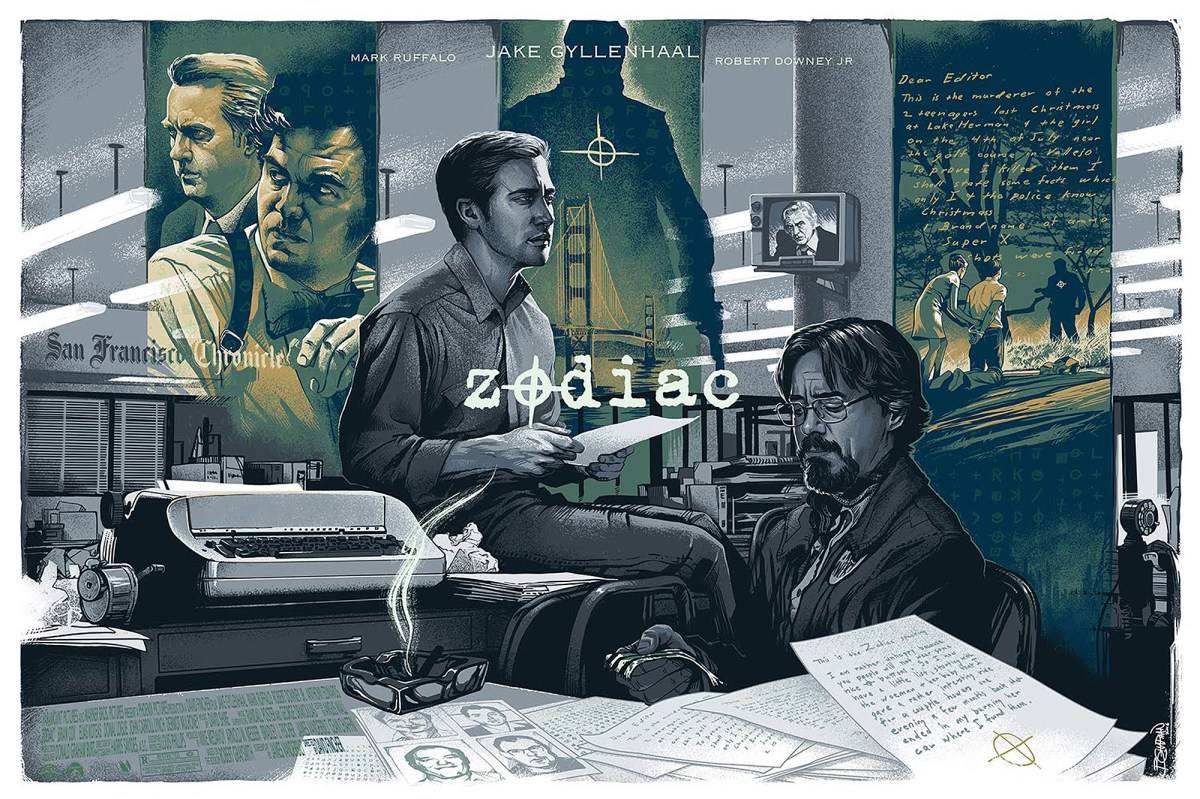
If you asked David Fincher about the childhood years he spent in San Anselmo in Marin County during the 1960s, the topic that would undoubtedly pop up would be that of an infamous serial killer who, in the director’s eyes, was “the ultimate boogeyman.” For it was precisely that time and that general area that saw the rise of the Zodiac, a murderer who frequently wrote letters and sent coded messages to local newspapers, gleefully taking credit for the gruesome killing sprees that would inevitably trigger waves of paranoia across the West Coast. As Fincher recalls: “I remember coming home and saying the highway patrol had been following our school buses for a couple weeks now. And my dad, who worked from home, and who was very dry, not one to soft-pedal things, turned slowly in his chair and said: ‘Oh yeah. There’s a serial killer who has killed four or five people, who calls himself Zodiac, who’s threatened to take a high-powered rifle and shoot out the tires of a school bus, and then shoot the children as they come off the bus.’” Fincher’s fascination with the mystery man who wreaked havoc in Northern California during the late 60s and early 70s, claiming to have taken the lives of thirty-seven people (out of which only five were confirmed as being his victims), ultimately resulted in the director gladly accepting to work on Zodiac, a 2007 movie written by James Vanderbilt. The screenwriter had read a 1986 non-fiction book of the same name while he was still in high school, years before pursuing his eventual career. After getting into screenwriting, he had the chance to meet Zodiac author Robert Graysmith, a cartoonist who had been working for one of the newspapers the killer wrote to during the 1960s, and decided to make a screenplay based on the information-packed book. Having creative control over the material was of the utmost importance to Vanderbilt, given the fact that the endings of his previous scripts had been altered. Together with producers from Phoenix Pictures, Vanderbilt bought the rights to both Zodiac and its follow-up, entitled Zodiac Unmasked, after which the Seven director was asked to come on board.
Apart from having a personal attachment to the story of the notorious serial killer who was never brought to justice, what drew Fincher to work on the project was also the fact that the ending of Vanderbilt’s script was left unresolved, thereby staying true to real-life events. But Fincher’s perfectionism and his wish to depict the open case as accurately as possible led to him asking that the screenplay be rewritten, for the wanted to research the original police reports from scratch. He also decided that he, Vanderbilt and producer Bradley J. Fischer should personally interview the people who were involved in the case so that they could discern for themselves whether the testimonies were to be believed or not. The people they spent months interviewing were family members of suspects, the Zodiac killer’s two surviving victims, witnesses, investigators both current and retired, as well as the mayors of Vallejo and San Francisco. As Fincher elaborated: “Even when we did our own interviews, we would talk to two people. One would confirm some aspects of it and another would deny it. Plus, so much time had passed, memories are affected and the different telling of the stories would change perception. So when there was any doubt we always went with the police reports.” They also hired a forensic linguistics expert to analyze the killer’s letters, with the expert’s focus being on how the Zodiac spelled words and structured sentences, as opposed to the emphasis that was put on the Zodiac’s handwriting by document examiners in the 1970s.
Caustic, nihilistic and controversial, Fight Club successfully adapted Chuck Palahniuk’s transgressive fiction novel, it’s a credit to screenwriter Jim Uhl’s excellent adaptation that the voice of the original novel is heard so clearly, and at the same time the film proved to be an enormous success. Though much credit is also due to the excellent sound and editing: so much in this film depends on hitting exactly the right tone.
Based on a reader suggestion, I decided to take a look at the various home video versions of Fight Club that are available.
Filming Fight Club
Fight club was photographed by Jeff Cronenweth, a then hot and upcoming Cinematographer who until that point hadn’t shot a major feature, but did have the advantage of being Blade Runner cinematographer Jordan Cronenweth’s son. Fincher has worked with both father and son on a number of projects culminating in ‘Alien 3’. Subsequently Jeff did camera work on a number of Fincher’s other features including ‘Se7en’ and ‘The Game’.
An Interview with Cronenweth in American cinematographer records Fincher’s preference for both natural and pre-existing lighting in locations over elaborate lighting setups. This necessitated the choice of higher speed stocks.
The film was shot using the Super35 format, and framed at 2.35:1. Daylight scenes were shot on Kodak EXR 100T and Vision 250D film, while the majority of night scenes were shot on ‘faster’, grainier Vision 500T.
Selected night scenes from the film were 5% flashed at the laboratory, which boosts contrast and enhances detail in the darker parts of the frame. Additionally a handful of release prints were treated with the Technicolor’s ENR silver retention process (bleach bypass) at the 80 IR level.
Shooting in Super35 at an aspect ratio of 2.35:1 provides considerable latitude for re-framing during the editing process, which David Fincher may have developed a taste for when working on the various home video editions of Se7en.
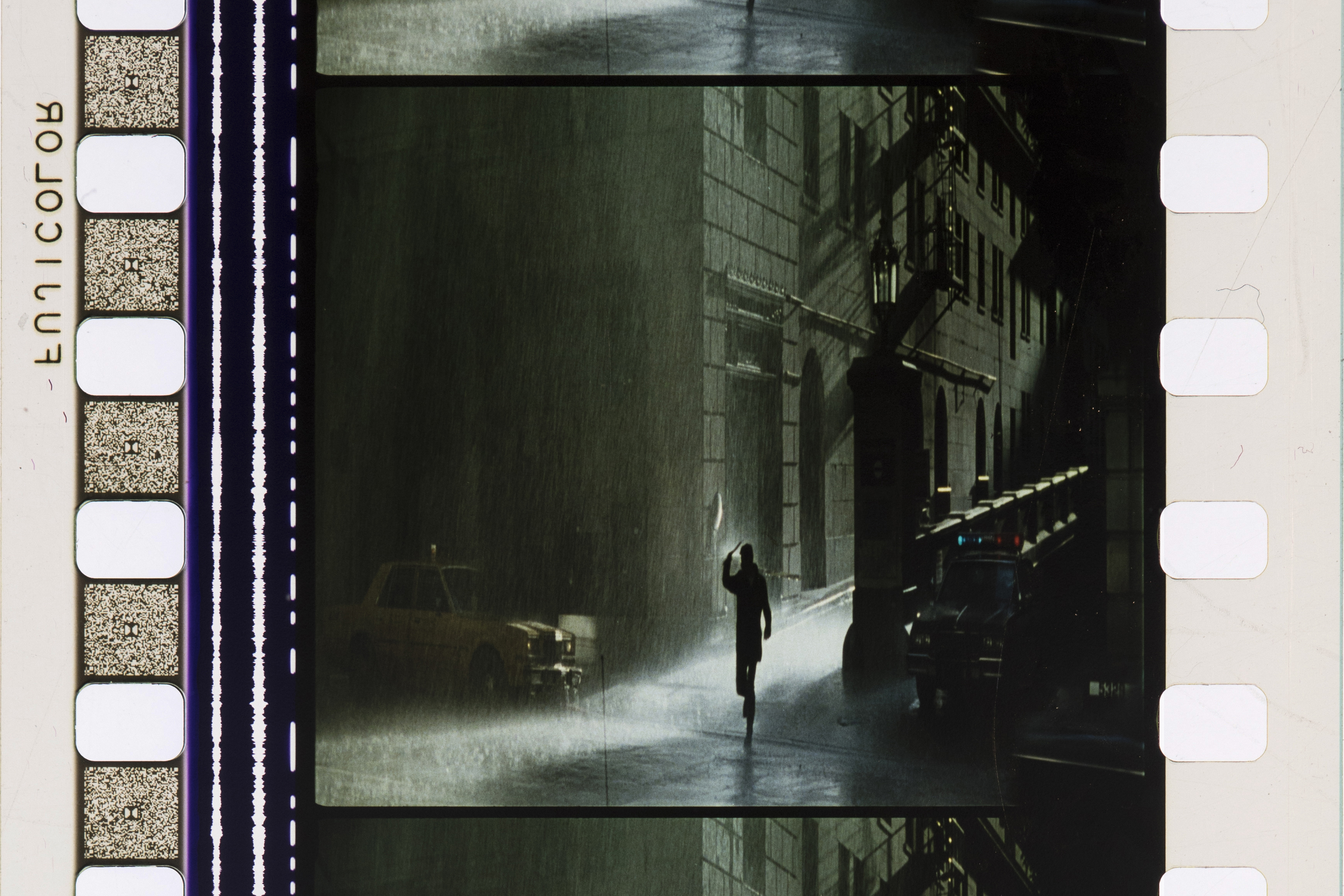
Se7en is a dark crime-horror fantasy, written by Andrew Kevin Walker, directed by David Fincher with cinematography by Darius Khondji. The film was a success both commercially and critically. However due to the complexity of the photographic process, it is difficult to be certain that any of the home-video releases reflect the image seen in first run showings. This article will examine the various video releases of Se7en, and explain the process by which they came about, and attempt to pick the best amongst them.
Se7en Through The Lens
During production careful consideration was put into developing the film’s ‘look’ by both the art department and the Cinematographer.
Super 35 cameras were used, which allowed the use of faster and wider ‘spherical’ lenses with shallower depth of field than comparable anamorphic lenses
The use of Super 35 also allowed some flexibility in re-framing shots in post production, since the film was intended to be projected in a 2.40:1 aspect ratio
On set smoke was used to reduce contrast and provide atmosphere to scenes
For some scenes the negative was ‘flashed’ using a Panaflasher to further reduce contrast, and bring out shadow detail
The film was pushed one stop (under-exposed and over-developed) to increase density and saturation
A Deluxe ‘Color Contrast Enhancement’ or ‘CCE’ bleach-bypass process was used for first run prints, increasing contrast, effectively crushing blacks
The CCE process was deemed too expensive for the majority of first and second-run prints, which were then struck from an inter-positive that had itself been bleach-bypassed, which approximated the effect of the CCE process. This meant that there would be differences between the first-run showings of the film, and subsequent runs
Actors, producers, models, and other artists share, encourage, and reveal their professional experiences, failures, accomplishments and authentic selves.
‘Mindhunter‘ still & behind-the-scenes photographer, Miles Crist, shares his incredible path from knowing the right person at the right time to winning the 8-month job of photographing BTS of ‘Mindhunter‘ for Netflix, jumping from Columbia to Art Center, the demanding surprises of the profession, his passion for films, learning from David Fincher, and working for him again this winter.