Cinematographers & Cameras: Insights Into “The Crown,” “Strong Island,” “Mindhunter,” Spots

Robert Goldrich
March 26, 2018
Shoot

One DP just won his first career ASC Award—on the strength of his work on The Crown (Netflix).

Another made key contributions to the heartfelt Strong Island (Netflix), which was nominated for this year’s Best Documentary Feature Oscar.

And a third DP has spent a recent stretch focusing on spots after getting a career break from David Fincher on the TV series Mindhunter (Netflix).

Here are insights from DPs Adriano Goldman, ASC, ABC, Alan Jacobsen and Erik Messerschmidt.

[…]

Erik Messerschmidt

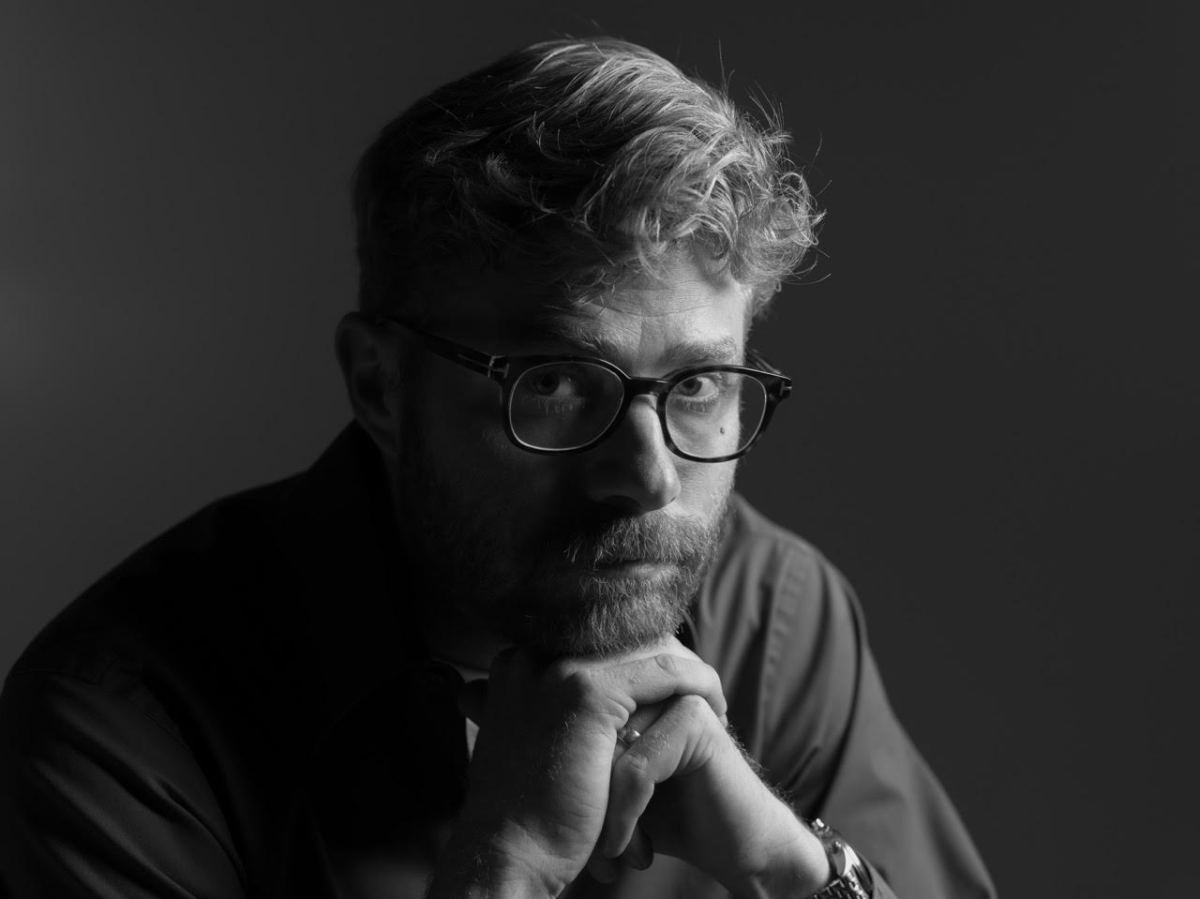
Cinematographer Erik Messerschmidt has spent the past year focused on commercials but his career progression is the reverse of what is typical. Instead of spots serving as a springboard to TV series and theatrical features, it was Messerschmidt’s work on the TV series Mindhunter (Netflix) which established him as a DP, leading to spotmaking opportunities.

Messerschmidt’s commercial lensing exploits have included Taco Bell’s “Web of Fries” cinema, web and TV fare directed by Joseph Kosinski of RESET, Buick and other automotive ads from director Kevin Berlandi, and a pharmaceutical spot directed by Mark Pellington of Washington Square Films. Messerschmidt also shot for Pellington the Demi Lovato music video “Tell Me You Love Me.”

Messerschmidt had been a gaffer who worked extensively on commercials that were lensed by such notables as Claudio Miranda, ASC, Tami Reiker, ASC and Jeff Cronenweth, ASC.

On the feature front, Messerschmidt served as a gaffer on the David Fincher-directed, Cronenweth-shot Gone Girl, a project which proved pivotal. “David knew I had a still photography background and I ended up doing promotional still work with him on Gone Girl,” related Messerschmidt. “David took me under this wing and moved me up to shoot his series Mindhunter.” (The alluded to still photography chops date back to when Messerschmidt worked for still shooter Gregory Crewdson.)
Read the full profile

Harris Savides, ASC and director David Fincher plumb the depths of human obsession

Flashback: Zodiac.

David E. Williams
Unit photography by Merrick Morton, SMPSP
April 2007
American Cinematographer

Most people remember the San Francisco Bay Area of the late 1960s for “flower power” and the Summer of Love. But as the decade came to a close, a grim nightmare unfolded in the counterculture mecca. On the night of December 20, 1968, two teens in the San Francisco-adjacent town of Benicia were brutally slain by a lone gunman. At midnight on July 4, 1969, another young couple was attacked in nearby Vallejo. On July 31, cryptic letters arrived at three Bay Area newspapers, including the San Francisco Chronicle; each contained part of a complex cipher. The writer warned that unless his coded messages were printed on the front page of each publication, “I will go on a kill rampage.” A followup letter soon arrived at the newspaper. Opening with the sentence “This is the Zodiac speaking,” the missive detailed the particulars of both crimes. The killer had given himself a name and stated his purpose: to taunt and terrify. The three-part cipher was soon solved, revealing a hate-filled manifesto. In all, he would communicate with such letters and codes on more than 20 occasions.

One front-line observer to the unfolding story was Chronicle editorial cartoonist Robert Graysmith, who began investigating the case after it became clear that harried law-enforcement officials — hampered by jurisdictional regulations, misleading evidence, and the emergence of more than 2,500 suspects — were powerless to unmask the killer. In 1986, Graysmith published his true-crime book Zodiac, which connected disparate clues for the first time and presented theories on the killer’s identity. This book formed the basis of the recently released film, photographed by Harris Savides, ASC for director David Fincher.

In the film, Graysmith (Jake Gyllenhaal), SFPD inspectors Dave Toschi and Bill Armstrong (Mark Ruffalo and Anthony Edwards, respectively), and Chronicle reporter Paul Avery (Robert Downey Jr.) are sucked into the Zodiac’s vortex. All four try to manage their growing obsession with the case, but soon find their lives inextricably intertwined with that of a madman. The case remains unsolved to this day.

Read the full article

Zodiac

MINDHUNTER. Season 2 will have 8 episodes, two of them 2 hours long

According to Jennifer Nash, Mindhunter Extras Casting Director.

Jennifer Nash, Mindhunter Extras Casting Director (Jennifer Nash) 02

Tim Schooley, Reporter
March 20, 2018
Pittsburgh Business Times

Before any director calls action, Jennifer Nash has long begun the second season scramble to scout for extras in western Pennsylvania to appear in “Mindhunter,” which enjoyed a critically successful first season on Netflix last year.

In charge of recruiting and hiring extras for the episodic program about the early days of FBI profiling that grew into the study of serial killers, Nash emphasized just how heavily the show invests to hire extras in both type and number.

“We need so many more people than just the normal background acting community,” she said. “We need regular people.”

This season, one of her biggest tasks will be to hire a significant number of African-American people as extras. This includes a major scene in which 1,000 people, mostly African-Americans, will be needed for a protest expected to be shot in Wilkinsburg for several days.

“We’re going to be bringing hundreds of thousands of dollars, if not millions of dollars, to African-American communities,” she said, of Mindhunter’s second season emphasize on story lines involving African-Americans.

Last year, Nash was charged with recruiting 3,000 people to be extras in the 10-episode first season of “Mindhunter.” This year, she needs 5,000 for an eight-episode season, including two episodes that will be two hours each.

“I really have my work cut out for me,” she said, of hosting casting call events at places such as Trixie’s on the South Side, where a line stretched around the block. She also wants candidates to reach out to her at mindhuntercasting@gmail.com.

Read the full profile:

‘Episodics’ to dominate Pittsburgh film production this year [PAID CONTENT]

Exclusive event. Creating the unique HDR look for Netflix’s Mindhunter

FilmLight

Colorist Eric Weidt shares creative insights on using Dolby Vision and Baselight to shape the look of the gripping Netflix original series.

Join us for an exclusive presentation by colorist Eric Weidt, who will demonstrate how he collaborated with producer and director David Fincher to create the look of the masterful psychological thriller Mindhunter.

Don’t miss this opportunity to explore how Eric developed the HDR color grade, which drew inspiration from films of the ’70s – demonstrated live on BaseLight.

The presentation will be followed by a technical discussion where Eric will be joined by Peter Postma, FilmLight‘s Managing Director of the Americas, Thomas Graham, Dolby‘s Sr. Manager of Imaging Content Solutions and Chris Clark, Manager – Imaging Science Technologies at Netflix who will share insights from their work with the latest tools and solutions for creating amazing HDR content.

March 28, 2018
Dolby Cinema Vine Theatre
Los Angeles, CA 90028

Full details of the event:

FilmLight – Creating the unique HDR look for Mindhunter
Eventbrite – Creating the unique HDR look for Mindhunter

2018-03-17 Eventbrite - Exclusive event. Creating the unique HDR look for Netflix's Mindhunter (Mindhunter Logos)

Exclusive event: Creating the unique HDR look for Netflix’s Mindhunter
REDUSER

A Q&A with producer Peter Mavromates and colourist Eric Weidt
Film
Light

“What’s it like shooting for David Fincher?”

Christopher Probst

Logo - The ASC

Christopher Probst, ASC, is curating The ASC’s Instagram for March.

Christopher Probst, ASC
March 2, 2018
The ASC (Instagram)

Hello and thanks for the warm welcome! I’m honored to be hosting this month and look forward to posting a variety of images/topics. Being a nerd, there’ll be plenty of technical posts about cameras/lenses, but I’d also like to draw on my teaching at Global Cinematography Institute and writing/editing for American Cinematographer for the last 24 years. To begin, I’ll start with a little Mindhunter anecdote.

Over the past few months I’ve been asked, “What’s it like shooting for David Fincher?”

Coming up the camera department as a 1st AC/operator then shooting music videos and commercials, I’ve operated most of my projects. Simultaneously, I’ve also been writing for AC since 1994 and its Technical Editor since 98. That enabled me to literally corner many of the DPs I admired and pick their brains under the guise of some altruistic journalistic cause (but always with the underlying motive to learn from idols like Conrad Hall, Deakins, Chivo, Khondji, Harris Savides; and directors like Spielberg, Bay, the Coen bros., and Fincher). Like many of you, I’ve admired/studied David’s work, so thinking myself somewhat clever and not without operating skills, I opted to operate A-camera on my episodes.

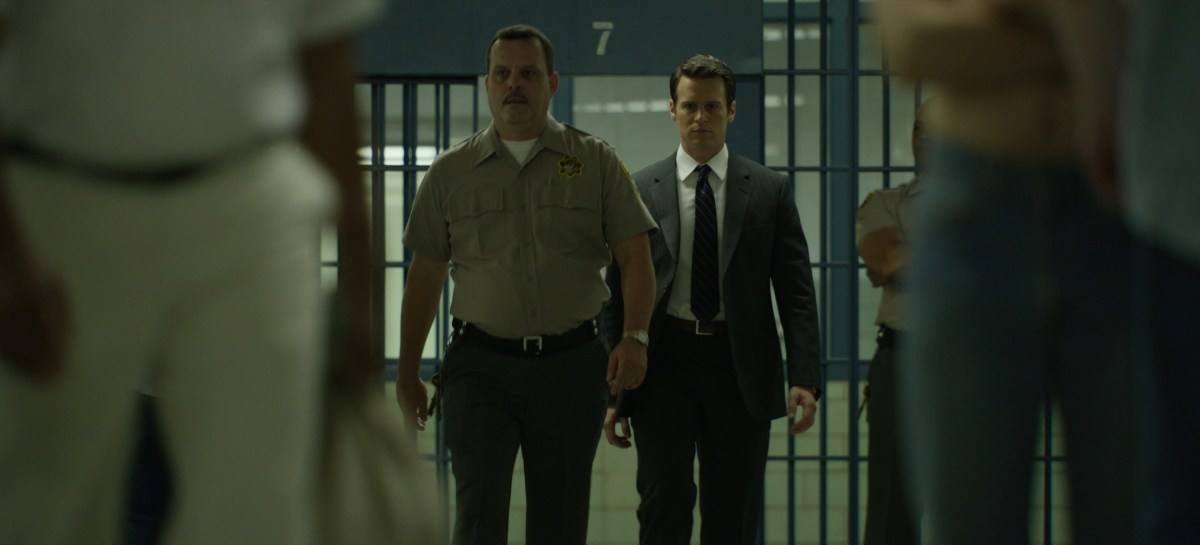
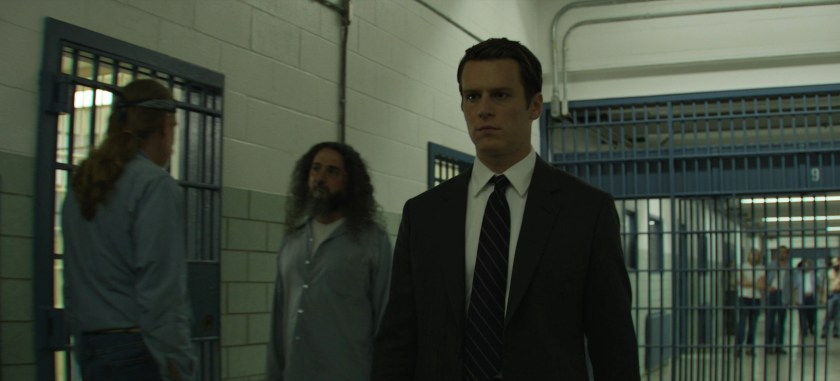
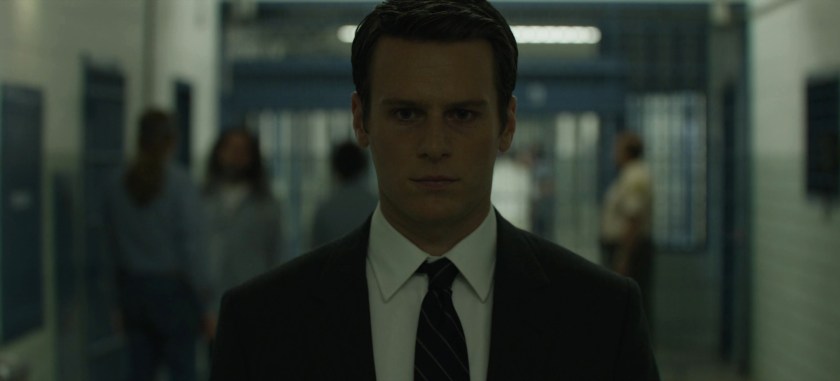
Early in the schedule, we were shooting a prison corridor as Jonathan Groff is led to meet the serial-killer Ed Kemper. We had 2 cameras on 150’ of dolly track: a 65mm locked-off closeup and a 29mm low 2-shot I operated remotely. We did a take and David said, “That’s great, but pan a little to the right.” Ok… note taken. Next take. “Pan to the left…” What the hell? Ok, what’s he looking at? We shot Mindhunter in 6K framing for a 5K extraction, so I was mainly looking where to place our lead in this low 3/4 shot. You know, rule-of-thirds kind of thinking:

Mindhunter S01E02 - Christopher Probst 02

Then it dawned on me. David’s looking for balance/symmetry in all aspects of his work. Forget what books say. He’s looking at the shot as a whole. Not just the actors. As the two walk, if I framed only for Ford, the guard may be at the edge or even cut off. Anything but symmetrical! But once I got in David’s head, I moved back from the monitor and tried to NOT look at the actors and just balance the sides of the frame.

That level of symmetry/precision permeates all aspects of a Fincher film. Working with David is full of moments that strengthen you as a filmmaker if you are open to challenging yourself and your preconceived ideas.

Mindhunter S01E02 - Christopher Probst 03

https://www.instagram.com/p/Bf0R_qlBtqb/

https://www.instagram.com/p/BgUVoWAB5Ax/

https://www.instagram.com/p/BgOjr6jBjx0/

https://www.instagram.com/p/BgjrXKSB2qP/

https://www.instagram.com/p/Bgw_7mDBvQS/

https://www.instagram.com/p/Bg75mDCBozd/

Mindhunter as Social Research

Jonathan Wynn
March 5, 2018
Everyday Sociology Blog

I recently watched a Netflix show called Mindhunter. The show—based on a non-fiction book—is about the beginnings of a crime division in the FBI that attempts to tackle serial killers.

If you’ve ever taken a sociology class, the first and most obvious thing about the show are the explicit references to our discipline! One of the main characters, Debbie, played by Hannah Gross, is a graduate student in sociology, studying deviance. In the first episode Debbie explains the sociological approach to deviance to her date, a somewhat listless young FBI agent named Holden (played by Jonathan Groff of Hamilton and Glee fame). In a bar she admonishes Holden: “You teach about criminality but you’ve never heard of Labeling Theory?” (Although, granted, Debbie doesn’t get Durkheim right.)

The characters of the show are, in a way, responding to what they see as newer kinds of deviance, wherein killers inflict extreme violence upon strangers, often with some repetition in manner and types of targets. The FBI agents have a puzzle they want to solve, and they find that older theories, concepts, and facts (largely informed by movies and Sigmund Freud) inhibit their understanding of what they see on the ground. One of Holden’s teachers asks the sociological question: “Are criminals born, or are they formed?”

Halfway through I realized that this was a show about a research team conducting social science. Holden and his partners—a grizzled former military-man, Bill, and Wendy, a professor of psychology—spend the season slowly piecing together new terminology, building their new understanding of deviance through multiple interviews with murderers and some rather engaging dialogue between each other.

Read the full article

Asif Kapadia on the music of Mindhunter, Amy and Senna

2018-02-09 Soundtracking with Edith Bowman (Audioboom) - Episode 76. Asif Kapadia on The Music of Mindhunter, Amy and Senna

Edith Bowman
February 9, 2018
Soundtracking with Edith Bowman (Audioboom)

Another week, another Oscar winner chats to Soundtracking in partnership with the EE BAFTAs.

These days, the quality and quantity of original programming on streaming services is quite astounding – with A-list talent delivering high-class drama time and time again.

One of Netflix‘s standout series of 2017 was Mindhunter. Overseen by David Fincher, it tells the story of how the FBI’s profiling unit came into being in the 1970s. By turns dark, funny, moving, cool and brutal, it also makes great use of contemporary pop & rock.

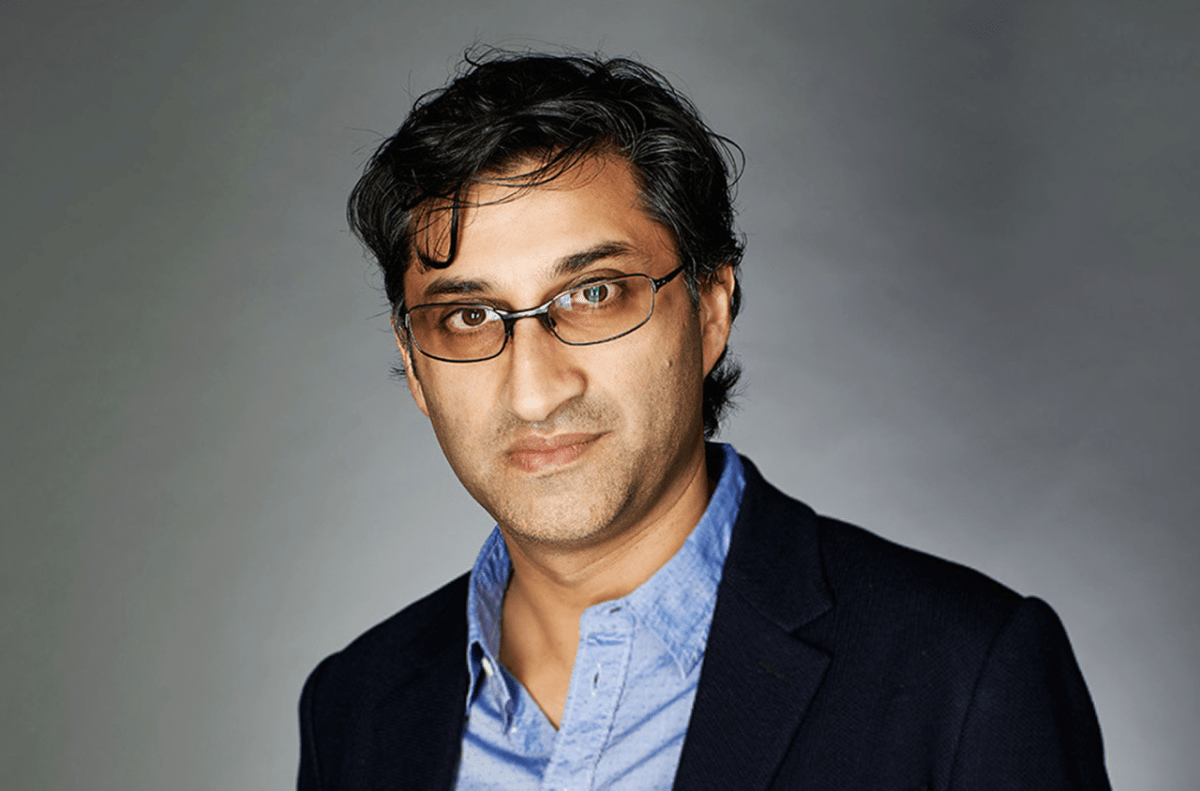
So it’s with great pleasure that we welcome Asif Kapadia to the show, who directed two episodes of the first season.

Asif has won numerous awards for The Warrior, Senna and Amy, with the latter scooping the Oscar for Best Documentary. There will, of course, be plenty of examples of Amy Winehouse‘s music throughout the course of the conversation, as well as composer Antonio Pinto‘s work on both Amy and Senna.

The “FINCHER App”