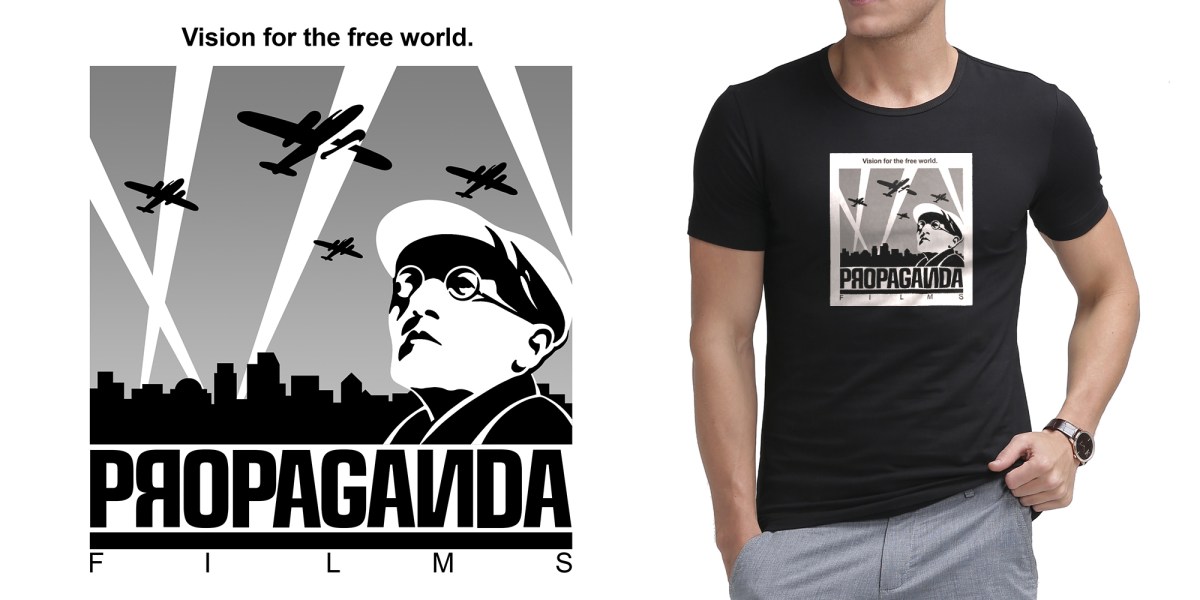
Limited Edition “Propaganda Films” Logo T-Shirt

FilmFanaticsDesign (Etsy)

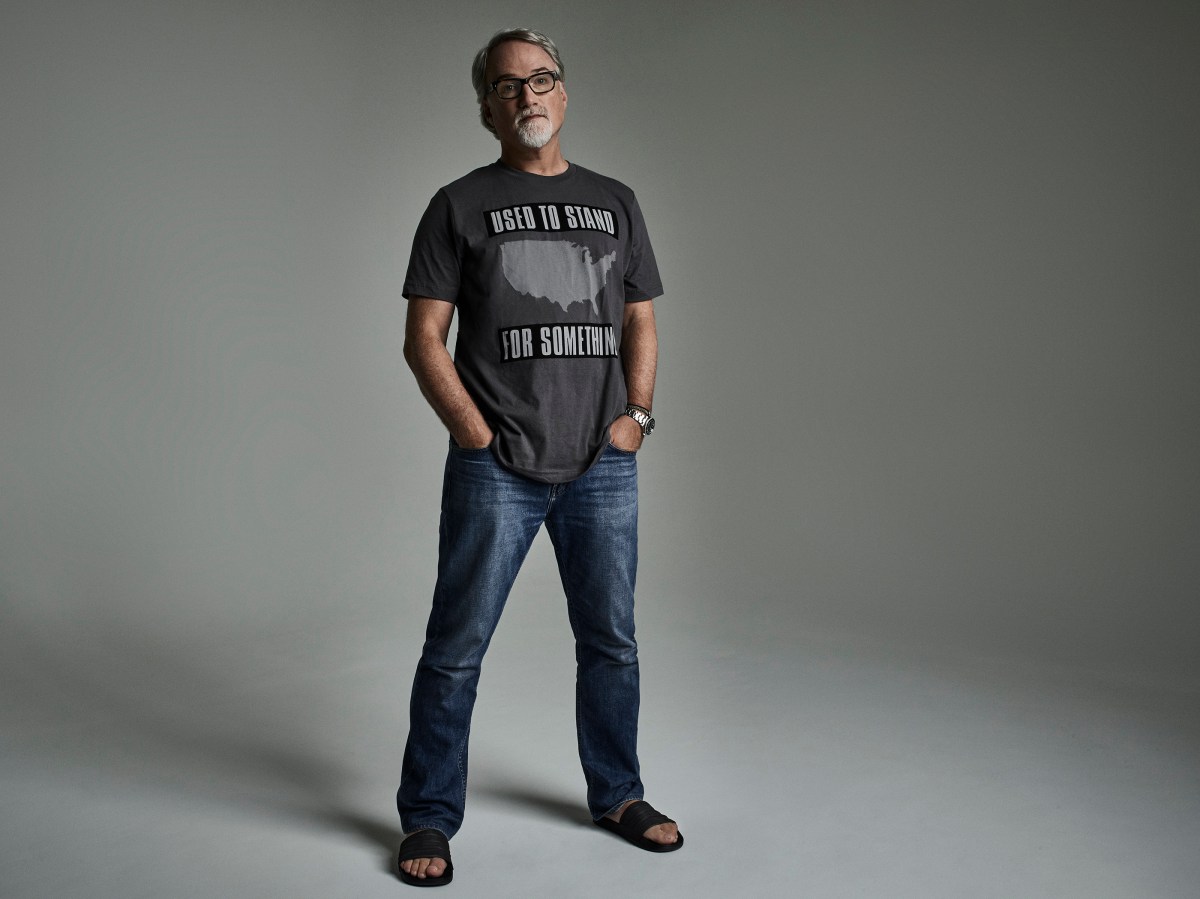
We present 16 limited-edition T-shirts featuring the Propaganda Films Logo. We have always loved this company and its logo.

Propaganda Films was founded in Los Angeles in 1986 by American producer Steve Golin, Icelandic producer Sigurjón Sighvatsson, English director Nigel Dick, and American directors David Fincher, Dominic Sena, and Greg Gold. The company quickly made its mark in the world of visual media. Originally celebrated for its groundbreaking television commercials and music videos, it rapidly expanded its influence to Film and TV. Within four years, it was producing almost a third of all music videos in the United States.

Directors who worked for Propaganda Films include: David Fincher, Michel Gondry, Spike Jonze, Mark Romanek, Michael Bay, Antoine Fuqua, Alex Proyas, Zack Snyder… All wore t-shirts and jackets with this logo. Now you can, too.

Buy the Limited Edition “Propaganda Films” Logo T-Shirt

David Fincher: “Directors are trained dogs who like to do a backflip and be applauded afterwards”

The man who directed films such as ‘Seven’ and ‘Zodiac’ has released his latest film: ‘The Killer.’ In an interview with EL PAÍS, he reflects on his cinematographic technique, his fascination with criminal minds, his terrible experience directing ‘Alien 3′ and his reputation for being tough on set.

Tommaso Koch
5 November 2023
El País (in English)

In front of David Fincher, there’s a table and a glass of water. The typical, minimal decoration of any interview. But the talent of the 61-year-old director isn’t typical or minimal at all. With just a few bursts of words, he can transform a nondescript setting into a sudden master class in cinema.

He’s always thinking about how something could be filmed, from where, with what intention. His long shots — assembled with frenetic phrases — are capable of turning even the dullest premise into a thriller.

The Denver-born director has a career that spans three decades, with iconic films such as Seven (1995), The Social Network (2010) and Gone Girl (2014). He’s one of the most-admired filmmakers on the planet, for his visual style, his extensive research into the abysses of the mind and his capacity for immersive narration.

Fincher is a relentless perfectionist, just like the protagonist of The Killer, his latest film, now playing in theaters and available on Netflix on November 10. The professional assassin has a perfect record… until, for the first time, he makes a mistake.

In Fincher’s career, there are hardly any. Except, perhaps, right at the beginning. He was 30-years-old and had a solid reputation as a director of music videos, when he was offered something on the big screen. From the vertigo of recording Madonna or Michael Jackson, he was suddenly part of something even more terrifying: Alien 3. But he wasn’t scared of the creature, he was simply horrified by the industry, its thirst for money, its managers, its obstacles to creativity. To this day, he says that no one hates that film more than him. “I was like, ‘Well, surely you don’t want to have the Twentieth Century Fox logo over a shitty movie.’ And they were like, ‘Well, as long as it opens.’ He added that the experience made him “a belligerent bastard.”

Another key to his fame is his impeccable workmanship. He’s always hunting for details, seeking the perfect final result. Some say he goes overboard. Gyllenhaal — who starred in Zodiac (2007) claims that Fincher “paints with people” while working. “It’s tough to be a color,” the actor added, in an interview with The New York Times. “It’s hard to be David Fincher,” Jodie Foster once said.

The director confessed, in a chat with Sam Mendes, that the phrase he repeats most on set is “shut the fuck up, please.” He admits that he becomes firm when he notices that someone is slacking. He believes it’s necessary, given the time and the money at stake. The viewer also isn’t allowed to relax.

Years ago, he was in talks to direct an installment of Spiderman, but what he proposed must have been so different that the executives despised it. With Fincher, it’s all love or hate.

The premiere of Fight Club (1999) — at the Venice Film Festival — awakened, above all, the latter sentiment. “They wanted to tear off our skin,” the creator said some time later. However, when he returned two months ago to the festival — where this interview was held — the event organizers welcomed him like a divo.

Read the full interview

David Fincher: “Los directores somos perros adiestrados que aman hacer la voltereta y que los aplaudan después”

El creador de ‘Seven’ y ‘Zodiac’ estrena su última película, ‘El asesino’, y reflexiona sobre la técnica cinematográfica, su fascinación por las mentes criminales, su pésima experiencia en ‘Alien 3′ o su fama de duro en el plató.

Tommaso Koch
29 octubre 2023
El País

Ante David Fincher hay una mesa y un vaso de agua. Lo habitual, la decoración mínima de cualquier entrevista. Pero el talento del director (Denver, 61 años) poco tiene de común. Tanto que, con dos ráfagas de palabras, transforma el anodino cáliz en protagonista de una repentina clase magistral de cine. Cómo podría filmarse, desde dónde, con qué intención alguien lo cogería. Y un largo travelling de disquisiciones técnicas, montado a golpe de frases frenéticas, capaz de convertir en todo un thriller tan insulsa premisa. He aquí la síntesis más breve de la unicidad de su trabajo. La versión larga, en cambio, abraza tres décadas de carrera, películas como Seven, La red social, Perdida, Mank o la serie Mindhunter y el estatus de uno de los cineastas más admirados del planeta. Por su estilo visual, su indagación en los abismos de la mente, su narración envolvente. Un perfeccionista implacable, como El asesino de su último largo—estrenado ahora en una treintena de salas antes de llegar el 10 de noviembre a la plataforma Netflix—. Hasta que, por primera vez, comete un error.

En la trayectoria de Fincher apenas los hay. Salvo, quizás, justo al principio. Tenía 30 años y un sólido prestigio como director de vídeos musicales cuando le ofrecieron debutar en el séptimo arte. Del vértigo de grabar a Madonna o Michael Jacksonotro extraterrestre, más terrorífico aún: Alien 3. No tanto por el xenomorfo, en realidad: le horrorizaron los directivos, la industria, su sed de dinero, sus trabas a la creatividad. A día de hoy, dice que nadie odia esa obra más que él. “Pensaba: ‘No querrán el logo de Twentieth Century Fox sobre una película de mierda’. Y ellos decían: ‘Bueno, mientras se estrene…”, ha contado en alguna ocasión. Y añadió que la experiencia le volvió “un cabrón beligerante”.

Lee la entrevista completa (sólo para suscriptores)

Read the full interview in Spanish (for subscribers only)

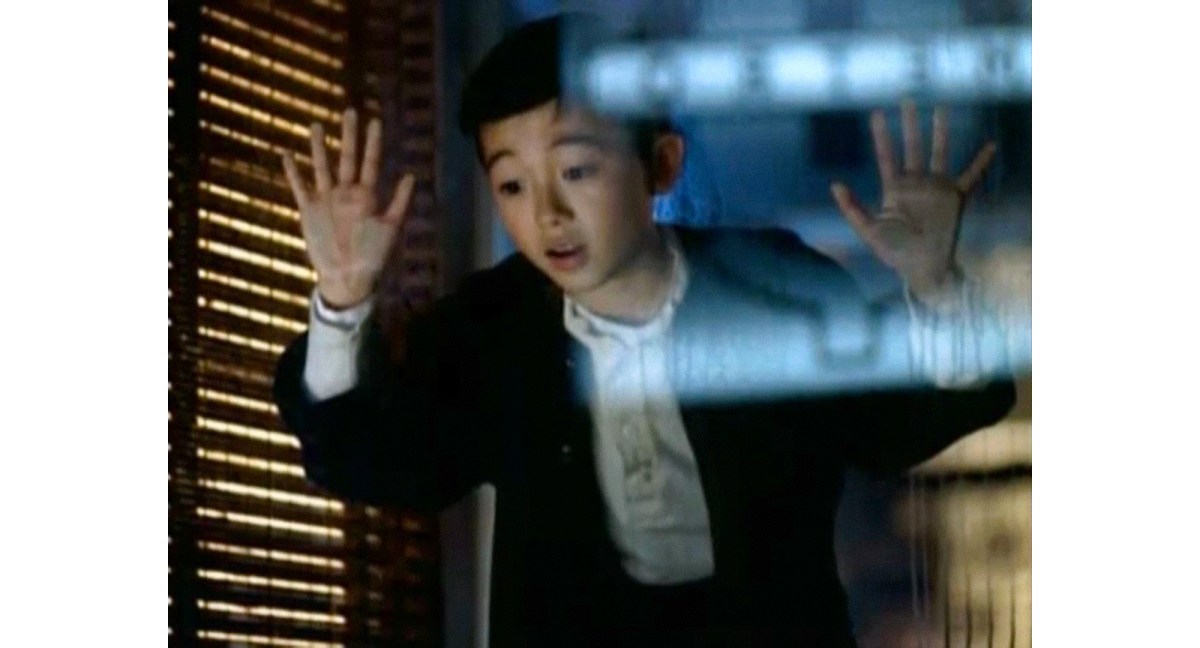
Coca-Cola – “Blade Roller” (1993)

In 2021 AD, the futuristic megalopolis of ZERO-CITY is under martial law. When the authorities try to enforce a curfew, a gang of renegade “Blade Rollers” defy it rollerblading daredevil-style through the deserted rain-slicked streets.

For this stylistic homage to Blade Runner (Ridley Scott, 1982), director David Fincher recruited the cinematographer of the classic film, Jordan CronenwethASC, one of his all-time heroes.

It was also the first collaboration between Fincher and Producer Ceán Chaffin.

Watch all the versions of the commercial and read The Fincher Analyst dossier:

1993. Coca-Cola – Blade Roller

Kirk Thatcher on Working on David Fincher’s Music Videos & His Early Career with ILM

Thatcher tells all about the beginnings of his prolific career.

Ryan O’Rourke
November 24, 2022
Collider

Collider’s own Steve Weintraub recently got the chance to sit down with legendary multi-hyphenate Kirk Thatcher to discuss his prolific career working in numerous roles throughout the industry. The Emmy-winning writer/director/actor/producer/effects whiz is now known for everything from Muppets Tonight to Star Trek IV: The Voyage Home and, more recently, Werewolf By Night, but during the interview, he also elaborated on his roots rising up through Industrial Light & Magic (ILM). It was there that Thatcher would blossom and meet a friend who would help him kick off his career – David Fincher.

Before he even started at ILM, Thatcher describes his fascination with Star Wars that would one day lead him to the studio. At 15, he’d heard the hype surrounding the revolutionary sci-fi film and made sure he was there on opening day to see it unfold. “So I kind of knew it was coming out, and I went and saw opening day at Man’s Chinese, the first screening, the 12-noon screening at Man’s Chinese, completely blown away and just became a huge Star Wars fan instantly.,” he told Weintraub. Bought the books, including the Star Wars sketchbook by Joe Johnston.” His love for the films would almost immediately lead him to an important industry connection. “So maybe within three months of that opening, my mom came home from church on a Sunday afternoon and said, “Hey, I just met a gal at church, a really nice lady, whose son worked on Star Wars.” Her son was Johnston, then a concept artist and special effects technician for Star Wars: A New Hope.

Read the full profile

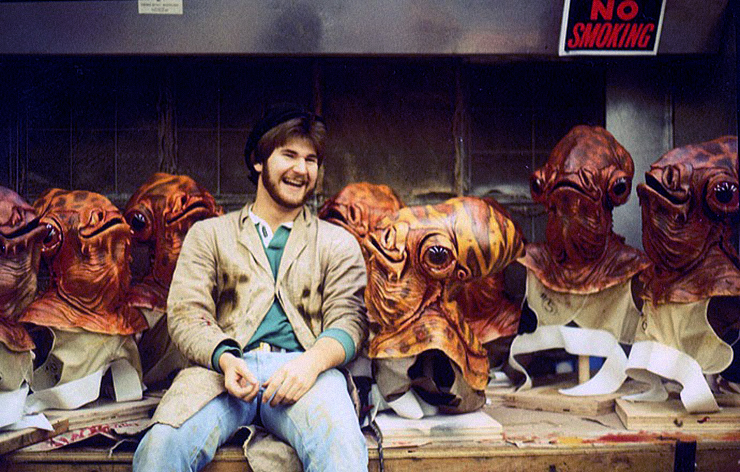
Kirk Thatcher in the Return of the Jedi Creature Shop at ILM.

The Director’s Chair: David Fincher

Fincher on Fincher — How David Fincher Directs a Movie

August 9, 2021
StudioBinder (YouTube)

Director David Fincher explains his personal approach to film directing.

Special thanks to:

Variety’s David Fincher Interview
Escuela Universitaria de Artes TAI
BAFTA Guru
FilmIsNow Movie Bloopers & Extras
Moog Music Inc
Akai Pro Video

Chapters:
00:00 Intro — How David Fincher became a Filmmaker
02:01 Early Career & Return of the Jedi
03:18 Shot Composition and Blocking
06:19 “Relentless” Number of Takes
11:02 Directing with Precision
13:43 Color Theory & Creating the Look
15:48 Create a Feeling (Production Design & Music)
19:35 Final Takeaways

David Fincher is a director’s director. His reputation for having complete control over his work is well-known but many directors have had similar power. So, what makes his approach to film directing so captivating? In this David Fincher video essay, we’ll let the man speak for himself. Through a collection of interviews from throughout his career, Fincher guides us through some of the strongest characteristics of his directing style.

To date, over the past four decades, David Fincher has directed a plethora of music videos, commercials, and 11 feature films. Along the way, he has refined his directing style which can be summed up in two words: precise and purposeful. When watching any David Fincher movies, you would be hard-pressed to find an out-of-place camera movement, or a lazy frame composition. One lesson we learned from Fincher is how he balanced and imbalanced the frame during Nick and Amy’s first meeting in Gone Girl to show the “push and pull” of their flirting.

Another well-known staple of the David Fincher directing style is his predilection for shooting multiple takes. He famously shot 99 takes of the opening scene in The Social Network, for example. But there’s a method to his madness — he wants the actors to move “beyond muscle memory” especially in their domestic environments. In Fincher’s logic, when the actor sits on their couch, they need to have sat in it a hundred times to make it look like they’ve sat in it a hundred times.

Fincher also explains how he creates mood and tone with lighting, color, and music. With a darker frame, desaturated color, and the brooding tones of Atticus Ross and Trent Reznor, there certainly is a distinct experience watching David Fincher films. While all of this sounds extreme, the proof that he’s doing something right is visible on-screen.

♬ Songs used:

“Father / Son” — Makeup and Vanity Set
“Subdivide” — Stanley Gurvich
“Switchback” — Nu Alkemi$t
“Battle in the Forest” — Charles Gerhardt – National Philharmonic Orchestra
“Chasing Time” – David A. Molina
“Sugar Storm” – Trent Reznor & Atticus Ross
“Soul Sacrifice” – Santana
“Graysmith Obsessed” – David Shire
“Intriguing Possibilities” – Trent Reznor & Atticus Ross
“Wendy Suite” – Jason Hill
“Under the Midnight Sun” — Trent Reznor & Atticus Ross
“14 – Ghosts II” – Nine Inch Nails
“Corporate World” – The Dust Brothers
“Appearances” – Trent Reznor & Atticus Ross
“With Suspicion” – Trent Reznor & Atticus Ross
“What Have We Done to Each Other” – Trent Reznor & Atticus Ross
“Cowboys and Indians” – Trent Reznor & Atticus Ross
“San Simeon Waltz” – Trent Reznor & Atticus Ross
“Fool” – Ryan Taubert
“Where Is My Mind” – The Pixies

David Fincher Interviews & Quotes on His Filmmaking Process

Chris Heckmann
August 8, 2021
StudioBinder

American Cancer Society’s “Smoking Fetus”

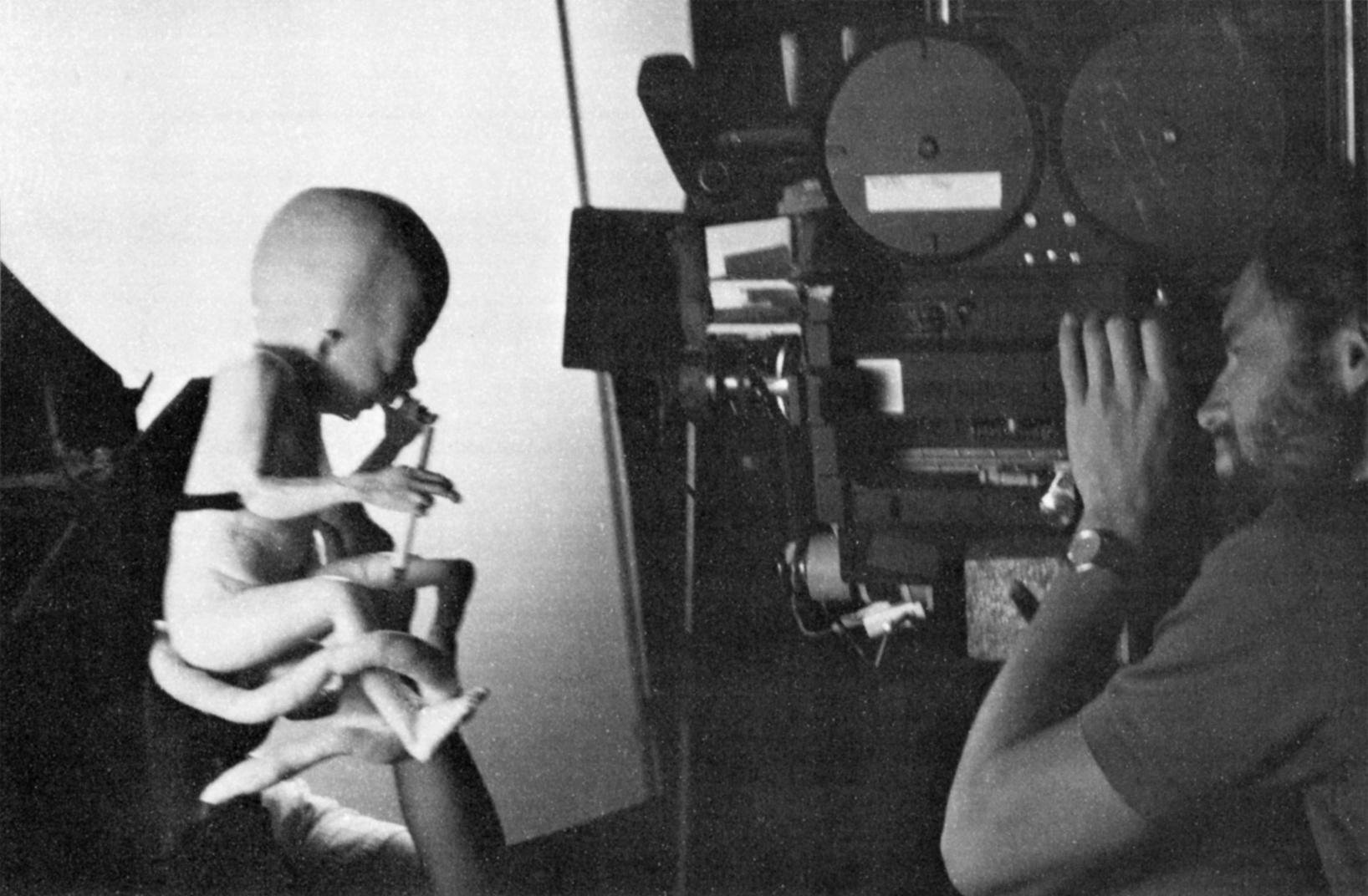
Directed by David Fincher and shot by Michael Owens, this PSA gained national attention due to its striking images and potent warning.

Bruce Mink
August 1985
American Cinematographer

Tony McVey sets up his sculpture in front of the motion-control camera.

The sound of a heartbeat is heard. A human fetus fades up on the television screen in close-up and a voiceover begins: “Would you give a cigarette to your unborn child?” The camera pans and dollies back to reveal an entire fetus existing serenely in the womb of its mother. “You do every time you smoke when you’re pregnant.” At this point, the fetus slowly brings a lit cigarette to its lips and takes a puff, exhaling the smoke into the glowing placenta it lives in. And the voiceover finishes: “Pregnant mothers, please don’t smoke.”

The 30-second spot was produced for the American Cancer Society by a talented and relatively untapped group of San Francisco Bay area filmmakers, modelmakers, and computer specialists brought together by producer Joseph Vogt (Rick Springfield’s “Bop ’Till You Drop”). With a film and conceptual design education behind him, Vogt organized the majority of his film crew from the ranks of Industrial Light and Magic. It was with the abundant talents of these production people — director David FincherMidland Productions, and Monaco Labs — that Vogt brought life to a most creative and technically challenging public service announcement.

Director of photography Michael Owens at the Mitchell GC ready to shoot the prepped sculpture.

Jerry Angert, director of broadcasting with the American Cancer Society, described the ad as “one of the most powerful we have done… We considered the fact that it would be controversial and the networks might not show it, but counted on the local stations to take it.” And that’s exactly what transpired. NBC and CBS chose not to air the graphic spot while CNN (Turner Broadcasting), ABC and its affiliates and affiliates of NBC and CBS elected to show it.

CBS and NBC claim the spot is too graphic. An NBC spokeswoman cited “general taste considerations” as a deterrent to airing the spot. “It was the sight of the fetus that was especially shocking and we felt it was potentially offensive to our viewers,” she was quoted as saying. A CBS spokesman said the network agreed with the “importance of the intent of the message,” but said that the spot was “far too graphic for broadcast on CBS.” An ABC spokesman, however, said the message put forth by the spot was “important for pregnant mothers to understand.” The network felt that. while it was “different visually” from the usual fare viewed on TV, it contained no material that warranted its ban from the airwaves.

Read the full article

American Cinematographer, August 1985 cover

Watch the commercial and read The Fincher Analyst dossier:

1985. American Cancer Society – Smoking Fetus (PSA)

IndieWire Influencers: David Fincher & Sound Designer Ren Klyce

Influencers: Through their decades-long partnership, the pair have constantly refined how sound can be used to shape a viewer’s emotional response.

Chris O’Falt
January 13, 2021
IndieWire

David Fincher and Ren Klyce came of age during a seminal time for Hollywood: when the pair were just kids, a group of ’70s filmmakers was reshaping what it meant to make movies, right from the pair’s native Bay Area. In a biographical detail almost too perfect to be true, George Lucas rented a house in Marin County to edit his “THX 1138,” that just so happened to be located right next door to the Klyce family’s home. A single suburban lawn is all that separated a then-9-year-old Ren from the great Walter Murch, just as he was starting to change modern movie sound forever, work he’d continue throughout the decade with another NorCal auteur, Francis Ford Coppola. And it would be on a Lucas-produced animated feature, “Twice Upon a Time,” that future sound designer Klyce would meet his Coppola, a then-19-year-old Fincher.

Over the last 25 years, as Hollywood has utilized the multi-channel surround technology pioneered by Murch to create bombastic soundtracks that all too often mask a lack of craft, Klyce has helped Fincher explore the subconscious underbelly of his own films, constantly refining how sound can be used to shape a viewer’s emotional response.

“To me, sound design is not about 96 channels all at 11, and two side cars giving you this sound pressure-gasm; to me, it’s very much about the detail and the nuance and maybe things that you wouldn’t even be aware that you heard until the second or third time you saw it,” said Fincher in an interview about his collaboration with Klyce. “I can’t talk more enthusiastically about someone [Klyce] I feel has very subtly pushed what sound designers do.”

Read the full profile and watch the 3 exclusive video essays

David Fincher Has Had Plenty of Hugs. Thank You

David Fincher (Frank Ockenfels / Netflix)

Glenn Whipp, Entertainment Columnist
December 4, 2020
Los Angeles Times

Jack Fincher retired from journalism right around the time his son, David, was moving from directing music videos for the likes of Madonna and George Michael to making his first feature film, “Alien 3.” Jack, a lifelong movie fan, told David he’d like to try writing a screenplay. David encouraged him to delve into the story of Herman Mankiewicz, the co-writer (or, perhaps, sole writer) of Orson Welles’ 1941 landmark “Citizen Kane.” Jack wrote eight drafts of the screenplay, homing in on the journey of the self-sabotaging Mankiewicz as he stops betraying his talents and paints his one masterpiece (relatively) late in life.

Father and son could never quite crack the script, and Jack died in 2003 of pancreatic cancer. Those eight drafts of “Mank” sat on a shelf in David’s office for years until Netflix executives Ted Sarandos and Cindy Holland asked Fincher about his dream unmade project. That was two years ago, and “Mank” has consumed most of Fincher’s waking hours since.

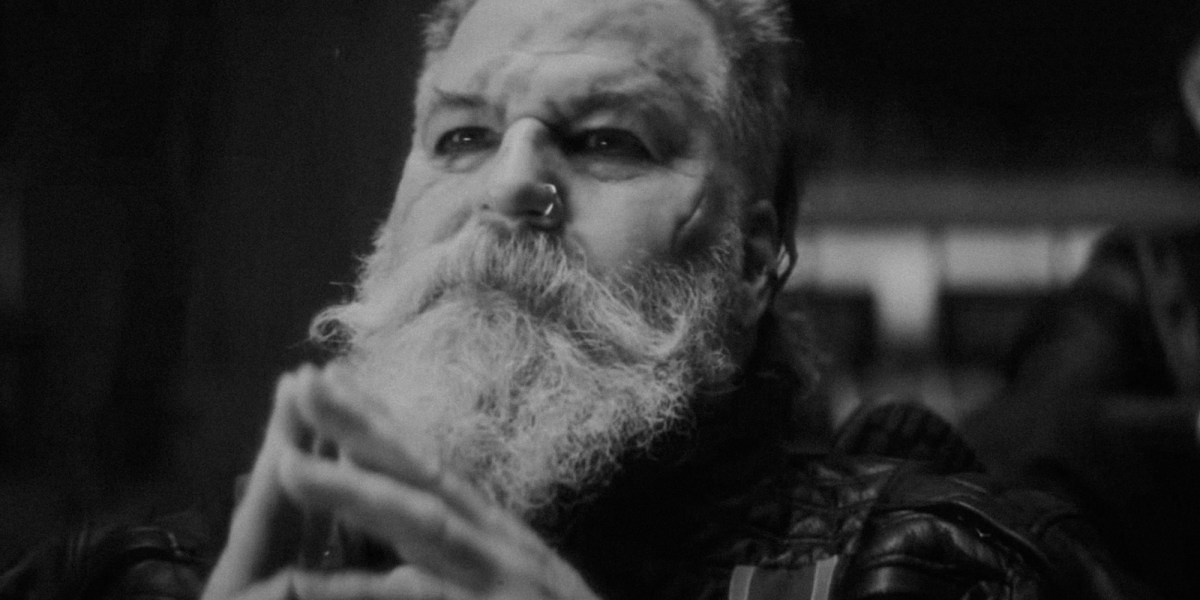
The black-and-white movie, starring Gary Oldman in the title role, premiered in a handful of theaters last month and arrives on Netflix today. It figures to be a force in this year’s awards season, such as it is. It’s certainly the warmest movie Fincher has made in a career founded on the notion that “people are perverts.”

Fincher called the other morning. He was disarmingly polite, by turns generous and evasive, and full of the sardonic humor that courses through his films. “I’m a little groggy,” he said, noting that he didn’t get much sleep the previous night, “but hopefully I know the answers to these questions.”

Read the full interview

Dismantling the Myth of David Fincher

On the cusp of the 25th anniversary of Se7en and the 10th anniversary of The Social NetworkThe Ringer hereby dubs the next five days David Fincher Week. Join us all throughout the week as we celebrate and examine the man, the myth, and his impeccable body of work.

He has a reputation as Hollywood’s ultimate control freak, a director obsessed with attaining perfection no matter how many takes it needs or whose feelings he hurts. Now, three decades of collaborators demystify what it’s really like to work with one of the most talented directors of his generation.

Eric Ducker
Eric Ducker is a writer and editor in Los Angeles.
September 21, 2020
The Ringer

In the early 1990s, Michael Alan Kahn worked as David Fincher’s first assistant director. Kahn had already paid his dues on Joel Silver productions like Die Hard, Hudson Hawk, and the first two Lethal Weapon sequels—big-budget action flicks made by big personalities whose off-camera tantrums rivaled the on-screen explosions. Fincher was coming off the failure of Alien 3, a film that the director still hates and hates talking about. As Fincher entered his 30s, he had returned to making music videos and commercials, two worlds where he’d earned a reputation first as a prodigy and then as a master. “When I linked up with David I immediately recognized that it was a whole different level,” says Kahn.

Not only was Fincher’s work inventive and distinct, it was meticulously constructed. Kahn remembers a series of spots they made for Heineken. They had two days to film four tableaus of the bottle in different environments, including one on an airplane. “You’d start from scratch and [Fincher] would spend five hours and 57 minutes dressing the fuselage, dressing the background, moving the background around, putting the bottle right in place, finessing the light so it felt like you were in flight, the right amount of spritz on the bottle, the right amount of napkin,” says Kahn. “Every aspect of every aspect was considered and perfected. Then he would roll the camera for three minutes, and that was lunch and that one was done. It was an amazing thing to watch because you see a blank frame and then you see him paint, basically.”

But trying to realize the vision of one man—and a man as doggedly obsessive as David Fincher—could be a double-edged sword, especially when the director moved back to filmmaking. Shortly after production began on 1995’s Se7en, “I had one of those moments where I looked around and I appreciated where I was,” says Kahn. Fincher had often admitted to Kahn how badly he wanted another chance to make a movie. “I went up to Fincher and I said, ‘Look at this! Look! It’s here! We’re here! You did it! We’re shooting a movie! There’s Morgan Freeman. There Brad [Pitt]. There’s Kevin Spacey. … Isn’t this amazing? Isn’t this wonderful? This is what you wanted.’ And he looked at me as though I were from outer space and said, ‘No, it’s awful.’ And I looked at him and I said, ‘Why is it awful?’ And he said, and I mean sincerely, ‘Because now I have to get what’s in my head out of all you cretins.’” Early in his career, Fincher already knew that no matter how an entire film unspooled in his brain, actually turning it into a reality would require him to make an endless amount of compromises, most of which only he would perceive. But that hasn’t stopped him from fighting his way toward his version of a flawless end product.

Throughout Fincher’s 40-year career, from his time as a teenage production assistant in Marin County to his upcoming 11th feature, Mank, he’s established himself as one of his generation’s most talented, and most emulated, filmmakers. He’s also become notorious for his singular style of making films. He’s gained a reputation as a demanding director who is never satisfied and doesn’t suffer fools, and seems to have little interest in being likable. But of course the full story is more complicated. During interviews with more than a dozen cast and crew members—ranging from those who have worked with him consistently since his earliest days as a director, to those who were part of a single project—he was called “exacting,” “razor-sharp focused,” “intense,” “tough,” “extremely observant,” “very articulate,” and “relentless.” Some also admitted that “there are times he can be a dick,” that he was “difficult,” “condescending,” and “a bit of a bully.” But he was also described as “very self-depreciating,” “so witty,” “fucking hilarious,” “one of the smartest people I’ve ever met,” “very generous,” and “my dearest, dearest friend.”

Nobody says making a Fincher film is easy. Most say it’s worth it.

Read the full profile

The David Fincher Exit Survey

To kick off Fincher Week, contributors explain what they find so fascinating about the man behind ‘Fight Club,’ ‘The Social Network,’ and more

The Ringer Staff
September 21, 2020
The Ringer