Sounding Out Ren Klyce On David Fincher’s “Mank”

7-time Oscar nominee reflects on his longstanding working relationship with the director and the creative challenges of their latest collaboration

Robert Goldrich
January 1, 2021
Shoot

Sound designer, editor and mixer Ren Klyce is a seven-time Oscar nominee, five of those nods coming for David Fincher movies–Fight Club in 2000, The Curious Case of Benjamin Button in 2009, The Social Network in 2011 and The Girl with the Dragon Tattoo for both sound mixing and sound editing in 2012. (Klyce’s other two noms are for Star Wars: Episode VIII–The Last Jedi for sound editing and mixing in 2018.)

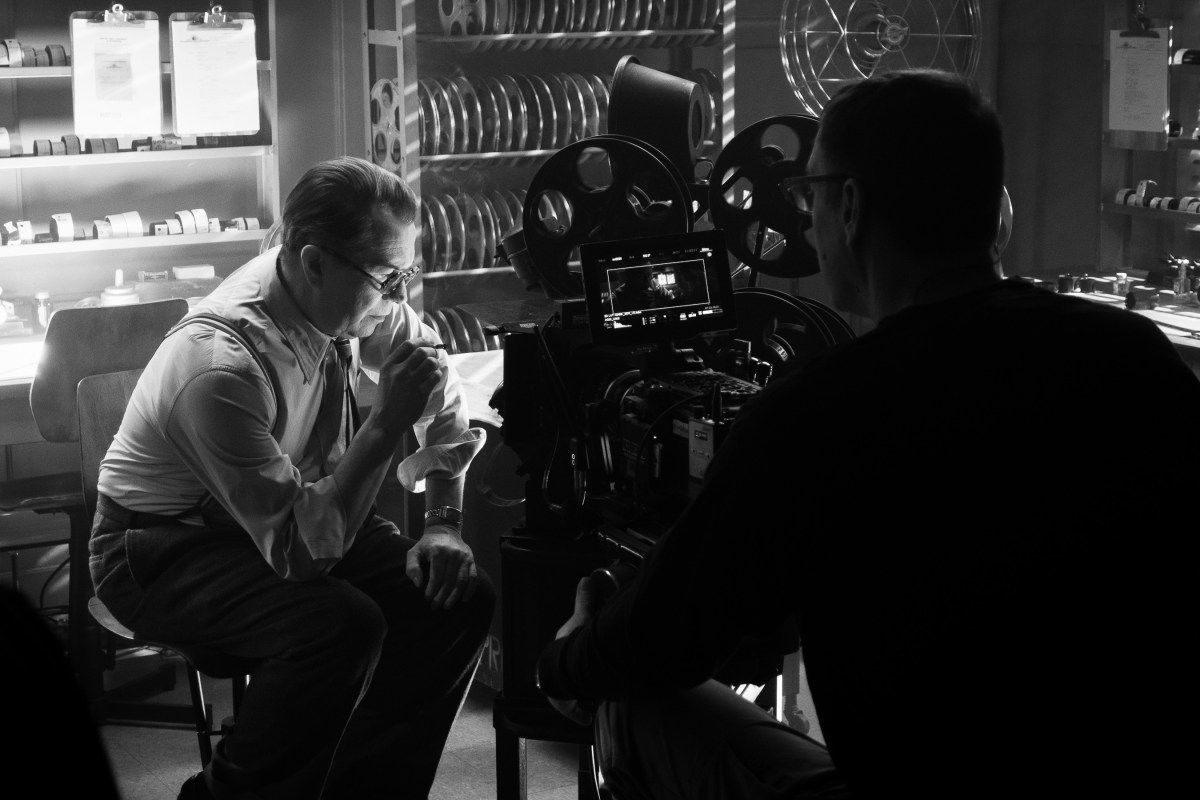
Now Klyce is again in the awards season conversation for Fincher’s Mank (Netflix) which centers on screenwriter Herman J. Mankiewicz (portrayed by Gary Oldman) as he races to finish director Orson Welles’ Citizen Kane on a tight timetable, secluded in a bungalow in a desert town miles removed from Los Angeles as he recuperates from a car accident in 1940. Attending to him are his secretary Rita (Lily Collins) and his German nurse (Monika Grossmann).

In the process, through Mankiewicz’s worldview–marked by his abiding social conscience and wit, at times caustic–we are introduced to not only Hollywood but life in the 1930s, ranging from the grandeur of Hearst Castle and high society to the struggle of the rank and file during the Great Depression. We also become privy to Mankiewicz’s own inner struggles with alcoholism, as well as a professional battle with Welles (played by Tom Burke) over screen credit for what became the classic Citizen Kane. The Mank cast also includes Charles Dance (as William Randolph Hearst), Amanda Seyfried (as Marion Davies, Hearst’s wife), Tuppence Middleton (as Sara Mankiewicz, Herman’s wife), Arliss Howard (as Louis B. Mayer), Sam Troughton (as John Houseman), Tom Pelphrey (as Joe Mankiewicz, Herman’s brother), Toby Leonard Moore (as David O. Selznick) and Ferdinand Kinsley (as Irving Thalberg).

For Klyce, Mank posed layers of challenges on top of the conventional goal of having the soundtrack support the story. “We hear all the dialogue, feel the motion of the music, get a sense of surroundings and characters through sound design. It helps us to connect with the characters,” Klyce explained.
Read the full profile

Making Mank’s Vintage Hollywood-Magic Sound – An In-Depth Interview with Ren Klyce

For Director David Fincher’s latest film Mank — now available on Netflix — he’s teamed up once again with his long-time collaborator, supervising sound editor Ren Klyce. Here, Klyce shares details on creating an ‘old Hollywood’ feel by working in mono, adding patina layers of analog equipment hiss and natural ‘theater’ reverb, and creating a special filter modeled after the original Citizen Kane .

Jennifer Walden
December 10, 2020
A Sound Effect

Fight ClubSe7enThe GameThe Girl with the Dragon Tattoo, Zodiac, Mindhunter, House of Cards, Panic Room, and the list goes on — these are just some of the amazing projects that Director David Fincher and supervising sound editor Ren Klyce have worked on together.

One of the hallmarks of Fincher’s films is the attention to detail, and Klyce is an apposite candidate to fill that bill sonically. The seven-time Oscar-nominated sound supervisor/sound designer is never short of creative ideas and solutions, as he demonstrates most recently on Mank.

Mank is a biographical drama on how Citizen Kane came to be, who the writers were (Herman J. Mankiewicz and Orson Welles), and what the extent of their collaboration was on the film.

Fincher wanted Mank to have an ‘old Hollywood’ feel, so Klyce comes up with a multi-step sonic patina process that includes running the mix through a filter modeled after the sonic shape of the original Citizen Kane film, adding layers of analog film equipment noise and hiss, and adding in natural reverb created by playing the final mix back on a scoring stage and capturing the room bounce.

Here, Klyce shares enlightening and amusing details on how they achieved that patina, the important role of Foley, orchestrating sound effects and music, and so much more!

Read the full interview

‘Mank’: Sound Designer Ren Klyce Talks The Authenticity Of David Fincher’s Latest Film

Tomris Laffly
December 7, 2020
The Playlist

You are likely to feel whisked away to the Golden Age of Hollywood while watching “Mank,” David Fincher’s historical character study about legendary studio screenwriter Herman Mankiewicz (Gary Oldman) and his painstaking process of writing Orson Welles’ “Citizen Kane.” Still, Fincher’s Hollywood epic won’t necessarily register as tritely nostalgic or melancholic about the past in a way showbiz movies often do. That’s because “Mank” is far more concerned about seizing a frozen-in-time type of authenticity. It’s a picture one could swear to be of the era as opposed to an homage to the era—a quality its sound design gloriously emulates by ditching contemporary sonic attributes and embracing monaural sound in order to match that of “Citizen Kane.”

“That was one of the very first things David was most eager to speak about,” recalls 7-time Academy Award-nominated sound designer Ren Klyce, who worked on 10 out of 11 Fincher movies and might win his first Oscar with “Mank.” “The original words he said to me were, ‘I want this to feel like this film was literally on the shelf next to “Citizen Kane,” existing on actual celluloid with the soundtrack on it. And I want it to sound like somebody made it back in that period.’ And that was a very interesting idea to start off with. Authenticity is the perfect word for it actually—that’s a very important thing for David in all of his movies. He wants it to feel like it’s coming from a genuine place.”

For Klyce, designing the sound of a film that hypothetically has “always been there the whole time” meant using today’s technology to fabricate a set of means and methods for the past to ultimately telegraph the feeling that the film was made then, with the technology of then. “How do we still make it feel sophisticated, but limit ourselves with an imaginary toolset of the 1940s?”

In an interview with The Playlist, Klyce detailed out his technical process and collaboration with Fincher, explaining how he achieved the vintage sound of “Mank” as well as that old-timey aural grandeur, as if the film is bouncing off the walls of a majestic movie theater.

Read the full interview

Ren Klyce and Jeremy Molod of ‘Mank’ Break Their Silence on the Sound Secrets of 1940s

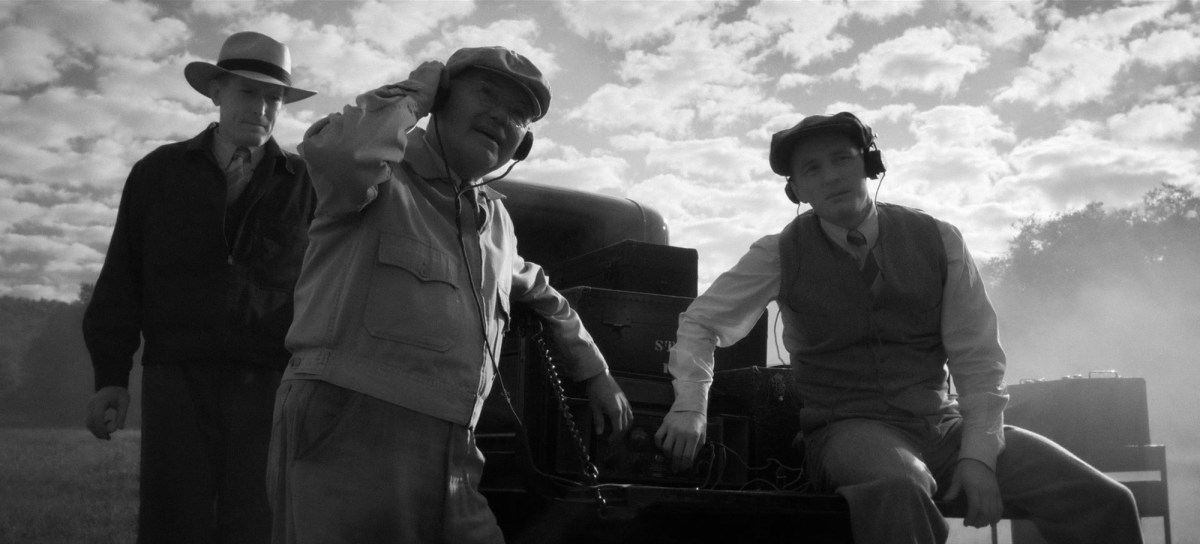
Rich Quinn (ADR editor), Jonathon Stevens (Sound Effects Editor), Jeremy Molod (Supervising Sound Editor), Malcolm Fife (Sound Effects Editor), Ren Klyce (Sound Designer/Re-Recording Mixer).

Patrick Z. McGavin
December 2, 2020
CineMontage

Orson Welles famously observed a writer needs a pen, a painter a brush, and a filmmaker an army.

One of the soldiers behind Welles’ most fabled work is at the heart of David Fincher’s new Netflix film “Mank,” which excavates a creation myth from the contentious backstory of “Citizen Kane,” Welles’ 1941 feature directing debut. Many critics consider it one of the best films ever made.

Fincher commanded his own army of Foley artists, dialog editors and sound specialists for his iconoclastic biographical portrait of the screenwriter Herman J. Mankiewicz (Gary Oldman).

Verisimilitude was the most pressing concern in crafting a symphonic soundtrack of rare cars, Underwood typewriters and vintage telephones.

Sound designer/re-recording mixer Ren Klyce and supervising sound editor Jeremy Molod have worked on every Fincher movie since his breakthrough second feature, “Se7en” (1995).

“We know what Fincher is trying to get at when he is giving us directions,” Molod said. “Sometimes when he is asking us to provide certain sounds and he gives us a description of what the character or location is, it’s not always meant to be a literal translation.

“It’s more of a feeling and what he is trying to convey.”

Klyce assembled an impressive and highly experienced editorial team that included dialog editors Kim Fosacto and Richard Quinn, Foley editor Shaun Farley and the FX editor Malcom Fife and his team, Jonathon Stevens, Josh Gold and Coya Elliott.

Most important they all had a deep work background with the fastidiously exacting filmmaker.

Read the full interview

David Fincher, the Unhappiest Auteur

The director makes beautiful bummers in an industry that prefers happy endings. Perhaps that’s why his movies seem like an endangered species.

Manohla Dargis
January 1, 2021
The New York Times

For nearly three decades, David Fincher has been making gorgeous bummer movies that — in defiance of Hollywood’s first principle — insist that happy endings are a lie. Filled with virtuosic images of terrible deeds and violence, his movies entertain almost begrudgingly. Even when good somewhat triumphs, the victories come at a brutal cost. No one, Fincher warns, is going to save us. You will hurt and you will die, and sometimes your pretty wife’s severed head will end up in a box.

Long a specialized taste, Fincher in recent years started to feel like an endangered species: a commercial director who makes studio movies for adult audiences, in an industry in thrall to cartoons and comic books. His latest, “Mank,” a drama about the film industry, was made for Netflix, though. It’s an outlier in his filmography. Its violence is emotional and psychological, and there’s only one corpse, even if its self-destructive protagonist, Herman J. Mankiewicz (Gary Oldman), can look alarmingly cadaverous. Set in Hollywood’s golden age, it revisits his tenure in one of the most reliably bitter and underappreciated Hollywood tribes, a.k.a. screenwriters.

Read the full article

The Cinematography Podcast: Erik Messerschmidt

Erik Messerschmidt, ASC: Mank, Mindhunter, Legion, Raised By Wolves, working with David Fincher.

Ben Rock & Illya Friedman
December 30, 2020
The Cinematography Podcast (Cam Noir)

Erik Messerschmidt, ASC believes that cinematographers get too much credit for how a movie looks and not enough for how the story is told. When you break a scene apart and assemble a sequence, the cinematographer has a huge part to play in the process of deciding when to move the camera, what lenses are used, how it flows and when it moves. Erik thinks when you look at it that way, cinematography has a lot more in common with editing rather than photography.

Erik’s most recent project, Mank– which is currently streaming on Netflix- was shot entirely in black and white. The look was the result of lots of conversations with director David Fincher. They both had a clear idea of what they wanted it to look like and also exactly what they did not want- too much heavy handed, contrast-heavy black and white cinematography in a film-noir style would take the viewers out of the experience, so it needed a lighter touch. Erik used fine art photography from the ’30’s to the mid ’40’s as a reference, and he and David Fincher wanted an homage to Citizen Kane without it actually looking like the film. Fincher was clear that he wished to transport the audience so they would lose their awareness of watching a black and white movie, and feel as though they are in the world of Herman J. Mankiewicz as he writes the script for Citizen Kane in the 1940’s.

Erik has worked with director David Fincher on several projects, first working as a gaffer on Gone Girl, then moving into the camera department on the series MindhunterErik and David have become very close collaborators, and he enjoys working with him. Fincher likes a sense of hyper reality to his movies, and Erik sees it as his job as the cinematographer to learn what the director responds to, figure out how best to support their process and bring something to the party.

Before moving into the camera department, Erik worked for several years as a gaffer. After working with David Fincher on two seasons of Mindhunter, Erik needed more work since he was a newly minted director of photography. He got the opportunity to shoot second unit on Sicario: Day of the Soldado with cinematographer Dariusz Wolski as the lead DP. He then worked on a few episodes of the TV series Legion with producer/director Noah Hawley and DP-turned-director Dana Gonzales, which was visually fun to work on. Legion’s look was whimsical yet dark, as it explored the main character’s mental illness and possible superpowers. He had the opportunity to work with Dana again on the finale of season four of Fargo. Erik also shot several episodes of the Ridley Scott series, Raised By Wolves, splitting the series with DP Ross Emery.

Listen to the podcast:

Cam Noir
Apple Podcasts
Spotify

Mank is available to watch right now on Netflix.
Find Erik Messerschmidt: Instagram

LIKE AND FOLLOW US, send fan mail or suggestions!: editor@camnoir.comFacebookInstagramTwitter

Podcast Credits:

Sponsored by Hot Rod Cameras (Instagram)
Editor in Chief: Illya Friedman (Instagram)
Ben Rock (TwitterInstagram)
Producer: Alana Kode
Editor: Ben Katz
Composer: Kays Alatractchi

Mank Is a Rich Immersion Into Hollywood’s Black-and-White Glory Days

A rendering of the archway in the dining room at Hearst Castle, which features Spanish Revival details. Drawings by Daniela Medeiros

David Fincher’s new film tells the story of screenwriter Herman J. Mankiewicz as he pens the script for Citizen Kane

Mara Reinstein
December 3, 2020
Architectural Digest

Judging the film Mank just based on the story alone—cynical, heavy-drinking screenwriter Herman J. Mankiewicz evaluates his turbulent travails through Hollywood as he struggles to script Citizen Kane—doesn’t do it justice. A work of impeccable craftsmanship that unspools in crisp black-and-white, Mank, which premieres Friday, December 4, on Netflix, allows viewers to journey back in time to experience all the glamour and grit of Los Angeles during the 1930s and early ’40s. And that’s exactly how director David Fincher (Gone Girl, The Social Network) intended it.

“I remember when David first spoke to me about it,” Oscar-winning production designer Donald Graham Burt (The Curious Case of Benjamin Button) tells Architectural Digest. “He said ‘I want it to feel like you’re in a film vault and you see Citizen Kane and then you see a film next to it and it says Mank and you think, ‘Oh, I never saw that.’ He wanted it to look like a film made in that period.”

Read the full profile

An Exclusive Look at the Making of Mank

Production designer Donald Graham Burt takes AD behind the scenes of the Golden Globe–nominated film

Cathy Whitlock
February 12, 2021
Architectural Digest

“We Don’t Find Shots, We Build Them”: DP Erik Messerschmidt on Mank, Lens Flare Painting and Native Black and White

Matt Mulcahey
December 22, 2020
Filmmaker

In 1941, a 25-year-old Orson Welles made one of cinema’s most auspicious debuts by directing, co-writing, starring in and producing Citizen Kane. With Mank—David Fincher’s look at the evolution of Kane’s screenplay—cinematographer Erik Messerschmidt makes an impressive feature bow of his own. 

After working his way up through the ranks of grip and electric and earning DP credits on the shows LegionMindhunter and Fargo, Messerschmidt’s very first fiction feature has landed him in the midst of Oscar conversation. With Mank now streaming on Netflix, Messerschmidt spoke with Filmmaker about deep focus, high ISOs and painting in lens flares; and how even when working with David Fincher you “start compromising when you get out of bed in the morning.”

Read the full interview

‘Mank’: How the Cinematography of David Fincher’s Film Took Inspiration From ‘Citizen Kane’

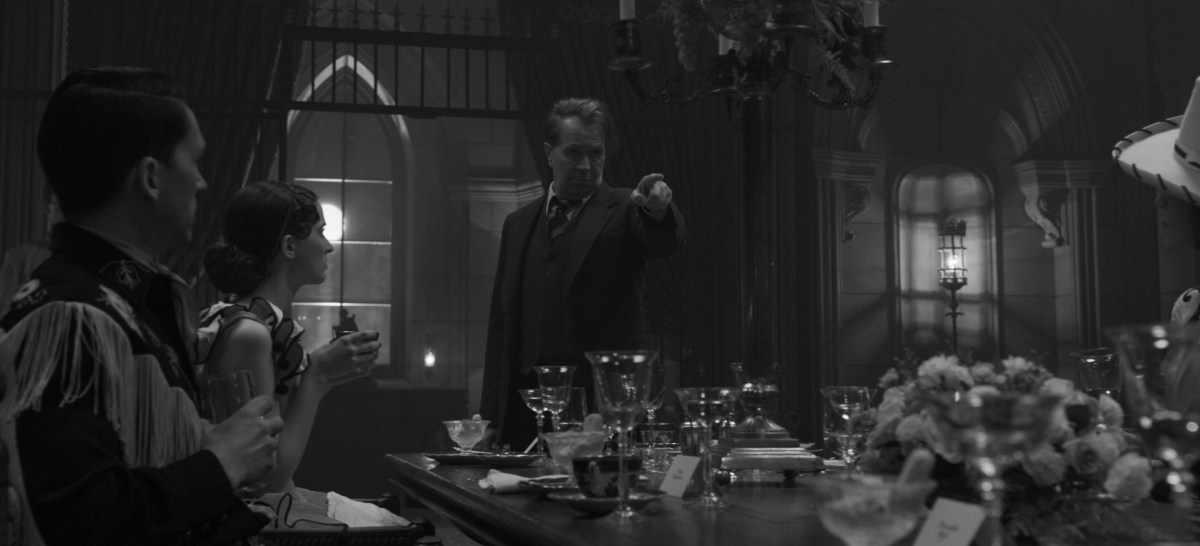
Gary Oldman, as Herman J. Mankiewicz, holds forth at a dinner party at William Randolph Hearst’s San Simeon home, created at Los Angeles Center Studios. “The room is dark and it’s made to look musty and cold,” says cinematographer Erik Messerschmidt.

While legendary DP Gregg Toland and the indelible images he created for Orson Welles’ masterpiece inspired the new movie, the director and cinematographer Erik Messerschmidt aimed for a look that suggests an echo, not a copy.

Carolyn Giardina
December 22, 2020
The Hollywood Reporter

Gregg Toland is one of the most influential cinematographers of all time, and his work on Orson Welles‘ Citizen Kane (1941) — with innovations including deep focus, which keeps the foreground, middle ground and background all looking sharp — is iconic. So when director David Fincher and cinematographer Erik Messerschmidt set out to make Mank, the Netflix drama that stars Gary Oldman as screenwriter Herman J. Mankiewicz in the throes of writing Kane, Toland’s efforts had to be carefully considered.

“David and I talked at length about it. That was something we wanted to echo and reference and pay homage to, but we weren’t really trying to emulate it,” says Messerschmidt, who earned an Emmy nomination this year for Fincher’s Netflix crime series Mindhunter. “We didn’t want people to necessarily look at the film and be like, ‘Oh, it’s Gregg Toland’s work.’ We were trying to keep the photography story-driven and within the narrative of what we were trying to translate to the audience.”

Read the full profile

HPA NET Critical Conversations with Peter Mavromates

Two Decades of Inventing Digital Workflows: Lessons from One of the Masters

Mark Chiolis
December 20, 2020
HPA

The new David Fincher movie, Mank, released on Netflix on December 4th of this year, was originally scheduled to be produced in 1999 but didn’t happen due to a number of factors. In 2007 Fincher released Zodiac which was one of the first major theatrical features to be shot in a digital environment around a completely new file-based workflow that would revolutionize the industry over the next decade.

Peter Mavromates, the post production supervisor on Zodiac and a number of other Fincher projects over the years, including a co-Producer credit on Mank, joins Critical Conversations to discuss how digital workflows have grown and evolved over the last 15 years. Peter will talk about helping to design the early workflows on Zodiac, continuing to build it with The Curious Case of Benjamin Button, the ongoing developments created for Mank, and what’s next for the future.

Peter Mavromates has worked in post production for more than 35 years.  He saw the future of “film” when he walked into a high-end video facility in New York called Charlex.  Working at Charlex while still in “film” school in the NYU Grad Film Program, he saw the beauty of film (read ACETATE) and the power of electronic (read ANALOG VIDEO transitioning to DIGITAL) and watched as those two processes merged and mutated throughout the ‘80s and ‘90s.  Peter produced his first DI on Panic Room in 2002, and his first DI of a digitally acquired movie on Zodiac in 2007. Most of the last 25 years have been spent working on projects with David Fincher, but he has also worked with Quentin Tarantino, Stephen Gaghan, and George Clooney.

Watch the full conversation