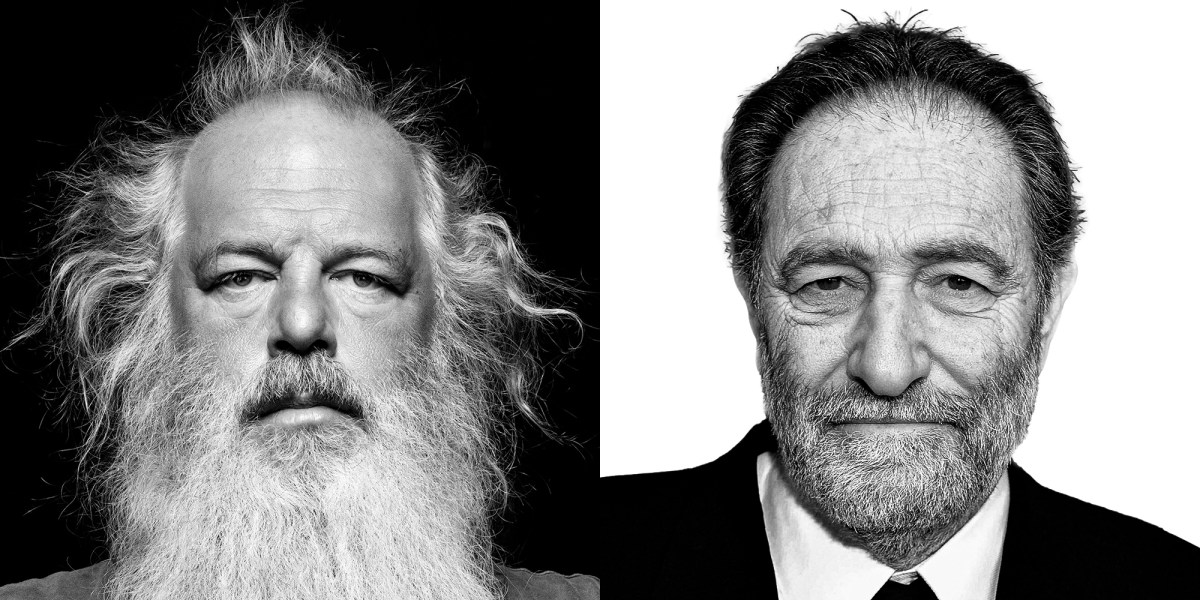
Eric Roth is an Academy Award-winning screenwriter best known for adapting Forrest Gump, for which he won the Oscar for Best Adapted Screenplay. He has received additional Academy Award nominations for The Curious Case of Benjamin Button, A Star Is Born, and Dune: Part One, and is widely regarded as one of Hollywood’s most sought-after writers. Roth co-wrote Killers of the Flower Moon with Martin Scorsese. He continues to work in films as both writer and executive producer. His latest project, the 2025 film The President’s Cake, is now playing in theaters.
There is always a class of filmmakers perennially itching for the next technological leap forward: James Cameron and Steven Soderbergh come to mind as two directors with opposing working styles but similar ambitions for the efficiencies and reality-bending possibilities of digital technology. The transition from the photochemical film process to digital production—from cameras to visual effects to editing within the early part of the 21st century—represents one of the most profound flashpoints in cinema history. David Fincher, just as technically savvy and game to test out the latest toys, has been less has received less fanfare, but if one has paid attention to Fincher’s career for any length of time, a sentimental affinity for the medium lags far behind the more practical desire to move on to the next project. It’s one of a panoply of oft-stated advantages with digital filmmaking, the ability to move quickly and dexterously, without the literal weight of film to slow you down. But Fincher’s work, inclusive of his time in television advertising and music videos in the ’80s and ’90s, illustrates a director’s desire at first to uphold and then transcend the strictures of the camera itself.
There are two competing perspectives of David Fincher: that of a hard-driving auteur who demands perfection and challenges his audiences with provocative material while still working comfortably within the commercial constraints of the Hollywood studio system; and that of the technical savant, an artist who, from a young age, steeped in the filmmaking culture of the 1970s (George Lucas was his neighbor in northern California for a time), absorbed every part of the cinematic production process, from developing film for director John Korty to working in the matte department at Industrial Light & Magic (Fincher worked under both Korty and Lucas on the 1983 animated feature Twice Upon a Time). Both views run parallel to one another throughout Fincher’s career, a gun-for-hire with an insatiable curiosity for process, a defining feature of his style and the narratives of his films.
After Reznor brought industrial grind into the mainstream, he became an in-demand film composer—and from Natural Born Killers to Tron: Ares, he’s done some of his best, most adventurous work for the screen. A definitive guide to Nine Inch Nails on film.
Nine Inch Nails founder Trent Reznor can’t have known how different a line like “I don’t believe in your institutions” would sound decades later. Nine Inch Nails have been inducted into the Rock and Roll Hall of Fame; Reznor and his composing partner Atticus Ross have an Emmy, a Bafta, two Grammies, three Golden Globes, two Oscars (they’re just a Tony away from an EGOT), and a Country Music Award. In some ways Reznor is now the kind of establishment figure he always despised, a respected elder statesman to goths and queers everywhere. With Nine Inch Nails, he married industrial aesthetics to pop instincts; Prince and Bowie were always more important to the recipe than Skinny Puppy. Reznor and Ross won their second Oscar for a Disney movie, and might win for another one at next year’s ceremony. The institutions believe in them.
It makes a lot of sense that someone whose audience is wide enough to include every strain of angry queer teen and the staff of Pixar would embrace these contradictions as he got older, got sober, had children, and became close friends with the people he grew up admiring (Bowie, David Lynch, John Carpenter). There is something in Reznor’s voice that speaks to millions of people, something indefinable that has nothing to do with hooks or record-label muscle behind him. The subject matter has always been lacerating and bleak. On his albums, Reznor was a one-man band plus hired hands until around 2016, where he officially made Atticus Ross a full member. Contradictorily, when he was inducted into the Hall of Fame he submitted every single touring musician as a band member and was forced to negotiate down to 7.
The Tron: Ares soundtrack, released a few weeks ago in advance of the Jared Leto-led threequel, is the first Nine Inch Nails album in five years credited to the band (as opposed to Reznor and Ross) and the first NIN release with sung vocals since 2018’s excellent but brief Bad Witch. It comes on the heels of a tour that everyone you know and admire went to, featuring startling production and the seamless incorporation of acoustic pianos and new collaborator Boys Noize. The pair have announced upcoming projects ranging from a new Naughty Dog video game to starting a production company that wants to branch into film production and fashion. Tron Ares, out today, isn’t even the only movie with a Reznor/Ross soundtrack in theaters right now—they also scored Luca Guadagnino‘s After The Hunt.
Frame & Reference is a conversation between Cinematographers hosted by Kenny McMillan. Each episode dives into the respective DP’s current and past work, as well as what influences and inspires them. These discussions are an entertaining and informative look into the world of making films through the lens of the people who shoot them.
Let’s get into how Erik Messerschmidt does what he does, by unpacking his thoughts and philosophy on photography and looking at what gear he chooses in this episode of Cinematography Style.
00:00: Introduction 01:04: Background 02:06: Visual Language & References 03:44: Perspective & Camera Movement 05:40: Post Production 07:15: Lenses 09:05: Cameras 10:51: Grips 11:33: Lighting 12:28: MUBI
Music: Ottom – ‘Hold On’ Stephen Keech – ‘Grand Design’ Nuer Self – ‘Dawn’ Liquid Memoirs – ‘Distant Dream’ Joley – ‘Night Stroll’ I Am Alex – ‘Bonfire’ The Soundkeeper – ‘The View From The Attic Window’ Sero – ‘Mid August’ Chill Winston – ‘The Truth’
DISCLAIMER: Some links in this description are affiliate links. If you purchase a product or service with these links I may receive a small commission without an additional charge to you. Thank you for supporting my channel so I can continue to provide you with free videos!
In David Fincher’s Netflix darkly comic thriller The Killer, Michael Fassbender is the nameless assassin who goes on an international hunt for revenge while insisting to himself that it isn’t personal.
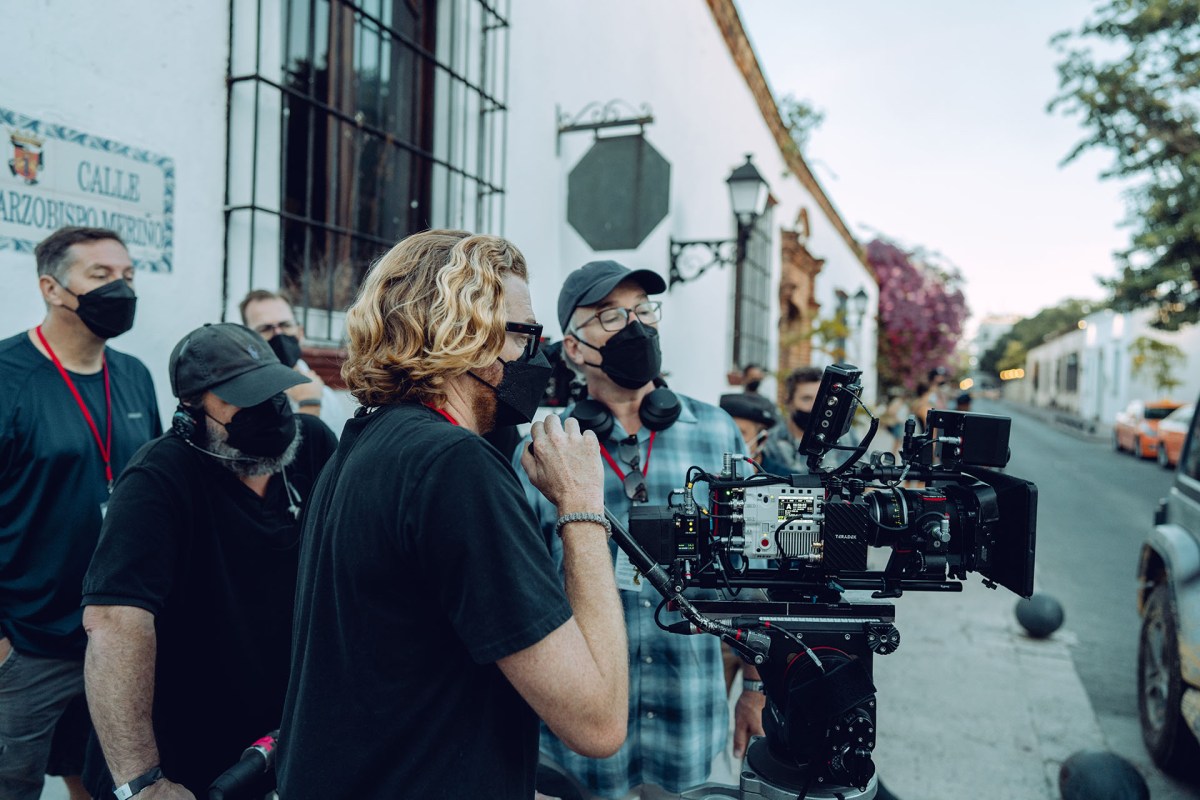
The film marks the second Fincher-directed feature shot by Erik Messerschmidt ASC, following the Citizen Kane drama Mank, for which he won the 2020 Academy Award for Best Cinematography.
It is also the latest in a long line of Fincher movies since The Social Network to be shot on RED.
“There was not a conversation about using another camera system – there never is with David,” Messerschmidt says. “RED as a partner have been enormously collaborative with us in terms of helping us develop new ideas and solve problems. RED is absolutely creative partners to David’s process and certainly to me.”
Master of creating imagery that illustrates beyond the narrative, Erik Messerschmidt is an Academy-Award-winning cinematographer and long-time David Fincher collaborator equipped with a captivating photographic eye and razor-sharp instinct. Messerschmidt’s expertise lies in the visceral experience, the intricacy of his lens causing hairs on the backs of necks to stand to attention while Fincher’s protagonists face a run-in with death, and chests to pound amid the thrill of a car chase – all thanks to the cinematographer’s ability to deliver a sucker-punch to the senses.
After starting out as gaffer on Fincher’s 2014 thriller Gone Girl, Messerschmidt was the guiding visual eye behind the auteur’s chilling Netflix series Mindhunter, his monochromatic ode to 1940s cinema, Mank (for which Messerschmidt won the Oscar for Best Cinematography), and most recently The Killer, stalking the dark psyche of a trained assassin. Having developed an instinctive shorthand with Fincher, Messerschmidt’s ongoing intention is to ensure the viewer is immersed in a world that is palpable in our own. Messerschmidt switched lanes for his most recent project, as Michael Mann’s cinematographer for his acclaimed high-speed epic, Ferrari, bringing to life the tumultuous rise of Enzo Ferrari’s automotive empire in Northern Italy.
Trent Reznor and Atticus Ross—best friends and Nine Inch Nails bandmates—found unlikely creative fulfillment (and a couple of Oscars) by reassessing what they had to offer as musicians. Now they’re thinking even bigger, and imagining an artistic empire of their own making.
Every weekday,Trent Reznor makes his way from his house, a cottagey sprawl behind a white wall in a canyon on Los Angeles’s Westside, to a studio he’s built in his backyard. There he meets his best friend, bandmate, and business partner, Atticus Ross, and they get to work. Reznor and Ross observe the same hours, Monday through Friday, 11 a.m. to 7 p.m. “We show up,” Reznor told me. “We’re not late. We’re not coming in to start to fuck around.” It’s a methodical, orderly existence that Reznor could not have foreseen in the ’90s, when he was fronting Nine Inch Nails and struggling with a drug-and-alcohol problem that was his answer to success. “I would do anything to avoid writing a song,” Reznor said. “I’d rewire the studio 50 times.”
Now Reznor has a wife, Mariqueen Maandig, five kids, and multiple jobs. He is sober. Since 2010, when the director David Fincher asked Reznor and Ross to score The Social Network, for which Reznor and Ross won an Oscar, the two men have had steady employment composing for film. This year, Reznor and Ross are also starting a company called With Teeth, built around storytelling in multiple disciplines: film production, fashion, a music festival, and a venture with Epic Games.
David Fincher’s films have often been analyzed for their visual style – the exacting cinematography, precise editing, muted color palette, and meticulous construction of the frame. But with the release of The Killer, people are starting to take note of another aspect – his evocative use of SOUND. However, you can’t really discuss the sonic landscape of a Fincher film without talking about his longest creative collaborator – sound designer Ren Klyce. From Se7en to The Killer, and every project in between, Klyce’s mixes have provided a crucial aural backdrop, frequently blurring the line between sound and music. They both build a textural ambience that sets the tone of the film while also allowing us to access the subjectivity of the characters on screen. So let’s explore how a David Fincher film sounds.
CHAPTERS:
0:00: Intro 1:33: Se7en & Ren Klyce 2:43: The Girl with the Dragon Tattoo 5:01: Zodiac & Musique Concrète 8:15: Role as Re-recording Mixer 10:33: Trent Reznor & Atticus Ross 11:43: The Social Network & Expressionistic Sound
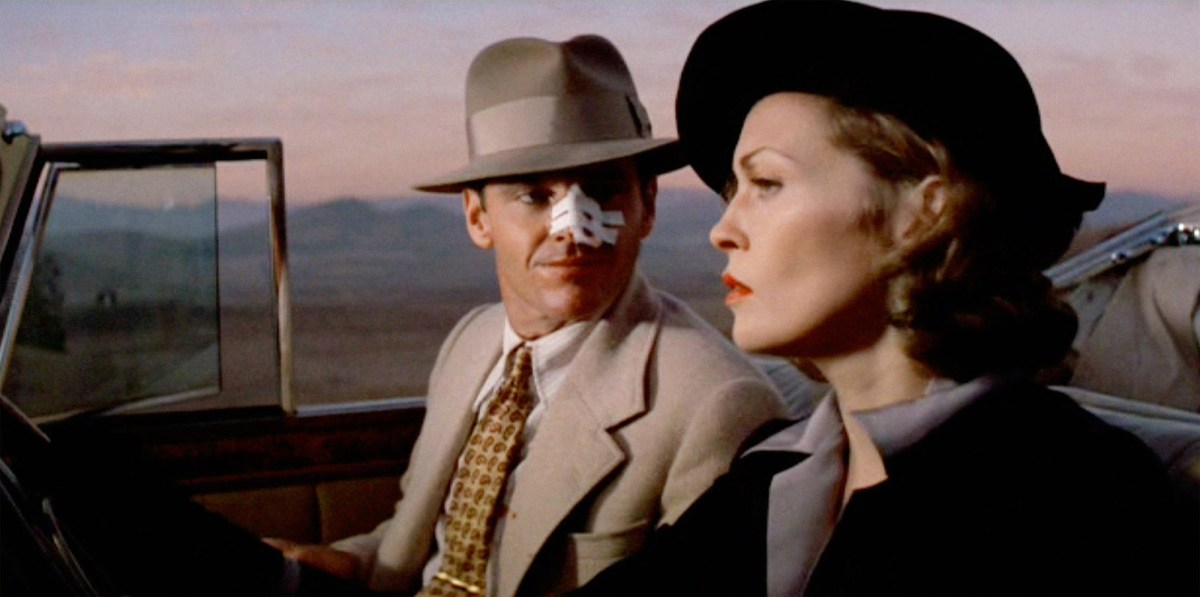
Roman Polanski’s 1974 neo-noir Chinatown is regarded as one of the greatest films of all time. In this episode, we’re joined by Academy Award-winning cinematographer Erik Messerschmidt to discuss this masterpiece of cinema.
We start by talking to Erik about his passion for filmmaking and what led him to a career in cinematography. He shares how he was drawn to the camaraderie and creative collaboration of working on set. Over time, he realized the cinematographer role allowed him to blend his interests in art, science, and technology.
This year, he’s reunited with David Fincher for his adaptation of the graphic novel, The Killer, starring Michael Fassbender, and also teamed up with Michael Mann to shoot his racing biopic, Ferrari, starring Adam Driver.
When it comes to Chinatown, Erik praises the elegant camerawork and seamless visual storytelling. Polanski uses the camera deliberately, guiding the audience through clues and reveals without excessive dialogue. The mystery unfolds through precise editing and minimalist framing. We also discuss the phenomenal performances and how Polanski pulls back at key moments to ground the major plot turns.
Chatting with Erik gave us a new appreciation for the nuance and artistry of Chinatown. It’s a masterclass in subtle visual storytelling that inspired generations of filmmakers. Roman Polanski’s direction and Robert Towne’s script form a potent combination. We highly recommend revisiting this neo-noir gem.






 The Fincher Analyst