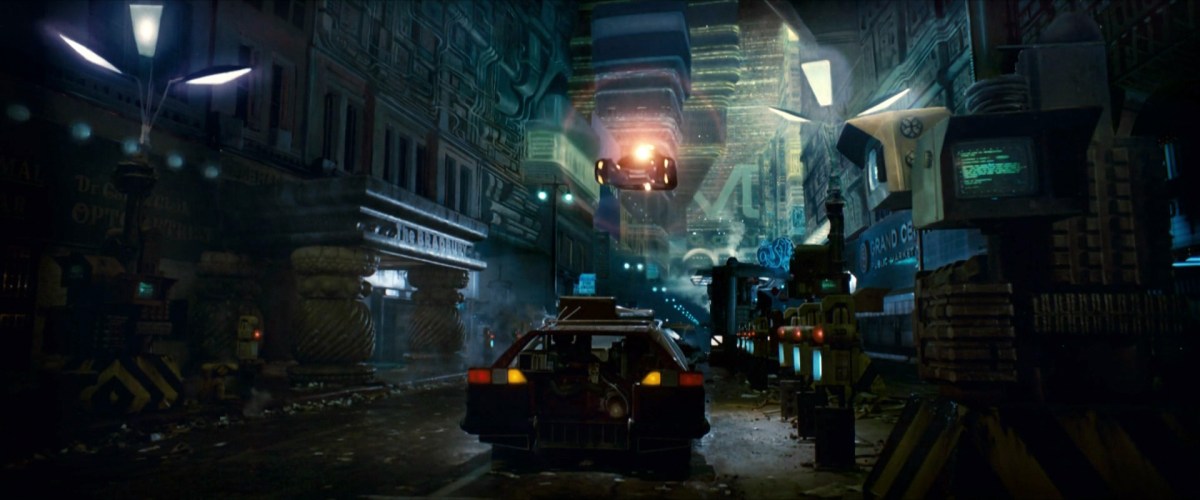
Movies We Like: Cinematographer Jeff Cronenweth on Blade Runner

A Legacy of Light and Shadow

Andy Nelson and Pete Wright
October 27, 2025
Movies We Like (TruStory FM)

Cinematographer Jeff Cronenweth joins Movies We Like hosts Andy Nelson and Pete Wright to explore Ridley Scott’s groundbreaking 1982 film Blade Runner. As the son of the film’s original cinematographer, Jordan Cronenweth, Jeff brings a unique perspective on both the technical achievements and lasting influence of this sci-fi noir masterpiece. With his recent work on Tron: Ares hitting theaters, Cronenweth reflects on how Blade Runner continues to inspire filmmakers and cinematographers four decades later.

From early experiences on film sets with his father to becoming David Fincher’s go-to cinematographer on films like Fight Club, The Social Network, and The Girl with the Dragon Tattoo, Cronenweth has built a career focused on visual storytelling that serves character and narrative. He describes his approach as seeking human stories within any genre, whether period drama or science fiction. His transition from film to digital cinematography reflects broader industry changes, while maintaining his commitment to thoughtful, story-driven imagery.

The conversation explores how Blade Runner created its influential neo-noir aesthetic with remarkably limited technical resources, including just three xenon lights for its iconic beam effects and borrowed neon lights from Francis Ford Coppola’s One from the Heart set. Cronenweth shares insights into the film’s production challenges and creative solutions, from practical lighting techniques to Ridley Scott’s visionary production design. The discussion examines how the film balances its high-concept science fiction premise with intimate character moments, creating a template for genre storytelling that continues to resonate. Cronenweth also offers a perspective on the various cuts of the film and its 2017 sequel.

Through this engaging conversation, Cronenweth illuminates not just the technical mastery behind Blade Runner, but its enduring impact on cinema. His unique connection to the film through his father, combined with his own distinguished career, offers viewers fresh insights into this landmark work of science fiction and its continuing influence on visual storytelling.

Listen to the podcast:
Apple Podcasts
Spotify
YouTube (Audio Only)

CineTalk: Peter Rosenfeld SOC, Camera Operator

Hugo Will
November 25, 2025
CinePro

Peter Rosenfeld, SOC, is one of Hollywood’s most respected camera and Steadicam operators, with credits on The Social Network, Gone Girl, American Sniper, Memoirs of a Geisha, Spider-Man: No Way Home, and more. In this episode of CineTalk, we dive into his decades of experience working alongside filmmakers like David Fincher, Clint Eastwood, Kathryn Bigelow, Rob Marshall, and Aaron Sorkin.

Peter breaks down the craft of camera operating, problem-solving on set, collaborating with directors, and the mindset required for a long-lasting career. A must-watch for anyone serious about cinematography or pursuing camera department work.

Watch the full episode on CinePro Academy

How Trent Reznor and Nine Inch Nails Changed the Sound of Movies

After Reznor brought industrial grind into the mainstream, he became an in-demand film composer—and from Natural Born Killers to Tron: Ares, he’s done some of his best, most adventurous work for the screen. A definitive guide to Nine Inch Nails on film.

By Laura Wynne
Photograph by Danielle Levitt
October 17, 2025
GQ

Nine Inch Nails founder Trent Reznor can’t have known how different a line like “I don’t believe in your institutions” would sound decades later. Nine Inch Nails have been inducted into the Rock and Roll Hall of Fame; Reznor and his composing partner Atticus Ross have an Emmy, a Bafta, two Grammies, three Golden Globes, two Oscars (they’re just a Tony away from an EGOT), and a Country Music Award. In some ways Reznor is now the kind of establishment figure he always despised, a respected elder statesman to goths and queers everywhere. With Nine Inch Nails, he married industrial aesthetics to pop instincts; Prince and Bowie were always more important to the recipe than Skinny Puppy. Reznor and Ross won their second Oscar for a Disney movie, and might win for another one at next year’s ceremony. The institutions believe in them.

It makes a lot of sense that someone whose audience is wide enough to include every strain of angry queer teen and the staff of Pixar would embrace these contradictions as he got older, got sober, had children, and became close friends with the people he grew up admiring (BowieDavid LynchJohn Carpenter). There is something in Reznor’s voice that speaks to millions of people, something indefinable that has nothing to do with hooks or record-label muscle behind him. The subject matter has always been lacerating and bleak. On his albums, Reznor was a one-man band plus hired hands until around 2016, where he officially made Atticus Ross a full member. Contradictorily, when he was inducted into the Hall of Fame he submitted every single touring musician as a band member and was forced to negotiate down to 7.

The Tron: Ares soundtrack, released a few weeks ago in advance of the Jared Leto-led threequel, is the first Nine Inch Nails album in five years credited to the band (as opposed to Reznor and Ross) and the first NIN release with sung vocals since 2018’s excellent but brief Bad Witch. It comes on the heels of a tour that everyone you know and admire went to, featuring startling production and the seamless incorporation of acoustic pianos and new collaborator Boys Noize. The pair have announced upcoming projects ranging from a new Naughty Dog video game to starting a production company that wants to branch into film production and fashion. Tron Ares, out today, isn’t even the only movie with a Reznor/Ross soundtrack in theaters right now—they also scored Luca Guadagnino‘s After The Hunt.

Read the full article

Frame & Reference Podcast Extras: David Fincher’s Directors of Photography

Kenny McMillan
August 12, 2025
Frame & Reference

Frame & Reference is a conversation between Cinematographers hosted by Kenny McMillan. Each episode dives into the respective DP’s current and past work, as well as what influences and inspires them. These discussions are an entertaining and informative look into the world of making films through the lens of the people who shoot them.

This is a compilation of selections from past interviews with David Fincher‘s Directors of Photography, discussing their experiences working with him: Erik Messerschmidt, ASC (2022), Erik Messerschmidt, ASC (2024), Eigil Bryld (2023), Tim Ives, ASC (2021), Igor Martinovic and Vanja Černjul (2024), Jeff Cronenweth, ASC (2022).

Listen to the podcast:

Apple Podcasts
Spotify
YouTube

Support and follow the podcast: Patreon
Follow Frame & ReferenceYouTubeTwitterInstagram
Follow OWL BOTInstagram
Follow Kenny McMillanInstagram

AC Gallery: Gone Girl

A collection of stills and images from the making of David Fincher’s 2014 mystery drama.

Brian Kronner
April 14, 2025
American Cinematographer

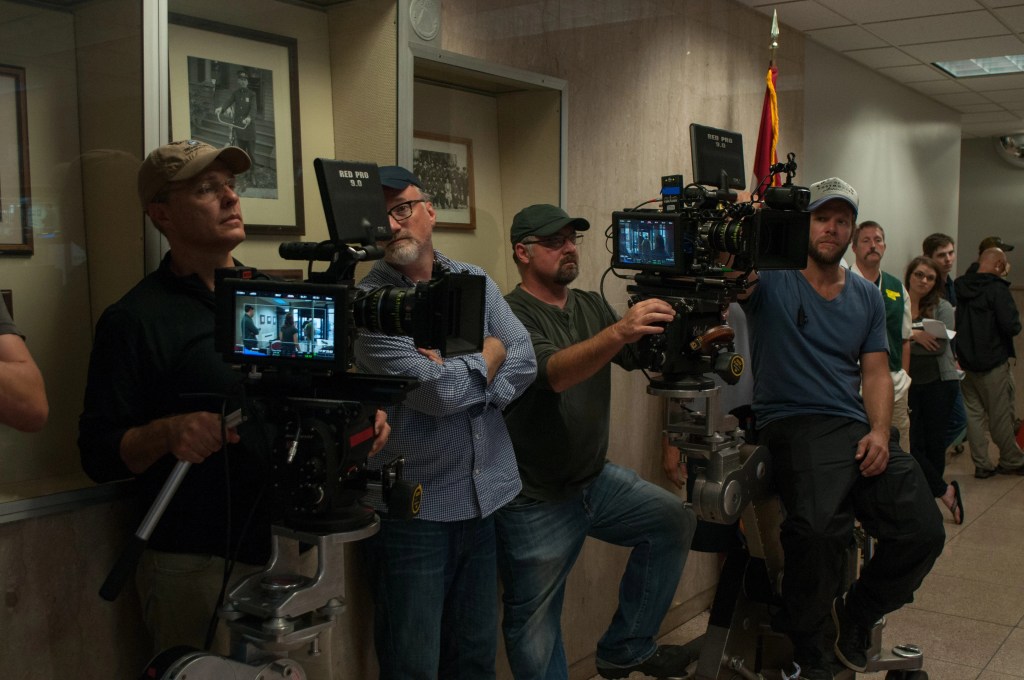
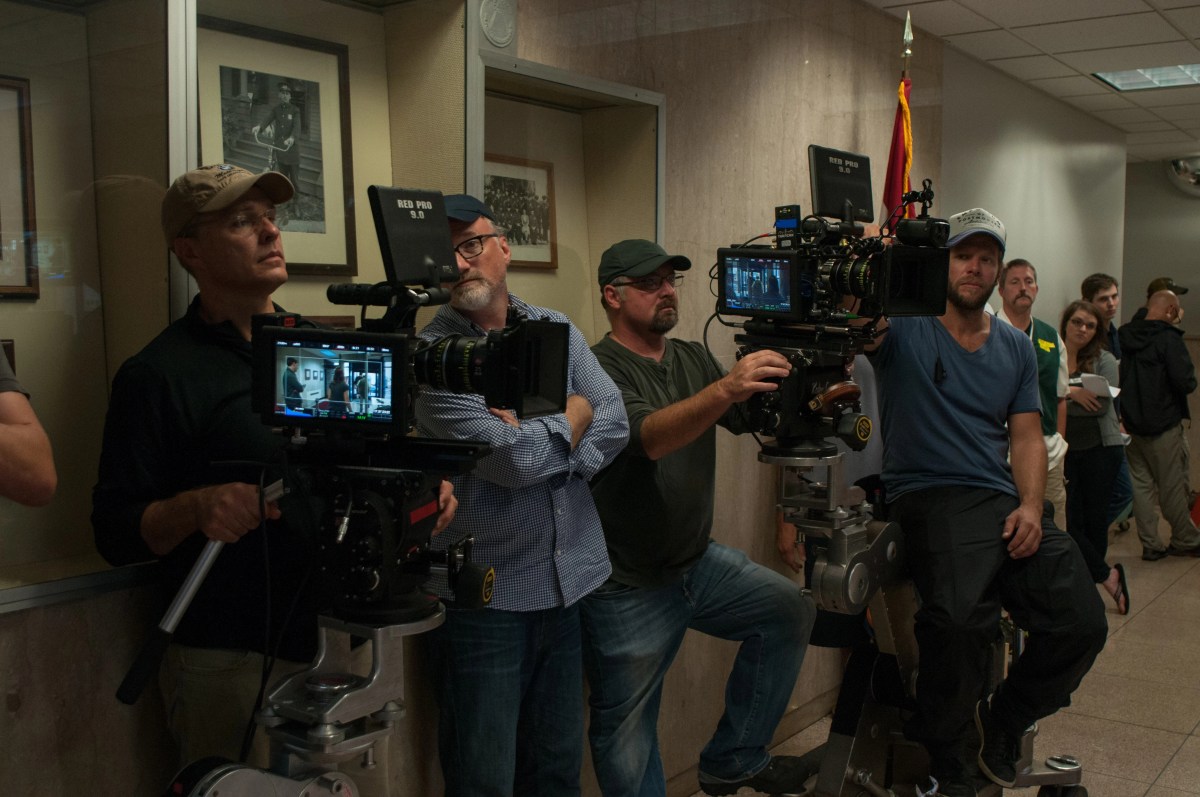
Gone Girl was the fourth feature collaboration between director David Fincher and cinematographer Jeff Cronenweth, ASC since 1999; Fight Club, The Social Network and The Girl with the Dragon Tattoo being the other three. Additionally the pair worked together on multiple commercials and music videos, creating a working chemistry.

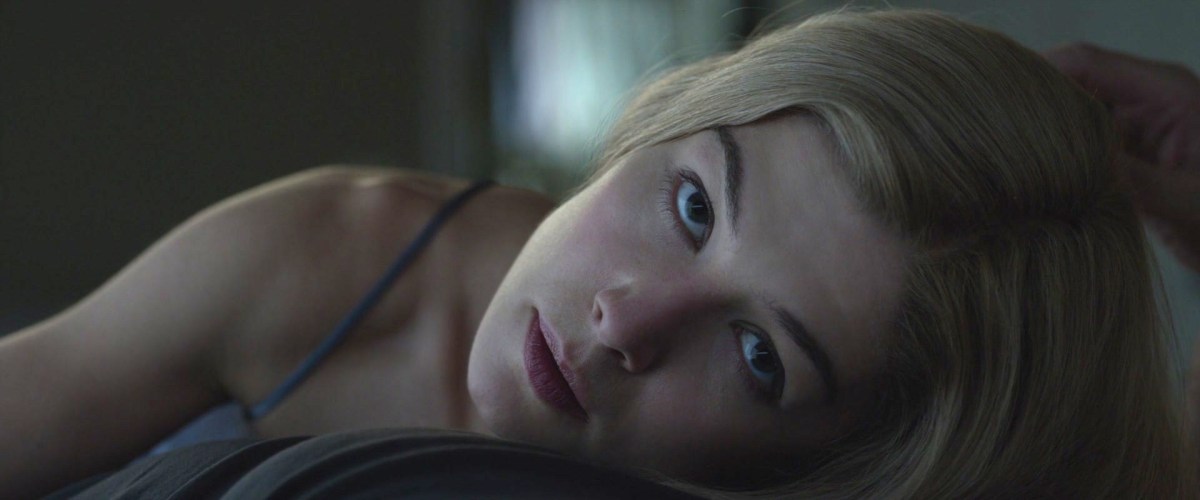
Their 2014 feature Gone Girl, for which Rosamund Pike earned a Best Actress nomination from the Academy, was deftly shot and flowed quicker than its 149-minute runtime would suggest, resulting in one of the best psychological thrillers of the 2000s.

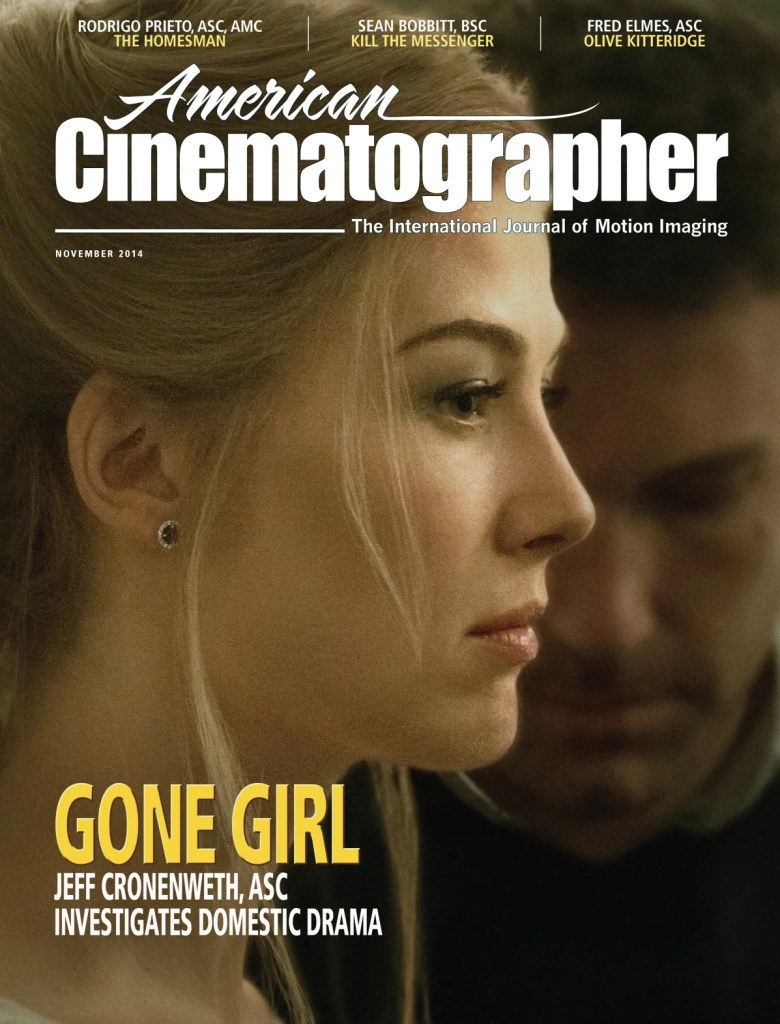
The film was shot digitally on Red Dragon cameras, using Leitz Summilux-C lenses and “a fairly comprehensive lighting package,” which included ETC Source Fours, Mole-Richardson incandescents, and Arri M Series HMIs. Further details can be found in our cover story published in AC Nov. 2014.

In addition to Pike, the filmmakers rounded out the cast with Ben Affleck, Carrie Coon, Neil Patrick Harris, Tyler Perry, Kim Dickens, Patrick Fugit, Missi Pyle, Emily Ratajkowski, Casey Wilson, Boyd Holbrook, and Scoot McNairy.

Cronenweth’s chief lighting technician on this show was Erik Messerschmidt — now an ASC member whose feature credits as a cinematographer include Fincher’s Mank and The Killer.

What follows is a curated collection of unit photography by Merrick Morton, a founding member of the SMPSP who also shot stills for features including L.A. ConfidentialFight ClubZodiac, and The Bad Batch, and the series Mindhunter.

View the full gallery

David Fincher on SE7EN 4K Restoration, Post-‘Alien 3’ Redemption and Casting Ned Beatty as John Doe

The making of a masterpiece.

Todd Gilchrist
January 3, 2025
Variety

David Fincher bristles at being labeled a perfectionist.

He makes an unconvincing case in the shadow of his filmography, which includes “Fight Club,” “Zodiac” and “The Social Network” among several other films marked by a meticulous and unerring technical precision. But Fincher’s objections ring especially hollow when it comes in the midst of an explanation — involving corrections to emulsion caused by the device that perforated the original celluloid — why a new 4K version of “SE7EN” took a year to complete. Yet even if one were inclined to describe his approach merely as a “passionate attention to detail,” that attention has nevertheless resulted in some of the most unforgettable cinematic images of the last 30 years — and now, one of the most beautiful restorations produced in the high-definition era.

Perhaps ironically, “SE7EN,” the film that marked his Hollywood breakthrough, was by his description inspired by “movies with dirt under their fingernails.” Following its premiere at the 2024 TCM Film Festival, the upgraded transfer will be released in theaters (including IMAX) Jan. 3, to be followed on 4K UHD Jan. 7. Fincher recently spoke with Variety about the film, describing his approach to the project after the critical and commercial underperformance of his debut feature, “Alien 3;” revealing details about key casting and creative choices in bringing to life the story of a serial killer inspired by the seven deadly sins; and reflecting on its legacy as a film that both inspired countless imitators and defined his reputation — be it as a perfectionist or just a filmmaker who learned to ask for forgiveness instead of permission.

David Fincher:

I bristle at that idea of perfectionism because if you look at an image and you can see that there’s something going on on the left side of it, I’ll admit it was a big problem for me when I moved to high definition because now I could finally see all of the background actors looky-looing and counting, and you go, “Wow, what is this behavior that’s in the background?” So the more you see, the more I feel it’s my responsibility to make sure that the only thing that’s documented is the stuff that focuses your attention on what you need to walk away with. 

Read the full interview

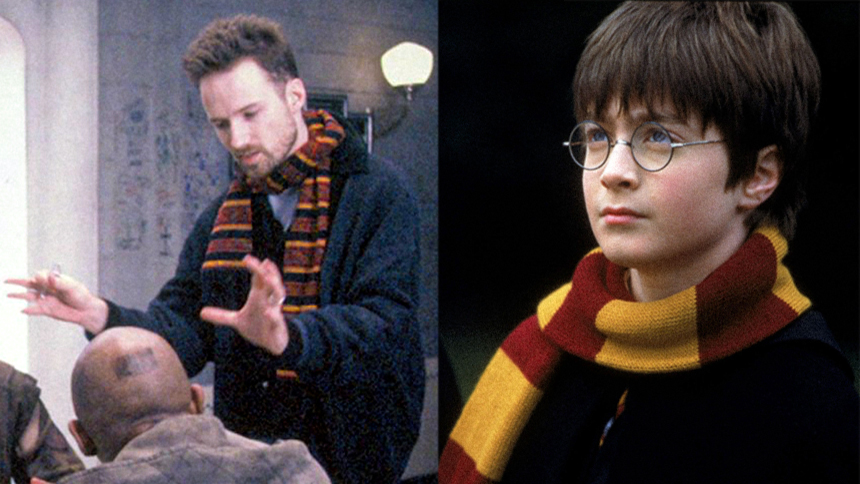
David Fincher Says He Met With Warner Bros. to Direct ‘Harry Potter’ and Told the Studio ‘I Want It to Be Kind of Creepy’

Todd Gilchrist
January 2, 2025
Variety

Cool Girl Catharsis: box-cutting open the deep impact of the titular “Gone Girl”, Amy Dunne

As Gone Girl rings in ten years of Amazing Amy’s disappearing act, Mia Lee Vicino probes the mystery-thriller’s deep impact, from annual Valentine’s Day rewatches to the catharsis of the Cool Girl monologue.

Mia Lee Vicino
October 3, 2024
Letterboxd

This article contains spoilers for ‘Gone Girl’.

“Cool Girl is hot. Cool Girl is game. Cool Girl is fun.” With this incisive diatribe, Rosamund Pike as Amy Elliot Dunne articulates the previously inarticulable. The moment comes at the midpoint of Gone Girl, pulling the rug out from under first-time viewers, while devoted Amazing Amy acolytes mouth the sacred words along with her: “Cool Girl never gets angry at her man. She only smiles in a chagrined, loving manner and then presents her mouth for fucking.”

It’s been ten years since we were first visually exposed to the exquisite Cool Girl monologue; twelve since author Gillian Flynn initially published it across seven blistering pages of her bestselling source novel. David Fincher, Pike (who earned an Oscar nomination for her performance) and Ben Affleck as Amy’s “lazy, lying, shitting oblivious husband” Nick Dunne then brought this ice-pick sharp vision to life, crafting a simultaneous indictment and endorsement of marriage, of revenge, of feminine rage.

Read the full article

Litepanels ‘Inspired By’ Episode 3: David Fincher

Garrett Sammons & Quinton Myricks
July 31, 2024
Litepanels

In this episode of Inspired By, we step into the meticulously crafted universe of David Fincher. Host Garrett Sammons welcomes director Quinton Myricks to lift the veil on Fincher’s signature chilling style.

Join us live as we uncover how he utilizes reverse key lighting, reflections, and harsh light to craft his hauntingly beautiful worlds.

03:15: Introducing Quinton Myricks
07:30: Scene breakdown 1
16:30: Scene breakdown 2
22:48: Scene breakdown 3

Products Discussed: Gemini 1×1 Hard, Gemini 1×1 Soft, Gemini 2×1 Soft

Follow Litepanels: Instagram, Facebook, Ex-Twitter

Follow Garrett Sammons: YouTube, Instagram

Follow Quinton Myricks: Instagram

‘Inspired By’ Episode 1: Roger Deakins
‘Inspired By’ Episode 2: The Bear

Cinematography Style: Erik Messerschmidt

Gray Kotzé (Director of Photography)
June 30, 2024
In Depth Cine

Let’s get into how Erik Messerschmidt does what he does, by unpacking his thoughts and philosophy on photography and looking at what gear he chooses in this episode of Cinematography Style.

00:00: Introduction
01:04: Background
02:06: Visual Language & References
03:44: Perspective & Camera Movement
05:40: Post Production
07:15: Lenses
09:05: Cameras
10:51: Grips
11:33: Lighting
12:28: MUBI

Music:
Ottom – ‘Hold On
Stephen Keech – ‘Grand Design
Nuer Self – ‘Dawn
Liquid Memoirs – ‘Distant Dream
Joley – ‘Night Stroll
I Am Alex – ‘Bonfire
The Soundkeeper – ‘The View From The Attic Window
Sero – ‘Mid August
Chill Winston – ‘The Truth

Sources: 1, 2, 3, 4, 5

In Depth Cine: Website, Official IDC Merch, Patreon, YouTube, Instagram, Discord, Facebook

Gear I use: YouTube Gear, Editing Software, Music

DISCLAIMER: Some links in this description are affiliate links. If you purchase a product or service with these links I may receive a small commission without an additional charge to you. Thank you for supporting my channel so I can continue to provide you with free videos!

MINDHUNTER Composer Jason Hill

Darek Thomas
May 20, 2024
Monday Morning Critic

Jason Hill is a multi-talented artist who has made a name for himself as an award-winning film composer, platinum-selling recording artist, record producer, and mixer.

Hill’s upcoming projects include; Apple TV+‘s drama series Dark Matter, which premieres May 8th; and season 4 of Showtime’s Couples Therapy, which premieres May 31st. Hill is also a music producer on the forthcoming Robbie Williams’ biopic, Better Man.

Notable film and television credits include David Fincher‘s psychological thriller film, Gone Girl; the Emmy-winning series, Mindhunter; Voir; Videosyncrasy; and his only animated short film, Bad Travelling (part of the Emmy-winning series Love, Death, and Robots); Elijah Bynum’s drama film, Magazine Dreams; Apple TV+’s Extrapolations; and City On Fire; Netflix’s Fyre: The Greatest Party That Never Happened; The Confession Killer; and This Is A Robbery; and Philip O’Leary‘s film, The Buffalo Hunt.

In addition to his work in film/television scoring and production, Hill is also the lead singer, guitarist, and producer for the band LOUIS XIV along with the band Vicky Cryer (which contained members of bands The Killers, Muse, Julian Casablancas and the Voidz, Jet, and Jamiroquai). In 2011, he also joined The New York Dolls and played bass on several tours after producing the album Dancing Backward in High Heels, their final Dolls album. He has produced, written records or otherwise worked with such artists as The Killers, David Bowie, Robbie Williams, Jet, Sky Ferreira, Brandon Flowers, Ariel Pink, The Virgins, Macy Gray, Neon Trees, The Bronx, Nick Littlemore/Luke Steele (Empire of the Sun, Pnau), IDKHBTFM (I Don’t Know How But They Found Me), and more. Hill was also part of the seminal alt-country band, Convoy in his early years.

In 2015 Hill bought a building in Glendale that was originally built as a music studio in the mid-1970s and reimagined it into one of the world’s premier modern recording facilities, Department of Recording and Power. This iconic complex was once the birthplace of massive hits from The Beach Boys, James Brown, Barbra Streisand, Billy Joel, Michael Jackson, Joni Mitchell, Joe Cocker, and many more, and is now reborn for the next generation of influential artists.

Listen to the podcast:

Apple Podcasts