Frame & Reference Podcast: Michael Cioni, CEO & Founder of Strada

Kenny McMillan
April 18, 2024
Frame & Reference

Frame & Reference is a conversation between Cinematographers hosted by Kenny McMillan. Each episode dives into the respective DP’s current and past work, as well as what influences and inspires them. These discussions are an entertaining and informative look into the world of making films through the lens of the people who shoot them.

In this episode, we’re joined by my friend Michael Cioni to talk about his new company Strada (YouTube).

Michael is a serial entrepreneur whose career includes numerous awards for his creative work and technical achievements. He is an accomplished director, cinematographer, musician, four-time Emmy winner, member of the Motion Picture Academy, and Associate Member of the American Society of Cinematographers.

A U.S. patent holder of digital cinema technology, Michael was the founder and CEO of the post house Light Iron where he pioneered tools and techniques that emerged as global workflow industry standards. After Light Iron was acquired by Panavision, Michael served as product director for Panavision’s Millennium DXL 8K camera ecosystem.

He then joined the cloud startup company Frame.io where he served as Senior Vice President of Global Innovation. After Frame.io was acquired by Adobe, Michael led numerous workflow innovations including the breakthrough Camera to Cloud technology program as Senior Director of Global Innovation.

He continues to be motivated by the desire to democratize professional workflows and focuses his efforts on inventing new ways for filmmakers to create through his technology. Michael is a well-known and gifted speaker, advocate for the community, and serves as a mentor and educator throughout the global media industry.

Listen to the podcast:

Apple Podcasts
Spotify
YouTube

Support the podcast on PatreonBuy Me a Coffee
Follow Frame & ReferenceTwitterInstagram
Follow Kenny McMillanInstagramOWL BOT

Trent Reznor and Atticus Ross Have a Plan to Soundtrack Everything

Trent Reznor and Atticus Ross—best friends and Nine Inch Nails bandmates—found unlikely creative fulfillment (and a couple of Oscars) by reassessing what they had to offer as musicians. Now they’re thinking even bigger, and imagining an artistic empire of their own making.

By Zach Baron
Photography by Danielle Levitt
April 4, 2024
GQ

Every weekday, Trent Reznor makes his way from his house, a cottagey sprawl behind a white wall in a canyon on Los Angeles’s Westside, to a studio he’s built in his backyard. There he meets his best friend, bandmate, and business partner, Atticus Ross, and they get to work. Reznor and Ross observe the same hours, Monday through Friday, 11 a.m. to 7 p.m. “We show up,” Reznor told me. “We’re not late. We’re not coming in to start to fuck around.” It’s a methodical, orderly existence that Reznor could not have foreseen in the ’90s, when he was fronting Nine Inch Nails and struggling with a drug-and-alcohol problem that was his answer to success. “I would do anything to avoid writing a song,” Reznor said. “I’d rewire the studio 50 times.”

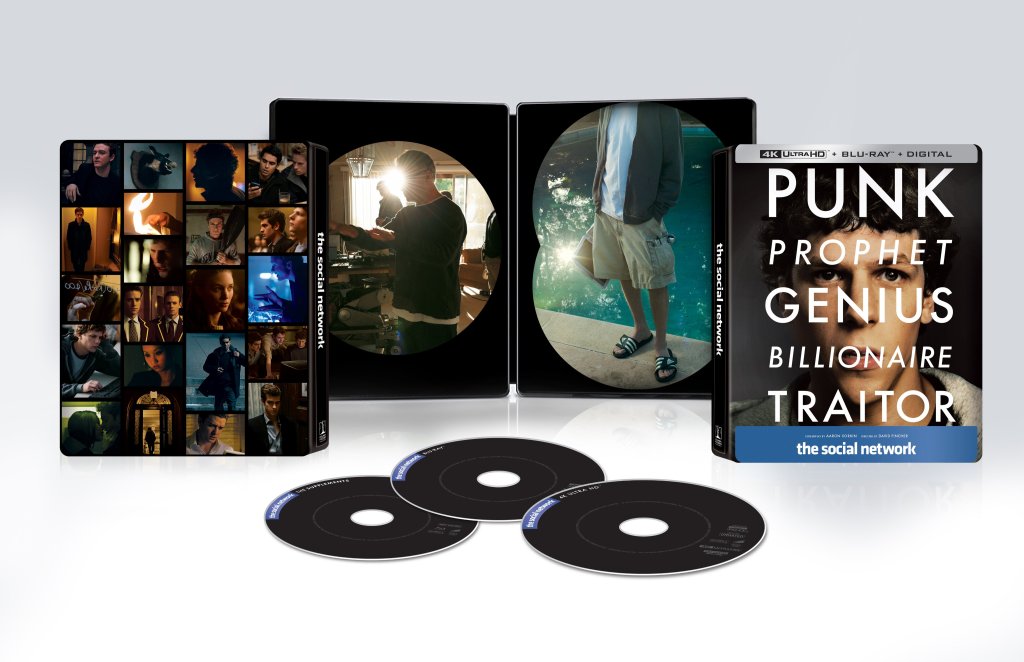
Now Reznor has a wife, Mariqueen Maandig, five kids, and multiple jobs. He is sober. Since 2010, when the director David Fincher asked Reznor and Ross to score The Social Network, for which Reznor and Ross won an Oscar, the two men have had steady employment composing for film. This year, Reznor and Ross are also starting a company called With Teeth, built around storytelling in multiple disciplines: film production, fashion, a music festival, and a venture with Epic Games.

Read the full profile

Trent Reznor & Atticus Ross (NIN) Break Down Their Most Iconic Tracks

April 4, 2024
GQ (YouTube)

Watch the video on GQ:

‘The Social Network’ Might Have Been a Very Different Movie Without This Trent Reznor and Atticus Ross Cue

David Fincher at The Cinémathèque Française: “Zodiac” Screening and Q&A

Frédéric Bonnaud, Director of the Cinémathèque française
Anaïs Duchet, Interpreter
October 14, 2023
Cinémathèque Française

The Cinémathèque Française (French Cinematheque) hosted a David Fincher Retrospective from October 13 to 22, 2023, in Paris (France).

Supported by Netflix, Patron of the Cinémathèque, it opened with a preview screening of The Killer followed by a Q&A with Director David Fincher, and Director of Photography Erik Messerschmidt, ASC.

The next day, a screening of Zodiac was followed by a discussion with the director about the film and his career, “David Fincher par David Fincher, une leçon de cinéma” (“David Fincher by David Fincher, a lesson in cinema”).

The Signature Moves of David Fincher

Adam Schoales, video producer/editor
October 27, 2023
Toronto International Film Festival (TIFF)

From his earliest days working for ILM on Return of the Jedi; to his countless music videos for stars like Madonna, Michael Jackson, and The Rolling Stones; to his groundbreaking big-screen adaptations, there’s no one with an eye quite like David Fincher. But how does he do it (apart from doing over 100 takes)? Through his use of razor-sharp precision; his omniscient and unencumbered camerawork; his pitch-black comedy; and the recognition that deep down people are perverts.

Films Included: The Social Network (2010), Alien3 (1992), SE7EN (1995), Zodiac (2007), Mank (2020), Panic Room (2002), The Girl with the Dragon Tattoo (2011), Gone Girl (2014), The Game (1997), Fight Club (1999), The Curious Case of Benjamin Button (2008)

Want more TIFF? Find us here: Ex-Twitter, Instagram, YouTube, Facebook

From The Frame: David Fincher, What Often Goes Unnoticed

November 30, 2023
From the Frame

David Fincher’s films have often been analyzed for their visual style – the exacting cinematography, precise editing, muted color palette, and meticulous construction of the frame. But with the release of The Killer, people are starting to take note of another aspect – his evocative use of SOUND. However, you can’t really discuss the sonic landscape of a Fincher film without talking about his longest creative collaborator – sound designer Ren Klyce. From Se7en to The Killer, and every project in between, Klyce’s mixes have provided a crucial aural backdrop, frequently blurring the line between sound and music. They both build a textural ambience that sets the tone of the film while also allowing us to access the subjectivity of the characters on screen. So let’s explore how a David Fincher film sounds.

CHAPTERS:

0:00: Intro
1:33: Se7en & Ren Klyce
2:43: The Girl with the Dragon Tattoo
5:01: Zodiac & Musique Concrète
8:15: Role as Re-recording Mixer
10:33: Trent Reznor & Atticus Ross
11:43: The Social Network & Expressionistic Sound

SOURCES:

The Editing Podcast: David Fincher’s Editor Reveals The Key To Make ANY Edit Work

Jordan Orme and Hayden Hillier-Smith
November 22, 2023
The Editing Podcast

Welcome to The Editing Podcast, where storytelling meets the art of post-production. In this riveting episode, hosts Hayden Hillier-Smith and Jordan Orme sit down with none other than the master editor behind the brilliance of David Fincher‘s cinematic wonders—Kirk Baxter.

We delve deep into Kirk’s illustrious career, spanning iconic films that have left an indelible mark on the world of cinema. From “The Social Network” to “Gone Girl” to his most recent thriller, “The Killer”, Kirk Baxter’s editorial prowess has shaped some of the most memorable moments in film history and has influenced the editing landscape forever.

In this episode, we dissect the mesmerizing opening sniper scene, a sequence that hooks audiences from the first frame. Kirk takes us behind the scenes, sharing the secrets of crafting tension and suspense that keep viewers on the edge of their seats. We also explore the intricacies of “The Killer‘s” visceral fight scene, a jaw-dropping display of editing finesse that elevates the film to a new level of intensity. Kirk Baxter’s insights into the creative decisions behind each cut and the rhythmic flow of the sequence offer a rare glimpse into the mind of a true editing maestro.

00:00: David Fincher’s Editor Kirk Baxter
01:00: Use Riverside
02:18: Why Hiding Blinks Creates Intention
05:05: The David Fincher Editing Style
09:50: Choreographing The Vicious Fight Scene in The Killer
12:29: Letting Sound & Music Guide Your Edit
13:57: Comment “Storyblocks is cool”
15:00: Hooking Your Audience In The First 5 Minutes
16:23: How To Cut With Intention
18:14: Breaking Down The Sniper Scene in The Killer
25:15: The Magic Of Vertical Sound Cutting
27:53: Breaking Down The “Cool Girl” Sequence in Gone Girl

Editor: ​⁠ Tyson Pellegrini and Hayden Hillier-Smith
Executive Producer: Vishnu Vallabhaneni
Thumbnail: David Altizer

Listen to the podcast:

Apple Podcasts
Google Podcasts
Spotify

Follow The Editing Podcast: YouTube, Twitter, Instagram

Homecrux: Interview with Donald Burt, Two-Time Oscar Winning Production Designer

Atish Sharma
November 9, 2023
HomeCrux

The 1970s was influenced by conceptualism and performance arts, and Donald Graham Burt, a university student who was then transitioning from boy to manhood was drawn to the conceptual movement. He found it as a way of expressing himself and relied on the art form as a medium to communicate his heart. It’s been more than forty years since Donald graduated but his approach to work and life has remained the same. I caught up with the two-time Academy Award winner to discuss art, design, films, and life in general.

Read the full profile

David Fincher: “Who doesn’t think they’re an outsider?” David Fincher on hitmen, “incels” and Spider-Man’s “dumb” origin story

The director is one of Hollywood’s most unpredictable film-makers. He discusses making a shamelessly pulpy ‘B-movie’, the misogynistic legacy of Fight Club – and the urge to film 100 takes

Steve Rose
October 27, 2023
The Guardian

For anyone who thought David Fincher’s last film, Mank, was the beginning of a new highbrow phase for the director, his latest offering will be something of a jolt. Whereas Mank – on the writing of Orson WellesCitizen Kane – was a sumptuous, substantial, awards-friendly hymn to old Hollywood (it was nominated for 10 Oscars and won two), his new film, The Killer, is a pulpy, violent, almost wilfully two-dimensional hitman thriller adapted from a comic book. “I will never be a more mature film-maker. I will carry the 12-year-old me with me wherever I go,” he says proudly.

Rather than growing up, it looks like Fincher is having fun – albeit in a highly controlled, Fincheresque way. He is in a particularly relaxed mode when we meet at a hotel in London. He looks healthy and he is full of wit and energy, almost as if this isn’t the umpteenth interview he has done in his 40-year career.

Despite being one of the most renowned and distinctive film-makers in the business, Fincher is not comfortable with being described as an “auteur”, or even an artist. “There’s this fallacy that film directors come in and explain exactly what it is that they want to see and then they go to their trailer,” he says. “And then it’s presented to them and they make a few revisions, and then it’s trapped in aspic for all eternity. That’s just not it. It’s much more sock puppetry and daycare and plumbing – you know, pouring concrete. It’s a lot more physical labour than people probably imagine.”

Nevertheless, with The Killer, he says: “I just didn’t want to take it quite as seriously.” He describes the film as “like a good B-movie”: lean, gripping and, despite some bone-crunching action, surprisingly funny. Michael Fassbender’s lone‑wolf hitman is almost comical in his fastidiousness, from his defiantly un-Bond dress code (“like a German tourist”), to his reusable folding cup to take on jobs, to his playlist of Smiths songs. But his well-laid plans go off the rails, forcing him to break his own rule: “Anticipate, don’t improvise.”

Read the full profile

David Fincher: “Cuando a la gente le das un cuento sin moraleja se confunde y culpa al director”

El director de obras míticas como ‘Seven’, ‘El club de la lucha’ o ‘Zodiac’ regresa al escenario del primer con ‘El asesino’, un ‘thriller’ sobre un ejecutor profesional químicamente perfecto.

Luis Martínez, Venecia
25 octubre 2023
El Mundo

El asesino, el último trabajo de David Fincher (Denver, Colorado, 1962), es, ante todo, una película tremendamente moral. Sí, trata de la historia de un muy inmoral asesino a sueldo, pero, sobre todo, reflexiona sobre las consecuencias de los actos, sobre la ética del trabajo, sobre el arrepentimiento por los errores cometidos y, apurando, sobre la precisión con la que el mal, así en general, hace de las suyas. De paso, la película supone el regreso de su autor a la irrenunciable fascinación por el crimen en su más brutal y evidente crudeza.

De la mano de Michael Fassbender, se cuenta la historia de un asesino a sueldo que se ve obligado a intentar paliar los efectos siempre tremendos de una equivocación fatal. Nos recibe en Venecia poco después de la presentación de la película en la Mostra. En el Lido, precisamente, estrenó hace casi 25 años El club de la lucha.

Lee la entrevista completa / Read the full interview in Spanish

The Vice Guide to Film: David Fincher (2016)

VICE, 2016

Ben Affleck, Director of Photography Jeff Cronenweth, Writer Kiva Reardon, Jesse Eisenberg, Robin Wright, and Director Tamra Davis, examine the films of David Fincher, whose mixture of craftsmanship and showmanship has created thrillers that cast a dark shadow over American cinema.