Riverside Chats with Tom Knoblauch: Adam Nayman on “David Fincher: Mind Games”

Tom Knoblauch
January 16, 2022
Riverside Chats with Tom Knoblauch (Twitter, Facebook, Instagram)

Riverside Chats is a series of conversations hosted by Tom Knoblauch exploring culture of all kinds, broadcast from the Heartland. Listen on KIOS 91.5 Omaha Public Radio on Mondays and Saturdays or on your favorite podcast app.

Adam Nayman is a critic at The Ringer and Cinema Scope and he is also the author of The Coen Brothers: This Book Really Ties the Room Together and Paul Thomas Anderson: Masterworks, which he discussed in an earlier episode of this show.

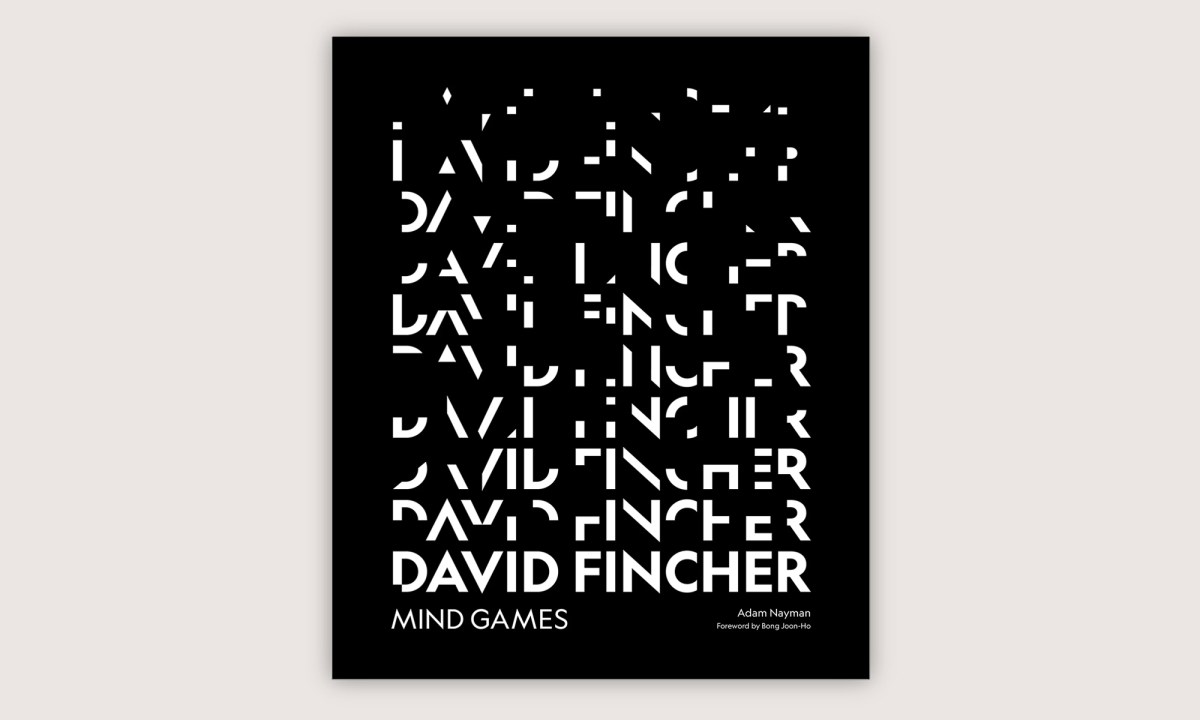
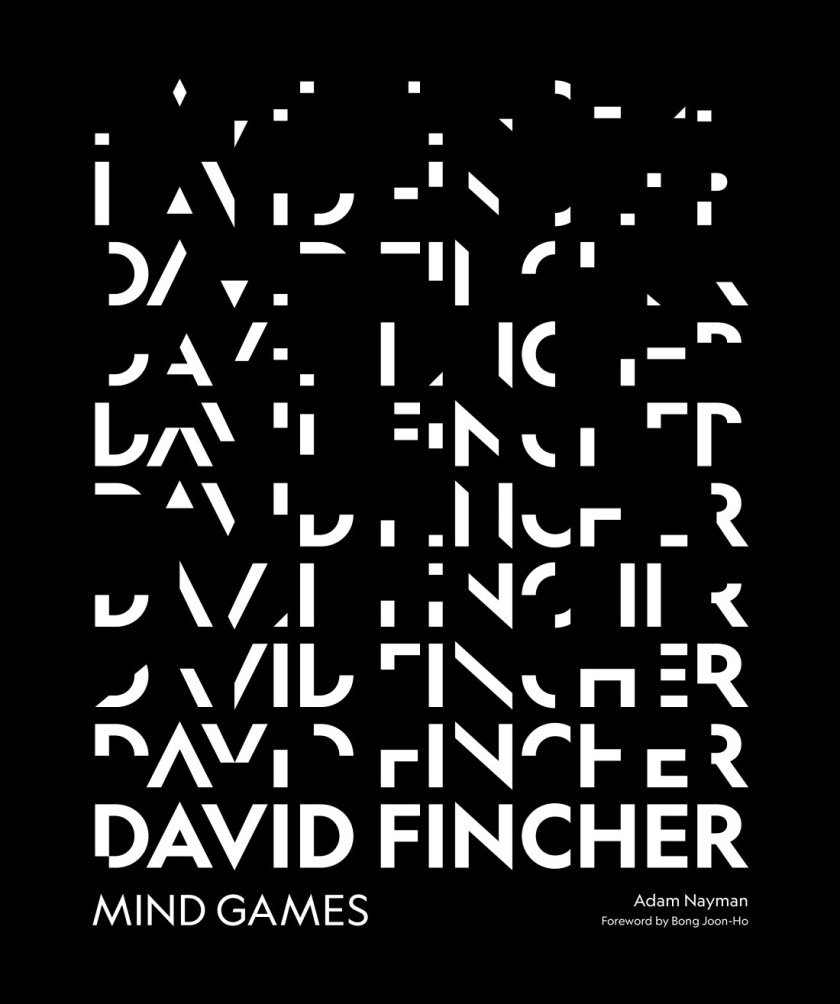
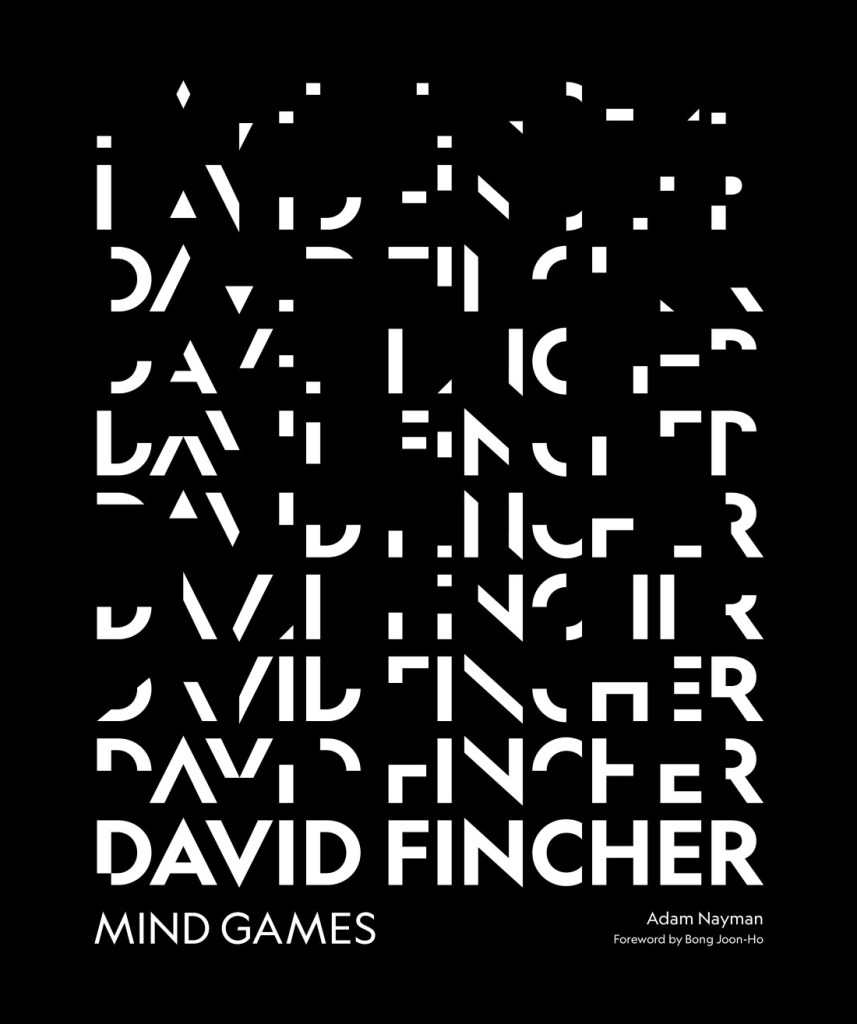
His latest book, David Fincher: Mind Games is a critical and visual survey of the filmmaker behind incredibly influential works include Seven, Fight Club, The Curious Case of Benjamin Button, The Social Network, The Girl with the Dragon Tattoo, and Gone Girl, and more. Nayman gives context, analysis, links themes, and conducts interviews with various people involved across Fincher’s career, grouping Fincher’s work around themes of procedure, imprisonment, paranoia, prestige, and relationship dynamics. Today he talks about Fincher’s career and shifting place in the cinematic landscape.

Check out David Fincher: Mind Games wherever you get books.

Support the podcast

Listen to this episode:

Apple Podcasts
Spotify
Google Podcasts
RadioPublic

Connecting the dots between Gone Girl, Zodiac and David Fincher

Illustration by Hsiao-Ron Cheng

Mind Games author Adam Nayman discusses the connective tissue between David Fincher’s films and why we can’t help comparing him to Paul Thomas Anderson

Radheyan Simonpillai
December 22, 2021
NOW Magazine

In the David Fincher film Zodiac, cartoonist Robert Graysmith obsessively pours over legal documents, testimonies, and geographic patterns. He connects the dots that won’t necessarily give him conclusive answers regarding the titular San Francisco serial killer but will nevertheless make for a pretty good book that paved the way for a masterpiece film. I like to picture Toronto film critic and author Adam Nayman doing the same for his book David Fincher: Mind Games.

Nayman scans Fincher’s work, from the music video for Madonna’s Express Yourself to last year’s endearing look back at authorship in Mank, writing chapters on each movie with forensic detail and riveting insight. Mind Games, which comes with a lovely foreword from Parasite director Bong Joon-Ho, is the latest in Nayman’s series of comprehensive books on the greatest white male directors of our generation, sitting nicely alongside The Coen Bros: This Book Really Ties The Films Together and Paul Thomas Anderson: Masterworks. And there’s an argument to be made that this book is the most fascinating of the three.

More so than the others, Fincher’s movies inspire divisive reactions. Movies like The Curious Case Of Benjamin Button and Mank rack up the most Oscar nominations while being pilloried by many critics. Se7en and Fight Club earn dorm room notoriety, which in turn is weaponized against the films themselves. Some of his greatest work in Zodiac and Gone Girl doesn’t quite get the love it deserves. But Fincher is the kind of filmmaker whose misses are infinitely more fascinating to me than the best that a Christopher Nolan puts up.

Nayman discussed Fincher’s canon with NOW in a conversation about the imprint he leaves on his films and how he compares to Paul Thomas Anderson. The Licorice Pizza filmmaker has a very different kind of career, but feels oddly linked to Fincher.

Read the full interview

Buy the book David Fincher: Mind Games. By Adam Nayman

BETA (WPR): The exacting and evolving genius of filmmaker David Fincher

Film critic Adam Nayman’s ‘Mind Games’ explores the successful perfectionism of the ‘Fight Club,’ ‘Se7en,’ ‘The Social Network’ and ‘Zodiac’ director

Doug Gordon, Adam Friedrich
December 18, 2021
BETA (WPR)

In 1985, aspiring director David Fincher was tapped by the American Cancer Society to make a PSA. Riffing off Stanley Kubrick‘s “2001,” Fincher put forth one of the most provocative and memorable commercials ever featuring an in-utero fetus smoking a cigarette to demonstrate the dangers of pregnant smoking.

This PSA was just the beginning of Fincher’s ability to utilize the shared language and visuals of film to express a point. He would move next to directing music videos where he famously invoked Fritz Lang‘s “Metropolis” while directing Madonna’s 1989 video for “Express Yourself.”

Film critic Adam Nayman told WPR‘s “BETA” that Fincher’s cinematic ambition was present in all of this early work before he became a household name directing transcendent films like “Fight Club,” “Se7en,” “Zodiac” and “The Social Network.”

“I think that he was part of a cycle of music video directors who were drawing on movies for the music videos. So, by the time they ended up making feature films, the visual language and the ambition were already there,” Nayman said.

Nayman is the author of “David Fincher: Mind Games,” a comprehensive critical companion book to Fincher’s career output thus far. It’s the third installment of Nayman’s deep dives into generational filmmakers that includes the Coen brothers and Paul Thomas Anderson.

Read and listen to the full interview

Buy the book David Fincher: Mind Games. By Adam Nayman

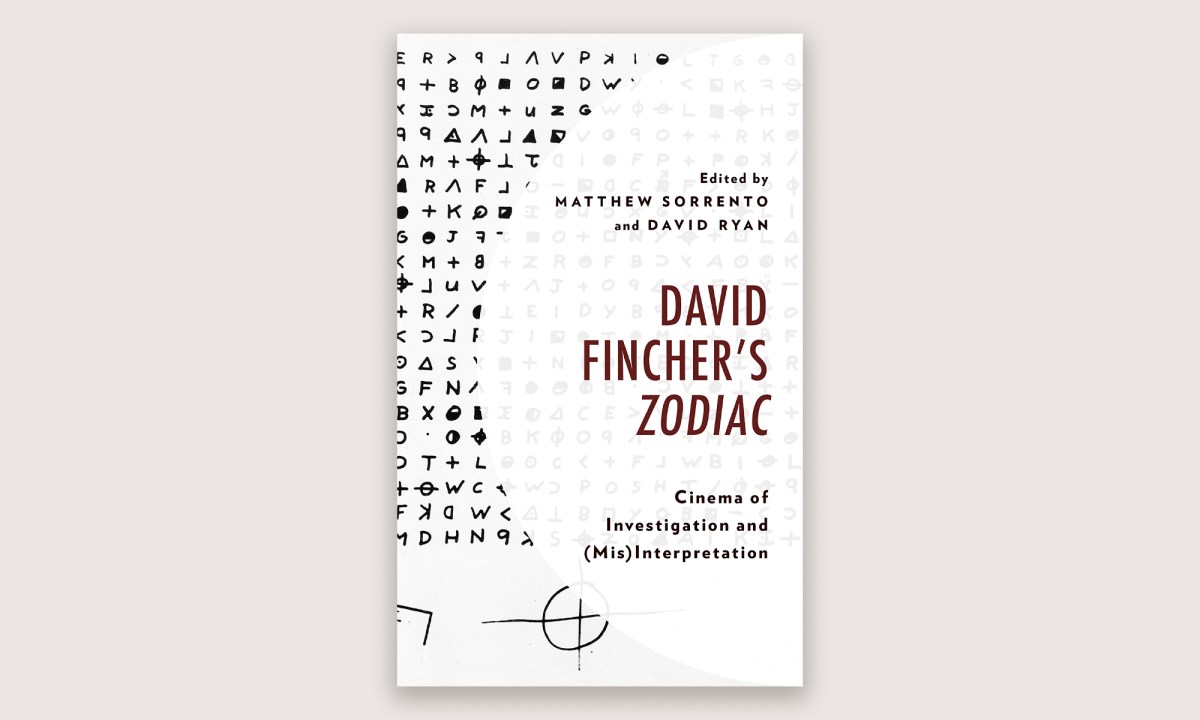
David Fincher’s Zodiac. Cinema of Investigation and (Mis)Interpretation

Edited by Matthew Sorrento, teacher of film studies at Rutgers University-Camden, and David Ryan, academic director and faculty chair of the Master of Arts of Professional Communication program at the University of San Francisco.

Foreword by Christopher Sharrett

Contributions by Jeremy Carr; Daniel R. Fredrick; Deborah L. Jaramillo; Martin Kevorkian; Rod Lott; Theresa Rodewald; Jake Rutkowski; David Ryan; Christopher Sharrett; Matthew Sorrento; George Toles; Christopher Weedman and Andrew M. Winters.

David Fincher’s Zodiac (2007), written by producer James Vanderbilt and adapted from the true crime works of Robert Graysmith, remains one of the most respected films of the early twenty-first century. As the second film featuring a serial killer (and the first based on fact) by Fincher, Zodiac remains a standout in a varied but stylistically unified career. While connected to this genre, the film also hybridizes the policier genre and the investigative reporter film. And yet, scholarship has largely ignored the film.

This collection is the first book-length work of criticism dedicated to the film. Section One focuses on early influences, while the second section analyzes the film’s unique treatment of narrative. The book closes with a section focusing on game theory, data and hegemony, the Zodiac’s treatment in music, and the use of sound in cinema. By offering new avenues and continuing a few established ones, this book will interest scholars of cinema and true crime along with fans and enthusiasts in these areas.

University Press Copublishing Division / Fairleigh Dickinson University Press
Pages: 274 • Trim: 6 x 9
978-1-68393-326-7 • Hardback • December 15, 2021 • $105.00 • (£81.00)
978-1-68393-327-4 • eBook • December 15, 2021 • $45.00 • (£35.00)
Series: The Fairleigh Dickinson University Press Series in Law, Culture, and the Humanities
Subjects: Performing Arts / Film / History & Criticism, Social Science / Criminology, Performing Arts / Film / Genres / Documentary

More details: Rowman & Littlefield

ORDER
Also available from: Amazon, Barnes & Noble

VFX Notes: The Art of Matte Painting and Invisible VFX with Craig Barron

Hugo Guerra (Twitter) & Ian Failes (Twitter)
November 24, 2021
Hugo’s Desk (YouTube, Patreon, Twitter, Facebook) / befores & afters

On this episode of VFX Notes, Hugo Guerra from Hugo’s Desk and Ian Failes from befores & afters are joined by Craig Barron. Barron is creative director at Magnopus, and previously worked as a matte painter at ILM and co-founder and visual effects supervisor at Matte World Digital. Barron won a VFX Oscar for The Curious Case of Benjamin Button, and was also nominated for a VFX Oscar for Batman Returns.

They talk about his amazing career and his work in Zodiac, Casino, Empire Strikes Back, Batman Returns, and so much more, what those original days of matte painting in the optical era were like, and how the transition to digital happened. Matte World Digital’s work on Zodiac, amongst other films, was also discussed in a previous episode.

This episode is sponsored by ActionVFX Black Friday sale. It begins November 25th at 8 PM EST and will end on December 3rd at 11:59 PM EST. All VFX elements in the library will be 55% off the first 24 hours, & 50% off the remaining days of the sale. All Annual Subscription Plans (Individual & Studio Plans) purchased during the sale will receive 2x the amount of monthly elements. Learn more here.

Chapters:
00:00:00 – Intro
00:04:30David Fincher and DVD extras
00:05:35 – Craig’s career
00:08:16Ray Harryhausen and influences
00:12:08 – Matte paintings in Empire Strikes Back
00:18:13 – Physical correct vs artistic direction
00:32:07 – Matte paintings in Batman Returns
00:34:12Casino and the first radiosity render
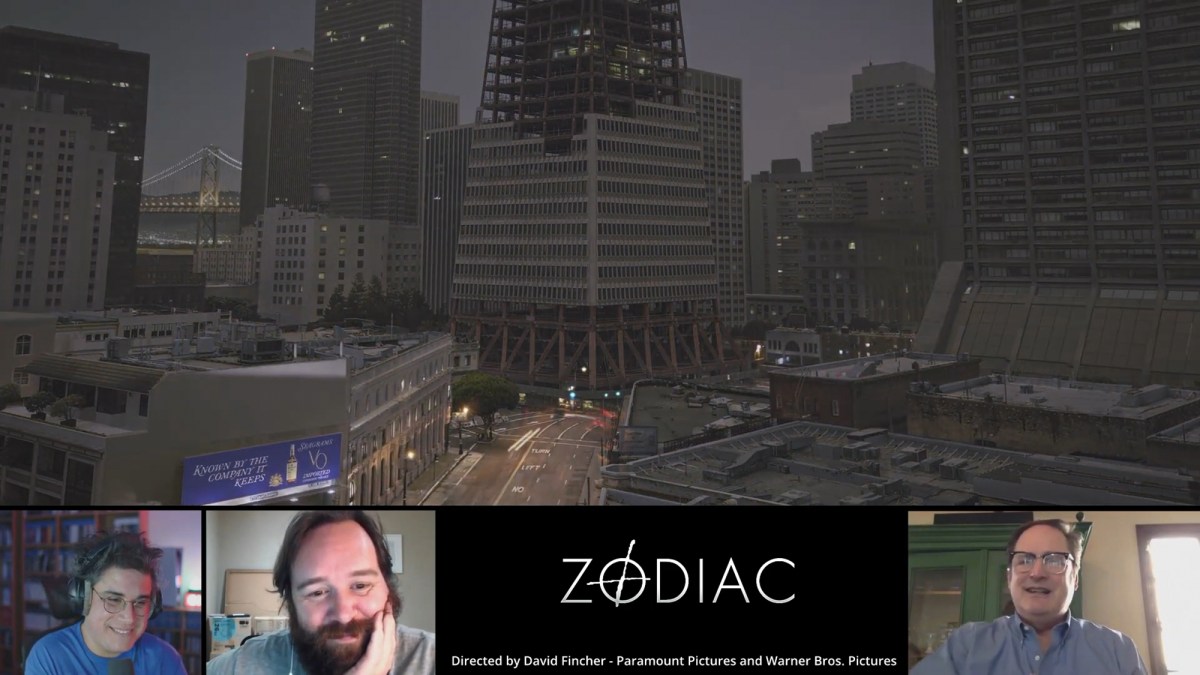
00:43:37 – 3D projections in Zodiac
00:55:02Blade Runner VR
00:59:48The Criterion Collection and history
01:07:05Patreon, Twitch Subs and YouTube members credits

Listen to the podcast:

befores & afters
Apple Podcasts

Spotify
Google Podcasts

The Film Comment Podcast: The Mind Games of David Fincher

David Fincher by Michael Avedon

Devika Girish and Clinton Krute
November 23, 2021
Film Comment

This week’s conversation focuses in on David Fincher—a director whose decade-spanning body of gritty Americana—from the grim moral drama of Se7en to the revisionist Hollywood tale of the recent Mank—has inspired both obsessive fandom and derisive dismissal.

A new book by Adam NaymanDavid Fincher: Mind Games (out November 23 from Abrams Books), offers a canny and timely appraisal of the director’s filmography. Adam writes that, “Over the past thirty years, Fincher has cultivated and maintained a reputation that precedes him of formal rigor and technocratic exactitude, of moviemaking as a game of inches.” Film Comment editors Devika Girish and Clinton Krute invited Adam and critic, filmmaker, and former NYFF director, Kent Jones—who’s written about Fincher many times over the years in FC—for an illuminating deep-dive into the Fincherverse.

Listen to the podcast

Buy the book David Fincher: Mind Games. By Adam Nayman

Adam Nayman on David Fincher’s Complicated Auteurism

David Fincher by Jack Davison

Nick Newman
November 23, 2021
The Film Stage

Few film books in recent memory made waves like Adam Nayman’s Paul Thomas Anderson: Masterworks, a too-rare melange of authorial talent, topical interest, and opulent presentation. Last year Nayman and I spoke at length about the tome that no doubt you’ve seen in bookstores (big and small alike) since.

Nayman has returned with David Fincher: Mind Games, another Abrams-published doorstop on another double-capital-A American Auteur, lined again with essays that surprise in their capacity to find new perspectives and provocative readings on films for which there seemed no more room. Finally able to talk in person—thus, you’ll (please) read, at greater length—we sat down for a talk on writing thousands of words on someone for whom a consistent critical standing is tougher than meets the eye.

Read the full interview

Buy the book David Fincher: Mind Games. By Adam Nayman

Adam Nayman Talks David Fincher’s Adman Past (And Present)

A conversation with the author about his new book, “David Fincher: Mind Games”

Sydney Urbanek
November 17, 2021
Mononym Mythology

Adam Nyman is a fellow film critic and the author of several books about films and filmmakers, including but not limited to The Coen Brothers: This Book Really Ties the Films Together (2018) and Paul Thomas Anderson: Masterworks (2020). (Though we’ve never crossed paths in person, he also teaches in the department where I did my Master’s program.) He opens Mind Games with a dedicated discussion of the decade or so before Fincher ever made his narrative feature debut with ALIEN³ (1992), but then continues to come back to his commercial and music video work for the remainder of it, wisely treating his adman past as, well, more of an adman present. A few weeks back, Adam and I chatted for an hour about Fincher’s short-form oeuvre, but also his features because—again—the two aren’t as discrete as a lot of people believe. Our conversation has been edited for clarity, but not really so much for length.

Read the full interview

Buy the book David Fincher: Mind Games. By Adam Nayman

Multiple Men Play the Zodiac Killer in Zodiac. Adam Nayman’s New Book on David Fincher Explains Why

Illustration by Ana Godis

Adam Nayman
November 15, 2021
MovieMaker

There is a fourth major screen presence in Zodiac: the title character, who is played by a number of different actors in various guises before disappearing as a physical presence around the midpoint of the movie, last seen and heard threatening a female hitchhiker who survives her encounter. This set-piece, based on the recollections of one Kathleen Johns (Ione Skye), pays off the ruthlessness of what has come before, even as it emphasizes Fincher’s restraint. Because we’ve seen in bloody detail what the Zodiac is capable of in the prologue and the borderline unwatchable lakeside filleting of a couple in Berryessa, his warning to Kathleen that “before I kill you, I’m going to throw your baby out the window” is hideously credible. But, amazingly, the historical record intervenes as a deus ex machina; Kathleen’s unlikely escape and roadside salvation constitute this pressurized movie’s only moment of true relief.

Zodiac’s multiple-casting trick is there to account for the possibility — floated in Graysmith’s book, as well as several other studies — of multiple killers, either working in tandem or in a copycat scenario. Broadly speaking, the film follows Graysmith’s hypothesis that the most plausible suspect was one Arthur Leigh Allen (referred to in Zodiac the book pseudonymously as “Bob Starr”), a disgraced elementary school teacher with a history of pedophilia who died in 1992 surrounded by a veritable mountain of persuasive circumstantial evidence, including a series of supposedly self-incriminating comments to friends and relatives. Allen was ultimately exculpated by DNA testing and inconclusive fingerprint matches, events which Zodiac presents without trying to either reinforce or rebut them. “I don’t want this [movie] to be about convicting Arthur Leigh Allen,” Fincher said in 2005. “Certainly [Graysmith] came to his conclusion and it was good enough for him . . . When [Allen] died, he felt like it was put away. That’s not what we want to represent.”

Read the full excerpt

Buy the book David Fincher: Mind Games. By Adam Nayman

Shooting Zodiac. By Robert Graysmith

Monkey’s Paw Publishing, Inc. (FacebookTwitterInstagram)

DAVID FINCHER WAS AFTER THE TRUTH.

WITHOUT IT, HE WOULD NOT SHOOT ZODIAC.

For nearly two decades, Hollywood had been trying to make a movie of Zodiac, and for nearly two decades, it had failed. In 2003, producer Brad Fischer, and screenwriter Jamie Vanderbilt attempted the undoable, and set their sights on the one filmmaker they felt unequalled for the helm: director David Fincher (Se7enFight Club). Fincher’s eye for detail, probing mind, and unrelenting quest for answers made him ideal. His personal connection to the case made him perfect.

Author Robert Graysmith, director David Fincher, producer Brad Fischer, and screenwriter James Vanderbilt: “The Untouchables” (Photo: Margot Graysmith)

From Hollywood boardrooms to remote fog-shrouded crime scenes, they battle a huge script that refuses to be beaten, a case that refuses to be solved, and a running time and budget that threaten their film. Follow as they track down missing witnesses, gather the original investigators, visit the original crime scenes, discover boxes of Zodiac case files from an attic, unearth new clues, a videotape of the prime suspect’s police interrogation, and a surviving victim who doesn’t want to be found. To keep Fincher on board, and get their film greenlit, it will take cold leads, private eyes, new evidence, and most of all, perseverance.

About The Author

Robert Graysmith in 2012. Photo: Russell Yip / The Chronicle

Robert Graysmith (Facebook) is an author and illustrator. He was the political cartoonist for the San Francisco Chronicle when the letters and cryptograms from the infamous Zodiac killer began arriving to the paper. He was present when they were opened in the morning editorial meetings, and has been investigating & writing ever since. He lives in San Francisco where he continues to write and illustrate. He is best known for his books “Zodiac” and “Zodiac Unmasked”.

Edition

Imprint: Monkey’s Paw Publishing, Inc.
Editor: Aaron Smith
Publication Date: August 31, 2021

Formats

HARDCOVER
Dimensions: 6 x 9 x 1 inches
Weight: ‎ 1.59 pounds
ISBN-10: 1736580051
ISBN-13: 978-1736580059
Page Count: 375
Price: $29.99
BUY: Amazon (Worldwide: check your local Amazon), Barnes & Noble

EBOOK
ISBN-10: 1736580035
ISBN-13: 9781736580035
Page Count: 354
Price: $12.99
BUY: Amazon, Apple Books, Barnes & NobleKoboGoogle Play BooksSmashwords

“Zodiac in Costume at Lake Berryessa,” by former Chronicle cartoonist Robert Graysmith. Surviving victim Bryan Hartnell personally described the costume in detail to Graysmith, after his, and Cecilia Shepherd’s, encounter with the Zodiac on Sept. 27, 1969. Photo: Robert Graysmith

Robert Graysmith, political cartoonist for The San Francisco Chronicle, in 1977. Photo: Gary Fong / The Chronicle

BOOKS

Robert Graysmith wrote the definitive Zodiac Killer book. He breaks decade-long silence to tell us about his upcoming projects

Kevin Fagan
September 20, 2021
Datebook (San Francisco Chronicle)

For a fairly famous guy, author Robert Graysmith doesn’t get out much. He hasn’t been heard from in public for about a decade, and he rarely leaves his San Francisco home.

The 78-year-old Graysmith has been crafting manuscripts at such an astonishing pace, printing them out as he goes along, that they now stand in a 5-foot-high stack that breaks down into what he says will be 34 books, ranging from children’s tales and historical explorations to true crime and fictional legends. Most just need a few final touches and editing, he said.

These days, Graysmith is working with a new publisher he knows well: his 50-year-old son, Aaron Smith.

An artist and CGI supervisor for dozens of movies, from “Monsters vs. Aliens” to “Cast Away,” Smith founded a publishing house in November that is producing his father’s books. The company is called Monkey’s Paw.

The first in this voluminous new string landed on online sites like Amazon at the end of August, the 383-page “Shooting Zodiac,” which documents the planning that went into making the movie “Zodiac.”

“It’s much more fun working with Aaron on these things, because he can put them out quickly,” Graysmith said. “I figured out you’re going to wait about three years to get a book done, and then you hand them the book, and they’re going to spend a lot of time and then they won’t do anything for another year or so. With Aaron, we can get the book edited and out there in a few months.”

Graysmith’s son — who uses the last name his dad used before he merged Gray and Smith — said he wasn’t really surprised when he realized how many pages his dad had in the hopper.

“Writing is pretty much all he does,” Smith said by phone from his home in Southern California, “and the illustrations.”

Graysmith said he started working on his engagingly told “Shooting Zodiac” before the movie came out, as he was being bowled over by the dedication director David Fincher, producer Brad Fischer and screenwriter Jamie Vanderbilt put into the project. They combed over the same material Graysmith had in his books “Zodiac” and “Zodiac Unmasked” to rebuild and advance his narrative around the only suspect ever named by police, Arthur Leigh Allen of Vallejo.

Watching them work was “a marvelous adventure,” Graysmith said.

The new book is as much about greenlighting the movie and hiring actors like Jake Gyllenhaal, who played Graysmith, as it is about how the three filmmakers did their research. It’s also probably the last thing Graysmith will write about the Zodiac, he and his son said.

Read the full profile

A young Aaron Graysmith (Smith), played by Zachary Sauers, already helping Dad with his “special project”. (Zodiac, 2007)