Few film books in recent memory made waves like Adam Nayman’s Paul Thomas Anderson: Masterworks, a too-rare melange of authorial talent, topical interest, and opulent presentation. Last year Nayman and I spoke at length about the tome that no doubt you’ve seen in bookstores (big and small alike) since.
Nayman has returned with David Fincher: Mind Games, another Abrams-published doorstop on another double-capital-A American Auteur, lined again with essays that surprise in their capacity to find new perspectives and provocative readings on films for which there seemed no more room. Finally able to talk in person—thus, you’ll (please) read, at greater length—we sat down for a talk on writing thousands of words on someone for whom a consistent critical standing is tougher than meets the eye.
Adam Nyman is a fellow film critic and the author of several books about films and filmmakers, including but not limited to The Coen Brothers: This Book Really Ties the Films Together (2018) and Paul Thomas Anderson: Masterworks (2020). (Though we’ve never crossed paths in person, he also teaches in the department where I did my Master’s program.) He opens Mind Games with a dedicated discussion of the decade or so before Fincher ever made his narrative feature debut with ALIEN³ (1992), but then continues to come back to his commercial and music video work for the remainder of it, wisely treating his adman past as, well, more of an adman present. A few weeks back, Adam and I chatted for an hour about Fincher’s short-form oeuvre, but also his features because—again—the two aren’t as discrete as a lot of people believe. Our conversation has been edited for clarity, but not really so much for length.
There is a fourth major screen presence in Zodiac: the title character, who is played by a number of different actors in various guises before disappearing as a physical presence around the midpoint of the movie, last seen and heard threatening a female hitchhiker who survives her encounter. This set-piece, based on the recollections of one Kathleen Johns (Ione Skye), pays off the ruthlessness of what has come before, even as it emphasizes Fincher’s restraint. Because we’ve seen in bloody detail what the Zodiac is capable of in the prologue and the borderline unwatchable lakeside filleting of a couple in Berryessa, his warning to Kathleen that “before I kill you, I’m going to throw your baby out the window” is hideously credible. But, amazingly, the historical record intervenes as a deus ex machina; Kathleen’s unlikely escape and roadside salvation constitute this pressurized movie’s only moment of true relief.
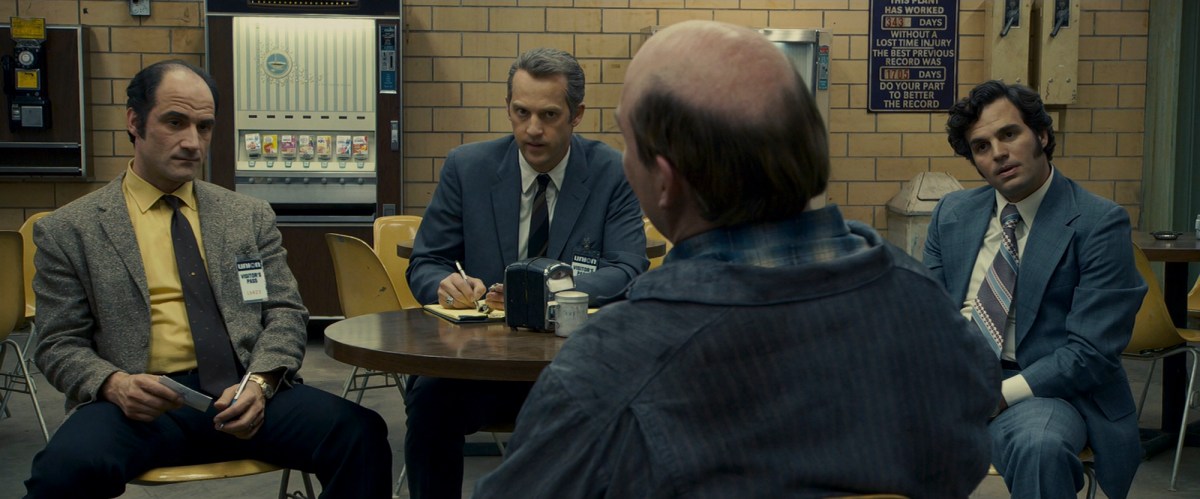
Zodiac’s multiple-casting trick is there to account for the possibility — floated in Graysmith’s book, as well as several other studies — of multiple killers, either working in tandem or in a copycat scenario. Broadly speaking, the film follows Graysmith’s hypothesis that the most plausible suspect was one Arthur Leigh Allen (referred to in Zodiac the book pseudonymously as “Bob Starr”), a disgraced elementary school teacher with a history of pedophilia who died in 1992 surrounded by a veritable mountain of persuasive circumstantial evidence, including a series of supposedly self-incriminating comments to friends and relatives. Allen was ultimately exculpated by DNA testing and inconclusive fingerprint matches, events which Zodiac presents without trying to either reinforce or rebut them. “I don’t want this [movie] to be about convicting Arthur Leigh Allen,” Fincher said in 2005. “Certainly [Graysmith] came to his conclusion and it was good enough for him . . . When [Allen] died, he felt like it was put away. That’s not what we want to represent.”
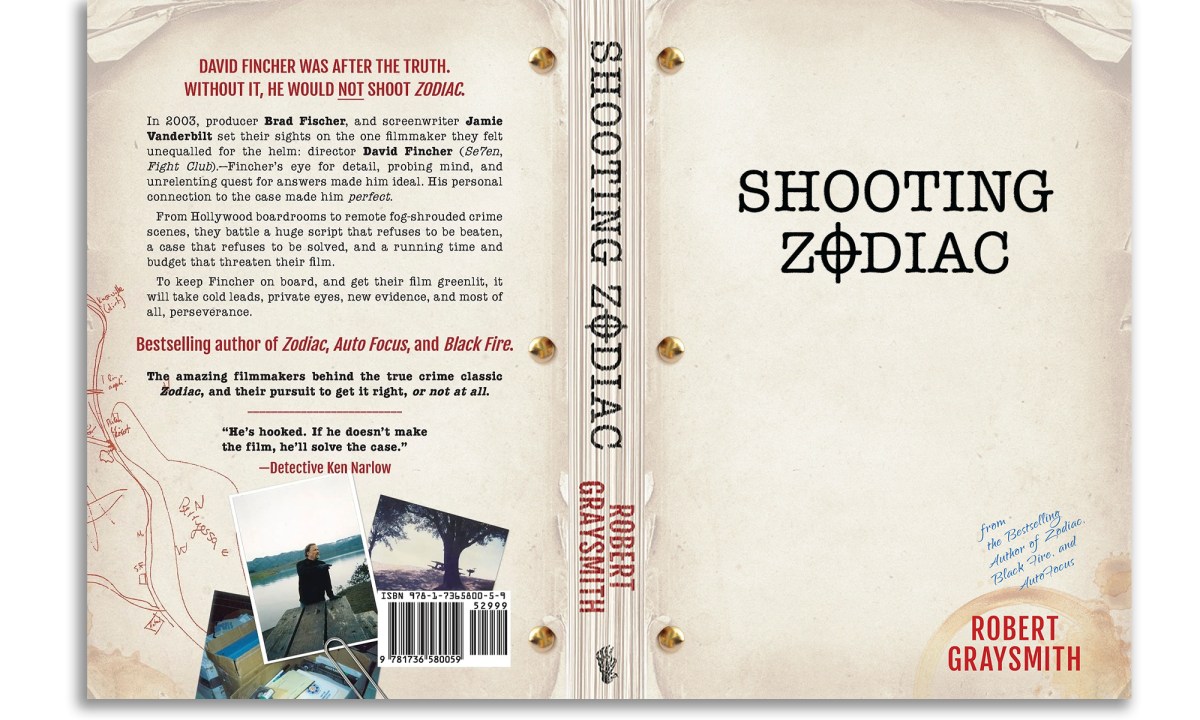
For nearly two decades, Hollywood had been trying to make a movie of Zodiac, and for nearly two decades, it had failed. In 2003, producer Brad Fischer, and screenwriter Jamie Vanderbilt attempted the undoable, and set their sights on the one filmmaker they felt unequalled for the helm: director David Fincher (Se7en, Fight Club). Fincher’s eye for detail, probing mind, and unrelenting quest for answers made him ideal. His personal connection to the case made him perfect.
Author Robert Graysmith, director David Fincher, producer Brad Fischer, and screenwriter James Vanderbilt: “The Untouchables” (Photo: Margot Graysmith)
From Hollywood boardrooms to remote fog-shrouded crime scenes, they battle a huge script that refuses to be beaten, a case that refuses to be solved, and a running time and budget that threaten their film. Follow as they track down missing witnesses, gather the original investigators, visit the original crime scenes, discover boxes of Zodiac case files from an attic, unearth new clues, a videotape of the prime suspect’s police interrogation, and a surviving victim who doesn’t want to be found. To keep Fincher on board, and get their film greenlit, it will take cold leads, private eyes, new evidence, and most of all, perseverance.
About The Author
Robert Graysmith in 2012. Photo: Russell Yip / The Chronicle
Robert Graysmith (Facebook) is an author and illustrator. He was the political cartoonist for the San Francisco Chronicle when the letters and cryptograms from the infamous Zodiac killer began arriving to the paper. He was present when they were opened in the morning editorial meetings, and has been investigating & writing ever since. He lives in San Francisco where he continues to write and illustrate. He is best known for his books “Zodiac” and “Zodiac Unmasked”.
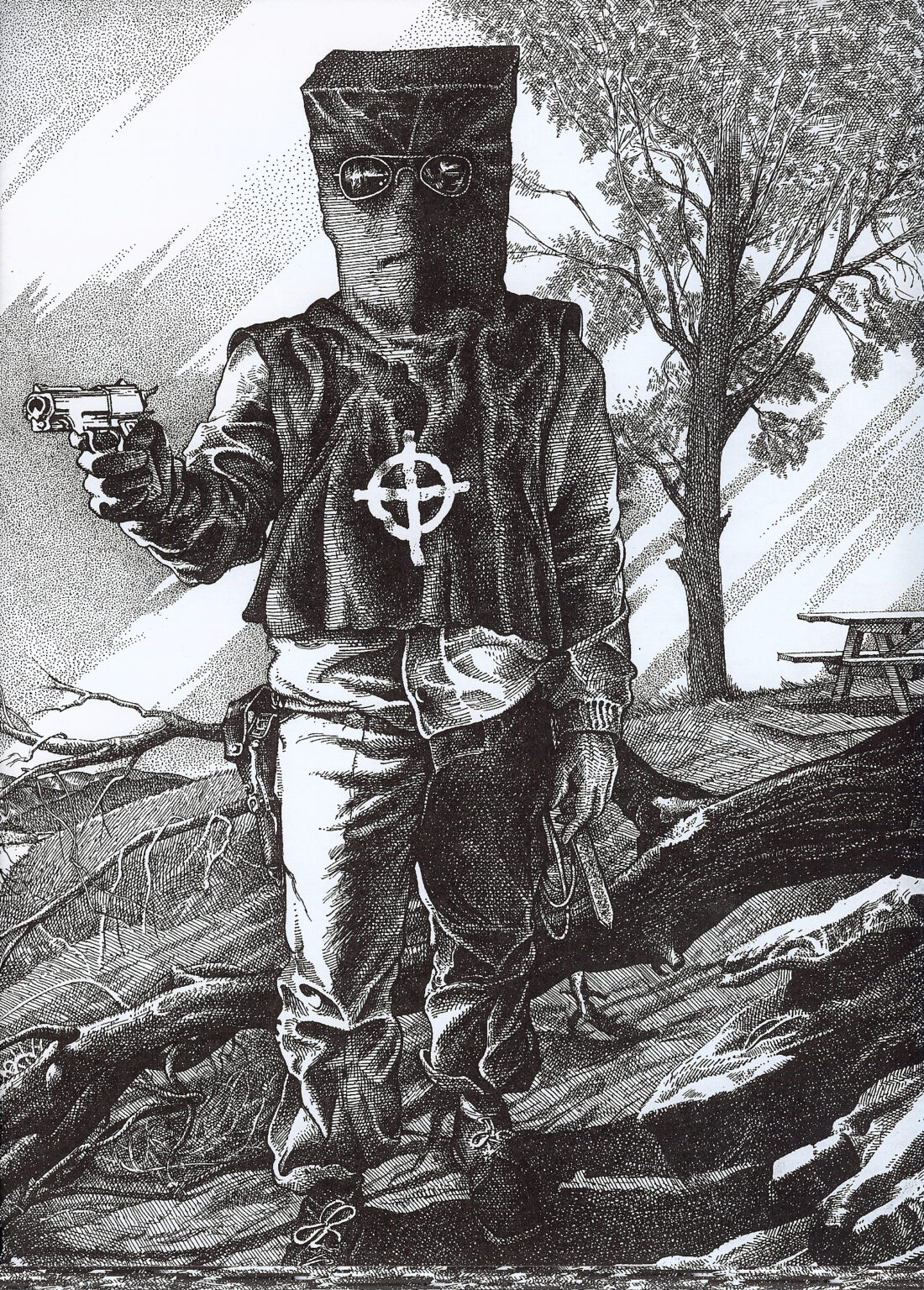
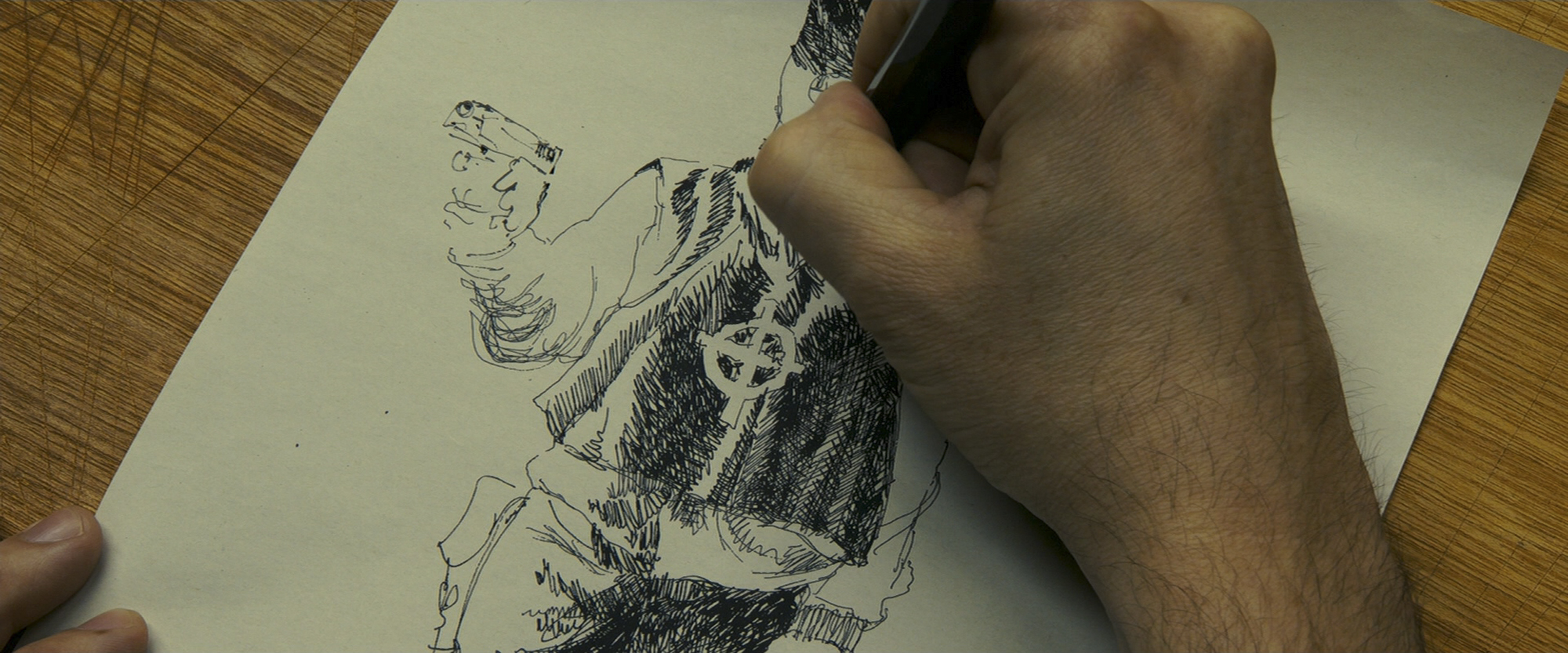
“Zodiac in Costume at Lake Berryessa,” by former Chronicle cartoonist Robert Graysmith. Surviving victim Bryan Hartnell personally described the costume in detail to Graysmith, after his, and Cecilia Shepherd’s, encounter with the Zodiac on Sept. 27, 1969. Photo: Robert Graysmith
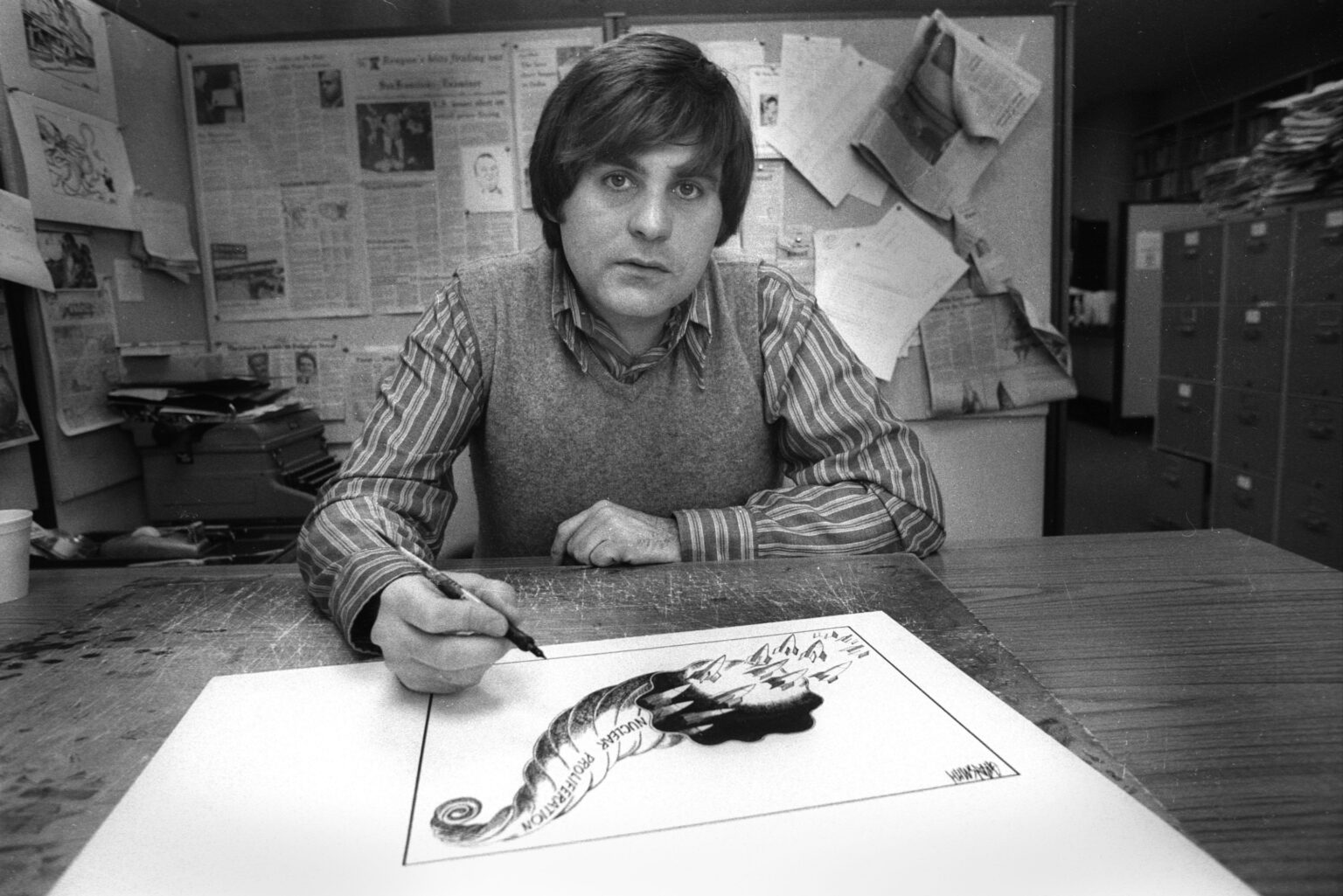
Robert Graysmith, political cartoonist for The San Francisco Chronicle, in 1977. Photo: Gary Fong / The Chronicle
BOOKS
Robert Graysmith wrote the definitive Zodiac Killer book. He breaks decade-long silence to tell us about his upcoming projects
For a fairly famous guy, author Robert Graysmith doesn’t get out much. He hasn’t been heard from in public for about a decade, and he rarely leaves his San Francisco home.
The 78-year-old Graysmith has been crafting manuscripts at such an astonishing pace, printing them out as he goes along, that they now stand in a 5-foot-high stack that breaks down into what he says will be 34 books, ranging from children’s tales and historical explorations to true crime and fictional legends. Most just need a few final touches and editing, he said.
These days, Graysmith is working with a new publisher he knows well: his 50-year-old son, Aaron Smith.
The first in this voluminous new string landed on online sites like Amazon at the end of August, the 383-page “Shooting Zodiac,” which documents the planning that went into making the movie “Zodiac.”
“It’s much more fun working with Aaron on these things, because he can put them out quickly,” Graysmith said. “I figured out you’re going to wait about three years to get a book done, and then you hand them the book, and they’re going to spend a lot of time and then they won’t do anything for another year or so. With Aaron, we can get the book edited and out there in a few months.”
Graysmith’s son — who uses the last name his dad used before he merged Gray and Smith — said he wasn’t really surprised when he realized how many pages his dad had in the hopper.
“Writing is pretty much all he does,” Smith said by phone from his home in Southern California, “and the illustrations.”
Graysmith said he started working on his engagingly told “Shooting Zodiac” before the movie came out, as he was being bowled over by the dedication director David Fincher, producer Brad Fischer and screenwriter Jamie Vanderbilt put into the project. They combed over the same material Graysmith had in his books “Zodiac” and “Zodiac Unmasked” to rebuild and advance his narrative around the only suspect ever named by police, Arthur Leigh Allen of Vallejo.
Watching them work was “a marvelous adventure,” Graysmith said.
The new book is as much about greenlighting the movie and hiring actors like Jake Gyllenhaal, who played Graysmith, as it is about how the three filmmakers did their research. It’s also probably the last thing Graysmith will write about the Zodiac, he and his son said.
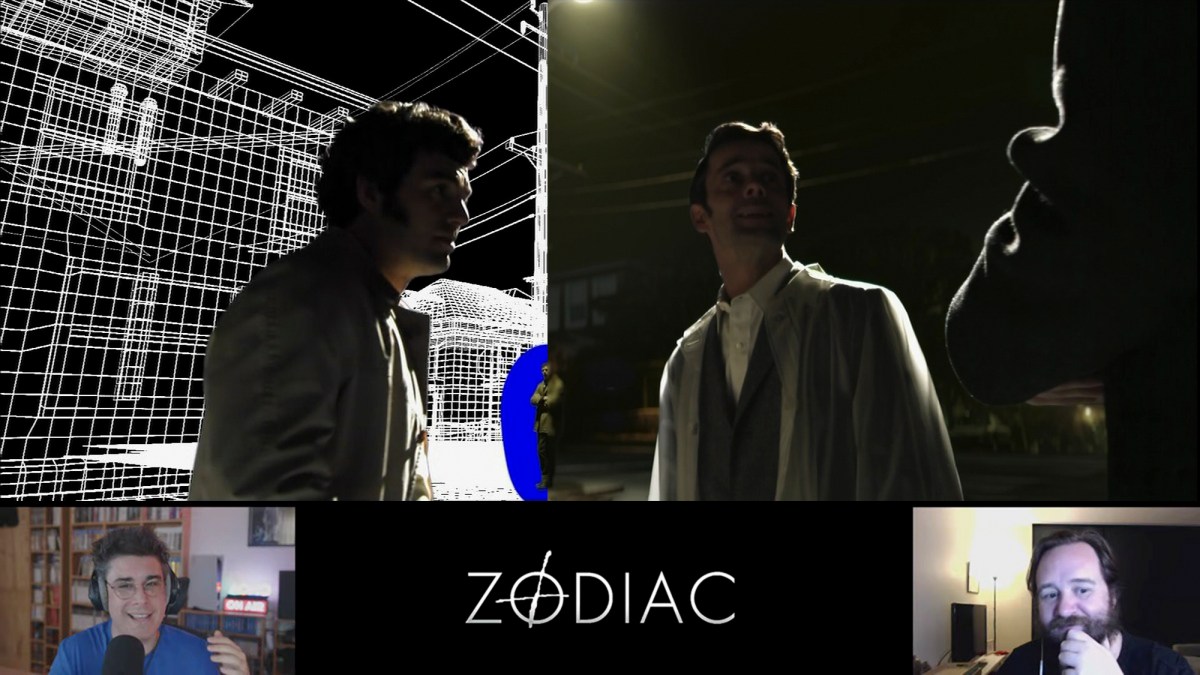
On this episode of VFX Notes, Hugo Guerra from Hugo’s Desk and Ian Failes from befores & afters dive deep into the visual effects in David Fincher films. We take an especially close look at Digital Domain‘s work for Zodiac and The Curious Case of Benjamin Button.
Chapters: 00:00:00 – Intro 00:04:20 – Zodiac and the rise of invisible VFX 00:09:09 – The rise of D2 and Foundry‘s Nuke 00:18:31 – David Fincher’s methods and Zodiac‘s murder scenes 00:30:03 – Environments by DD and Matte World 00:43:41 – The VFX of The Curious Case of Benjamin Button 00:57:27 – The VFX of The Social Network 01:03:15 – The VFX of Mindhunter 01:09:51 – Wrap up 01:12:45 – Patreon, YouTube members and Twitch Subs Credits
The Team Deakins podcast is an ongoing conversation between acclaimed cinematographer Roger Deakins and James Deakins, his collaborator, about cinematography, the film business and whatever other questions are submitted. We start with a specific question and end….who knows where! We are joined by guests periodically. Followup questions can be posted in the forums at rogerdeakins.com.
Team Deakins delves into the craft of production design with the great production designer, Donald Burt (The Curious Case of Benjamin Button, Hostiles, Mank). We loved hearing about his path to the film business! We talk about his first movie as production designer, Joy Luck Club – quite a film to start on! He shares his methods of working with a director and how he doesn’t want to draw attention to what he is doing and that he wants to be supportive and serve the story first. We also touch on how restrictions and limitations breed imagination, his approach to sets vs locations, and how you can’t be afraid of articulating a stupid idea. And, we also speak about the making of Mank, The Outlaw King, and Zodiac. As well as much, much more!
Chapters: 00:00 Intro — How David Fincher became a Filmmaker 02:01 Early Career & Return of the Jedi 03:18 Shot Composition and Blocking 06:19 “Relentless” Number of Takes 11:02 Directing with Precision 13:43 Color Theory & Creating the Look 15:48 Create a Feeling (Production Design & Music) 19:35 Final Takeaways
David Fincher is a director’s director. His reputation for having complete control over his work is well-known but many directors have had similar power. So, what makes his approach to film directing so captivating? In this David Fincher video essay, we’ll let the man speak for himself. Through a collection of interviews from throughout his career, Fincher guides us through some of the strongest characteristics of his directing style.
To date, over the past four decades, David Fincher has directed a plethora of music videos, commercials, and 11 feature films. Along the way, he has refined his directing style which can be summed up in two words: precise and purposeful. When watching any David Fincher movies, you would be hard-pressed to find an out-of-place camera movement, or a lazy frame composition. One lesson we learned from Fincher is how he balanced and imbalanced the frame during Nick and Amy’s first meeting in Gone Girl to show the “push and pull” of their flirting.
Another well-known staple of the David Fincher directing style is his predilection for shooting multiple takes. He famously shot 99 takes of the opening scene in The Social Network, for example. But there’s a method to his madness — he wants the actors to move “beyond muscle memory” especially in their domestic environments. In Fincher’s logic, when the actor sits on their couch, they need to have sat in it a hundred times to make it look like they’ve sat in it a hundred times.
Fincher also explains how he creates mood and tone with lighting, color, and music. With a darker frame, desaturated color, and the brooding tones of Atticus Ross and Trent Reznor, there certainly is a distinct experience watching David Fincher films. While all of this sounds extreme, the proof that he’s doing something right is visible on-screen.
♬ Songs used:
“Father / Son” — Makeup and Vanity Set “Subdivide” — Stanley Gurvich “Switchback” — Nu Alkemi$t “Battle in the Forest” — Charles Gerhardt – National Philharmonic Orchestra “Chasing Time” – David A. Molina “Sugar Storm” – Trent Reznor & Atticus Ross “Soul Sacrifice” – Santana “Graysmith Obsessed” – David Shire “Intriguing Possibilities” – Trent Reznor & Atticus Ross “Wendy Suite” – Jason Hill “Under the Midnight Sun” — Trent Reznor & Atticus Ross “14 – Ghosts II” – Nine Inch Nails “Corporate World” – The Dust Brothers “Appearances” – Trent Reznor & Atticus Ross “With Suspicion” – Trent Reznor & Atticus Ross “What Have We Done to Each Other” – Trent Reznor & Atticus Ross “Cowboys and Indians” – Trent Reznor & Atticus Ross “San Simeon Waltz” – Trent Reznor & Atticus Ross “Fool” – Ryan Taubert “Where Is My Mind” – The Pixies
Warning: This article discusses many of the ending scenes
In my previous piece, focused on Mank (2020),I wrote about the idea that a story is essentially a lens on truth, as it joins together distinct pieces of information and events into a connected whole, and inevitably does so through the storyteller’s lens (their particular way of joining the pieces). That film, the latest in David Fincher’s filmography, was more specifically about the truth of people, and about how a storyteller gets to their truth without locking it and owning the keys to it.
Thirteen years back in the director’s work, Zodiac dived in not-too-dissimilar waters, but expanded them in many directions of its own. It remains Fincher’s top work to date.
Zodiac is the story of a time and a place in which Fincher spent much of his childhood — the San Francisco Bay Area in the late 60’s and early 70’s — marked by public alertness to a murderer who used to write cryptic letters to the police and to newspapers. From the opening scene, this enigma of a man is slowly drawn.
It’s natural that any story that features at its center a mysterious serial killer who goes uncaught will always have a special aura reserved for that character. But even if Zodiac doesn’t exactly play against that idea, it’s also clear enough that the film is not in the business of drawing the archetypical picture of a God-like criminal mastermind. The titular character, who may or may not be among the ones we see onscreen at different times, can by turns come across as weak, child-like, in need of help and/or largely insignificant. He may be responsible for a small handful of crimes, but the fact is that he repeatedly claims to be much deadlier than he really is, at one point taking responsibility for as many as 37 victims without there being the least bit of evidence for it. He is a case of enigmatic broken humanity that remains beyond grasp.
But the mystery draws people in. In one sense limited by statements such as “Do you know that more people die in the East Bay commute every three months than that idiot ever killed?” and in another sense taking on a life of its own, the Zodiac enigma becomes huge in public consciousness.
When the twist-filled cosmic horror mind-bender The Empty Manwas unceremoniously dumped in theaters last October, its writer and director David Prior wasn’t even sent a link to the final version of the film by the studio. More than four years before, he’d pitched the movie to 20th Century Fox, a perhaps unconventional home for such a strange project, and, after the company was acquired by Disney in 2019, Prior’s debut feature slipped through the corporate cracks. In the middle of a global pandemic, The Empty Man was released with one misleading trailer, which marketed the two-hour-plus saga as another urban legend-inspired teen thriller, and minimal promotional fanfare. Unsurprisingly, it bombed, grossing just over $4 million worldwide. Prior transmitted and almost no one received.
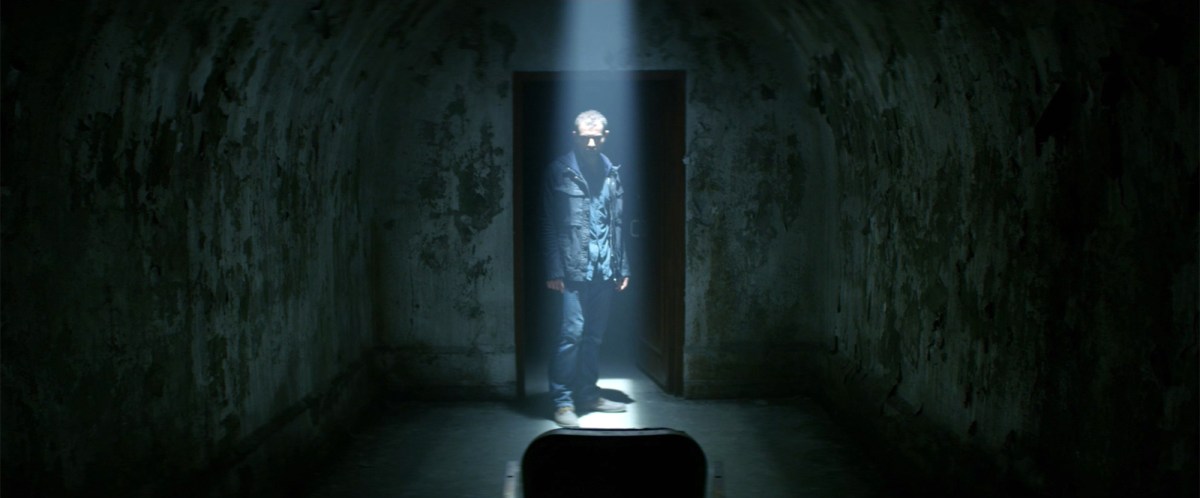
Adapted from a Boom! Studios comic by the writer Cullen Bunn and artist Vanesa R. Del Rey, The Empty Man was initially sold to Fox in 2016 as a stylish horror mystery infused with thematic ambiguity, existential dread, and a dash of Lovecraftian terror. James Badge Dale plays ex-detective James Lasombra, a grief-stricken widower whose friend Nora (Marin Ireland) enlists him to help find her daughter Amanda (Sasha Frolova) after she disappears. Amanda and her teenage friends may or may not have summoned the Empty Man, a mystical entity with an odd connection to a cult-like organization called the Pontifex Institute, led by a charismatic leader played by Stephen Root of Office Space and Barry. (I’ve been describing it to friends as The Girl with the Dragon Tattoo meets The Ring.) In his early conversations with executives, Prior compared it to Mulholland Drive rather than something in The Conjuring universe or the Blumhouse arsenal. In the writing stage, executives even encouraged him to expand the film’s lengthy opening, a snowbound tale of hikers in Bhutan’s Ura Valley who stumble upon a sinister cave.
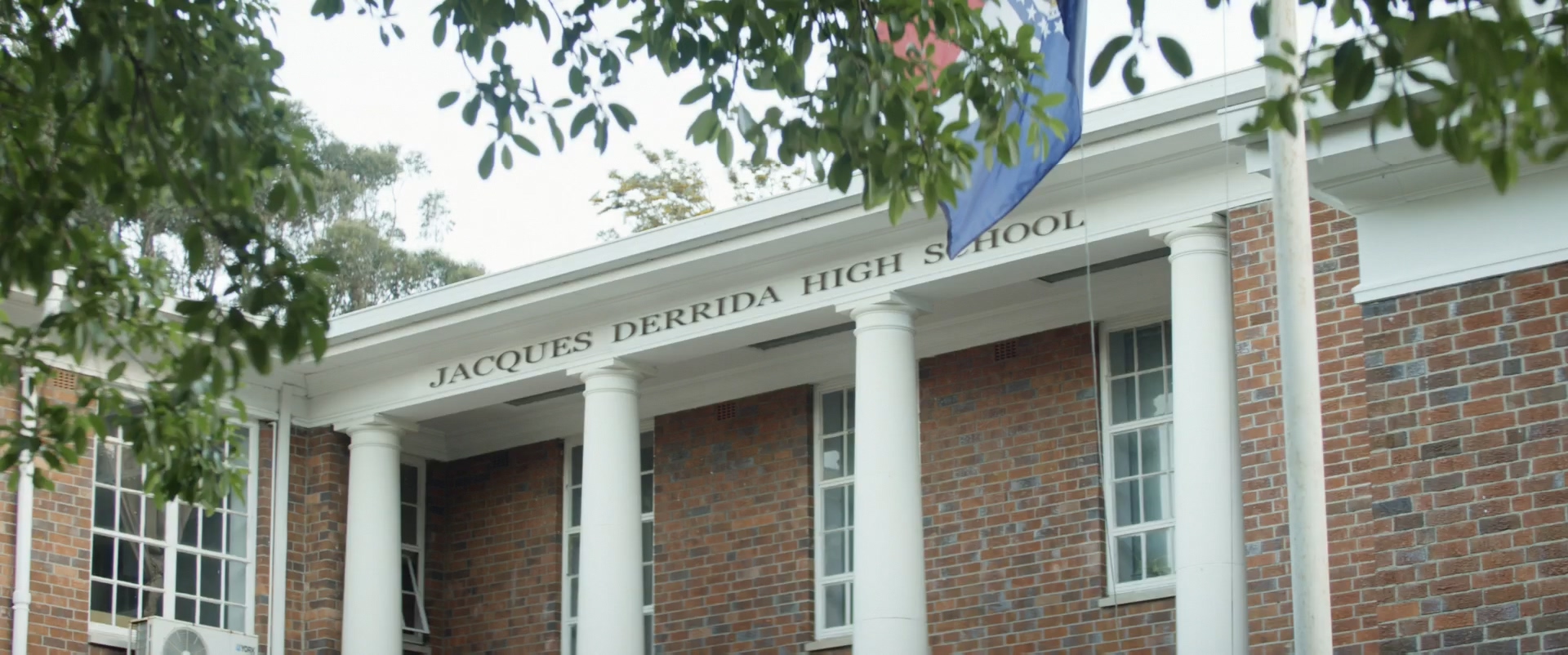
The Empty Man‘s journey to the big screen quickly unraveled. In some ways, the story has all the hallmarks of classic Hollywood fiasco: a shoot plagued by bad weather, disastrous test screenings, fights over runtime, studio meddling, a breakdown in communication, and an ambitious first-time director threading potentially alienating material into familiar genre fare. (Not many horror movies have a prominent shot of a high school named after a famous French philosopher.) In other ways, it’s a uniquely modern tale of mounting corporate neglect, expiring tax rebates, confusing IP mismanagement, and slow-building social media advocacy.
Are audiences hungry for movies like The Empty Man? The movie’s box office performance would suggest a definitive no, but, since becoming available as a digital rental in 2021, the film has taken on a second life online, where podcast hosts and viewers on platforms like Twitter and Letterboxd have sung its praises, turning it into the rare 21st century studio project that earns the over-used descriptor of “cult movie.”
Prior, who began his career working on a DVD of the 1999 horror movie Ravenous and later directed special features for David Fincher films like Zodiac and The Social Network, has a keen awareness of how his movie plays into certain narratives. Over a Google Hangout, he spoke with the combination of weary cynicism and wounded pride that often accompanies someone who has been through an ordeal. “It’s amazing how trenchant Barton Fink is about the way the Hollywood system really works,” he noted early in the conversation.
As the Coen Brothers screenwriter protagonist knows, the “life of the mind” can be painful. While unpacking the jargon-heavy mythology of his debut and the turmoil-packed narrative of its production, Prior repeatedly emphasized how grateful he was that the movie has found an audience and often laughed at the absurdity of its fate. Who can be blamed for what happened to The Empty Man? As one of the movie’s grizzled detectives remarks in the film, “We can’t indict the cosmos.”