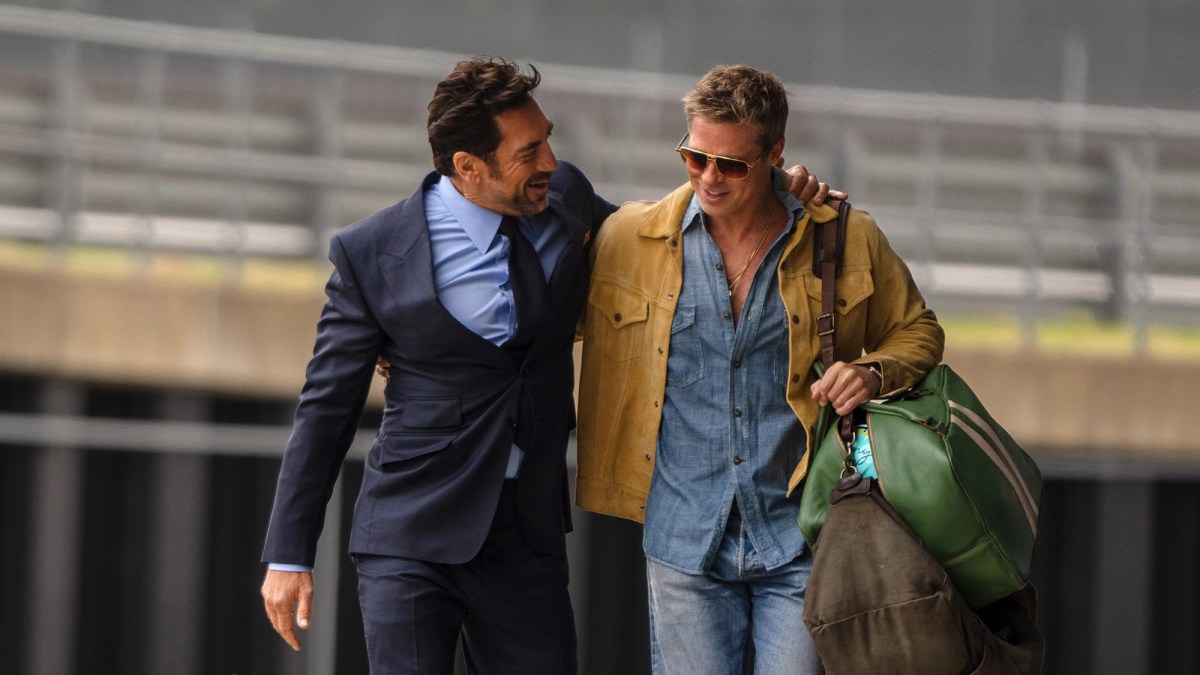
To create the new movie F1—which director Joseph Kosinski describes as “the most authentic, realistic, and grounded racing movie ever made”—no shortcuts were taken. Stars Brad Pitt and Damon Idris both drove their own cars, and the film’s crew integrated themselves into the actual Formula 1 season. That painstaking attention to detail also extended to the watch Pitt wears as the racer Sonny Hayes. The actor was extremely exacting about the timepiece he wanted to wear, its backstory, and many of the technical details, including the movement and thickness.
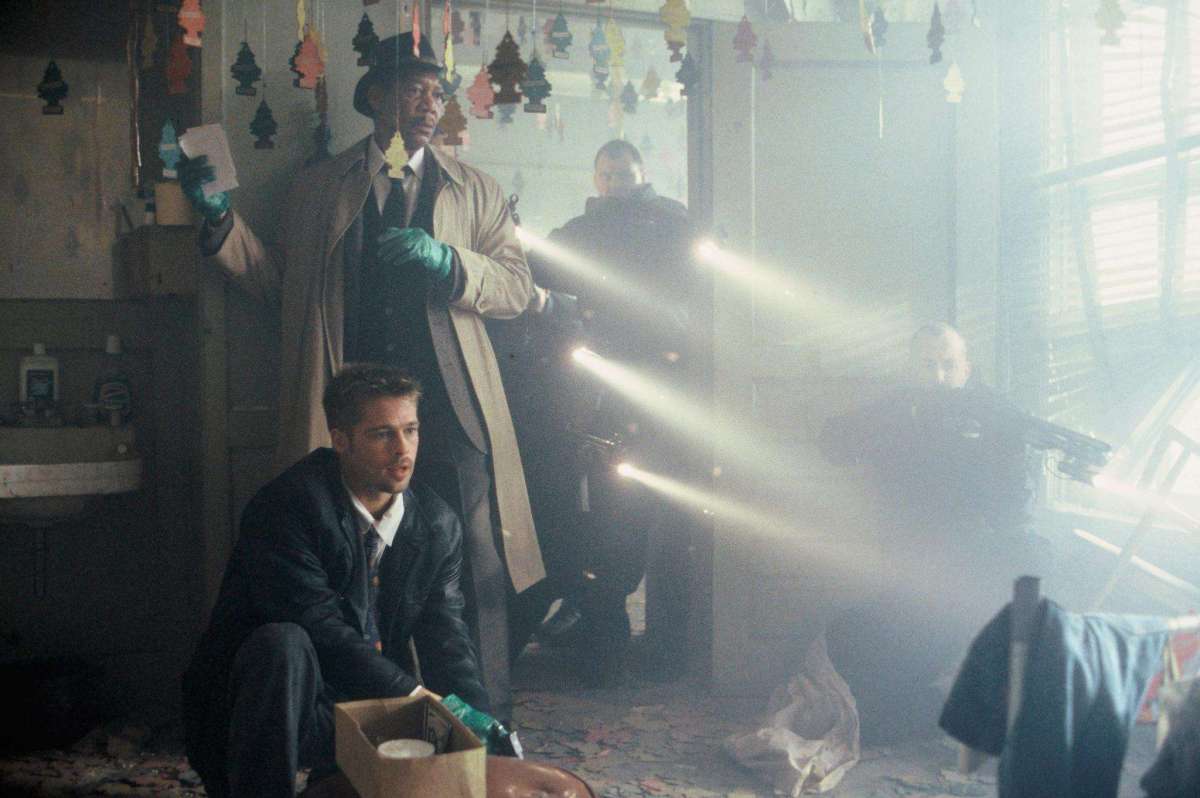
Our story begins, oddly enough, with David Fincher. The Oscar-nominated director and Pitt are longtime collaborators and pals who share a love of making awesome movies—Fight Club and Se7en, anyone?—and, apparently, equally awesome watches.
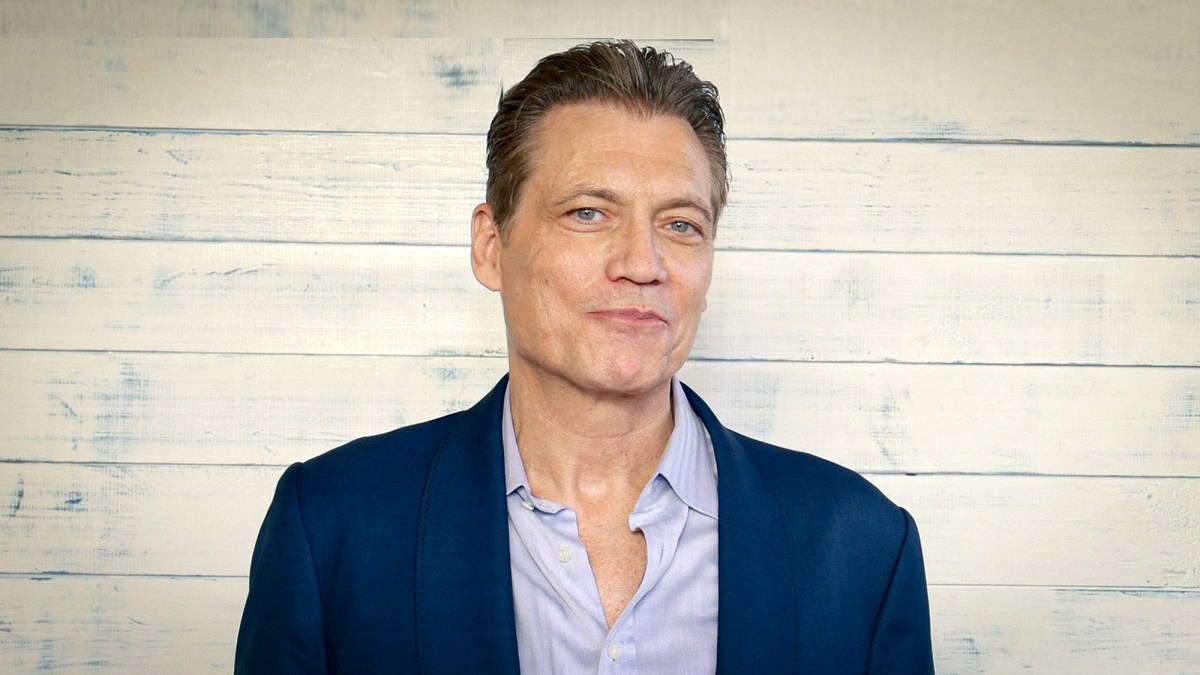
With the critical success of MINDHUNTER, the Irish-born actor graduated from supporting tough guy parts in films like Fight Club to leading his own shows. As he prepares for the release of The Waterfront, he speaks to Annabel Nugent about his traditional parents, how he almost turned down Alien3 – and why for him, ‘chivalry is not dead’.
To hear Holt McCallany reel off his childhood heroes is to understand him a little better. “Steve McQueen, Burt Lancaster, Bob Mitchum, Gene Hackman, Jack Palance,” the actor says. “I loved Jack Palance. Lee Marvin. Charles Bronson.” He recites each name with cinematic gravitas and through semi-pursed lips as though he’s balancing an invisible cigarette out the corner of his mouth. “Those guys, they had this classic American… masculinity.”
The same can and has been said of McCallany, who at 61 has carved a career out of that same strong, silent archetype. He’s played parts on both sides of the law, including one tough guy unironically named Bullet. Bit parts in early David Fincher films like Alien3 and Fight Club introduced him as an excellent character actor, “that guy!” audiences are always happy to see, even if they may not know his name.
Fincher not only had his name, he had McCallany’s number, believing from the get-go that he was destined for bigger things, and eventually casting him as a lead in MINDHUNTER – the critically acclaimed Netflix neo-noir series about the FBI and serial killers. His performance as the straight-shooting, flat-top agent Bill Tench was so lauded, it inspired a think piece in Vulture titled: “Why MINDHUNTER’s Bill Tench Is So Lovable.” That article got to the crux also of what makes McCallany so, if not lovable, then watchable, because hand-in-hand with that stone-cold hardiness is an unexpected sensitivity. Flashes of openness where you’d expected a door slammed shut.
But McCallany downplays his part in the show’s success, attributing it instead to “the creative genius” behind the camera. He compares his role to that of a guest at a lavish dinner party: “There’s gorgeous tablecloths, beautiful crystal glasses, and delicious food. You just have to not spill food down your shirt and everybody goes, bravo!” It may sound like false humility, but in truth, there is a steely confidence to McCallany’s words: give him a good part, and he’ll do the rest.
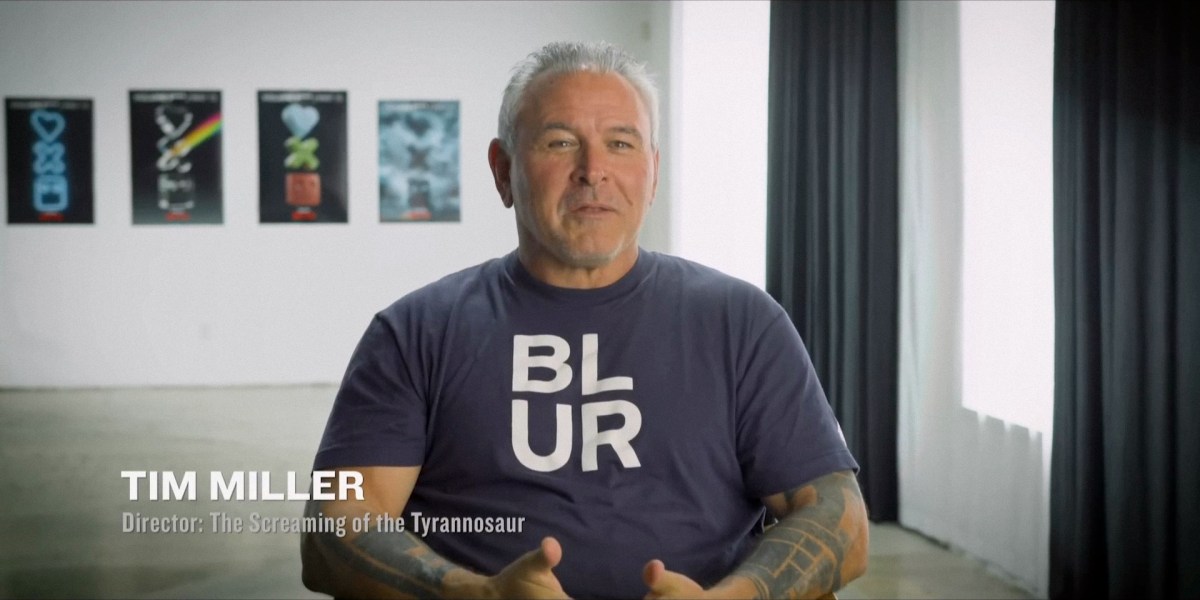
Director Tim Miller discusses how he approached directing this dinosaurs in space adventure, starring MrBeast! Featuring Jennifer Yuh Nelson and David Fincher.
Fearless anthology series LOVE DEATH + ROBOTS returns with a unique blend of styles, stories, and heroes you didn’t know you needed — from scheming felines to a traumatized toilet. “I try and get a mix of horror, sci-fi, and fantasy,” says creator and executive producer Tim Miller. “And we work with some really fucking fantastic artists.” Miller is a voracious reader, and the source material for the series is largely short stories he has enjoyed over decades, though Volume 4 has a first: a concert film … from none other than David Fincher.
Fincher may now be best known for films such as Fight Club and The Killer, but he first rose to prominence directing music videos. The episode Can’t Stop calls on a long-cherished idea of animating a band as puppets; in this case, the Red Hot Chili Peppers. “This was a chance to exercise some old muscles, stretch — and it’s something I’ve always wanted to see,” says Fincher, who also executive produces the series. Each episode comes from a different team, and his was produced by Blur Studio, the VFX and production company co-founded by Miller. “I think Blur know that when I’m passionate about something, it’s going to be weird, and it’s going to be a lot of work,” says Fincher. “But who knows, it might be fun. It certainly will be challenging.” Creative risk and independent spirit are part of what’s led to the show’s 13 Emmy wins so far. But for the team, it’s really just the beginning of a long commitment to variety and invention. Says Fincher, “Hopefully by the time we get to Volume 20, there’s going to be something in here for everyone.”
Chad Smith remembers the night in 2003 when the Red Hot Chili Peppers played for an audience of 80,000 or so amid the rolling hills of the Irish countryside.
After a somewhat fallow period in the mid-’90s, the veteran Los Angeles alt-rock band resurged with 1999’s eight-times-platinum Californication and its 2002 follow-up, By the Way, which spawned the chart-topping single Can’t Stop. To mark the moment, the Chili Peppers brought a crew to document their performance at Slane Castle, where they headlined a full day of music that also included sets by Foo Fighters and Queens of the Stone Age, for an eventual concert movie.
Twenty-two years later, the Chili Peppers are bringing that 2003 gig to screens again — only this time they’re string puppets.
Can’t Stop is director David Fincher’s re-creation of the band’s rendition of that tune at Slane Castle. Part of the just-released fourth season of the Emmy-winning Netflix anthology series “Love, Death + Robots,” the animated short film depicts the Chili Peppers — Smith, Flea, singer Anthony Kiedis and guitarist John Frusciante — as dangling marionettes onstage before a veritable sea of the same. As the band rides the song’s slinky punk-funk groove, we see Flea bust out some of his signature moves and Kiedis swipe a fan’s cellphone for a selfie; at one point, a group of women in the crowd even flash their breasts at the frontman.
The puppets aren’t real — the entire six-minute episode was computer-generated. But the way they move looks astoundingly lifelike, not least when one fan’s lighter accidentally sets another fan’s wires on fire.
So why did Fincher, the A-list filmmaker behind Fight Club and The Social Network, put his considerable resources to work to make Can’t Stop?
“A perfectly reasonable inquiry,” the director, who executive produces LOVE DEATH + ROBOTS, said with a laugh.
In a world where so much entertainment is afraid to take risks, LOVE DEATH + ROBOTS is the iconoclastic brainchild of one man’s enigmatic yet expansive tastes. While a dedicated team of artists craft the (mostly) animated shorts comprising the 35 episodes of LDR, the basis for almost all of them are short stories that Tim Miller loves. Miller, the series co-creator and executive producer keeps a catalog of material on his computer, ready for the right moment to pair a story with a visionary team and unleash the results on unsuspecting audiences.
Now that we’ve arrived at Volume 4, the audience may suspect that they’re going to get something unexpected, yet the show still surprises. From hard-edged, serious sci-fi to explosively violent, unapologetically puerile action, the show contains multitudes.
Among the most ardent fans of LDR are the episode directors themselves, who have trouble picking their favorites among the first three volumes.
“I love seeing people’s LDR tier lists,” says Emily Dean, director of two episodes — the Volume 3 award winner The Very Pulse of the Machine and the fourth’s devilish cat caper For He Can Creep. She has been “very inspired” by a number of installments including Zima Blue, Bad Travelling, Pop Squad, The Drowned Giant, and Jibaro.
Three of these are on the list below, although LDR is the kind of show where your favorites may change according to the day of the week or the mood you’re in. Director and animator Diego Porral had a hand in two of the episodes below and sees the diversity of voices and styles as a major strength. “The fun thing is that whoever I talk to, in or out of the animation industry, everyone has their favorite, and I think that’s what makes LDR so special,” says Porral, helmer of this volume’s action-packed How Zeke Got Religion and lead animator on the Volume 3 classic Kill Team Kill.
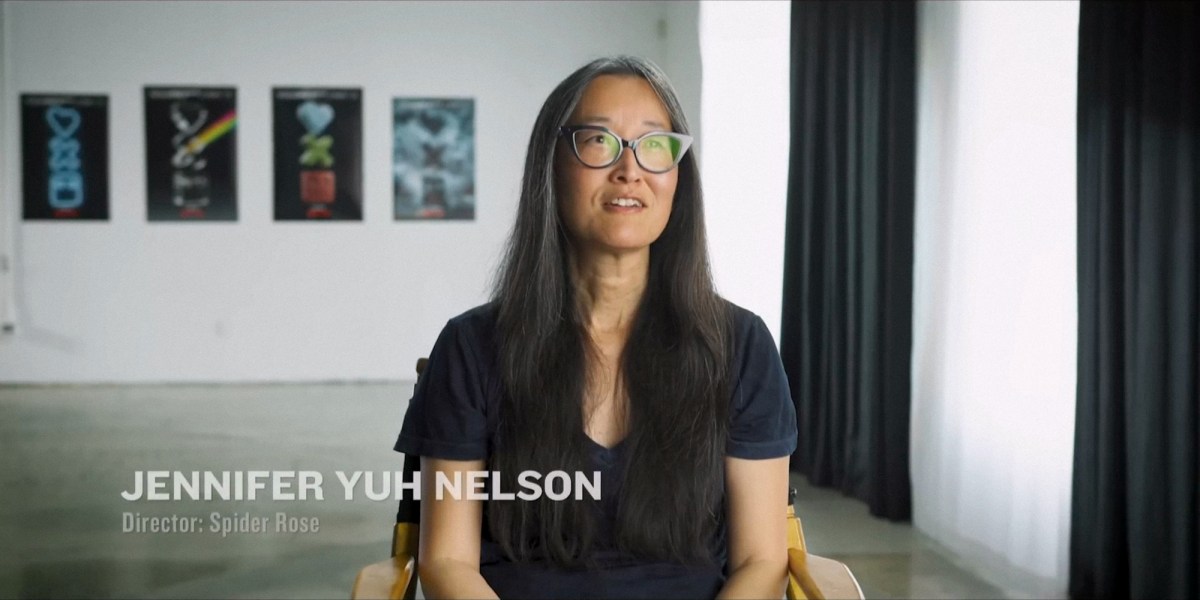
Miller dreamed for decades of an animated anthology exploring stories that had stuck in his subconscious. And now he — along with fellow executive producers David Fincher and Josh Donen and supervising director Jennifer Yuh Nelson — relishes seeing disparate filmmakers and animation studios come together to generate these distinct shorts. “Netflix, just like the internet, allows all these strange people, that would never find each other ordinarily, to connect,” says Miller. “Sometimes for good, sometimes for evil, but certainly in the case of LOVE DEATH + ROBOTS, I feel it’s a force for good.”
Below you can find 13 episodes to match your highly specific tastes, whether you’re in the mood for cats, carnage, concerts, or comfort.
Creator Tim Miller, supervising director Jennifer Yuh Nelson, and designer/director Robert Valley discuss the latest edition of Netflix’s Emmy Award-winning animated short film anthology series that once again delivers a wide selection of funny, frightening, and thoroughly provocative works.
Director Jennifer Yuh Nelson tells IndieWire about being drawn to a grieving cyborg and her alien companion, who knows how to be adorable as a defense mechanism.