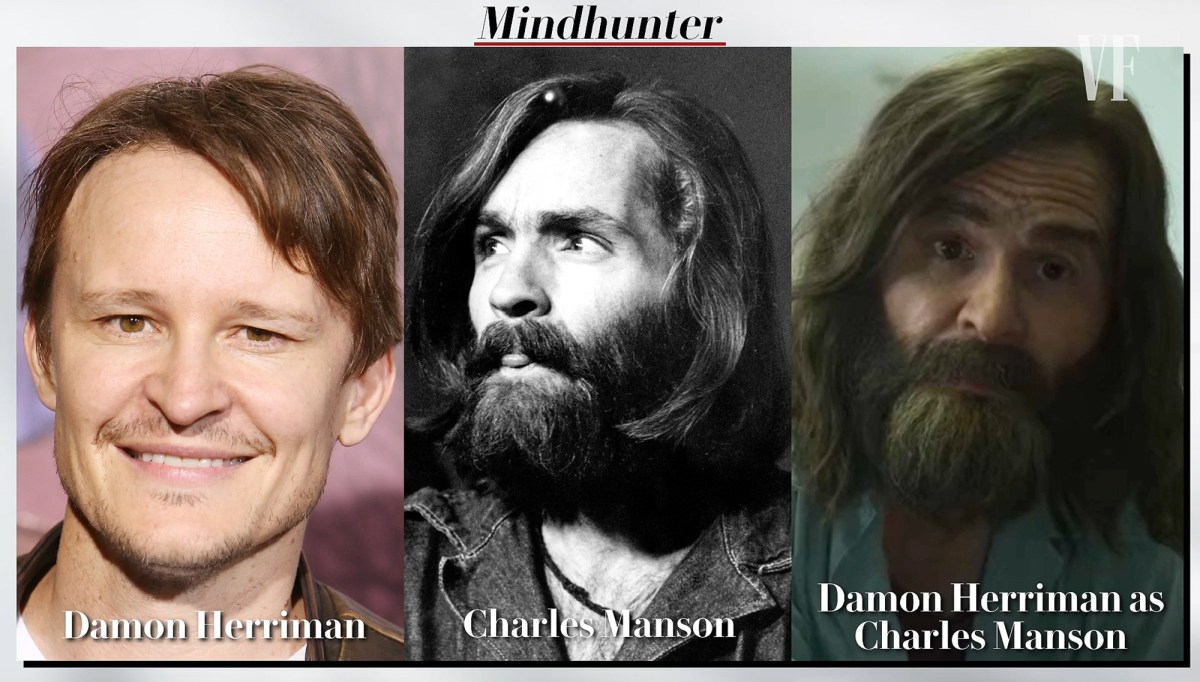
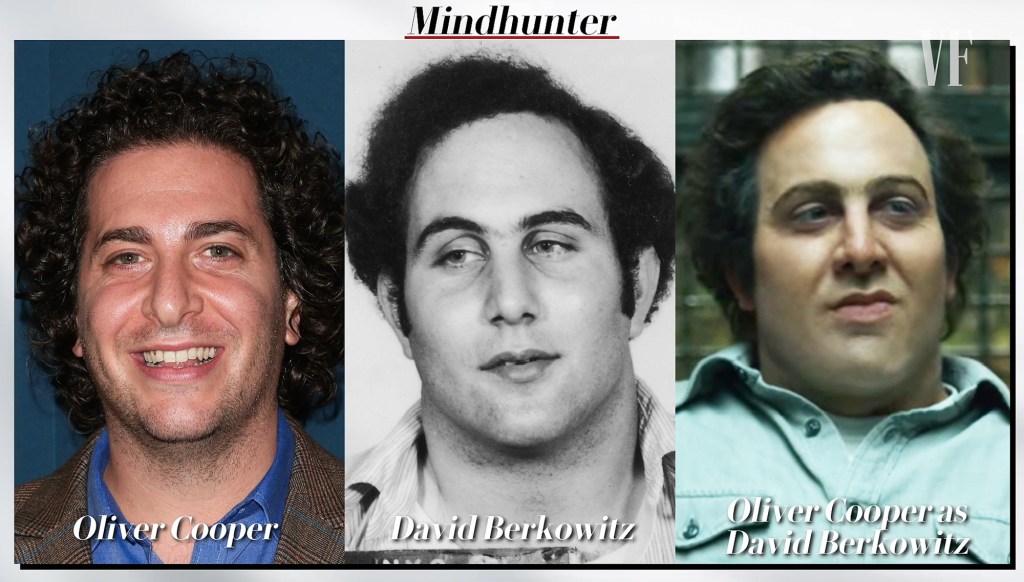
Kazu Hiro breaks down his process of using special effects to transform actors physical appearances. Kazu demonstrates the techniques he used to turn ‘Bombshell‘ cast Charlize Theron into Megyn Kelly, Nicole Kidman into Gretchen Carlson, and John Lithgow into Roger Ailes, ‘Darkest Hour‘ cast Gary Oldman into Winston Churchill, and ‘Mindhunter‘ cast Damon Herriman into Charles Manson, and Olive Cooper into David Berkowitz.
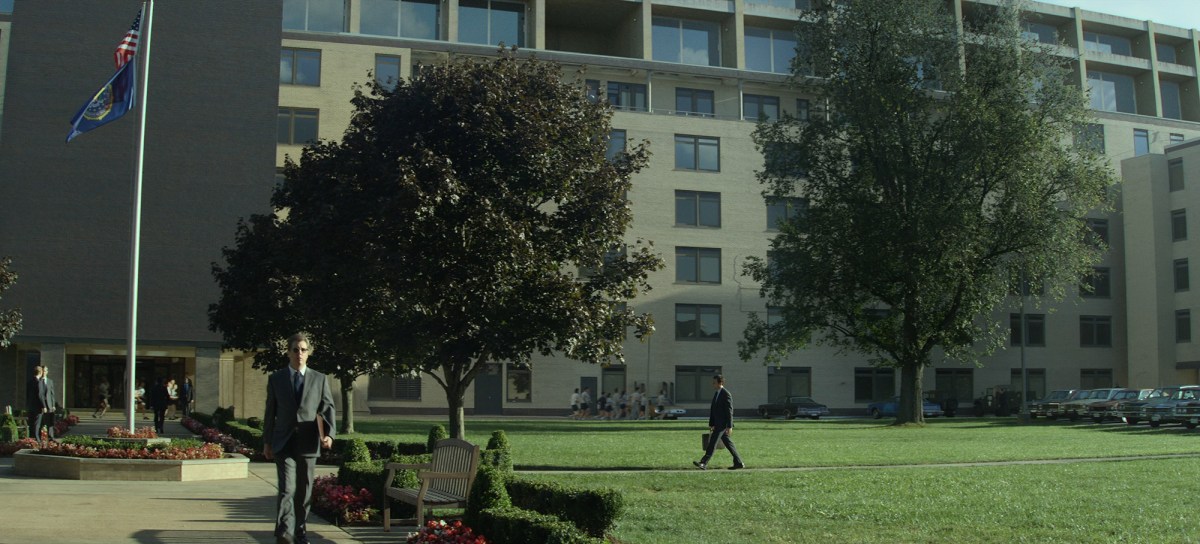
Cinema director David Fincher created one of the first original streaming series with House of Cards, and his innovative spirit infuses the Netflix original series Mindhunter, now in its second season.
In this podcast episode, the sound team discuss Fincher’s unique approach to the sound of serial killer interrogation scenes, a hallmark of this fascinating, dark series. The team discuss setting the acoustic tone of the series, including the oppression of the FBI agents’ basement office (and a very special door), why it was important to Fincher to always hear trainee agents at Quantico at target practice, and the joy of receiving Fincher’s incredibly detailed mix notes.
Steve Bissinger – Sound Effects Editor Scott Lewis – Re-Recording Mixer Stephen Urata – Re-Recording Mixer
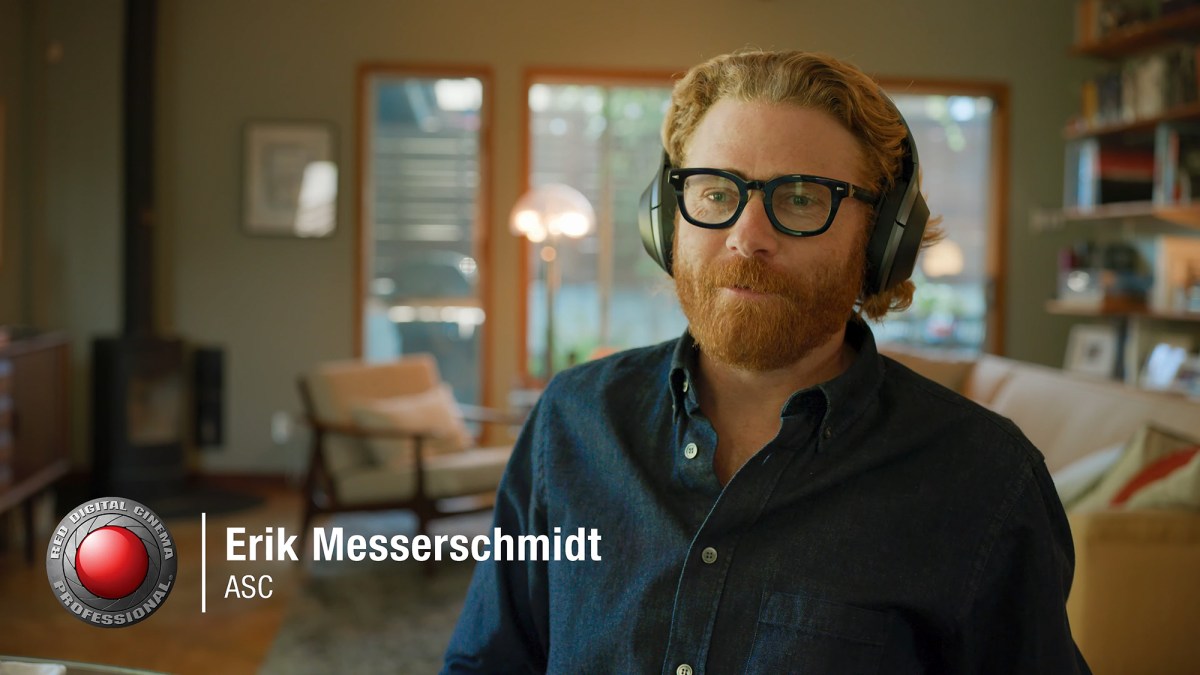
RED is Behind the Look with Erik Messerschmidt, ASC who brings a gentle, elegant visual sensibility to the Netflix series MINDHUNTER. We screen and breakdown pivotal shots from Season Two of this crime thriller, and discuss what it’s like to collaborate with the legendary David Fincher.
On Netflix‘s drama “Mindhunter,” FBI Agent Bill Tench keeps his emotions close to the vest, so actor Holt McCallany was “grateful to the writers and to David Fincher for deciding to allow the audience to get to know Bill a little bit more deeply, and obviously his domestic life is a big part of who he is.” So in season two of the series, which streamed in August 2019, Tench faced traumas both at work and on the home front. Watch our exclusive video interview with McCallany above.
Season two of “Mindhunter” explored the real-life Atlanta child murders that terrorized the city’s Black community from 1979 to 1981, with a death toll of at least 28 victims. But while Tench and his partner Holden Ford (Jonathan Groff) try to get to the bottom of that mystery, Tench’s young son is involved in the disturbing death of a toddler, a crisis that strains his marriage.
“Tench is really being pulled in two different directions,” McCallany explains, “because he wants to be a good husband and a good father, but at the same time he wants to be a good detective, and he wants to live up to his responsibilities as an FBI agent … but never really able to do it.”
Unfortunately, Netflix announced in January 2020 that a third season of “Mindhunter” was on indefinite hold, though not cancelled outright. But for McCallany, hope is not lost. “I’m still optimistic that there can be another season of ‘Mindhunter,’” he says. “I think it’s not too late for us to come back, so my hope is that we haven’t seen the last of Bill Tench and Holden Ford … I’m keeping my fingers crossed.”
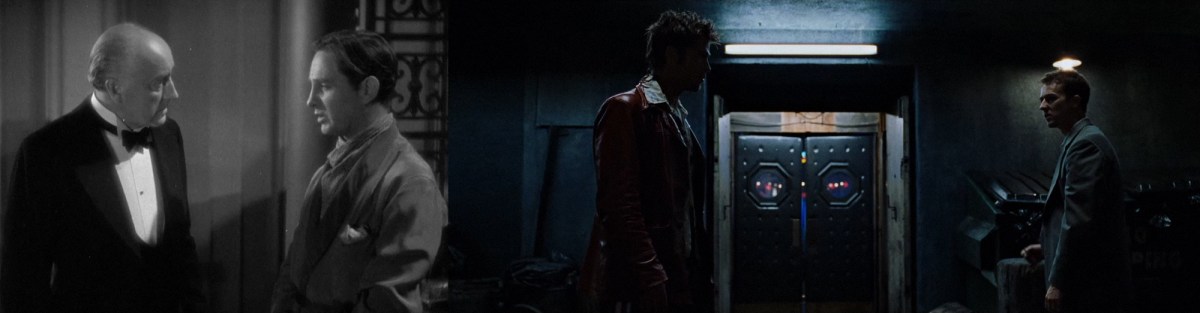
A multi-screen meditation on puttering featuring Platinum Blonde (1931, Frank R. Capra) and Fight Club (1999, David Fincher). Made for The Video Essay Podcast.
Interview with David Fincher at the TAI University School of Arts (Madrid), hosted by Carlos Reviriego.
In English, with Spanish subtitles.
Questions:
0:00:33 – What did the book ‘Gone Girl‘ is based on had that made you want to film a movie about it? 0:02:33 – Talk about your first years in the movie industry. 0:06:38 – You once said ‘No one hates Alien3 more than me’. Can you talk about it? 0:09:31 – David Lynch was here last year, and he said that the most important advice was to always fight for the final cut of your film. Do you think the same? 0:15:03 – Some critics think that ‘Fight Club‘ and movies on your filmography celebrate violence and anarchy. What do you have to say about it? 0:18:39 – Do you see yourself as a perfectionist? 0:22:17 – What’s more important, talent or hard work? 0:25:40 – What changes with digital cinema? 0:28:09 – How do you work with the Cinematographer and the Art Department? 0:34:31 – Can you talk about your work for TV and House of Cards? 0:36:37 – How do you feel about Amy’s character in Gone Girl? 0:37:53 – Do you get involved in the writing process? 0:39:08 – Why do you tend to use green and yellow colours in your cinema? 0:41:12 – Do you see a certain similarity between Brad Pitt’s character in ‘Twelve Monkeys‘ and ‘Seven‘? 0:43:02 – What do you look for in an actor? 0:48:38 – Is it more complicated to do fiction or documentary?
Encuentro con David Fincher en la Escuela Universitaria de Artes TAI (Madrid), conducido por Carlos Reviriego.
En inglés, con subtítulos en español.
Preguntas:
0:00:33 – ¿Qué te atrajo de la obra literaria en la que se inspira ‘Gone Girl‘? 0:02:33 – Háblanos de tus comienzos 0:06:38 – Una vez dijiste que nadie odió Alien3 más que tu. ¿Puedes hablar sobre ello? 0:09:31 – David Lynch estuvo aquí el año pasado y dijo que lo más importante era tener el corte final de la película. ¿Opinas lo mismo? 0:15:03 – Algunos críticos opinan que ‘Fight Club‘ y otras de tus películas ensalzan la violencia y el caos. ¿Qué tienes que decir al respecto? 0:18:39 – ¿Te consideras un perfeccionista? 0:22:17 – ¿Qué es más importante, el talento o el trabajo duro? 0:25:40 – ¿Qué añade la conversión al digital del cine a tu obra? 0:28:09 – Tu estética tiene una firma o un sello personal. ¿Cómo trabajas con el Director de Fotografía? 0:34:31 – ¿Puedes hablar sobre tu participación en televisión y en House of Cards? 0:36:37 – ¿Qué piensas del personaje de Amy en Gone Girl? 0:37:53 – ¿Cómo te involucras en el proceso de escritura del guión? 0:39:08 – ¿Por qué tu cine tiene cierta tendencia a usar verdes y amarillos? 0:41:12 – ¿Crees que hay cierta similitud entre la forma de actuar del personaje de Brad Pitt en ‘Twelve Monkeys‘ y ‘Seven‘, que fueron rodadas en la misma época? 0:43:02 – ¿Qué buscas de un actor a la hora de trabajar con él? 0:48:38 – ¿Es más complicado rodar ficción o documental?
The cinematographer of David Fincher’s hit Netflix series, Mindhunter, Erik Messerschmidt ASC takes us behind the scenes the show.
Erik and Go Creative Show host, Ben Consoli, discuss how he created the distinct look of Mindhunter, why David Fincher shoots so many takes, mastering good camera movement, how Erik preps for shoots, and more!
What you will learn in this episode:
Importance of film school and on-set experience (02:22)
What Erik is watching during COVID-19 (12:08)
Visual approach to MINDHUNTER (15:48)
Mastering good camera movement (20:08)
Camera and lens package (22:22)
Why David Fincher shoots so many takes (27:28)
Compositing multiple takes together (42:05)
Approach to lighting (44:57)
Shot diagrams and storyboarding (54:18)
Lighting the prison scenes (01:01:59)
Exposing for dark cinematography (01:04:25)
Color theory and how it affects the audience (01:05:21)
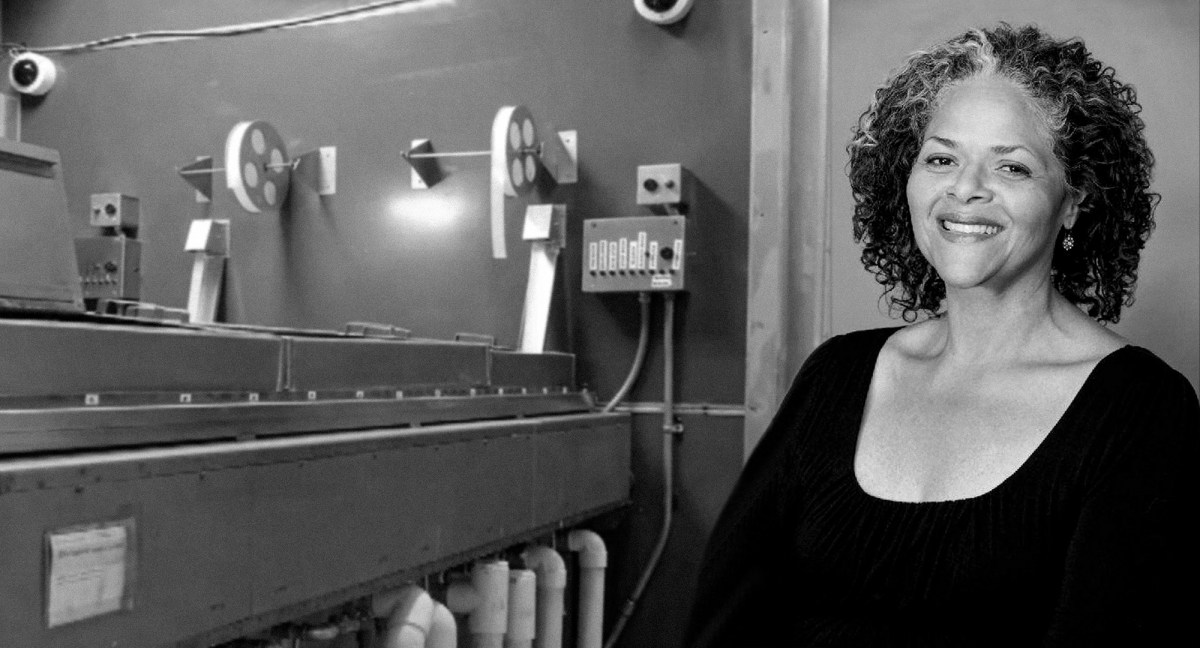
We speak with Beverly Wood, former Executive VP at Deluxe and Managing Director at eFilm. We discuss the transition in Hollywood from Film to Digital with one of the industries foremost experts on the science behind it all. We discuss how film emulsion actually works, color science, her work with Roger and James, and films like SkyFall, O Brother, Where Art Thou and more.
She’s been with us through our journey from film to digital and is a great source of information in general!
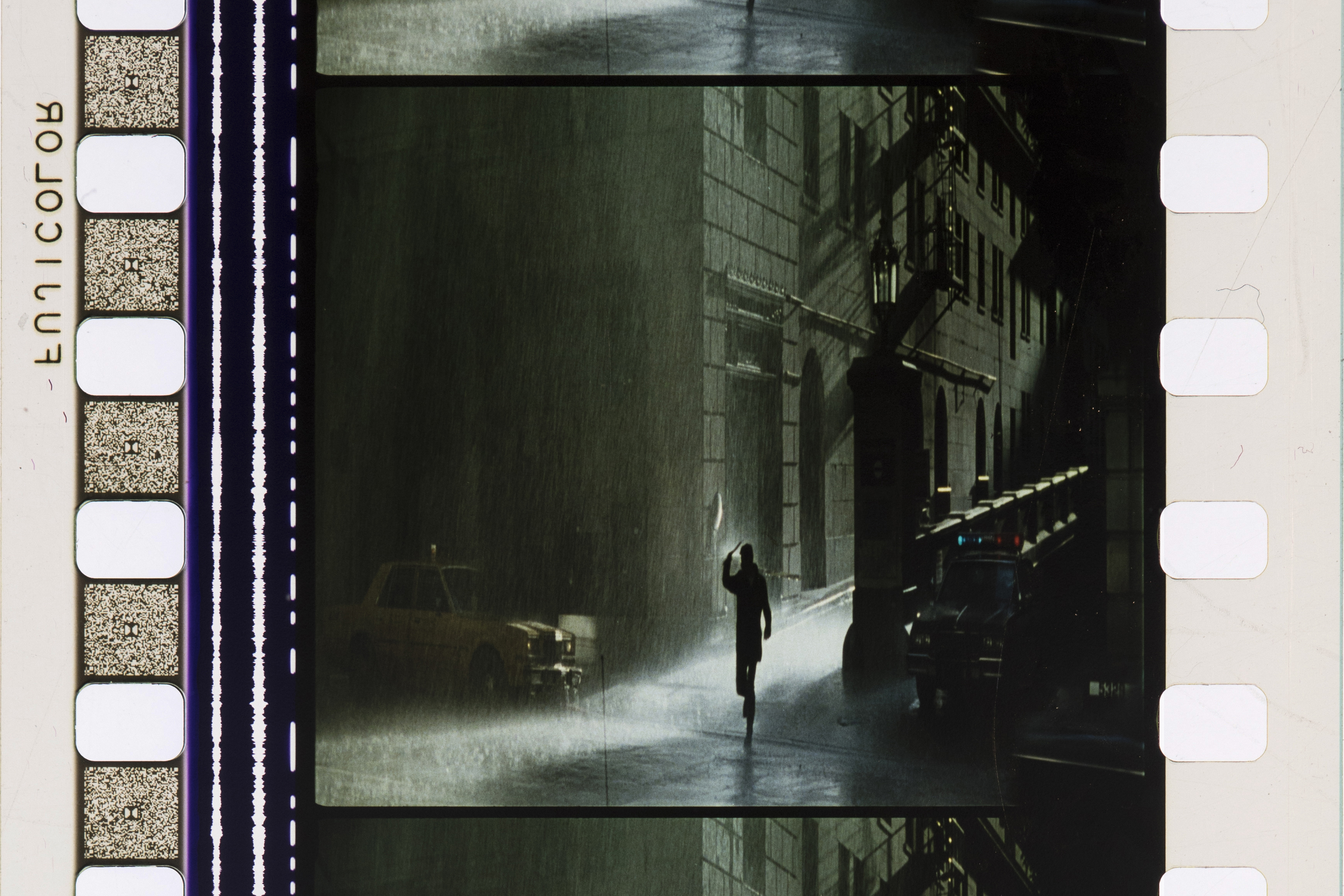
Although mainstream audiences may not be consciously aware of the use of special processes when they watch a film in a theater, they certainly felt the effect while watching David Fincher‘s horrific thriller Seven (AC Oct. ’95), which was photographed by Darius Khondji. A number of the film’s release prints were treated with Deluxe‘s Color Contrast Enhancement (CCE) process to heighten the film’s blacks and add a palpable texture and tonality.
Color Contrast Enhancement (CCE) was a silver retention process used at Deluxe Laboratories in the late 1990s that provided an extreme gritty look, with a muted color palette and increased contrast. Its companion process, Adjustable Contrast Enhancement (ACE), allowed for scalable control of contrast and black levels without impairing color saturation.
On David Fincher’s Se7en(1995), a small number of 35mm show prints were made for big city engagements using Deluxe’s Color Contrast Enhancement silver retention process. This enhanced the film’s noirish visual style with heightened contrast, desaturated colors and rich blacks.
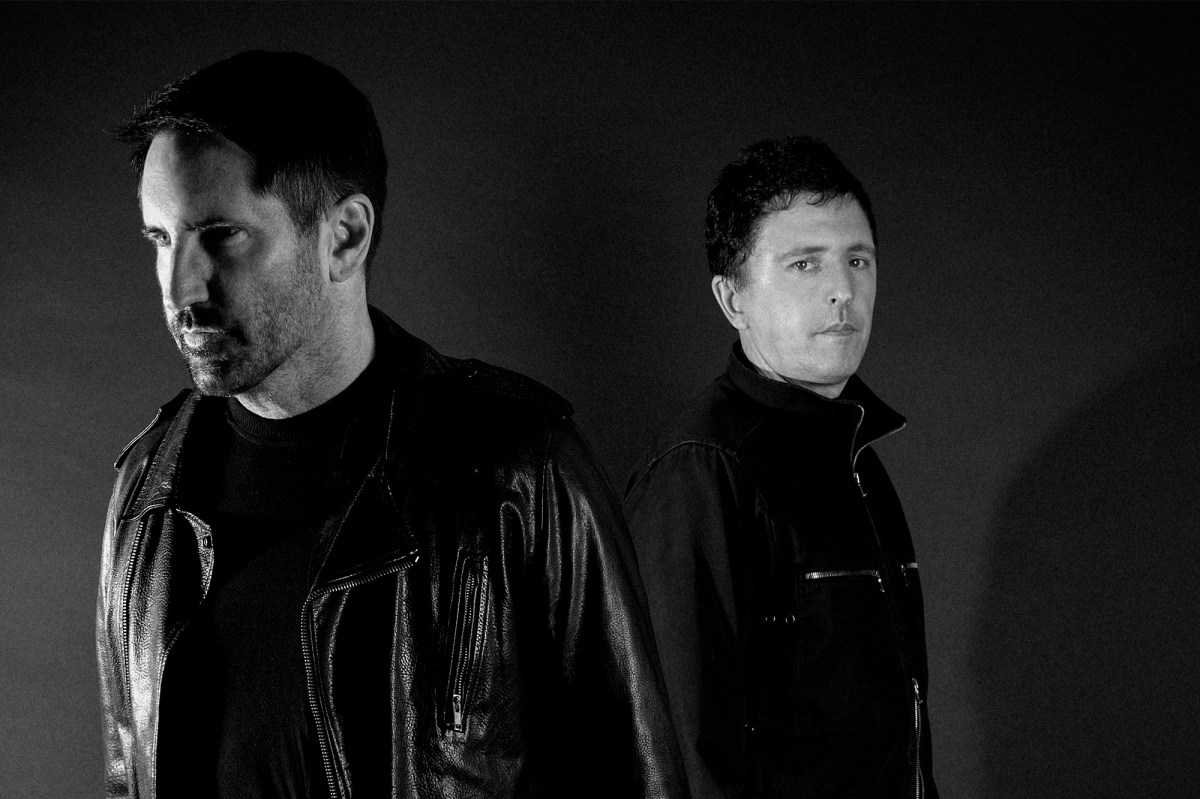
And Trent Reznor explains why David Fincher is great to work with.
Reznor and Ross share some glimpses on their work with Fincher on Mank at the end of their interview about their score for HBO and Damon Lindelof‘s Watchmen.
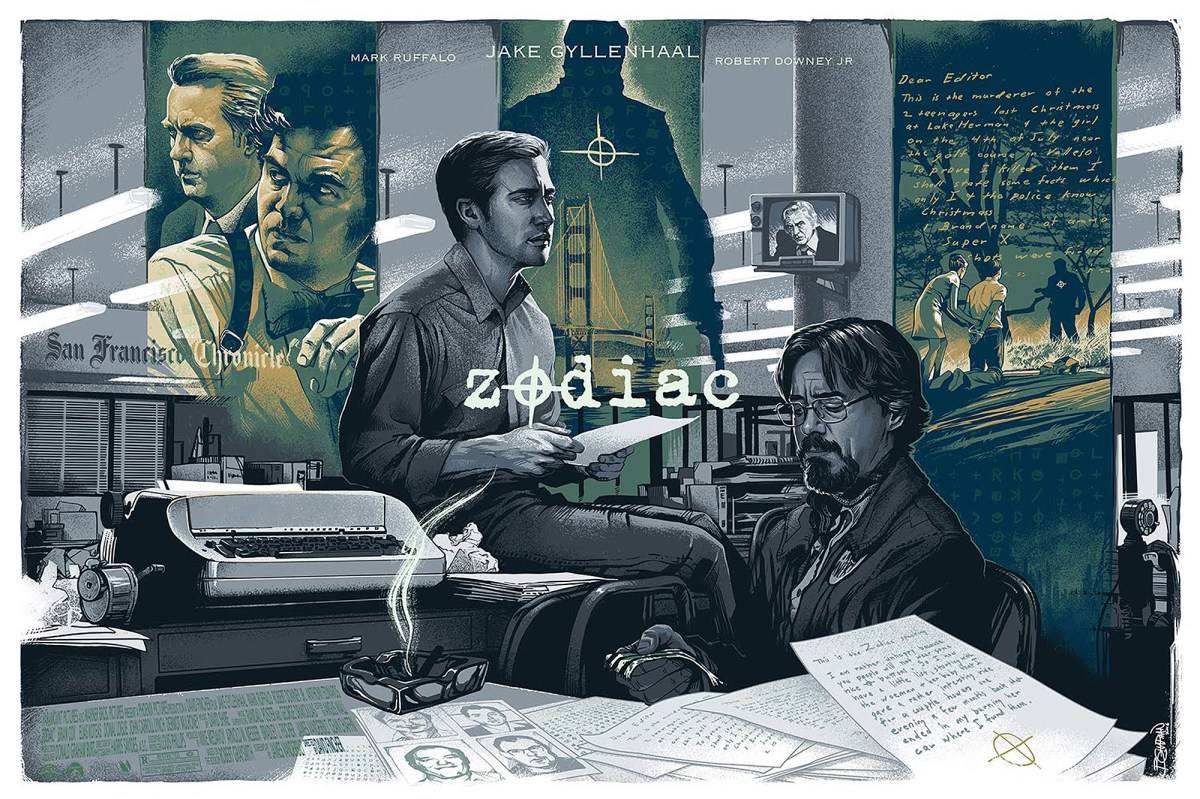
If you asked David Fincher about the childhood years he spent in San Anselmo in Marin County during the 1960s, the topic that would undoubtedly pop up would be that of an infamous serial killer who, in the director’s eyes, was “the ultimate boogeyman.” For it was precisely that time and that general area that saw the rise of the Zodiac, a murderer who frequently wrote letters and sent coded messages to local newspapers, gleefully taking credit for the gruesome killing sprees that would inevitably trigger waves of paranoia across the West Coast. As Fincher recalls: “I remember coming home and saying the highway patrol had been following our school buses for a couple weeks now. And my dad, who worked from home, and who was very dry, not one to soft-pedal things, turned slowly in his chair and said: ‘Oh yeah. There’s a serial killer who has killed four or five people, who calls himself Zodiac, who’s threatened to take a high-powered rifle and shoot out the tires of a school bus, and then shoot the children as they come off the bus.’” Fincher’s fascination with the mystery man who wreaked havoc in Northern California during the late 60s and early 70s, claiming to have taken the lives of thirty-seven people (out of which only five were confirmed as being his victims), ultimately resulted in the director gladly accepting to work on Zodiac, a 2007 movie written by James Vanderbilt. The screenwriter had read a 1986 non-fiction book of the same name while he was still in high school, years before pursuing his eventual career. After getting into screenwriting, he had the chance to meet Zodiac author Robert Graysmith, a cartoonist who had been working for one of the newspapers the killer wrote to during the 1960s, and decided to make a screenplay based on the information-packed book. Having creative control over the material was of the utmost importance to Vanderbilt, given the fact that the endings of his previous scripts had been altered. Together with producers from Phoenix Pictures, Vanderbilt bought the rights to both Zodiac and its follow-up, entitled Zodiac Unmasked, after which the Seven director was asked to come on board.
Apart from having a personal attachment to the story of the notorious serial killer who was never brought to justice, what drew Fincher to work on the project was also the fact that the ending of Vanderbilt’s script was left unresolved, thereby staying true to real-life events. But Fincher’s perfectionism and his wish to depict the open case as accurately as possible led to him asking that the screenplay be rewritten, for the wanted to research the original police reports from scratch. He also decided that he, Vanderbilt and producer Bradley J. Fischer should personally interview the people who were involved in the case so that they could discern for themselves whether the testimonies were to be believed or not. The people they spent months interviewing were family members of suspects, the Zodiac killer’s two surviving victims, witnesses, investigators both current and retired, as well as the mayors of Vallejo and San Francisco. As Fincher elaborated: “Even when we did our own interviews, we would talk to two people. One would confirm some aspects of it and another would deny it. Plus, so much time had passed, memories are affected and the different telling of the stories would change perception. So when there was any doubt we always went with the police reports.” They also hired a forensic linguistics expert to analyze the killer’s letters, with the expert’s focus being on how the Zodiac spelled words and structured sentences, as opposed to the emphasis that was put on the Zodiac’s handwriting by document examiners in the 1970s.






 The Fincher Analyst