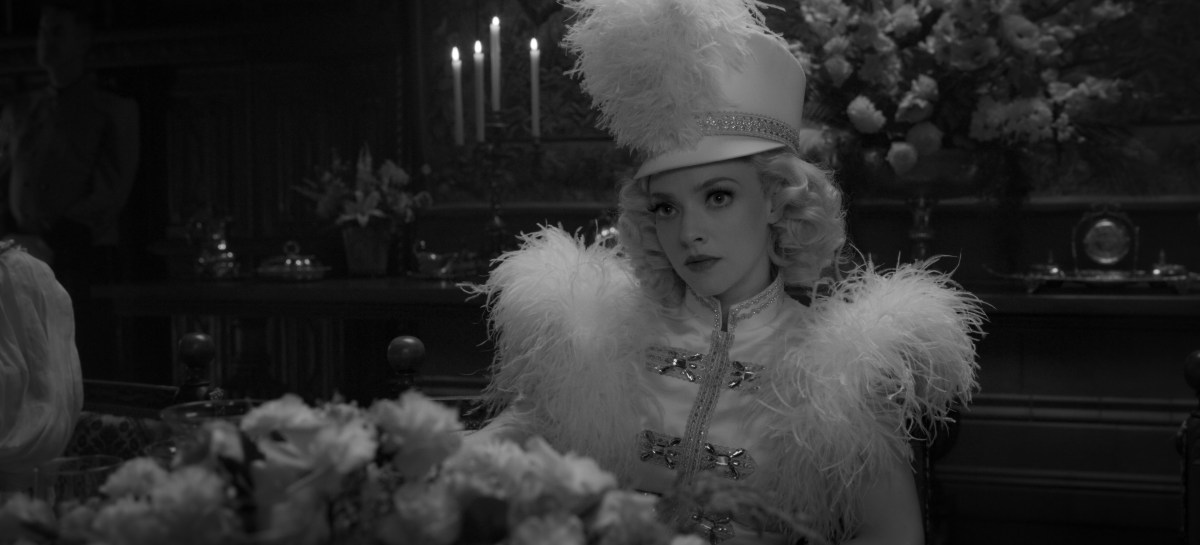
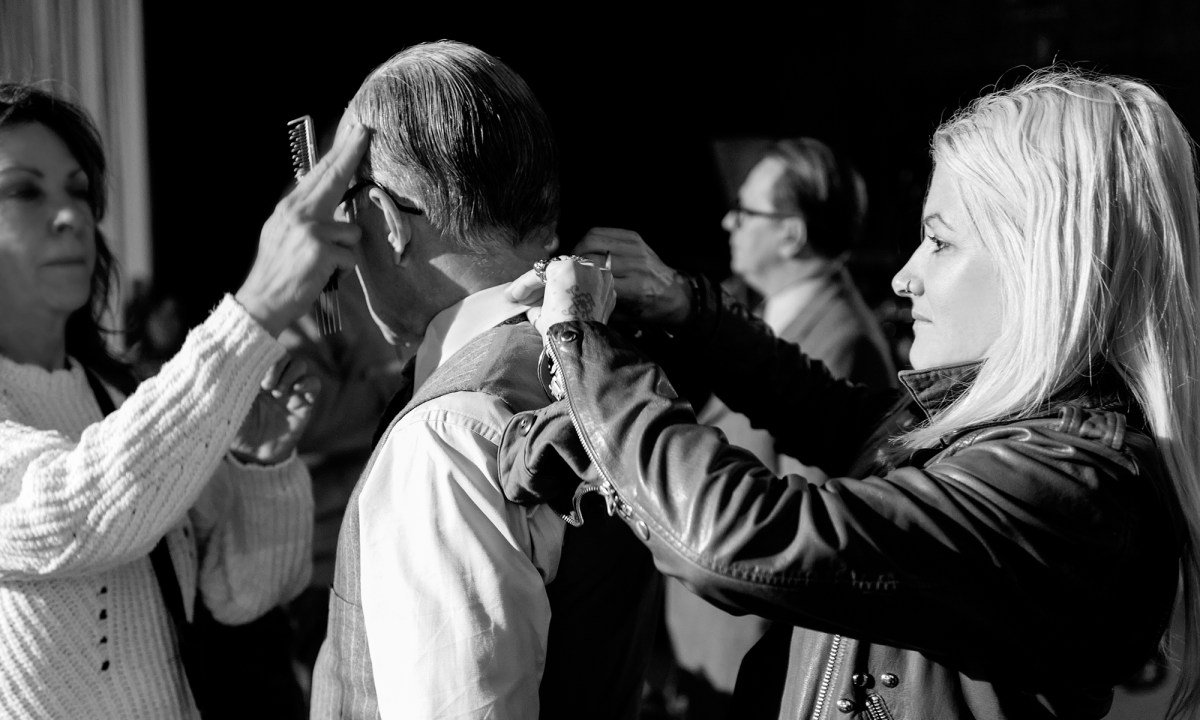
When it came to designing the costumes of David Fincher’s “Mank,” both costume designer Trish Summerville and production designer Donald Graham Burt used the noir and monochromatic filters on their iPhones to see how color would convert for Fincher’s black and white film.
The film, which tells the story of Herman J. Mankiewicz and how he developed the script for Orson Welles’ “Citizen Kane,” was shot on digital and filmed in black and white, rather than converted after shooting. That meant Summerville had to use wardrobe colors that would pop onscreen.
In looking at photos from the ‘30s, Summerville says she found that the Hollywood executives and glamorous actresses dressed in salmon hues, greens and aubergine, which she used to build texture when it came to dressing Amanda Seyfried and Gary Oldman.
“We wanted to show the varying degrees and levels of socioeconomic status in Hollywood at the time,” says Summerville, who breaks down key costumes from “Mank,” now streaming on Netflix.
Le grand film de Fincher débarque sur Netflix le 4 décembre. L’occasion d’un entretien avec le cinéaste, mais aussi avec ses collaborateurs les plus proches. 16 pages spéciales.
Scénario pour une critique par Nicolas Tellop
Filmopathe entretien avec David Fincher – par Nev Pierce
Collaborer avec Fincher entretiens avec Erik Messerschmidt (chef opérateur) – Donald Graham Burt (chef décorateur) – Trish Summerville (costumière) – Kirk Baxter (monteur)
2. Revisiter Fincher
Plongée exceptionnelle dans l’oeuvre de l’un des plus grands cinéastes contemporains. Filmographie commentée, analyses… 50 pages à lire.
4 nuances de Fincher par Jean-Sébastien Massart et Fabrice Fuentes
David Fincher en 14 titres Propaganda Films (clips) – Alien 3 – Se7en – The Game – Fight Club – Panic Room + les plans de Panic Room – Zodiac – L’Étrange histoire de Benjamin Button – The Social Network – Millénium + la musique hantée de Millénium – Gone Girl – Mindhunter
3. Analyses
Démoniaque – la perfection du crime par Nathan Reneaud Fantômes et paranoïa par Jérôme d’Estais Solitude & obsession – Fincher Dogma par Alexandre Jourdain Poétique du suicide par Aurélien Lemant Le système des objets – design finchérien par Dick Tomasovic
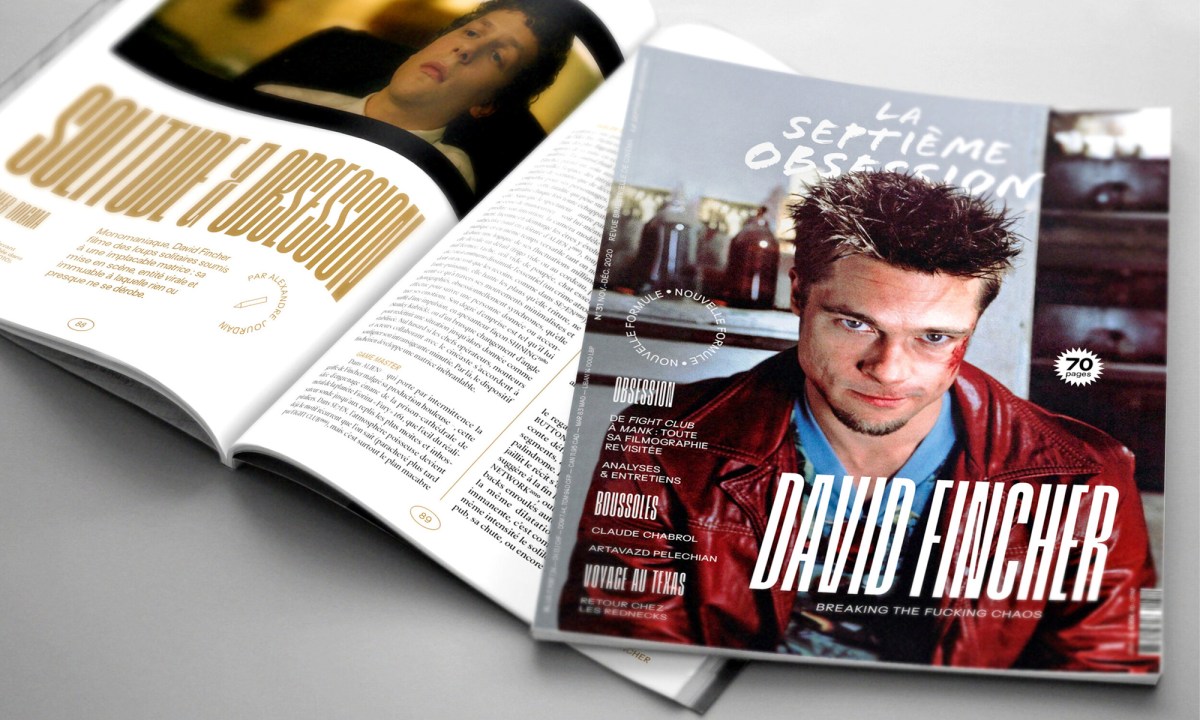
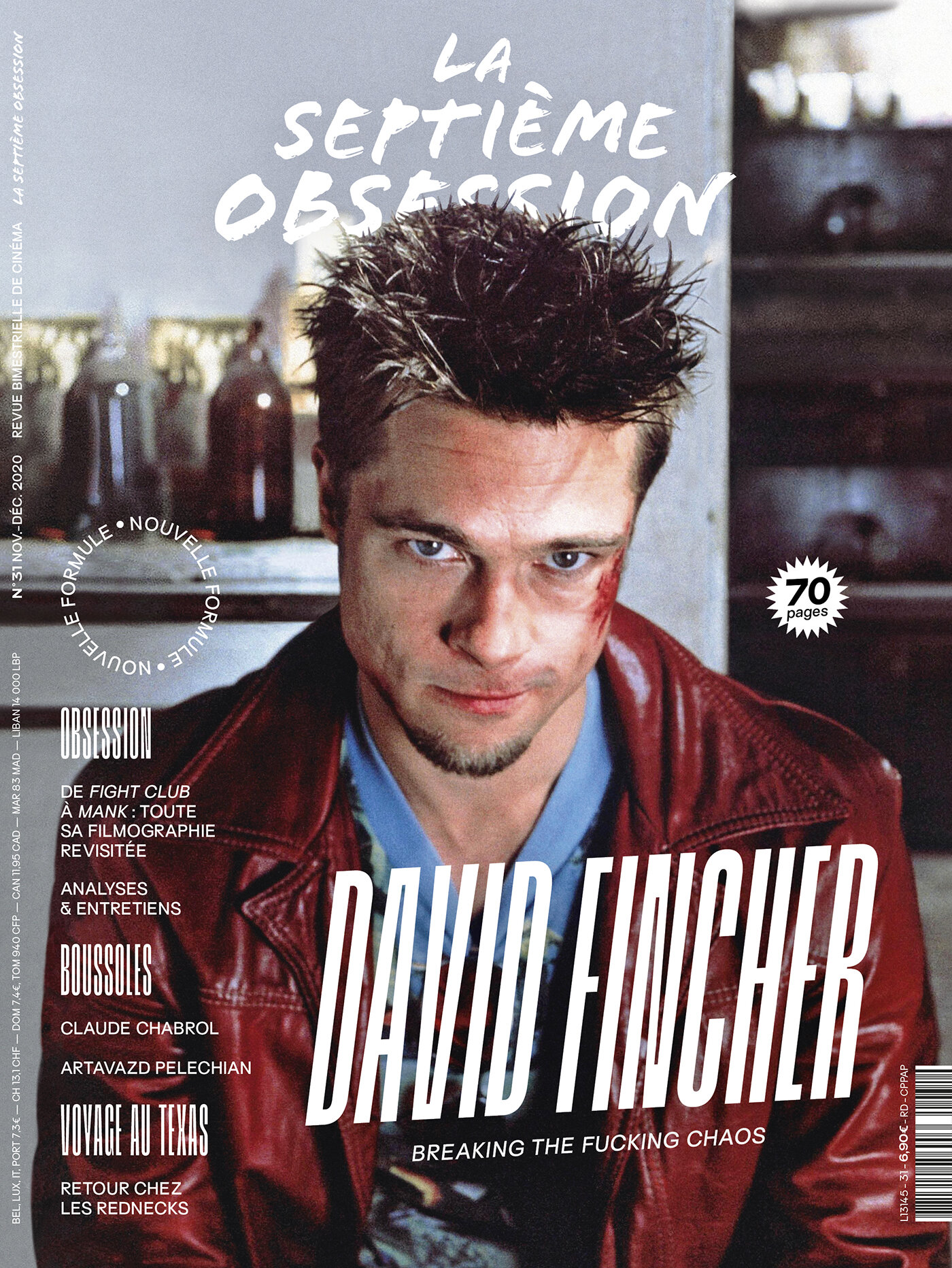
Please extend a big, hearty welcome to our new issue, which is inspired by David Fincher’s Mank. First a little bit of back story: the film was adapted from a script written by Fincher’s father, Jack, who took it on as a project set by his son (who was making his early incursions into Hollywood at the time) to liven up his retirement years. This was back in the early ’90s, and once it was ready, Fincher Jr hit something of a brick wall when it came to convincing studios to fund this black and white rendering of a vital moment in old Hollywood lore.
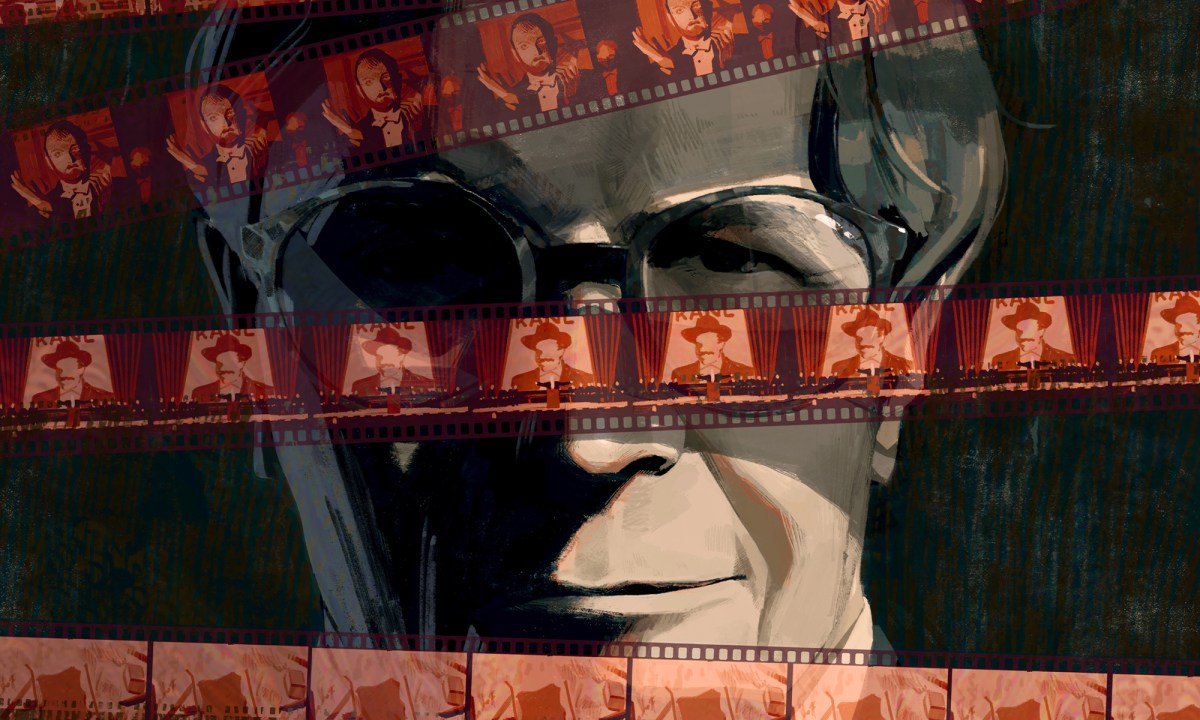
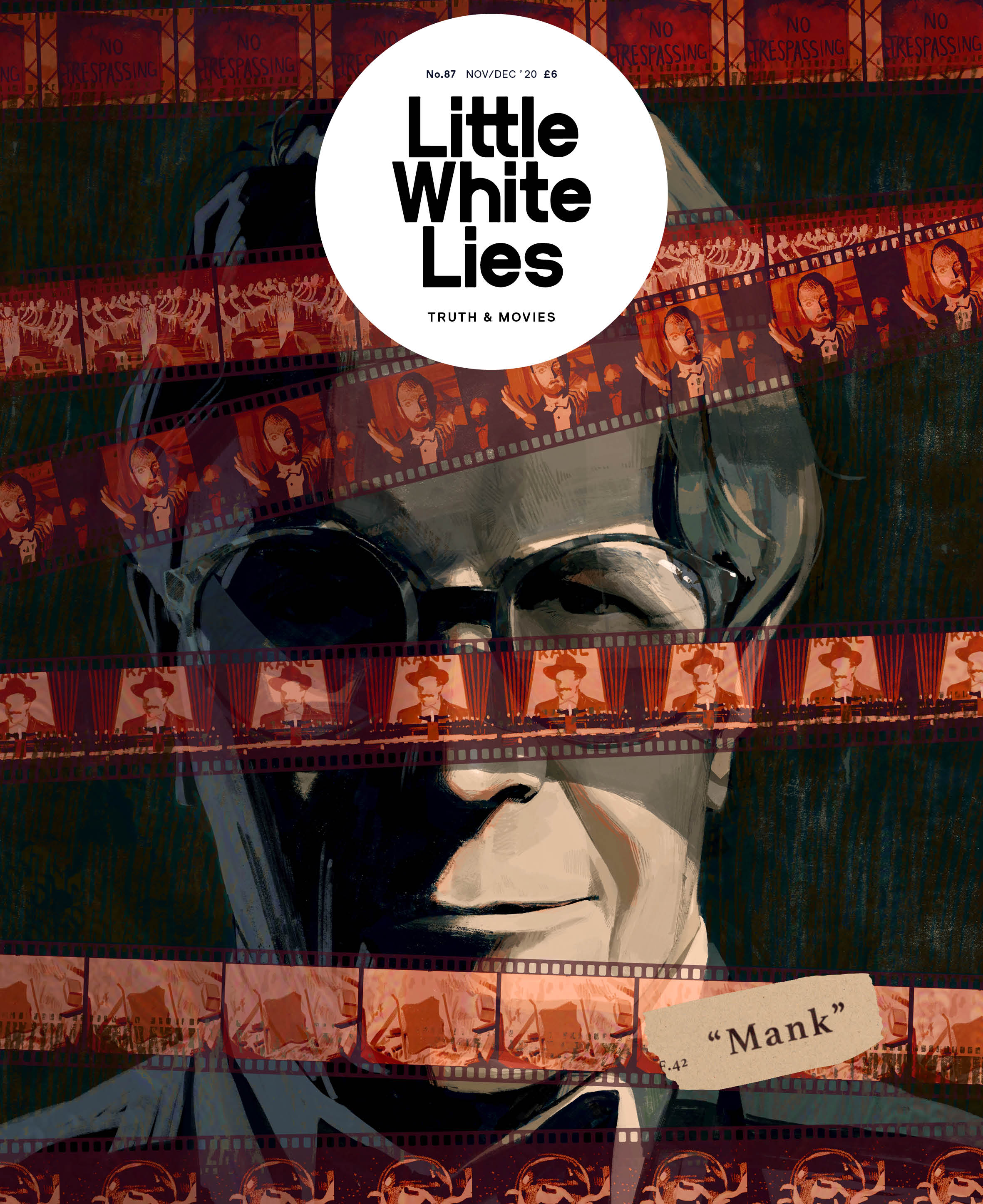
On the cover
The title refers to the nickname given to ace scribe, wit and raconteur, Herman J Mankiewicz, and how after years of coasting on his genius, he finally alienates enough professional cohorts to write something big, meaningful and dangerous. The 200 page script he ended up with was named American, but it ended up being released into cinemas (albeit not very many cinemas) under the name Citizen Kane, directed by Orson Welles. Mank is the story of how that script came into being, but is also a hard-nosed exploration into the malevolent nature of creativity, and the cruel aspect of parlaying real lives into a fictional context.
We worked with the Brooklyn-based illustrator Katherine Lam on a series of portraits inspired by cinema’s arch outsiders for our Shape of Water issue, and so she was our first choice to attack a cover about another fringe Hollywood figure being placed in the limelight. Her stunning portrait of Gary Oldman as Mank is obscured by reels of the film he had an important (but largely spectral) hand in bringing to life.
Inside the issue
A review of David Fincher’s Mank Hannah Woodhead verbally spars with this sumptuous evocation of classic-era Hollywood.
It’s All True: A Conversation with David Fincher David Jenkins talks to the master filmmaker about realising a passion project after a 30-year wait.
The Heroine Caitlin Quinlan profiles one of our favourite actors working today, Tuppence Middleton.
F For Fake On the magic tricks behind selecting costumes to show up on black-and-white film.
The Dreamers Adam Woodward scours the credits of Citizen Kane for the lost masters of cinema.
For David Fincher‘s new movie Mank — which chronicles screenwriter Herman J. Mankiewicz‘s efforts to craft Citizen Kane, as well as the personal baggage behind the film — Summerville was tasked with bringing the Tinseltown of the 1930s and ’40s back to life.
In some cases, she was recreating the looks of classic stars, including Marion Davies (Amanda Seyfried) and Orson Welles (Tom Burke). But for the most part, the film (and Summerville) opted for grit over glitz. “It’s not super-glamorous,” she tells EW. “We’re really focused on the daily life of Mank [played by Gary Oldman]. So we were looking for authentic pieces and nothing too over-the-top. We want it to be authentic in the shapes, what fabrics were used, the silhouettes, the colors, that kind of thing — and then translate that into black and white. It has to be subtle.”
On the surface, it was a perfect fit for Summerville, who previously worked with Fincher on projects like Gone Girl and The Girl With the Dragon Tattoo. “Normally I don’t use a lot of color; I use a really muted palette,” she says. “For Dave’s films, it is always pretty muted.”


 The Fincher Analyst