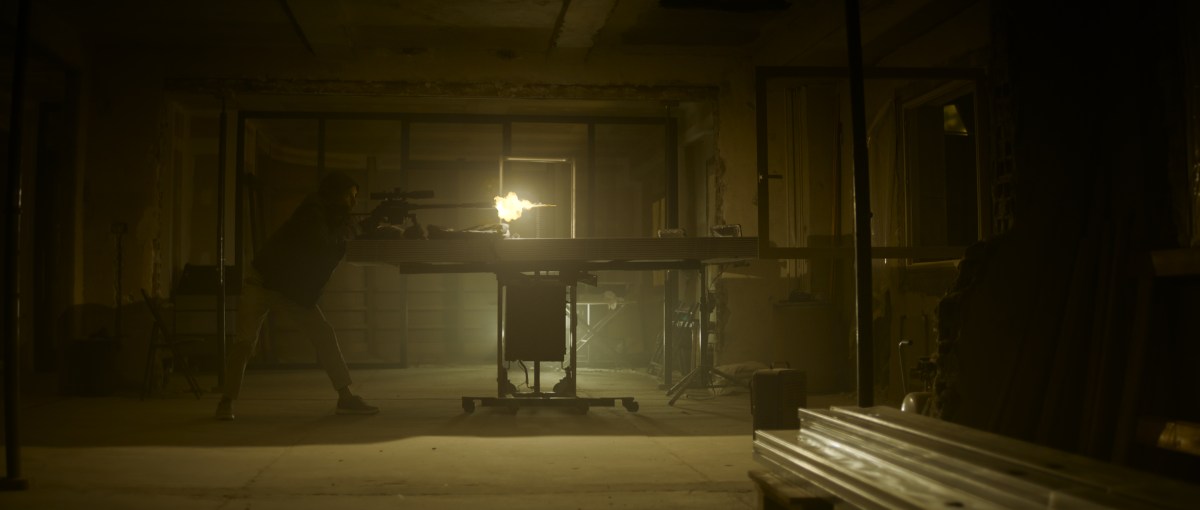
Editing David Fincher’s ‘The Killer’ on Premiere Pro

Netflix has another hit movie on its hands with David Fincher’s The Killer. We spoke to the film’s editor, Kirk Baxter, and Assistant Editor, Jennifer Chung, about how they put it together using Adobe Premiere Pro.

Andy Stout
November 10, 2023
RedShark

Kirk Baxter ACE picked up two Oscars working on previous Fincher titles you will probably have heard of, The Social Network (2010) and The Girl with the Dragon Tattoo (2011). In other words, The Killer has some serious pedigree behind it, and much like this year’s Academy Award for Editing winner Everything Everywhere All At Once, it was cut on Adobe Premiere Pro.

Jennifer Chung ACE was one of the Assistant Editors on The Killer and represents a 14-strong editing department. Chung is currently cutting her first indie feature (“It’s a different kind of stress,” she says laughing), but looking back on The Killer, is there any particular sequence that stands out as her favorite?

“I think it has to be the fight sequence,” she says. “The fight sequence is pretty epic. And it just goes on. I think Kirk did an incredible job with that; it’s just really fun to watch.”

“I watched something on TV which had a big fight sequence two nights ago, and I couldn’t follow it,” says Kirk Baxter, who edited The Killer and put the movie’s signature fight scene together. “I knew people were fighting, but I couldn’t track who owned what fist and what thing. It was just a jumble of limbs edited quickly.”

No such failure to follow the action in The Killer’s own fight scene, which Baxter says is essentially a sequence of 18 scenes with multi-camera setups depicting a single fight all strung together in a row. He was cutting the sequence as Fincher was shooting it. The shoot would break at lunchtime when he’d start cutting the first half of the day, getting the second half later at the end, then cutting into the evening and sending it to Fincher to see if any pickups were needed.

“It was this crazy, relentless week of all of us going around the clock to know that we had the thing,” he says. 
Read the full profile

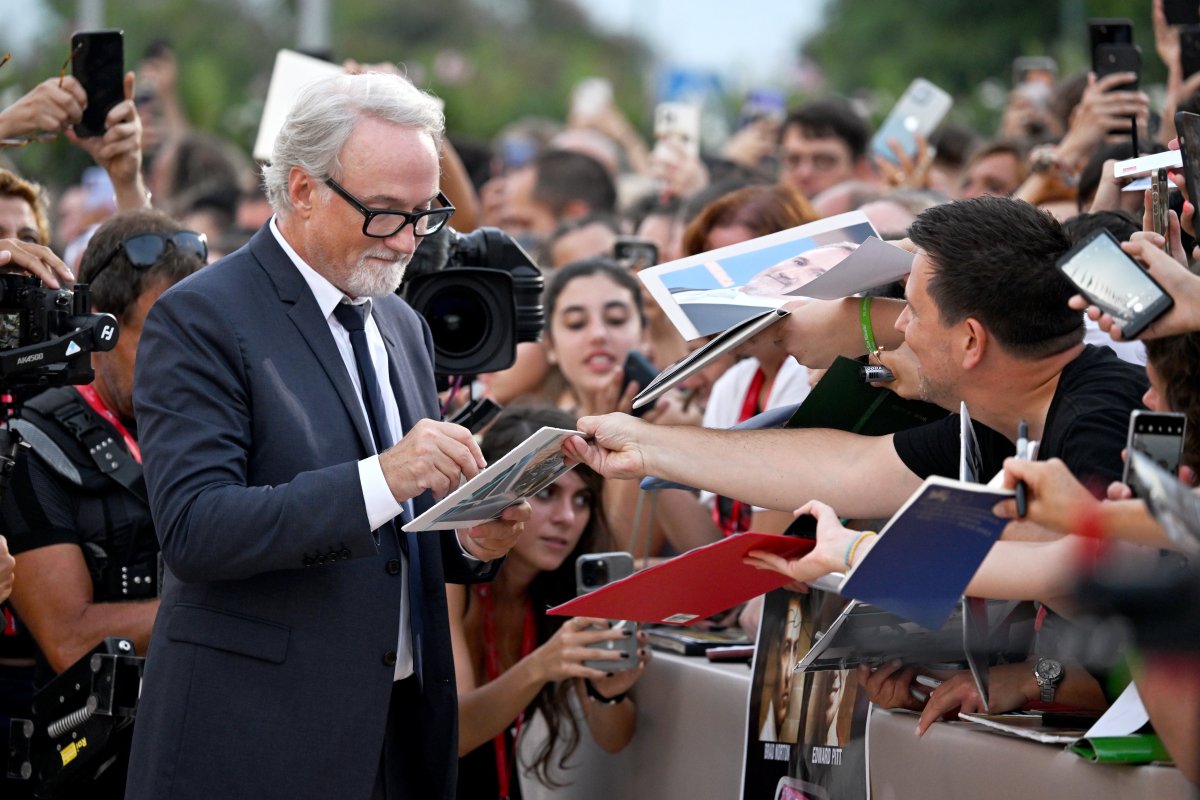
Venice Film Festival: “The Killer” World Premiere

September 3, 2023
Venice Film Festival (YouTube)

Press conference featuring Director of Photography Erik Messerschmidt ASC, Sound Designer Ren Klyce, Director David Fincher, and Editor Kirk Baxter ACE.

Red Carpet featuring Producer Peter Mavromates, Director of Photography Erik Messerschmidt ASC, Writer of the original “The Killer” (“Le tueur”) comic Alexis “Matz” Nolent, Editor Kirk Baxter ACE, Sound Designer Ren Klyce, Director David Fincher. The original stream has the ambient sound turned down to a minimum because it is too busy and noisy, and only barely intelligible in the close-ups.

The Sound and Cinematography of “The Autopsy”

August 11, 2023
Netflix: Behind the Streams

Cinematographer Anastas Michos and Supervising Sound Editor Nelson Ferreira discuss their Emmy nominated work on “The Autopsy” episode of Guillermo del Toro’s Cabinet of Curiosities.

Watch the age-restricted video on YouTube

Soundstage Access: Gwen Yates Whittle, Supervising Sound Editor

Brando Benetton
June 6, 2022
Soundstage Access

For this masterclass on the Art of Sound in film and TV, we welcome on the show Gwen Yates Whittle, a 2-time Oscar-nominated sound professional whose credits include this summer’s Jurassic World: Dominion, Saving Private Ryan, Top Gun: Maverick and the upcoming Avatar: The Way of the Water.

In today’s conversation, the Skywalker Sound member and I break down some of Hollywood’s biggest sound moments. We discuss Gwen’s beginning in the industry and why the prospect of sound editing intrigued her in ways that sound mixing never did; her relationship with detail-oriented directors like Steven Spielberg, James Cameron, and David Fincher (Fight Club, Panic Room, Zodiac, Benjamin Button, Gone Girl); the process of layering animal sounds to create the dinosaur voices in the Jurassic World franchise—as well as how the pandemic suddenly impacted Gwen’s work. All of this… and much more!

Gwen’s newest movies Jurassic World: Dominion and Top Gun: Maverick are now in theaters across the world, with Avatar: The Way of the Water opening in December 2022.

Listen to the podcast on:

Apple Podcasts
Spotify

Soundcloud
Google Podcasts
Stitcher

Soundstage Access on Facebook, Twitter, and Instagram.

Conversations with Sound Artists: Dialogue Editing and ADR with Gwen Whittle

Glenn Kiser, Director of the Dolby Institute
September 21, 2015
SoundWorks Collection / The Dolby Institute

Editing dialog and working with the original recordings from the set is one of the most under-appreciated arts in cinema sound. In this episode of “Conversations with Sound Artists,” two-time Academy Award nominee Gwen Yates Whittle talks with the Dolby Institute’s Glenn Kiser about why George Lucas thinks dialog editing is one of the most important parts of the process, why she loves working on low-budget independent films (“They talk more,”), and why David Fincher and Meryl Streep love doing ADR.

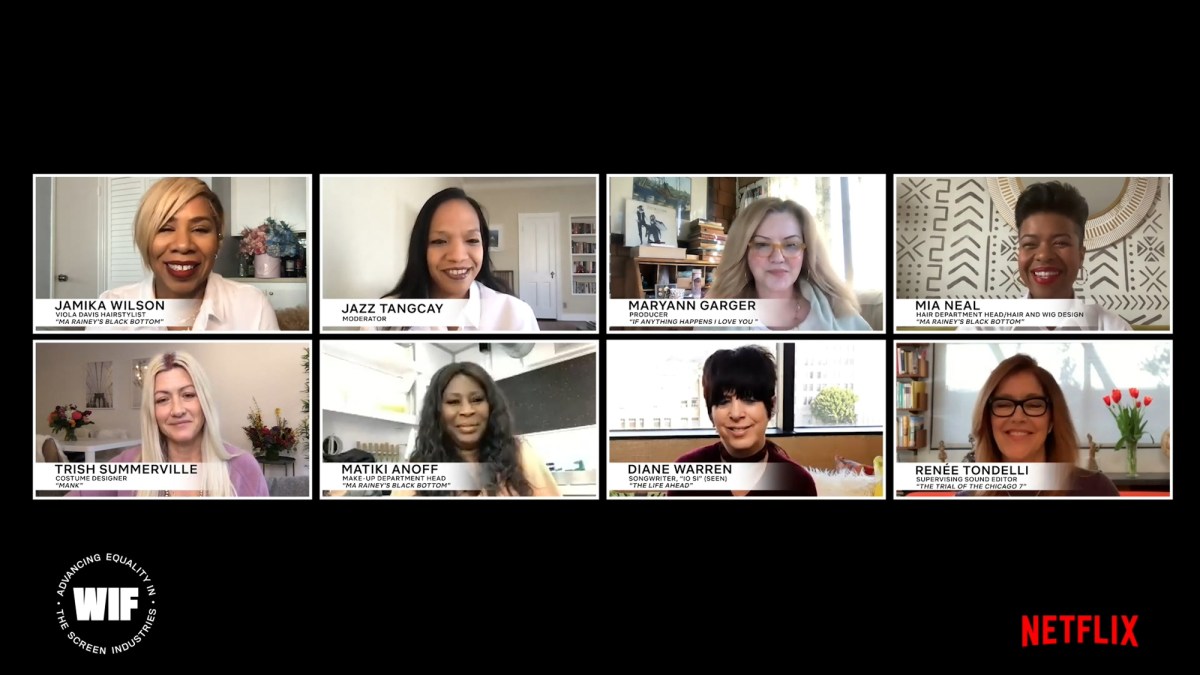
Netflix Presents a Women in Film Conversation

Jazz Tangcay, Senior Artisans Editor at Variety
March 24, 2021
Netflix Film Club (YouTube)

Join a who’s who of behind-the-scenes talent for a Women in Film discussion about their work on Netflix‘s Oscar®-nominated slate this year, including:

  • Animated Short Producer Maryann Garger (If Anything Happens I Love You)
  • Costume Designer Trish Summerville (Mank)
  • Hair-and-Makeup Artisans Mia Neal, Matiki Anoff and Jamika Wilson (Ma Rainey’s Black Bottom)
  • Songwriter Diane Warren (“Io Sí” from The Life Ahead)
  • Supervising Sound Editor Renée Tondelli (The Trial of the Chicago 7)

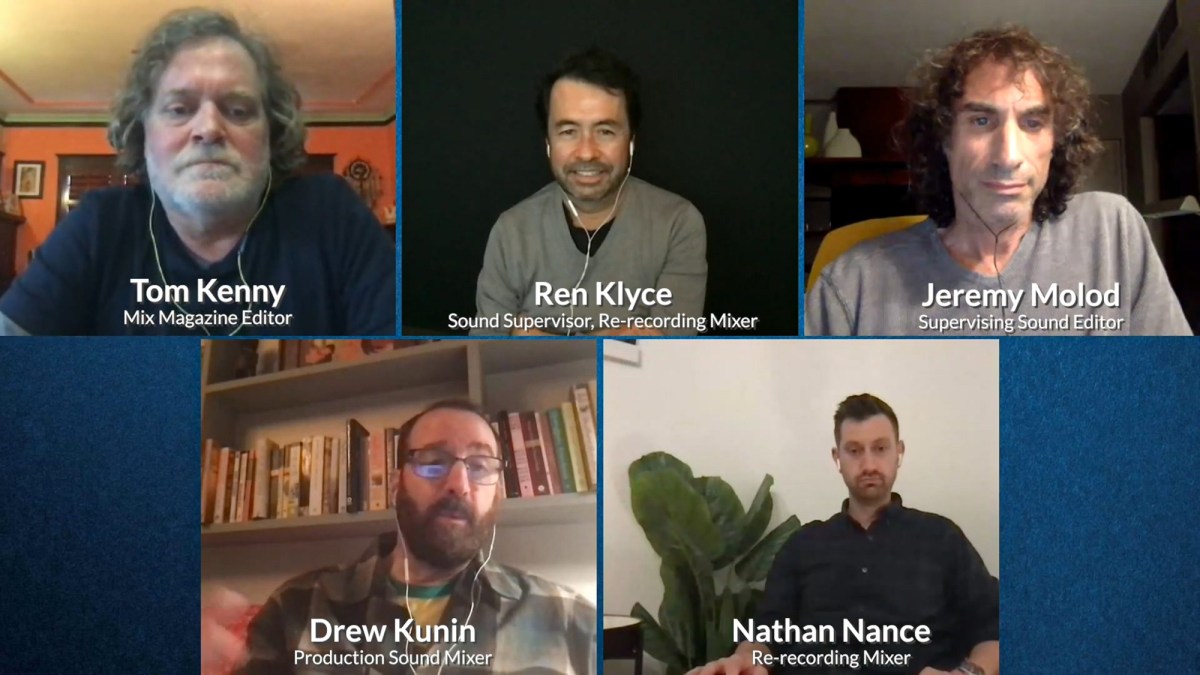
Mix Presents Award Season 2021: Mank

Tom Kenny
February 8th, 2021
Mix Magazine / SoundWorks Collection

Director David Fincher tasked the sound crew with reviving the feel of the Golden Age of Hollywood in the track. They came up with a process of combining old and new technologies to create a “patina” for playback.

Ren Klyce, Sound Designer
Drew Kunin, Production Sound Mixer
Jeremy Molod, Supervising Sound Editor
Nathan Nance, Re-Recording Mixer

Moderated by Tom Kenny, Editor of Mix

Listen to the SoundWorks Collection podcast on:

Apple Podcasts
Spotify

SoundCloud
Stitcher

The Golden Age Sound of ‘Mank’

Jennifer Walden
February 10, 2021
Mix Magazine

Ren Klyce and Jeremy Molod of ‘Mank’ Break Their Silence on the Sound Secrets of 1940s

Rich Quinn (ADR editor), Jonathon Stevens (Sound Effects Editor), Jeremy Molod (Supervising Sound Editor), Malcolm Fife (Sound Effects Editor), Ren Klyce (Sound Designer/Re-Recording Mixer).

Patrick Z. McGavin
December 2, 2020
CineMontage

Orson Welles famously observed a writer needs a pen, a painter a brush, and a filmmaker an army.

One of the soldiers behind Welles’ most fabled work is at the heart of David Fincher’s new Netflix film “Mank,” which excavates a creation myth from the contentious backstory of “Citizen Kane,” Welles’ 1941 feature directing debut. Many critics consider it one of the best films ever made.

Fincher commanded his own army of Foley artists, dialog editors and sound specialists for his iconoclastic biographical portrait of the screenwriter Herman J. Mankiewicz (Gary Oldman).

Verisimilitude was the most pressing concern in crafting a symphonic soundtrack of rare cars, Underwood typewriters and vintage telephones.

Sound designer/re-recording mixer Ren Klyce and supervising sound editor Jeremy Molod have worked on every Fincher movie since his breakthrough second feature, “Se7en” (1995).

“We know what Fincher is trying to get at when he is giving us directions,” Molod said. “Sometimes when he is asking us to provide certain sounds and he gives us a description of what the character or location is, it’s not always meant to be a literal translation.

“It’s more of a feeling and what he is trying to convey.”

Klyce assembled an impressive and highly experienced editorial team that included dialog editors Kim Fosacto and Richard Quinn, Foley editor Shaun Farley and the FX editor Malcom Fife and his team, Jonathon Stevens, Josh Gold and Coya Elliott.

Most important they all had a deep work background with the fastidiously exacting filmmaker.

Read the full interview

Mix Magazine 2020: The Music in Sound with Ren Klyce

Ren Klyce in Peter Elsea’s Studio (1984)

Larry Blake
November 5, 2020
Mix Magazine / SoundWorks Collection

Animated short for Sesame Street (January 17, 1984) produced by John Korty. Sound and music by Ren Klyce:

SoundWorks Collection: The Sound of MindHunter

Glenn Kiser, Director of the Dolby Institute
July 2, 2020
SoundWorks Collection / The Dolby Institute

Cinema director David Fincher created one of the first original streaming series with House of Cards, and his innovative spirit infuses the Netflix original series Mindhunter, now in its second season.

In this podcast episode, the sound team discuss Fincher’s unique approach to the sound of serial killer interrogation scenes, a hallmark of this fascinating, dark series. The team discuss setting the acoustic tone of the series, including the oppression of the FBI agents’ basement office (and a very special door), why it was important to Fincher to always hear trainee agents at Quantico at target practice, and the joy of receiving Fincher’s incredibly detailed mix notes.

Steve Bissinger – Sound Effects Editor
Scott Lewis – Re-Recording Mixer
Stephen Urata – Re-Recording Mixer

Listen to the SoundWorks Collection podcast on:

Apple Podcasts
Spotify

SoundCloud
Stitcher

How Crafts Amplified Berkowitz, Watson, & Manson Scenes in ‘Mindhunter’ Season 2

A look at the crafts behind the killer interrogations, including cinematography, sound editing, prosthetics, editing, and rerecording mixers.

Megan McLachlan
June 20, 2020
Awards Daily

Awards Daily’s Megan McLachlan and the technical team behind Netflix’s Mindhunter Season 2 (cinematography, sound editing, editing, prosthetics, and rerecording mixers) break down why each killer interview is completely different.

Mindhunter Season 2 starts with a “doozy” of a sequence.

“You’re not sure where you are,” said Mindhunter re-recording mixer Scott Lewis.

The opening sequence reacquaints us with the mind of a killer—in this case, specifically the BTK Killer (Sonny Valicenti), who we’ve been following in Season 1 through vignettes. BTK’s wife comes home to discover him tying himself up in the bathroom while wearing a mask. Lewis and his re-recording mixer partner Stephen Urata went back and forth about how the sound of the door, bumping from BTK’s aggression, was supposed to sound from down the hall.

“[Director] David [Fincher] gave some vague directions for that,” said Urata. “We tried to keep it really mysterious. We started with really dreamy, big reverb, did some fabbing, and [the wife] starts picking up on those knocking sounds. We took our liberties with it. The knocking sounds probably wouldn’t be that loud.”

It had to compete with Roxy Music’s “In Every Dream Home a Heartache,” something they had to find the right timing for with the knocks. When it came to editing the sequence with the music, editor Kirk Baxter felt like he was working on a music video.

“The track was predetermined, so I could plot everything to the music, when it was gonna hit,” said Baxter. “So much of the reaching, the hand, it was based around being stretched so the door opened at the exact beat I needed it to. To me, it was like a Christmas present. When you’ve got all of the angles and coverage, you can expand the tension and manipulate the hell out of it.”

The Crafts Behind the Madness of Mindhunter Season 2

It’s specific technical details like this that take Mindhunter to a new level of creepy with each episode. And though these elements are subtle, they add so much to each and every scene, especially when Holden (Jonathan Groff) and Tench (Holt McCallany) interview the killers.

While they might seem like they’re similar in format, each interrogation scene is completely different and tells you so much about the killer they’re questioning, with precise engineering and great care that goes into them. Let’s look at how Berkowitz, Tex Watson, and Manson are all completely different from each other.

Featured crafts:

Kirk Baxter, editing
Kazu Hiro, prosthetics
Scott Lewis & Stephen Urata, rerecording mixers
Erik Messerschmidt, cinematographer
Jeremy Molod, sound editor

Read the full profile