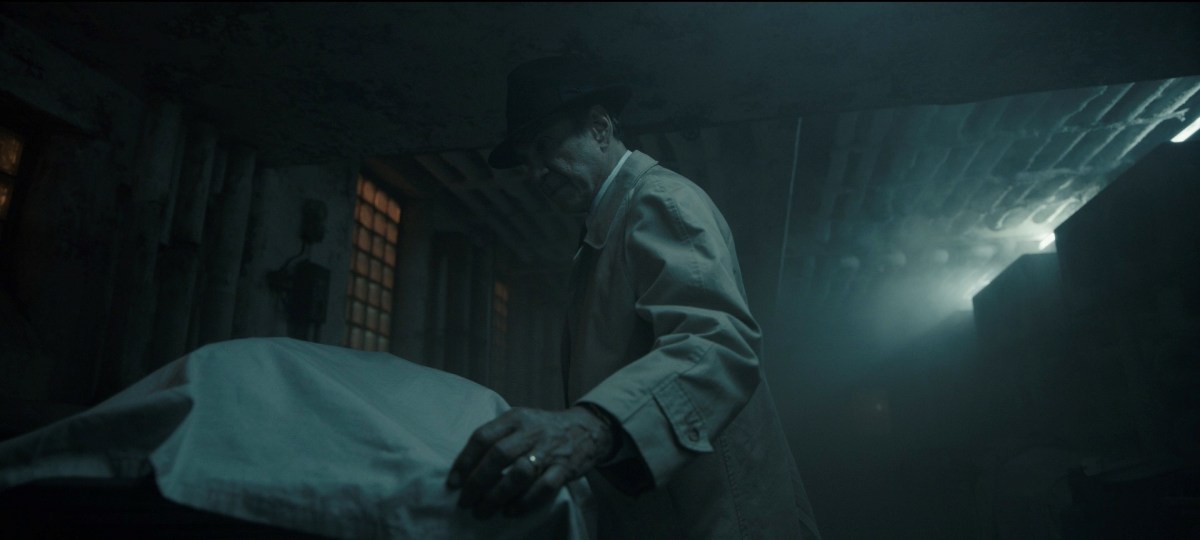
Cinematographer Anastas Michos, ASC, GSC, takes us into the thrilling world of Guillermo del Toro’s Cabinet of Curiosities with “The Autopsy.” Michos’ mastery weaved an emotive visual narrative through skillfully dark color palettes, dynamic lighting, and expert composition, turning settings into characters and creating an immersive, unforgettable experience. Go behind the look, and learn about the choices Anastas made on “The Autopsy” that earned him a well-deserved Emmy nomination for Outstanding Cinematography For A Limited Or Anthology Series Or Movie.
Michos takes us Behind The Look: THAT SHOT of his favorite sequence of “The Autopsy” starting in the morgue.
“The Autopsy” is the third episode of Netflix‘s Cabinet of Curiosities. A seasoned sheriff investigates a dead body in the woods and calls on an old pal, a medical examiner, to help piece together a series of chilling events.
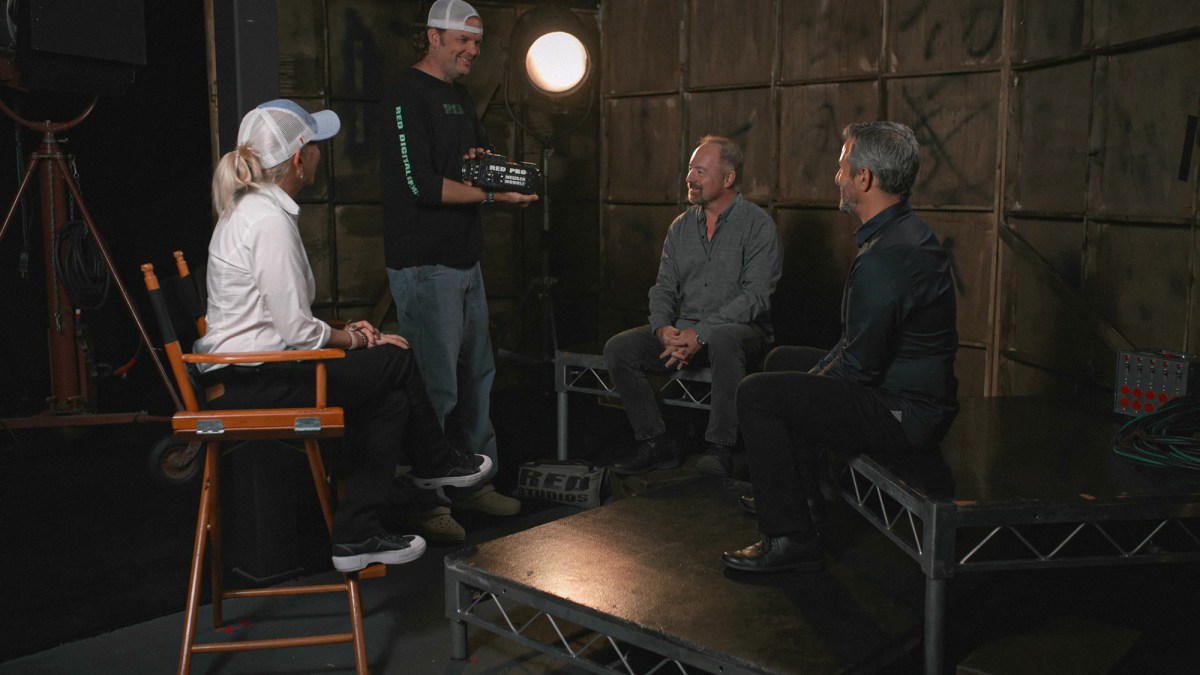
Jeff Cronenweth, ASC, and Steven Meizler, two cinematography legends, sit down with RED‘sJarred Land and Naida Albright. They discuss the challenges and triumphs of shooting projects like Che and The Social Network during the early years of RED and how those experiences and their continued relationship with the brand have forged a symbiotic relationship that has helped their art and more importantly, helped to push RED’s technology forward to meet their high standards.
Two-time Oscar-nominated cinematographer Jeff Cronenweth, ASC, is known for his role as the director of photography on Fight Club, The Social Network, The Girl with the Dragon Tattoo, and Gone Girl.
Emmy-award winner Steven Meizler‘s films include Che, The Minority Report, The Queen’s Gambit, The OA, Godless, and the upcoming American political drama series The White House Plumbers.
Follow the fourth season of Michael Fassbender’s journey to compete at the world’s ultimate motorsport event in this weekly YouTube series.
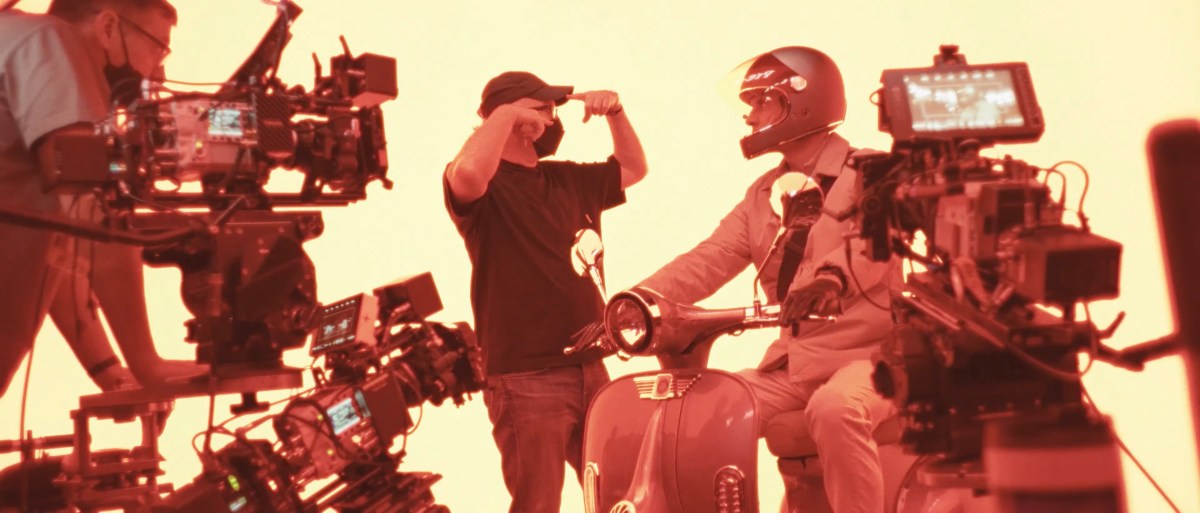
Starting at minute 2:14, there is a three-minute clip of Fassbender shooting car process scenes for The Killer with Fincher and his team on Sound Stage 2 at Triscenic Production Services. Andrew Kevin Walker, the screenwriter of the film, is also visiting.
The actor discusses working on the film during the off-season of his other passion, car racing:
I had the great privilege and honor of working with David Fincher on The Killer. I have the lead role in his film. To have a small window of opportunity to go to work and then to be able to work with one of the best filmmakers out there was just a dream come true.
It felt really good to go back to work. The film that I’ve done before was just before lockdown. But that was 2019, so I was definitely ready to go back to work.
With somebody of David’s caliber, it was a very special opportunity for me: quite a few locations over a five-month period.
What was interesting for me was taking the experience from what we’re doing on track and bringing it on set, especially with somebody like David who films very precisely and everything is dealing in fractions in terms of how you deliver things and movement and exactly how the frame is occupied.
You have to step on and deliver in a period of time. And David is looking for perfection and to do that within a take, however long that take is. It might be 40 seconds. It might be six minutes long, but within that time frame, you’re looking to do everything exactly as it should be.
You’ve taken on board all the notes and there’s plenty of them to digest, but in the moment when you’re trying to deliver those notes, you’re not thinking at all.
It was a real honor. I felt like I learned a lot from him. It was a full-on shoot, very long hours sometimes six-day weeks. So there was literally not enough time for me to get into car and do any training whatsoever.
So we wrapped up the film in L.A., end of March, and I got directly on a flight the next day and then came straight to the track.
Has there ever been a movie director who has taken more advantage of new technology than David Fincher? We look back on how digital production benefitted his movies so much.
When digital cinematography was in its infancy, around 2005, it was like the Wild West; new cameras were appearing seemingly every week, whether from University’ concept’ programs or start-ups with a movie making a revolution on their minds.
In this white heat of technology, director David Fincher started to craft his movie-making skills. He was a risk taker with new technology but driven by the promise it gave him. As much as Fincher and his crew were proud of the films they made, they were also proud of how they made them.
Zodiac’s Digital Gamble
Fincher had already used digital cinematography for his commercials and decided to commit early to this technology for his movies. But his long-time producer Ceán Chaffin brought some hard business sense to brace against his pioneering creative decisions.
Ceán had been involved more in costing this digital workflow out and had looked at introducing digital for a feature before Zodiac but found that it wasn’t cost-efficient at that time; Zodiac was different. “At the moment of Zodiac, storage was so cheap that we could push it; it was also about the savings at that point. The sticking point was really about storage for us up to Zodiac.”
Has any cinematographer had so fast an ascendancy as Erik Messerschmidt? While no newcomer—his IMDb dates back to 2001, his first cinematography credit from 2003—work on Gone Girl earned the attention of David Fincher, by whom Messerschmidt was then enlisted to shoot his Netflix series Mindhunter. (Impressive then, all the more sterling since as an example of streaming television that doesn’t look or move like streaming television.) Which led into Mank which led into The Killer, Fincher’s much-anticipated thriller arriving next year.
Somewhere along the way Michael Mann called. I talked to Messerschmidt at ENERGACamerimage, where he was promoting the new feature Devotion and mere weeks from wrapping Ferrari, Mann’s first feature in longer than you’d believe and a passion project of equal gestation—nothing you leave in the hands of an amateur. Certainly not if you’re as obsessive, fastidious, demanding as Michael Mann. Meeting in Toruń’s CKK Jordanki, we were quick to start.
Jarred Land has spent his career in close collaboration and connection with filmmakers, supporting the execution of their vision with powerful and ground-breaking tools.
Jarred Land runs RED Digital Cinema, the company whose 4K camera went from scepticism to admiration on a run of prestige movies like David Fincher’s Oscar-winning Mank and series like The Queen’s Gambit. Since 2013, Land has led a team focused on precedent-setting technology for filmmakers.
Land didn’t found RED but joined Jim Jannard before the launch of the first camera and during the hardcore, technology banging sleepless nights part of the story, where a small group failed, learned, succeeded. From the first conversation Land had with Jannard and still today, the focus is on providing a more complete tool for filmmakers.
Born in Edmonton, Canada, Land’s father ran gas stations and shopping malls, imbuing in him an entrepreneurial spirit. The teenage Land’s passion was mountain biking which he segued into his own bike courier company in Vancouver.
A chance encounter with a client inspired him to take up videography using the Panasonic tape camcorder DVX100. “I couldn’t go to film school because I was running my company and biking 100km a day, so I set up a bulletin board for help,” he says.
Frame & Reference is a conversation between Cinematographers hosted by Kenny McMillan. Each episode dives into the respective DP’s current and past work, as well as what influences and inspires them. These discussions are an entertaining and informative look into the world of making films through the lens of the people who shoot them.
In this episode, Kenny talks with legendary cinematographer Jeff Cronenweth, ASC about the Oscar Nominated film “Being the Ricardos.” You likely know Jeff from his work on films such as “Fight Club“, “Gone Girl“, “The Social Network” & “The Girl with the Dragon Tattoo.”
It’s Showtime! When Steven Soderbergh joins Rob, the two friends get to ask the questions they’ve never asked one another. In this episode find out about Steven’s new film Kimi, and how he thinks Sex, Lies, and Videotape now feels like a Jane Austen novel.
In this edition I’ll look at Jeff Cronenweth, who, to a large extent, is responsible for popularising a style of ‘dark cinematography’, through his work on movies such as Fight Club or The Social Network.
DISCLAIMER: Some links in this description are affiliate links. If you purchase a product or service with these links I may receive a small commission without an additional charge to you. Thank you for supporting my channel so I can continue to provide you with free videos!
3 Things That Working With Jeff Cronenweth Taught Me About Cinematography



 The Fincher Analyst