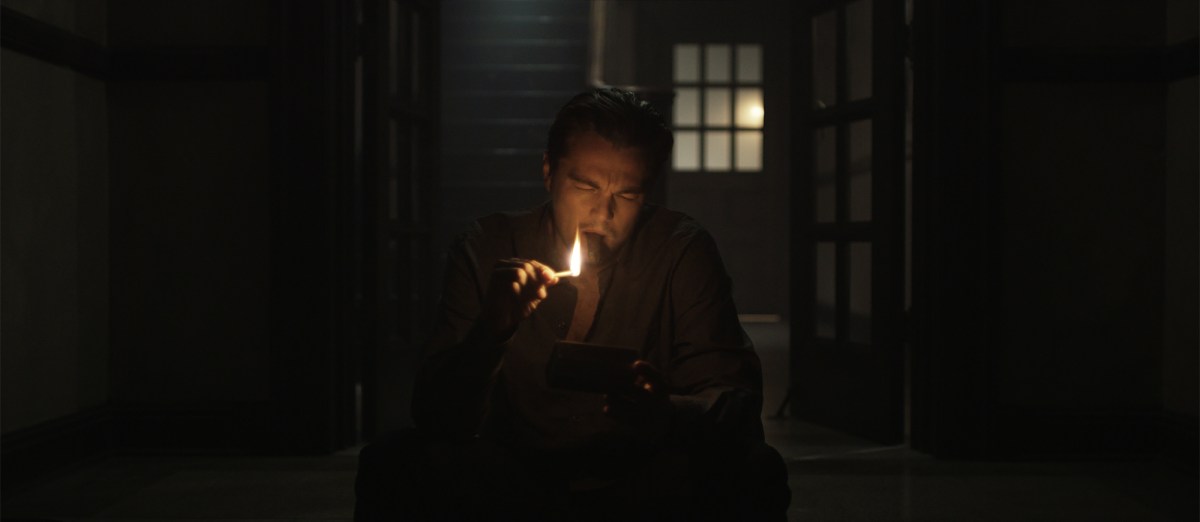
Leonardo DiCaprio and director David Fincher are movie titans of the modern age; therefore it is surprising that the two have never worked together. Unless you count the time the pair tested a RED camera together in 2010 for a clip called The Match.
At the time, Fincher was directing The Social Network and DiCaprio also happened to be in Boston as he was finishing Shutter Island. In fact, the same hallway where The Match was filmed briefly appears in The Social Network.
In this episode, we welcome two-time Oscar-nominated cinematographer Jeff Cronenweth, ASC. Jeff has shot films including Fight Club, One Hour Photo, The Social Network, The Girl with the Dragon Tattoo, Hitchcock, Gone Girl, Being the Ricardos, and Tron: Ares. In our chat, Jeff shares his origin story, experiences working with David Fincher — and all about his latest movie, Tron: Ares. He also offers extensive insights and recommendations for today’s cinematographers and filmmakers.
Go behind the visuals of TRON: ARES with cinematographer Jeff Cronenweth, ASC – the mind behind the camera for films like The Social Network, The Girl with the Dragon Tattoo, and Gone Girl. We talk about the look of the new TRON film, his collaboration with director Joachim Rønning, shooting digitally on RED cameras, and how his decades-long partnership with David Fincher shaped his approach to modern cinematography.
If you’re into camera tech, lighting, or just want to know why TRON: ARES looks so good, this one’s for you.
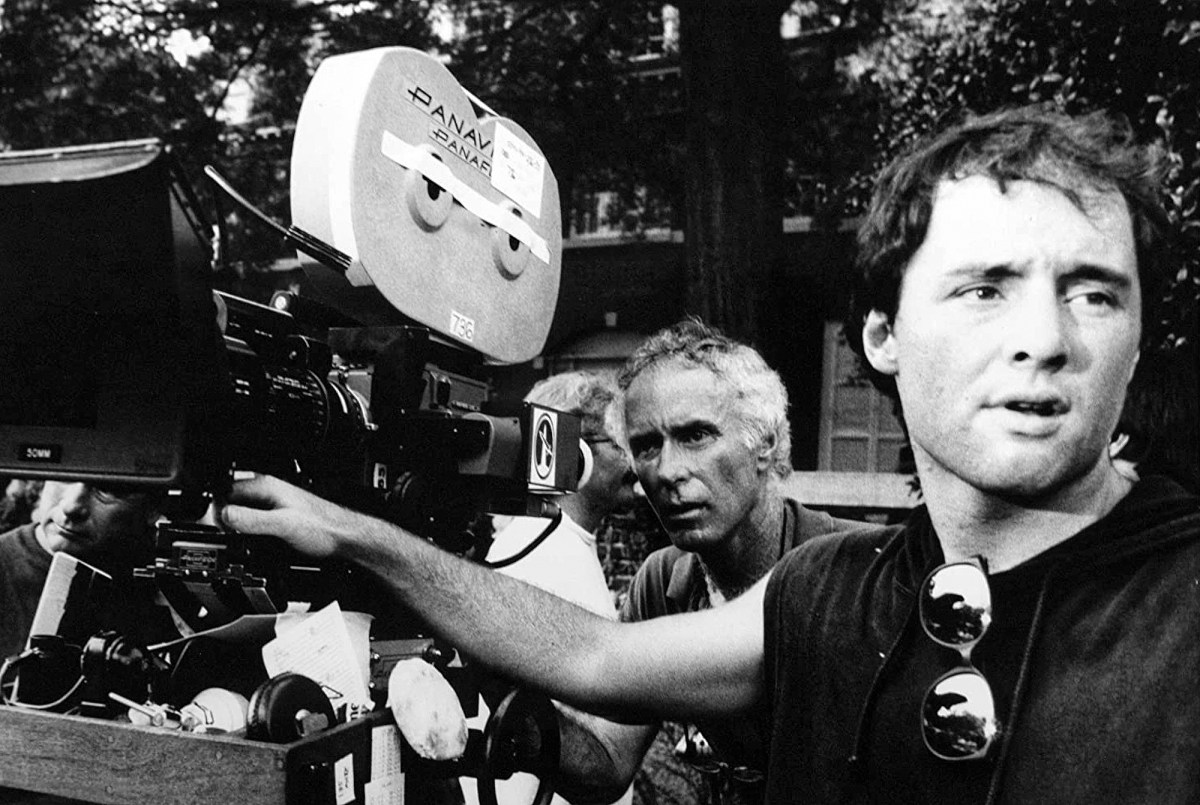
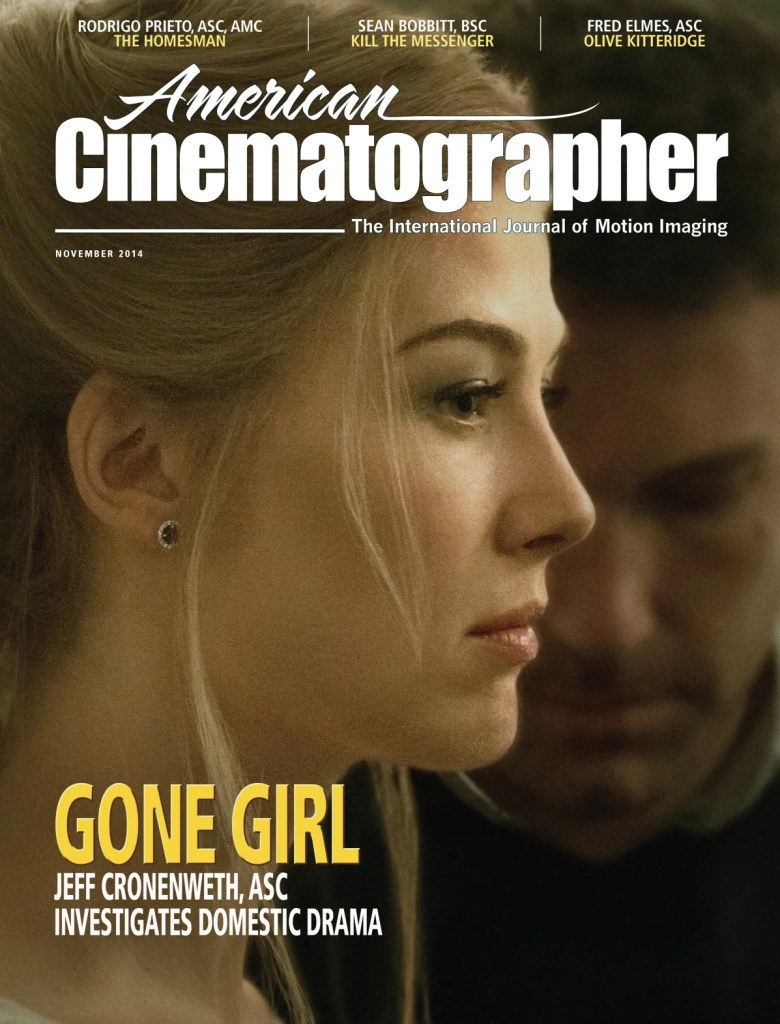
Gone Girl was the fourth feature collaboration between director David Fincher and cinematographer Jeff Cronenweth, ASC since 1999;Fight Club, The Social Network and The Girl with the Dragon Tattoo being the other three. Additionally the pair worked together on multiple commercials and music videos, creating a working chemistry.
Their 2014 feature Gone Girl, for which Rosamund Pike earned a Best Actress nomination from the Academy, was deftly shot and flowed quicker than its 149-minute runtime would suggest, resulting in one of the best psychological thrillers of the 2000s.
The film was shot digitally on Red Dragon cameras, using Leitz Summilux-C lenses and “a fairly comprehensive lighting package,” which included ETC Source Fours, Mole-Richardson incandescents, and Arri M Series HMIs. Further details can be found in our cover story published in AC Nov. 2014.
In addition to Pike, the filmmakers rounded out the cast with Ben Affleck, Carrie Coon, Neil Patrick Harris, Tyler Perry, Kim Dickens, Patrick Fugit, Missi Pyle, Emily Ratajkowski, Casey Wilson, Boyd Holbrook, and Scoot McNairy.
Cronenweth’s chief lighting technician on this show was Erik Messerschmidt — now an ASC member whose feature credits as a cinematographer include Fincher’s Mank and The Killer.
What follows is a curated collection of unit photography by Merrick Morton, a founding member of the SMPSP who also shot stills for features including L.A. Confidential, Fight Club, Zodiac, and The Bad Batch, and the series Mindhunter.
Let’s get into how Erik Messerschmidt does what he does, by unpacking his thoughts and philosophy on photography and looking at what gear he chooses in this episode of Cinematography Style.
00:00: Introduction 01:04: Background 02:06: Visual Language & References 03:44: Perspective & Camera Movement 05:40: Post Production 07:15: Lenses 09:05: Cameras 10:51: Grips 11:33: Lighting 12:28: MUBI
Music: Ottom – ‘Hold On’ Stephen Keech – ‘Grand Design’ Nuer Self – ‘Dawn’ Liquid Memoirs – ‘Distant Dream’ Joley – ‘Night Stroll’ I Am Alex – ‘Bonfire’ The Soundkeeper – ‘The View From The Attic Window’ Sero – ‘Mid August’ Chill Winston – ‘The Truth’
DISCLAIMER: Some links in this description are affiliate links. If you purchase a product or service with these links I may receive a small commission without an additional charge to you. Thank you for supporting my channel so I can continue to provide you with free videos!
With The Killer, David Fincher created a masterpiece of cinematic storytelling.
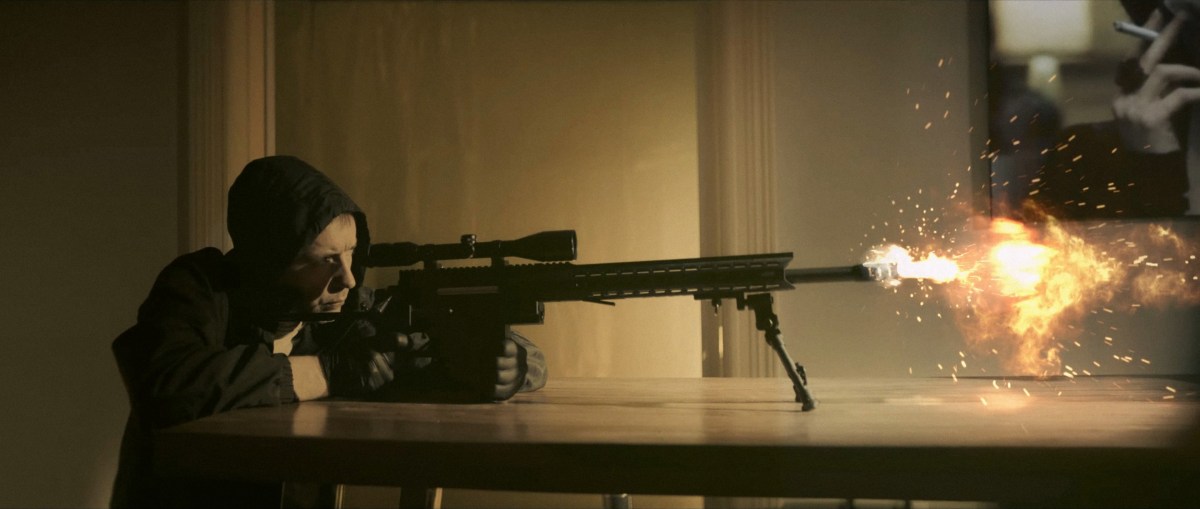
In the first act – the Paris hit – Fincher and his team combined three sets in post. They also added typical artifacts like horizontal flares and distortions to give The Killer an anamorphic vibe.
To learn and explore, we set out to recreate the climax of the first act of The Killer, BUT to do it for real: One real location and real anamorphic lenses. We even developed a way to do film through a real rifle scope – anamorphic of course.
This was possible as DZO just introduced three new focal lengths to their awesome PAVO lineup of 2x anamorphic lenses, a 135mm, a 180mm, and a 65mm Macro. This new focal length and the general short minimum focus distance of the PAVO made them the ideal companions to shoot our short.
We take you behind the scenes, share our experiences with you, and, of course, show you the result: “The Killers” gives the original a slightly different spin…
Disclaimer: We collaborated with DZOfilm and got the full PAVO set of 9 lenses to shoot our short. As always, we strive to give you our honest opinion based on our experience and tests.
00:00: Intro & Contents 02:48: The Killer / A Cinematic Masterpiece 03:44: Subjective Camera Movement 05:00: Subjective Sound Design 05:41: Subjective Edit 06:25: Paris: A Real Fake Location 10:08: Faking the Anamorphic Look| 12:14: Reimagining The Killer 15:49: Gear: The Lenses 23:18: The Rifle Scope 25:01: Gear: The Cameras 27:45: Feature: The Killers 31:08: A Second Killer & Verdict 33:16: Thank You 34:02: Member Shout Out
In David Fincher’s Netflix darkly comic thriller The Killer, Michael Fassbender is the nameless assassin who goes on an international hunt for revenge while insisting to himself that it isn’t personal.
The film marks the second Fincher-directed feature shot by Erik Messerschmidt ASC, following the Citizen Kane drama Mank, for which he won the 2020 Academy Award for Best Cinematography.
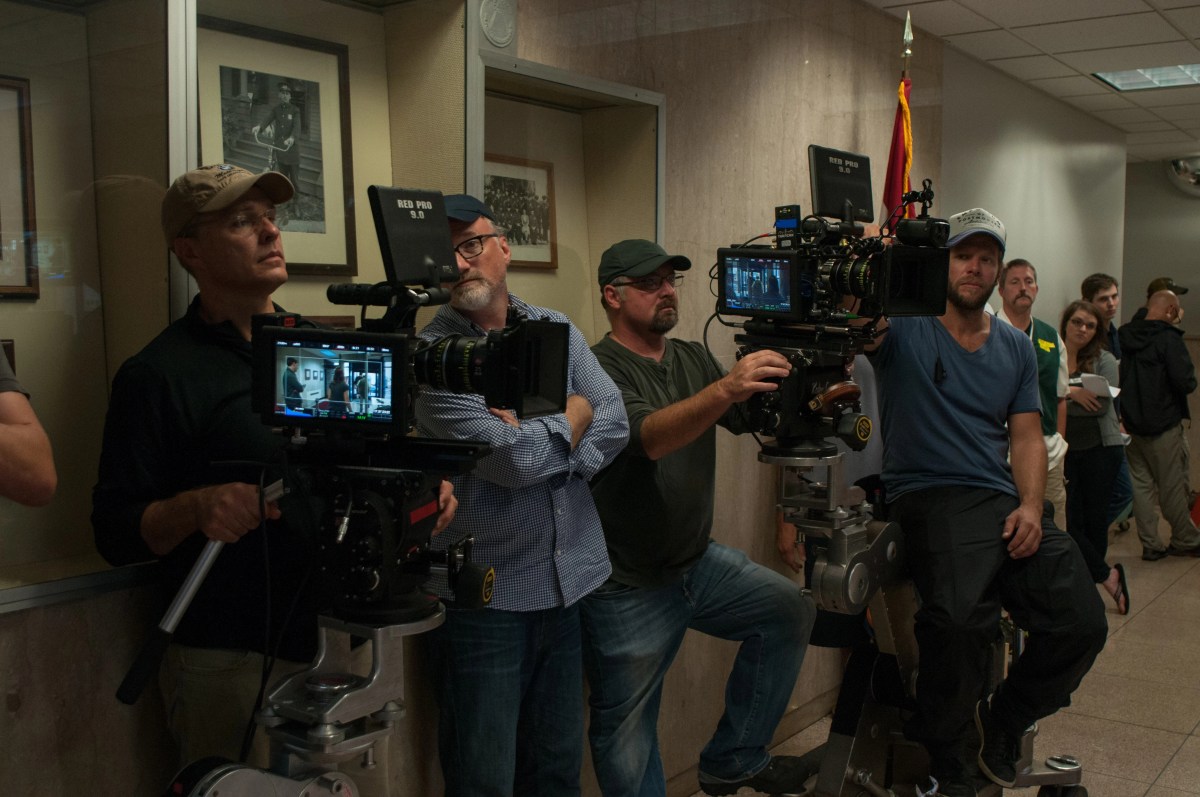
It is also the latest in a long line of Fincher movies since The Social Network to be shot on RED.
“There was not a conversation about using another camera system – there never is with David,” Messerschmidt says. “RED as a partner have been enormously collaborative with us in terms of helping us develop new ideas and solve problems. RED is absolutely creative partners to David’s process and certainly to me.”
Frame & Reference is a conversation between Cinematographers hosted by Kenny McMillan. Each episode dives into the respective DP’s current and past work, as well as what influences and inspires them. These discussions are an entertaining and informative look into the world of making films through the lens of the people who shoot them.
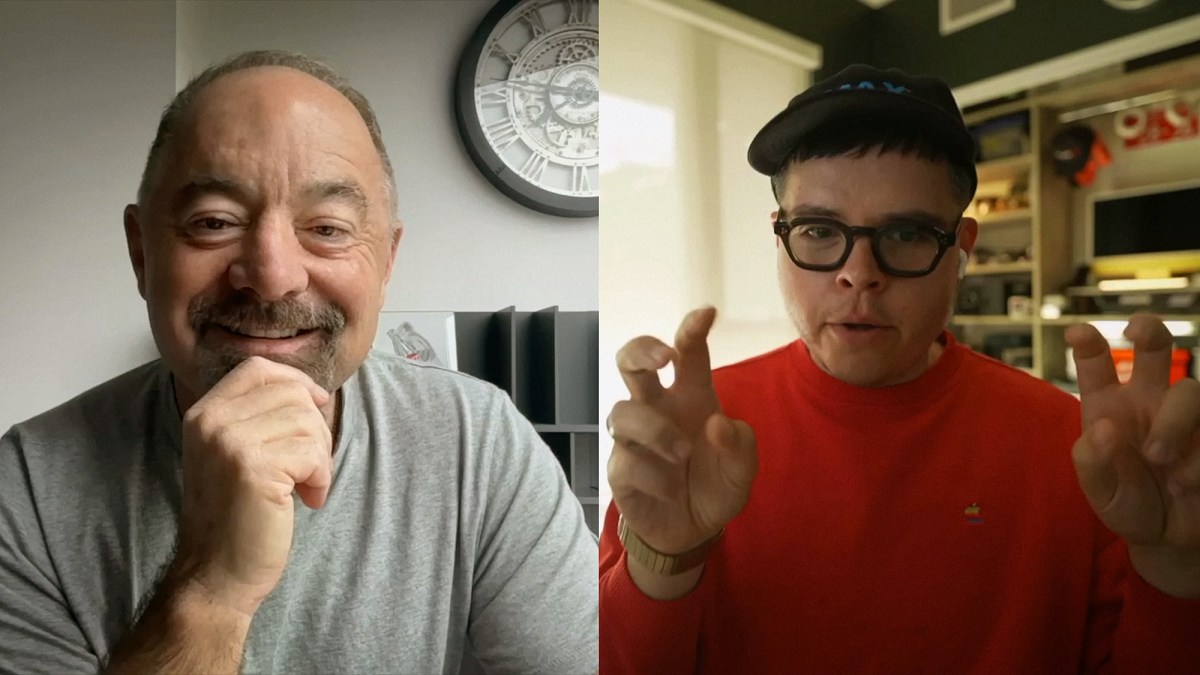
In this episode, we’re joined by my friend Michael Cioni to talk about his new company Strada (YouTube).
Michael is a serial entrepreneur whose career includes numerous awards for his creative work and technical achievements. He is an accomplished director, cinematographer, musician, four-time Emmy winner, member of the Motion Picture Academy, and Associate Member of the American Society of Cinematographers.
A U.S. patent holder of digital cinema technology, Michael was the founder and CEO of the post house Light Iron where he pioneered tools and techniques that emerged as global workflow industry standards. After Light Iron was acquired by Panavision, Michael served as product director for Panavision’s Millennium DXL 8K camera ecosystem.
He then joined the cloud startup company Frame.io where he served as Senior Vice President of Global Innovation. After Frame.io was acquired by Adobe, Michael led numerous workflow innovations including the breakthrough Camera to Cloud technology program as Senior Director of Global Innovation.
He continues to be motivated by the desire to democratize professional workflows and focuses his efforts on inventing new ways for filmmakers to create through his technology. Michael is a well-known and gifted speaker, advocate for the community, and serves as a mentor and educator throughout the global media industry.
Having been in development since 2007, David Fincher’s adaptation of the French comic series The Killer arrives as a slick, stylish, and darkly funny film about a professional assassin desperately trying to project an image of cold, exacting competence, all the while struggling to keep his head above water in the aftermath of a job gone wrong.
With its solo protagonist who goes for long stretches of the film without saying aloud a single word, The Killer often resembles a silent film as much as anything else. Camera Operator had the opportunity to talk with A camera operator Brian Osmond, SOC, about working with Michael Fassbender in this unique role, the camera as “straight man” for the film’s sly comedy, and the professional relationship he’s developed with director David Fincher over the past seven years.
With no name and no background to go on, we meet “The Killer” in Paris, France, in the midst of his preparations to assassinate a similarly unnamed target. After days of meticulous planning, the moment finally comes with the target in sight, ready to take the shot, and he misses! Our mysterious assassin is left trying to pick up the pieces of this botched assassination all the while the situation continues to spiral out of control. The Killer is directed by David Fincher from a screenplay by Andrew Kevin Walker and stars Michael Fassbender, Arliss Howard, Charles Parnell, Kerry O’Malley, Sala Baker, Sophie Charlotte, and Tilda Swinton.
Camera Operator: Let’s talk about the first 20 minutes of the movie. That’s the part that really stuck in my head after the movie. That long, slow burn setup to what’s kind of the movie’s main punch line: him missing the shot after all that meticulous buildup and preparation. Can you talk a little bit about what went into shooting that sequence?
Brian Osmond: Yeah, it is a slow burn, isn’t it? It’s a bit painstaking, but ultimately I really like the sequence. His meticulous nature is obviously on display, and when it finally comes to the moment to pay it all off, he misses! And that sets up the rest of the movie. Shooting it was a lot of work, as you can imagine. The entire sequence, structurally, was made from three pieces: there was the Paris work, there was the stage work with Michael, and there was the stage work for everything across the street, and those are seamlessly combined with compositing and editing.
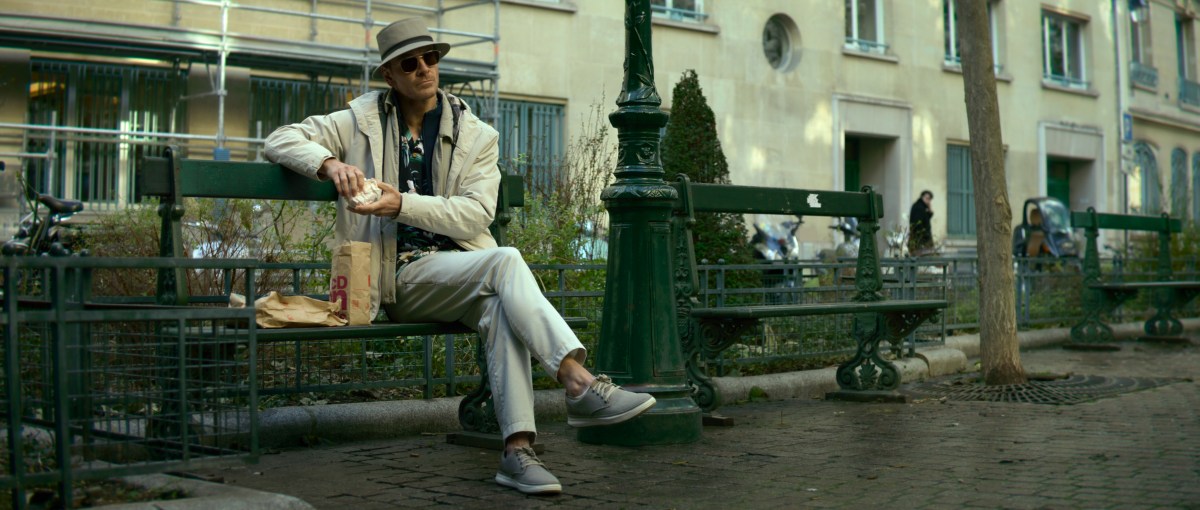
The Killer begins with an assassin (Michael Fassbender) in a half-completed WeWork office awaiting the arrival of his latest target. As he waits, he details his vocational mantras for the audience in voiceover: stick to the plan. Don’t improvise. Never yield an advantage. Forbid empathy. Fassbender proceeds to miss his shot and spends the rest of the film breaking each and every one of those tenets in the chaotic aftermath.
Many of the pieces written about the film have pointed out perceived similarities between the film’s methodical, detail-oriented titular character and the perfectionist reputation of its director, David Fincher. However, what makes Fincher’s approach to filmmaking so fascinating is the way it combines the fluid with the obsessively regimented. For The Killer, the illusion of handheld camerawork, anamorphic lens characteristics and glass filters were all created in post, where they could be minutely modulated. Conversely, Fincher often prefers to design coverage on the day after blocking rehearsals and is open to the spontaneous comedic possibilities of the cheese grater.
On Fincher’s Mindhunter, Mankand now The Killer, cinematographer Erik Messerschmidt has been the director’s partner in that duality. The Oscar-winning DP graced this column for a fifth time to discuss his latest work.




 The Fincher Analyst