Connecting the dots between Gone Girl, Zodiac and David Fincher

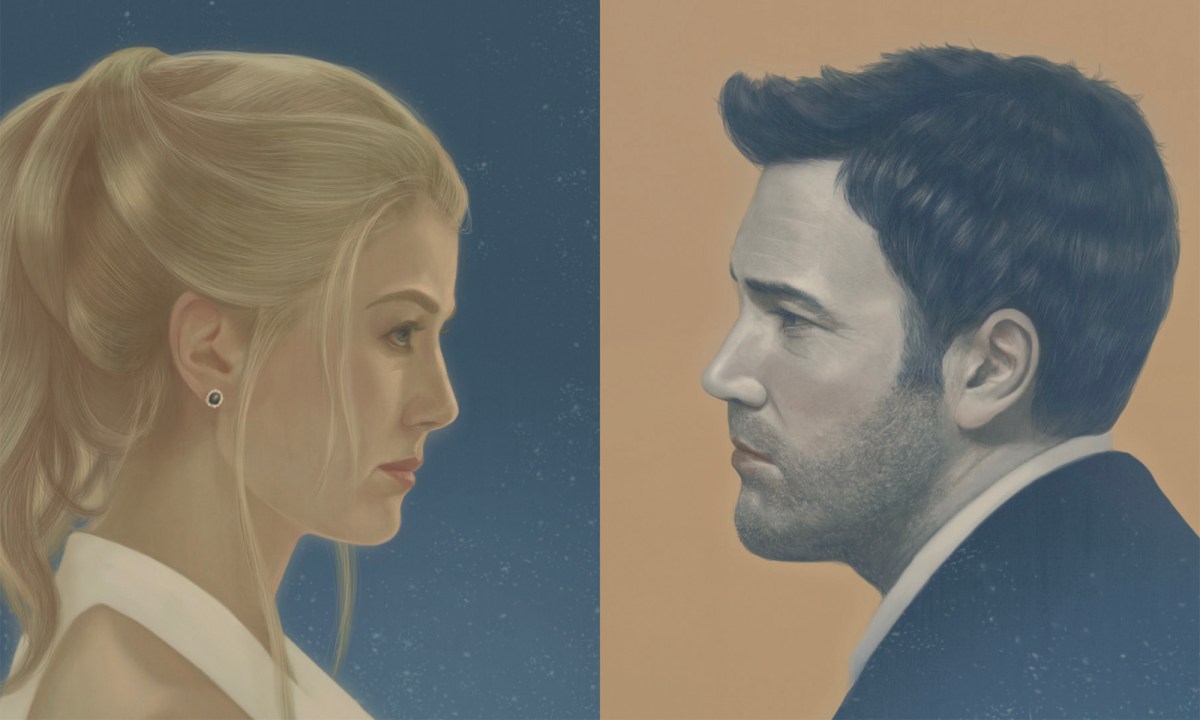
Illustration by Hsiao-Ron Cheng

Mind Games author Adam Nayman discusses the connective tissue between David Fincher’s films and why we can’t help comparing him to Paul Thomas Anderson

Radheyan Simonpillai
December 22, 2021
NOW Magazine

In the David Fincher film Zodiac, cartoonist Robert Graysmith obsessively pours over legal documents, testimonies, and geographic patterns. He connects the dots that won’t necessarily give him conclusive answers regarding the titular San Francisco serial killer but will nevertheless make for a pretty good book that paved the way for a masterpiece film. I like to picture Toronto film critic and author Adam Nayman doing the same for his book David Fincher: Mind Games.

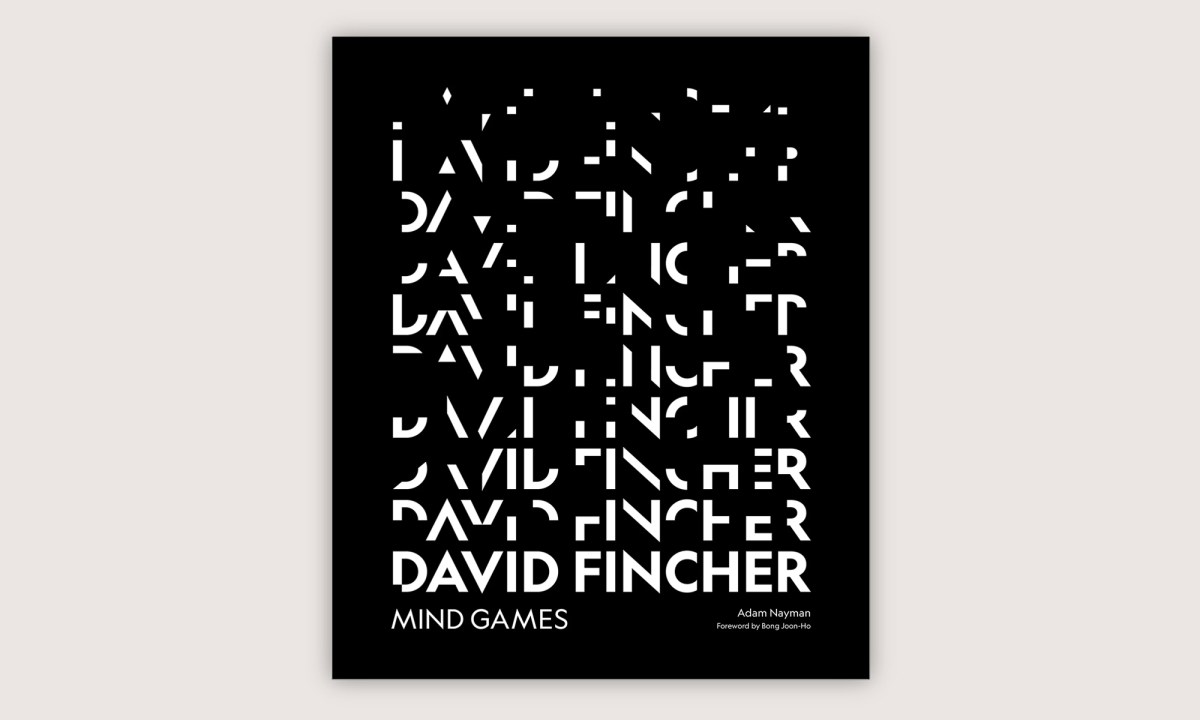
Nayman scans Fincher’s work, from the music video for Madonna’s Express Yourself to last year’s endearing look back at authorship in Mank, writing chapters on each movie with forensic detail and riveting insight. Mind Games, which comes with a lovely foreword from Parasite director Bong Joon-Ho, is the latest in Nayman’s series of comprehensive books on the greatest white male directors of our generation, sitting nicely alongside The Coen Bros: This Book Really Ties The Films Together and Paul Thomas Anderson: Masterworks. And there’s an argument to be made that this book is the most fascinating of the three.

More so than the others, Fincher’s movies inspire divisive reactions. Movies like The Curious Case Of Benjamin Button and Mank rack up the most Oscar nominations while being pilloried by many critics. Se7en and Fight Club earn dorm room notoriety, which in turn is weaponized against the films themselves. Some of his greatest work in Zodiac and Gone Girl doesn’t quite get the love it deserves. But Fincher is the kind of filmmaker whose misses are infinitely more fascinating to me than the best that a Christopher Nolan puts up.

Nayman discussed Fincher’s canon with NOW in a conversation about the imprint he leaves on his films and how he compares to Paul Thomas Anderson. The Licorice Pizza filmmaker has a very different kind of career, but feels oddly linked to Fincher.

Read the full interview

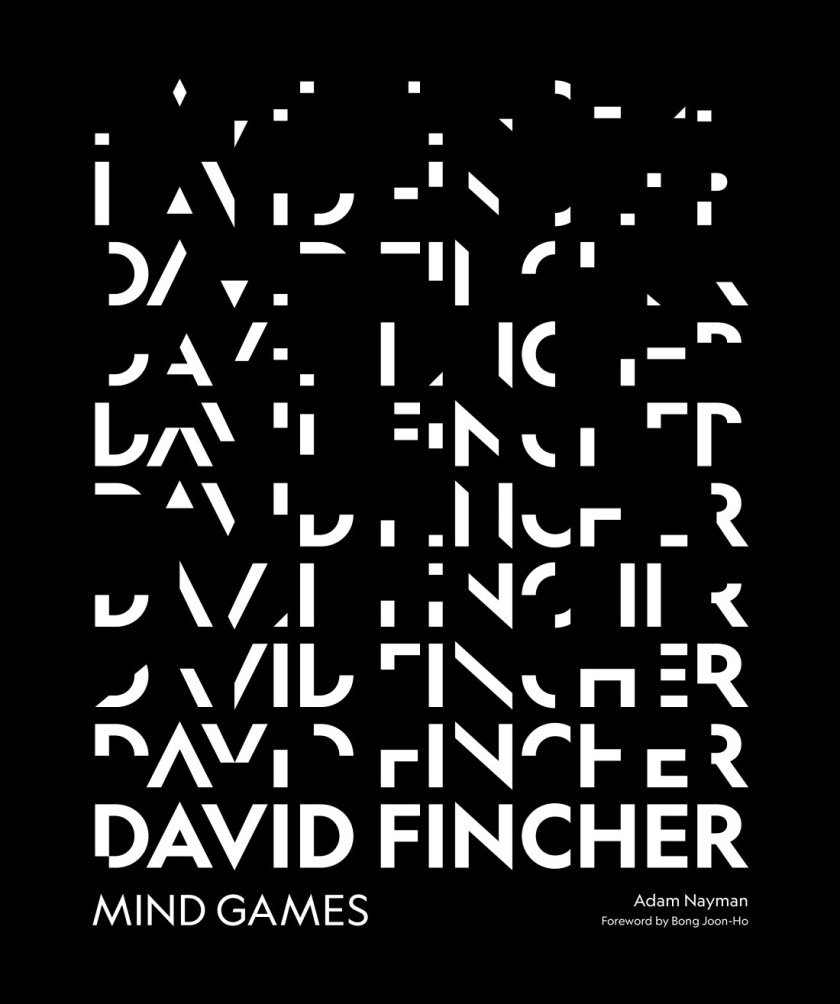
Buy the book David Fincher: Mind Games. By Adam Nayman

BETA (WPR): The exacting and evolving genius of filmmaker David Fincher

Film critic Adam Nayman’s ‘Mind Games’ explores the successful perfectionism of the ‘Fight Club,’ ‘Se7en,’ ‘The Social Network’ and ‘Zodiac’ director

Doug Gordon, Adam Friedrich
December 18, 2021
BETA (WPR)

In 1985, aspiring director David Fincher was tapped by the American Cancer Society to make a PSA. Riffing off Stanley Kubrick‘s “2001,” Fincher put forth one of the most provocative and memorable commercials ever featuring an in-utero fetus smoking a cigarette to demonstrate the dangers of pregnant smoking.

This PSA was just the beginning of Fincher’s ability to utilize the shared language and visuals of film to express a point. He would move next to directing music videos where he famously invoked Fritz Lang‘s “Metropolis” while directing Madonna’s 1989 video for “Express Yourself.”

Film critic Adam Nayman told WPR‘s “BETA” that Fincher’s cinematic ambition was present in all of this early work before he became a household name directing transcendent films like “Fight Club,” “Se7en,” “Zodiac” and “The Social Network.”

“I think that he was part of a cycle of music video directors who were drawing on movies for the music videos. So, by the time they ended up making feature films, the visual language and the ambition were already there,” Nayman said.

Nayman is the author of “David Fincher: Mind Games,” a comprehensive critical companion book to Fincher’s career output thus far. It’s the third installment of Nayman’s deep dives into generational filmmakers that includes the Coen brothers and Paul Thomas Anderson.

Read and listen to the full interview

Buy the book David Fincher: Mind Games. By Adam Nayman

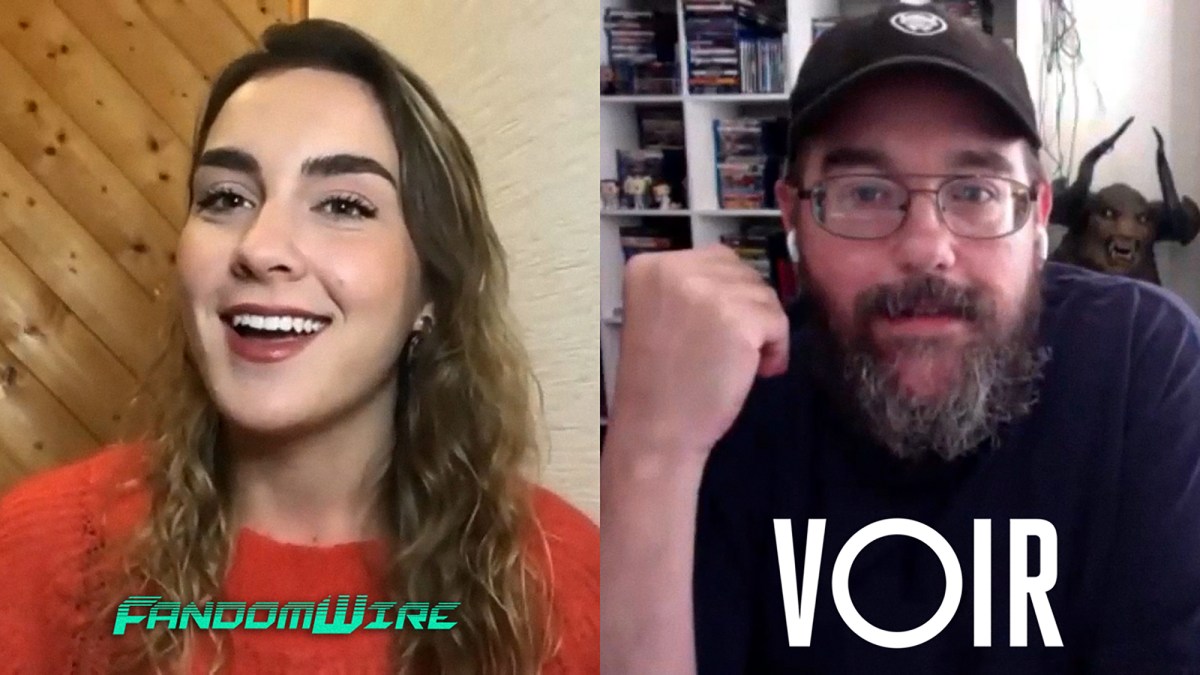
Drew McWeeny Talks Making Voir With David Fincher

Maëlle Beauget-Uhl
December 14, 2021
FandomWire

Drew McWeeny explained that he almost missed out on David Fincher’s emails and calls after he thought someone was pranking him and was using a very weird, full of movie references email address (and yes, I really need to know what were these references now…):

“He emailed me in the middle of the night. I didn’t know him, we hadn’t spoken before (…) and the email just said “Hi, this is David Fincher. Call me.”

He ignored the email. David Fincher emailed him again the next day, but Drew didn’t want to believe it.:

“And it’s the third day when he actually called me and said ‘Hi, this is David Fincher, what’s your problem?!’ And I went ‘Oh my god! Hi, how are you?”

VOIR: 03. But I Don’t Like Him. Written and narrated by Drew McWeeny

Drew McWeeney declared that creating Voir started with David Fincher having “the vaguest notion that he wanted to celebrate movies”.

But when Drew McWeeney decided to make his episode of Voir centered on unlikeable characters, it was because he felt that a conversation needed to be had:

“I think ‘likeability’ has become this weird, weird buzzword, we hang a lot of other issues about movies on it. When people don’t like a movie, they immediately go to ‘I didn’t like the character’. But that’s not necessarily a bad thing. And all I wanted to do is reframe that conversation”. (…) Art is not about endorsement.”

Watch VOIR on Netflix

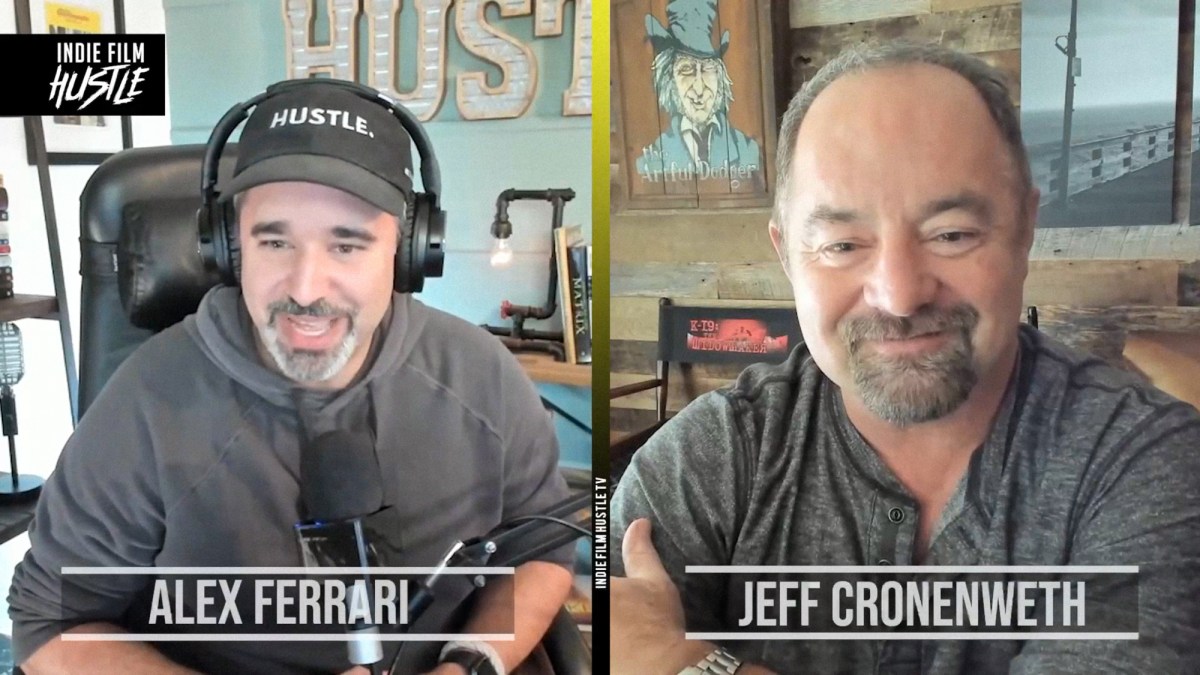
Indie Film Hustle: Cinematographer Jeff Cronenweth, ASC

The Art of Cinematography & David Fincher

Alex Ferrari
December 14, 2021
Indie Film Hustle

Cinematographer Jeff Cronenweth, ASC, is the son of Jordan Cronenweth, ASC, one of the most influential cinematographers in history, most notable for Blade Runner.

He worked with his father as a camera loader and second assistant camera during high school, graduated from the USC School of Cinematic Arts, and worked his way up to first assistant camera and then camera operator until the mid-1990s. He also worked for legendary Swedish cinematographer Sven Nykvist.

The first major motion picture where he acted as a DP was for David Fincher‘s Fight Club. Other notable feature films on which he worked as a DP are One Hour Photo, directed by Mark RomanekK-19: The WidowmakerDown With LoveThe Social NetworkHitchcockThe Girl with the Dragon Tattoo, Gone Girl, and recently, Being the Ricardos, written and directed by Aaron Sorkin.

He was nominated twice for an Academy Award for Best Cinematography for his work on Fincher’s The Social Network (2010) and The Girl with the Dragon Tattoo (2011).

Listen to the podcast and read the transcript

‘Voir’: Why Crafting Video Essays for Netflix Meant Embracing All Types of Filmmaking

“Voir” writers and “Every Frame a Painting” creators Tony Zhou and Taylor Ramos discuss their learning process to teach audiences about cinema.

Sarah Shachat
December 7, 2021
IndieWire

David Fincher and David Prior’s anthology essay series “Voir” is only six episodes, but fully half of those came from Taylor Ramos and Tony Zhou. Their skill with the form comes as no surprise to fans of their YouTube channel “Every Frame a Painting,” which almost served as a proof of concept for a show like “Voir” — and that millions of people would be interested in videos exploring just how the grammar of filmmaking impacts its meaning. When done well, video essays combine the thrill of knowing a secret and the joy of learning more about a long-held passion. Zhou and Ramos spoke to IndieWire about how the process of creating that joyful learning shifted and expanded when working on “Voir.”

YouTube was very constricting because of things like copyright and DMC,” Ramos said. “The license that Netflix and [David Fincher] gave us, it was very, ‘Oh, we can do anything and everything!’ And [that] was, I don’t want to say daunting, but —”

“It was mildly terrifying,” Zhou added.

Read the full profile

Watch VOIR on Netflix

I am Sitting in a Room, Listening to Mank

Cormac Donnelly
October 2021
Screenworks

This video essay examines the innovative use of sound recording and mixing in David Fincher’s Mank (2020). Whilst Mank received a limited theatrical release, the film is most widely available via the Netflix streaming platform. The essay takes as a starting point the rerecording and spatialisation of the soundtrack, with a focus on the home viewing experience. Donnelly argues that the re-recording process used on Mank’s soundtrack could potentially suggest a method by which films released into the domestic market could retain the reverberant sonic signature of cinematic exhibition. The published screenwork draws upon interviews with Fincher’s sound designer Ren Klyce, as well as the work of experimental composer, Alvin Lucier in order to better understand the experience of listening to Mank in our own rooms.

Watch the video essay and read the research statement

Read the original in-depth interview with Ren Klyce:

Making Mank’s Vintage Hollywood-Magic Sound

The Film Comment Podcast: The Mind Games of David Fincher

David Fincher by Michael Avedon

Devika Girish and Clinton Krute
November 23, 2021
Film Comment

This week’s conversation focuses in on David Fincher—a director whose decade-spanning body of gritty Americana—from the grim moral drama of Se7en to the revisionist Hollywood tale of the recent Mank—has inspired both obsessive fandom and derisive dismissal.

A new book by Adam NaymanDavid Fincher: Mind Games (out November 23 from Abrams Books), offers a canny and timely appraisal of the director’s filmography. Adam writes that, “Over the past thirty years, Fincher has cultivated and maintained a reputation that precedes him of formal rigor and technocratic exactitude, of moviemaking as a game of inches.” Film Comment editors Devika Girish and Clinton Krute invited Adam and critic, filmmaker, and former NYFF director, Kent Jones—who’s written about Fincher many times over the years in FC—for an illuminating deep-dive into the Fincherverse.

Listen to the podcast

Buy the book David Fincher: Mind Games. By Adam Nayman

Adam Nayman on David Fincher’s Complicated Auteurism

David Fincher by Jack Davison

Nick Newman
November 23, 2021
The Film Stage

Few film books in recent memory made waves like Adam Nayman’s Paul Thomas Anderson: Masterworks, a too-rare melange of authorial talent, topical interest, and opulent presentation. Last year Nayman and I spoke at length about the tome that no doubt you’ve seen in bookstores (big and small alike) since.

Nayman has returned with David Fincher: Mind Games, another Abrams-published doorstop on another double-capital-A American Auteur, lined again with essays that surprise in their capacity to find new perspectives and provocative readings on films for which there seemed no more room. Finally able to talk in person—thus, you’ll (please) read, at greater length—we sat down for a talk on writing thousands of words on someone for whom a consistent critical standing is tougher than meets the eye.

Read the full interview

Buy the book David Fincher: Mind Games. By Adam Nayman

Adam Nayman Talks David Fincher’s Adman Past (And Present)

A conversation with the author about his new book, “David Fincher: Mind Games”

Sydney Urbanek
November 17, 2021
Mononym Mythology

Adam Nyman is a fellow film critic and the author of several books about films and filmmakers, including but not limited to The Coen Brothers: This Book Really Ties the Films Together (2018) and Paul Thomas Anderson: Masterworks (2020). (Though we’ve never crossed paths in person, he also teaches in the department where I did my Master’s program.) He opens Mind Games with a dedicated discussion of the decade or so before Fincher ever made his narrative feature debut with ALIEN³ (1992), but then continues to come back to his commercial and music video work for the remainder of it, wisely treating his adman past as, well, more of an adman present. A few weeks back, Adam and I chatted for an hour about Fincher’s short-form oeuvre, but also his features because—again—the two aren’t as discrete as a lot of people believe. Our conversation has been edited for clarity, but not really so much for length.

Read the full interview

Buy the book David Fincher: Mind Games. By Adam Nayman

Director David Prior Talks ‘The Empty Man,’ ‘Voir’ & Netflix Becoming “Custodians To The Cinematic Experience”

Andrew Bundy
November 5, 2021
The Playlist

There’s a specificity of intention to David Prior’s “The Empty Man” that eludes most studio horror projects. Inspired by the Boom Studios! comic (created by writer Cullen Bunn and artist Vanessa del Rey), Prior’s debut could have been a success story were the movie released under different circumstances. Inherited by Disney following the Fox merger, and dumped into theaters mid-pandemic, “The Empty Man” certainly wasn’t given the A24 Ari Aster treatment, which is a shame, as Prior’s film would make an outstanding, grief-tinged double feature with “Midsommar” or “Hereditary,” though its shape is far more chimerically hypnotic. 

Laying somewhere in the cosmic ether between David Fincher’s serial killer films, “Se7en” and “Zodiac,” Prior’s sepulchral vision slithers like a paranormal odyssey in the guise of a J-horror procedural a la Kiyoshi Kurasawa’s “Cure,” veteran character actor James Badge Dale aiding in making detective work look effortless through a mesmerizing lead performance. “We go looking for things we have lost… More than that, there is no such thing as loss,” a mysterious cult leader, played by Stephen Root, preaches

Audiences missed out on “The Empty Man,” but it’s deservedly found a devoted following. “If the price of making the movie I wanted to make meant getting abandoned by the studio and left to be picked up by passionate people who saw it on their own, that’s not a bad outcome.” Prior told us, “At least it’s the movie I wanted to make. It wasn’t some highly compromised, shortened, messed up version of that probably would have gotten more support from the studio but it would have vanished from everybody’s mind as soon as they saw it.”

Prior was later approached by David Fincher (for whom he used to direct documentaries) about a new film appreciation series, titled “Voir.” Scheduled to debut at AFI Fest this month, Netflix’s video essay project spotlights “passionate voices that love movies… highlighting the elements that get people excited about cinema.”

In a time when streaming services threaten to swallow up the theatrical experience, “Voir” is an essential look back at what makes film uniquely hypnotic. “Movies cornered the cultural conversation throughout the 20th century.” Prior told us. “It was the art form of the 20th century… [movies] don’t hold the same place in cultural thinking they used to and there’s a lot that’s important being lost.”

No great film deserves to be forgotten, and Prior is keenly aware platforms like Netflix now hold the keys to Hollywood’s kingdom, as “custodians to the cinematic experience.” “The Empty Man,” may not have mopped up box office dollars but revealed its director to be as impassioned and skilled a filmmaking scholar as David Fincher. We were fortunate to sit down for an extensive chat with him ahead of “Voir’s” upcoming premiere. Eerily, both his debut film and new Netflix series stemming from an obsession with Jaws,” the legendary Steven Spielberg, a fervent supporter of his film appreciation project.

Read the full interview