Debra Minoff & Susannah McCullough
April 12, 2018
ScreenPrism (YouTube)
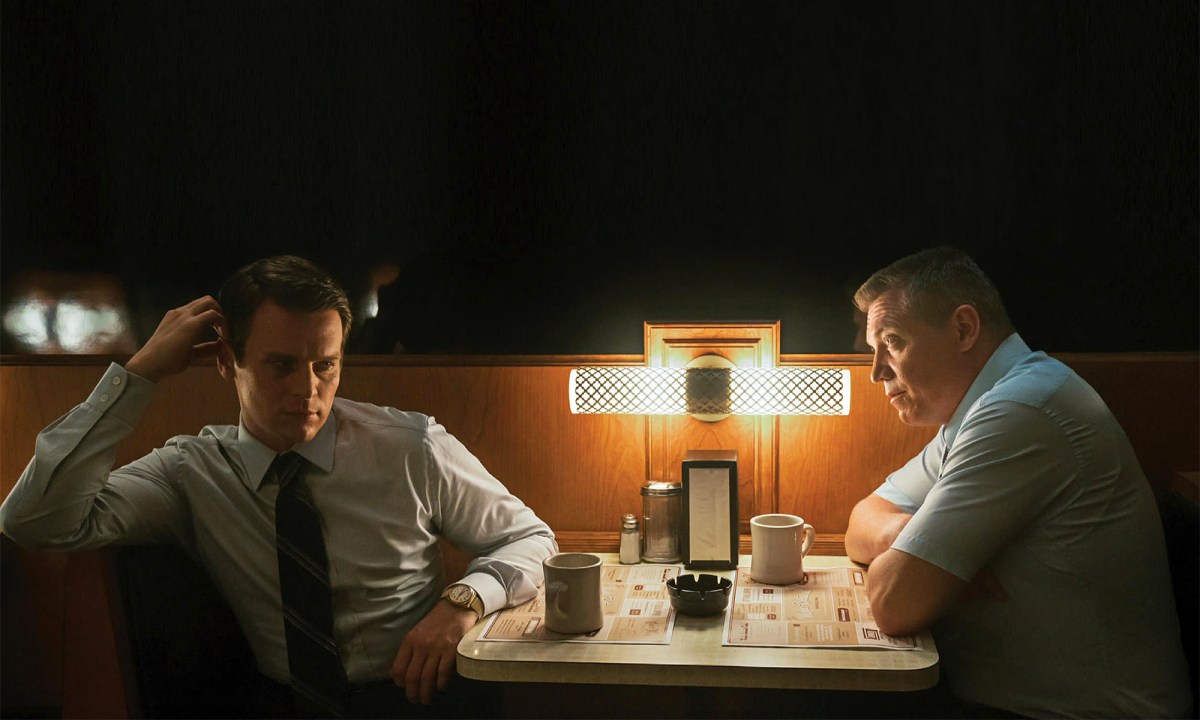
David Fincher’s Netflix hit Mindhunter shows the power of dialogue done right.
Debra Minoff & Susannah McCullough
April 12, 2018
ScreenPrism (YouTube)
David Fincher’s Netflix hit Mindhunter shows the power of dialogue done right.

Erik Messerschmidt and Chris Probst, ASC, also have made “smart” use of LED technology, as detailed in our cover story on Mindhunter (page 36). David Fincher, who first started using LED’s for process work on Zodiac, 11 years ago, not only customized a high-resolution RED camera for the show (dubbed the “Xenomorph”), but also devised one of the most ingenious LED-driven plate projection/interactive lighting processes for driving shots TV has ever seen. Messerschmidt’s description of Fincher’s commitment to innovation mirrors those Sundancers bending technology in the service of new ways to tell a story: “For David, the frame is sacred; what we choose to include is intrinsic to what the audience thinks is important. They are one and the same.”
David Geffner, Executive Editor
ICG Magazine
Visualizing the daring and often scary world of David Fincher requires new technologies and processes rarely attempted in series television.
Matt Hurwitz
Photos by Patrick Harbron & Merrick Morton, SMPSP
April 2018
ICG Magazine
In the season 1 finale of Netflix’s MINDHUNTER, a disturbed FBI agent, Holden Ford (Jonathan Groff), bursts wildly from a hospital room, as a handheld camera gives chase. The move begins as shaken as ford is, but, as it lands with the agent, who collapses in the hallway, it’s as if the camera has floated to a butter-smooth stop inches from the floor, the maneuver executed like it was on a perfectly balanced Jib arm, crane, or even Steadicam. But it’s none of those. What can viewers assume from this?
David Fincher has returned to television.
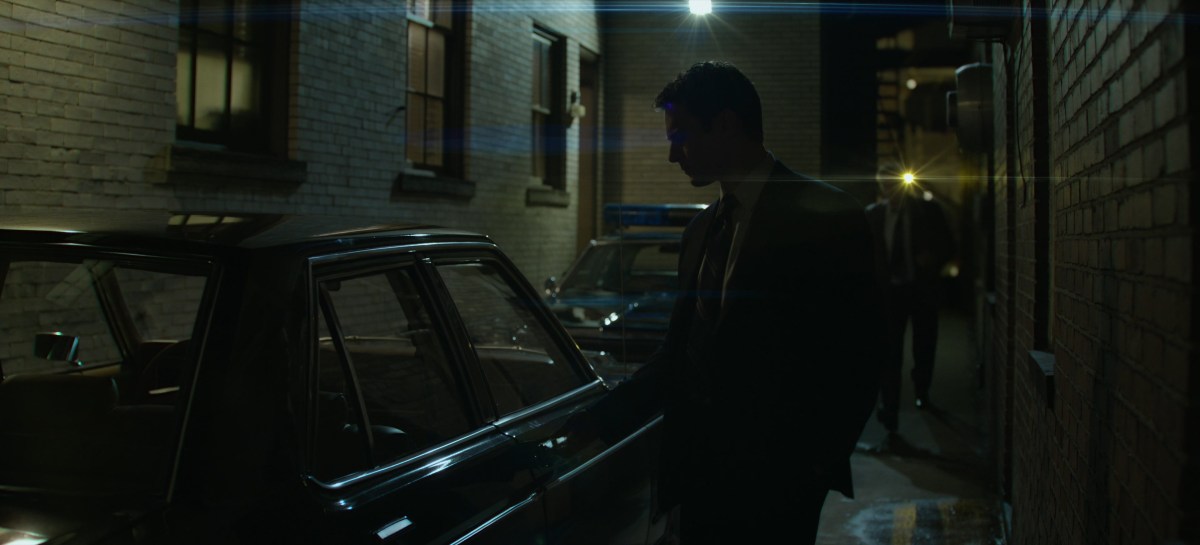
FOR THIS SERIES ABOUT A PAIR OF AGENTS WORKING IN THE FBI’S ELITE BEHAVIORAL SCIENCES UNIT in 1979, and attempting to understand the mind of a serial killer, Fincher used a number of leading-edge technologies – interactive LED lighting, custom built high-resolution cameras, and, as in the shot with Agent Ford, image stabilization/smoothing in postproduction – to keep the viewer visually embedded. Fincher’s aim with MINDHUNTER, which has no graphic violence, is for viewers to “access their own attics. There’s far scarier stuff up there than anything we can fabricate,” the filmmaker insists. “I wanted people to register what’s going on in [characters’] eyes and where the gear changes are taking place. At what point do I [as the viewer] feel like, ‘OK, I’ve got an insight,’ and at what point do they feel like: ‘oh, I’m being sold something. It’s all about the nuance in how the balance of power is changing.”
Fincher’s longtime postproduction supervisor, Peter Mavromates, says he creates an “experience of omniscience,” similar to Kubrick’s A Clockwork Orange, “where you’re in a straitjacket with your eyelids pinned open, and David’s forcing you to watch these horrible things.” In fact, the show’s unique visual process began more than a year before production started in Pittsburgh (on area locations and on stages at 31st Street Studios, a former steel mill), with the development of a unique RED camera system.
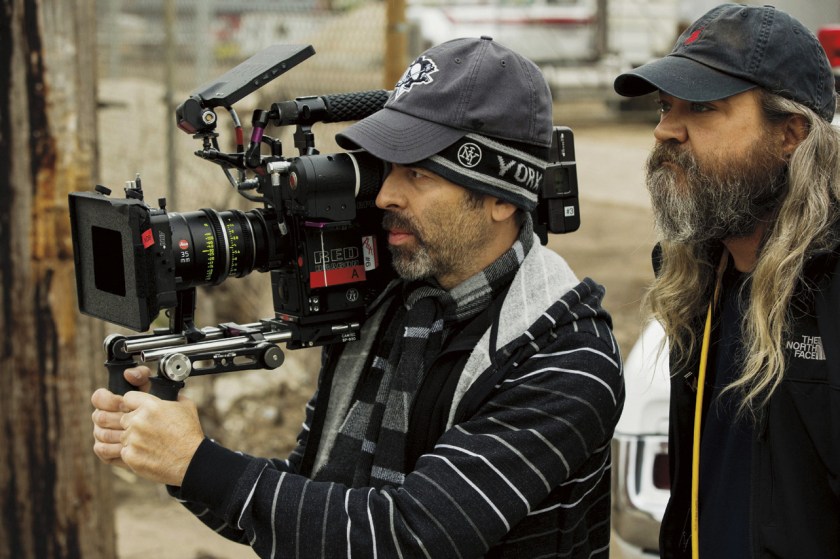
Christopher Probst, ASC – who shot MINDHUNTER’S pilot and second episode – was asked for his input on a RED prototype system, which had been designed by Jarred Land and RED’s Chief Designer Matt Tremblay according to Fincher’s specific needs. “David wanted to take all of the different exterior add-ons that create a jungle of wires, and put them inside the camera body,” Probst explains.
Fincher puts it even more directly: “It just seems insane that we’ve been bequeathed a [camera] layout [dating back to] D.W. Griffith and Charlie Chaplin that looks like some bizarre Medusa. [The camera] should be something that people want to approach, touch, and pick up.”
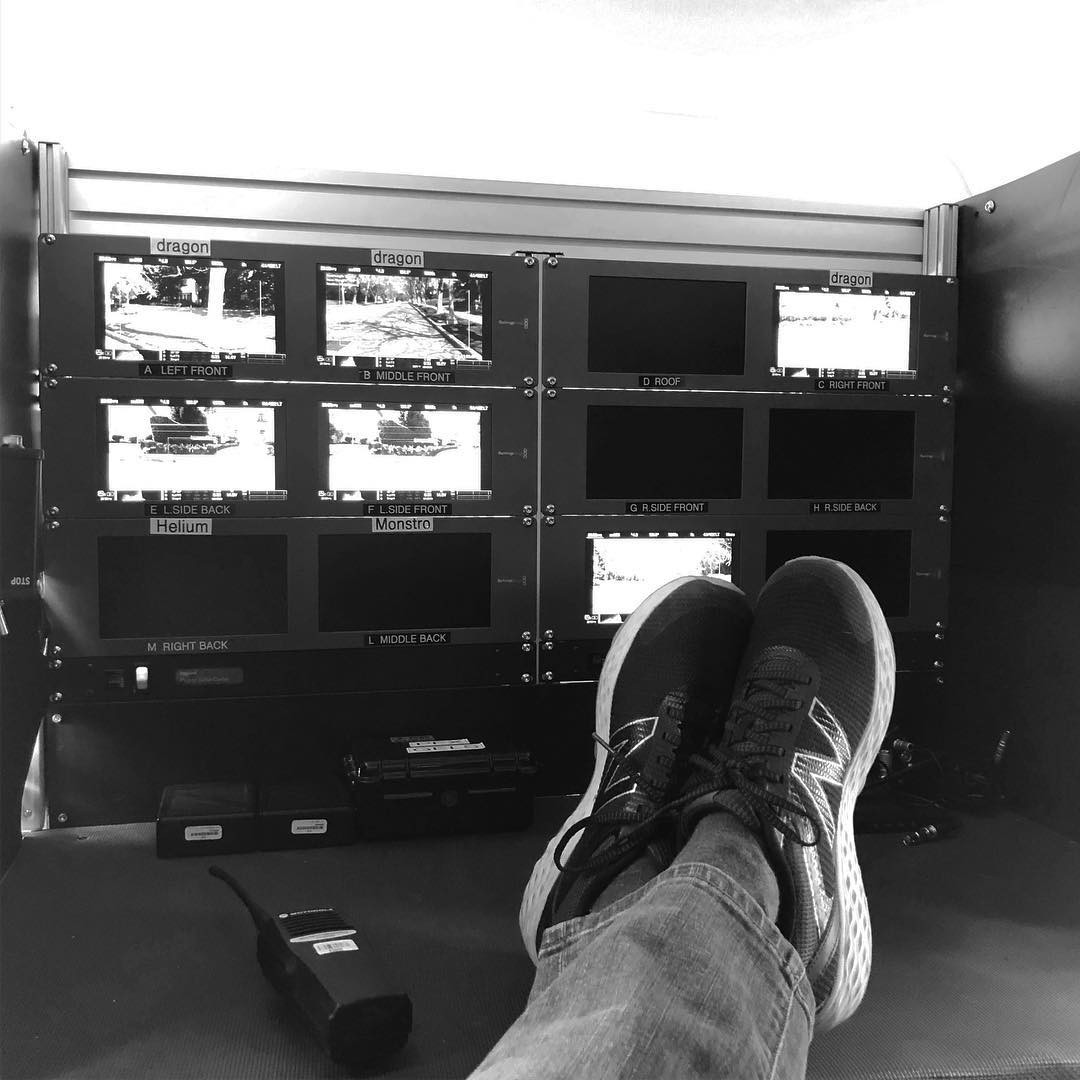
In fact, the custom system built for Season 1 [Land created a 2.0 version being used in Season 2] had an RTMotion MK3.1 lens-control system, Paralinx Arrow-X wireless video, and Zaxcom wireless audio (with timecode) integrated into the RED body, with the only visible cable being to control the lens. Slating was all but eliminated, with clip-number metadata being shared wirelessly between the camera and the script supervisor, who used Filemaker software to associate takes and clips. An audio scratch track from the mixer was recorded onto the REDCODE RAW R3D files and received wirelessly.
The base camera was one of RED’s DSMC2 systems, the then-new WEAPON DRAGON, with its 6K sensor. The shell design, accommodating the added gear inside, with its angular shape and heat venting fins on top, had a “Xenomorph” appearance (à la Alien), and was dubbed as such by Land and Fincher. “When the camera arrived in Pittsburgh, they had actually engraved “Xenomorph” on the side,” Probst says.
Read the full profile:
Website version of the profile


Flashback: Zodiac.
David E. Williams
Unit photography by Merrick Morton, SMPSP
April 2007
American Cinematographer
Most people remember the San Francisco Bay Area of the late 1960s for “flower power” and the Summer of Love. But as the decade came to a close, a grim nightmare unfolded in the counterculture mecca. On the night of December 20, 1968, two teens in the San Francisco-adjacent town of Benicia were brutally slain by a lone gunman. At midnight on July 4, 1969, another young couple was attacked in nearby Vallejo. On July 31, cryptic letters arrived at three Bay Area newspapers, including the San Francisco Chronicle; each contained part of a complex cipher. The writer warned that unless his coded messages were printed on the front page of each publication, “I will go on a kill rampage.” A followup letter soon arrived at the newspaper. Opening with the sentence “This is the Zodiac speaking,” the missive detailed the particulars of both crimes. The killer had given himself a name and stated his purpose: to taunt and terrify. The three-part cipher was soon solved, revealing a hate-filled manifesto. In all, he would communicate with such letters and codes on more than 20 occasions.
One front-line observer to the unfolding story was Chronicle editorial cartoonist Robert Graysmith, who began investigating the case after it became clear that harried law-enforcement officials — hampered by jurisdictional regulations, misleading evidence, and the emergence of more than 2,500 suspects — were powerless to unmask the killer. In 1986, Graysmith published his true-crime book Zodiac, which connected disparate clues for the first time and presented theories on the killer’s identity. This book formed the basis of the recently released film, photographed by Harris Savides, ASC for director David Fincher.
In the film, Graysmith (Jake Gyllenhaal), SFPD inspectors Dave Toschi and Bill Armstrong (Mark Ruffalo and Anthony Edwards, respectively), and Chronicle reporter Paul Avery (Robert Downey Jr.) are sucked into the Zodiac’s vortex. All four try to manage their growing obsession with the case, but soon find their lives inextricably intertwined with that of a madman. The case remains unsolved to this day.


Christopher Probst, ASC, is curating The ASC’s Instagram for March.
Christopher Probst, ASC
March 2, 2018
The ASC (Instagram)
Hello and thanks for the warm welcome! I’m honored to be hosting this month and look forward to posting a variety of images/topics. Being a nerd, there’ll be plenty of technical posts about cameras/lenses, but I’d also like to draw on my teaching at Global Cinematography Institute and writing/editing for American Cinematographer for the last 24 years. To begin, I’ll start with a little Mindhunter anecdote.
Over the past few months I’ve been asked, “What’s it like shooting for David Fincher?”
Coming up the camera department as a 1st AC/operator then shooting music videos and commercials, I’ve operated most of my projects. Simultaneously, I’ve also been writing for AC since 1994 and its Technical Editor since 98. That enabled me to literally corner many of the DPs I admired and pick their brains under the guise of some altruistic journalistic cause (but always with the underlying motive to learn from idols like Conrad Hall, Deakins, Chivo, Khondji, Harris Savides; and directors like Spielberg, Bay, the Coen bros., and Fincher). Like many of you, I’ve admired/studied David’s work, so thinking myself somewhat clever and not without operating skills, I opted to operate A-camera on my episodes.
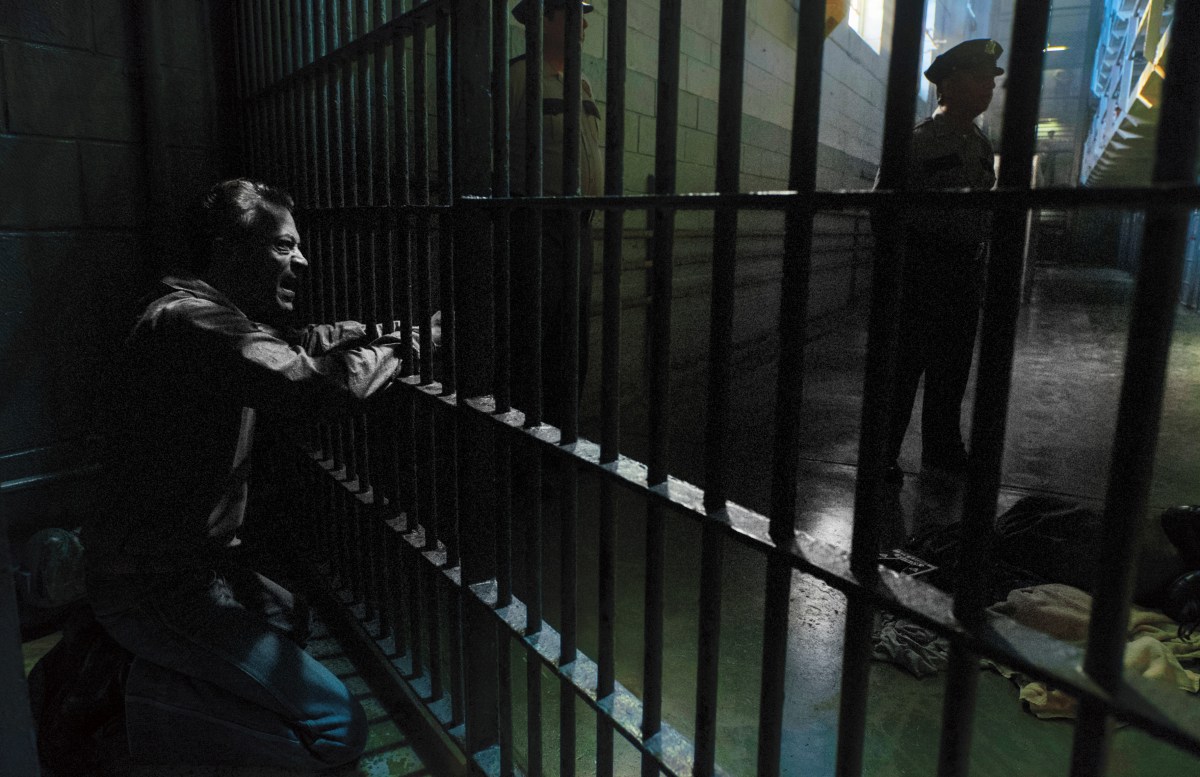
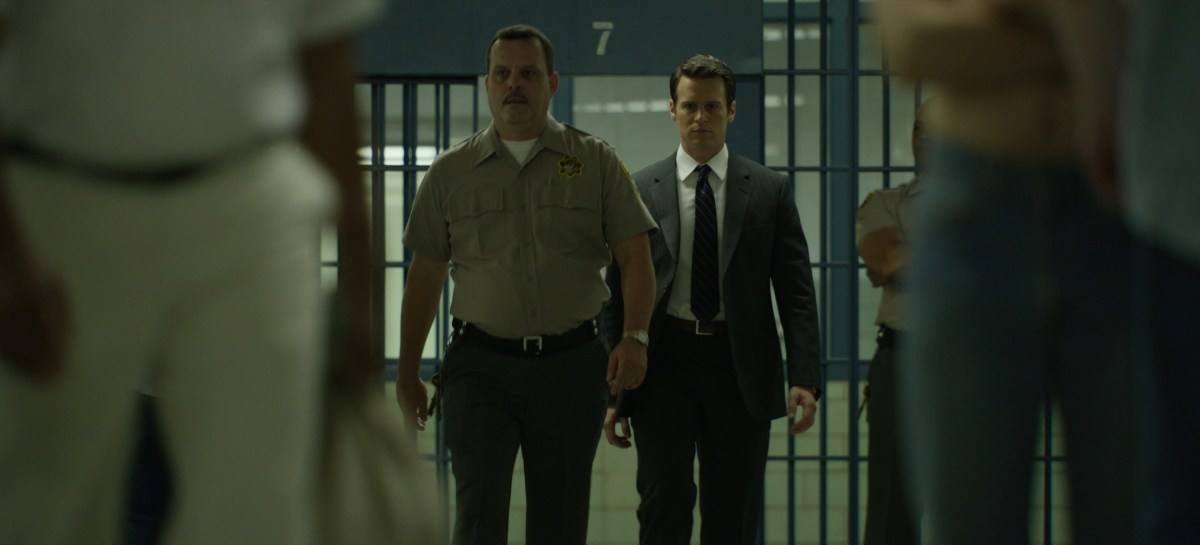
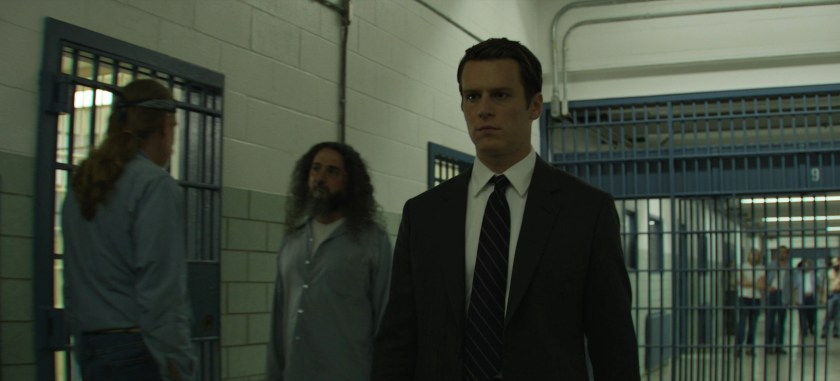
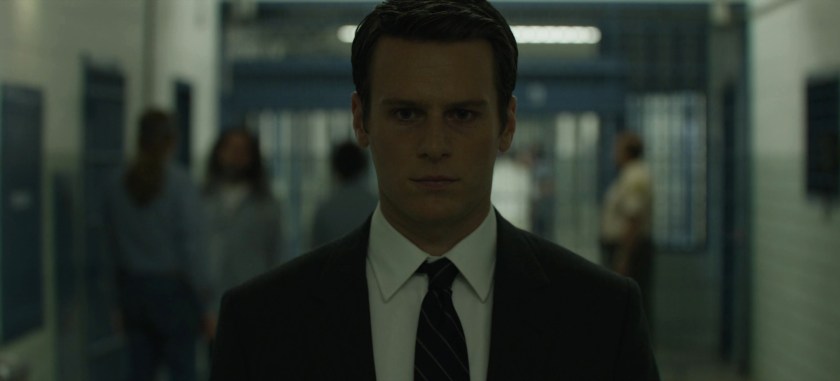
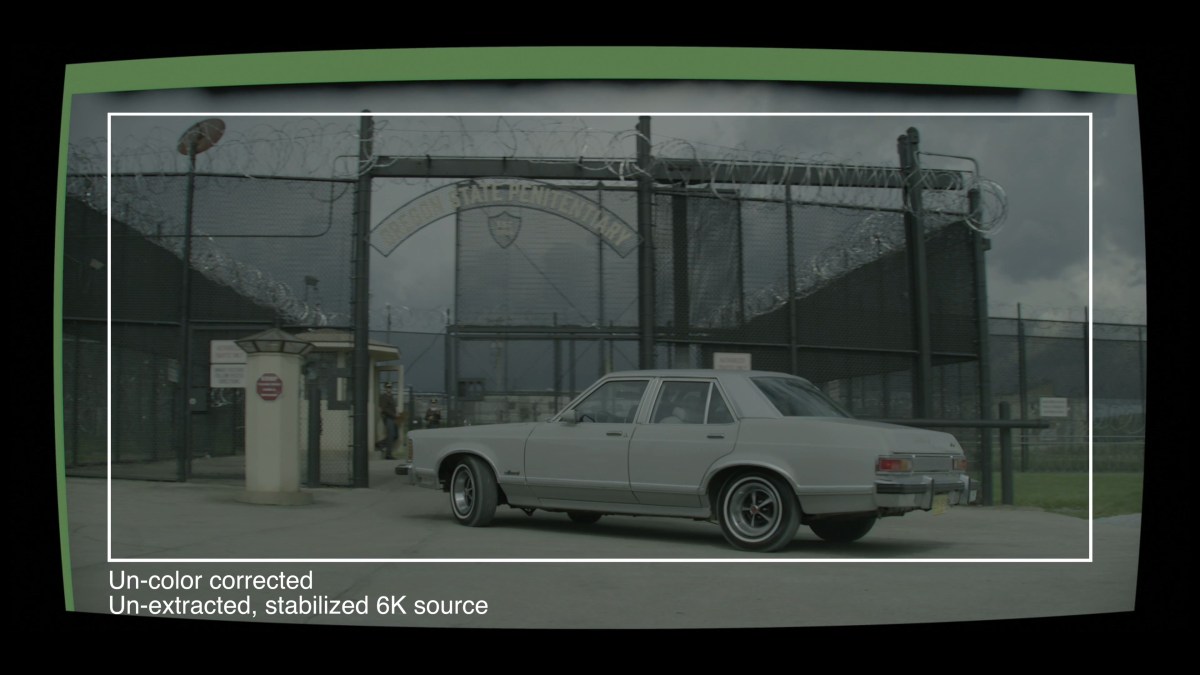
Early in the schedule, we were shooting a prison corridor as Jonathan Groff is led to meet the serial-killer Ed Kemper. We had 2 cameras on 150’ of dolly track: a 65mm locked-off closeup and a 29mm low 2-shot I operated remotely. We did a take and David said, “That’s great, but pan a little to the right.” Ok… note taken. Next take. “Pan to the left…” What the hell? Ok, what’s he looking at? We shot Mindhunter in 6K framing for a 5K extraction, so I was mainly looking where to place our lead in this low 3/4 shot. You know, rule-of-thirds kind of thinking:

Then it dawned on me. David’s looking for balance/symmetry in all aspects of his work. Forget what books say. He’s looking at the shot as a whole. Not just the actors. As the two walk, if I framed only for Ford, the guard may be at the edge or even cut off. Anything but symmetrical! But once I got in David’s head, I moved back from the monitor and tried to NOT look at the actors and just balance the sides of the frame.
That level of symmetry/precision permeates all aspects of a Fincher film. Working with David is full of moments that strengthen you as a filmmaker if you are open to challenging yourself and your preconceived ideas.

https://www.instagram.com/p/Bf0R_qlBtqb/
https://www.instagram.com/p/BgUVoWAB5Ax/
https://www.instagram.com/p/BgOjr6jBjx0/
https://www.instagram.com/p/BgjrXKSB2qP/

2016. The “Hydra” 1.0 (Patrick Harbron / Netflix)

The Nominees Are: 2017 Achievements in Cinematography Earn ASC Accolades
The American Society of Cinematographers
The winners will be revealed at the organization’s February 17 ceremony. The event will be held at the Ray Dolby Ballroom at Hollywood & Highland.
The ASC Awards — attended each year by more than 1,500 guests including Society members, other top cinematographers, their crews and representatives from many industry-leading support companies worldwide — is cinematography’s biggest annual event, celebrating the finest work of the year and its exceptional practitioners.
Motion Picture, Miniseries, or Pilot Made for Television:
Pepe Avila del Pino for The Deuce pilot on HBO
Serge Desrosiers, CSC for Sometimes the Good Kill on Lifetime
Mathias Herndl, AAC for Genius (“Chapter 1”) on National Geographic
Shelly Johnson, ASC for Training Day pilot (“Apocalypse Now”) on CBS
Christopher Probst, ASC for Mindhunter pilot on Netflix
![2018-02-01 Christopher Probst, ASC (Instagram) - Ad appearing in the recent issue of American Cinematographer magazine [Ed.]](https://thefincheranalyst.com/wp-content/uploads/2018/02/2018-02-01-christopher-probst-asc-instagram-ad-appearing-in-the-recent-issue-of-american-cinematographer-magazine-ed1.jpg?w=840)
Netflix (American Cinematographer)
Erik Messerschmidt (Instagram)
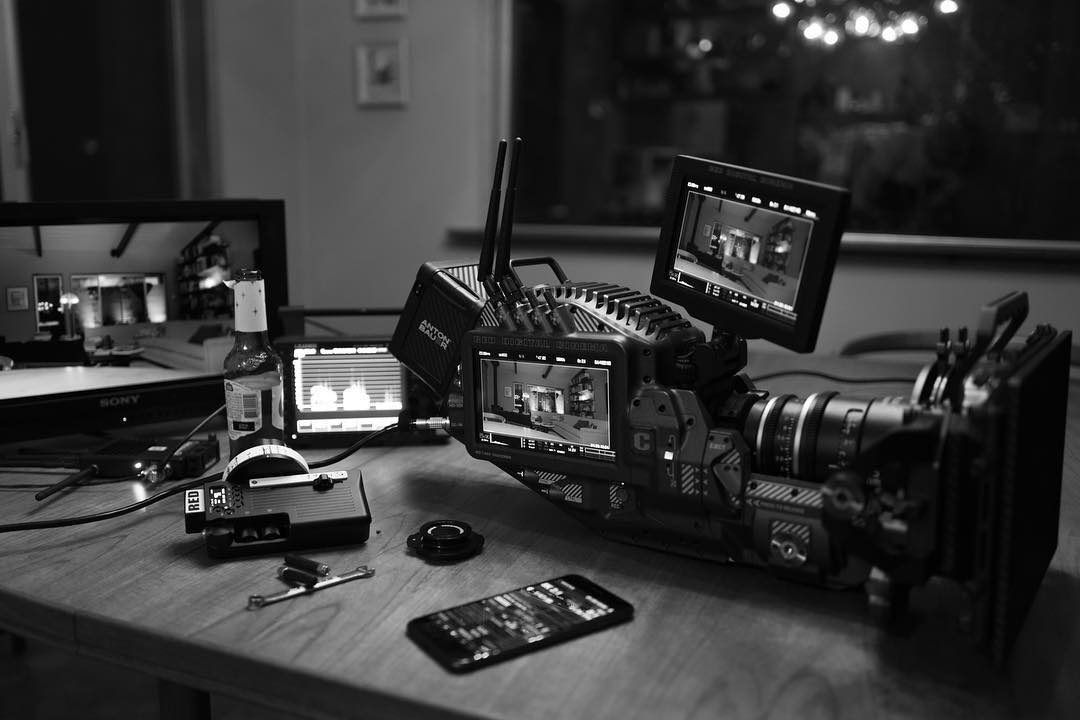
“A little late-night Xenomorph Mk2 Firmware Testing”.
RED Xenomorph Mk2 custom camera for David Fincher:
RED Helium 8K S35 sensor
Leica Summilux-C lenses by CW Sonderoptic
RTMotion lens motor control
Paralinx Tomahawk 2 wireless HD video
Zaxcom wireless audio and timecode
7.0″ LCD Touch
Foolcolor Foolcontrol camera control app for iOS & OS X
Extended WiFi/Foolcontrol antenna array
Anton Bauer Gold Battery Mount
Shoulder Mount
DXL Channel (vimeo)
December 20, 2017
Presented live at Camerimage 2017, this provocative presentation examines the psychology, physiology, and physical relationships between resolution and sharpness. Panavision and Light Iron experts Michael Cioni, Dan Sasaki, and Ian Vertovec present a fresh perspective on how the pursuit of cinematic smoothness is tied to the race for resolution.
Excellent article on the cinematography of Mindhunter by Spanish DP, Producer and cinematography scholar Ignacio Aguilar. Time to practice your rusty Spanish or get help from a good web translator.
Serie creada por David Fincher para Netflix, basada al parecer en investigaciones y trabajos reales del FBI y que está ambientada hacia 1977. El protagonista es un joven agente (Jonathan Groff), quien tras una operación fallida es relegado a dar clases formativas junto a otro agente más veterano (Holt McCallany) viajando por el país y estudiando casos concretos de crímenes reales. Para intentar resolverlos, los agentes comienzan a entrevistarse con asesinos en serie a fin de estudiar su psicología y tratar de aplicar lo aprendido para resolver los nuevos casos que se van presentando. Pero la cercanía con los asesinos y sus mentes provocarán un fuerte impacto en el protagonista. Hannah Gross, como su novia, así como Anna Torv, como una psicóloga que en principio colabora con el equipo y posteriormente se une al mismo, forman el reparto principal, en el que Cameron Britton, como uno de los peligrosos asesinos que aparecen en los diez episodios de esta notable primera temporada, crea una gran impresión.
Ignacio Aguilar
25 enero 2018
Harmonica Cinema
Fincher se ha hecho cargo de cuatro de estos diez episodios de arranque (los dos primeros y los dos últimos), mientras que Christopher Probst [ASC] rodó los dos primeros y Erik Messerschmidt los ocho restantes. Probst es un viejo conocido de los lectores de “American Cinematographer”, ya que desde hace más de dos décadas colabora con la revista con entrevistas y artículos y, desde hace años, viene siendo su editor técnico. Seguramente en alguna de estas entrevistas conoció a Fincher en los años 90. Desde entonces, en paralelo, ha venido desarrollando una sólida carrera como director de fotografía en videoclips, con trabajos para artistas como Taylor Swift o Eminem entre muchos otros. “Mindhunter” es su primera gran oportunidad en la ficción, como lo es también para Messerschmidt, ya que hasta la fecha su oficio venía siendo el de “gaffer” o jefe de eléctricos. Como ya le sucediera a Claudio Miranda, “gaffer” en parte de “Se7en”, “The Game” y “Fight Club” al que Fincher dio su primera gran oportunidad con “The Curious Case of Benjamin Button”, Messerschmidt ocupó este cargo para Jeff Cronenweth en “Gone Girl” y Fincher le ha ofrecido con esta serie la oportunidad de rodar una importante serie de televisión.
Desde hace muchos años, en concreto desde los tiempos de “Zodiac” (2007), con la que esta serie guarda bastantes similitudes temáticas y estilísticas, David Fincher ha venido siendo un abanderado de la tecnología digital para adquirir sus imágenes. Desde 2010, Fincher ha sido fiel a la empresa de cámaras RED, habiendo empleado casi todas sus cámaras en sus proyectos: la Red One MX en “The Social Network”, una mezcla de Red MX y Epic MX en “The Girl With the Dragon Tattoo” (2011), así como la Epic Dragon en “Gone Girl” (2014). Incluso también su serie “House of Cards” (2013) empleó los sensores Mysterium-X y Dragon. Fincher, por lo tanto, es uno de los más prestigiosos cineastas del universo RED, de modo que no resulta del todo extraño que la empresa le haya fabricado tres cámaras customizadas (denominadas Red Xenomorph, que recuerdan estéticamente al “Alien” de Giger, saga en la que participó Fincher como director). Estas cámaras incorporan el mismo sensor Dragon que Red Weapon convencionales, pero además de una forma más ergonómica, proporcionan más conexiones, vídeo y motores inalámbricos, etc. En cierto modo, lo que a estas alturas Red debería estar ofreciendo ya a sus consumidores, en lugar de sus cámaras modulares tradicionales con las que nunca parece poder competir con ARRI, excepto para Netflix, ya que sus cámaras son las únicas de “alta gama” (además de las Sony) que cumplen con el requisito de los 4K nativos (que llevan a absurdos como el hecho de que la única Alexa que se puede emplear sea la Alexa 65).