Gone Girl was the fourth feature collaboration between director David Fincher and cinematographer Jeff Cronenweth, ASC since 1999;Fight Club, The Social Network and The Girl with the Dragon Tattoo being the other three. Additionally the pair worked together on multiple commercials and music videos, creating a working chemistry.
Their 2014 feature Gone Girl, for which Rosamund Pike earned a Best Actress nomination from the Academy, was deftly shot and flowed quicker than its 149-minute runtime would suggest, resulting in one of the best psychological thrillers of the 2000s.
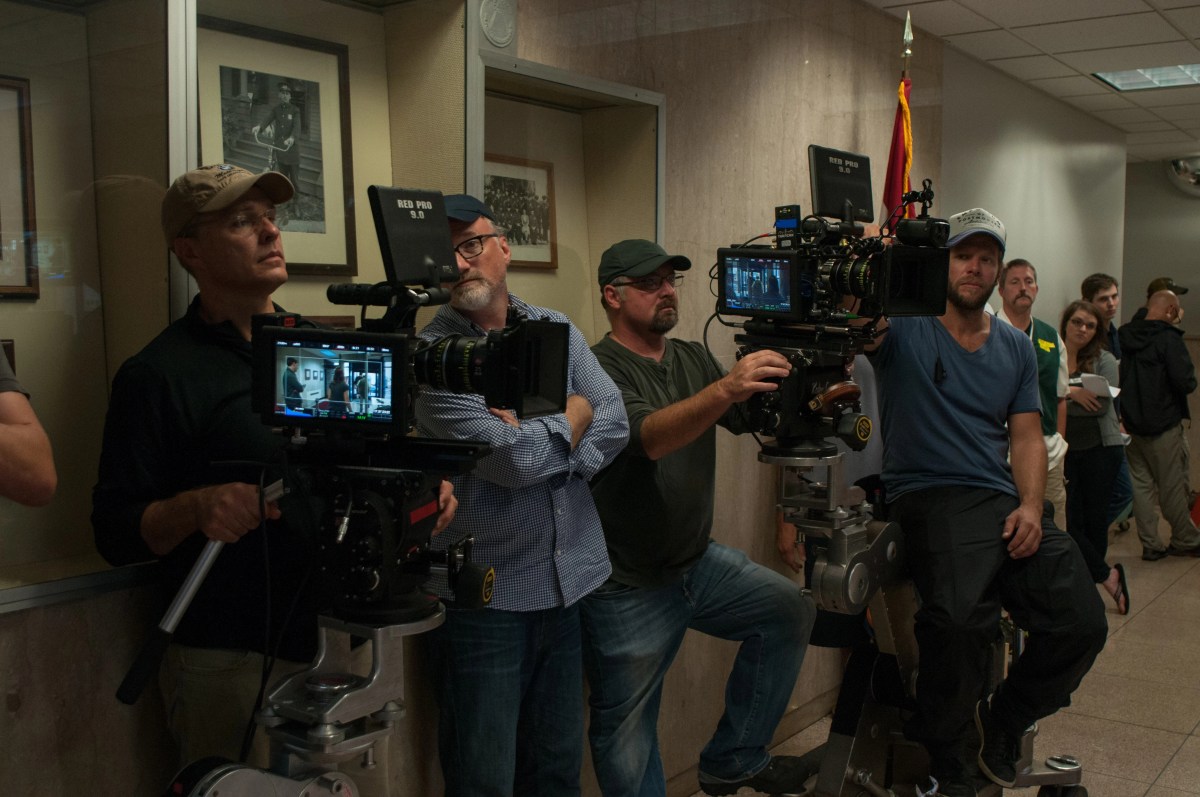
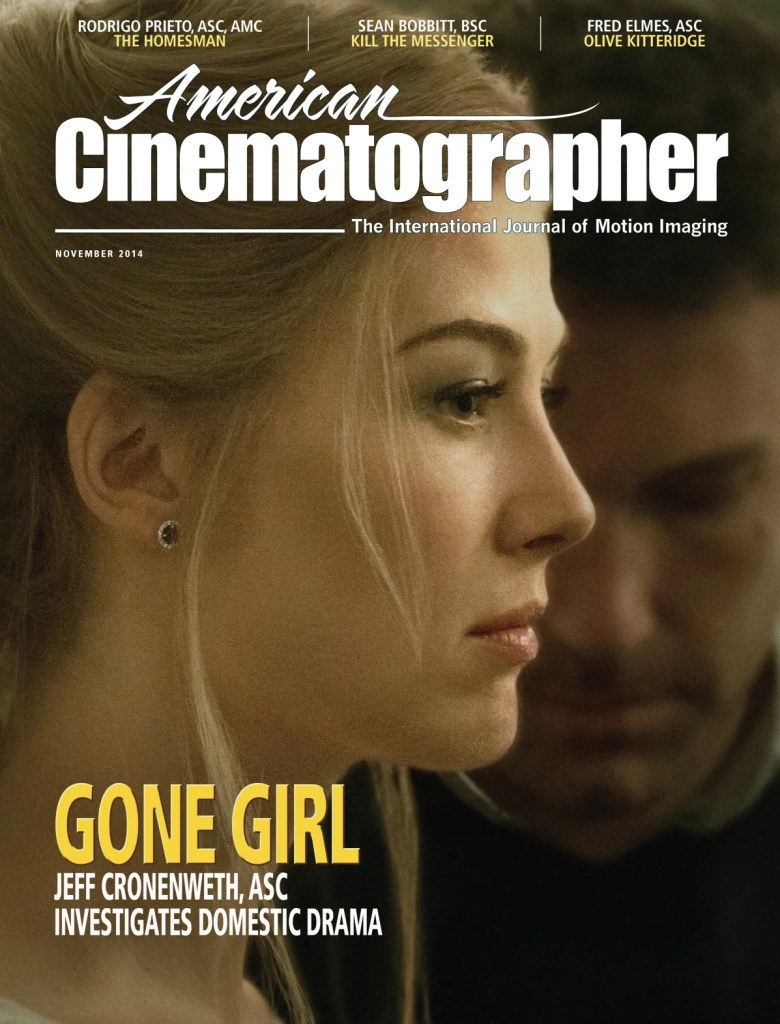
The film was shot digitally on Red Dragon cameras, using Leitz Summilux-C lenses and “a fairly comprehensive lighting package,” which included ETC Source Fours, Mole-Richardson incandescents, and Arri M Series HMIs. Further details can be found in our cover story published in AC Nov. 2014.
In addition to Pike, the filmmakers rounded out the cast with Ben Affleck, Carrie Coon, Neil Patrick Harris, Tyler Perry, Kim Dickens, Patrick Fugit, Missi Pyle, Emily Ratajkowski, Casey Wilson, Boyd Holbrook, and Scoot McNairy.
Cronenweth’s chief lighting technician on this show was Erik Messerschmidt — now an ASC member whose feature credits as a cinematographer include Fincher’s Mank and The Killer.
What follows is a curated collection of unit photography by Merrick Morton, a founding member of the SMPSP who also shot stills for features including L.A. Confidential, Fight Club, Zodiac, and The Bad Batch, and the series Mindhunter.
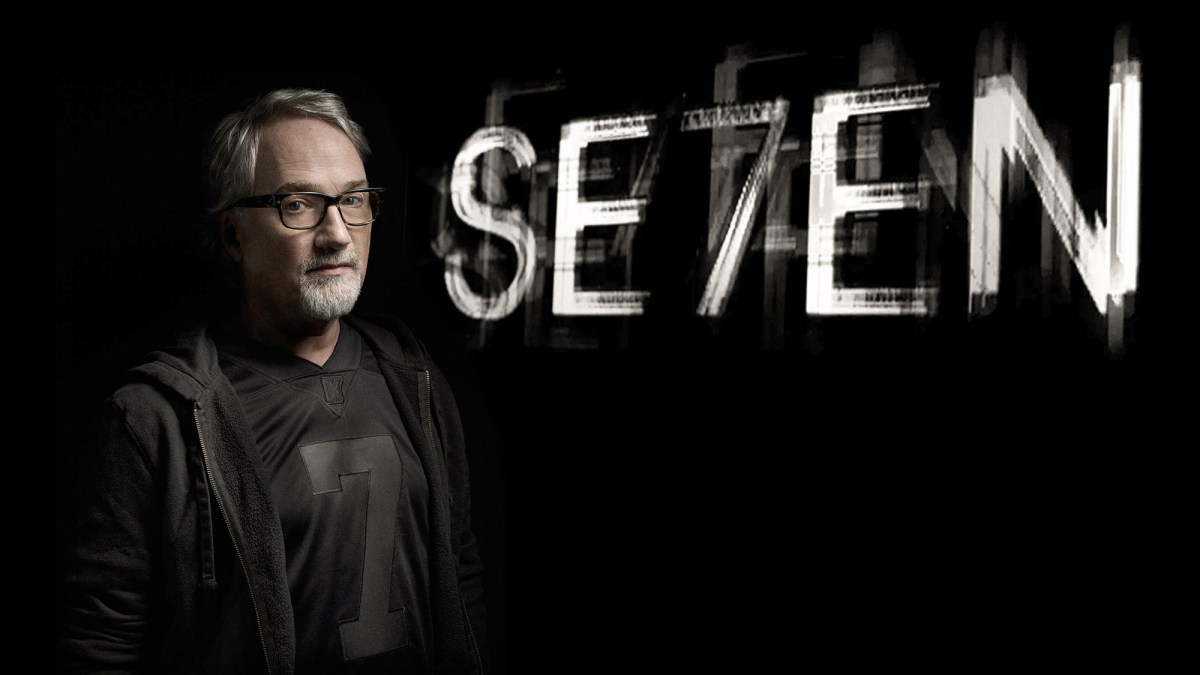
For David Fincher, seeing SE7EN in 4K was an experience he can only describe as harrowing. That or a high school reunion.
“There are definitely moments that you go, ‘What was I thinking?’ Or ‘Why did I let this person have that hairdo’?” Fincher said in a recent interview with The Associated Press.
He’s OK with the film being a product of its time in most respects. But some things just could not stand in high-definition resolution.
“It was a little decrepit, to be honest,” said Fincher. “We needed to resuscitate it. There are things you can see in 4K HDR that you cannot see on a film print.”
Ever the perfectionist, he and a team got to work on a new restoration of the film for its 30th anniversary re-release. This weekend the restored SE7EN will play on IMAX screens for the first time in the U.S. and Canada, and on Jan. 7, the 4K UHD home video version will be available as well.
The dark crime thriller written by Andrew Kevin Walker and starring Brad Pitt and Morgan Freeman as a pair of detectives looking for a serial killer was somewhat of a career-reviver for Fincher, whose directorial debut Alien 3 had not gone well. SE7EN was not a sure thing: It was made for only $34 million (and only got that when Fincher managed to persuade studio execs to give up $3 million more). But it went on to earn more than $327 million, not accounting for inflation, and continues to influence the genre.
Fincher has over the years overseen several restorations of the film (including one for laser disc) but decided this needed to be the last. It’s why he insisted on an 8K scan that they could derive the 4K from. He wanted to ensure that it wouldn’t have to be repeated when screens get more advanced.
“I don’t want to do this again,” Fincher said. “What we’ve essentially gotten to with this is that this is the new negative. This will be the new archival storage element.”
For casual viewers, the tweaks should not be terribly noticeable. Fincher didn’t go in and add characters or give Gwyneth Paltrow a happy ending.
“I’m very against the idea of changing any of the content,” Fincher said. “There’s literally zero opportunity for toys in ‘Seven’ so we won’t be introducing any of that.”
But take the opening scene where Pitt’s character selects a pre-tied tie and looks out a window. In the original version, Fincher used a tried and true filmmaking technique where you bounce soft light off a white card outside the window to give the appearance of depth and natural light coming in. He called them the Being There windows, referring to what cinematographer Caleb Deschanel did on that film.
“There’s no expectation by the audience that you see the buildings beyond the window. They’re just overexposed. The inside is dark enough that your eyes don’t adjust. And so outside it’s very bright,” he explained. “In 4K, it’s no good. You could see the sheen of the white card.”
The fix was to add a cityscape and some rain drizzle.
“We’re not showing off that now you can see the city,” he said. “We’re just finally kind of bringing the bottom end of the expectation up a little bit so that it feels like it was intended to because now we have the ability to resolve that stuff.”
There were some exposure issues, some cinch marks, some places where the splices came loose or where the perforations of the print changed the properties. Fincher also removed some of the camera jiggles at the end of the film, explaining that because it was an omniscient camera it was distracting. But he didn’t want to do too much and have it lose its essence.
“It’s a document of its time and I believe that movies should be that,” Fincher said. “For all the primitive nonsense of the equipment that went into making The French Connection, it informs that movie. There is a kind of rugged primitivism in it. And I didn’t want that baked out.
David Fincher bristles at being labeled a perfectionist.
He makes an unconvincing case in the shadow of his filmography, which includes “Fight Club,” “Zodiac” and “The Social Network” among several other films marked by a meticulous and unerring technical precision. But Fincher’s objections ring especially hollow when it comes in the midst of an explanation — involving corrections to emulsion caused by the device that perforated the original celluloid — why a new 4K version of “SE7EN” took a year to complete. Yet even if one were inclined to describe his approach merely as a “passionate attention to detail,” that attention has nevertheless resulted in some of the most unforgettable cinematic images of the last 30 years — and now, one of the most beautiful restorations produced in the high-definition era.
Perhaps ironically, “SE7EN,” the film that marked his Hollywood breakthrough, was by his description inspired by “movies with dirt under their fingernails.” Following its premiere at the 2024 TCM Film Festival, the upgraded transfer will be released in theaters (including IMAX) Jan. 3, to be followed on 4K UHD Jan. 7. Fincher recently spoke with Variety about the film, describing his approach to the project after the critical and commercial underperformance of his debut feature, “Alien 3;” revealing details about key casting and creative choices in bringing to life the story of a serial killer inspired by the seven deadly sins; and reflecting on its legacy as a film that both inspired countless imitators and defined his reputation — be it as a perfectionist or just a filmmaker who learned to ask for forgiveness instead of permission.
David Fincher:
I bristle at that idea of perfectionism because if you look at an image and you can see that there’s something going on on the left side of it, I’ll admit it was a big problem for me when I moved to high definition because now I could finally see all of the background actors looky-looing and counting, and you go, “Wow, what is this behavior that’s in the background?” So the more you see, the more I feel it’s my responsibility to make sure that the only thing that’s documented is the stuff that focuses your attention on what you need to walk away with.
It’s officially 2025, and that makes it the year of SE7EN’s 30th anniversary. Released in theaters on September 22, 1995, David Fincher’s second feature film enjoyed a successful run at the box office, scored an Academy Award nomination for Best Film Editing, a BAFTA nomination for Best Original Screenplay, and is still revered as top-tier cinema to this day.
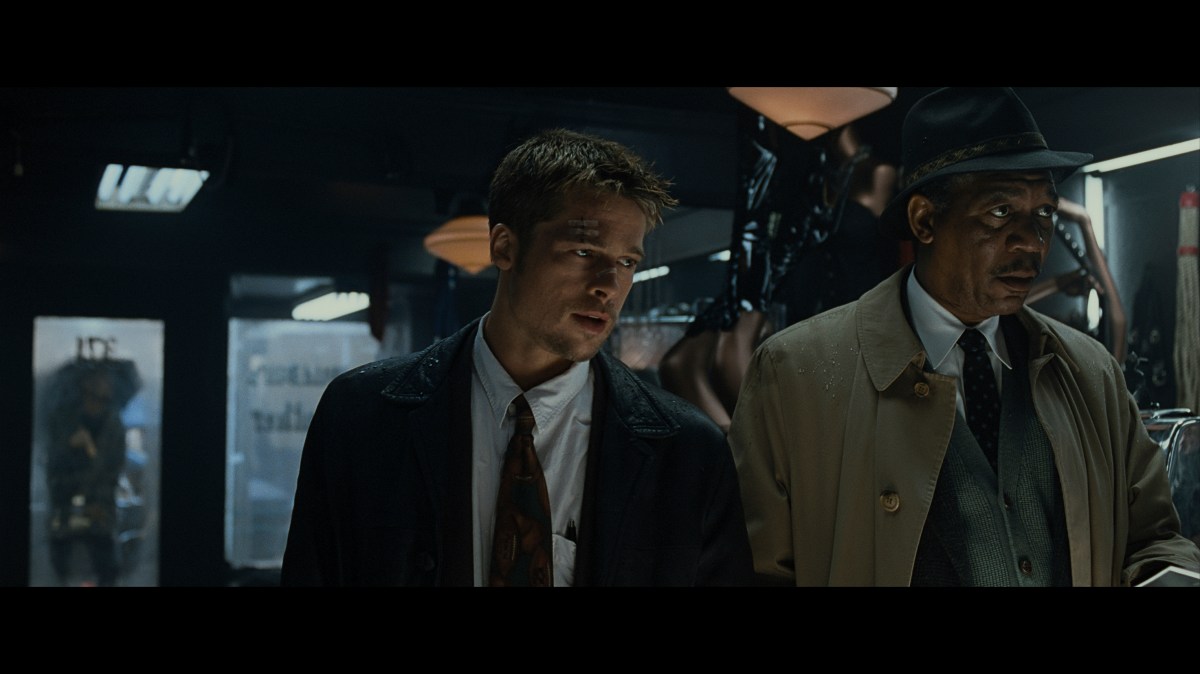
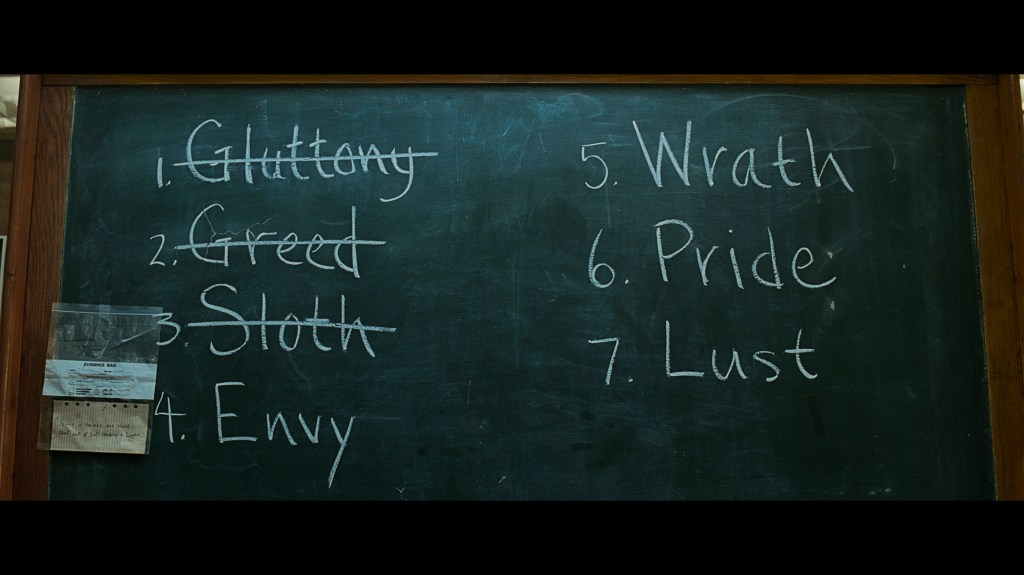
The movie stars Morgan Freeman and Brad Pitt as detectives. Freeman’s William Somerset is a respected veteran on the verge of retirement, while Pitt’s David Mills is a recently transferred detective with loads of confidence, but lots to learn from Somerset. The pair is assigned to investigate a string of elaborate and ruthless murders, each one connected to one of the seven deadly sins.
In celebration of SE7EN’s release on 4K UHD on January 7, and also its first-ever IMAX release on January 3, I got the opportunity to get a peek behind the curtain of the restoration process courtesy of Fincher himself. He broke down the factors he must consider when choosing which of his films to restore, where he draws the line when making changes to the original film during this restoration process, how he used AI to pull off “the most thrillingly stupid fix in the world,” and loads more. You can read about all of that and his thoughts on his Netflix projects getting physical releases in the interview below.
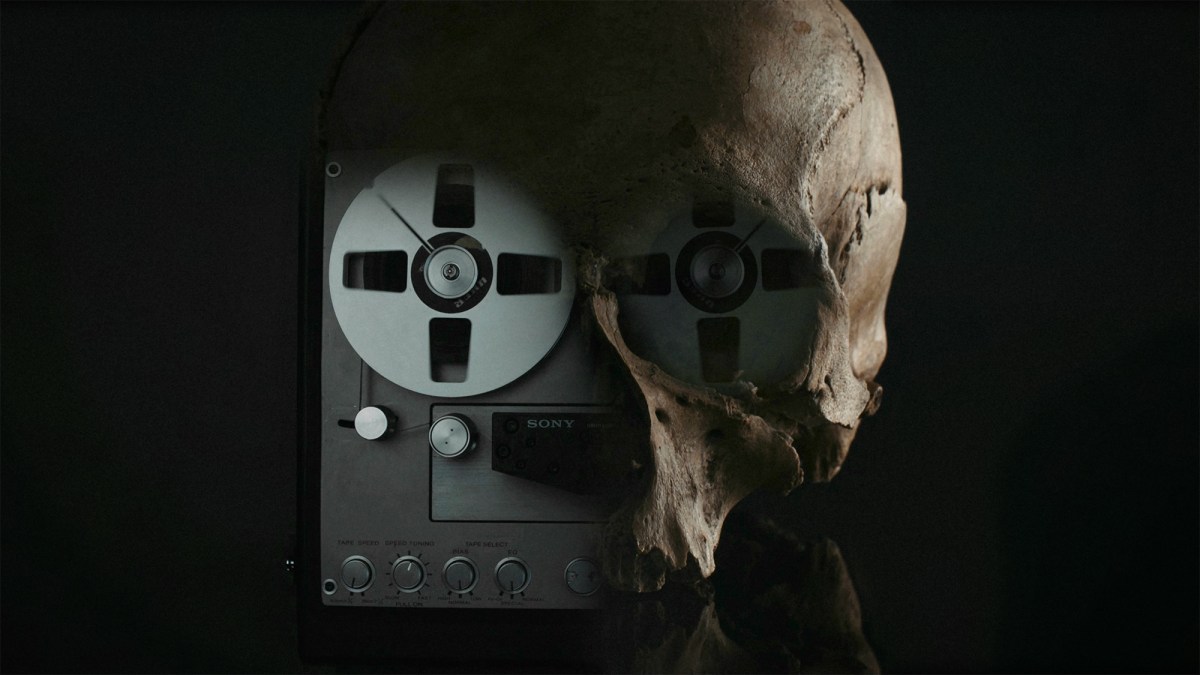
This is a cinematography experiment for fun and education. To explore Macro techniques, we recreate David Fincher‘s iconic MINDHUNTER title sequence and, of course, we give it our very own twist.
We also test & review the new Laowa Sword cine macro lenses. Macro Lenses open a whole world of technical possibilities and perspectives that are impossible to achieve with normal lenses. Macro and extreme close-ups can play an important role in cinematic storytelling, product videography, Stop-Motion work, and practical effects.
Then, we take you behind the scenes and show you how the different scenes were set up and lit. The LAOWA Sword macro cine lenses cover full frame and offer a wide range of focal lengths starting from 15mm all the way up to 180mm. We give you test shots and talk about our experience.
00:00: Intro & Contents 02:23: Extreme close ups in cinema 04:02: What is a Cine Macro Lens 07:52: Laowa Sword introduction 13:20: Laowa Sword Lens Test 18:15: Reimagining the Mindhunter titles 22:10: MACROHUNTER 25:48: Making of & Tutorial 29:10: Staging Marie – Skull shots tutorial 32:12: The Verdict 34:19: Laowa Aurogon introduction 37:19: Thank You
Here is our short with all MACROHUNTER sequences next to behind-the-scenes.
Disclaimer: we collaborated with LAOWA to bring you this episode. As always, we strive to give you our honest opinion based on our experience and our tests. If you are interested in buying the LAOWA Sword, please consider our affiliate link. It doesn’t cost you a dime more, but we get a little for the tip jar. Thanks a lot!
A filmmaker friend reached out to me with a question about one of our shared favorite movies of all time, so I did what I sometimes do – I went totally overboard to find a satisfying answer and then wrote a long-winded article about it.
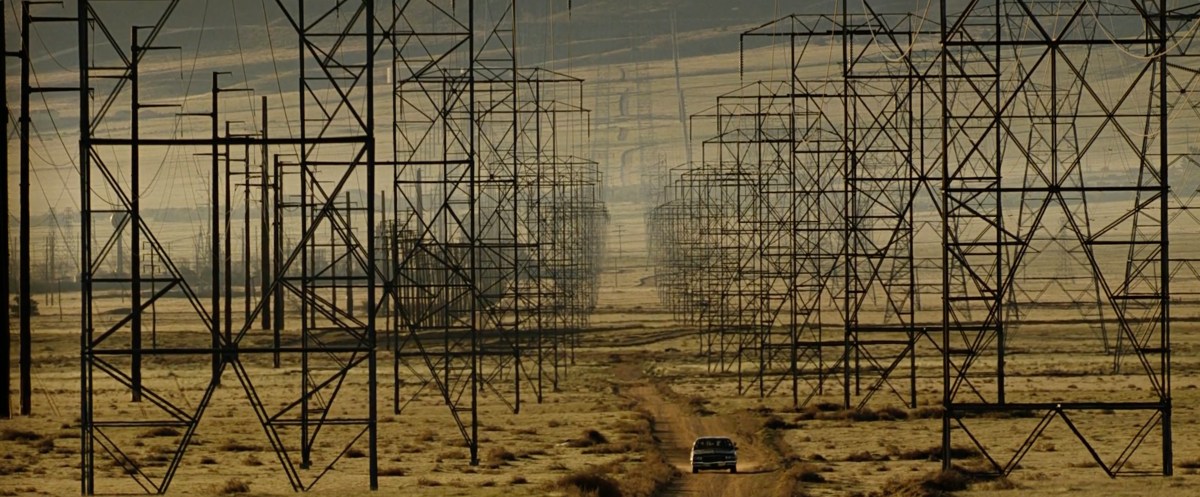
Near the end of David Fincher‘s 1995 masterpiece Seven, John Doe takes Somerset and Mills to the middle of nowhere to reveal his final surprise. They drive to a desolate area surrounded by high-tension power lines and towers. A combination of long lenses and wide lenses were used to alternate between images of long-lens compression of the space, and scattered wider lenses to illustrate the desolation of the environment.
Then comes this gorgeous shot. A simple, slow tilt down of the car racing down the road, filmed with a long lens. It’s breathtaking because it looks other-worldly, and some of that is due to the visual “compression” that happens to a scene filmed with a telephoto lens: objects that are far apart from each other “compress” in depth to look like they’re actually existing very close together in real-world space. Filmmakers make lens choices to give a scene a deliberate, artistic feel. It’s one of the many tools in a filmmaker’s toolbox.
Frame & Reference is a conversation between Cinematographers hosted by Kenny McMillan. Each episode dives into the respective DP’s current and past work, as well as what influences and inspires them. These discussions are an entertaining and informative look into the world of making films through the lens of the people who shoot them.
Igor Martinovic (Man on Wire, House of Cards: S02, The Night Of) and Vanja Černjul (Orange Is the New Black: S01, Marco Polo, Crazy Rich Asians), who grew up together in Croatia, talk about their experiences working with David Fincher in House of Cards: S02 (Igor), shooting a big production like House of the Dragon (Vanja), and making together the documentary Jim Henson: Idea Man directed by Ron Howard.
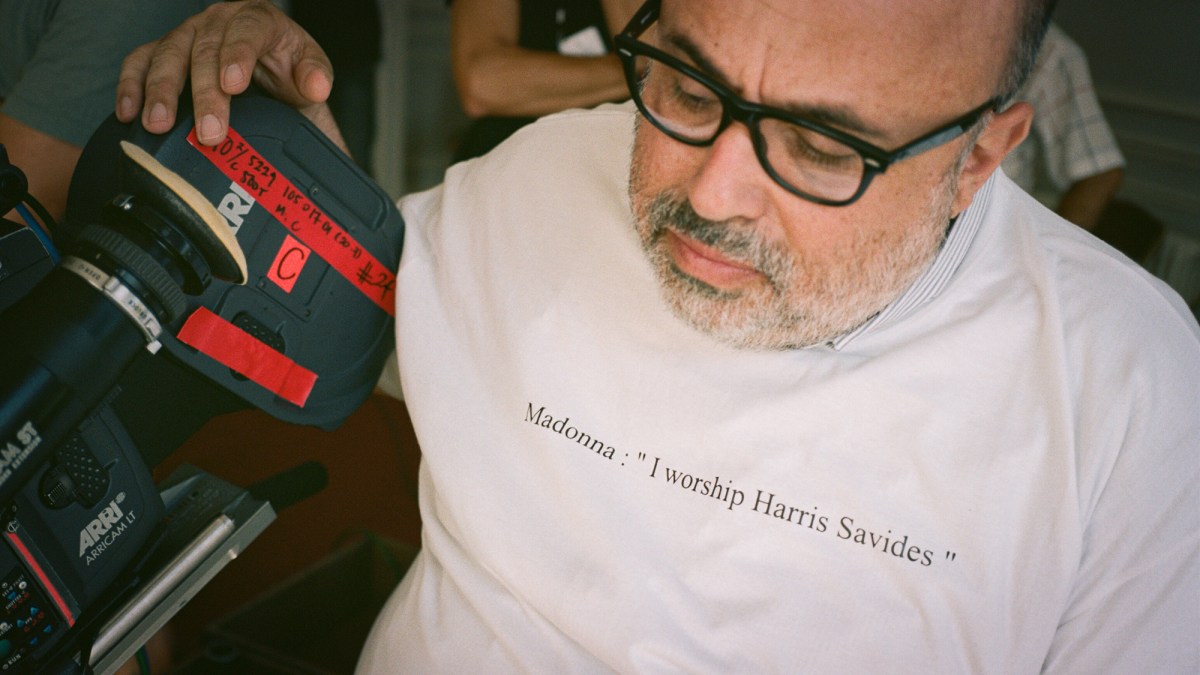
Sofia Coppola, Gus Van Sant, Noah Baumbach, Jonathan Glazer, David Fincher, and today’s best cinematographers reflect on the giant hole in the heart of cinema that was left when Harris Savides died in 2012.
When cinematographer Bradford Young was fresh out of Howard University, he would have done anything to get near the set of his idol Harris Savides. He eventually found a way to shoot behind-the-scenes footage for the French director Fabian Barron, who hired Savides to shoot an Armani fragrance commercial in Hawaii. When Young got to the forest set, with shafts of light streaming through the trees, he became confused when he flipped on his DV camera to capture the scene.
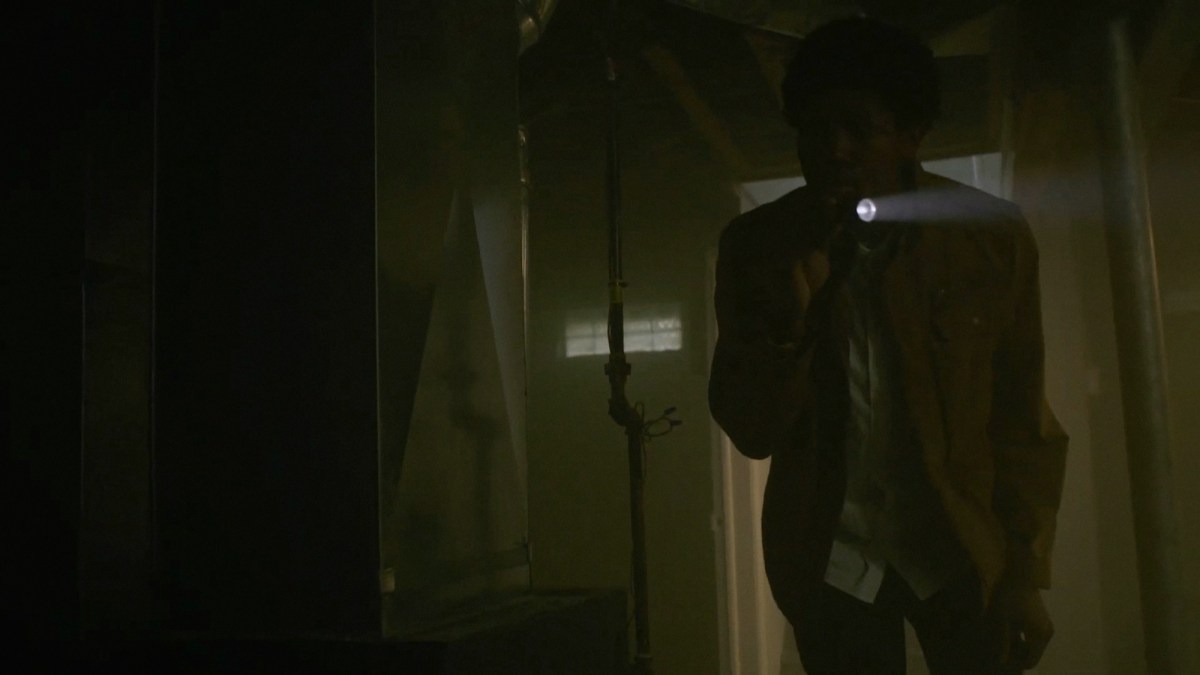
“The model came on set, and I was like, ‘How’s he going to light her face?,’” recalled Young, who couldn’t believe what happened next: Savides walked on to set with a flashlight in hand and shined it at the model. “He was completely secure with this little flashlight on this million-dollar set. With my eye on the day, I didn’t understand what was happening, ‘How’s he still getting exposure?’ And then I saw the commercial. It was that God particle thing that Harris had. This was complete technical mastery and a complete mystery to observe.”
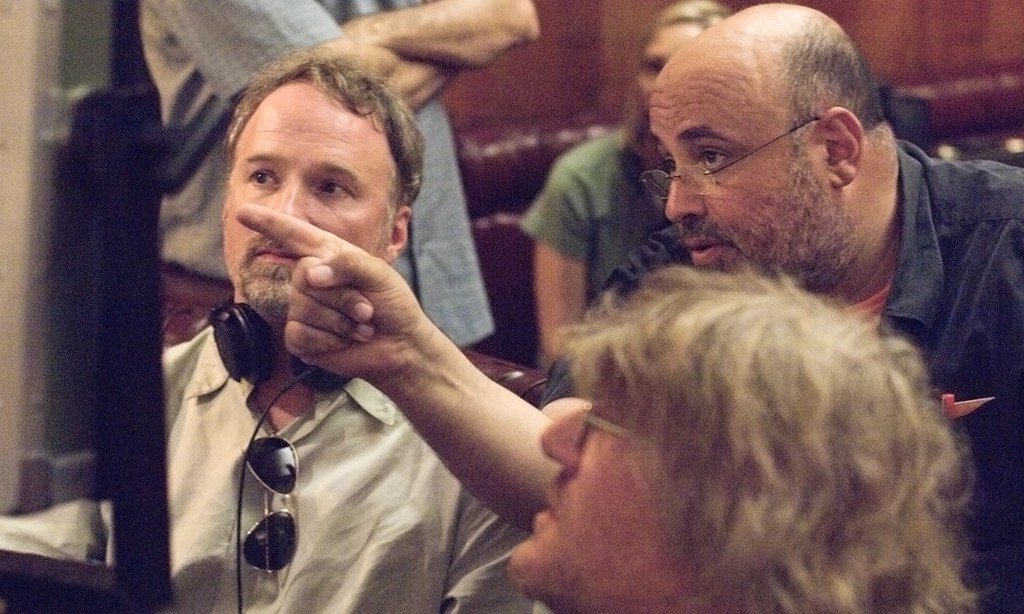
David Fincher and Harris Savides, Zodiac (Merrick Morton, 2007)
There was a sense of magic surrounding what Savides was able to do. When discussing what his go-to cinematographer was using to light a scene, director David Fincher used to joke, “I don’t know, Harris’ got a jar of fireflies.”
“Beyond the technical process, there was always something else going on in the picture that I couldn’t account for, something that was only him,” writer/director Noah Baumbach told IndieWire. “Something that I guess we call genius.”
Garrett Sammons & Quinton Myricks July 31, 2024 Litepanels
In this episode of Inspired By, we step into the meticulously crafted universe of David Fincher. Host Garrett Sammons welcomes director Quinton Myricks to lift the veil on Fincher’s signature chilling style.
Join us live as we uncover how he utilizes reverse key lighting, reflections, and harsh light to craft his hauntingly beautiful worlds.
03:15: Introducing Quinton Myricks 07:30: Scene breakdown 1 16:30: Scene breakdown 2 22:48: Scene breakdown 3
Let’s get into how Erik Messerschmidt does what he does, by unpacking his thoughts and philosophy on photography and looking at what gear he chooses in this episode of Cinematography Style.
00:00: Introduction 01:04: Background 02:06: Visual Language & References 03:44: Perspective & Camera Movement 05:40: Post Production 07:15: Lenses 09:05: Cameras 10:51: Grips 11:33: Lighting 12:28: MUBI
Music: Ottom – ‘Hold On’ Stephen Keech – ‘Grand Design’ Nuer Self – ‘Dawn’ Liquid Memoirs – ‘Distant Dream’ Joley – ‘Night Stroll’ I Am Alex – ‘Bonfire’ The Soundkeeper – ‘The View From The Attic Window’ Sero – ‘Mid August’ Chill Winston – ‘The Truth’
DISCLAIMER: Some links in this description are affiliate links. If you purchase a product or service with these links I may receive a small commission without an additional charge to you. Thank you for supporting my channel so I can continue to provide you with free videos!

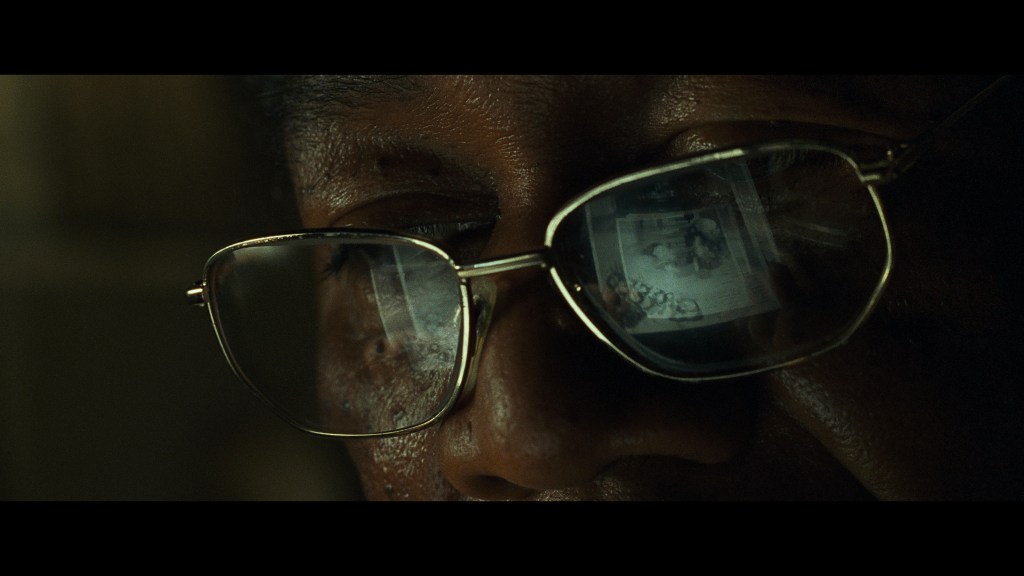
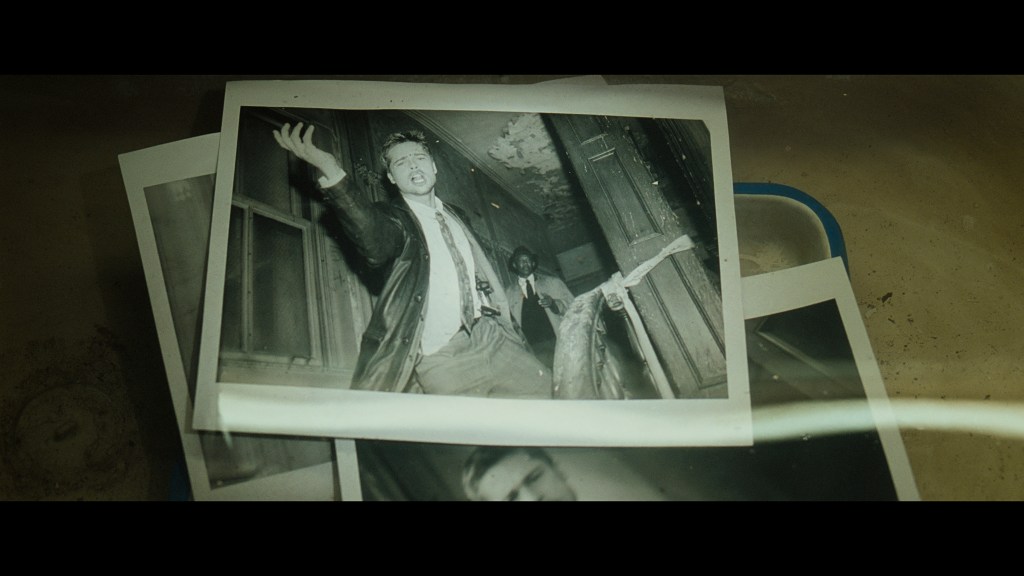
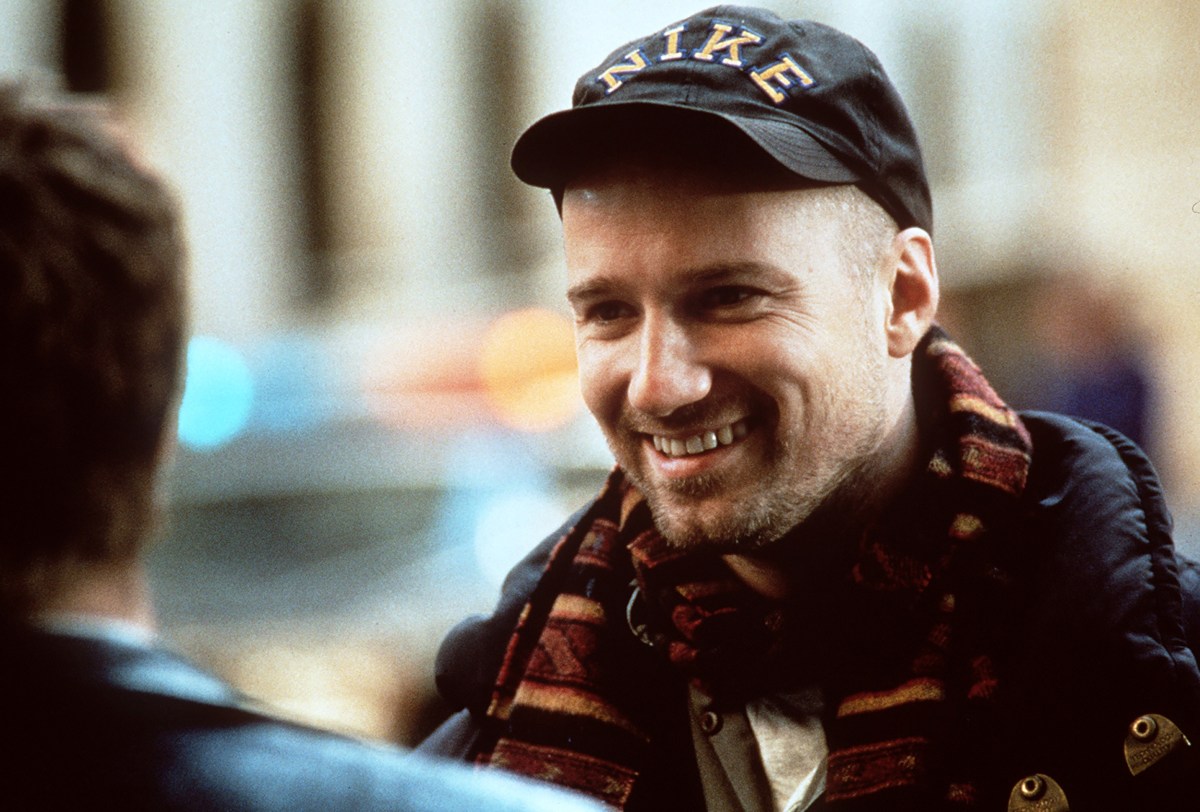
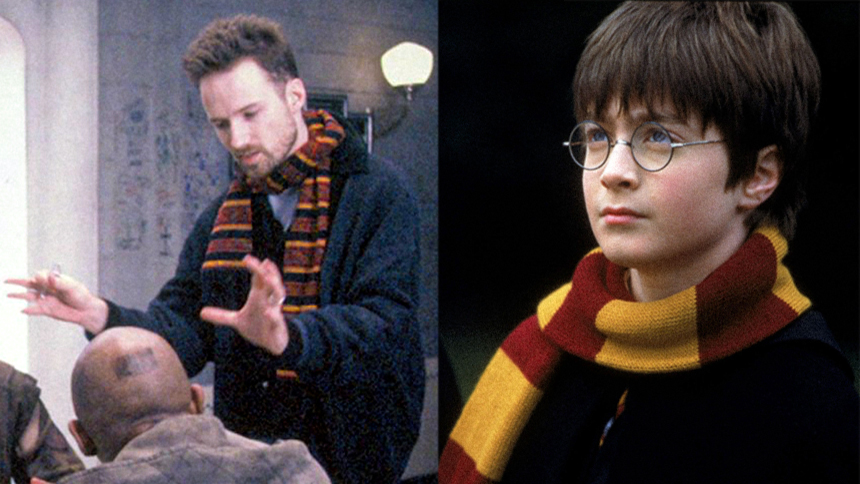

 The Fincher Analyst