Miles Perkins, Industry Manager, Epic Games July 28, 2025 Unreal Engine
Join Tim Miller, co-founder of Blur Studio and winner of multiple Emmy Awards, for a candid chat on his origins as an animator and visual effects artist, his “story first” philosophy, and his views on creativity. Tim’s curiosity and drive has led him to branch out from traditional visual effects to direct live-action features and explore real-time animation with Blur’s Secret Level series and the LOVE DEATH & ROBOTS anthology series.
As SE7EN receives an anniversary release in IMAX theaters and on 4K UHD Blu-ray, David Fincher tells Mitchell Beaupre about the film’s enduring impact, Brad Pitt’s basketball ties, John Doe’s memorable entrance and more, including his personal favorite opening credit sequences.
“The movie is a horror movie. The movie is about utter and total loss of control.” —David Fincher on SE7EN
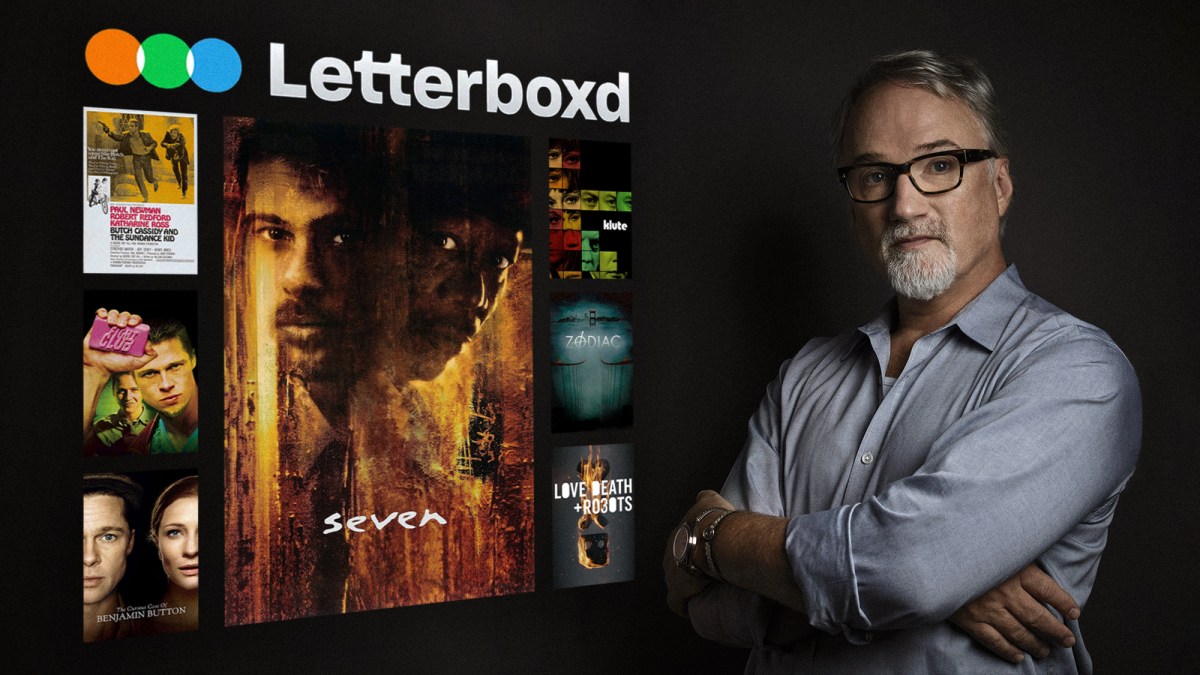
Plenty of films want to sell us on the idea that sinning is fun. SE7EN is not that film. Drenched in the cold city rain, grime coming out from the sewers and onto the streets, cockroaches scattering behind furniture and paint peeling off the walls, in the world of Se7en there’s not much fun about life at all. And yet, since its release thirty years ago, David Fincher’s neo-noir-tinged detective thriller/serial killer horror has been a fan favorite, pulling in more than $327 million worldwide and firmly cementing a place on the Letterboxd Top 250 with a whopping 4.3 average rating. Not bad for a movie that makes you want to take a shower the minute you finish watching.
Beneath all of the shocking moments of grotesquerie as Detectives Mills (Brad Pitt) and Somerset (Morgan Freeman) track the meticulously orchestrated slaughters executed by John Doe (Kevin Spacey), SE7EN’s resonance comes from how it invites us to question the futility of feeling good about anything in this life. It’s the ultimate glass half full or half empty story, as these men see some of the worst that humankind is capable of every day, and Mills somehow retains a positive outlook while Somerset has lost all hope for society. Over the course of a week, these two develop a natural bond while their worldviews continuously clash. Director Jim Cummings writes in a Letterboxd review of SE7EN that “outside of the incredible craftsmanship displayed in its filmmaking, it’s an incredible character study with perfect fusion of character-comedy and detective-pornography.”
Cummings is one of many filmmakers who adore Fincher’s sophomore feature, which laid the foundation in 1995 for essentially every gnarly detective thriller that would come in the years to follow. “Easy to forget that this became the template for the genre it reinvented, but beyond that it’s a spectacular piece of provocation and confidence,” Matt writes, which Dirk echoes by saying, “The true star here is David Fincher. He has created an aesthetic that has been copied so many times, but has never really been equaled.” Dirk also opens his review by pondering, “It is always difficult to determine when you are ‘allowed’ to call a film a classic or a masterpiece,” then three paragraphs later ending with the declaration that SE7EN is, indeed, both.
So that settles that. Here’s my conversation with David Fincher.
David Fincher bristles at being labeled a perfectionist.
He makes an unconvincing case in the shadow of his filmography, which includes “Fight Club,” “Zodiac” and “The Social Network” among several other films marked by a meticulous and unerring technical precision. But Fincher’s objections ring especially hollow when it comes in the midst of an explanation — involving corrections to emulsion caused by the device that perforated the original celluloid — why a new 4K version of “SE7EN” took a year to complete. Yet even if one were inclined to describe his approach merely as a “passionate attention to detail,” that attention has nevertheless resulted in some of the most unforgettable cinematic images of the last 30 years — and now, one of the most beautiful restorations produced in the high-definition era.
Perhaps ironically, “SE7EN,” the film that marked his Hollywood breakthrough, was by his description inspired by “movies with dirt under their fingernails.” Following its premiere at the 2024 TCM Film Festival, the upgraded transfer will be released in theaters (including IMAX) Jan. 3, to be followed on 4K UHD Jan. 7. Fincher recently spoke with Variety about the film, describing his approach to the project after the critical and commercial underperformance of his debut feature, “Alien 3;” revealing details about key casting and creative choices in bringing to life the story of a serial killer inspired by the seven deadly sins; and reflecting on its legacy as a film that both inspired countless imitators and defined his reputation — be it as a perfectionist or just a filmmaker who learned to ask for forgiveness instead of permission.
David Fincher:
I bristle at that idea of perfectionism because if you look at an image and you can see that there’s something going on on the left side of it, I’ll admit it was a big problem for me when I moved to high definition because now I could finally see all of the background actors looky-looing and counting, and you go, “Wow, what is this behavior that’s in the background?” So the more you see, the more I feel it’s my responsibility to make sure that the only thing that’s documented is the stuff that focuses your attention on what you need to walk away with.
Jason Hill is a multi-talented artist who has made a name for himself as an award-winning film composer, platinum-selling recording artist, record producer, and mixer.
Hill’s upcoming projects include; Apple TV+‘s drama series Dark Matter, which premieres May 8th; and season 4 of Showtime’s Couples Therapy, which premieres May 31st. Hill is also a music producer on the forthcoming Robbie Williams’ biopic, Better Man.
Notable film and television credits include David Fincher‘s psychological thriller film, Gone Girl; the Emmy-winning series, Mindhunter; Voir; Videosyncrasy; and his only animated short film, Bad Travelling (part of the Emmy-winning series Love, Death, and Robots); Elijah Bynum’s drama film, Magazine Dreams; Apple TV+’s Extrapolations; and City On Fire; Netflix’s Fyre: The Greatest Party That Never Happened; The Confession Killer; and This Is A Robbery; and Philip O’Leary‘s film, The Buffalo Hunt.
In addition to his work in film/television scoring and production, Hill is also the lead singer, guitarist, and producer for the band LOUIS XIV along with the band Vicky Cryer (which contained members of bands The Killers, Muse, Julian Casablancas and the Voidz, Jet, and Jamiroquai). In 2011, he also joined The New York Dolls and played bass on several tours after producing the album Dancing Backward in High Heels, their final Dolls album. He has produced, written records or otherwise worked with such artists as The Killers, David Bowie, Robbie Williams, Jet, Sky Ferreira, Brandon Flowers, Ariel Pink, The Virgins, Macy Gray, Neon Trees, The Bronx, Nick Littlemore/Luke Steele (Empire of the Sun, Pnau), IDKHBTFM (I Don’t Know How But They Found Me), and more. Hill was also part of the seminal alt-country band, Convoy in his early years.
In 2015 Hill bought a building in Glendale that was originally built as a music studio in the mid-1970s and reimagined it into one of the world’s premier modern recording facilities, Department of Recording and Power. This iconic complex was once the birthplace of massive hits from The Beach Boys, James Brown, Barbra Streisand, Billy Joel, Michael Jackson, Joni Mitchell, Joe Cocker, and many more, and is now reborn for the next generation of influential artists.
Jason Hill is a multi-instrumentalist known for inventing, building, and mastering his own unusual instruments which help create his unique scores and productions. Hill is the lead singer, guitarist, and producer for the band LOUIS XIV. He has produced, written records or otherwise worked with such artists as The Killers, David Bowie, Ariel Pink, The White Stripes, and more.
Jason Hill now spends most of his time as a film composer working with acclaimed director David Fincher on the psychological thriller film Gone Girl and has since worked on many projects with Fincher such as the Emmy-winning series MINDHUNTER.
The next day, a screening of Zodiac was followed by a discussion with the director about the film and his career, “David Fincher par David Fincher, une leçon de cinéma” (“David Fincher by David Fincher, a lesson in cinema”).
Andrew Kevin Walker and David Fincher have one of the most creatively fulfilling relationships in Hollywood, and their latest collaboration “The Killer” is certainly one of their best.
Walker burst onto the scene as the screenwriter behind 1995’s twisted serial killer thriller “Seven,” whose shocking ending immediately caught the eye of Fincher and became the director’s second feature film. Walker would go on to perform uncredited work on scripts for “The Game” and “Fight Club” and wrote a few other Fincher projects that never came to pass (including a “20,000 Leagues Under the Sea” reboot for Disney), and recently co-wrote and produced the 2022 thriller “Windfall” for Netflix and filmmaker Charlie McDowell. But “The Killer” brings Walker and Fincher back into familiar territory with a fresh twist.
When Fincher first pitched “The Killer” – which follows an assassin (played by Michael Fassbender) following a botched hit – to Walker back in 2008, they talked about minimizing the character’s dialogue. When the project gained new life at Netflix a decade later, Walker was tasked with a very specific job: try and write the film with only 10 lines of dialogue for Fassbender’s character.
Walker nearly succeeded, getting the total number of lines down to 13, but after the first assembly cut of the film was put together, Fincher and Walker agreed the film needed more voiceover. Much more.
Walker unpacked this process and his relationship with Fincher in an interview with The Wrap, also touching on how he went about crafting the Tilda Swinton scene in the film and the somewhat ambiguous ending.
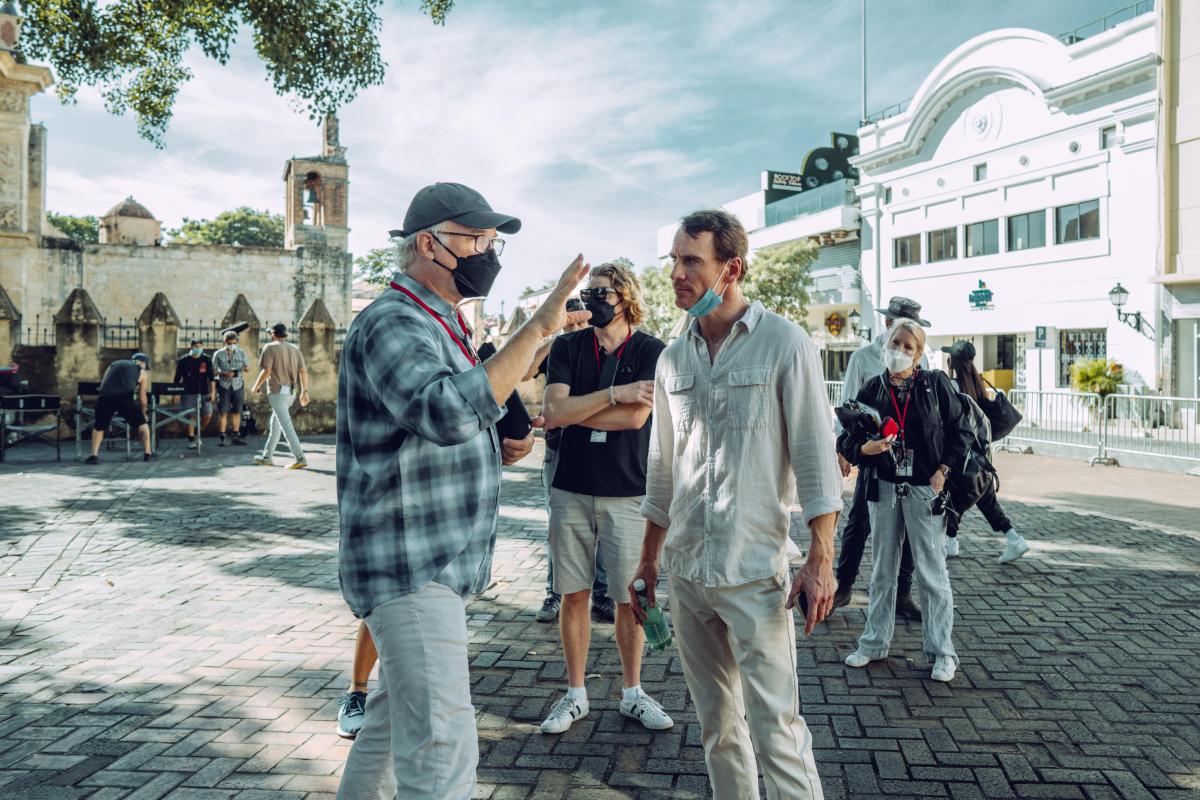
David Fincher, Erik Messerschmidt, Michael Fassbender (Monaris / Netflix)
The Killer sees David Fincher deliver a lean, efficient and darkly funny hitman tale. Screen talks to the filmmaker and screenwriter Andrew Kevin Walker about bringing a French graphic novel to the screen.
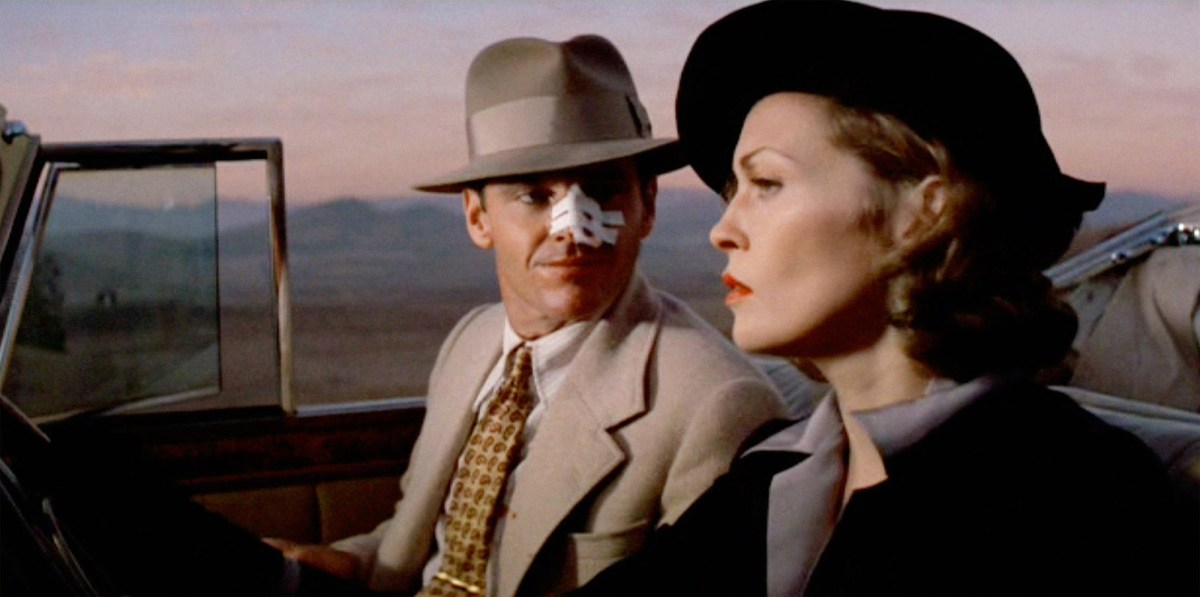
“Obviously, I’m drawn to nihilism,” says a grinning David Fincher, director of Se7en, Fight Club and Gone Girl, when asked why he wanted to adapt French graphic novel series The Killer into a film. “But I wanted to make a fucking Don Siegel movie. I wanted to make a Michael Winner movie. I’m so tired of slogging through characters you create to deliver some idea of backstory. What’s the greatest backstory in the history of motion pictures? ‘What were you doing in Chinatown, Jake?’ ‘As little as possible.’ It explains everything in one line.
“I love it when you can distil motivation down to these incredibly brief and simple evocations,” he continues. “I’m tired of two-hour 45-minute movies, and two-hour 30-minute movies. I’m tired of making them. I’m joking, but does it warrant it? Then I started thinking about Get Carter, Charley Varrick. Movies where it just is what it is.”
This was back in 2007, when the graphic novel series — written by Alexis ‘Matz’ Nolent and illustrated by Luc Jacamon, and first published in 1998 — was being developed into a film by Brad Pitt’s Plan B Entertainment and Paramount. Fincher was intrigued, but was directing Pitt in The Curious Case Of Benjamin Button, so was not ready to commit. “It wasn’t like you were going, ‘This has to be seen.’ It was more of a way to explore some things I was interested in — the broadest brushstrokes of backstory and this idea of intercepted thought. Why is it we assume when we hear a character’s thoughts that it’s the truth? I don’t know people who aren’t lying to themselves.”
Fincher approached Se7en screenwriter Andrew Kevin Walker, who had done uncredited rewrites on Fight Club and The Game as well as work on several unmade Fincher projects — among them The Girl Who Played With Fire, 20,000 Leagues Under The Sea, an adaptation of Arthur C Clarke’s Rendezvous With Rama and a remake of The Reincarnation Of Peter Proud — to see if he was interested in adapting The Killer. But Walker was not, according to Fincher. “He didn’t want to touch it then.”
Roman Polanski’s 1974 neo-noir Chinatown is regarded as one of the greatest films of all time. In this episode, we’re joined by Academy Award-winning cinematographer Erik Messerschmidt to discuss this masterpiece of cinema.
We start by talking to Erik about his passion for filmmaking and what led him to a career in cinematography. He shares how he was drawn to the camaraderie and creative collaboration of working on set. Over time, he realized the cinematographer role allowed him to blend his interests in art, science, and technology.
This year, he’s reunited with David Fincher for his adaptation of the graphic novel, The Killer, starring Michael Fassbender, and also teamed up with Michael Mann to shoot his racing biopic, Ferrari, starring Adam Driver.
When it comes to Chinatown, Erik praises the elegant camerawork and seamless visual storytelling. Polanski uses the camera deliberately, guiding the audience through clues and reveals without excessive dialogue. The mystery unfolds through precise editing and minimalist framing. We also discuss the phenomenal performances and how Polanski pulls back at key moments to ground the major plot turns.
Chatting with Erik gave us a new appreciation for the nuance and artistry of Chinatown. It’s a masterclass in subtle visual storytelling that inspired generations of filmmakers. Roman Polanski’s direction and Robert Towne’s script form a potent combination. We highly recommend revisiting this neo-noir gem.
Generally good words to live by. In the case of director David Fincher, they’re also good words to work by, at least as it pertains to entertaining the notion of making a sequel to his new film, The Killer, available now on Netflix. “It doesn’t pay to have rules with that stuff. I’m the guy who, before Zodiac, said, ‘No more serial killers.'”
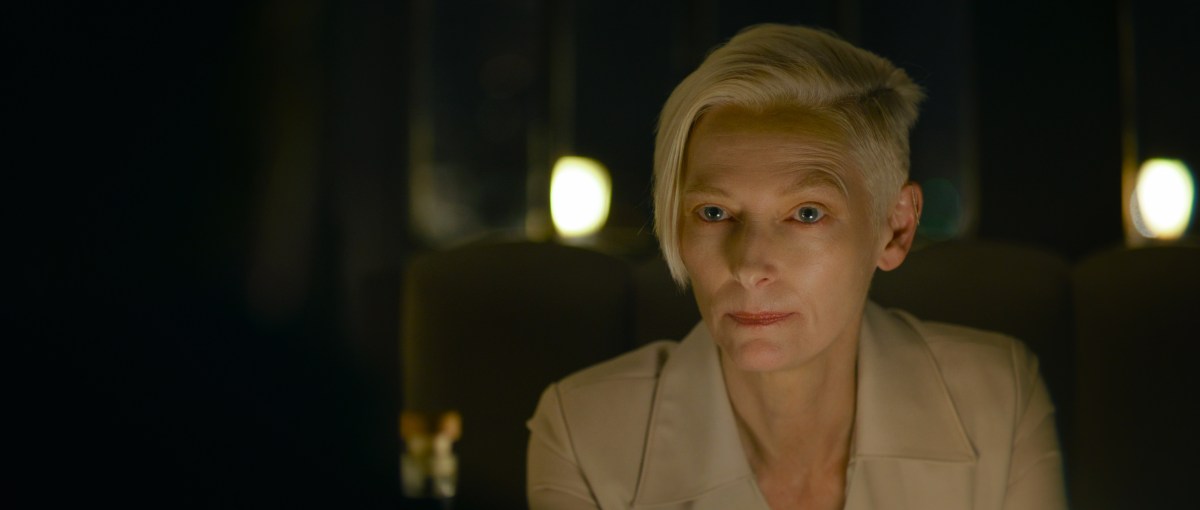
The joke is typical Fincher: dry, winking, and only humorous to those who possess the proper context. The filmmaker who brought us Kevin Spacey‘s serial killer John Doe in 1995’s Seven would, of course, continue to explore similarly murderous terrain, not just with 2007’s Zodiac, but in 2011’s The Girl With the Dragon Tattoo, and on two seasons of his Netflix show Mindhunter. While The Killer is not a serial killer film, it certainly has a series of killings. The movie stars Michael Fassbender as a nameless hit man who, after a job goes wrong, sets about visiting with routinely lethal consequences a succession of folks — including two fellow assassins, one played by Tilda Swinton— who might pose a threat to his future.
The film reunites Fincher with Seven screenwriter Andrew Kevin Walker in the pair’s first credited big-screen collaboration since the Brad Pitt-starring hit and pop culture sensation. The director tasked Walker to come up with a script that kept the dialog of Fassbender’s central character to the bare minimum. Walker recalls that Fincher told him to, “try and write it so this guy has literally ten lines of dialog spoken in the entire movie. As a point of pride, I did hand in a first draft that had literally 13 lines of dialog. It was the most I could get it down to and still have it function and be semi-natural.”



 The Fincher Analyst