Cinematographer Jeff Cronenweth joins Movies We Like hosts Andy Nelson and Pete Wright to explore Ridley Scott’s groundbreaking 1982 film Blade Runner. As the son of the film’s original cinematographer, Jordan Cronenweth, Jeff brings a unique perspective on both the technical achievements and lasting influence of this sci-fi noir masterpiece. With his recent work on Tron: Ares hitting theaters, Cronenweth reflects on how Blade Runner continues to inspire filmmakers and cinematographers four decades later.
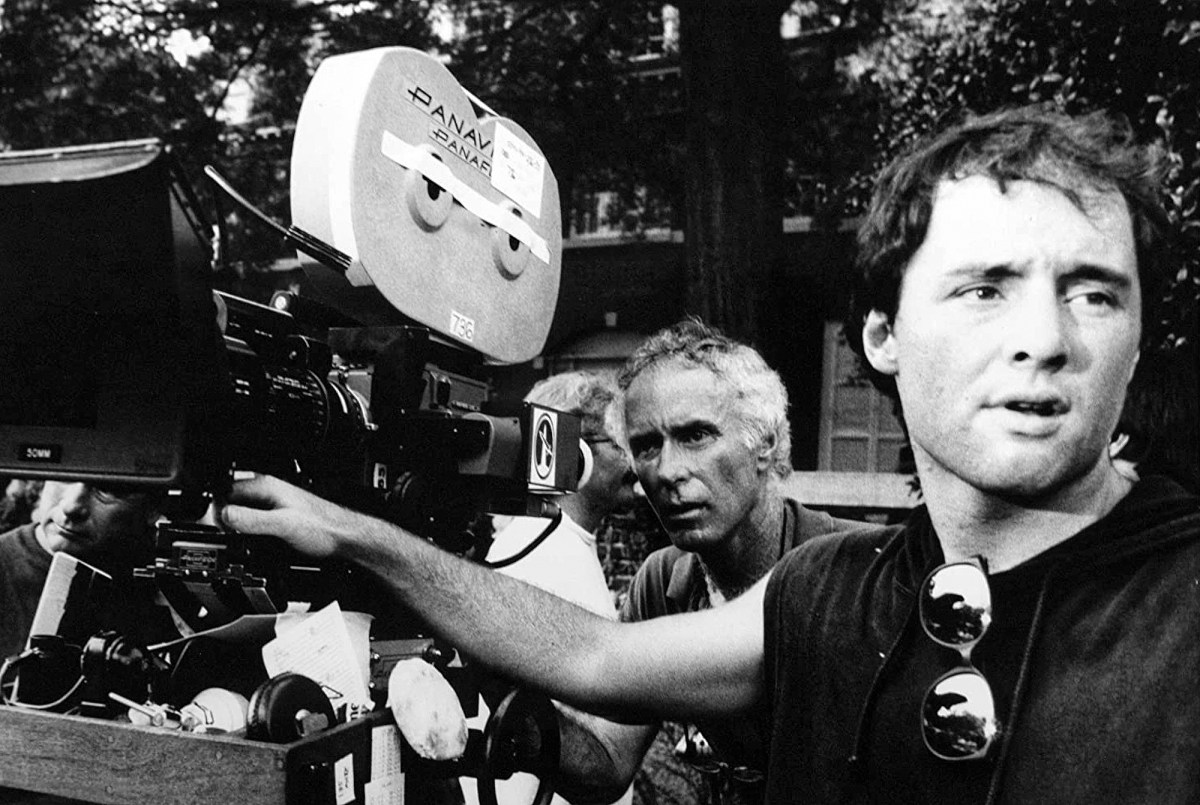
From early experiences on film sets with his father to becoming David Fincher’s go-to cinematographer on films like Fight Club, The Social Network, and The Girl with the Dragon Tattoo, Cronenweth has built a career focused on visual storytelling that serves character and narrative. He describes his approach as seeking human stories within any genre, whether period drama or science fiction. His transition from film to digital cinematography reflects broader industry changes, while maintaining his commitment to thoughtful, story-driven imagery.
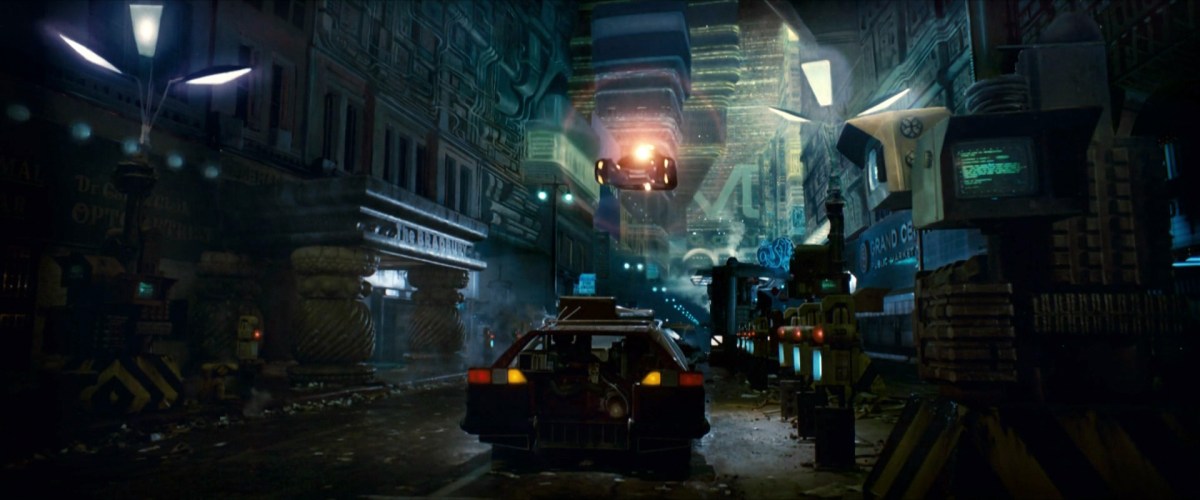
The conversation explores how Blade Runner created its influential neo-noir aesthetic with remarkably limited technical resources, including just three xenon lights for its iconic beam effects and borrowed neon lights from Francis Ford Coppola’s One from the Heart set. Cronenweth shares insights into the film’s production challenges and creative solutions, from practical lighting techniques to Ridley Scott’s visionary production design. The discussion examines how the film balances its high-concept science fiction premise with intimate character moments, creating a template for genre storytelling that continues to resonate. Cronenweth also offers a perspective on the various cuts of the film and its 2017 sequel.
Through this engaging conversation, Cronenweth illuminates not just the technical mastery behind Blade Runner, but its enduring impact on cinema. His unique connection to the film through his father, combined with his own distinguished career, offers viewers fresh insights into this landmark work of science fiction and its continuing influence on visual storytelling.
In this episode, we welcome two-time Oscar-nominated cinematographer Jeff Cronenweth, ASC. Jeff has shot films including Fight Club, One Hour Photo, The Social Network, The Girl with the Dragon Tattoo, Hitchcock, Gone Girl, Being the Ricardos, and Tron: Ares. In our chat, Jeff shares his origin story, experiences working with David Fincher — and all about his latest movie, Tron: Ares. He also offers extensive insights and recommendations for today’s cinematographers and filmmakers.
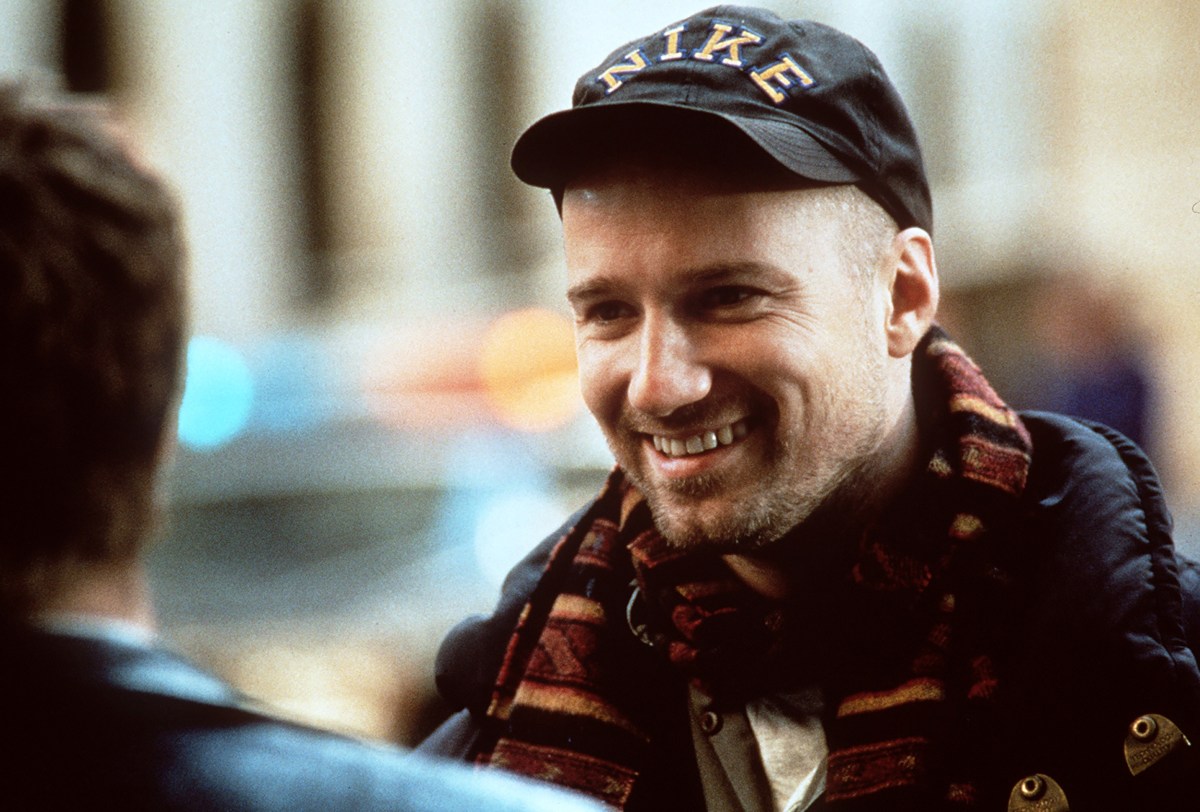
As SE7EN receives an anniversary release in IMAX theaters and on 4K UHD Blu-ray, David Fincher tells Mitchell Beaupre about the film’s enduring impact, Brad Pitt’s basketball ties, John Doe’s memorable entrance and more, including his personal favorite opening credit sequences.
“The movie is a horror movie. The movie is about utter and total loss of control.” —David Fincher on SE7EN
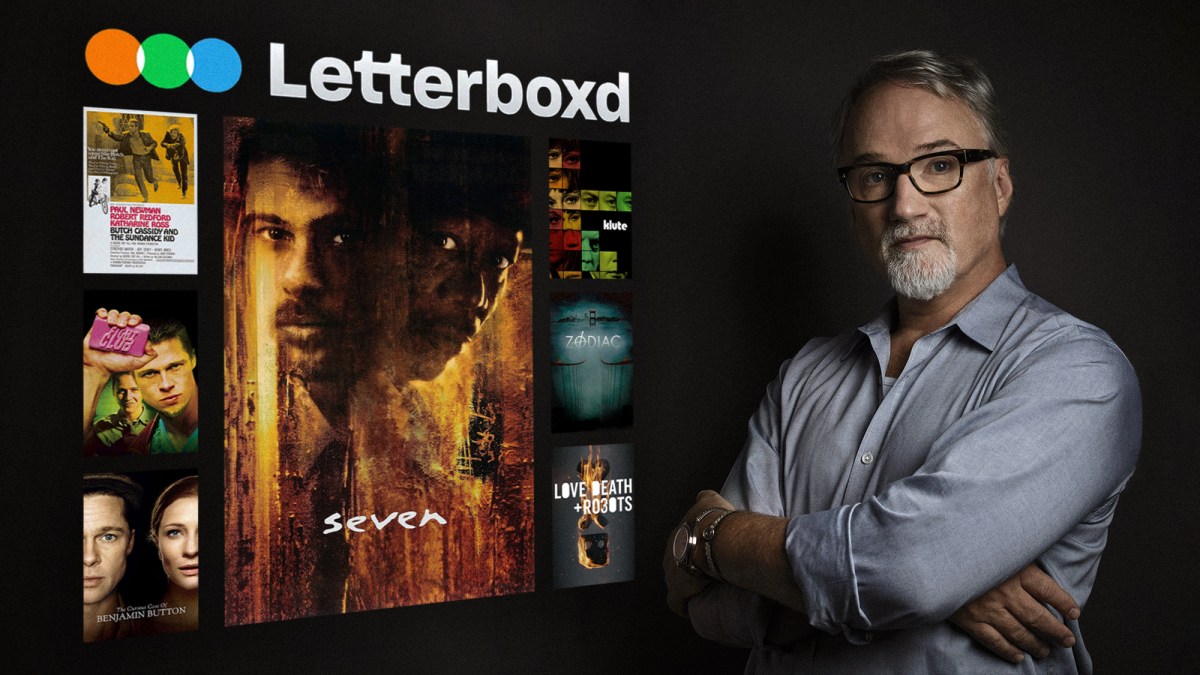
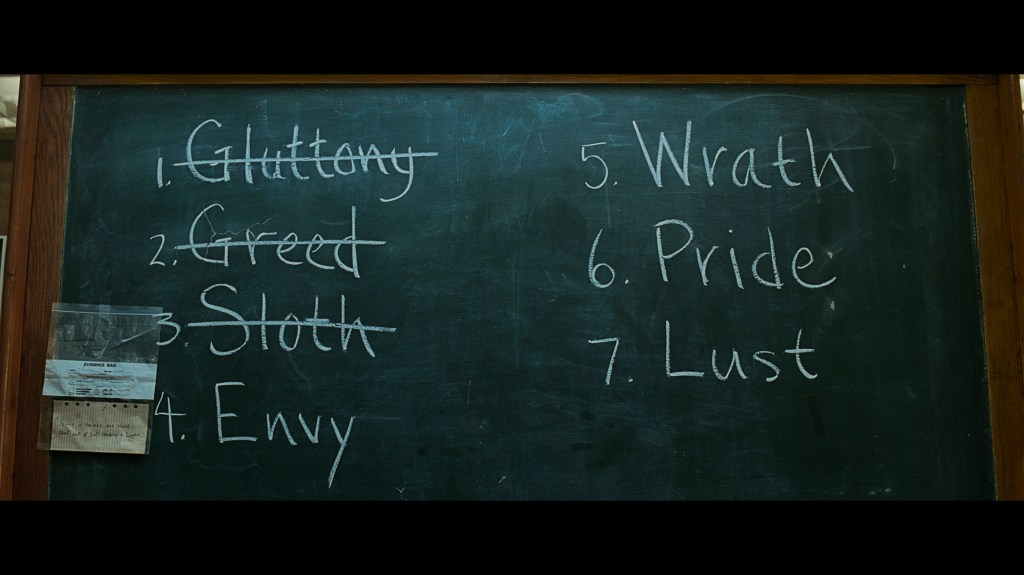
Plenty of films want to sell us on the idea that sinning is fun. SE7EN is not that film. Drenched in the cold city rain, grime coming out from the sewers and onto the streets, cockroaches scattering behind furniture and paint peeling off the walls, in the world of Se7en there’s not much fun about life at all. And yet, since its release thirty years ago, David Fincher’s neo-noir-tinged detective thriller/serial killer horror has been a fan favorite, pulling in more than $327 million worldwide and firmly cementing a place on the Letterboxd Top 250 with a whopping 4.3 average rating. Not bad for a movie that makes you want to take a shower the minute you finish watching.
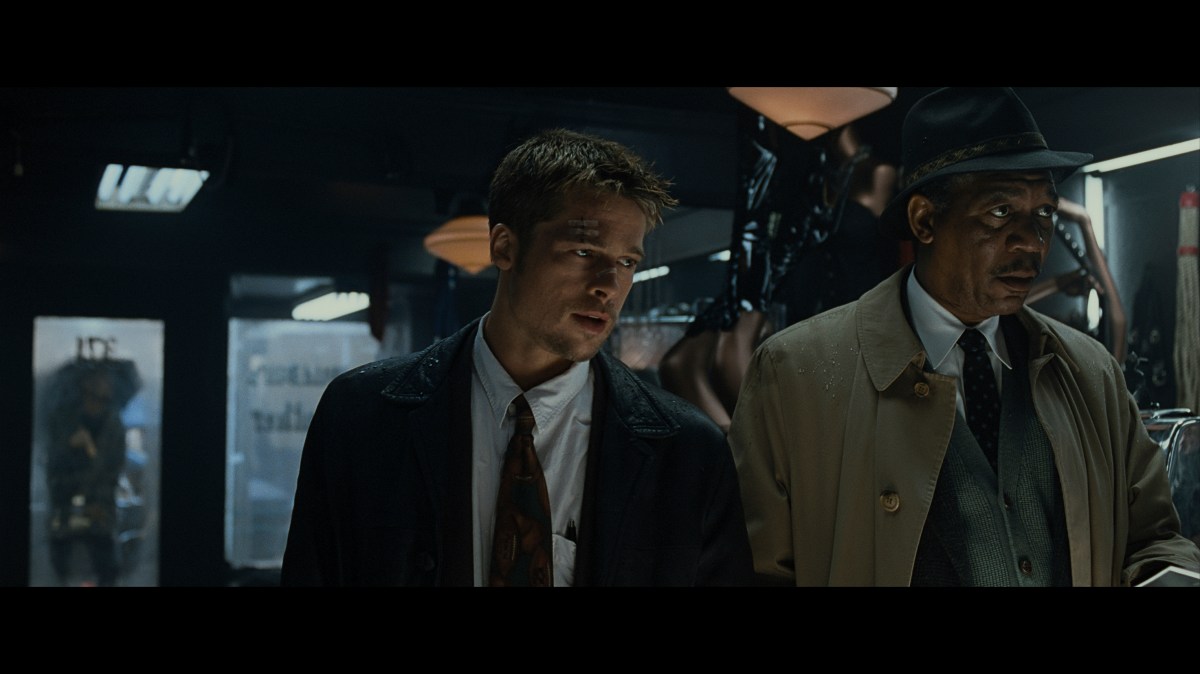
Beneath all of the shocking moments of grotesquerie as Detectives Mills (Brad Pitt) and Somerset (Morgan Freeman) track the meticulously orchestrated slaughters executed by John Doe (Kevin Spacey), SE7EN’s resonance comes from how it invites us to question the futility of feeling good about anything in this life. It’s the ultimate glass half full or half empty story, as these men see some of the worst that humankind is capable of every day, and Mills somehow retains a positive outlook while Somerset has lost all hope for society. Over the course of a week, these two develop a natural bond while their worldviews continuously clash. Director Jim Cummings writes in a Letterboxd review of SE7EN that “outside of the incredible craftsmanship displayed in its filmmaking, it’s an incredible character study with perfect fusion of character-comedy and detective-pornography.”
Cummings is one of many filmmakers who adore Fincher’s sophomore feature, which laid the foundation in 1995 for essentially every gnarly detective thriller that would come in the years to follow. “Easy to forget that this became the template for the genre it reinvented, but beyond that it’s a spectacular piece of provocation and confidence,” Matt writes, which Dirk echoes by saying, “The true star here is David Fincher. He has created an aesthetic that has been copied so many times, but has never really been equaled.” Dirk also opens his review by pondering, “It is always difficult to determine when you are ‘allowed’ to call a film a classic or a masterpiece,” then three paragraphs later ending with the declaration that SE7EN is, indeed, both.
So that settles that. Here’s my conversation with David Fincher.
For David Fincher, seeing SE7EN in 4K was an experience he can only describe as harrowing. That or a high school reunion.
“There are definitely moments that you go, ‘What was I thinking?’ Or ‘Why did I let this person have that hairdo’?” Fincher said in a recent interview with The Associated Press.
He’s OK with the film being a product of its time in most respects. But some things just could not stand in high-definition resolution.
“It was a little decrepit, to be honest,” said Fincher. “We needed to resuscitate it. There are things you can see in 4K HDR that you cannot see on a film print.”
Ever the perfectionist, he and a team got to work on a new restoration of the film for its 30th anniversary re-release. This weekend the restored SE7EN will play on IMAX screens for the first time in the U.S. and Canada, and on Jan. 7, the 4K UHD home video version will be available as well.
The dark crime thriller written by Andrew Kevin Walker and starring Brad Pitt and Morgan Freeman as a pair of detectives looking for a serial killer was somewhat of a career-reviver for Fincher, whose directorial debut Alien 3 had not gone well. SE7EN was not a sure thing: It was made for only $34 million (and only got that when Fincher managed to persuade studio execs to give up $3 million more). But it went on to earn more than $327 million, not accounting for inflation, and continues to influence the genre.
Fincher has over the years overseen several restorations of the film (including one for laser disc) but decided this needed to be the last. It’s why he insisted on an 8K scan that they could derive the 4K from. He wanted to ensure that it wouldn’t have to be repeated when screens get more advanced.
“I don’t want to do this again,” Fincher said. “What we’ve essentially gotten to with this is that this is the new negative. This will be the new archival storage element.”
For casual viewers, the tweaks should not be terribly noticeable. Fincher didn’t go in and add characters or give Gwyneth Paltrow a happy ending.
“I’m very against the idea of changing any of the content,” Fincher said. “There’s literally zero opportunity for toys in ‘Seven’ so we won’t be introducing any of that.”
But take the opening scene where Pitt’s character selects a pre-tied tie and looks out a window. In the original version, Fincher used a tried and true filmmaking technique where you bounce soft light off a white card outside the window to give the appearance of depth and natural light coming in. He called them the Being There windows, referring to what cinematographer Caleb Deschanel did on that film.
“There’s no expectation by the audience that you see the buildings beyond the window. They’re just overexposed. The inside is dark enough that your eyes don’t adjust. And so outside it’s very bright,” he explained. “In 4K, it’s no good. You could see the sheen of the white card.”
The fix was to add a cityscape and some rain drizzle.
“We’re not showing off that now you can see the city,” he said. “We’re just finally kind of bringing the bottom end of the expectation up a little bit so that it feels like it was intended to because now we have the ability to resolve that stuff.”
There were some exposure issues, some cinch marks, some places where the splices came loose or where the perforations of the print changed the properties. Fincher also removed some of the camera jiggles at the end of the film, explaining that because it was an omniscient camera it was distracting. But he didn’t want to do too much and have it lose its essence.
“It’s a document of its time and I believe that movies should be that,” Fincher said. “For all the primitive nonsense of the equipment that went into making The French Connection, it informs that movie. There is a kind of rugged primitivism in it. And I didn’t want that baked out.
David Fincher bristles at being labeled a perfectionist.
He makes an unconvincing case in the shadow of his filmography, which includes “Fight Club,” “Zodiac” and “The Social Network” among several other films marked by a meticulous and unerring technical precision. But Fincher’s objections ring especially hollow when it comes in the midst of an explanation — involving corrections to emulsion caused by the device that perforated the original celluloid — why a new 4K version of “SE7EN” took a year to complete. Yet even if one were inclined to describe his approach merely as a “passionate attention to detail,” that attention has nevertheless resulted in some of the most unforgettable cinematic images of the last 30 years — and now, one of the most beautiful restorations produced in the high-definition era.
Perhaps ironically, “SE7EN,” the film that marked his Hollywood breakthrough, was by his description inspired by “movies with dirt under their fingernails.” Following its premiere at the 2024 TCM Film Festival, the upgraded transfer will be released in theaters (including IMAX) Jan. 3, to be followed on 4K UHD Jan. 7. Fincher recently spoke with Variety about the film, describing his approach to the project after the critical and commercial underperformance of his debut feature, “Alien 3;” revealing details about key casting and creative choices in bringing to life the story of a serial killer inspired by the seven deadly sins; and reflecting on its legacy as a film that both inspired countless imitators and defined his reputation — be it as a perfectionist or just a filmmaker who learned to ask for forgiveness instead of permission.
David Fincher:
I bristle at that idea of perfectionism because if you look at an image and you can see that there’s something going on on the left side of it, I’ll admit it was a big problem for me when I moved to high definition because now I could finally see all of the background actors looky-looing and counting, and you go, “Wow, what is this behavior that’s in the background?” So the more you see, the more I feel it’s my responsibility to make sure that the only thing that’s documented is the stuff that focuses your attention on what you need to walk away with.
In tandem with his first-ever retrospective at the Albertina, a new book pairs the prolific photographer’s work with writings from directors David Fincher and Matthieu Orléan, and novelist Emily St. John Mandel, among others.
“I’ve always said that I think every artist has one central story to tell,” photographer Gregory Crewdson says on a call from Great Barrington, Massachusetts, where he lives and works. “And they circle around that story, over and over again, over a lifetime, reinventing aspects of it and challenging others and trying to push things forward. But at the core of it, it’s like the central preoccupations remain fixed.”
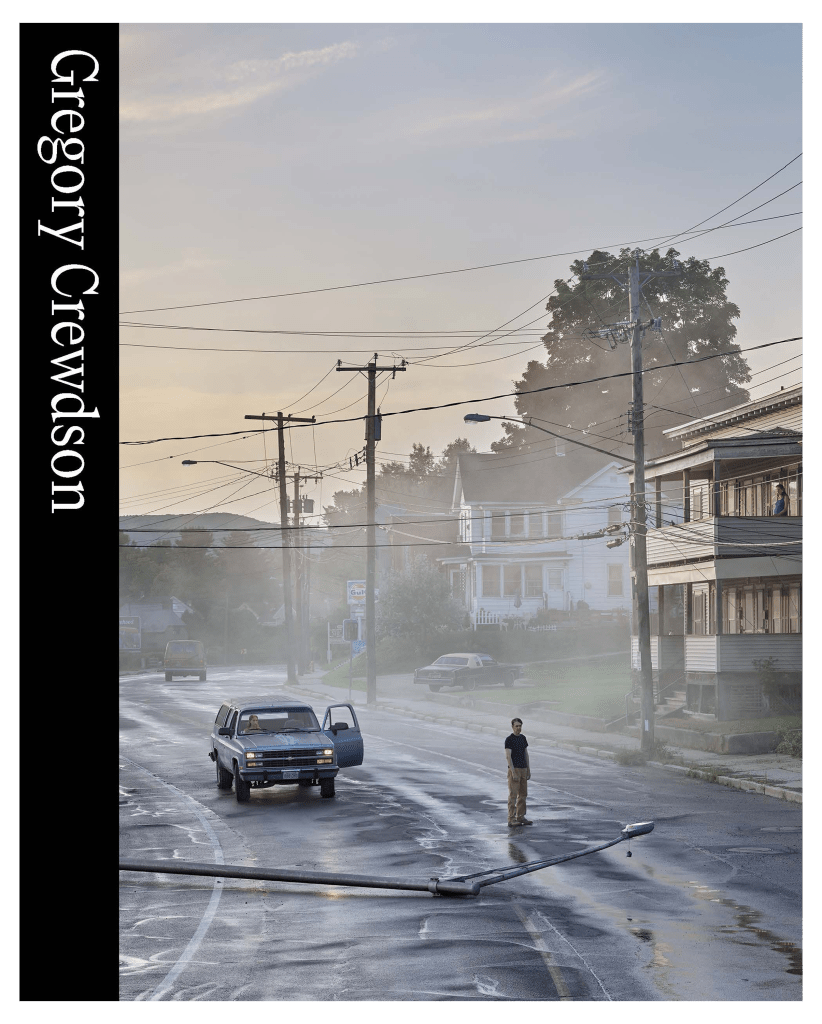
The concept is particularly timely for the photographer, who for the past three-and-a-half decades has been constructing gripping images that call to mind film stills, as his first-ever retrospective opened in May at the Albertina in Vienna. Later this month, the eponymous exhibition takes new form with the release of Gregory Crewdson, its 280-page catalogue edited by the Albertina’s chief curator of photography Walter Moser and published by Prestel. The book features more than 300 photographs and production stills that examine the complexities of American suburbia, be it through someone wandering a parking lot, shirtless and unmoored, or a twosome’s forlorn gazes into a television as its glow illuminates a basement, paired with writings from directors David Fincher and Matthieu Orléan, and novelist Emily St. John Mandel, among others.
Gregory Crewdson – Walter Moser, Editor (Prestel, 2024)
For Crewdson, the process of revisiting nearly 40 years of work was “complicated,” but led him to draw parallels between his earliest endeavors and present-day work. “It’s interesting in that on some basic level everything’s changed and then on another level, nothing’s changed really,” he says. “When I look back at pictures I made when I was in graduate school, [those are] the first pictures in the show, they’re not that dissimilar in terms of the basic concerns—on a much more modest scale, of course.”
In advance of the catalogue’s release, Crewdson spoke with Vanity Fair about the possibility of making the switch from photography to directing feature-length films, and the story he’s been telling all these years.
Mark Laurila, retired teacher of English and Film at California State University August 21, 2023 (Updated in June 2025) Marechal1937 (YouTube)
“My aesthetic has always been tied to the Gordon Willises of the world, the Jordan Cronenweths, the Conrad Halls, the James Wong Howes… the people who took risks.”
David Fincher ‘Seven‘ Criterion Laserdisc commentary, 1996
“With all our modern technology, there is no one who can match James Wong Howe’s ability to control light in the service of story.”
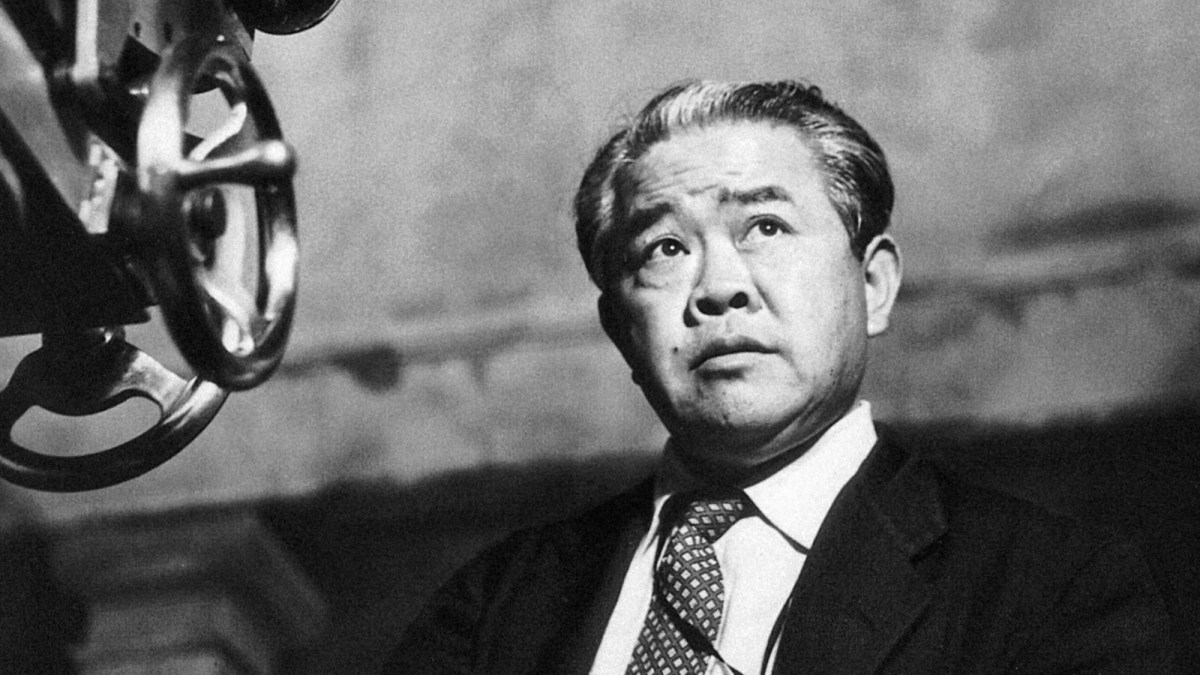
James Wong Howe ASC was a legendary Hollywood cameraman who remains too little known today, despite having been nominated ten times for Academy Awards (and winning twice). A master of black and white, he brought his characteristic, nuanced control of darkness, and light to cinematography.
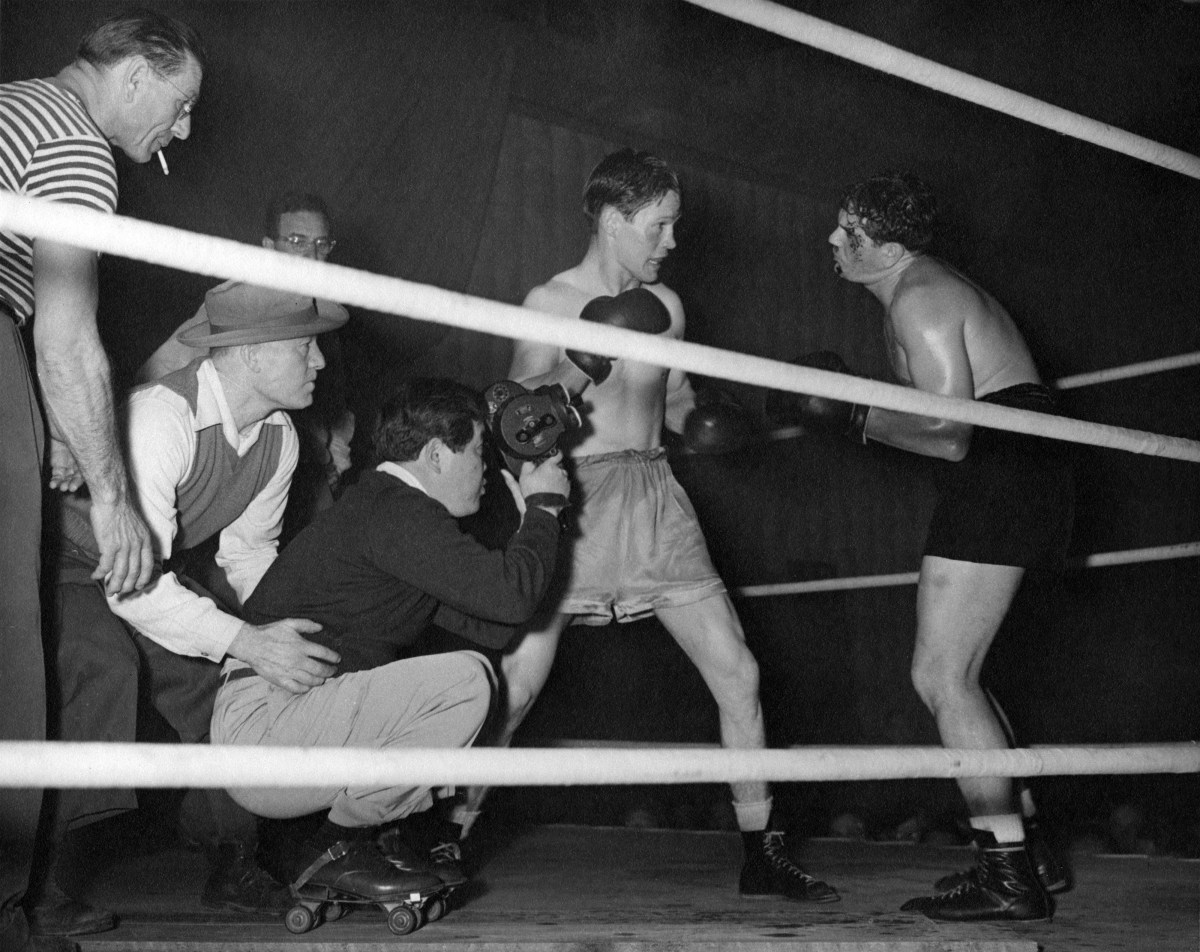
He loved to tell the story of how he put on roller skates and picked up a handheld camera in order to capture the excitement of the climactic boxing match in the classic Film Noir Body and Soul (1947), starring John Garfield. The footage Wong Howe captured inside the ring became a major inspiration for Martin Scorsese when he made Raging Bull (1980). How exactly was Wong Howe’s approach so different from what had come before? This video shows examples of earlier boxing movies, such as Golden Boy (1939) and They Made Me a Criminal (1939), and compares them to Wong Howe’s achievement in Body and Soul.
The resulting analysis is surprising and will likely change perceptions of the film and of Chinese-born/American-raised James Wong Howe. Regarding the film, the innovative camerawork combines the smoothness of the Mitchell BNC with the instability of the handheld Eyemo. Regarding Wong Howe, racism was a constant presence in his life, as he experienced racist movie crews, was denied citizenship because of the Chinese Exclusion Act, and was barred from marrying the writer Sanora Babb because she was white. Additional Wong Howe movies referenced here include Sweet Smell of Success (1957), The Prisoner of Zenda (1937), Yankee Doodle Dandy (1942), Transatlantic (1931), Air Force (1943), He Ran All the Way (1951), Hud (1963), Peter Pan (1924), and The Heart is a Lonely Hunter (1968).
Best of James Wong Howe: The Thin Man (1934)
This video presents the highlights of Wong Howe’s cinematography in the 1934 Comedic Mystery The Thin Man, an adaptation of the novel by Dashiell Hammett. William Powell and Myrna Loy play Nick and Nora Charles, a famous detective and his heiress wife who team up (with the help of their dog Asta) to solve the mystery behind a murder and a missing suspect.
The video demonstrates Wong Howe’s brilliance in several modes: Revealing the Main Characters (in which the characters are first seen from behind, with a moving camera allowing their surprising actions to help define them), Shadowy Characters (in which Wong Howe employs the kind of light and dark that he would use in future Films Noir), Pioneering Whip Pans (in which he uses the ultra-fast panning that would become best known decades later in the films of the French New Wave), The Artful Close-up (which shows the painstaking, glamorous lighting techniques that made him so in demand among the era’s leading ladies…and men) and Character Motivates Camera Movement (which shows how Wong Howe preferred to move his camera only if it had the purpose of better showing characters’ actions).
The success of The Thin Man resulted in the production of five (less-effective) sequels between 1936 and 1947.
Best of James Wong Howe: Body and Soul (1947)
This video presents the highlights of Wong Howe’s cinematography in the 1947 John Garfield Film Noir boxing drama Body and Soul. The movie shows how money, along with sex, can lead to corruption, a theme often found in Garfield’s movies.
The video demonstrates Wong Howe’s brilliance in several modes: Emotion and the Moving Camera (in which emotions are enhanced through the choice to move the camera through space), Romance Night and Day (showing how the mood could be created differently, depending on the time), Picturing Lust (in which he used a composition to suggest objectification), Noir Style, Deep Focus, and Pioneering Hand-held Camera.
Body and Soul was created through Garfield’s own independent production company and resulted in a Best Actor Academy Award nomination for Garfield. It won for Best Editing by Robert Parrish. The film co-stars Lili Palmer, Hazel Brooks, William Conrad, Canada Lee, and Lloyd Gough (billed here as Lloyd Goff).
The film’s director Robert Rossen, its screenwriter Abraham Polonsky, and Garfield were all eventually targeted by HUAC, the House Committee on Un-American Activities, during the Hollywood Blacklists in the 1950s. Because of his blacklisting, Garfield’s career was destroyed, and he soon died of a heart attack at the age of 39.
Best of James Wong Howe: He Ran All the Way (1951)
This video presents the highlights of Wong Howe’s cinematography in the 1951 crime melodrama Film Noir He Ran All the Way, which contains the final on-screen performance by John Garfield.
The video demonstrates Wong Howe’s brilliance in several modes: Introducing a Character (which involves a fast pan, a startling push-in, and reframing to emphasize a gun), Darkness and Light (showcasing Wong Howe’s mastery of Film Noir style), Camera Placement in Pool (in which Wong Howe put on swim trunks and lowered his camera into Long Beach’s Plunge to get the play of light off the water and onto the actors’ faces), All in a Single Shot (virtuosic, and always helpful on a low budget movie), High-Angle Vulnerability (nearly a God’s Eye View looking down on human weakness), Trapped Inside Frames (fitting for a hostage story), and John Garfield’s Final Scene on Film (a collaboration with an actor that Wong Howe had loved and worked with since the 1930s).
The script was mostly written by Dalton Trumbo, but because of his blacklisting and impending prison sentence, his name was removed from the credits. The film’s director, John Berry, was also blacklisted, and he left the U.S. in order to continue working in Europe.
Best of James Wong Howe: Picnic (1955)
This video presents the highlights of Wong Howe’s cinematography in the 1955 Cinemascope and Technicolor classic Picnic, directed by Joshua Logan and based on the play by William Inge.
By the time this film was made, nearly half of all Hollywood feature films were still being shot in black and white. Wong Howe’s reputation still largely rests on his black and white work, but by the 1950s, studios increasingly chose to make films in color, pushing Wong Howe outside his comfort zone. The Technicolor company required DPs to be “assisted” by a supposed Technicolor expert who would try to dictate color use and lighting. But Wong Howe resisted, making enemies at Technicolor. He continually aimed to use less high key and more low key light than the Technicolor engineers pushed for, and he was always ready to desaturate the colors to give a more earthbound look, rather than a gaudy Hollywood one.
Picnic was the movie that made Kim Novak a star, and William Holden became a major sex symbol for his many shirtless scenes and for the sexual chemistry between him and Novak. Although most of the interiors were shot on Columbia Pictures sound stages in Hollywood, the many exteriors were shot on location in several small Kansas towns. Wong Howe loved the challenge of location shooting. And in this case, he also loved that the director, Joshua Logan, was mostly a New York stage director. As Todd Rainsberger writes, “Haskell Wexler, a Howe assistant at the time, says that Logan was not cinematically inclined and relied heavily upon Howe to visualize the story.” As Logan himself wrote in a letter to Jimmie, “If I have been a successful director in this picture, it is enormously due to the encouragement, ideas and editing that you gave to me so generously…” Wong Howe, known in the industry as a “frustrated director,” loved the opportunity to put his imprint on the movie’s look.
Best of James Wong Howe: Sweet Smell of Success (1957)
This video presents the highlights of Wong Howe’s cinematography in the 1957 Film Noir masterpiece Sweet Smell of Success. Burt Lancaster plays powerful and ruthless New York newspaper columnist J.J. Hunsecker who manipulates Press Agent-on-the-make Sidney Falco, played by Tony Curtis, into doing his bidding, breaking up his younger sister’s romantic relationship.
The video demonstrates Wong Howe’s brilliance in several modes: Sidney Falco and the Restless Camera (in which the constantly moving camera emphasizes the press agent’s non-stop hustling), Faces in Darkness (often suggesting hidden intentions and toxic influence), and EXT. NEW YORK CITY – NIGHT (in which Wong Howe’s mastery of location and night shooting astonishes).
Sweet Smell of Success began as a short story by Ernest Lehman, best known for writing Alfred Hitchcock‘s North by Northwest. Lehman wrote the first script, but after the director Alexander Mackendrick was hired, playwright Clifford Odets rewrote much of it, and the film’s famous acidic dialogue seems overtly Odetsian.
“Sweet Smell of Success is a crazy movie. You know, directors look at films in a pretty special way. We all have a kind of lexicon. For us, shots are common nouns and verbs that, together, form sentences or paragraphs, a language. And this language is constantly evolving. Sweet Smell of Success is part of my lexicon. It is there even when I don’t consciously refer to it. I love it because it stays true to its concept all the time. It never stops to take you by the hand, it pulls you in, period.”
This video presents the highlights of Wong Howe’s cinematography for Hud, the 1963 adaptation of a Larry McMurtry novel that showcased one of Paul Newman’s most iconic performances and that won Patricia Neal her Academy Award for Best Actress. Wong Howe won the Academy Award for Best Cinematography.
This video demonstrates Wong Howe’s brilliance in several modes: Ultra Widescreen Panavision for Dynamism, Making a Cadillac Emblematic of a Reckless Man (which shows how the pictorial qualities involving Hud’s pink Cadillac were used to reveal personality and, simultaneously, excite audiences), Tracking Two-Shots that Emphasize Connection…And Ultimate Disconnection (which shows how Wong Howe developed a motif over the course of the film), Filters Remove Clouds for a Stark, White-Hot Sky (which shows the use of light-blue filters to create an effect that Wong Howe bragged about in almost every interview he gave after this), Location Night Shooting Enhances Emotion and Realism (which actually benefits from the local bugs attracted to the photo floods), Wide Angle Lens (25mm) and Slow Pan Underlines the Isolation of a Barren Landscape (which shows one unbroken, high angled shot that made the surrounding farms look much farther away than they actually were), Matching a Location’s Bare-Bulbed Lighting for Small Town Authenticity (an instance in which Wong Howe proclaimed he resisted any use of his “special touch” with light), Mid-Gray, Rather than High Contrast to Create a Hot and Drab Environment (which shows how “Low Key Howe” stifled his favored mode for the sake of what was most appropriate for the story), Unglamorous Lighting to Suggest a Hard Life (which shows several scenes with Patricia Neal’s character, Alma), and One Virtuosic, Continuous Shot to Give Finality to a Character’s Arc (giving the kind of big send-off that couldn’t have hurt Neal’s chances on Oscar night).
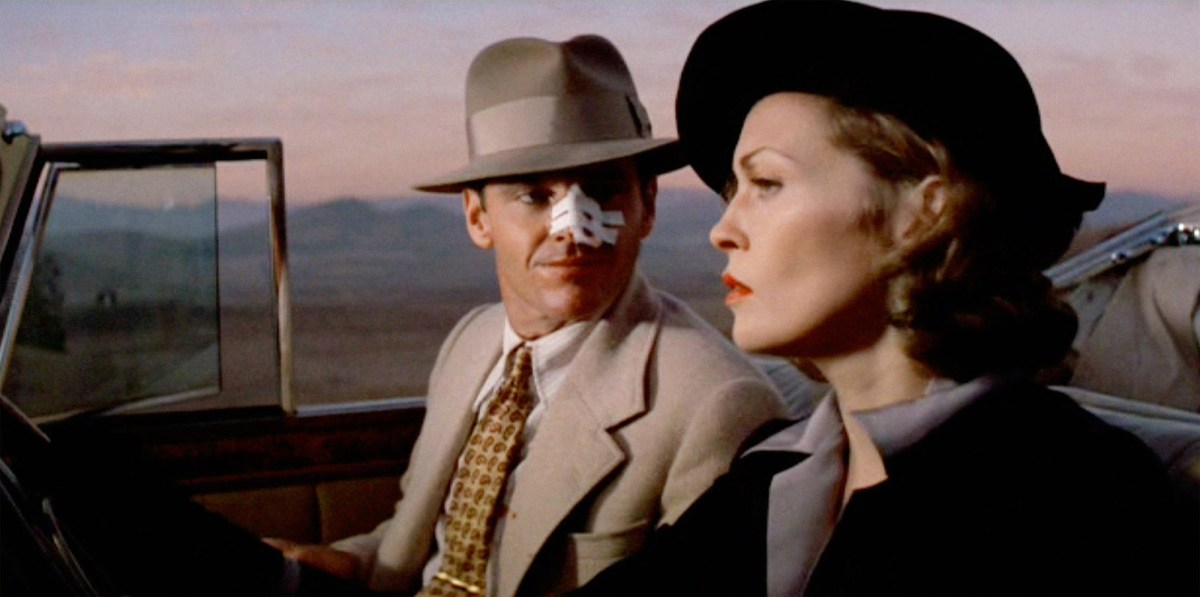
Roman Polanski’s 1974 neo-noir Chinatown is regarded as one of the greatest films of all time. In this episode, we’re joined by Academy Award-winning cinematographer Erik Messerschmidt to discuss this masterpiece of cinema.
We start by talking to Erik about his passion for filmmaking and what led him to a career in cinematography. He shares how he was drawn to the camaraderie and creative collaboration of working on set. Over time, he realized the cinematographer role allowed him to blend his interests in art, science, and technology.
This year, he’s reunited with David Fincher for his adaptation of the graphic novel, The Killer, starring Michael Fassbender, and also teamed up with Michael Mann to shoot his racing biopic, Ferrari, starring Adam Driver.
When it comes to Chinatown, Erik praises the elegant camerawork and seamless visual storytelling. Polanski uses the camera deliberately, guiding the audience through clues and reveals without excessive dialogue. The mystery unfolds through precise editing and minimalist framing. We also discuss the phenomenal performances and how Polanski pulls back at key moments to ground the major plot turns.
Chatting with Erik gave us a new appreciation for the nuance and artistry of Chinatown. It’s a masterclass in subtle visual storytelling that inspired generations of filmmakers. Roman Polanski’s direction and Robert Towne’s script form a potent combination. We highly recommend revisiting this neo-noir gem.
“My aesthetic has always been tied to the Gordon Willises of the world, the Jordan Cronenweths, the Conrad Halls, the James Wong Howes… the people who took risks.”
David Fincher ‘Seven‘ Criterion Laserdisc commentary, 1996
This May on TCM, we’re celebrating the work of groundbreaking cinematographer James Wong Howe. In this episode of Film 101, we explore how his techniques transformed cinema, the personal and professional obstacles he had to overcome, and why his work on films such as ‘He Ran All the Way’ (1951), ‘Picnic’ (1955), ‘Sweet Smell of Success’ (1957), and ‘Hud’ (1963) are celebrated to this day.
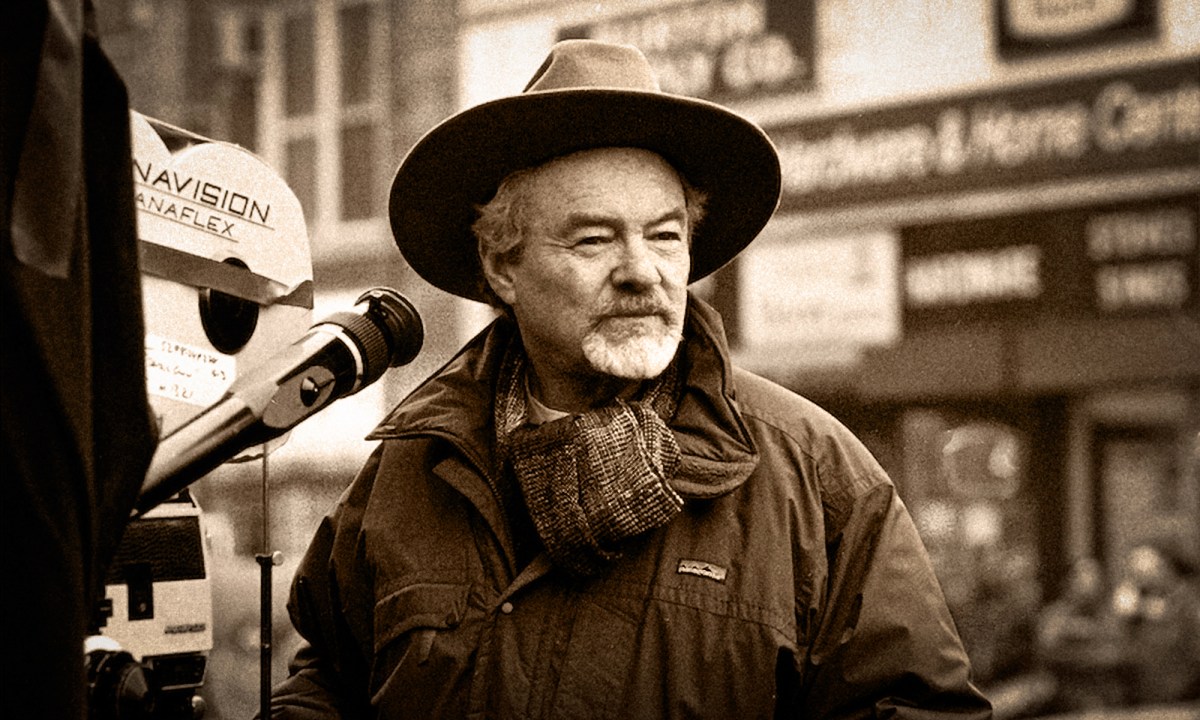
Alan Pakula: Going for Truth encompasses the personal and professional life of Alan J. Pakula, a lauded filmmaker and extremely private man, who was unflinching in his commitment to bringing some of the most memorable movies of the last half of the 20th century to the big screen. Select cast members from his wide-ranging filmography including To Kill A Mockingbird, Klute, The Parallax View, All the President’s Men, Sophie’s Choice, Presumed Innocent, and The Pelican Brief bring Pakula to life once more; while family and friends share their memories of knowing him as an artist, a husband, and a stepfather.
“As a storyteller, Pakula always put the substance of the story ahead of his own personal style for how the story should be told. His true signature was his anonymity. This led to his responsibility for the indelible classics he created, yet he hasn’t had the proper spotlight for his efforts until now.”
Featuring: Alan Alda, Jane Alexander, Alec Baldwin, Candice Bergen, Carl Bernstein, Jeff Bridges, Tom Brokaw, James L. Brooks, Dick Cavett, Brian Dennehy, Jane Fonda, Harrison Ford, Tony Goldwyn, Dustin Hoffman, Annette Insdorf, Kevin Kline, Mary Elizabeth Mastrantonio, Matthew Modine, Alan J. Pakula, Austin Pendleton, Christopher Plummer, André Previn, Robert Redford, Steven Soderbergh, Meryl Streep, Bob Woodward.


 The Fincher Analyst