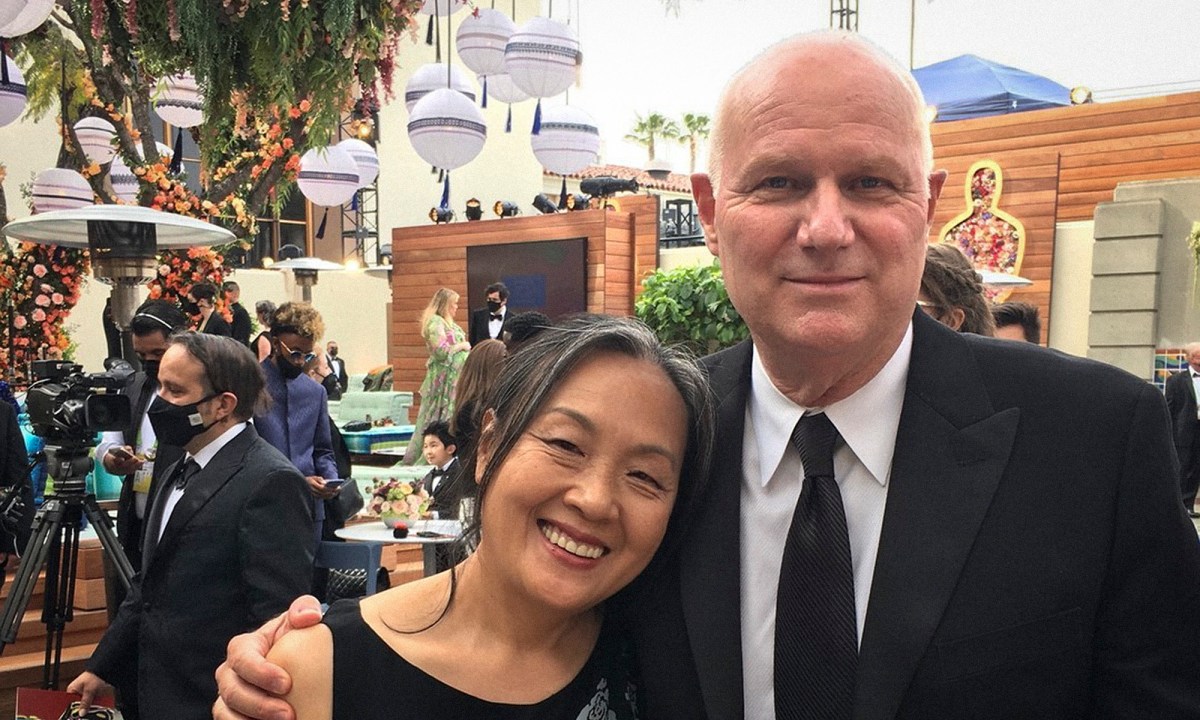
Eric Roth is an Academy Award-winning screenwriter best known for adapting Forrest Gump, for which he won the Oscar for Best Adapted Screenplay. He has received additional Academy Award nominations for The Curious Case of Benjamin Button, A Star Is Born, and Dune: Part One, and is widely regarded as one of Hollywood’s most sought-after writers. Roth co-wrote Killers of the Flower Moon with Martin Scorsese. He continues to work in films as both writer and executive producer. His latest project, the 2025 film The President’s Cake, is now playing in theaters.
As SE7EN receives an anniversary release in IMAX theaters and on 4K UHD Blu-ray, David Fincher tells Mitchell Beaupre about the film’s enduring impact, Brad Pitt’s basketball ties, John Doe’s memorable entrance and more, including his personal favorite opening credit sequences.
“The movie is a horror movie. The movie is about utter and total loss of control.” —David Fincher on SE7EN
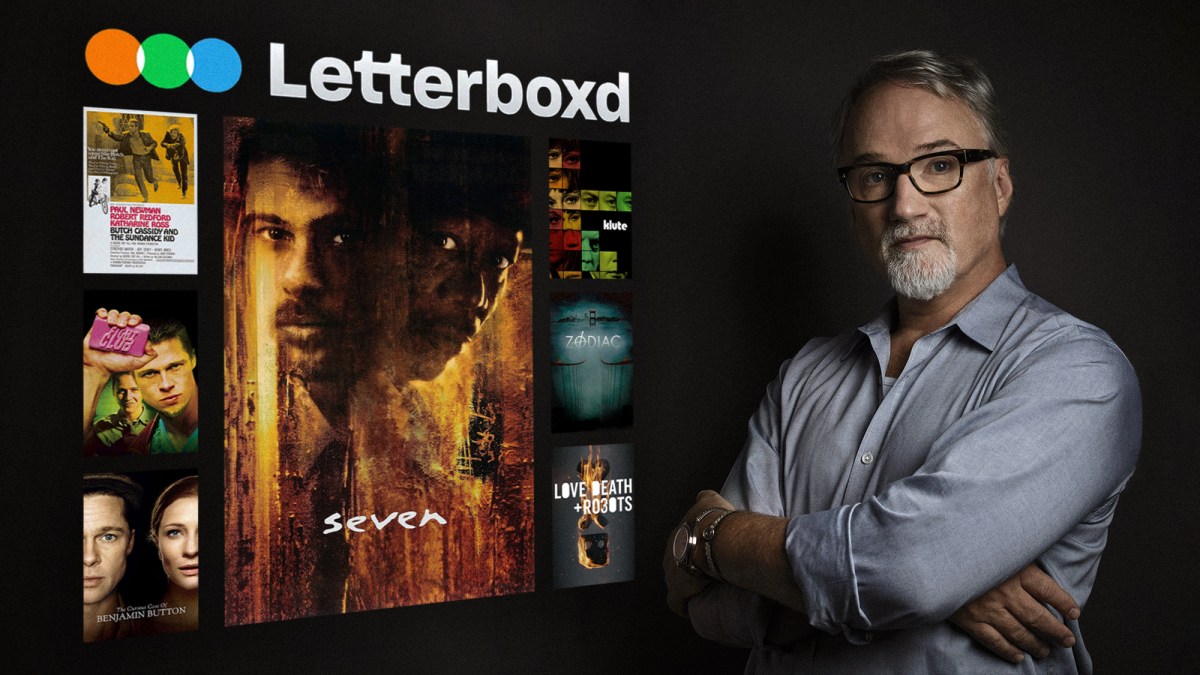
Plenty of films want to sell us on the idea that sinning is fun. SE7EN is not that film. Drenched in the cold city rain, grime coming out from the sewers and onto the streets, cockroaches scattering behind furniture and paint peeling off the walls, in the world of Se7en there’s not much fun about life at all. And yet, since its release thirty years ago, David Fincher’s neo-noir-tinged detective thriller/serial killer horror has been a fan favorite, pulling in more than $327 million worldwide and firmly cementing a place on the Letterboxd Top 250 with a whopping 4.3 average rating. Not bad for a movie that makes you want to take a shower the minute you finish watching.
Beneath all of the shocking moments of grotesquerie as Detectives Mills (Brad Pitt) and Somerset (Morgan Freeman) track the meticulously orchestrated slaughters executed by John Doe (Kevin Spacey), SE7EN’s resonance comes from how it invites us to question the futility of feeling good about anything in this life. It’s the ultimate glass half full or half empty story, as these men see some of the worst that humankind is capable of every day, and Mills somehow retains a positive outlook while Somerset has lost all hope for society. Over the course of a week, these two develop a natural bond while their worldviews continuously clash. Director Jim Cummings writes in a Letterboxd review of SE7EN that “outside of the incredible craftsmanship displayed in its filmmaking, it’s an incredible character study with perfect fusion of character-comedy and detective-pornography.”
Cummings is one of many filmmakers who adore Fincher’s sophomore feature, which laid the foundation in 1995 for essentially every gnarly detective thriller that would come in the years to follow. “Easy to forget that this became the template for the genre it reinvented, but beyond that it’s a spectacular piece of provocation and confidence,” Matt writes, which Dirk echoes by saying, “The true star here is David Fincher. He has created an aesthetic that has been copied so many times, but has never really been equaled.” Dirk also opens his review by pondering, “It is always difficult to determine when you are ‘allowed’ to call a film a classic or a masterpiece,” then three paragraphs later ending with the declaration that SE7EN is, indeed, both.
So that settles that. Here’s my conversation with David Fincher.
David Fincher bristles at being labeled a perfectionist.
He makes an unconvincing case in the shadow of his filmography, which includes “Fight Club,” “Zodiac” and “The Social Network” among several other films marked by a meticulous and unerring technical precision. But Fincher’s objections ring especially hollow when it comes in the midst of an explanation — involving corrections to emulsion caused by the device that perforated the original celluloid — why a new 4K version of “SE7EN” took a year to complete. Yet even if one were inclined to describe his approach merely as a “passionate attention to detail,” that attention has nevertheless resulted in some of the most unforgettable cinematic images of the last 30 years — and now, one of the most beautiful restorations produced in the high-definition era.
Perhaps ironically, “SE7EN,” the film that marked his Hollywood breakthrough, was by his description inspired by “movies with dirt under their fingernails.” Following its premiere at the 2024 TCM Film Festival, the upgraded transfer will be released in theaters (including IMAX) Jan. 3, to be followed on 4K UHD Jan. 7. Fincher recently spoke with Variety about the film, describing his approach to the project after the critical and commercial underperformance of his debut feature, “Alien 3;” revealing details about key casting and creative choices in bringing to life the story of a serial killer inspired by the seven deadly sins; and reflecting on its legacy as a film that both inspired countless imitators and defined his reputation — be it as a perfectionist or just a filmmaker who learned to ask for forgiveness instead of permission.
David Fincher:
I bristle at that idea of perfectionism because if you look at an image and you can see that there’s something going on on the left side of it, I’ll admit it was a big problem for me when I moved to high definition because now I could finally see all of the background actors looky-looing and counting, and you go, “Wow, what is this behavior that’s in the background?” So the more you see, the more I feel it’s my responsibility to make sure that the only thing that’s documented is the stuff that focuses your attention on what you need to walk away with.
Nothing else that is so certain is as surprising as age. This first struck me a few years ago when my eldest child turned 18 and, with spectacular solipsism, I thought: ‘Hang on, if my son is a man then that must mean I’m old.’ None of my own birthdays had hit so hard.
When I was a boy I used to believe – to hope, really – that one day I would, like Tom Hanks in Big, wake up and look in the mirror and find myself a fully formed adult, maybe with a caption saying, ‘10 years later’. Then you realise this is not a hope but basically a reality, as it’s a blink and you’re there (except I’d kill to have Hanks’ abs). As Jose Mourinho told Dele Alli, “I am 56 now and yesterday, yesterday, I was 20.”
I’m clinging to my mid-40s and realising the truth of this, as well as the reality that we’re never really adults – even our parents are not adults. Everyone is busking it. We never really feel grown up. As Martin Amis told Jude Rogers for Word magazine, in a quote she posted upon his death last year, “We’re like children all our lives, because every 10 years we have to acquaint ourselves with a new set of rules.”
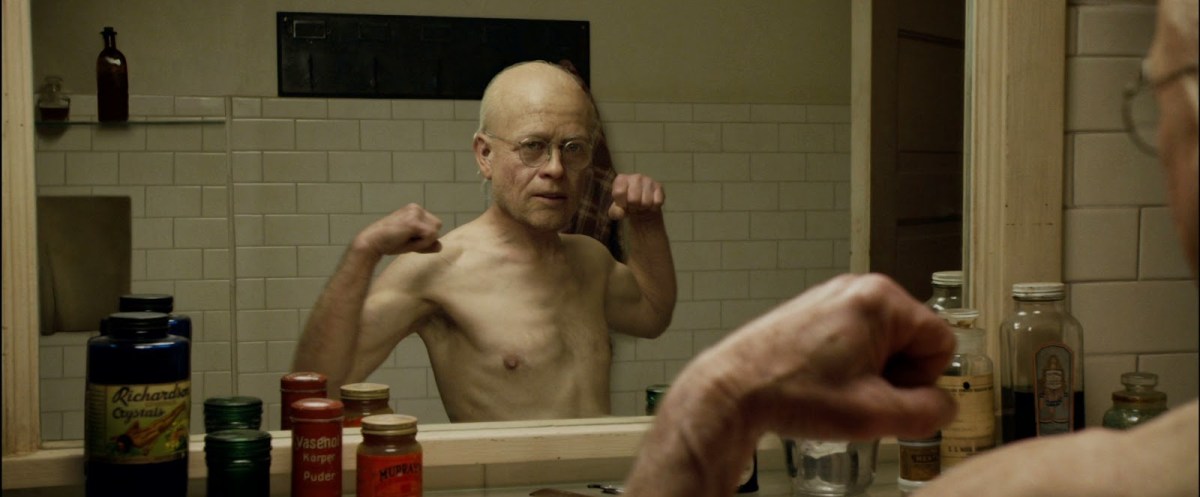
The Curious Case Of Benjamin Button deals with all of this, in a fantastical Hollywood romance, and at the time – certainly in my peer group – there was some confusion that David Fincher was interested in the heart rather than another head in the box. The film was grand, sweeping, and sad. Where was the bloodshed?
The Fall Will Probably Kill You is a reader-supported publication. To receive new posts and support Nev Pierce‘s work, consider becoming a free or paid subscriber.
Watch the shorts by Nev Pierce, including Bricks, an Edgar Allan Poe adaptation starring Jason Flemyng and Blake Ritson, which David Fincher said about: “A morbid yet classy take on a morbid classic.”
Frame & Reference is a conversation between Cinematographers hosted by Kenny McMillan. Each episode dives into the respective DP’s current and past work, as well as what influences and inspires them. These discussions are an entertaining and informative look into the world of making films through the lens of the people who shoot them.
In this episode, we’re joined by my friend Michael Cioni to talk about his new company Strada (YouTube).
Michael is a serial entrepreneur whose career includes numerous awards for his creative work and technical achievements. He is an accomplished director, cinematographer, musician, four-time Emmy winner, member of the Motion Picture Academy, and Associate Member of the American Society of Cinematographers.
A U.S. patent holder of digital cinema technology, Michael was the founder and CEO of the post house Light Iron where he pioneered tools and techniques that emerged as global workflow industry standards. After Light Iron was acquired by Panavision, Michael served as product director for Panavision’s Millennium DXL 8K camera ecosystem.
He then joined the cloud startup company Frame.io where he served as Senior Vice President of Global Innovation. After Frame.io was acquired by Adobe, Michael led numerous workflow innovations including the breakthrough Camera to Cloud technology program as Senior Director of Global Innovation.
He continues to be motivated by the desire to democratize professional workflows and focuses his efforts on inventing new ways for filmmakers to create through his technology. Michael is a well-known and gifted speaker, advocate for the community, and serves as a mentor and educator throughout the global media industry.
From his earliest days working for ILM on Return of the Jedi; to his countless music videos for stars like Madonna, Michael Jackson, and The Rolling Stones; to his groundbreaking big-screen adaptations, there’s no one with an eye quite like David Fincher. But how does he do it (apart from doing over 100 takes)? Through his use of razor-sharp precision; his omniscient and unencumbered camerawork; his pitch-black comedy; and the recognition that deep down people are perverts.
Films Included: The Social Network (2010), Alien3 (1992), SE7EN (1995), Zodiac (2007), Mank (2020), Panic Room (2002), The Girl with the Dragon Tattoo (2011), Gone Girl (2014), The Game (1997), Fight Club (1999), The Curious Case of Benjamin Button (2008)
The 1970s was influenced by conceptualism and performance arts, and Donald Graham Burt, a university student who was then transitioning from boy to manhood was drawn to the conceptual movement. He found it as a way of expressing himself and relied on the art form as a medium to communicate his heart. It’s been more than forty years since Donald graduated but his approach to work and life has remained the same. I caught up with the two-time Academy Award winner to discuss art, design, films, and life in general.
The retrospective supported by Netflix, Patron of the Cinémathèque Française (French Cinematheque), will open with a preview screening of The Killer followed by a discussion with Fincher. The next day, a screening of Zodiac will be followed by a Master Class with the director.
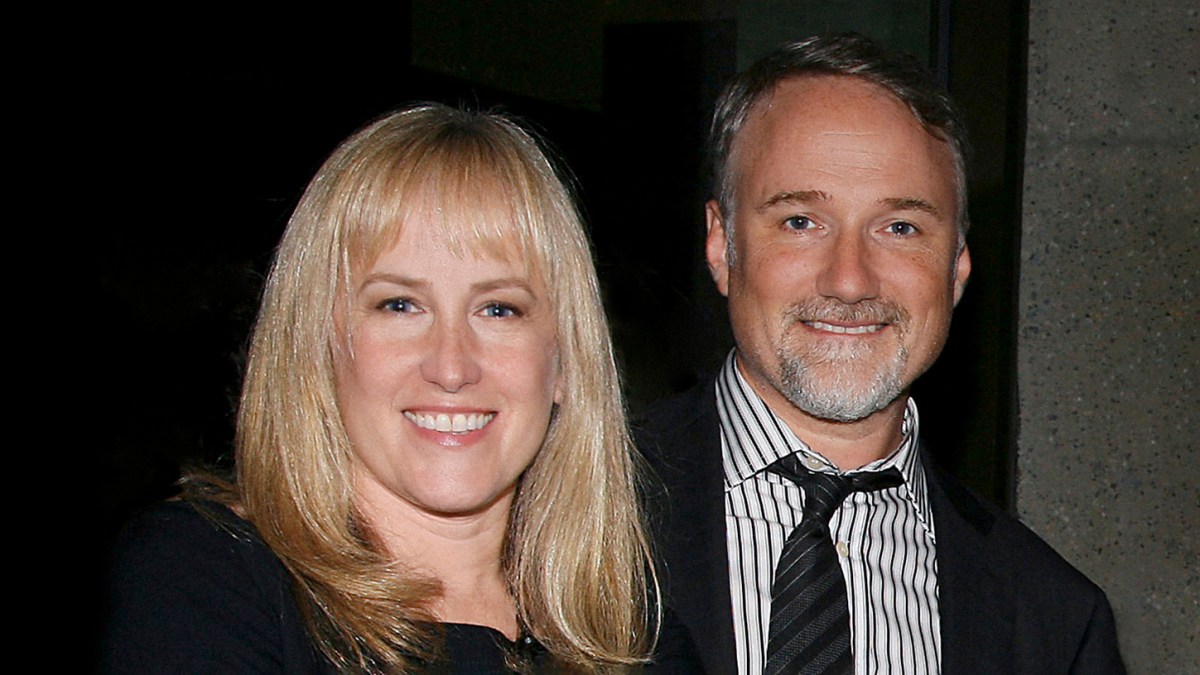
Born in Los Angeles, California, on June 26, 1957, Ceán Chaffin is a film producer who has mostly collaborated with her husband, director David Fincher.
I started out in commercials, at the bottom. PA-ing, 2nd AD-ing, the whole route into line producing. (1)
She joined Propaganda Films in 1992 and worked as a producer for several commercial directors, handling a diverse group of accounts that took her to 13 countries before accepting a job on a Japanese Coca-Cola commercial that was directed by David Fincher: Coca-Cola: Blade Roller (1993, filmed in December 1992). (2) (3) (4) (5)
I started working with difficult directors at Pytka and Propaganda Films.
It wasn’t a conscious choice but with those guys, I just learned more. Someone dared me to work for Fincher and partly because he was younger than me, I thought, “That little punk?” But I figured I’d give it a shot, and I learned more than I’d ever learned before. (1)
That project led to an association with Fincher on other commercials and such notable music videos as the Rolling Stones’ Grammy Award-winning Love is Strong (1994).
She also produced the music videos directed by Mark Romanek, Madonna’s Bedtime Story (1995), and Michael Jackson’s Scream (1995), for which she earned a second Grammy. (4)
Propaganda offered me a movie; they had moved other commercial producers into films, but I believe I was their first female producer. So I was offered this film with David, but he signed up first to make Seven, which I wasn’t hired to do. I prepped it but they wouldn’t hire me because I had never line-produced a feature before. Which drove me crazy and still does, that Catch-22. It was a film for Polygram, which owned Propaganda; the budget was $69 million, and it was called The Game. (1) (2) (4)
Chaffin and Fincher became a couple in 1995 and they married in 2013. (6) (7) (8) (9)
Producer Arnold Kopelson (Seven, 1995):
Ceán is very supportive of David. She makes it possible for him to be totally enmeshed in his life of making movies. (8)
Director Jamie Babbit (script supervisor on The Game, 1997):
I would say [the people who influenced my career the most are] David Fincher and Ceán Chaffin. They are the power couple, director-producer combo that I worked with at the beginning of my career. They really taught me how amazing it is to marry a producer, and I feel like they’re the best compliment to a director in love and in life. I’m currently married to a producer. (10)
(1) “Case Study. Walking the Line” (Produced By, October 2009) (2) “Entrevista de El curioso caso de Benjamin Button” (Ceán Chaffin) (Cine PREMIERE, YouTube, January 19, 2009) (3) Nev Pierce – “Interview” (Mank, The Unmaking, 2021) (4) “Cean Chaffin” (Panic Room, Production Notes. Sony Pictures, 2002) (5) Benoît Marchisio – Génération Propaganda (Playlist Society, 2017) (6) Nev Pierce – “The Devil Is in the Detail” (Total Film, March 26, 2007) (7) Nev Pierce – “In Conversation with David Fincher” (Empire, January 2009) (8) Stephen Galloway – “David Fincher. Punk. Prophet. Genius” (The Hollywood Reporter, February 9, 2011) (9) Nev Pierce – “Essay” (Mank, The Unmaking, 2021) (10) Danny Edwards – On My Radar: Jamie Babbit (shots, March 3, 2026)
Interview with David Fincher’s Producer Ceán Chaffin on The Curious Case of Benjamin Button
January 19, 2009 Cine Premiere (Mexico)
Case Study. Walking the Line
September 2009 Produced By
Quotes from Ceán Chaffin:
“I feel that being a line producer is an honor. I’m really proud of that. When you talk to somebody in the business and you say you’re a line producer, I think you get more respect then when you say, ‘Oh, I’m a producer.’ I think that I watch a director’s back better than anyone else, and that’s why David forces me into a Produced By credit. At first I was really hesitant because there’s a part of Hollywood that I kind of hide from. I really love directors, and I love what they do. But I also think that we all walk that line of supporting these filmmakers, while at the same time doing that job for the studio, because they’re financing it. We walk that line, and I don’t see anybody else willing to do that. How else are you going to deliver on all these different levels?”
“I think there’s too much hung on the creative idea; people’s egos are too attached to it or something. Because what we in this room all do couldn’t support the creative process more. Fincher is a very smart director; he gets that. I didn’t survive those early years with him because I had a different philosophy than he does. He feels the same way, so much so that one of the things he says to his fellow directors is “you gotta have your producer skills.” You need to understand what these people are doing for you because if they’re not doing it for you, you’re screwed.”
“Very rarely does anyone get upset when we say, ‘the money goes on the screen.’ That is our mantra. We don’t lie, and the money goes on the screen. When there are a lot of producers on a show, you sometimes have everyone in trailers … there are drivers, assistants, the whole entourage. And so, very gently, I hope, we ask: let’s put that on the screen instead. There aren’t a lot of bells and whistles and bling for everybody; when we have a Fincher project, it goes on the screen. We’re very serious about it. It’s not an easy question to ask some people, but you do.
You can look at dailies now online and on demand, so having some place to do that work is important, but it can be anywhere. It can be the AD’s trailer, wherever…”
“They will suss it out in a nanosecond if you’re not being honest. It’s so important. That’s probably number one.
I take ‘no’ from the director. And I understand the firm ‘no’ from the maybe-I-canchange-his-mind-later ‘no.’ That’s another skill.
We have our own opinions too. We’re not always going to agree with either the director or the studio. And that can get in the way.”
“We feel very strongly, both of us, that we have to make things work within the envelope that we promised… partly because that’s an expectation with the kind of movies that he makes. It’s a different beast that way. When you’ve got a Transformers, they’re willing to spend a little differently. So we give the bad news up front. We know that David asks for more days than most people do, but that’s the way he works. The studio once actually asked me, ‘How are you shooting 80 days on Panic Room when we’re at 80 days on Spider-Man?’ I said, ‘Well, who do you think is lying?’ [laughs]”
“It’s a wonderful little thing you get from commercials and music videos, which we still do, though not as much these days. But they’re a great opportunity to try out new DPs, new equipment… It’s a chance to push the edge, a little bit. It’s like a date. You get to date your crew, and then when you make a feature, you get to run a marathon with them.
You have to have visual effects knowledge as a producer or line producer. I haven’t had a job, including commercials, in probably 18 years that hasn’t used VFX. You have to know this stuff.
You just have to show up; that’s how we all learn. I didn’t know what a telecine was when I first started, 25 or 30 years ago. So I showed up. You go and you learn, and you go to all the meetings with the visual effects groups. And it’s a big time commitment, but I don’t see any other way of doing it. I actually get tired of chasing David, sometimes, because he is so curious. But you go, and you visit RED, and you meet with Viper, S.two, engineers… It’s all part of the job.”
“The audience has changed, our economy has changed, clearly technology has changed, and the delivery system is still changing. So between all those things, it does have an impact on everybody in the film business. And that’s why it is important, I think, that we embrace the change. Change ultimately can be a good thing. It almost always is, if you look at it historically. People always prefer their past to their present, but I think once you embrace the change, there’s another curve out here that can be a positive one.”
Conference Spotlight: Ceán Chaffin and David Fincher
July 2014 Produced By
One of the most anticipated sessions of the 2014 Produced By Conference was its “Conversation with Ceán Chaffin and David Fincher” — a rare look into the process of the producing and directing team behind some of the most provocative films of the last 20 years, including Fight Club, The Social Network, The Girl with the Dragon Tattoo and the upcoming Gone Girl.
In order to keep the discussion candid and open, members of the press were not allowed into the session, but Ms. Chaffin and Mr. Fincher graciously agreed to sit down with Producedby for a brief interview just before taking the stage.
Many of your films feel more like independent or even art films, given their challenge and complexity, and yet you’ve been able to make them within the major studio system. What’s your secret?
David Fincher: We’ve been pretty lucky. You have to have people within those bureaucracies who are fervent believers. We could not have made Fight Club without Laura [Ziskin] and Bill [Mechanic]. They bought the material. They had it before I had it. So I think you have to look for like-minded perverts within those bureaucracies to convert. And you have to do what you say you’re going to do.
Ceán Chaffin: And do it time and time again, so they start believing. It takes a while for that trust to be built up so you have a reputation that you can do what you say you’re going to do.
Wasn’t Seven famously a script that everyone said couldn’t be made?
Fincher: No, they just didn’t want to make it as written. They wanted to take out all the things that were disturbing. When it came down to whether there was going to be a head in the box at the end, my argument was: This movie is known around town as the ‘head in the box’ movie — so taking it out makes no sense. It’s like taking the wizard out of The Wizard of Oz. I don’t think it’s a question of unmakeability as much as it’s just people saying, “this could be too offensive.”
Chaffin: But they’re happy to make “too offensive” if it’s the right price.
Fincher: [With Seven], it was 11 drafts in development, and by the time I got it from Mike De Luca, I said, “Let’s go back to draft one.” So it’s finding the…
Chaffin: The champion.
Fincher: …the fellow pervert!
Chaffin: The like-minded people.
Working on projects with successful, popular source material often means that there are other producers attached. How do you stay true to your vision while collaborating with other producers?
Chaffin: It depends on the competence level and ego of each person. People know that David and I come together as a team, and I fill a space that they don’t [always] want to fill. [Other producers] have so much respect for David, and by this point they appreciate how we work, and they just want to be there when we need support. But a lot of people don’t want to do the things that we do and work how we work.
Let’s talk about that. What are those things?
Chaffin: We come from working on short-format together, and in that world you do everything from start to finish — and we just moved that over to films. I also line produce. You just wear more hats when you come from commercials and music video. So there’s more of an immersion in the whole process.
Fincher: I also think that the assembly-line nature of our industry encourages specialization, but I really have an aversion to that. So the people I am naturally going to turn to are people who can think about it from multiple facets. So for me, what Ceán brings to it is… for my job, I have to be out there, not trying to fail, but certainly exposed to failure. And I need someone behind me saying, “You need to keep in mind that if this goes horribly awry, that’s three days of shooting.” You need that balance. Or when it comes to music, like the Pixies song at the end of Fight Club — that’s Ceán saying “Listen to this.”
Chaffin: That’s not true. I just listen to a lot of music…
Fincher: Well, it is true. Or when we were casting Dragon Tattoo, Ceán was there right at the beginning saying, “I think Rooney [Mara] might be able to do it.” She has a legacy of experience, and I have that with 10 or 12 people that I continue to go back to because I know that they’re not going to try to talk me out of things that discomfort the audience.
Chaffin: But creative input — that’s not something I focus on with David. To me it’s all about watching the director’s back. And you’re in the position that you’re also working for the studio, and it’s very important that there’s somebody out there trying to work with both sides. It’s not just “us against them.”
Speaking of conflict, how often do you fight, what are the fights about, and who generally wins?
Chaffin: [Long pause] I don’t know.
Fincher: We don’t fight, we disagree. We disagree about a lot of things. Usually it’s because we’re looking at it from diametrically opposed [places]. I’m looking at it in terms of mortality, and she’s looking at it more in terms of feasibility. What can we guarantee? What can we expect from someone hanging from wires for nine hours?
Chaffin: We’ve worked together longer than we’ve been a couple, and we found early on that we have the same philosophy. That’s so much better, because if you don’t have that same care, it’s really tough, and can be dangerous, and can be dishonest, and that’s not comfortable for me. And with David, I have that. Then it was about…
Fincher: Not making you cry.
Chaffin: [Laughs] He made me cry on the first job; that’s true. But he makes everybody cry. I didn’t take it personally. His old person said, “Don’t worry, everyone cries.” [Fincher nodsin agreement.] I’m kidding. But it’s not just with David, it’s all the people [we work with] who are so talented. You have to learn what their process is. Because when you don’t understand that, it can create conflict. It’s not about being right, it’s about making the whole work, and if you don’t understand each individual’s process, you can’t really be that person that moves [things] along, makes deadlines, makes budgets. I think that’s the part that keeps us from knocking heads — as a producer, sitting back and asking, “How does this person work? Let’s observe how they behave.” And then you support them.




 The Fincher Analyst