It was amazing to sit down and chat with Writer/Director/Producer James Vanderbilt, whose credits include Sony‘s ‘The Amazing Spiderman‘, ‘White House Down‘ and David Fincher‘s masterpiece ‘Zodiac.’
In our conversation we talk about James’ early success selling his first script just days away from graduating at USC, his relationship with pitching films to studios, becoming a first-time director on ‘Truth‘ and much more.
Make sure to find and follow the podcast on Facebook.
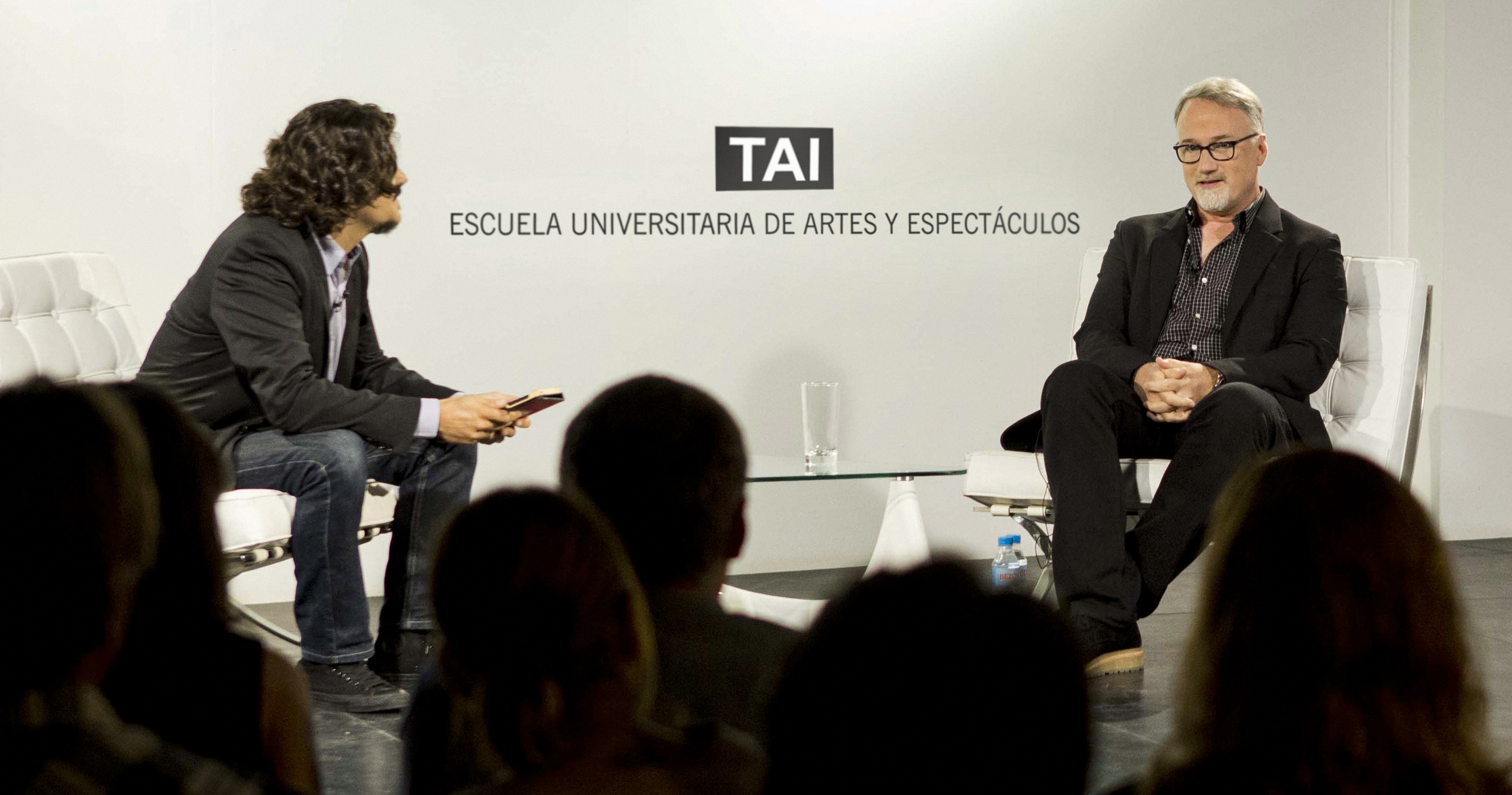
Interview with David Fincher at the TAI University School of Arts (Madrid), hosted by Carlos Reviriego.
In English, with Spanish subtitles.
Questions:
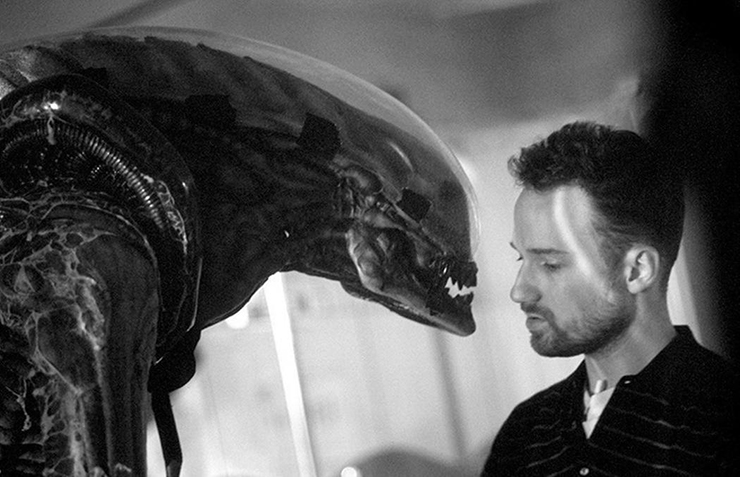
0:00:33 – What did the book ‘Gone Girl‘ is based on had that made you want to film a movie about it? 0:02:33 – Talk about your first years in the movie industry. 0:06:38 – You once said ‘No one hates Alien3 more than me’. Can you talk about it? 0:09:31 – David Lynch was here last year, and he said that the most important advice was to always fight for the final cut of your film. Do you think the same? 0:15:03 – Some critics think that ‘Fight Club‘ and movies on your filmography celebrate violence and anarchy. What do you have to say about it? 0:18:39 – Do you see yourself as a perfectionist? 0:22:17 – What’s more important, talent or hard work? 0:25:40 – What changes with digital cinema? 0:28:09 – How do you work with the Cinematographer and the Art Department? 0:34:31 – Can you talk about your work for TV and House of Cards? 0:36:37 – How do you feel about Amy’s character in Gone Girl? 0:37:53 – Do you get involved in the writing process? 0:39:08 – Why do you tend to use green and yellow colours in your cinema? 0:41:12 – Do you see a certain similarity between Brad Pitt’s character in ‘Twelve Monkeys‘ and ‘Seven‘? 0:43:02 – What do you look for in an actor? 0:48:38 – Is it more complicated to do fiction or documentary?
Encuentro con David Fincher en la Escuela Universitaria de Artes TAI (Madrid), conducido por Carlos Reviriego.
En inglés, con subtítulos en español.
Preguntas:
0:00:33 – ¿Qué te atrajo de la obra literaria en la que se inspira ‘Gone Girl‘? 0:02:33 – Háblanos de tus comienzos 0:06:38 – Una vez dijiste que nadie odió Alien3 más que tu. ¿Puedes hablar sobre ello? 0:09:31 – David Lynch estuvo aquí el año pasado y dijo que lo más importante era tener el corte final de la película. ¿Opinas lo mismo? 0:15:03 – Algunos críticos opinan que ‘Fight Club‘ y otras de tus películas ensalzan la violencia y el caos. ¿Qué tienes que decir al respecto? 0:18:39 – ¿Te consideras un perfeccionista? 0:22:17 – ¿Qué es más importante, el talento o el trabajo duro? 0:25:40 – ¿Qué añade la conversión al digital del cine a tu obra? 0:28:09 – Tu estética tiene una firma o un sello personal. ¿Cómo trabajas con el Director de Fotografía? 0:34:31 – ¿Puedes hablar sobre tu participación en televisión y en House of Cards? 0:36:37 – ¿Qué piensas del personaje de Amy en Gone Girl? 0:37:53 – ¿Cómo te involucras en el proceso de escritura del guión? 0:39:08 – ¿Por qué tu cine tiene cierta tendencia a usar verdes y amarillos? 0:41:12 – ¿Crees que hay cierta similitud entre la forma de actuar del personaje de Brad Pitt en ‘Twelve Monkeys‘ y ‘Seven‘, que fueron rodadas en la misma época? 0:43:02 – ¿Qué buscas de un actor a la hora de trabajar con él? 0:48:38 – ¿Es más complicado rodar ficción o documental?
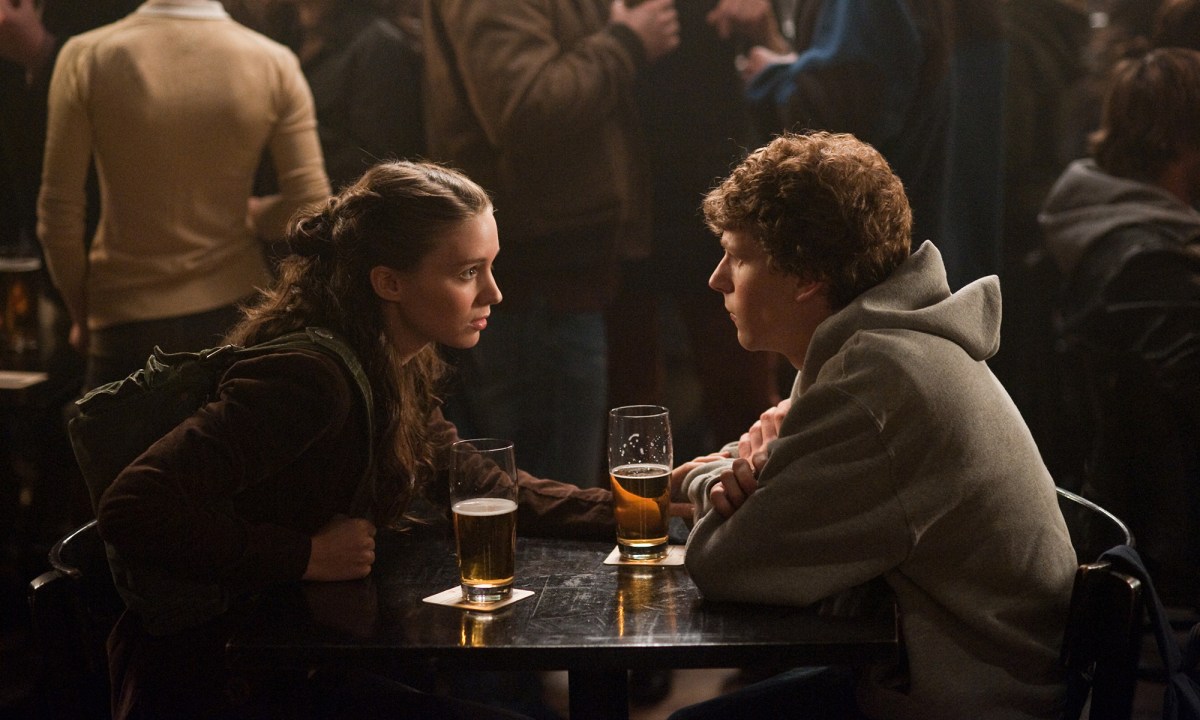
On October 1, The Social Network turns ten. The RED Mysterium X sensor (also turning ten) that rendered the film is now outmoded, but The Social Network thrives due to, not in spite of, the marks of its time. The limited latitude of the once cutting-edge camera sensor pushed David Fincher and DP Jeff Cronenweth—who also shot Fincher’s Fight Club, The Girl with The Dragon Tattoo and Gone Girl—into the darker bends of The Social Network’s imitation Harvard dorms. The camera struggled with highlights, so they avoided hot windows and sunny exteriors. It also strained to digest warm tones, so they chose a cooler palette that was easier for the RED to chew on. The sensor’s limitations had implicit limitations with the story of Facebook’s origin, the first of screenwriter Aaron Sorkin’s two tech mogul reprimands (Fincher’s Zuckerberg was follow by Danny Boyle’s Steve Jobs)—individuals he believes pioneered our doom out of spite, envy, inceldom.
When The Social Network initially released, an anecdote about Fincher hiring a mime to distract Harvard campus security was often iterated in the press. Fincher and Cronenweth stitched three shots captured by three REDs on a roof across the street and did a “pan and scan” in post to get a move they couldn’t have otherwise. But they needed light on some of the dark arches, so Fincher hired a mime to push a battery cart full of lights behind them, the impetus being that “by the time [security] got him out of there we would have already accomplished our shot.” Fincher adopted digital in its nascent stages to limit the compromises caused by the erratic nature of the film set. What remained to be compromised on he’d have more ways of fixing in post on digital than on film.
Filmmaker: What have you been watching?
Cronenweth: Eh, I don’t know. Mostly movies. I tried to do the Ozark series, which I like, but it starts to get redundant: same bad guys doing the same things. The only problem I find is that the first week we watched maybe 50 movies, so now we can’t separate the good scenes and shots from the others because we’ve watched so many in a row. That can be a handicap. I’m 58. This is the longest I’ve had off since I graduated from college. So, there are a lot of things I’ve been putting off for twenty years that have been good to get done with.
Filmmaker: Have you rewatched The Social Network recently?
Cronenweth: No, I tend not to. You see them so many times when you’re making them, in the edit, the color correct and the screenings. I would like to, though. It’s such a cleverly written script and Fincher did such a great job at bringing Aaron’s dialogue across. Everytime I watch it, regardless of how tied into it I was, it always amuses me how quickly it feels like it went by. You never have a chance to get off the rollercoaster, which is one of [Fincher’s] mottos. But by the end you go “Really? That’s the whole movie?” It feels like it just started.
Filmmaker: You guys were the first feature film to use RED’s Mysterium X sensor.
Cronenweth: It was my first experience shooting something long form with a digital camera. I had shot music videos and commercials on an array of different formats and cameras. Obviously Fincher had done Zodiac and Benjamin Button digitally. I can’t remember what they shot that on?
Filmmaker: I think they were both shot on the Viper. [Benjamin was a combination of the Viper, Sony F23 and some 35mm on the Arriflex 435]
If you asked David Fincher about the childhood years he spent in San Anselmo in Marin County during the 1960s, the topic that would undoubtedly pop up would be that of an infamous serial killer who, in the director’s eyes, was “the ultimate boogeyman.” For it was precisely that time and that general area that saw the rise of the Zodiac, a murderer who frequently wrote letters and sent coded messages to local newspapers, gleefully taking credit for the gruesome killing sprees that would inevitably trigger waves of paranoia across the West Coast. As Fincher recalls: “I remember coming home and saying the highway patrol had been following our school buses for a couple weeks now. And my dad, who worked from home, and who was very dry, not one to soft-pedal things, turned slowly in his chair and said: ‘Oh yeah. There’s a serial killer who has killed four or five people, who calls himself Zodiac, who’s threatened to take a high-powered rifle and shoot out the tires of a school bus, and then shoot the children as they come off the bus.’” Fincher’s fascination with the mystery man who wreaked havoc in Northern California during the late 60s and early 70s, claiming to have taken the lives of thirty-seven people (out of which only five were confirmed as being his victims), ultimately resulted in the director gladly accepting to work on Zodiac, a 2007 movie written by James Vanderbilt. The screenwriter had read a 1986 non-fiction book of the same name while he was still in high school, years before pursuing his eventual career. After getting into screenwriting, he had the chance to meet Zodiac author Robert Graysmith, a cartoonist who had been working for one of the newspapers the killer wrote to during the 1960s, and decided to make a screenplay based on the information-packed book. Having creative control over the material was of the utmost importance to Vanderbilt, given the fact that the endings of his previous scripts had been altered. Together with producers from Phoenix Pictures, Vanderbilt bought the rights to both Zodiac and its follow-up, entitled Zodiac Unmasked, after which the Seven director was asked to come on board.
Apart from having a personal attachment to the story of the notorious serial killer who was never brought to justice, what drew Fincher to work on the project was also the fact that the ending of Vanderbilt’s script was left unresolved, thereby staying true to real-life events. But Fincher’s perfectionism and his wish to depict the open case as accurately as possible led to him asking that the screenplay be rewritten, for the wanted to research the original police reports from scratch. He also decided that he, Vanderbilt and producer Bradley J. Fischer should personally interview the people who were involved in the case so that they could discern for themselves whether the testimonies were to be believed or not. The people they spent months interviewing were family members of suspects, the Zodiac killer’s two surviving victims, witnesses, investigators both current and retired, as well as the mayors of Vallejo and San Francisco. As Fincher elaborated: “Even when we did our own interviews, we would talk to two people. One would confirm some aspects of it and another would deny it. Plus, so much time had passed, memories are affected and the different telling of the stories would change perception. So when there was any doubt we always went with the police reports.” They also hired a forensic linguistics expert to analyze the killer’s letters, with the expert’s focus being on how the Zodiac spelled words and structured sentences, as opposed to the emphasis that was put on the Zodiac’s handwriting by document examiners in the 1970s.
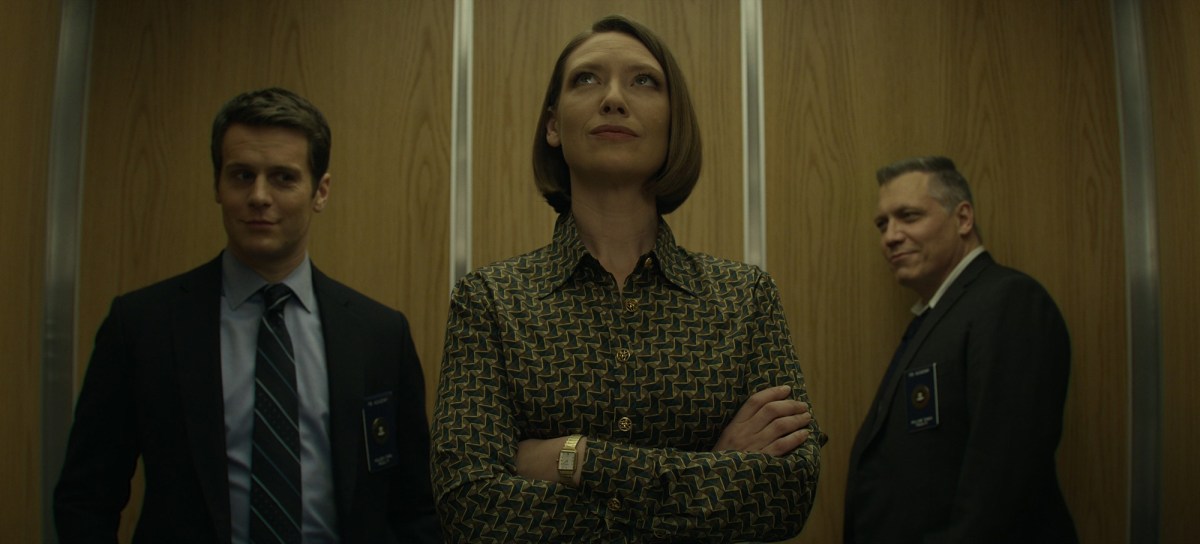
Mindhunter is the 4th time David Fincher has examined serial-killers. Far from resorting to tired clichés, with the 2nd season he has again broken new ground.
This dissertation aims to show the recurring themes of pressure and obsession in the work of film director David Fincher. Looking specifically at Seven (David Fincher, New Line Cinema, 1995), Zodiac (David Fincher, Paramount Pictures, 2007) and The Social Network (David Fincher, Columbia Pictures, 2010), I will show the gradual change in style and subject matter while still highlighting the resonance of the two themes under analysis. Furthermore, it will be shown how obsession and pressure link to Fincher’s working method. I will be examining critical, journalistic and academic writings to assess the themes and Fincher’s directorial position. Whereas Seven has had a great deal written about it, Zodiac and The Social Network are more recent films and thus there is less literature on them. For this reason, study on both films should garner more original analysis.
The themes of pressure and obsession differ slightly in all three films, however, there is an overriding sense in each film that the workplace and environment has a pressurizing effect on the characters. What is more, pressure can at times define the notion of obsession. Obsession is mostly shown as a mutation of characters’ personal drive, or an extension of their duties for work. The two themes can at times separate themselves in terms of aesthetic and narrative presentation yet they are mainly one and the same; at times they can even be analyzed in the context of Fincher’s filmmaking practice.
Chapter one gives an overview of contemporary Hollywood, the role of the director, Fincher in relation to both of these, the two themes under analysis and deliberations on auteurist theory – this constitutes the literature review. The second chapter examines the impetus of investigative obsession, along with the presentation of morbidity and tension in Seven. Chapter three looks at the similarity in obsessive personalities along with suspense and drama in Zodiac. Chapter four focuses on The Social Network and obsession effecting status quo. The conclusion will draw on the comparisons and contrasts from chapters two to four. It will also give an overall account of how we may regard Fincher in contemporary Hollywood and in respect to auteur theory.
When a film breaks with tradition, it is often rejected by audiences. Which may be why Zodiac was not recognised as the groundbreaking masterpiece it is.
Another comprehensive article by Spanish DP, Producer and cinematography scholar Ignacio Aguilar, this time on the cinematography of Zodiac. Time to practice your rusty Spanish or get help from a good web translator.
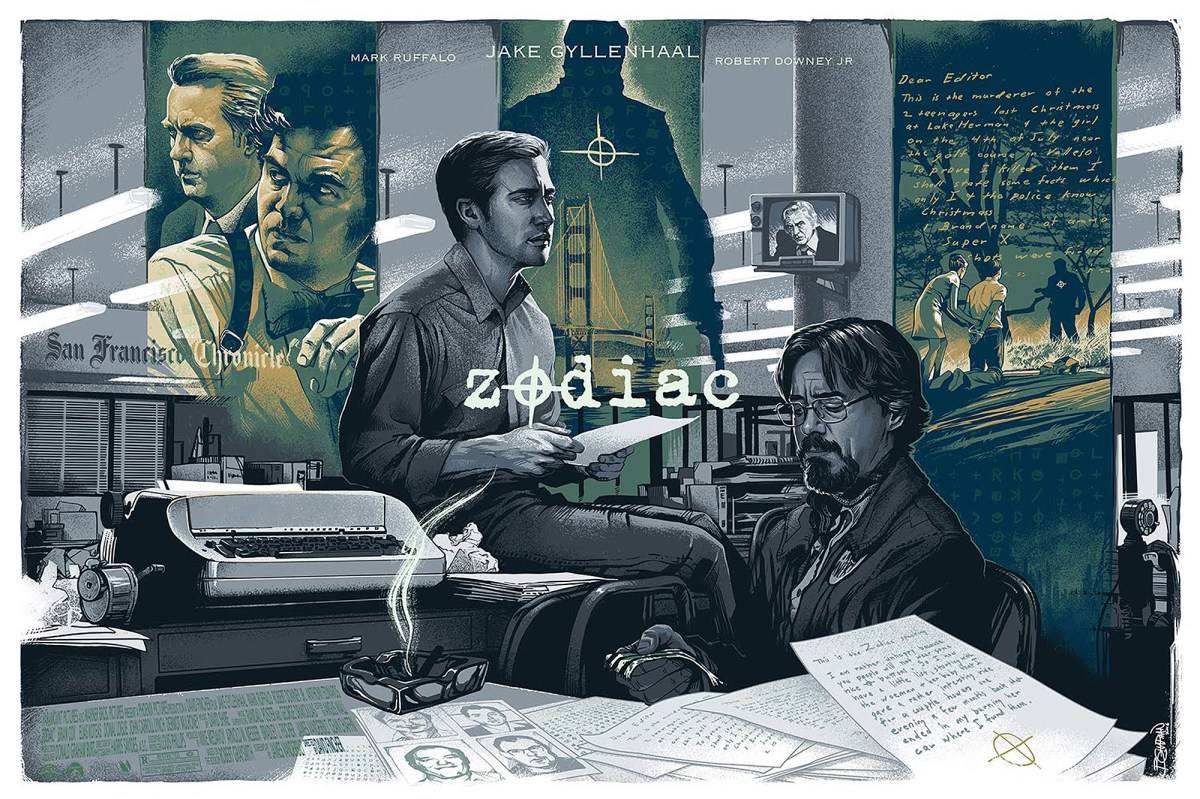
Excepcional adaptación cinematográfica del libro de Robert Graysmith, basado en su propia investigación sobre los asesinatos cometidos en la zona de San Francisco a finales de la década de los 60 y comienzos de los 70, por un asesino que además enviaba cartas a los períodicos, anunciando sus planes y próximas víctimas. El film está protagonizado, además de por el propio Graysmith (interpretado por Jake Gyllenhaal), por su compañero en el San Francisco Chronicle, Paul Avery (Robert Downey, Jr.) y por el detective de homicidios Dave Toschi (Mark Ruffalo), los cuales uno a uno, se van obsesionando por el caso que les ocupa a medida que profundizan en el mismo y creen encontrarse cerca de resolverlo. Se trata quizá del mejor y más sólido trabajo de David Fincher detrás de las cámaras, quien deja de lado su conocida solvencia técnica y se lanza a narrar minuciosamente todo lo concerniente al caso que inspiró películas como “Dirty Harry” (1971), tomando una estructura y formas muy parecidas a las de una de sus películas de referencia: “All The President’s Men” (Alan J. Pakula, 1976), escrita por William Goldman y protagonizada por Dustin Hoffman y Robert Redford. Anthony Edwards, Chloe Sevigny, Elias Koteas, John Carroll Lynch y Brian Cox, entre otros, completan el reparto de un film absolutamente modélico.
El director de fotografía fue Harris Savides [ASC], un hombre cuya carrera en cine, entre su tardía llegada y su prematuro fallecimiento por un cáncer cerebral a los 55 años de edad en el año 2012, desgraciadamente fue demasiado corta. Procedente de los videoclips y de los anuncios publicitarios, debutó en 1996 con “Heaven’s Prisoners” a las órdenes de Phil Joanou. Ya el año anterior había rodado metraje adicional para David Fincher en “Se7en” (1995), quien le contrató para su siguiente film, “The Game” (1997), la película que puso a Savides en el mapa. Posteriormente destacó mucho con “The Yards” (James Gray, 2000) y con varios trabajos para Gus Van Sant: “Finding Forrester”, “Gerry”, “Elephant”, “The Last Days” y “Milk”, además de por su trabajo para Jonathan Glazer en “Birth”. Además tuvo tiempo para colaborar con Ridley Scott en “American Gangster”, con Woody Allen en “Whatever Works” o con Sofia Coppola en “Somewhere”. Su estilo, muy sencillo y poco recargado, a menudo estaba dominado por la subexposición y la luz cenital, a veces asumiendo grandes riesgos, siguiendo en muchos aspectos la línea de Gordon Willis durante la década de los 70.
Savides por lo tanto era el director de fotografía ideal para Fincher en este proyecto, ya que el citado modelo “All The President’s Men” precisamente fue fotografiado por el autor de “The Godfather”. Ambientada desde finales de los años 60 hasta principios de los 80, “Zodiac” sorprendió mucho porque fue el primer proyecto de David Fincher rodado en formato digital y porque hasta aquél momento, dicha forma de adquisición se había empleado principalmente en películas como “Attack of the Clones” (2002) y “Revenge of the Sith” (2005), “Collateral” (2004) y “Miami Vice” (2006) o incluso “Apocalypto” y “Superman Returns” (2006), sin que ninguna de ellas (dejando de lado del film de Gibson) fueran películas de época. Savides (ante la insistencia de Fincher) recurrió a la cámara Thomson Viper Filmstream, la misma usada por Michael Mann en las dos películas citadas anteriormente, pero a diferencia del director de “The Last of the Mohicans”, en el caso de “Zodiac” los cineastas no lo hicieron para rodar con niveles de luz muy bajos o luz disponible, sino que rodaron en HD iluminándolo de forma muy parecida a como lo hubiesen hecho rodando en 35mm. Por ello, el efecto vídeo de las películas de Mann, tanto por la textura de la imagen como por emplear el obturador abierto, no está presente en absoluto en “Zodiac”, que en muchas ocasiones es mencionada como un hito precisamente porque su estética digital fue la primera que demostró que en este formato podían seguir obteniéndose imágenes de parecida calidad a las que se conseguían con el celuloide. Y aunque la Viper era una cámara limitada (con un sensor pequeño y no tanta latitud como las modernas) lo cierto es que prácticamente nunca se perciben dichas limitaciones.
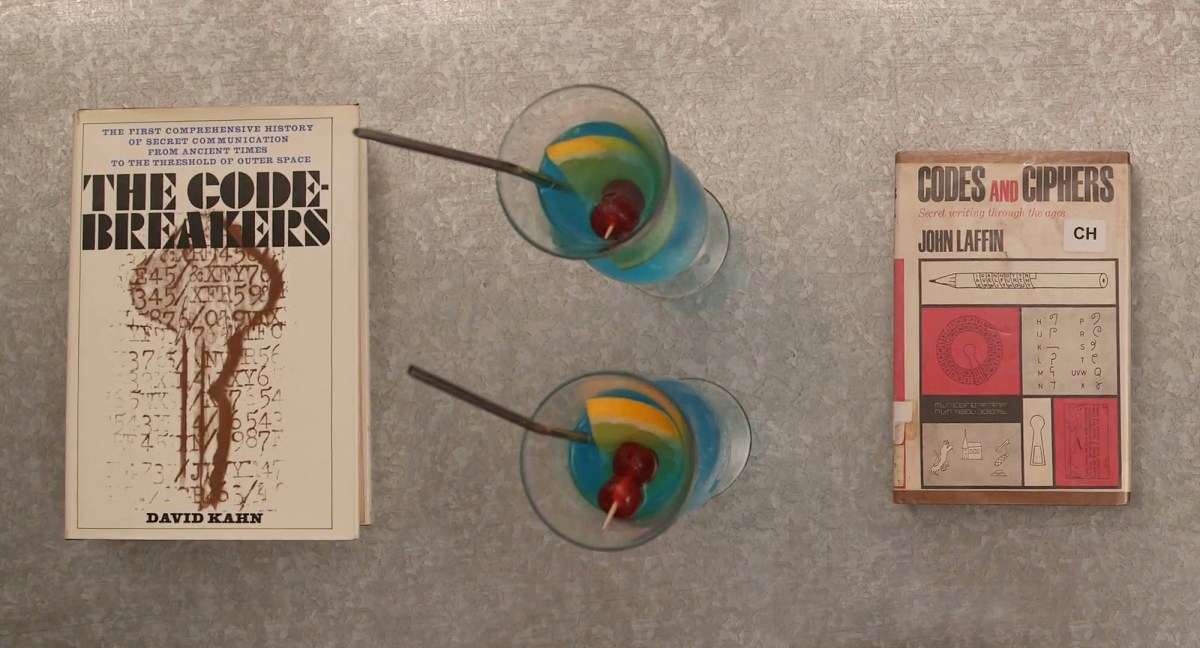
–Yertle the Turtle and Other Stories (1958) by Dr. Seuss –The Code Breakers (1967) by David Kahn –Codes and Ciphers: Secret Writing Through the Ages (1964) by John Laffin –Secret Writing: The Craft of the Cryptographer (1970) by James Raymond Wolfe –The Beast from 20,000 Fathoms (1953) film directed by Eugene Lourie –Dick Tracy Lunchbox, 1967 – Animal Crackers (cookie) –The Most Dangerous Game (1932) film directed by Irving Pichel and Ernest B. Schoedsack –Hair, original musical poster, show debut in 1967 –They Laughed When I Sat Down: An Informal History of Advertising in Words and Pictures (1959) by Frank Rowsome, Jr. –McElligot’s Pool (1947) by Dr. Seuss –TIME Magazine “Race and Reform on Campus,” Volume 93 No. 16, April 18, 1969 –The Asphalt Jungle (1950) film directed by John Huston –The Wrong Man (1956) film directed by Alfred Hitchcock –The Celebrated Cases of Dick Tracy, 1931-1951 (Anthology, 1970) by Chester Gould –Fox in Socks (1965) by Dr. Seuss –Curtain and The Mysterious Affair at Styles (1975) by Agatha Christie –An Artist in America (1951) by Thomas Hart Benton –Drawing: Seeing and Observation (1973) by Ian Simpson –Drawing the Female Figure (1975) by Joseph Sheppard –Mainstreams of Modern Art: David to Picasso (1961) by John Canaday –Homicide Investigation (first published 1944) by Lemoyne Snyder –Rescued in the Clouds (1927) by Franklin W. Dixon –LIFE Magazine “Confrontation in Harvard Yard,” Vol. 66 No. 16, April 25, 1969 – Slinky Toy Commercial from the 1960s – Slinky Toy –I Died A Thousand Times (1955) film directed by Stuart Heisler –Star Trek, Season 3 Episode 4 “And the Children Shall Lead” (1968) guest starring Melvin Belli, portrayed by Brian Cox in Zodiac – Aquavelva (alcoholic drink) – Reprise: The Code Breakers (1967) by David Kahn – Reprise: Codes and Ciphers (1964) by John Laffin –Richard Nixon Presidential Campaign Button, 1968 – “I Am Not Avery” button – 6 extremely rare first edition covers of Ian Fleming James Bond Novels: Dr. No (1958), For Your Eyes Only (1960), Moonraker (1955), On Her Majesty’s Secret Service (1963), You Only Live Twice (1964), The Spy Who Loved Me (1962) –Six Crises (1962) by Richard M. Nixon –San Francisco (first published 1969) edited by Jack McDowell and Dorothy Krell –The Selling of the President, 1968 (1969) by Joe McGinniss –Rubber Life Magazine, Vol. 01, No. 01, (1972) –Dirty Harry (1971) film directed by Don Siegel –Pong (1972) video game by Atari – I Looked and Listened: Informal Recollections of Radio and TV (1970) by Ben Gross – The Crime Vaccine: How to End the Crime Epidemic (1996) by Jay B. Marcus –The FBI in Our Open Society (1969) by Harry & Bonaro Overstreet – Kidnap: The Story of the Lindbergh Case (1961) by George Waller –The Property Man (1914) film directed by Charlie Chaplin – McCall’s Sewing Book (1968) by McCall Corporation – Them! (1954) film directed by Gordon Douglas –Illegal (1955) film directed by Lewis Allen – The World Almanac – Centennial Edition (1968) – The Rink (1916) film directed by Charlie Chaplin – Conquest (1937) film directed by Clarence Brown and Gustav Marchaty –Key Largo (1948) film directed by John Huston – Zodiac: The Shocking True Story of the Nation’s Most Bizarre Mass Murderer (1986) by Robert Graysmith
Zodiac (2007) Credits:
Directed by David Fincher
Production Design by Donald G. Burt
Art Direction by Keith Cunningham
Set Decoration by Victor J. Zolf0








 The Fincher Analyst