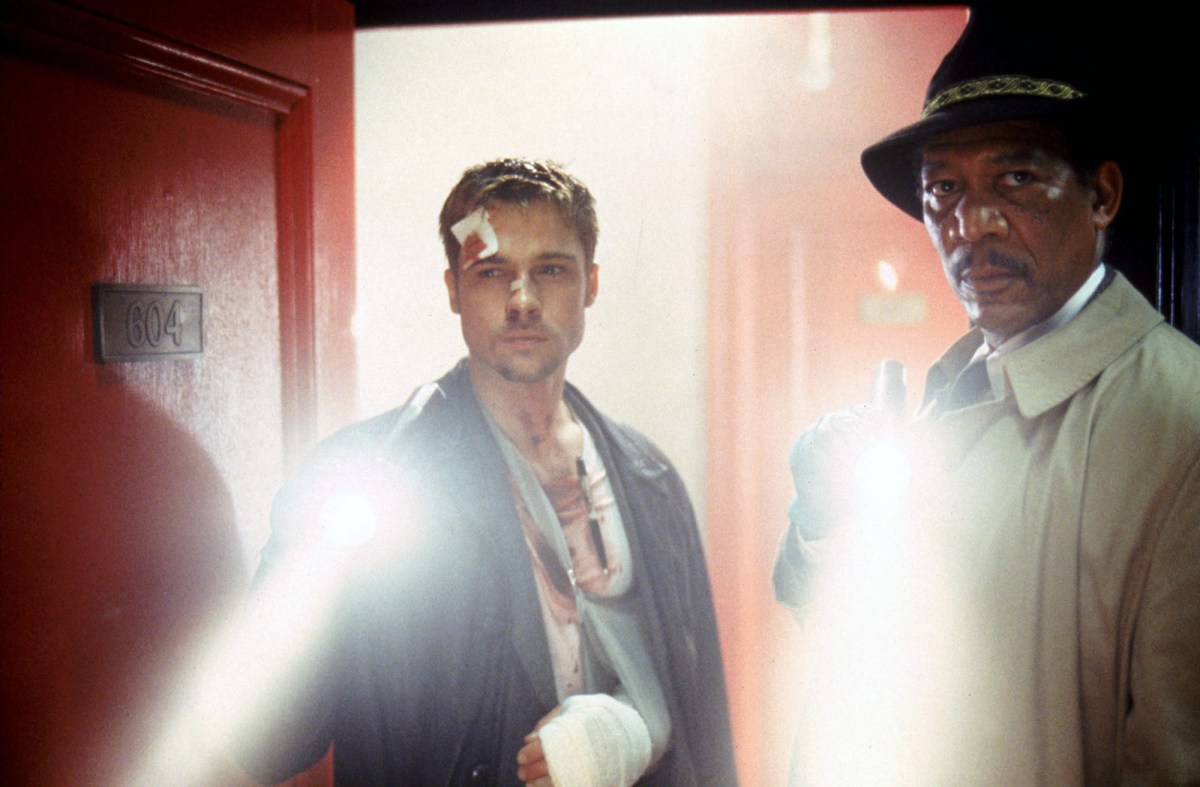
David Fincher’s gritty thriller commented on the urban blight and religious conservatism of the Reagan era. But it also predicted our obsession with true crime today.
Thirty years after its release, David Fincher‘s Seven is now celebrated as the zenith of neo-noir crime thrillers. It raked in a whopping $327m (£250m) at the box office on a $34m (£26m) budget and earned raves from most critics when it came out in 1995. Still, the persistent argument against the film is that it relies too heavily on shock-and-awe gruesomeness to distract from its paper-thin ideas and shopworn crime tropes. A Washington Postcritic lambastedSeven for disguising “formulaic writing” with gratuitous “bloodletting”, while a New York Times reviewer lamented that “not even bags of body parts… keep it from being dull”.
Three decades on, however, it’s clear that some critics missed a different layer to the film – namely, how it interpreted the US’s social crises of the 1980s. There was a worldwide recession at the start of the decade, and this coincided with high urban crime rates, a crack cocaine epidemic and the spread of Aids. The US’s new president, Ronald Reagan, responded to these issues with talk of being “tough on crime”, and his high-profile supporters included various influential Christian figures – leaders of what was known as the Christian right or the religious right – who preached the importance of traditional family values.
All of this fed into Seven. On one level, the film is an exquisitely well-made thriller about a psychopathic serial killer, but beneath its noir-style veneer lies a fascinating take on the way the US responded to some of its most divisive social issues.
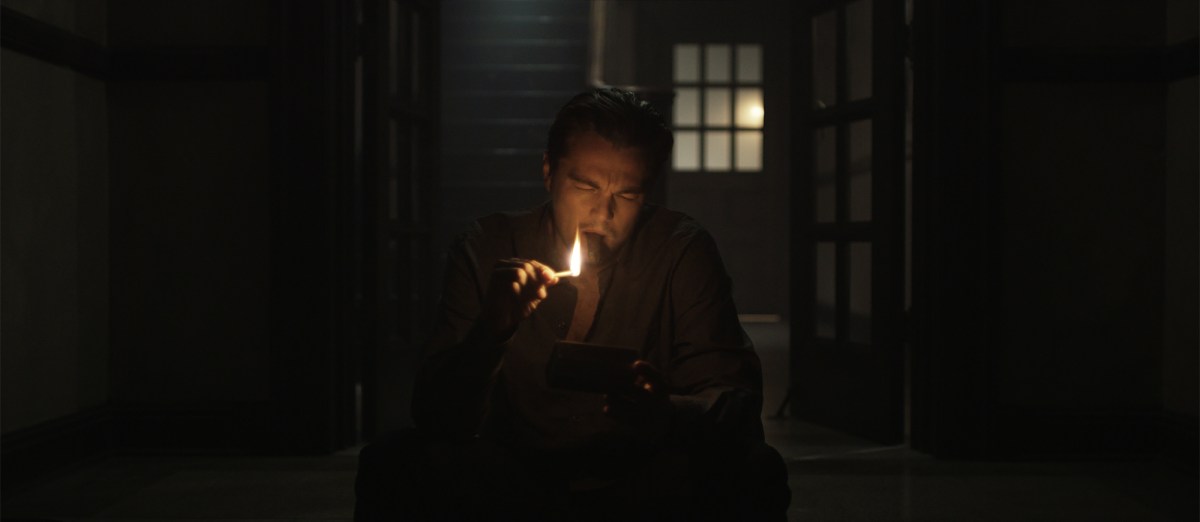
Leonardo DiCaprio and director David Fincher are movie titans of the modern age; therefore it is surprising that the two have never worked together. Unless you count the time the pair tested a RED camera together in 2010 for a clip called The Match.
At the time, Fincher was directing The Social Network and DiCaprio also happened to be in Boston as he was finishing Shutter Island. In fact, the same hallway where The Match was filmed briefly appears in The Social Network.
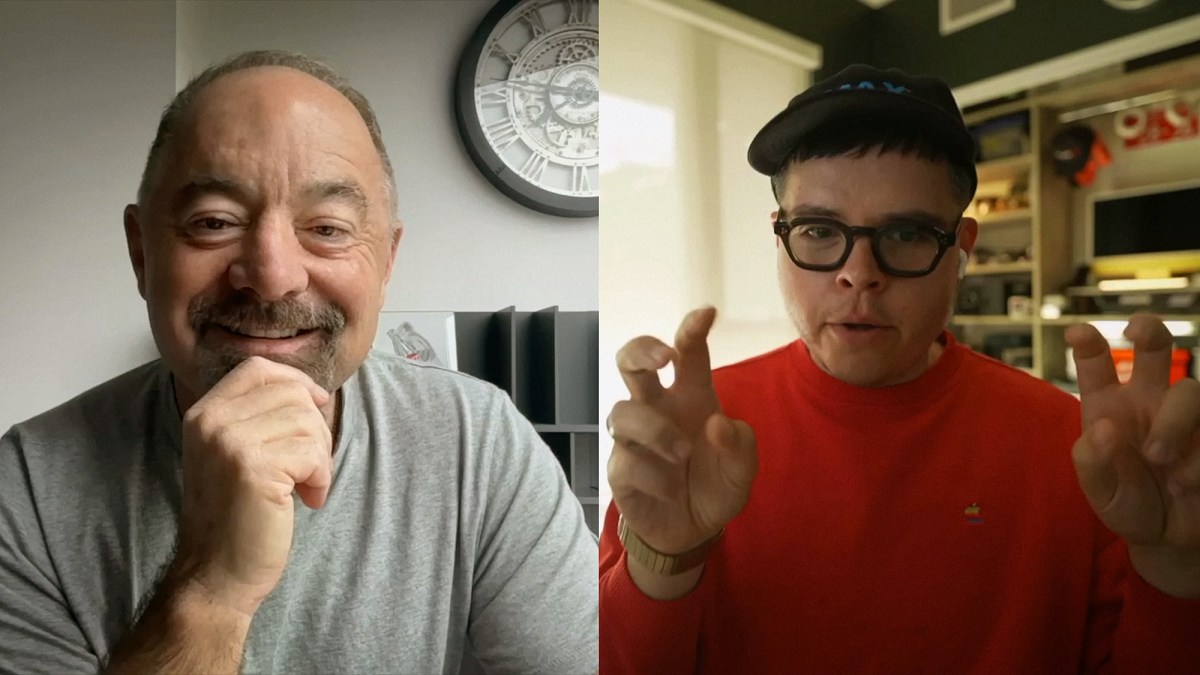
In this episode, we welcome two-time Oscar-nominated cinematographer Jeff Cronenweth, ASC. Jeff has shot films including Fight Club, One Hour Photo, The Social Network, The Girl with the Dragon Tattoo, Hitchcock, Gone Girl, Being the Ricardos, and Tron: Ares. In our chat, Jeff shares his origin story, experiences working with David Fincher — and all about his latest movie, Tron: Ares. He also offers extensive insights and recommendations for today’s cinematographers and filmmakers.
Go behind the visuals of TRON: ARES with cinematographer Jeff Cronenweth, ASC – the mind behind the camera for films like The Social Network, The Girl with the Dragon Tattoo, and Gone Girl. We talk about the look of the new TRON film, his collaboration with director Joachim Rønning, shooting digitally on RED cameras, and how his decades-long partnership with David Fincher shaped his approach to modern cinematography.
If you’re into camera tech, lighting, or just want to know why TRON: ARES looks so good, this one’s for you.
After Reznor brought industrial grind into the mainstream, he became an in-demand film composer—and from Natural Born Killers to Tron: Ares, he’s done some of his best, most adventurous work for the screen. A definitive guide to Nine Inch Nails on film.
Nine Inch Nails founder Trent Reznor can’t have known how different a line like “I don’t believe in your institutions” would sound decades later. Nine Inch Nails have been inducted into the Rock and Roll Hall of Fame; Reznor and his composing partner Atticus Ross have an Emmy, a Bafta, two Grammies, three Golden Globes, two Oscars (they’re just a Tony away from an EGOT), and a Country Music Award. In some ways Reznor is now the kind of establishment figure he always despised, a respected elder statesman to goths and queers everywhere. With Nine Inch Nails, he married industrial aesthetics to pop instincts; Prince and Bowie were always more important to the recipe than Skinny Puppy. Reznor and Ross won their second Oscar for a Disney movie, and might win for another one at next year’s ceremony. The institutions believe in them.
It makes a lot of sense that someone whose audience is wide enough to include every strain of angry queer teen and the staff of Pixar would embrace these contradictions as he got older, got sober, had children, and became close friends with the people he grew up admiring (Bowie, David Lynch, John Carpenter). There is something in Reznor’s voice that speaks to millions of people, something indefinable that has nothing to do with hooks or record-label muscle behind him. The subject matter has always been lacerating and bleak. On his albums, Reznor was a one-man band plus hired hands until around 2016, where he officially made Atticus Ross a full member. Contradictorily, when he was inducted into the Hall of Fame he submitted every single touring musician as a band member and was forced to negotiate down to 7.
The Tron: Ares soundtrack, released a few weeks ago in advance of the Jared Leto-led threequel, is the first Nine Inch Nails album in five years credited to the band (as opposed to Reznor and Ross) and the first NIN release with sung vocals since 2018’s excellent but brief Bad Witch. It comes on the heels of a tour that everyone you know and admire went to, featuring startling production and the seamless incorporation of acoustic pianos and new collaborator Boys Noize. The pair have announced upcoming projects ranging from a new Naughty Dog video game to starting a production company that wants to branch into film production and fashion. Tron Ares, out today, isn’t even the only movie with a Reznor/Ross soundtrack in theaters right now—they also scored Luca Guadagnino‘s After The Hunt.
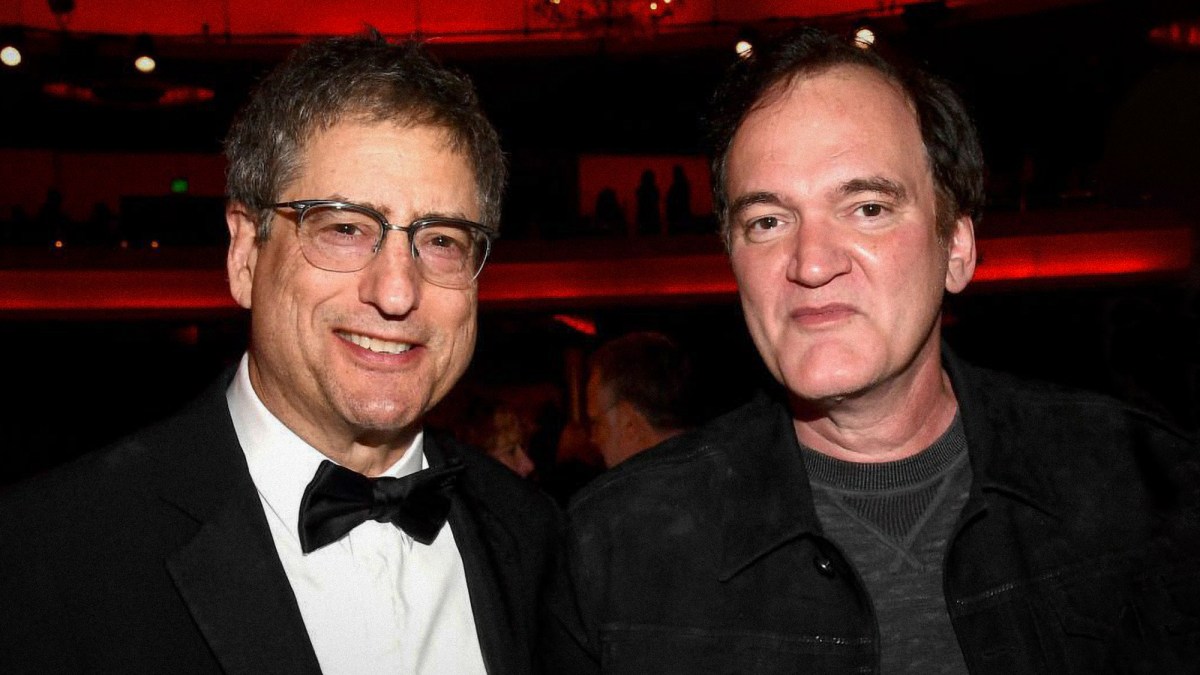
From the moment 1992’s Reservoir Dogs launched him like a supernova, Quentin Tarantino‘s career was intertwined with Harvey and Bob Weinstein. From Pulp Fiction to Inglourious Basterds, Kill Bill and the rest, Tarantino stayed monogamous as their cornerstone auteur until The Weinstein Company imploded and it was time for him to seek a new studio to hang his hat. This created the most hotly contested courtship Hollywood had seen in years.
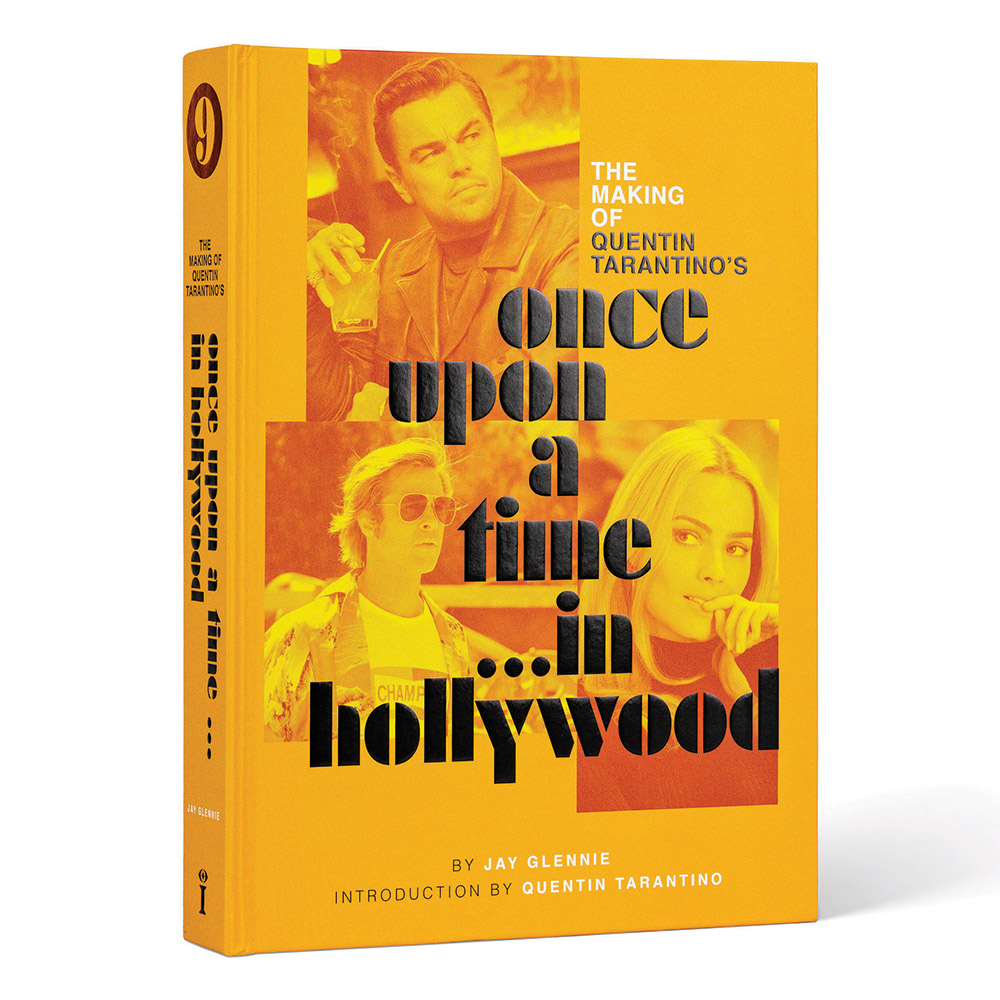
In a chapter from his new book The Making of Quentin Tarantino’s Once Upon a Time in Hollywood (Insight Editions), out October 28, author Jay Glennie details the seduction process and how Tom Rothman‘s passion — which included ensuring Tarantino retained the deal he had across all his films (including Django Unchained which Sony released internationally), that gives him back his copyright after 20 years — won Sony not only that global hit movie, but also most likely the 10th and final film Tarantino is working on now.
The Boy in the Iron Box is making his way to the screen.
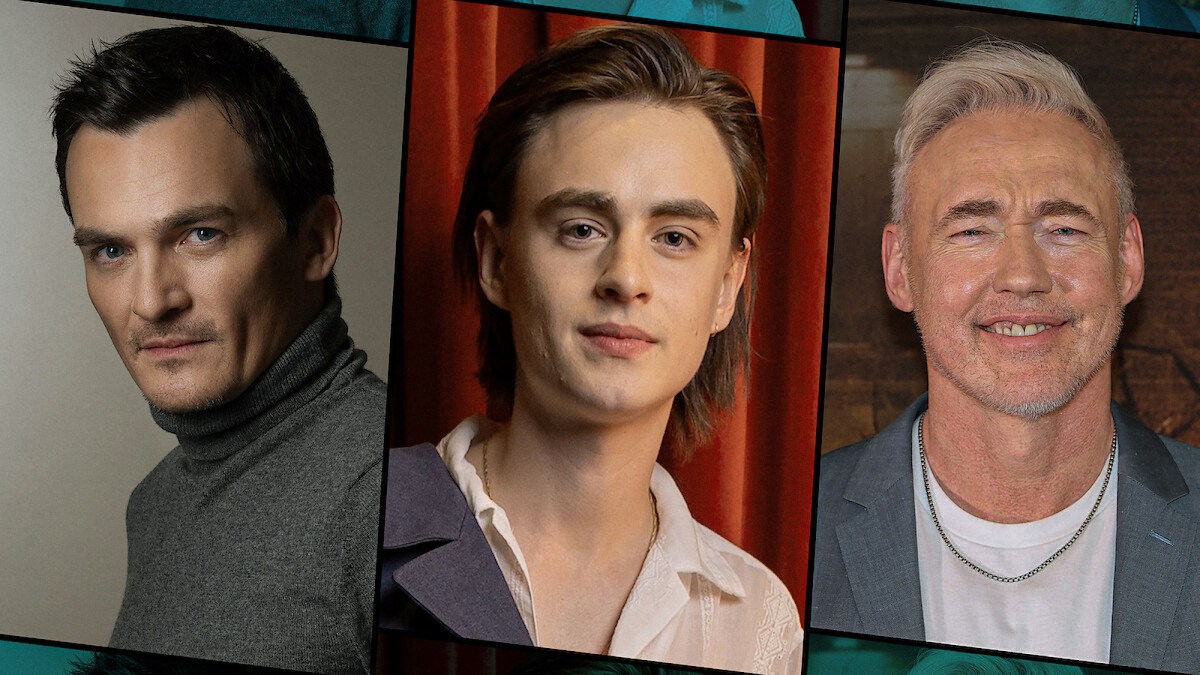
Guillermo del Toro and Chuck Hogan’s serialized novel is getting a feature film adaptation from writer-director David Prior (Guillermo del Toro’s Cabinet of Curiosities, The Empty Man). Starring Rupert Friend, Kevin Durand, and Jaeden Martell, The Boy in the Iron Box is the pulse-pounding tale of a team of mercenaries who find themselves out of their depth on a remote summit. What they encounter there will give you nightmares.
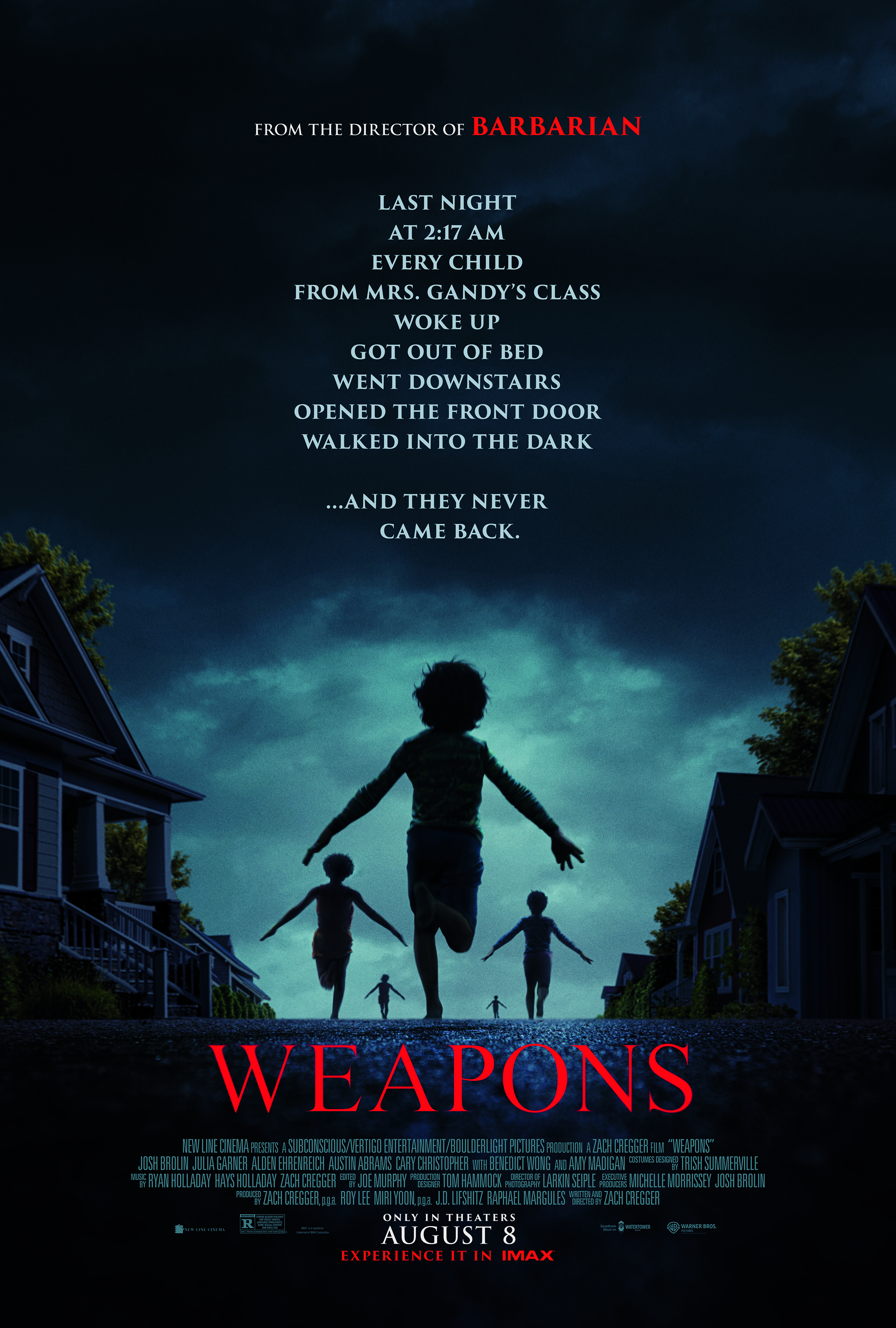
You can finally take writer/director Zach Cregger’s Weapons home.
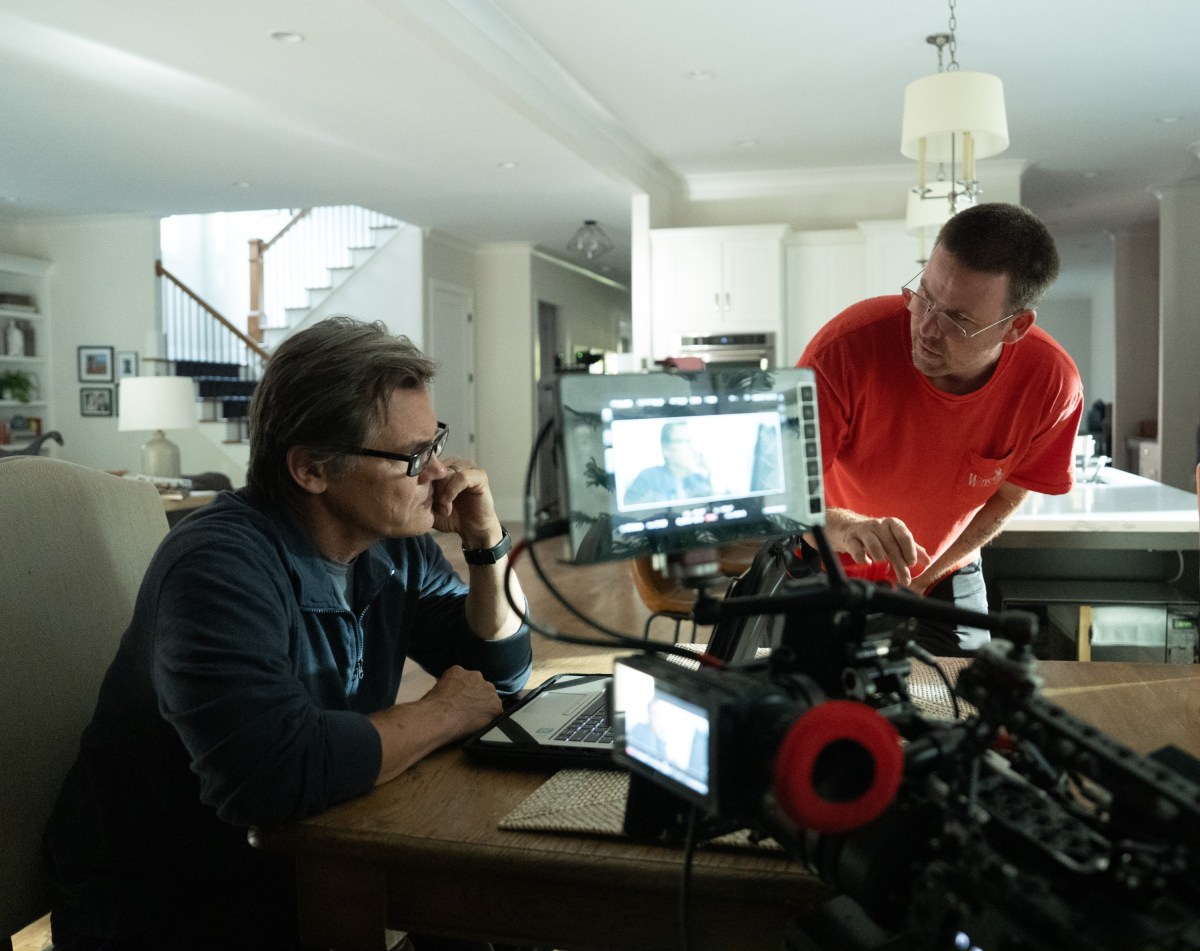
The horror epic, about a classroom full of kids that mysteriously vanish at 2:17 a.m., was released in theaters this summer, where it promptly became a huge hit. It made more than $267 million worldwide, which is even more impressive when you consider that it was an original concept, not based on a preexisting property. There are even rumblings that the movie, which stars Julia Garner, Josh Brolin and Alden Ehrenreich, could be a low-key Oscar contender. (Amy Madigan should be a shoo-in for Best Supporting Actress.)
And if you wanted to further explore its mysteries over and over again, now is your chance, with the film available on digital (on Apple TV, Prime Video, Fandango on Demand and other platforms) and physical media (DVD, Blu-ray and 4K UHD).
TheWrap spoke to Cregger about some of the things everyone has been talking about since the release of Weapons. “You hope people are going to respond to it and try and keep your expectations low and but that’s a hard thing to do,” Cregger said about the oversized response to Weapons. “But I was very pleasantly surprised.”
Read on for Cregger’s breakdown of some of Weapons most talked-about moments. But a massive spoiler warning should be issued ahead.
This is a story about my friend Aubrey, who died. It is also, inevitably, about me. This is possibly – definitely – self-involved, but the loss of someone is not abstract, or simply about someone’s inherent human worth, it is also about how stricken we are not to have them around, about what they meant to us, the part they played in our story.
Aubrey Day died a year ago, October 2, 2024. We had known each other 20 years, having met when I joined Total Film magazine, at Future Publishing. He was overseeing a few publications, but his passion was clearly movies and TV. He was a few years older than me, which in your 20s feels like a generation, and seemed debonair and certain, insanely confident and very, very clever. A few colleagues disliked him, not least because as well as being the smartest guy in the room, he was never especially shy about letting you know he was the smartest guy in the room. I just felt I had a lot to learn. And he was more than happy to teach. Not that he had a curriculum, or talked down to you (well, he didn’t always talk down to you), but he would present a problem and push you to solve it. It was a little sink or swim – he’d worked a bit in tabloids and had a tougher approach than the pally magazine world I was used to – but if he believed you could swim, that belief would buoy you.
The Fall Will Probably Kill You is a reader-supported publication. To receive new posts and support Nev Pierce‘s work, consider becoming a free or paid subscriber.
Watch the shorts by Nev Pierce, including Bricks, an Edgar Allan Poe adaptation starring Jason Flemyng and Blake Ritson, which David Fincher said about: “A morbid yet classy take on a morbid classic.”
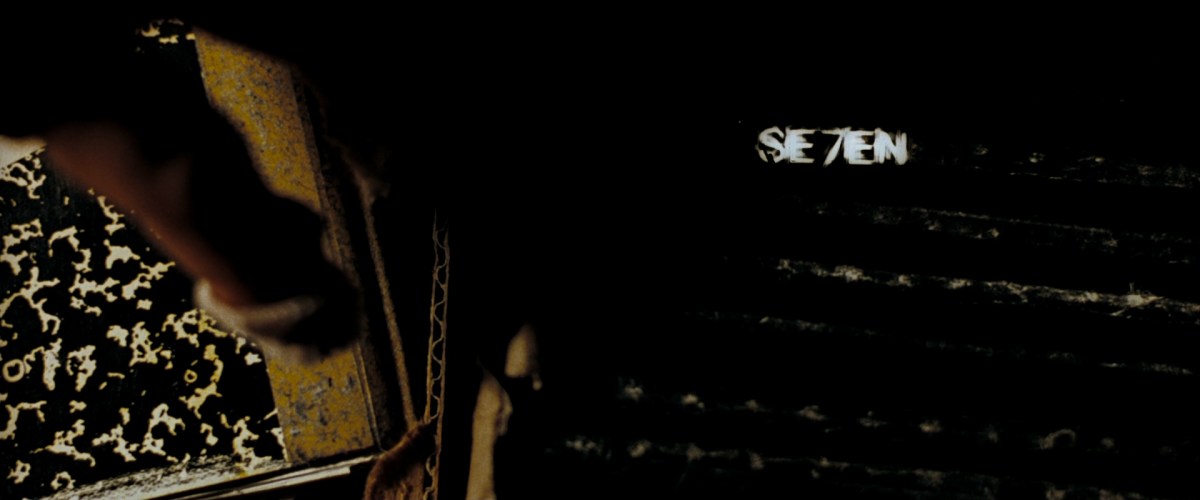
On September 22, 1995, David Fincher’s SE7EN introduced audiences to a darkness unlike anything seen before, accompanied by an opening title sequence from Kyle Cooper that has since become one of the most influential in film history.
For this classic title sequence, David Fincher tasked Kyle Cooper, founder of Prologue Films, to get inside the mind of a serial killer, immediately setting an ominous tone. Typography was scrawled into scratch board and shot on film, and Cooper shot tabletop photography representing the preparation of the killer’s obsessive sketchbooks. This dark yet spirited sequence was called a “masterpiece of dementia” and was credited with the resurgence of a generation’s interest in film title design.
The audio of this video is pulled from Kyle’s interview on the 2010 Blu-ray Special Edition of SE7EN, where he discussed the making of the sequence in detail.
In Part 1, Kyle reflects on his early conversations with Fincher. The two bounced ideas back and forth, shaping a vision that would forever change the way opening credits were made. This reel pairs finished titles with original process photographs, every frame shot on film, every prop (from John Doe’s notebooks to the hand model) photographed and tested.
“People think there’s computer graphics in there, but we assembled the majority of the sequence by hand… it takes on a life of its own.” In Part 2, he explains how he created the unsettling typography. Every letter was scratched, smeared, and distorted through the camera itself, analogue from start to finish. This reel pairs final frames from the title sequence with the original process photography of John Doe’s notebooks, props, and hands, showing how the haunting visuals took shape long before digital tools.
“This is John Doe’s job: he gets up, makes his books, plans his murders, drinks his tea.” In part 3, he reveals how the titles were designed to immerse viewers directly into the fractured psyche of the killer. To capture the killer’s mindset, Kyle went beyond typography. He gathered real objects from his surroundings, fish hooks, razor blades, sewing needles, twine, even clumps of hair from his shower drain, and filmed them in-camera alongside hand-crafted journals. These raw analogue elements were photographed, tested, and layered into the sequence, blurring the line between prop and pathology.
Kyle has recalled in interviews that during the premiere, when the title sequence finished, the audience actually clapped, something almost unheard of for opening credits. Thirty years later, that impact still reverberates across cinema and design.
The SE7EN End Credits Crawl
The unease of SE7EN doesn’t end with the final scene. Even the closing crawl was designed to keep audiences trapped in John Doe’s world.
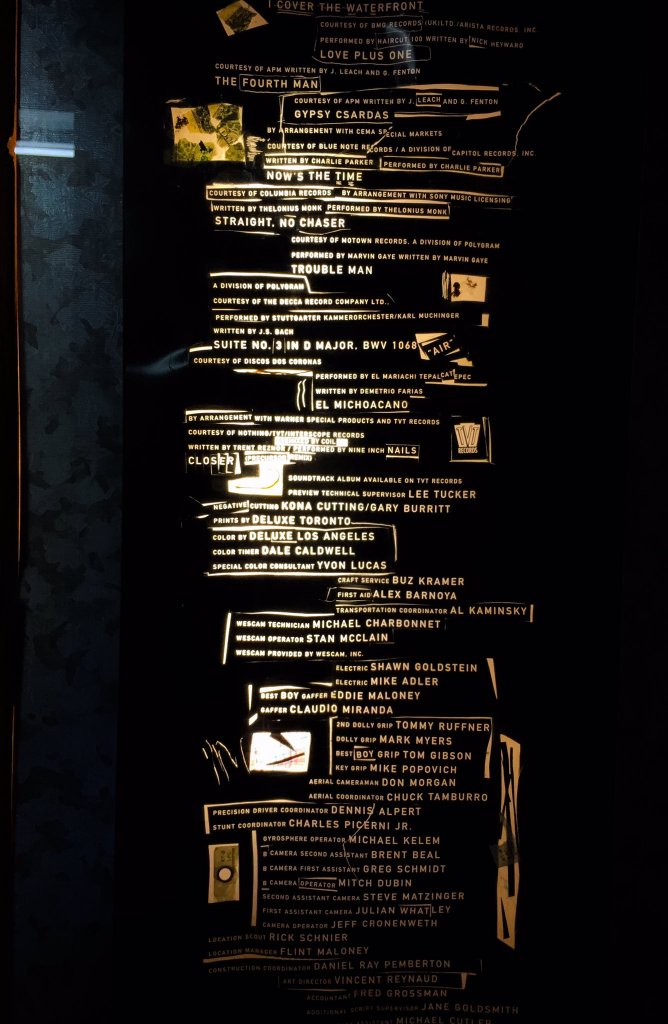
Kyle and Kim Cooper crafted the end credits entirely by hand. Each name was cut out and taped together into a single, massive scroll, almost like a tapestry. The piece was then shot with a video camera and lit from behind so the light bled through the lettering.
To deepen the sense of obsession, the crawl was embellished with objects John Doe might have owned: razor blades, fishing hooks, twine, screws, wire, flies, even hair pulled from a shower drain. Every detail was assembled practically, frame by frame, just like the opening titles.
We first show the original handmade scroll, now preserved in five long backlit panels at Prologue Films. Continue watching to see the crawl as it appeared in 1995. Instead of rolling upward like a traditional credit sequence, Fincher had it roll downward, a subtle inversion that mirrored the sick, twisted psychology at the heart of the film.
SE7EN end credits crawl panel, displayed at Prologue Films, photographed by Hideo Kojima.



 The Fincher Analyst