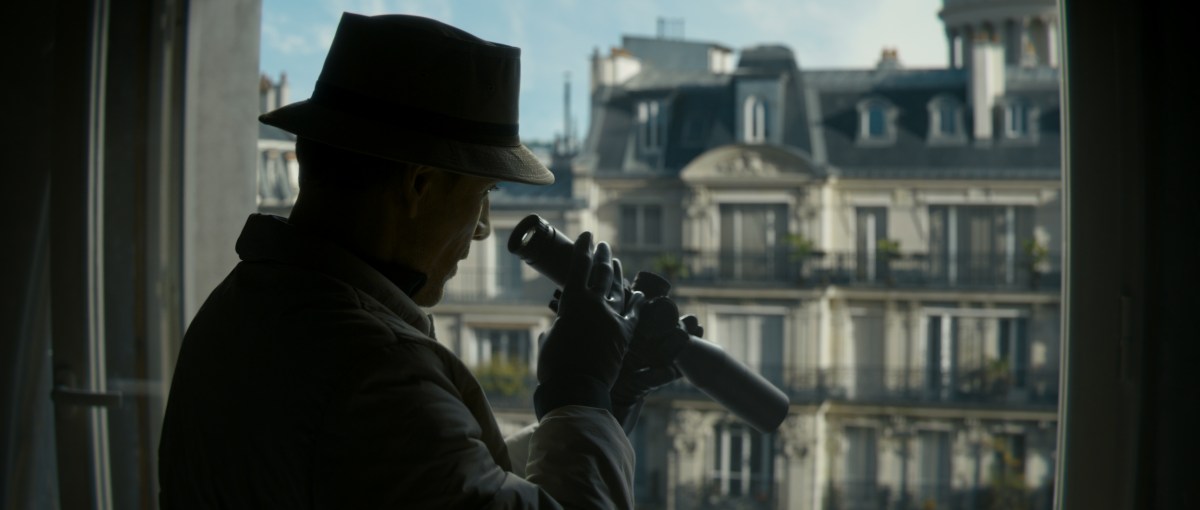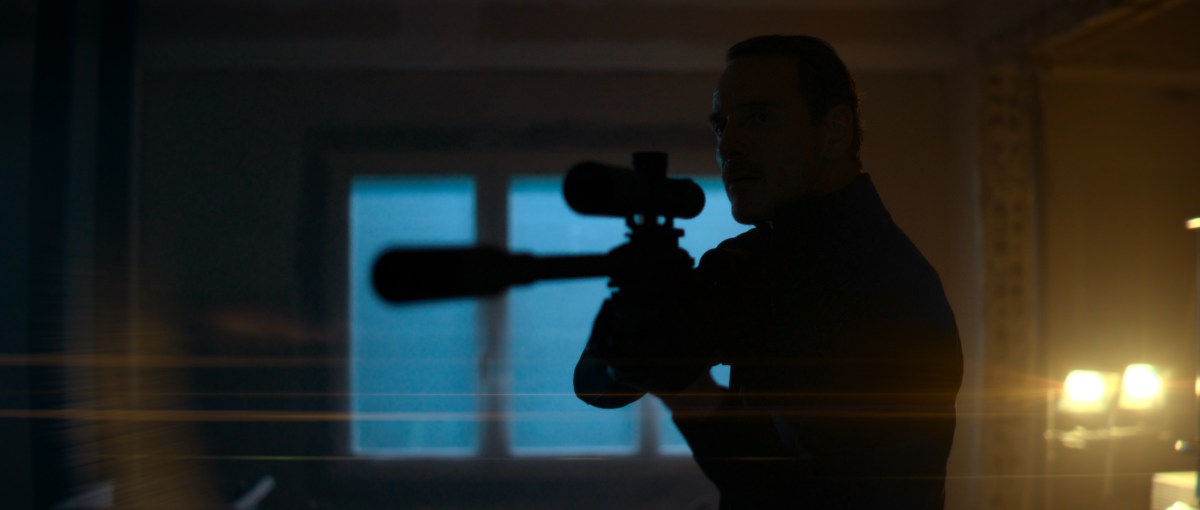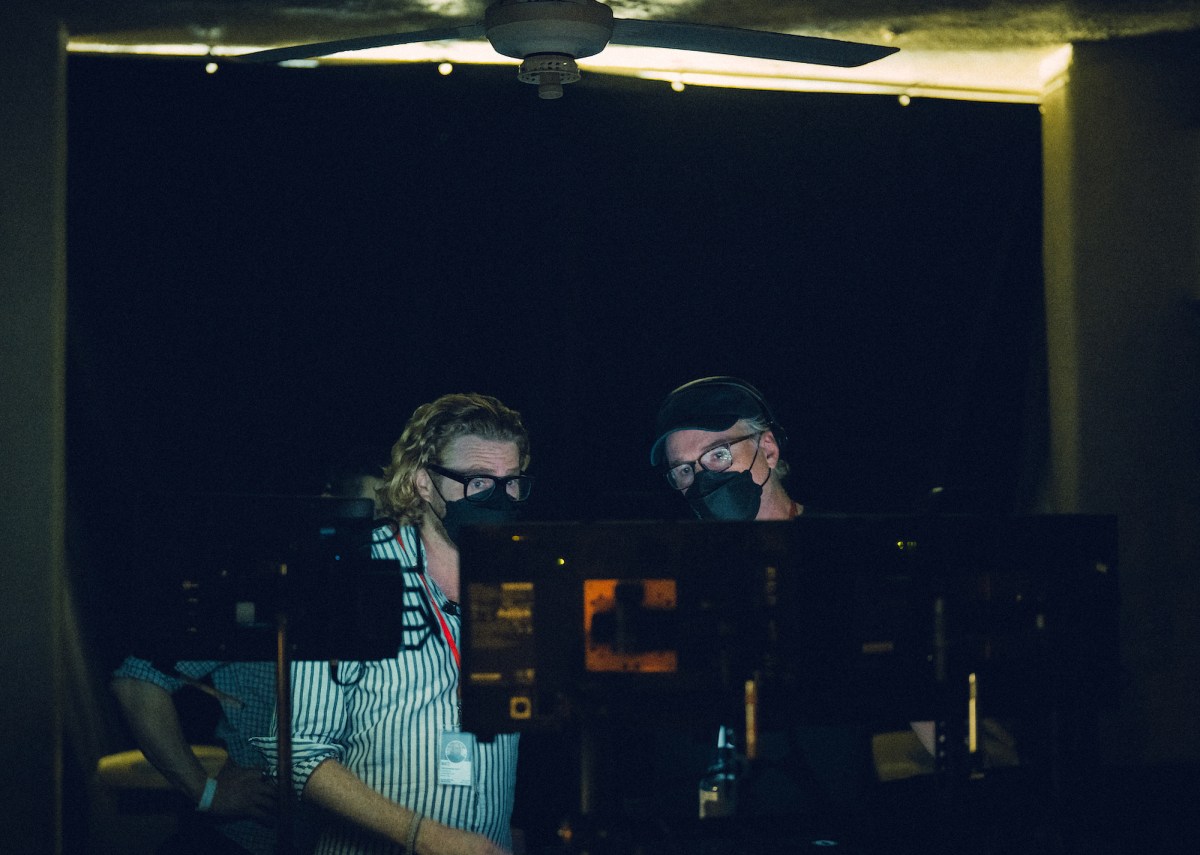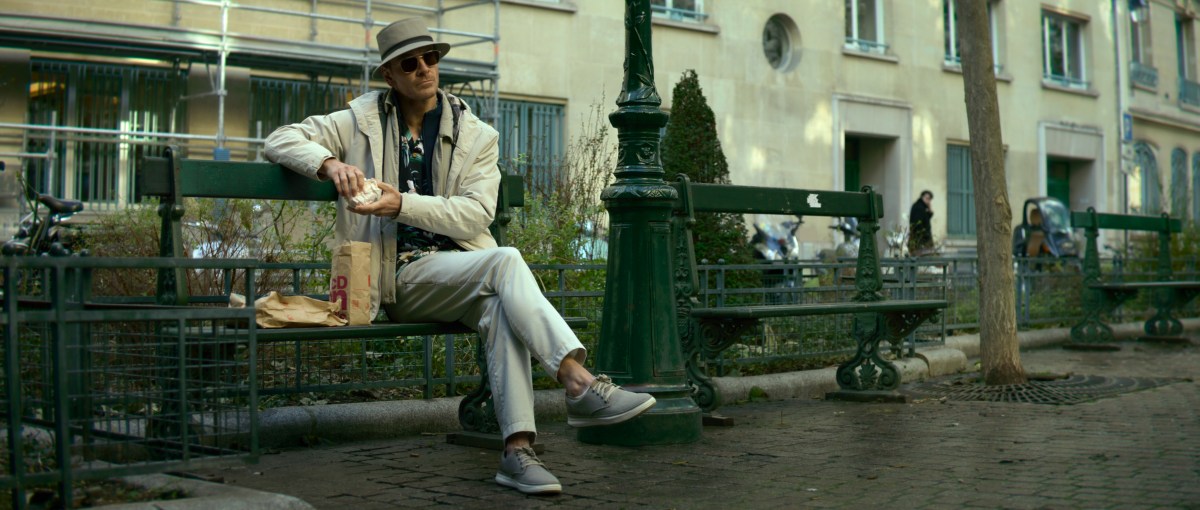
Costume designer Cate Adams convinces audiences a guy like Michael Fassbender can walk through the world unnoticed. That’s not an easy task. The costume designer makes the titular character in David Fincher‘s The Killer an assassin who blends into his surroundings, almost like death himself in the big cities.
It’s a Fincher film in which the craftsmanship shines without drawing attention away from the story at hand.
Or, in the case of The Killer, the character. It’s more about point-of-view than plot, thanks to Andrew Kevin Walker‘s cold yet intimate, clockwork-like script as well as the impeccable work from crew members such as Adams. She makes the killer’s world and his wardrobe more tangible, both mundane and poppy.
Recently, the costume designer spoke with Below the Line about her beautiful, subtle work in David Fincher’s latest film.
The last few years have been a whirlwind for Erik Messerschmidt, ASC. He had been working his way through the camera department for nearly two decades, including as a gaffer on David Fincher’s Gone Girl, before he began acting as DoP on a number of high-profile shows, one of them being Fincher’s Mindhunter for Netflix.
When Fincher decided to make Mank, his biopic about Citizen Kane screenwriter Herman J. Mankiewicz, as played by Gary Oldman, he brought Messersschmidt along with him to shoot the film in black and white. The movie was slightly hobbled by the pandemic that kept it from playing theatrically, but Messerschmidt won the Oscar for Cinematography, as well as the feature film category for the American Society of Cinematographers (ASC).
Last year, Messerschmidt reunited with Fincher for his adaptation of the graphic novel, The Killer, starring Michael Fassbender as an assassin on a streak of vengeance after a job goes wrong. He also teamed up with the great Michael Mann to shoot his racing biopic, Ferrari, starring Adam Driver.
Below the Line spoke with the cinematographer a few months back when he was in Poland for EnergaCAMERIMAGE, although we got on Zoom with him from the States.
Watch our interview with Erik Messerschmidt – famous cinematographer, who presented the film Ferrari directed by Michael Mann during this year’s edition of EnergaCAMERIMAGE Festival. We also discuss his collaborations with David Fincher in Mindhunter and The Killer.
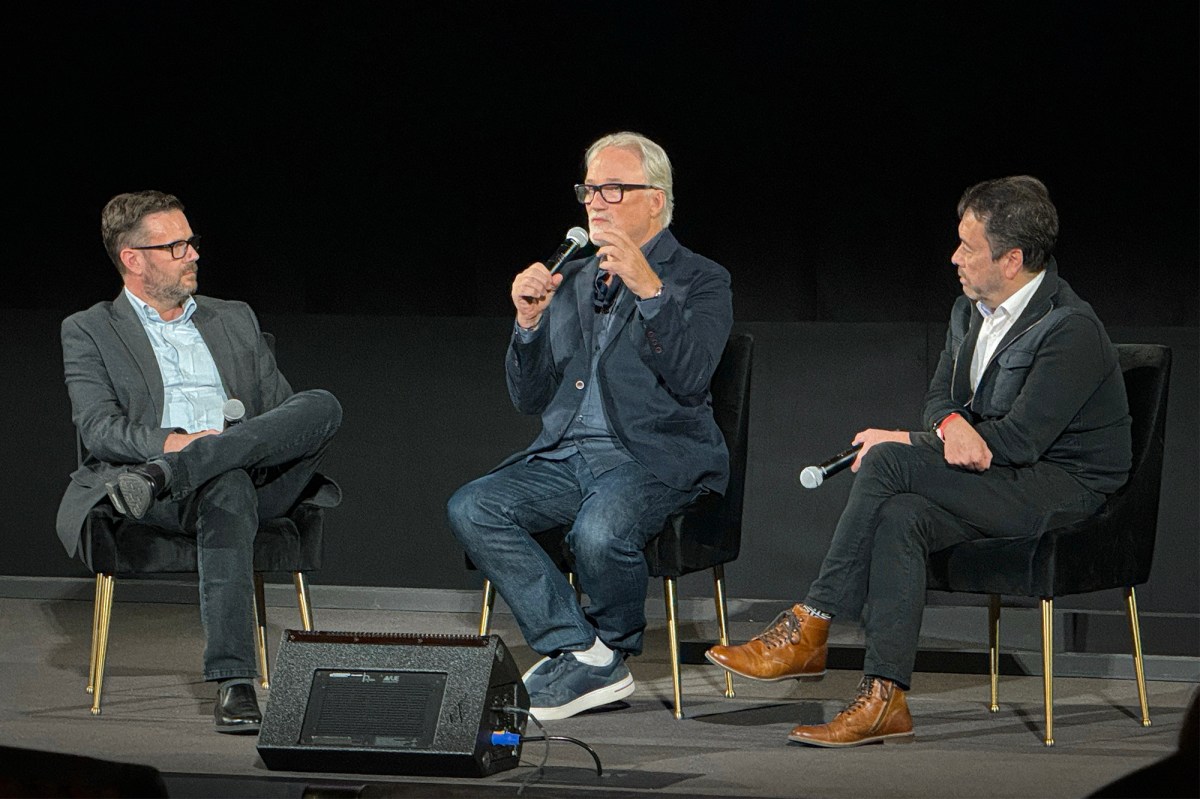
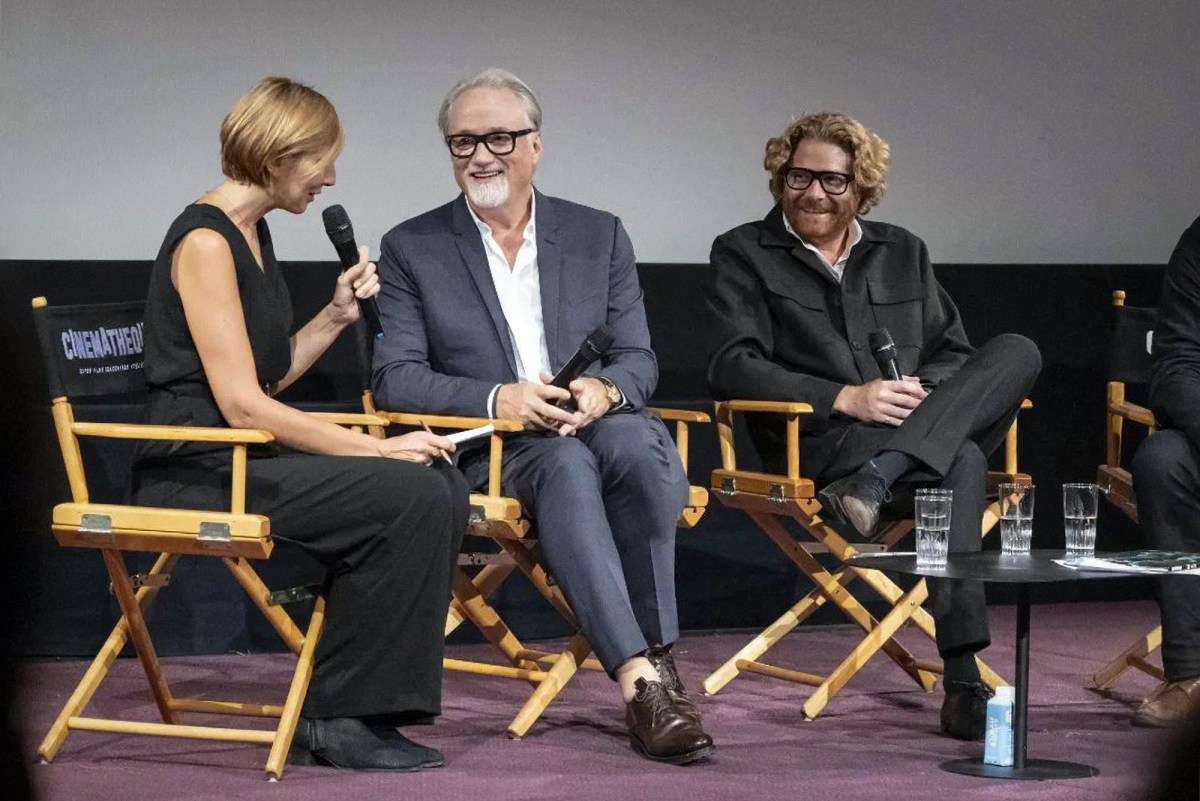
The Egyptian Theatre re-opened in Hollywood with a special screening of The Killer, followed by a Q&A with Director David Fincher and Sound Designer Ren Klyce hosted by Jim Hemphill.
The next day, a screening of Zodiac was followed by a discussion with the director about the film and his career, “David Fincher par David Fincher, une leçon de cinéma” (“David Fincher by David Fincher, a lesson in cinema”).
Frédéric Bonnaud, Director of the Cinémathèque française Anaïs Duchet, Interpreter October 13, 2023 Cinémathèque Française
The Cinémathèque Française (French Cinematheque) hosted a David Fincher Retrospective from October 13 to 22, 2023, in Paris (France).
Supported by Netflix, Patron of the Cinémathèque, it opened with a preview screening of The Killer followed by a Q&A with Director David Fincher, and Director of Photography Erik Messerschmidt, ASC.
Andrew Kevin Walker and David Fincher have one of the most creatively fulfilling relationships in Hollywood, and their latest collaboration “The Killer” is certainly one of their best.
Walker burst onto the scene as the screenwriter behind 1995’s twisted serial killer thriller “Seven,” whose shocking ending immediately caught the eye of Fincher and became the director’s second feature film. Walker would go on to perform uncredited work on scripts for “The Game” and “Fight Club” and wrote a few other Fincher projects that never came to pass (including a “20,000 Leagues Under the Sea” reboot for Disney), and recently co-wrote and produced the 2022 thriller “Windfall” for Netflix and filmmaker Charlie McDowell. But “The Killer” brings Walker and Fincher back into familiar territory with a fresh twist.
When Fincher first pitched “The Killer” – which follows an assassin (played by Michael Fassbender) following a botched hit – to Walker back in 2008, they talked about minimizing the character’s dialogue. When the project gained new life at Netflix a decade later, Walker was tasked with a very specific job: try and write the film with only 10 lines of dialogue for Fassbender’s character.
Walker nearly succeeded, getting the total number of lines down to 13, but after the first assembly cut of the film was put together, Fincher and Walker agreed the film needed more voiceover. Much more.
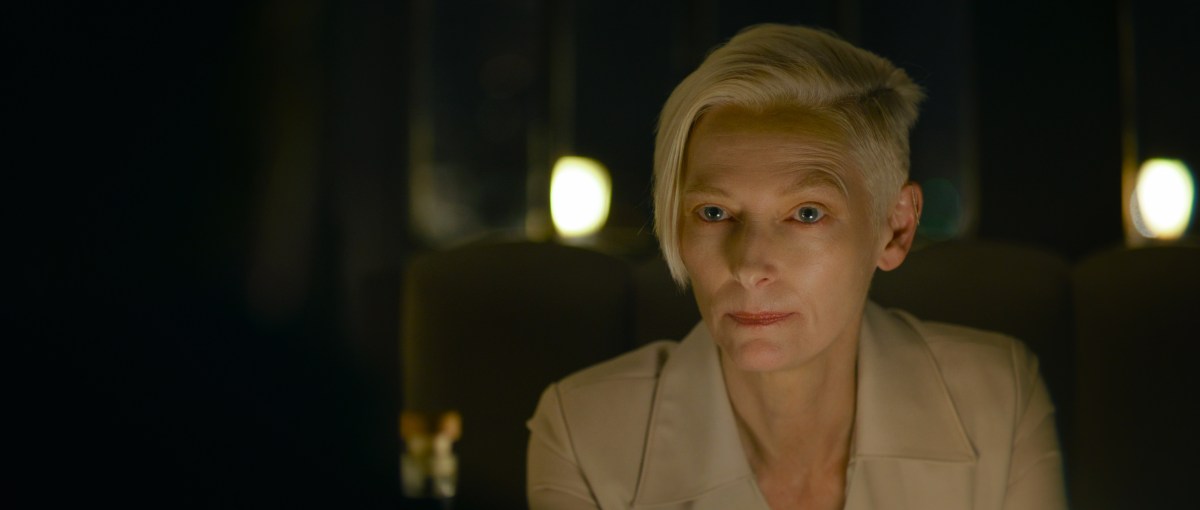
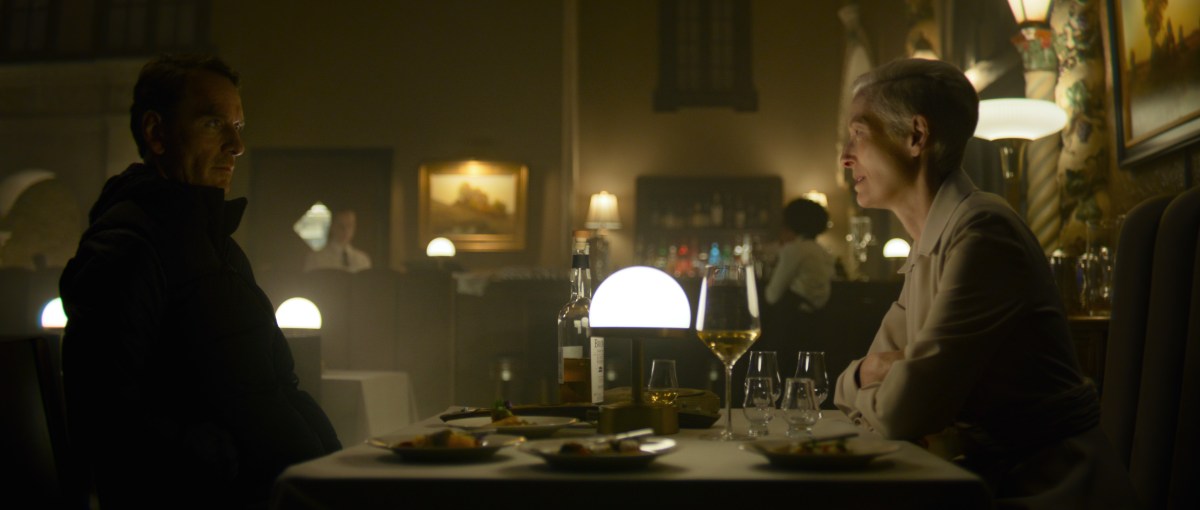
Walker unpacked this process and his relationship with Fincher in an interview with The Wrap, also touching on how he went about crafting the Tilda Swinton scene in the film and the somewhat ambiguous ending.
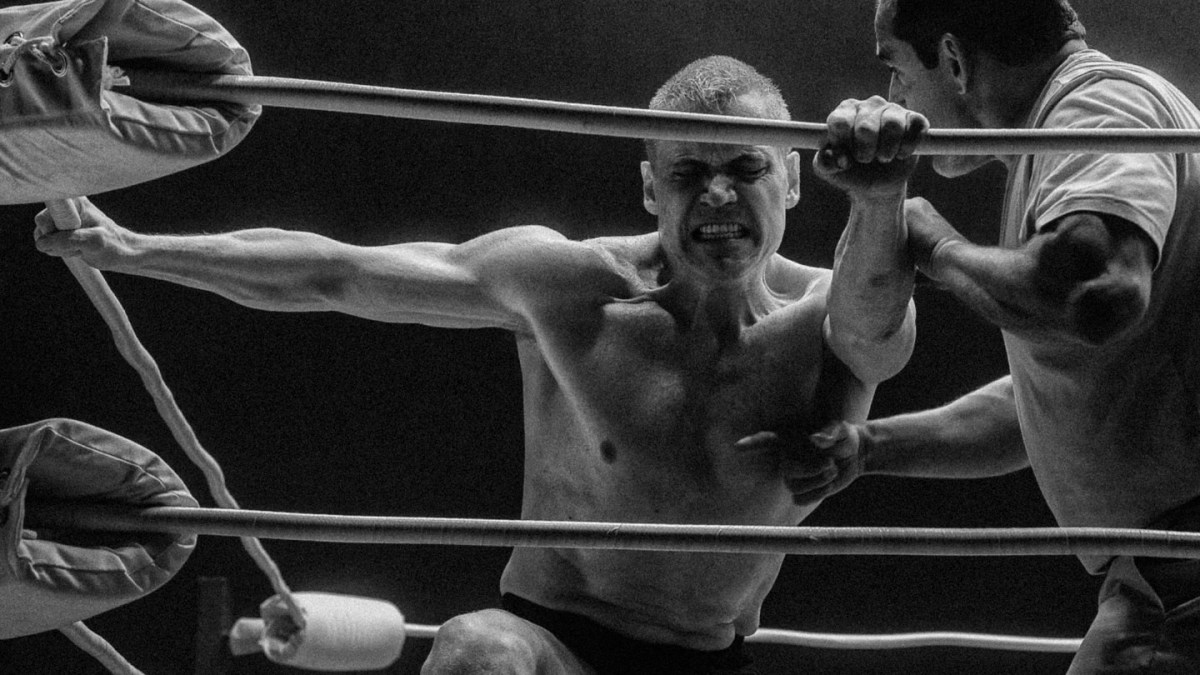
After casting Holt McCallany in Alien 3 and later in Fight Club in the types of tough-guy roles that have largely defined his four-decade career, David Fincher finally let the 60-year-old actor showcase his softer side as FBI agent Bill Tench in Netflix’s psychological thriller Mindhunter. It was that performance, in which McCallany was able to balance steely professionalism and quiet melancholy, that earned him a meeting with director Sean Durkin, who was looking for the right person to play the patriarch of the Von Erich clan inThe Iron Claw, his biopic of the legendary Texas wrestling dynasty. As Fritz Von Erich, a loving but severe father who pushed his four sons (played by Zac Efron, Jeremy Allen White, Harris Dickinson, and Stanley Simons) beyond their limits—often with tragic results—McCallany is earning the best reviews of his career, and even, to his own shock, some Oscar buzz. As he told Fincher over Zoom a couple of weeks ago, he’s still letting it all sink in.
DAVID FINCHER: Hey Holtster! How have you been?
HOLT MCCALLANY: I’ve been great David, because there were a couple of articles, one in Variety, one in Vulture, that picked me as somebody who could get a possible Academy Award nomination for Supporting Actor, even though it’s going to be a very tough year.
Also on this episode, “The Iron Claw” actor Holt McCallany talks about playing the legendary wrestler Fritz Von Ehrich in Sean Durkin’s powerful new drama. He discusses coming to peace with many of his scenes that were cut from the film, and what we can expect from his upcoming directorial effort “The Star Maker” after getting script notes from David Fincher.
A quintessential “that guy” performer in the eyes of most audience members, this veteran character actor boasts over 80 credits in a three-decade career, including turns in “Nightmare Alley” and Netflix’s “Mindhunter.” As the hardened patriarch of a family of pro wrestlers in A24’s sports drama, McCallany exudes an intense and thorny power, expertly revealing the dangers of a particular form of pressurized ambition. It’s a performance that’s reminiscent of J.K. SimmonsOscar-winning turn as the abusive music teacher in “Whiplash.”
David Fincher‘s “The Killer” and Michael Mann‘s “Ferrari” are two of the most visually sophisticated films of the fall season, though their approaches are as different as those two directors’ sensibilities. “The Killer” is icy and deglamorized where “Ferrari” is smoking hot and visceral; Fincher puts his character under a microscope for the audience to study like a microbe, while Mann wants the audience in the driver’s seat with his passionate and committed characters. What the two films have in common is an attention to light, color, and framing as expressive tools that is exceptional in its precision; few movies in recent memory have guided the viewer’s eye in such an intentional and affecting manner. That’s because of something else these movies share: cinematographer Erik Messerschmidt.
Just seven years ago, Messerschmidt was a respected gaffer on series like “Mad Men” and “Bones.” That changed when, on the set of “Gone Girl,” Fincher recognized Messerschmidt’s taste and talent; he promoted the gaffer to director of photography on his Netflix series “Mindhunter,” which led to Messerschmidt’s collaboration with Fincher on “Mank.” Messerschmidt’s shimmering black-and-white photography on that movie earned him some well-deserved attention — and an Academy Award for his first cinematography credit on a feature film.
Unsurprisingly, Fincher returned to Messerschmidt when the time came to make “The Killer,” though the director of photography says the initial conversations were quite different. “It was unique because we didn’t really talk about the way the movie was meant to look at all,” Messerschmidt told IndieWire. “We talked about pace and structure and how he wanted to handle the voiceover and structure the scenes. We talked about the movie much more abstractly than when we were talking about ‘Mank.’ The palette and aesthetic came much later in the process.”
Julian Mitchell, editor, media maker publishing December 18, 2023 NAB Amplify
NAB Amplify caught up with cinematographer Erik Messerschmidt just as he was about to fly to the Camerimage film festival in Poland, where Ferrari, his first film with director Michael Mann, was in competition. “An extraordinary experience, once in a lifetime,” was his on-the-spot reaction to the question, “How was it?”
But we wanted to talk to him about The Killer, a Netflix movie with an appearance in selected theaters at very selective times. Most people would wait for the stream and live with the Internet compression artifacts for the treat of a Fincher film, this time about a man who kills for a living. Cue Michael Fassbender, with sociopathic personality traits and an attention to detail that leaves nothing to chance; some reviews suggested that this man was a depiction of Fincher himself.
If you have seen previous films or television shows from the Fincher/Messerschmidt duo, especially 2018’s Mindhunter, you would be in a comfortable place from the get-go of The Killer: An avocado-colored LUT, exquisite scene management, and meticulous coverage. “Is this all you?” the DP was asked.
“It’s a thing that David and I do together. I enjoy the process of camera direction; I view it as sort of my principal job, really. It’s thinking about the structure of the film and of each scene. Every director’s interaction in terms of coverage and camera direction is different. It’s the first thing David and I discuss: structure and pacing. It’s almost an editorial conversation in terms of what we’re going to provide Kirk [Baxter, the editor] and how each scene breaks down in terms of the pace,” he said.