The People Who Can See Inside David Fincher’s Head

The famously meticulous Mank director is surrounded by collaborators tasked with turning his most ambitious ideas into reality.

David Sims
December 9, 2020
The Atlantic

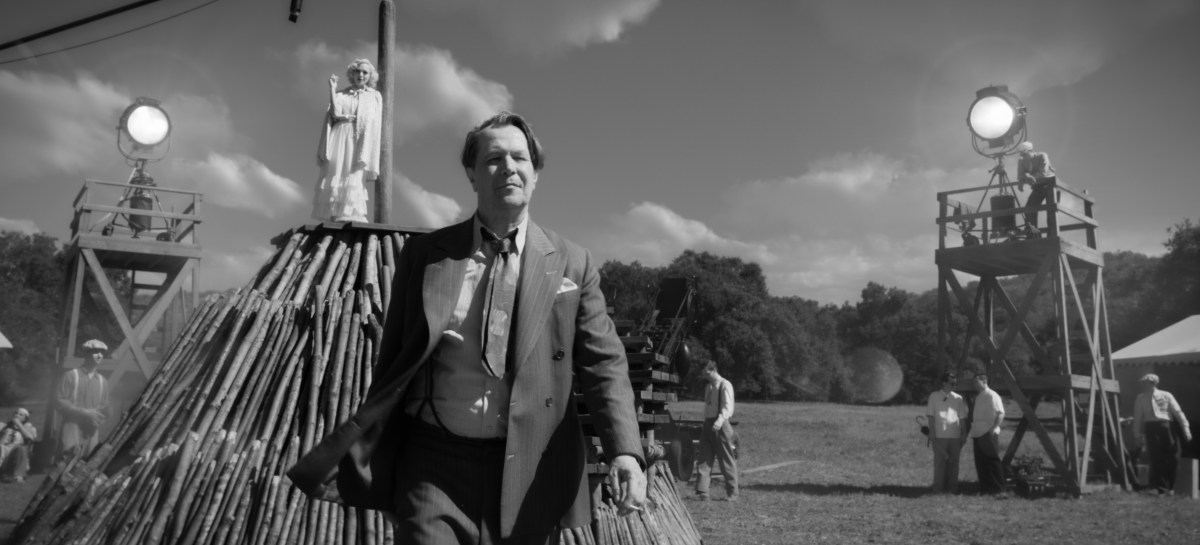
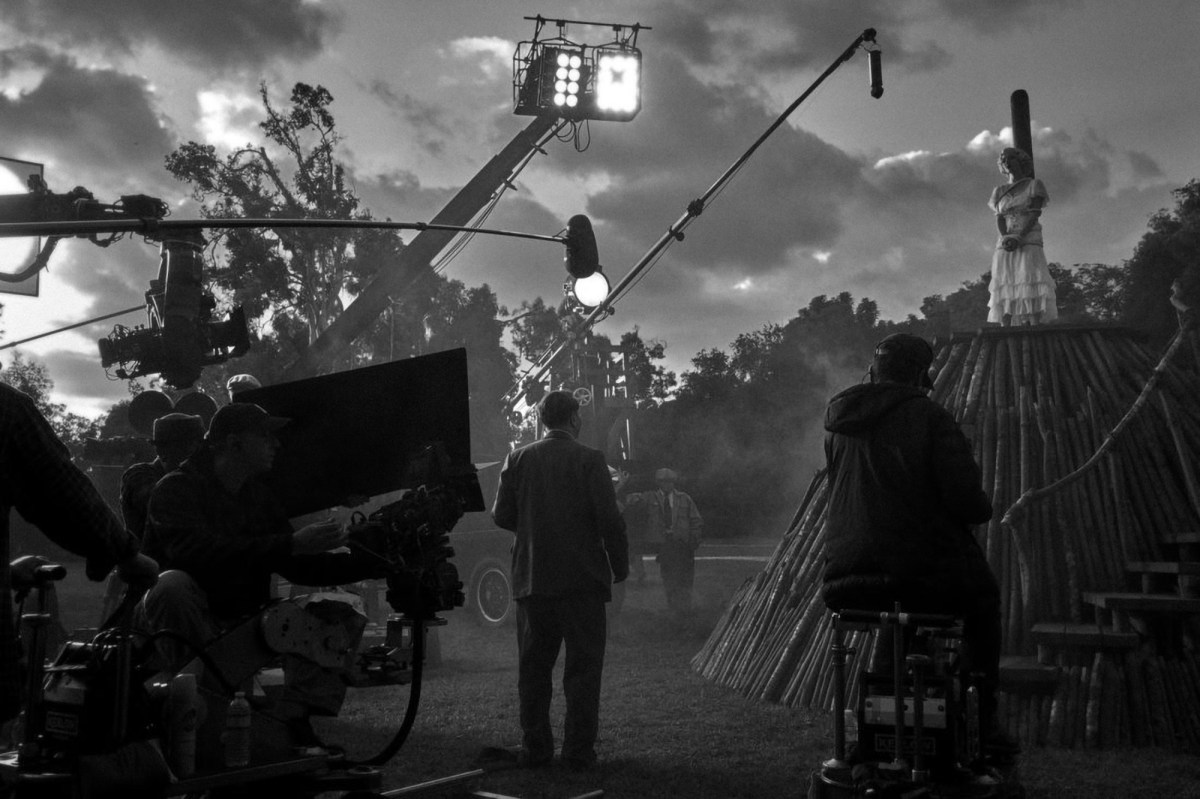
Early in Netflix’s Mank, the screenwriter Herman J. Mankiewicz (played by Gary Oldman) ambles onto an outdoor movie set, where he bumps into an array of glamorous characters. In a scene full of repartee with real-life figures such as the actor Marion Davies, the film honcho Louis B. Mayer, and the mogul William Randolph Hearst, the visual details of the environment might seem unimportant. But to Mank’s director, David Fincher, they mattered. “The grass was not to David’s liking, and the sky was not to his liking, so all that’s been replaced,” Peter Mavromates, his co-producer, told me. When making a movie, Fincher literally controls heaven and earth.

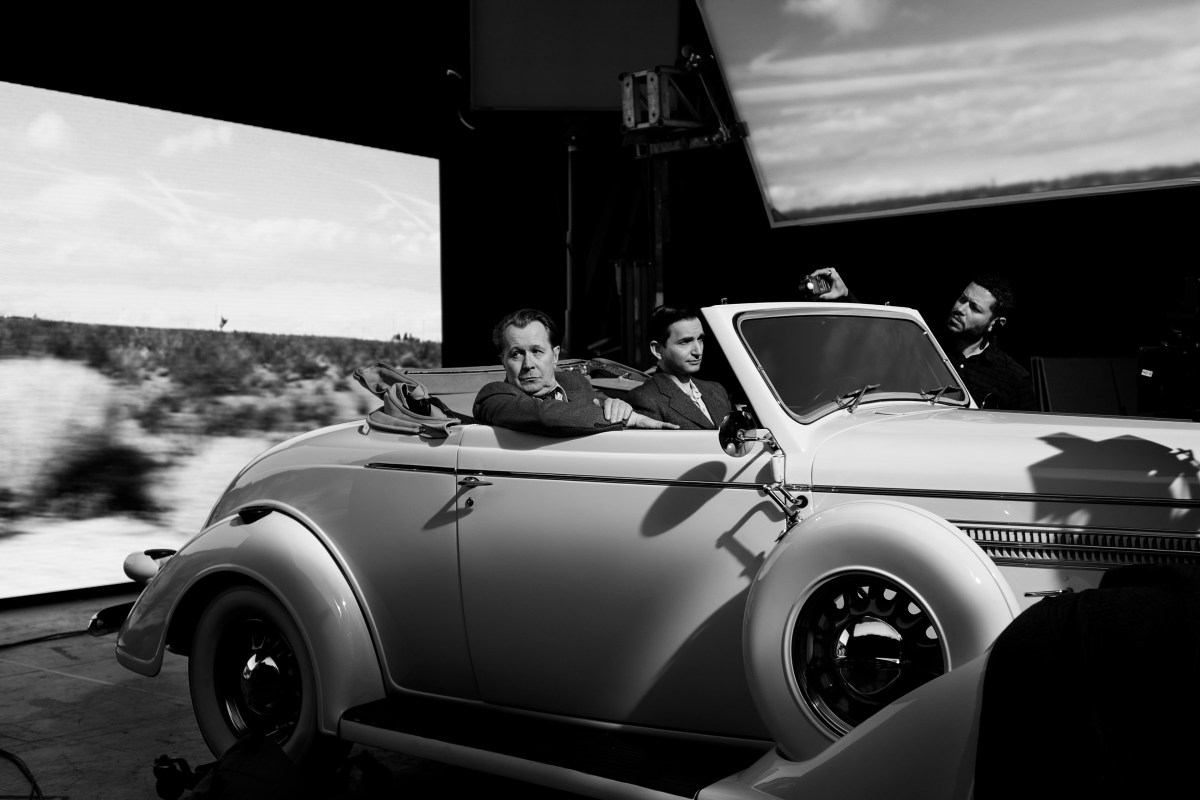
That example sums up the capricious-sounding, godlike power of a director, especially in the age of digital filmmaking, which allows for total command of every frame. But as with all of his movies, Fincher’s vision for Mank was realized by a group of dedicated collaborators, most of whom have worked with the director for many years across projects. This film, which Fincher mulled for nearly three decades, is unlike anything he has made before. An unusual-looking-and-sounding film set in the Golden Age of Hollywood, Mank reflects the aesthetic of the 1930s with its black-and-white cinematography; an echoey, old-fashioned sound mix; and a brassy, orchestral score. But Fincher also wanted it to be a distinctly modern film, which posed many unique and fascinating technical challenges to the creators charged with bringing his lofty ideas to life.

Read the full profile

X2X: Glimpse into Future Filmmaking with Mank

How will filmmaking adapt in the post-Covid era? A glimpse into the future is afforded by Mank, the forthcoming Netflix feature project directed by David Fincher and spearheaded by producer Ceán Chaffin. More than a love letter to a catalog title, Mank is a glimpse of the complex interplay of human creativity and the filmmaking process as practiced in Hollywood’s golden era.

December 9, 2020
X2X

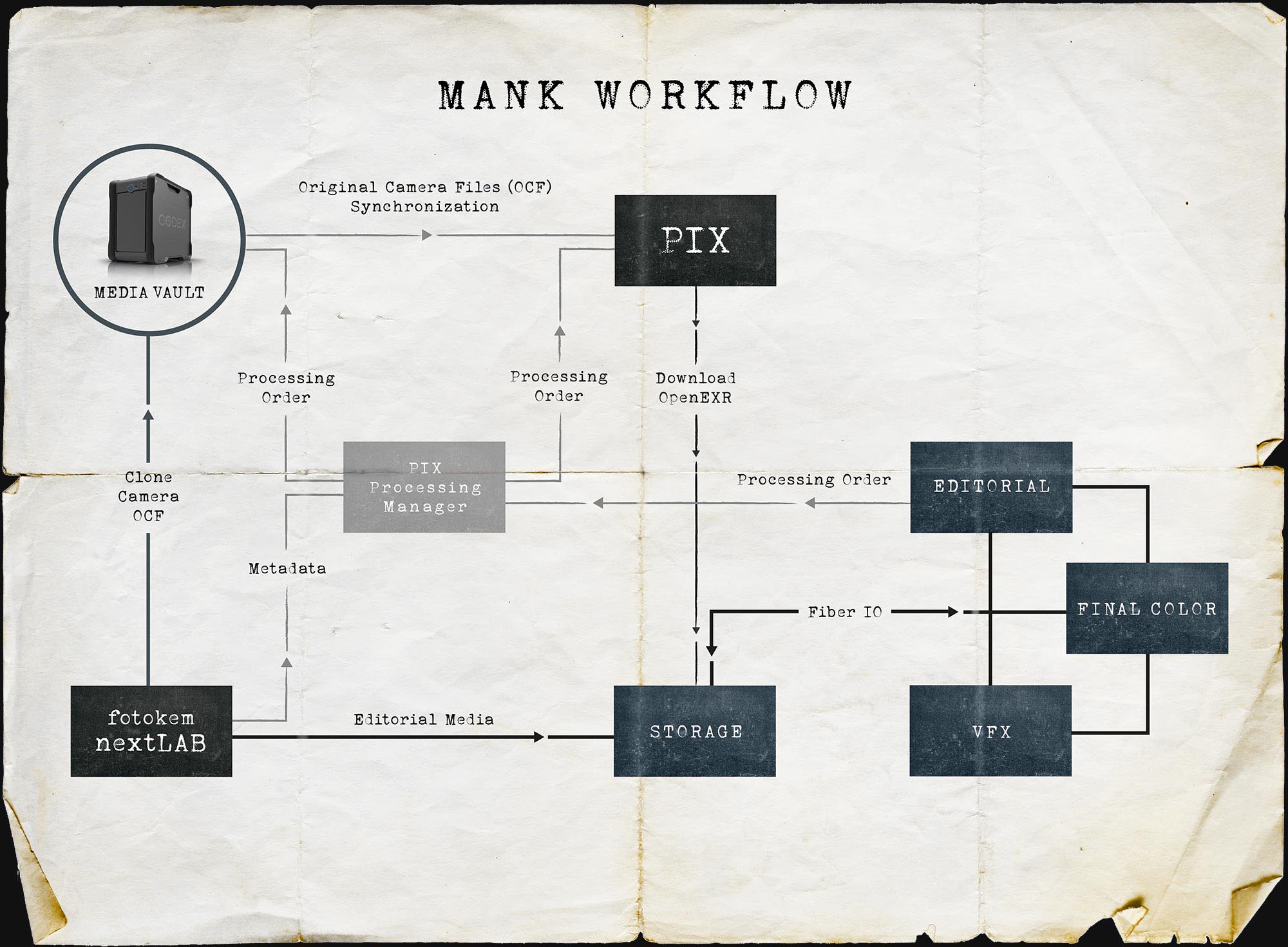
Fincher is known for working in the vanguard of filmmaking technology. Examples include a very early digital intermediate on Panic Room – the first ever in a facility designed for the purpose – and Zodiac, one of the first major features to be shot almost entirely digitally. The remote collaboration envisioned by futurists at the dawn of the internet era was already common practice for his team long before the pandemic.

“Fortunately, we have not missed a beat,” says Chaffin. “We are working now exactly how we mostly could have been working the past ten years, which is working from home during post.”

But the virus and its requirement to remain physically apart may constitute a final push for the industry at large. All the attributes of true remote connectivity – reduced travel time and its attendant benefits in terms of stress, pollution and time savings, enhanced with rapid feedback, superior organization and a centralized database – will still be applicable when health concerns subside.

A canvas of the top pros on David Fincher’s team indicates that while the pandemic naturally raises stress levels, the need to work separately has been essentially a non-factor in terms of their ability to collaborate efficiently and keep the production on track.

Fincher came to the project with a mandate that the production work with the PIX production hub. Chaffin, who has made nine films with Fincher, says that the system is an essential tool for collaboration and input.

“This is how we have worked for a long time.” says Chaffin. “David feels the team is making the film with him, sharing in the problem-solving. Even when we were in the same building, David was often responding exclusively through PIX. His preferences and concerns are there for everyone to refer to. You don’t have to go find that one email, or remember a comment someone made on their way out the door.

Read the full case study

‘Mank’ Production Team on Creating a Feast for the Eyes and Ears for the Netflix Period Film

Jazz Tangcay
December 4, 2020
Variety

In David Fincher’s “Mank,” bowing Dec. 4 on Netflix, a key sequence takes place at Hearst Castle, when Gary Oldman’s Herman J. Mankiewicz shows up drunk and unannounced at a lavish dinner party thrown by newspaper tycoon William Randolph Hearst, played by Charles Dance.

Filming is normally not allowed at the actual estate, with Lady Gaga’s “G.U.Y.” video the rare exception. So production designer Donald Graham Burt and Fincher spent months tracking down locations around Los Angeles that could stand in for the grand mansion. Interiors and exteriors were shot at a Pasadena estate, the Huntington Gardens, in Malibu and on soundstages, all carefully decorated to give the feel of San Simeon if not the exact details.

It was up to sound mixer Ren Klyce to capture the extravagance that Fincher sought when filming those scenes. Klyce reverse-engineered the mix — distorting sounds, lowering the dynamic range and limiting the high frequency to take audiences back to 1930s Hollywood and the “Citizen Kane” era.

Burt and Klyce break down how they re-created the estate and captured the aura of wealth.

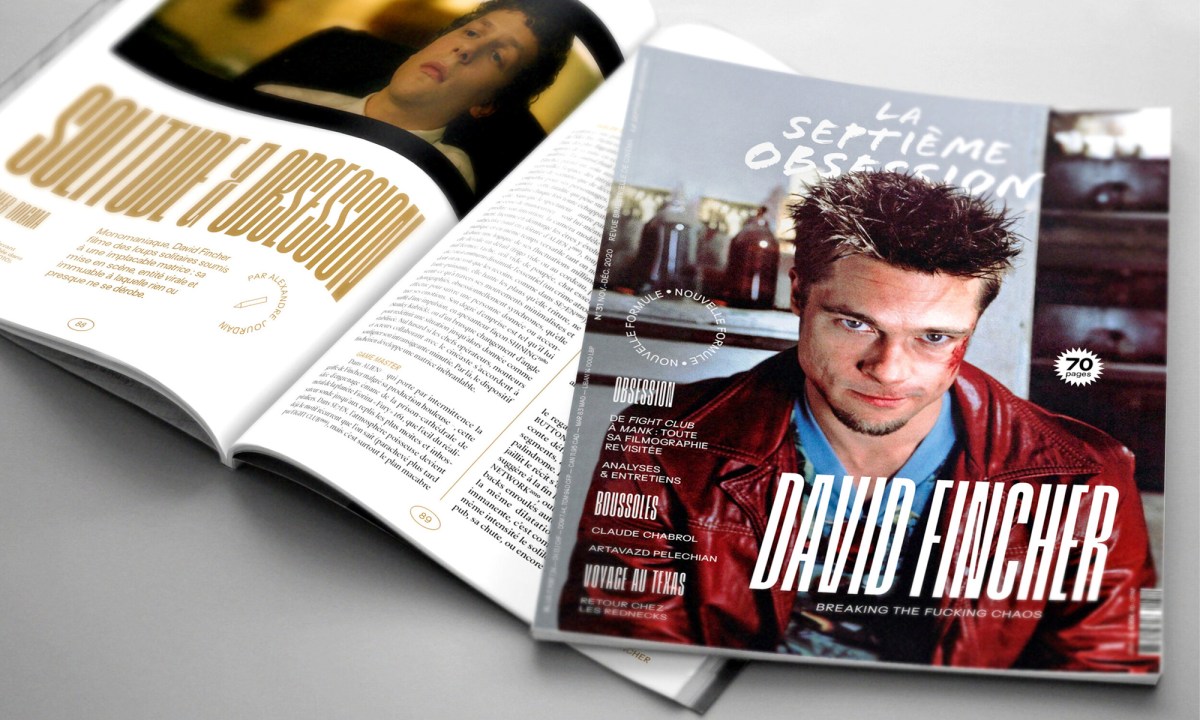
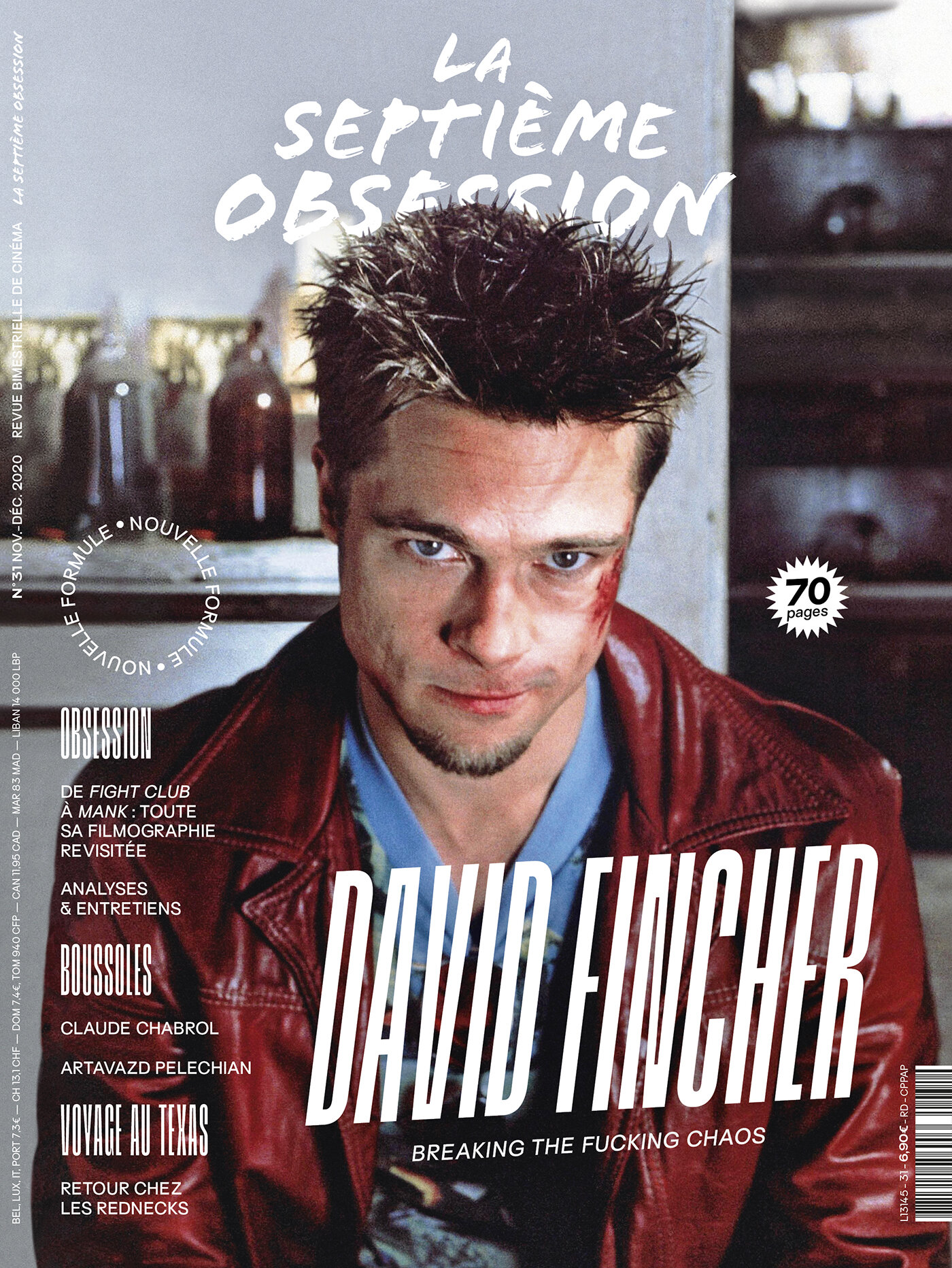
La Septième Obsession 31: David Fincher

La Septième Obsession

OBSESSION: David Fincher

1. Mank de David Fincher

Le grand film de Fincher débarque sur Netflix le 4 décembre. L’occasion d’un entretien avec le cinéaste, mais aussi avec ses collaborateurs les plus proches. 16 pages spéciales.

Scénario pour une critique par Nicolas Tellop

Filmopathe entretien avec David Fincher – par Nev Pierce

Collaborer avec Fincher entretiens avec Erik Messerschmidt (chef opérateur) – Donald Graham Burt (chef décorateur) – Trish Summerville (costumière) – Kirk Baxter (monteur)

2. Revisiter Fincher

Plongée exceptionnelle dans l’oeuvre de l’un des plus grands cinéastes contemporains. Filmographie commentée, analyses… 50 pages à lire.

4 nuances de Fincher par Jean-Sébastien Massart et Fabrice Fuentes

David Fincher en 14 titres Propaganda Films (clips) – Alien 3Se7enThe GameFight ClubPanic Room + les plans de Panic RoomZodiacL’Étrange histoire de Benjamin ButtonThe Social Network Millénium + la musique hantée de MilléniumGone Girl Mindhunter

3. Analyses

Démoniaque – la perfection du crime par Nathan Reneaud
Fantômes et paranoïa par Jérôme d’Estais
Solitude & obsession – Fincher Dogma par Alexandre Jourdain
Poétique du suicide par Aurélien Lemant
Le système des objets – design finchérien par Dick Tomasovic

Sommaire complet

Commander

Not Many People Have Basements in California …

To celebrate the 25th anniversary of Se7en and the 10th anniversary of The Social NetworkThe Ringer hereby dubs September 21-25 David Fincher Week. Join us all throughout the week as we celebrate and examine the man, the myth, and his impeccable body of work.

Robert Graysmith visiting the home of Bob Vaughn in ‘Zodiac’ is David Fincher’s most purely terrifying scene. Here’s how it came together—and came to stay in the movie.

Jake Kring-Schreifels 
Jake Kring-Schreifels is a sports and entertainment writer based in New York.
September 24, 2020
The Ringer

On a wet September night in 1978, Robert Graysmith couldn’t resist his curiosity.

A month earlier, the San Francisco Chronicle cartoonist had received an anonymous phone call regarding the identity of the Zodiac, the notorious Bay Area serial killer. “He’s a guy named Rick Marshall,” the mysterious voice told him at the start of an hourlong conversation. The killer’s string of murders in 1969 had gone unsolved, but Graysmith suddenly had a new lead. According to the tipster, Marshall—a former projectionist at The Avenue Theater—had hidden evidence from his five victims inside movie canisters, which he’d rigged to explode. Before hanging up, the nameless caller told Graysmith to find Bob Vaughn, a silent film organist who worked with Marshall. The booby-trapped canisters, Graysmith learned, had recently been moved to Vaughn’s home. “Get to Vaughn,” the voice told him. “See if he tells you to stay away from part of his film collection.”

After years spent independently entrenched in the open case, Graysmith dug into Marshall’s history and found several coincidences. His new suspect liked The Red Spectre, an early-century movie referenced in a 1974 Zodiac letter, and had used a teletype machine just like the killer. Outside The Avenue Theater, Marshall’s felt-pen posters even had handwriting similar to the Zodiac’s obscure, cursive strokes. On occasional visits to the upscale movie house, Graysmith observed Vaughn playing the Wurlitzer and noticed the Zodiac’s crosshair symbol plastered to the theater’s ceiling. There were too many overlapping clues. He had to make a trip to Vaughn’s house. “We knew there was some link,” Graysmith tells me. “I was scared to death.”

Almost three decades later, director David Fincher turned Graysmith’s nightmarish visit into one of the creepiest movie scenes of all time. It takes place near the end of Zodiac, after Graysmith (Jake Gyllenhaal) follows Vaughn (Charles Fleischer) to his home through the rain in his conspicuous, bright-orange Volkswagen Rabbit. Once inside, the mood quickly becomes unnerving. After disclosing that he, not Marshall, is responsible for the movie poster handwriting, Vaughn leads a spooked Graysmith down to his dimly lit basement. As the organist sorts through his nitrate film records, the floorboards above Graysmith creak, insinuating another’s presence. After Vaughn assures his guest that he lives alone, Graysmith sprints upstairs to the locked front door, rattling the handle, before Vaughn slowly pulls out his key and opens it from behind. Graysmith bolts into the rain as though he’s just escaped the Zodiac’s clutches.

Ultimately, the third-act encounter is a red herring. Vaughn was never considered a credible suspect. But in a movie filled with rote police work and dead ends, those five minutes of kettle-whistling tension turn a procedural into true horror. The scene is a culmination of Graysmith’s paranoid obsession with the Zodiac’s identity—a window into the life-threatening lengths and depths he’ll go to solve the case—and a brief rejection of the movie’s otherwise objective lens. “It’s actually so different from the rest of the movie,” says James VanderbiltZodiac’s screenwriter. “It does kind of give you that jolt that a lot of the movie is working hard not to [give].”

Most simply, the basement scene is a signature Fincher adrenaline rush—a moment buttressed by years of intensive research, attention to accuracy, and last-minute studio foresight. Thirteen years after the movie’s release, it still sends shivers down Graysmith’s spine.

Read the full article