The “Mean Girls” and “Mamma Mia!” actress knows her performance as Marion Davies in“Mank” will be a turning point in her career. But first, she had to put some distance between herself and Hollywood.
In the Oscar-magnet Netflix film, her typist character brings ‘a young and fresh perspective’ to her boss, the booze-soaked narcissist writing ‘Citizen Kane.’
Please extend a big, hearty welcome to our new issue, which is inspired by David Fincher’s Mank. First a little bit of back story: the film was adapted from a script written by Fincher’s father, Jack, who took it on as a project set by his son (who was making his early incursions into Hollywood at the time) to liven up his retirement years. This was back in the early ’90s, and once it was ready, Fincher Jr hit something of a brick wall when it came to convincing studios to fund this black and white rendering of a vital moment in old Hollywood lore.
On the cover
The title refers to the nickname given to ace scribe, wit and raconteur, Herman J Mankiewicz, and how after years of coasting on his genius, he finally alienates enough professional cohorts to write something big, meaningful and dangerous. The 200 page script he ended up with was named American, but it ended up being released into cinemas (albeit not very many cinemas) under the name Citizen Kane, directed by Orson Welles. Mank is the story of how that script came into being, but is also a hard-nosed exploration into the malevolent nature of creativity, and the cruel aspect of parlaying real lives into a fictional context.
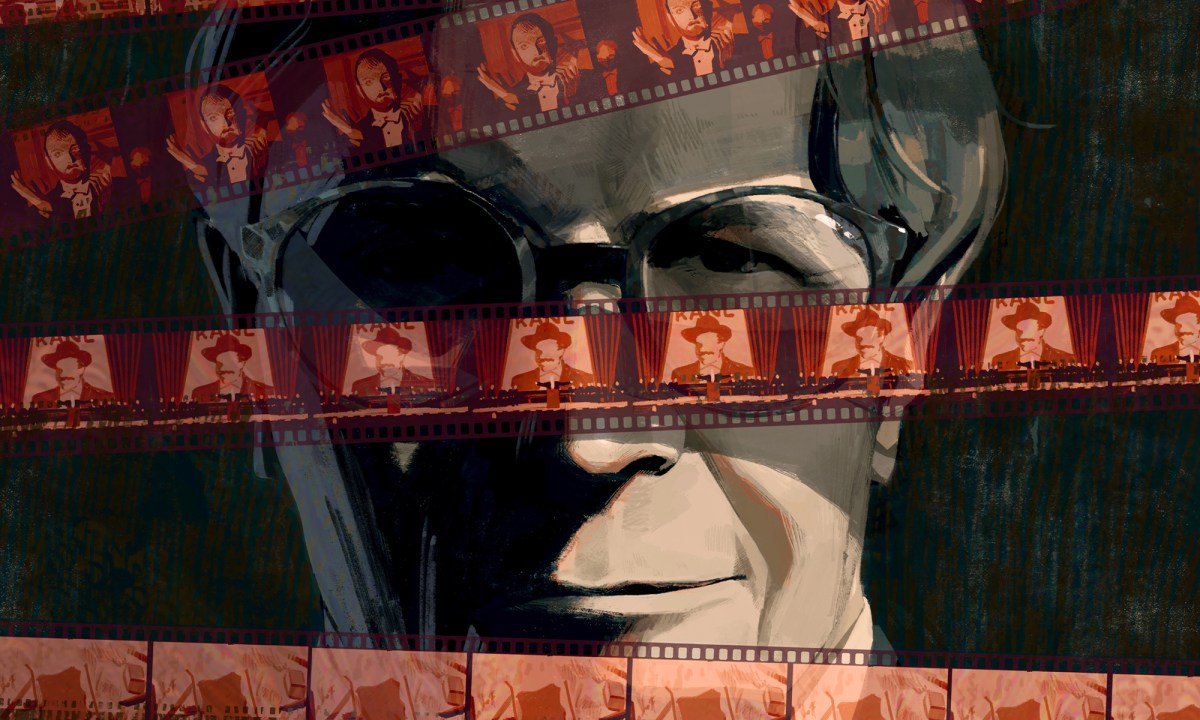
We worked with the Brooklyn-based illustrator Katherine Lam on a series of portraits inspired by cinema’s arch outsiders for our Shape of Water issue, and so she was our first choice to attack a cover about another fringe Hollywood figure being placed in the limelight. Her stunning portrait of Gary Oldman as Mank is obscured by reels of the film he had an important (but largely spectral) hand in bringing to life.
Inside the issue
A review of David Fincher’s Mank Hannah Woodhead verbally spars with this sumptuous evocation of classic-era Hollywood.
It’s All True: A Conversation with David Fincher David Jenkins talks to the master filmmaker about realising a passion project after a 30-year wait.
The Heroine Caitlin Quinlan profiles one of our favourite actors working today, Tuppence Middleton.
F For Fake On the magic tricks behind selecting costumes to show up on black-and-white film.
The Dreamers Adam Woodward scours the credits of Citizen Kane for the lost masters of cinema.
Six years ago, after I contacted David Fincher and told him I wanted to write an article about how he makes movies, he invited me to his office to present my case in person and, while I was there, watch him get some work done. On an April afternoon, I arrived at the Hollywood Art Deco building that has long served as Fincher’s base of operations, where he was about to look at footage from his 10th feature film, “Gone Girl,” then in postproduction. We headed upstairs and found the editor Kirk Baxter assembling a scene. Fincher watched it once through, then asked Baxter to replay a five-second stretch. It was a seemingly simple tracking shot, the camera traveling alongside Ben Affleck as he entered a living room in violent disarray: overturned ottoman, shattered glass. The camera moved at the same speed as Affleck, gliding with unvarying smoothness, which is exactly how Fincher likes his shots to behave. Except that three seconds in, something was off. “There’s a bump,” he said.
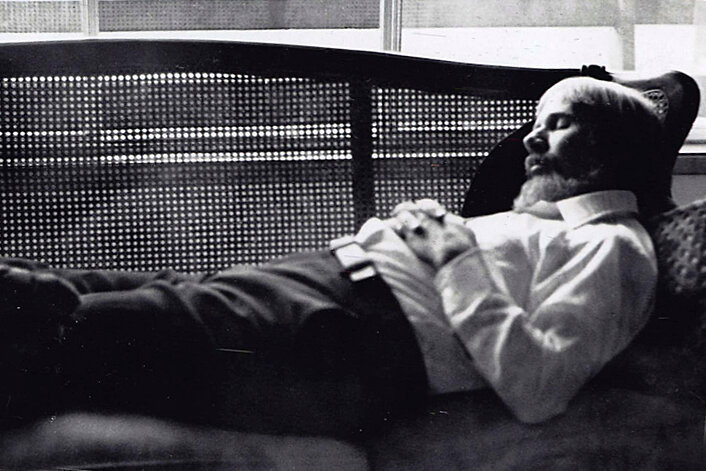
Jack Fincher photographed by David Fincher in 1976, when he was 14. “That’s why it’s out of focus”.
No living director surpasses Fincher’s reputation for exactitude. Any account of his methods invariably mentions how many takes he likes to shoot, which can annoy him, not because this is inaccurate but because it abets a vision of him as a dictatorially fussy artiste. Fincher, who is 58, argues that this caricature misses the point: If you want to build worlds as engrossing as those he seeks to construct, then you need actors to push their performances into zones of fecund uncertainty, to shed all traces of what he calls “presentation.” And then you need them to give you options, all while hitting the exact same marks (which goes for the camera operators too) to ensure there will be no continuity errors when you cut the scene together. Getting all these stars to align before, say, Take No. 9 is possible but unlikely. “I get, He’s a perfectionist,” Fincher volunteered. “No. There’s just a difference between mediocre and acceptable.”
The project had been in the family for decades: Jack conceived of the script in the late 1980s, and his son has been emotionally tied to the material since his father first showed him Citizen Kane at age 12. “It was only over time and with many, many conversations that we agreed there was something in this idea of a man finding his voice,” Fincher, 58, tells EW. “His voice was his entrée into Hollywood, and his voice was the thing that he was convinced didn’t really matter. How do we dramatize for the audience this dawning awareness of somebody who is self-immolating? That seemed like a ripe area of the garden to plant in.”
Fincher worked on the project with his father on and off for many years before his death in 2003, as can be seen in this exclusive annotated story sequence outline that arose from their countless conversations. “The pages are pre the draft,” the director says. “This is the outline from 1990 and has all of Jack’s scribblings on it as we were talking on the phone once a week and saying, ‘Well, what about if this happened?’ You can see the story was very different. It was a more complicated thing.”
There’s a moment in Mank, David Fincher’s incisive portrait of Herman J. Mankiewicz, where the irascible Hollywood genius is weighing the task before him. Already an accomplished screenwriter, Mankiewicz (played by Gary Oldman) has been tapped to script Orson Welles’ first film, an ambitious screenplay about newspaper titan William Randolph Hearst — the basis for Citizen Kane, now widely considered the greatest film of all time. “You cannot capture a man’s entire life in two hours,” Mankiewicz muses. “All you can hope is to leave the impression of one.”
It’s an apt commentary on Hearst and Kane, of course — but it’s also a mission statement for Mank itself: How do you tell the story of one of the greatest storytellers in Hollywood history?
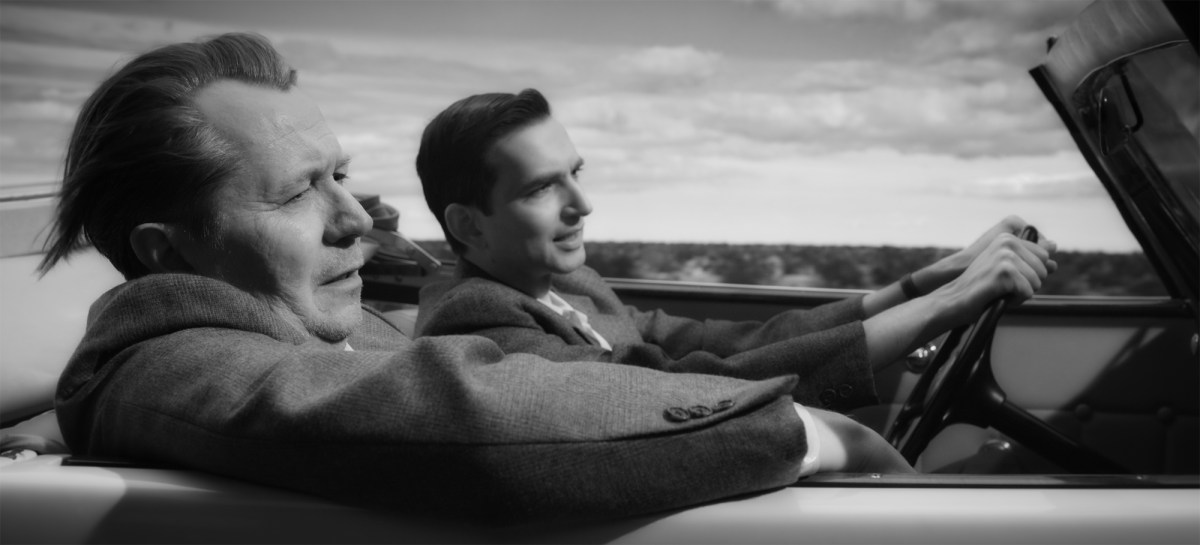
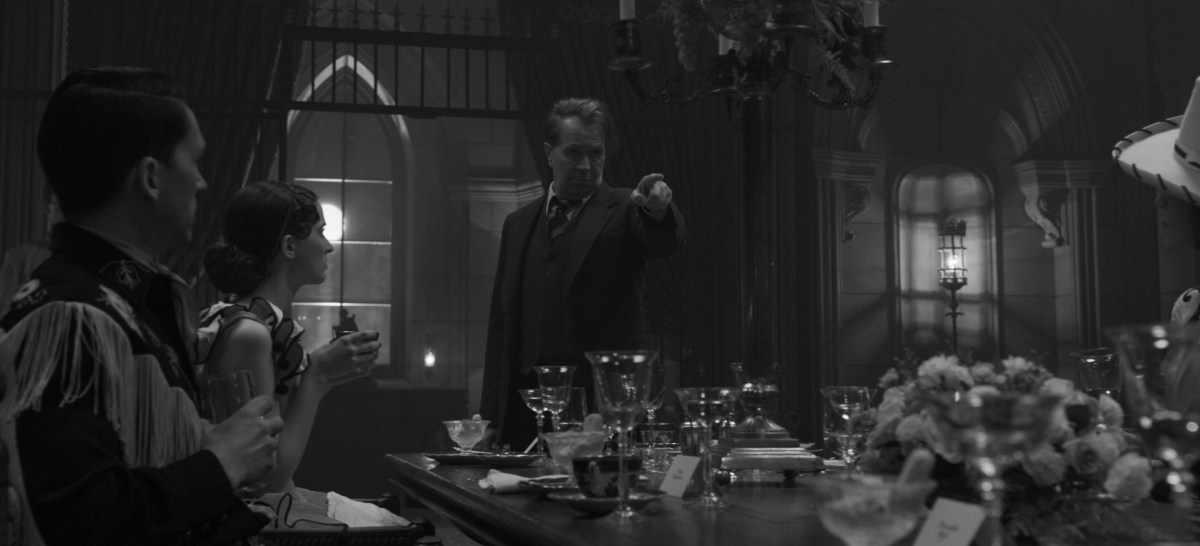
Fincher’s sweeping black-and-white epic attempts just that, starting with its stylistic homage to the era. The long-gestating script, by Fincher’s late father, Jack Fincher (who worked as a journalist and died in 2003), follows the acerbic and alcoholic screenwriter throughout his career. And it was up to Oldman to breathe life into Mankiewicz’s story. “There is not a lot to work with in bringing Herman to life,” Oldman, 62, says. “However, we knew two things: We knew what he did, and we knew what others thought of him. Here was a man regarded as the smartest, the wittiest, and the best writer by the most notable writers of his day.”
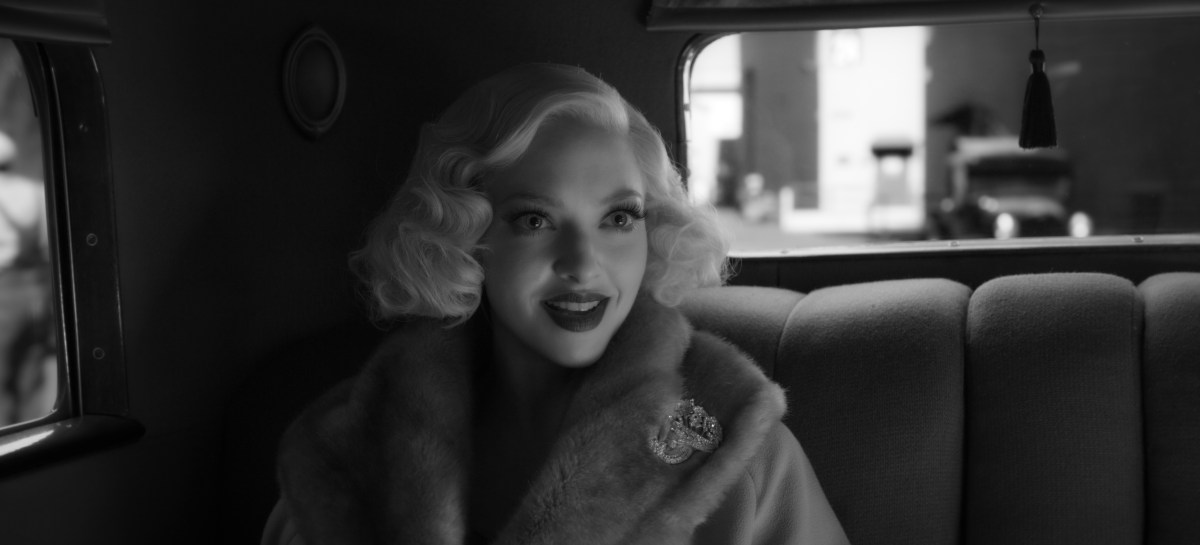
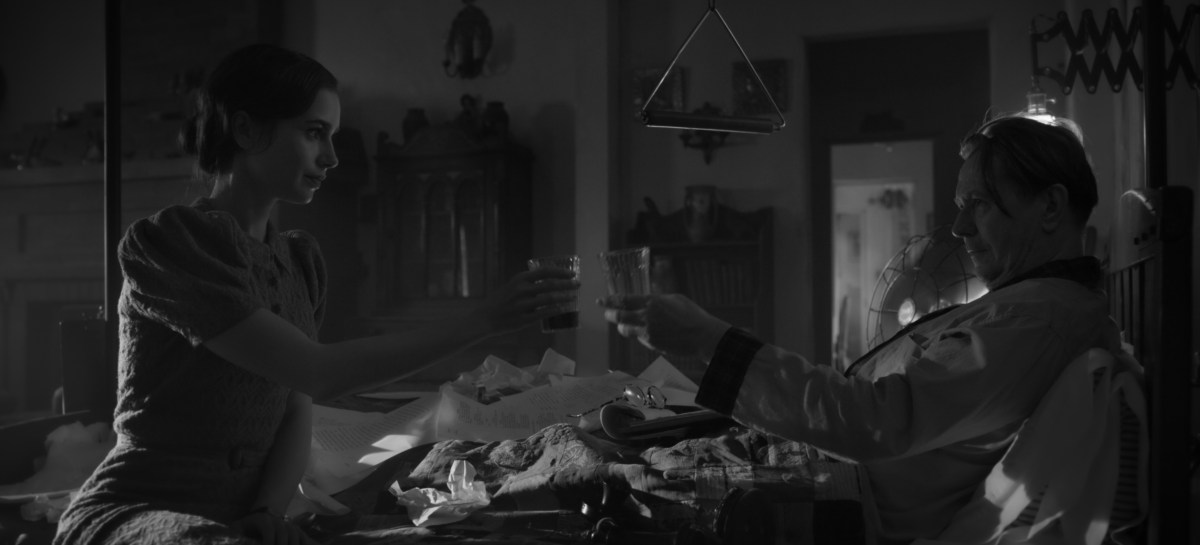
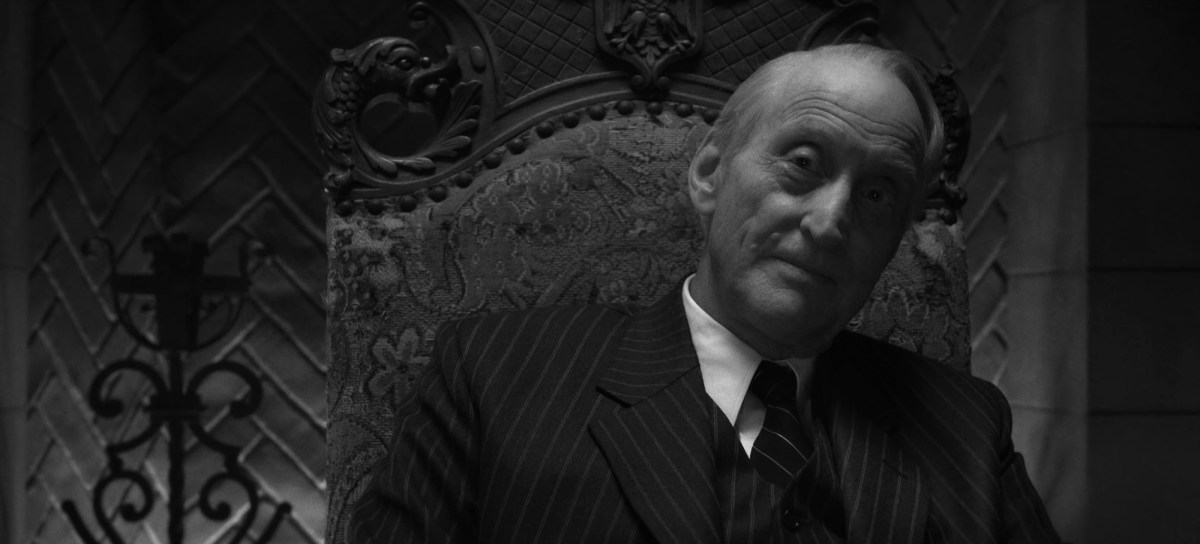
Mank follows its protagonist as he struggles to complete what would become his Oscar-winning magnum opus, assisted by stenographer Rita Alexander (Lily Collins). As he writes, he reflects on his career throughout the 1930s, with flashbacks detailing his meetings with Hearst himself (Charles Dance) and Hearst’s longtime mistress Marion Davies (Amanda Seyfried).
Charles Dance plays newspaper tycoon William Randolph Hearst in Mank.
Dance appeared as prison doctor Clemens in Fincher’s first film Alien3 (1992):
“First of all, I’m a huge fan of his. And I don’t say that about all directors that I’ve worked with. But when I first worked with David, the minute he walked onto the set and started to talk, I thought ‘right, this guy is clever'”.
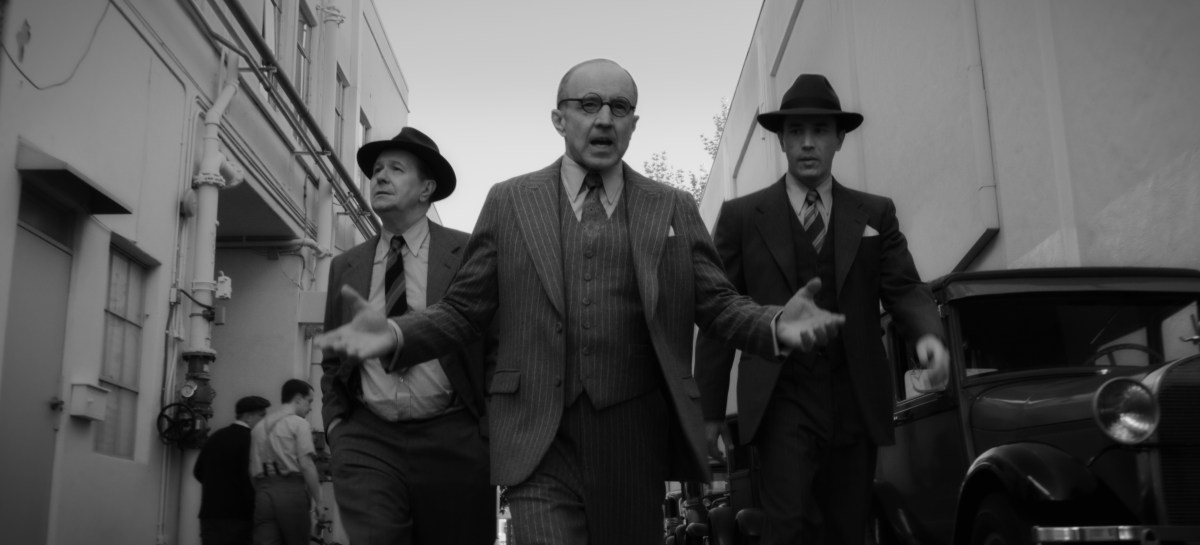
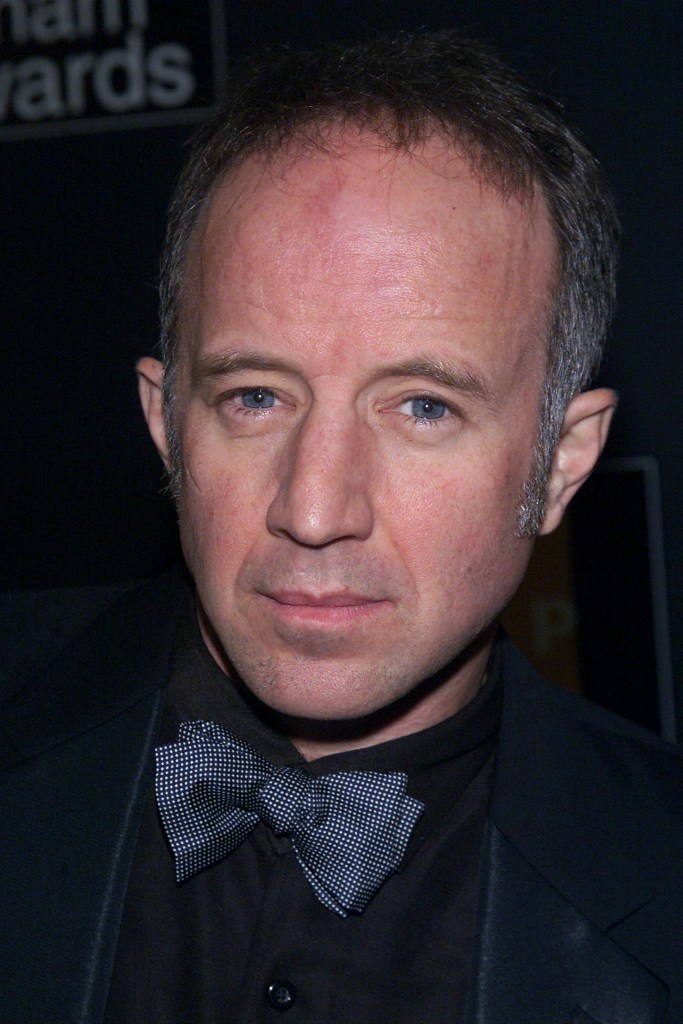
Don’t miss this exclusive and compelling conversation with actor, writer, and director Arliss Howard (Full Metal Jacket, Natural Born Killers, The Lost World: Jurassic Park, Amistad, Moneyball, Manhunt)
A journey into his process, his brilliant performance as MGM’s Louis B Mayer in David Fincher’s new epic feature ‘Mank’, working with Fincher, Kubrick, Spielberg and Stone and so much more!
‘Mank’ premieres theatrically in some territories on Nov 13th. On Netflix Dec 4.
There are few directors as infamously meticulous as David Fincher. Amanda Seyfried – who appears in Fincher’s upcoming movie Mank, about the writing of Citizen Kane – previously revealed that one scenetook around 200 takes to capture properly. For the latest issue of the magazine, Total Film asked the team behind Mank about working with Fincher, with the director himself being the first to admit that he can be quite demanding.
“It was exhausting in the beginning, I think, for him,” Fincher says of leading actor Gary Oldman. “Because I’m fairly didactic about, ‘These are the things that the scene needs to accomplish for me, and we will continue to play, to look for ways to underline these ideas that are as subtle as we can make them.’











 The Fincher Analyst